Slow Growth on Calathea Orbifolia: Causes, Checks & Fixes
Quick answer
Calathea Orbifolia (*Goeppertia orbifolia*) has a moderate growth rate: expect a few new large leaves per active season, not weekly flushes. First step: inspect the newest rolled leaf, measure humidity at canopy height, and check whether the top 2 cm of soil is drying on a 5–7 day rhythm before changing fertilizer or repotting.
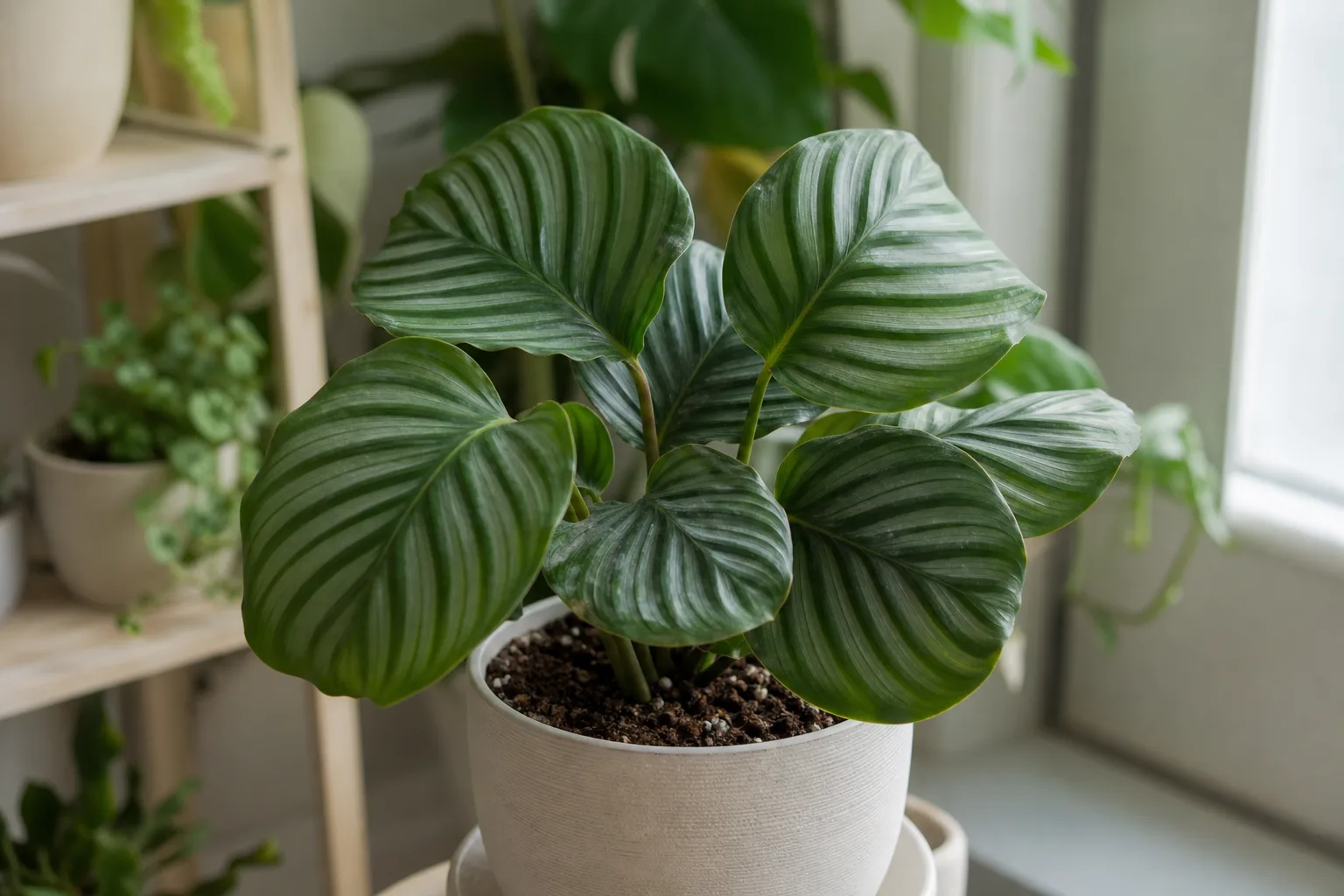
Slow Growth on Calathea Orbifolia: Causes, Checks & Fixes
This guide covers slow growth on Calathea Orbifolia. See also the general Slow Growth guide, watering, and light pages for this plant.
Slow Growth on Calathea Orbifolia: Causes, Checks & Fixes
Quick answer
Calathea Orbifolia - botanically Goeppertia orbifolia, though nursery tags still say Calathea orbifolia - is a moderate grower with large, energy-expensive leaves. A healthy indoor plant often produces a few new round blades per active season, not the constant flushes you see on pothos or spider plants. Winter slowdown with stable existing foliage is normal; no new petiole for eight or more weeks during spring or summer is not.
First step: inspect the newest rolled leaf at the center, measure humidity at canopy height, and check whether the top 2 cm of soil is beginning to dry on a roughly 5–7 day rhythm in warm months. NC State Extension recommends bright indirect light, consistent moisture, high humidity of at least 60%, and distilled or rainwater for Orbifolia to thrive - all four affect how fast new leaves appear. Do not reach for fertilizer or a larger pot until you know whether the stall is seasonal, environmental, or root-related.
Our Calathea Orbifolia overview explains baseline growth expectations and nyctinasty; this page focuses on when slow growth is normal versus when something in your setup is limiting the next flush.
What normal vs. slow growth looks like on Calathea Orbifolia
Orbifolia signals growth rate through new leaves, not old cosmetic marks. Learn to separate three patterns:
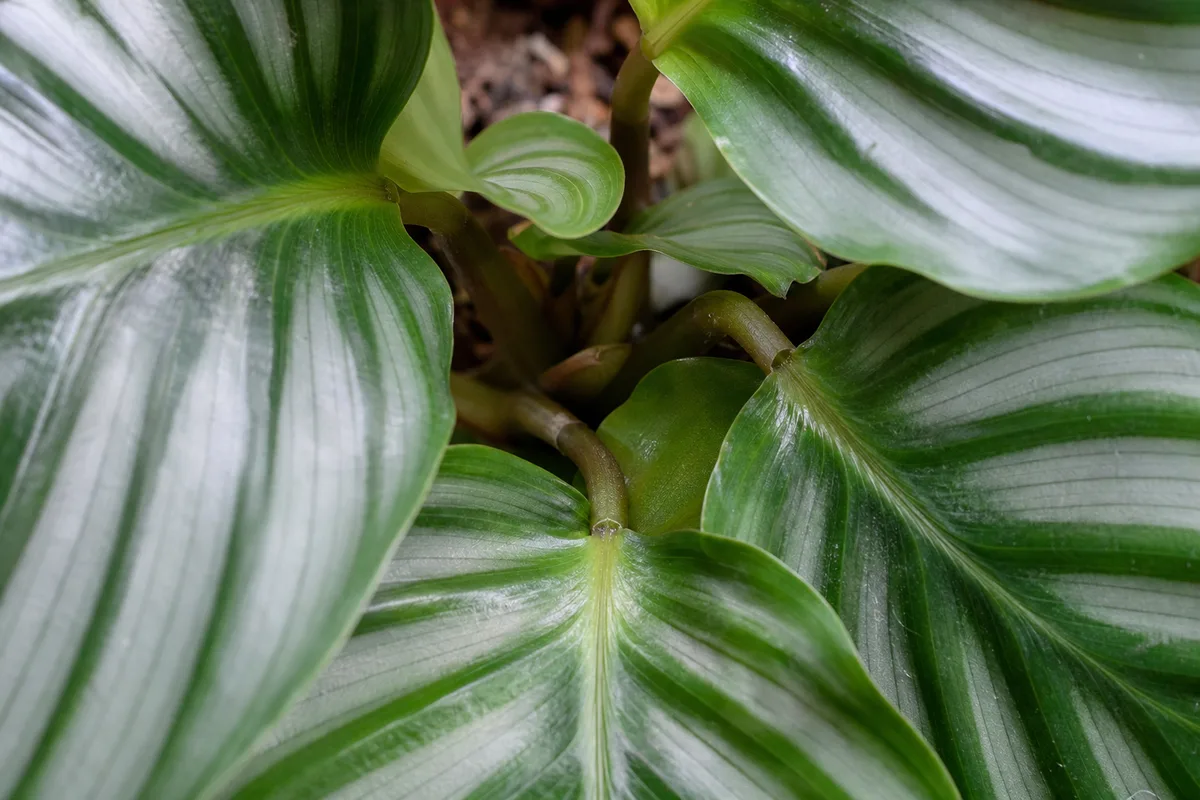
Slow Growth symptoms on Calathea Orbifolia - compare with healthy tissue on the same plant.
Normal moderate growth (healthy):
- One new rolled spear every roughly four to eight weeks during bright, warm months
- New blades unfurl to similar or slightly smaller size than mature leaves, with sharp silver-green banding
- Nyctinasty continues - leaves shift position through the day even when flushes are spaced out
- Soil dries on a predictable rhythm (often top 2 cm in 5–7 days in active growth)
Normal seasonal pause (winter dormancy):
- No new leaves from late autumn through early spring while existing foliage stays turgid
- Slower dry-down - watering may stretch toward 7–10 days
- No widespread yellowing, sour soil smell, or stuck spears with brown tips
Abnormal slow growth (stress stall):
- No center growth for eight or more weeks during spring or summer
- Stuck or crinkled leaf rolls that never reach full width
- Pale, smaller new leaves with faded banding and long thin petioles
- Wet soil for ten-plus days in a dim spot, or bone-dry mix with persistent limp leaves outside normal nyctinasty
- Rhizome crowding - roots visible at drainage holes, water runs straight through
Because one Orbifolia leaf can dominate the pot visually, a single slow month is not alarming. Repeated failed spears or shrinking new blades mean the environment-not the plant’s genetics-is the limiter.
Why Calathea Orbifolia gets slow growth
Orbifolia’s large round leaves change the math on growth. Each new blade is a major carbohydrate investment; the plant will not flush constantly unless light, humidity, water quality, and root space all support it. Fading of leaf color is caused by insufficient light; brown leaf edges and tips follow low humidity or fluoride in tap water; overwatering can cause root rot that stalls growth while leaves stay limp on wet mix.
The most common Orbifolia-specific causes:
Low humidity stalling unfurling. Orbifolia needs high humidity of at least 60% for clean margins and reliable spear expansion. Below 50% RH, new leaves stick, tear, or abort - which reads as “not growing” even when the rhizome is trying. See low humidity on Calathea Orbifolia.
Insufficient light slowing photosynthesis. Orbifolia wants bright, indirect light or partial shade. In a dim corner, the plant stretches, fades banding, uses less water, and produces fewer leaves. See not enough light and leggy growth for overlap.
Tap-water minerals before visible tip burn. Fluoride in tap water can brown leaf tips; salt buildup can also slow rhizome activity while older leaves still look acceptable. Filtered, distilled, or rainwater is the safer default.
Winter dormancy mistaken for failure. Shorter days and cooler rooms naturally reduce flush frequency - many houseplants grow more slowly in winter when light intensity drops. Existing leaves stay firm and prayer-plant movement continues - unlike drought stress, where limp leaves persist day and night.
Root-bound rhizome crowding. Orbifolia spreads by clumping rhizome. When roots circle and water runs through without soaking, uptake drops and new leaves shrink. Division in spring restores room - see repotting guide.
Post-repot or post-division pause. Repotting shocks fine roots; expect four to eight weeks with no new spear while the plant rebuilds. Do not repot again or fertilize during this window unless rot is confirmed.
Chronic overwatering in low light. Wet, airless mix damages roots; growth stalls while lower leaves yellow. See root rot and overwatering.
Lookalike patterns to rule out
| What you see | Likely cause | Where to read more |
|---|---|---|
| Long petioles, faded banding, no new leaves for months | Too little light | Not enough light |
| Stuck spears, crispy margins, RH below 50% | Low humidity | Low humidity |
| No growth Nov–Feb, stable older leaves | Winter dormancy | Normal - recheck in March |
| No growth 4–8 weeks after repot | Transplant recovery | Repotting |
| Yellow lower leaves, wet soil, sour smell | Root rot / overwatering | Root rot |
| Stretch toward window but banding still sharp | Light-seeking, not yet leggy | Leggy growth |
Nyctinasty as a health baseline: daily leaf movement that continues while no new spears appear points to an environment limiter (light, humidity, water quality, roots) - not imminent collapse. Limp leaves through day and night with wet or dusty soil point to water stress first.
How to confirm the cause
Work through this checklist in order. Stop when one pattern clearly matches.
- Season check - Note the calendar. Pause from October through February with firm existing leaves is often normal dormancy, not a care failure.
- Newest spear inspection - Is a rolled leaf present? Stuck, brown-tipped, or torn spears suggest humidity or water-quality issues during unfurling.
- Humidity at canopy - Measure RH at leaf height. Below 50% makes large-leaf unfurling unreliable; target 60–70% for active flushes.
- Light assessment - Compare the last two new leaves to older ones. Faded banding, smaller blades, or long petioles mean photosynthesis is limiting growth. Bright indirect light supports healthy foliage indoors.
- Soil moisture rhythm - Stick a finger into the top 2 cm. Active-season Orbifolia often dries here in roughly 5–7 days; pots that stay wet ten-plus days in dim light suggest overwatering, not thirst. Details: watering guide.
- Water source - Municipal tap with fluoride? Brown tips on newest leaves or white crust on soil support switching to filtered or rainwater.
- Root and rhizome check - Slide the plant partly from the pot. Circling roots at drainage holes, rhizome pressed against pot walls, or water running straight through without soaking confirms crowding.
- Recent repot - If you repotted or divided within the last two months, a growth pause may be recovery, not new stress.
If humidity, light, and moisture all look correct for two weeks and spring growth still does not start, inspect roots for brown mushy sections before fertilizing.
First fix for Calathea Orbifolia (by confirmed cause)
Make one primary change, then wait three to four weeks before stacking treatments.
If humidity is below 50% or spears stick: Run a humidifier near the canopy until RH holds 60–70% at leaf height. Do not flood the pot to compensate for dry air.
If new leaves are pale with faded banding or petioles are lengthening: Move to the brightest spot that keeps direct sun off the blades - east window with sheer curtain, bright north exposure, or several feet back from south/west glass. Read light guide.
If you use untreated tap water and see tip burn or salt crust: Switch to filtered, distilled, or rainwater and flush the pot once with plain room-temperature water until runoff clears.
If roots circle and water runs through: Plan a spring repot or division one pot size up with fresh airy mix - not during winter unless rot is confirmed. Follow repotting guide.
If soil stays wet ten-plus days in a dim spot: Stop watering until the top 2 cm dries; improve light before the next soak. Wet-soil stalls are often root-related - see root rot.
If the calendar says winter and leaves are stable: Wait. Reduce watering slightly and hold fertilizer until days lengthen.
If the plant is healthy, in active season, and simply not fast: Light monthly feeding at quarter strength on moist soil during spring and summer only - never on a stressed or dormant plant.
Recovery timeline
Recovery is measured by the next clean spear, not by old leaves changing.
| Cause severity | What to expect |
|---|---|
| Low humidity corrected | First new spear may unfurl cleanly in 4–8 weeks once RH stays above 60% |
| Light improved | Next one or two leaves show stronger banding and shorter petioles in 3–6 weeks |
| Water source switched | Tip burn stops on new tissue within one to two flushes; old margins stay brown |
| Root-bound repot in spring | 4–8 week pause, then normal flush frequency resumes |
| Winter dormancy | Growth often restarts March through May as light increases - no fix needed |
| Root rot (partial) | Several weeks to months; judge by firm roots and first small new leaf |
Damaged or stuck spears rarely reopen fully. Trim only fully dead rolled leaves after a replacement spear is underway.
What not to do
Do not fertilize a stressed Orbifolia to “force” growth - salts accumulate and burn sensitive roots. Do not repot during winter dormancy unless root rot is confirmed. Do not stack repotting, heavy pruning, and pesticide on the same day. Do not judge success by old leaf color; watch the newest round blade. Do not assume slow growth means a bigger pot - oversized containers stay wet and stall roots further.
How to prevent slow growth next time
Match care to Orbifolia’s moderate rhythm: bright indirect light, 60%+ humidity during heating season, filtered water, and watering when the top 2 cm begins to dry - not on a blind calendar. Refresh mix or divide every one to two years in spring before severe crowding. Log new leaf dates monthly so a winter pause does not feel like a crisis in February.
When slow growth is urgent
Treat as urgent when multiple leaves yellow while soil stays wet, the crown softens, roots smell sour, or pests coat new growth. Those patterns point to rot or infestation, not normal moderate pace.
A quiet winter with firm leaves is not urgent. One slow month in summer after a move is worth observing - not emergency repotting.
Conclusion
Slow growth on Calathea Orbifolia is often normal moderation, not neglect - especially in winter or after repotting. Worry when spring and summer pass with no center spear, when new leaves shrink and fade, or when stuck rolls and wet soil pair together. Fix humidity, light, water quality, and root space one at a time, and measure recovery by the next large, cleanly banded leaf unfurling from the center.
Related Calathea Orbifolia guides
- Calathea Orbifolia overview - baseline growth rate, nyctinasty, and cultural requirements
- Watering - top-2-cm dry-down rhythm and filtered water
- Light - bright indirect placement without scorch
- Low humidity - unfurling failures and humidifier-first fixes
- Not enough light - faded banding and stalled flushes
- Leggy growth - stretch vs. simple slow pace
- Root rot - wet-soil growth stall
- Repotting - division timing and post-repot recovery