How to Propagate Calathea Orbifolia by Division
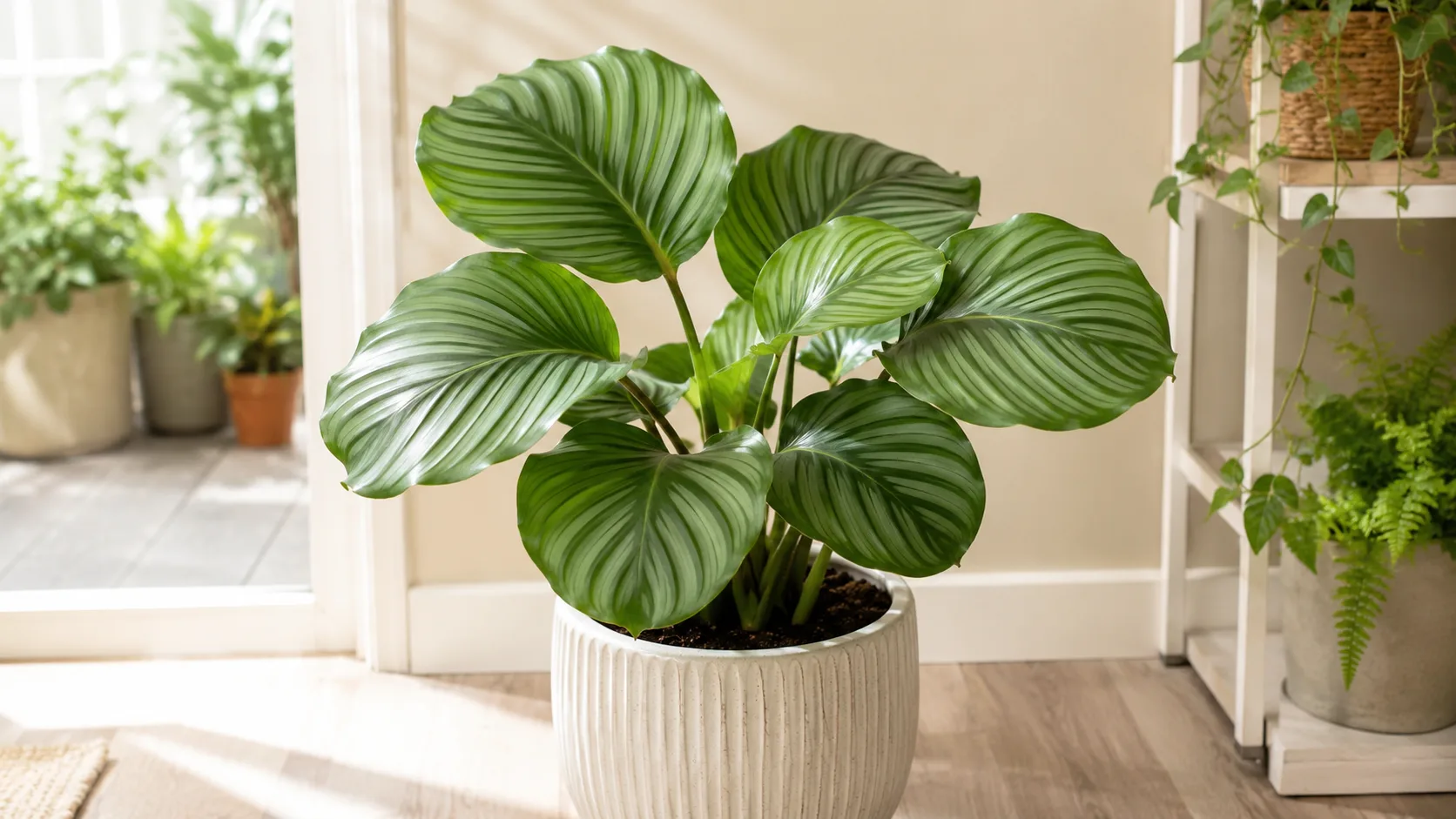
How to Propagate Calathea Orbifolia by Division
How to Propagate Calathea Orbifolia by Division
Calathea orbifolia is one of the most striking prayer plants in the trade, grown for its oversized round leaves with silver-green banding. It is also one of the most frequently mis-propagated. Search results and social posts still show leaf cuttings placed in water or single stems stuck into moss, and those attempts almost always fail. The reason is structural: Orbifolia grows from underground rhizomes and crowns, not from stem nodes that can regenerate roots in isolation. For home growers, the only dependable method is division during Calathea Orbifolia repotting guide-separating a mature, multi-crowned plant into sections that already carry roots, rhizome tissue, and living leaves. This guide walks through why that limitation exists, how to tell when your plant is ready, the exact division workflow, and the aftercare that keeps new divisions alive through transplant shock.
Why Division Is the Only Reliable Method for Orbifolia
Division works for Calathea Orbifolia because you are not asking plant tissue to invent a new root system from scratch. Each section you separate already owns a portion of the rhizome, a cluster of feeder roots, and several photosynthesizing leaves. That combination gives the division immediate access to water uptake and stored energy while it repairs broken roots and settles into fresh mix. Commercial growers and botanical references describe Calathea propagation almost exclusively through rhizome division or tissue culture in controlled labs-not through stem or leaf cuttings taken from mature foliage plants.
NC State Extension describes Goeppertia orbifolia as a clumping perennial native to the rainforests of Eastern Brazil. In nature, new shoots emerge along horizontal rhizomes-not from severed petioles in water. Division mimics that pattern by giving each section an existing crown and root system, unlike vining aroids where stem nodes can form adventitious roots.
What Happens When You Try Stem or Leaf Cuttings
Stem cuttings do not work on Calathea Orbifolia because the plant lacks the cellular plasticity to form roots from arbitrary stem segments. Unlike vining aroids, Calathea stems are not structured for adventitious rooting when separated from the rhizome. Cut a stem above the soil, place it in water or moss, and the tissue typically yellows, softens, and decays without ever producing viable roots. Even if callus forms at the cut surface, it rarely progresses to functional root initials because the necessary meristematic zone is tied to the rhizome crown, not the above-ground petiole.
Leaf cuttings fail for the same reason. A detached leaf-even with petiole attached-has no node capable of generating a new rhizome or shoot. Water, sphagnum, and rooting hormone do not change that biology.
Water propagation and seeds are not practical options for home growers. Orbifolia lacks usable above-ground nodes for water rooting, and indoor plants rarely produce viable seed. For practical purposes, division at repotting is the entire toolkit.
Understanding How Calathea Orbifolia Grows Underground
Before you cut anything, it helps to visualize what you are working with beneath the soil line. Orbifolia is not a single upright trunk with one root mass. It is a clumping rhizomatous perennial in the Marantaceae family-the same group that includes marantas and stromanthes, all known for nyctinastic leaf movement and sensitivity to dry air. Above ground you see large orbicular leaves on long petioles; below ground, fleshy rhizomes run horizontally and send up shoots at intervals. Roots emerge from rhizome tissue and spread outward into the potting mix, anchoring the plant and absorbing moisture.
When a nursery pot holds one visible cluster of leaves, you might assume the plant is indivisible. Often, however, multiple crowns share the same root ball, especially on older specimens that have filled a container over one to two years. Each crown represents a shoot connected to rhizome tissue. The division goal is to separate those crowns into independent units without stripping every root from any one section. Orbifolia’s large leaf surface area means each division needs enough root volume to supply water to the foliage it carries; an under-rooted section wilts quickly even in high humidity.
Rhizomes, Crowns, and Root Clusters
The rhizome is the horizontal storage stem. It should feel firm, not hollow or mushy, and it connects the shoot above to the roots below. A viable division must include a segment of healthy rhizome with at least one growth point-the region where new leaves emerge. Without that bud tissue, the division has roots and leaves but no path to future growth.
The crown is where petioles meet rhizome tissue at or just above soil level. Burying the crown too deeply after division is a common mistake; it keeps tissue wet and invites rot. When potting, maintain the same depth the division occupied before separation. The crown should sit at or slightly below the mix surface, never buried under several centimeters of soil.
Root clusters should be pale, firm, and resilient. Healthy Calathea roots range from white to tan depending on age and mix composition. Mushy, black, or foul-smelling roots indicate rot and should be trimmed before potting, with tools disinfected between cuts. A division can tolerate some root loss during teasing apart, but losing the majority of its roots while retaining full-sized leaves creates a severe water balance problem. Match leaf mass to root mass: if you must take a division with reduced roots, remove one or two of the oldest outer leaves to lower transpiration demand until new roots grow.
When Your Plant Is Ready to Divide
Not every Orbifolia in your collection qualifies for propagation. Division requires a mature, multi-crowned plant with enough biomass to survive being split. A young specimen with a single tight rosette of four or five leaves and a small root ball is better left to grow. Attempting to slice a one-crown plant in half creates two weak halves instead of two viable plants, and both sections may stall or decline because neither retained adequate roots and stored energy.
The clearest readiness signal is crowded growth in the pot. When you see multiple distinct leaf clusters emerging from separate points at the soil surface, roots circling the drainage holes, or the plant drying out faster than it used to despite consistent watering, you likely have a candidate. Repotting need and propagation opportunity align: the plant is already outgrowing its container, and the root ball will be exposed during the repot anyway. Combining the two tasks reduces total root disturbance compared with unpotting solely to divide and then repotting again weeks later.
Size matters as much as crown count. Orbifolia leaves can exceed thirty centimeters in diameter on established plants, and each leaf transpires heavily. A division carrying three large leaves needs a proportionally larger root system than a division carrying three small juvenile leaves. Use the two-to-five-leaf rule as a minimum: each section should retain at least two healthy leaves, and three to five is safer on a mature plant. More leaves are fine if roots support them; fewer leaves with a strong root cluster can also work if you accept slower visual recovery.
Maturity and Health Checks Before You Start
Run through a health checklist before you unpot. The parent should be free of active pest outbreaks-spider mites, mealybugs, and thrips all transfer to divisions and multiply in the stress window after separation. If pests are present, treat and stabilize the plant first, then propagate at the next repotting cycle. Similarly, active root rot on Calathea Orbifolia is a reason to delay propagation for multiplication and focus on rescue. Trim rotten roots, repot into fresh airy mix, and wait until new growth confirms recovery before dividing.
Hydration status matters on division day. The plant should be moderately watered, not bone dry and not saturated. Slightly dry soil helps the root ball release from the pot with less breakage; soggy soil smears across roots and makes natural division points harder to see. Water lightly one to two days before if the mix is completely dry, or proceed when the top layer has dried but the root ball still holds together.
Examine the newest leaves. Orbifolia is sensitive to tap water minerals, low humidity, and light stress, and older leaves may show edge crisping that does not reflect current conditions. New rolled leaves that open cleanly indicate the plant is in equilibrium with your environment. Dividing during a period when every new leaf arrives damaged suggests an underlying care issue-water quality, humidity, or light-that will stress divisions even more. Fix or improve those conditions before multiplying the plant.
The Best Time to Propagate During Repotting
Timing is not purely calendar-based, but spring through early summer is the safest window for dividing Calathea Orbifolia indoors. Longer days and warmer room temperatures support root repair and new leaf production, which is why NC State Extension recommends division during spring when growth is most vigorous. Orbifolia is not in a deep dormancy like a deciduous outdoor plant, but its metabolic rate still drops in cool, dim winter conditions, and recovery after root disturbance slows accordingly.
The ideal scenario is a scheduled repot every one to two years in spring, before peak summer heat if your home runs dry. You refresh depleted mix, upsize modestly, inspect roots, and divide only if natural separations exist or the plant is clearly multi-crowned. Forcing division on a plant that does not need repotting means unnecessary root trauma without a compelling benefit. Patience here is propagation skill: wait until the plant tells you the pot is full.
Spring and Early Summer Versus Other Seasons
Spring division aligns with emerging active growth. Damaged roots callus and regrow while the plant is already programmed to push new leaves, so the stall period is often shorter. You also have months of favorable conditions ahead before winter slowdown. If you repot annually, spring is the default propagation season.
Early summer remains workable in many homes, especially where humidity stays moderate and light is strong but filtered. Avoid mid-summer division if your space becomes extremely hot and dry; transpiration stress on large Orbifolia leaves can overwhelm reduced root systems. If summer division is necessary, prioritize humidity and shade from direct sun more aggressively than you would in spring.
Fall and winter division is possible but higher risk. Cooler temperatures and shorter days slow root regeneration, and heating systems drop indoor humidity precisely when divisions need it most. Because division already includes established roots-unlike a leafless cutting-the plant may survive off-season separation if aftercare is excellent, but expect longer stall times and more leaf edge damage on older foliage. Unless you have a compelling reason such as emergency rot treatment requiring separation of healthy tissue, waiting for spring is the lower-stress choice.
Tools, Pots, and Mix You Need
Gather everything before unpotting so divisions spend minimal time with exposed roots. You will need sharp, clean cutting tools-bypass pruners, a knife, or sturdy scissors depending on rhizome thickness. Disinfect blades with 70% isopropyl alcohol and let them dry before cutting living tissue. Prepare new pots with drainage holes sized for each division’s root mass, not the leaf span. Orbifolia divisions recover better in slightly snug pots than in oversized containers where wet mix surrounds unused volume.
Mix choice directly affects post-division survival. Orbifolia needs moisture-retentive but well-draining soil-typically peat-free houseplant mix amended with perlite and optionally orchid bark or coco coir for structure. A practical home blend is two parts quality indoor potting mix to one part perlite, adjusted with extra perlite if your environment runs humid and cool. Avoid straight garden soil or heavy compost that compacts and suffocates recovering roots. Fresh mix also reduces pathogen load compared with reusing old substrate from failed projects.
Support materials include labels if you are creating multiple divisions, newspaper or a tarp for the work surface, and optionally a clear humidity tent-a loose plastic bag or propagation dome-for the first one to two weeks. Gloves are optional but sensible if you have sensitive skin. Keep a watering can with a narrow spout ready for the initial settling water after potting. Do not prepare fertilizer; divisions should not receive feed until active new growth appears.
| Item | Purpose |
|---|---|
| Disinfected pruners or knife | Cut rhizome only when teasing fails |
| Small pots with drainage | Match root mass, not leaf size |
| Fresh airy potting mix | Oxygen + even moisture for new roots |
| Perlite or bark amendment | Prevent compaction after repotting |
| Humidity cover (optional) | Reduce transpiration first 10–14 days |
| Labels | Track division date and parent plant |
Step-by-Step Division During Repotting
Propagation happens during repotting, not as a standalone surgery on a plant that otherwise fits its pot. The workflow below assumes you have confirmed readiness, chosen spring or early summer timing, and assembled tools and mix. Work methodically; rushing increases root tears and crown damage on a plant that cannot afford heavy losses.
Start by sliding the plant from its pot with support at the base of the stems, not by pulling leaves. Squeeze flexible nursery pots to loosen the root ball, or run a knife around the inside of rigid pots. If roots exit drainage holes, untangle gently rather than snapping them. Once free, hold the root ball over your work surface and assess size and crown count before removing any soil.
Removing the Plant and Finding Natural Divisions
With the plant out of the pot, remove loose surface mix and lightly brush or finger-comb outer roots to expose structure. You are looking for natural separation planes-places where one crown’s roots diverge from another’s, or where rhizome segments connect two shoots with minimal shared tissue. Orbifolia often reveals two to four obvious clusters on a mature specimen; those clusters are your propagation units.
Do not invent a split line through the center of a single crown just to create two plants. If only one central cluster exists, the plant is not ready for division unless it is exceptionally large and you accept the risk of halving it-a technique reserved for experienced growers with robust specimens, not default advice. When natural offsets appear at the pot edge with their own roots, those are the lowest-risk divisions to remove first.
Soil removal should be gradual. Shake and tease rather than blasting roots with water unless you are treating rot and need visibility. Orbifolia dislikes excessive root disturbance; NC State Extension notes that repotting and division should be done gently, so minimize bare-rooting. Retain some original mix around each division if it is healthy, filling in with fresh blend around the exterior rather than stripping every old particle away.
Separating Clumps Without Destroying Roots
Tease apart first, cut second. Work from the outside inward, separating flexible roots with fingers. When rhizomes bind two crowns tightly, use your disinfected blade to slice through the connecting rhizome segment with one clean stroke rather than tearing. Each cut should leave rhizome tissue, roots, and leaves intact on both sides wherever possible. Cutting through thick roots is sometimes unavoidable; prioritize preserving the larger root mass on each division.
Each viable section needs at least two to three healthy leaves, a portion of firm rhizome, and a functional root cluster. Five leaves with strong roots is an excellent division on a large parent. If one section ends up short on roots, reduce its leaf count by removing the oldest outer leaf at the petiole base with a clean cut-do not pull. Mark which divisions felt root-light so you can monitor them more closely during aftercare.
Inspect every division before potting. Trim mushy or black roots back to firm tissue, disinfecting the tool between divisions if rot was present. Do not apply wound paste to rhizome cuts; clean air and appropriate moisture levels support healing. If a division wobbles because roots are sparse, hold it steady with a temporary stake or nestle it slightly deeper only at the root zone-not by burying the crown.
Potting Each New Division
Choose a pot one size appropriate to the root mass, generally only slightly larger than the division’s diameter. Place a small layer of moist mix at the bottom, set the division so the crown sits at the previous depth, and fill around the sides while gently tapping to remove large air voids without compressing all porosity from the blend. Orbifolia roots need air as much as moisture; brick-hard packing causes post-division decline.
Water once thoroughly after potting and let excess drain completely. Do not leave the pot standing in a cache dish of runoff. For the first week, moisture should stay evenly lightly moist, not saturated. Smaller root systems use less water than the intact parent did; the most common post-division killer is overwatering on Calathea Orbifolia a plant that can no longer transpire at its former rate.
Place divisions in Calathea Orbifolia light guide, shielded from direct sun that would heat leaves and accelerate wilting. An east window filtered by sheer curtain, or a few feet back from a south or west exposure, typically works. If you use a humidity tent, ensure leaves do not touch wet plastic and vent briefly every few days to prevent mold. Remove the cover when new growth appears or after roughly two to three weeks, whichever comes first.
Aftercare for Newly Divided Orbifolia Plants
The first month after division is about stability, not pushing growth. Expect transplant shock: older leaves may curl, edge crisp, or droop slightly even when you do everything right. That response reflects root damage and repotting stress, not necessarily immediate failure. The signal that matters is whether new leaves continue to form and open over the following four to eight weeks. Stalled new growth with progressive wilting is a problem; cosmetic damage on established leaves alone often is not.
Hold fertilizer until you see firm new foliage. Fresh mix contains some available nutrients, and salt load from feed stresses roots that are still re-forming contact with the medium. When you do resume feeding, use a diluted balanced houseplant fertilizer at half strength during active growth season, following the same cautious approach you would use after any repotting.
Humidity, Light, and Water During Recovery
Humidity is the most forgiving lever for Orbifolia divisions. Aim for 50–70% relative humidity if you can measure it, or use practical proxies: a humidifier nearby, grouping plants, or a pebble tray that increases ambient moisture without letting pot bottoms sit in water. Divisions with large leaf surface area lose water faster than small calathea species; dry indoor air during winter heating season is the main reason recovered plants still show edge burn.
Light should remain bright but indirect throughout recovery. Low light reduces stress visually but also slows root regeneration and new leaf production; very high light scorches leaves that cannot yet pull enough water. If you must choose, err slightly toward brighter filtered light in a humid environment rather than dim corners that stay wet too long.
Watering requires recalibration. Check the top two to three centimeters of mix and the pot’s weight before adding water. Divisions in smaller pots dry faster than the original large container, but reduced root mass means they also stall uptake if kept soggy. The target is consistent light moisture-mix that never fully desiccates but never stays muddy. Reduce frequency in cool or dim conditions; increase slightly in warm, bright, dry air as new roots establish.
Common Division Mistakes and How to Avoid Them
The first mistake is attempting stem or leaf cuttings because other houseplants propagate that way. Orbifolia does not, and time spent on water jars is time not spent growing a mature plant large enough to divide. The second mistake is dividing too early-splitting a single-crown juvenile because patience ran out. You end with two struggling halves instead of one healthy plant.
Over-dividing ranks high among experienced-grower errors. Creating four tiny sections from one pot maximizes plant count and minimizes survival rate. Two or three robust divisions beat five weak ones. Match ambition to root mass. Overpotting follows closely: placing a small division in a large decorative pot holds excess wet mix and invites root rot before the plant can grow into the space. One pot size up from the division’s root ball is sufficient.
Overwatering after repotting kills more divisions than underwatering on Calathea Orbifolia. Parent-plant watering habits do not transfer automatically. Smaller root zone, same watering volume equals saturation. Burying the crown causes rhizome rot at the soil line; maintain original planting depth. Immediate fertilizing and direct sun after division add salt and heat stress when the plant needs calm.
Skipping tool disinfection spreads pathogens between divisions, especially if the parent had minor fungal issues you did not notice. Propagating sick plants to “save” them multiplies problems. Stabilize first, divide later. Finally, ignoring humidity in dry homes produces crisped divisions that growers blame on “calathea being difficult” when the environment-not the method-was the limiting factor.
Signs Your Division Is Struggling
Learn to distinguish normal transplant stress from failure signals. Mild droop for a few days, slight curl on older leaves, and one yellowing lower leaf can occur on recovering divisions without indicating collapse. Progressive wilting that does not recover overnight, blackening at the crown, sour-smelling mix, or mushy roots when you finally inspect mean action is required.
Soft, translucent petioles near the base suggest rot moving upward-often from overwatering or buried crowns. Pull back water, improve airflow, and if rot is localized, you may salvage tissue by repotting into fresh dry mix after trimming damage. Total leaf collapse with no new shoots after six weeks in warm spring conditions suggests the division lacked viable rhizome or roots from the start.
Pest flare-ups-fine webbing, stippled leaves, cottony deposits-frequently follow stress. Treat promptly with appropriate methods for the identified pest, isolating affected divisions so they do not reinfect neighbors. Crisp edges without new leaf damage usually point to humidity or water quality issues rather than division failure; address those while maintaining stable watering. When in doubt, compare the newest leaf to older ones: improving new growth means recovery is underway even if old leaves look rough.
When Not to Propagate Calathea Orbifolia
Propagation is not the right response to every Orbifolia problem. If the plant is declining from root rot, dividing to “start fresh” without removing all rotten tissue and fixing watering habits spreads failure across multiple pots. Rescue the healthiest crowns into clean mix first; propagate only from confirmed sound tissue. Active pest infestations, severe dehydration, and recent shipping stress are also pause signals. Let the plant acclimate and stabilize for several weeks before adding division trauma.
Do not propagate merely because one leaf has brown edges. Edge burn on Orbifolia is often environmental-dry air, inconsistent moisture, fluoride or chlorine in tap water-and dividing does not fix those inputs. Similarly, do not divide a plant that does not need repotting just to create gifts or sales stock. Unnecessary root disturbance on a species sensitive to repotting buys risk without need.
Single-crown specimens should grow until they develop offset crowns or clear rhizome branching. Buying a second plant is a legitimate alternative if you want another Orbifolia faster than your current one can biologically support division. Finally, avoid propagation as a winter project in cold, dry rooms unless you can supply supplemental humidity and stable warmth; waiting until spring is not failure-it is appropriate timing for a fussy foliage plant with large leaves and rhizomatous roots.
Conclusion
Propagating Calathea Orbifolia is straightforward once you accept what the plant will and will not do. Division during repotting is the only reliable home method because each new plant must begin life with rhizome tissue, roots, and leaves already attached. Stem cuttings, leaf cuttings, and water propagation fail for biological reasons, not because of minor technique tweaks. Success flows from choosing a mature multi-crowned parent, dividing in spring or early summer when growth is active, separating along natural rhizome lines with clean tools, potting into appropriately sized containers with airy mix, and holding humidity and watering steady while roots recover.
Treat the weeks after division as a recovery phase, not a growth sprint. Skip fertilizer, avoid direct sun, and water less aggressively than you did for the full parent plant. Watch for new leaves, not perfect old ones. If your Orbifolia is still a single young rosette, grow it well first-good light, consistent moisture, adequate humidity-and division will become an option naturally when the next repotting cycle arrives. That patience yields the same striped round leaves you started with, multiplied into independent plants that can each carry the show forward.
When to use this page vs other Calathea Orbifolia guides
- Calathea Orbifolia overview - Start here for whole-plant context before deep-diving this topic.
- Calathea Orbifolia problems hub - Jump to symptom-specific fix guides when this care topic does not resolve the issue.
Related Calathea Orbifolia guides
- Calathea Orbifolia overview
- Calathea Orbifolia watering
- Calathea Orbifolia light
- Calathea Orbifolia soil
- Calathea Orbifolia fertilizer
- Calathea Orbifolia repotting
- Calathea Orbifolia problems
Related tool
Try the Propagation Success Calculator with calathea-orbifolia pre-selected to estimate needs for your setup.