Wilting on Calathea Orbifolia: Causes, Checks & Fixes
Quick answer
Wilting on Calathea Orbifolia is acute collapse-large round blades flatten suddenly, not the normal evening prayer-plant droop. First step: lift the pot and probe the top inch of soil. Light dry soil needs a thorough draining soak; heavy wet soil means stop watering and inspect roots before adding more water.
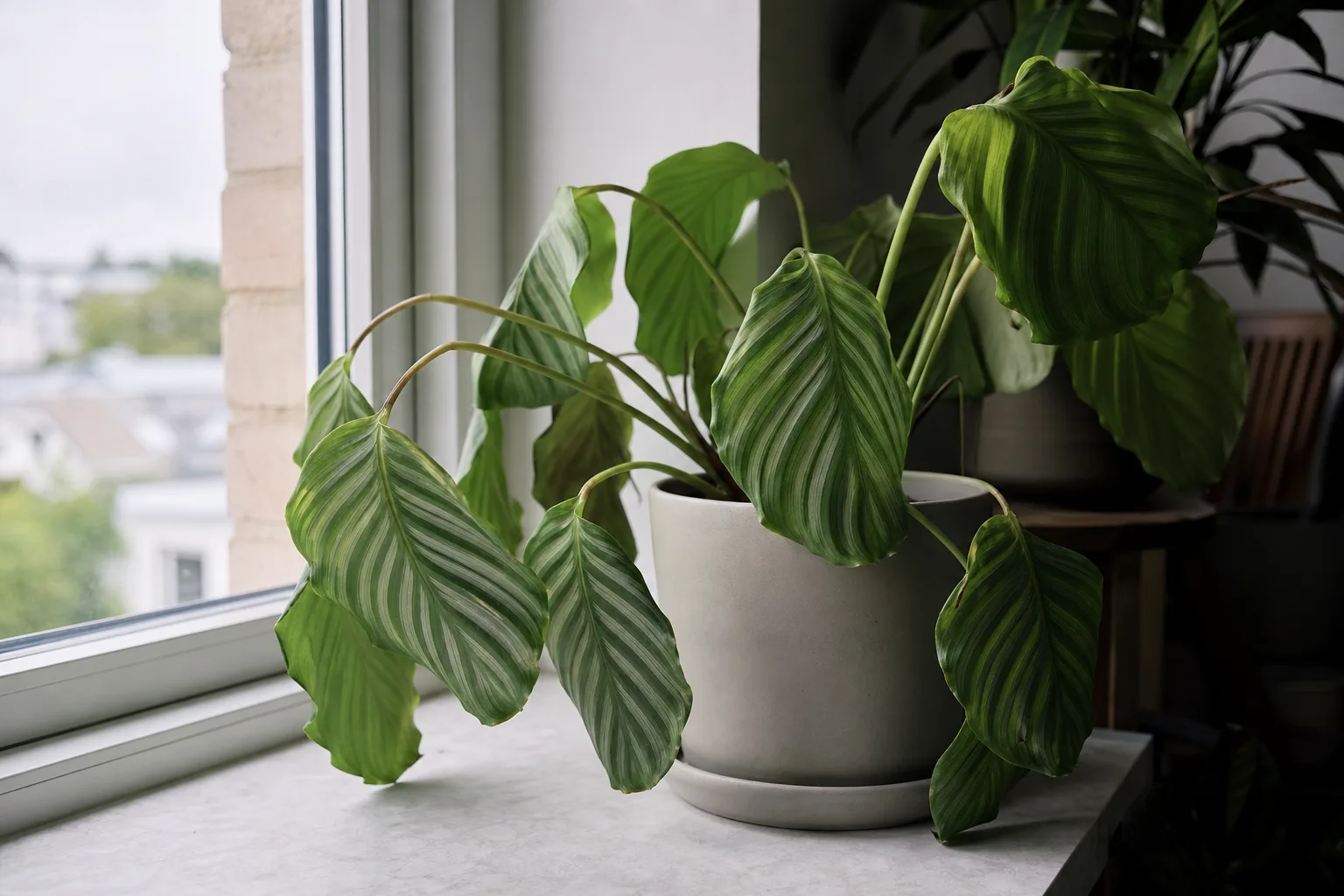
Wilting on Calathea Orbifolia: Causes, Checks & Fixes
This guide covers wilting on Calathea Orbifolia. See also the general Wilting guide, watering, and light pages for this plant.
Wilting on Calathea Orbifolia: Causes, Checks & Fixes
Quick answer
Wilting on Calathea Orbifolia means acute collapse-the large, silver-banded round blades lose turgor and flatten suddenly, often within hours. This is different from the slow chronic hang covered on our drooping leaves guide, and different from nyctinasty, the normal prayer-plant rhythm where leaves change posture at dusk and open on firm petioles by mid-morning.
Goeppertia orbifolia (still sold as Calathea orbifolia) carries orbicular leaves up to 12 inches wide on long petioles. That surface area transpires heavily in warm, dry air-yet chronic overwatering can still produce limp foliage while the mix stays wet when roots fail underground. NC State Extension notes the plant needs consistently moist but not wet or soggy soil and high humidity of at least 60% to thrive indoors.
First step: lift the pot and probe the top inch of soil. A light, dry pot with thin, curled blades needs a thorough draining soak per our watering guide. A heavy, wet pot with limp leaves means stop watering-damaged roots cannot absorb water, and adding more makes rot worse. See overwatering before you reach for the watering can.
What wilting looks like on Calathea Orbifolia
Wilting shows up as sudden loss of rigidity across multiple large round leaves at once-not a single aging lower leaf yellowing in isolation.
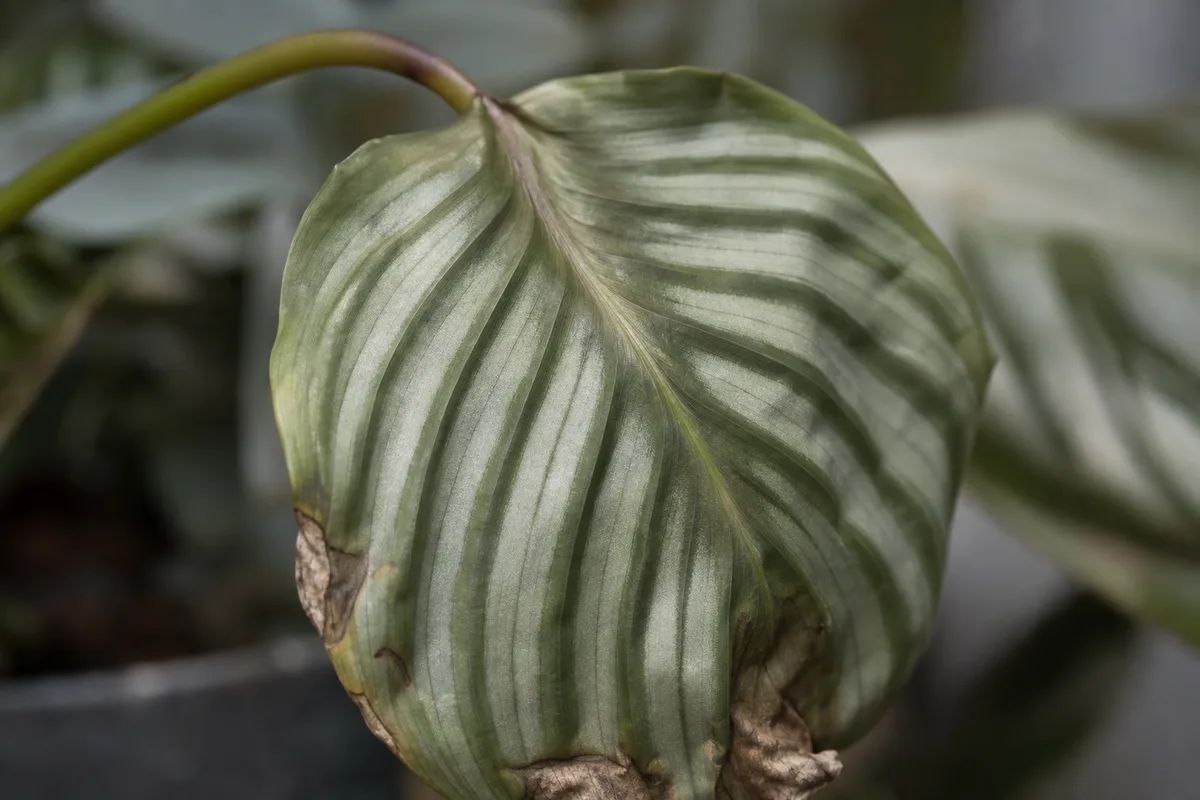
Wilting symptoms on Calathea Orbifolia - compare with healthy tissue on the same plant.
Typical wilt patterns on Orbifolia:
- Whole clump flattened - petioles bow and broad blades hang like soft plates rather than holding horizontal
- Thin, limp leaf tissue - blades feel papery or rubbery instead of turgid across the silver-green banding
- Inward curl along the midrib on dry-soil wilt, sometimes with crispy brown margins starting at edges
- Prayer movement stops - the daily nyctinasty cycle may disappear when turgor collapses; leaves stay limp through midday
- New rolled spears stall or brown when collapse is severe or prolonged
What wilt usually does not look like:
- One yellow lower leaf on an otherwise upright plant (often natural aging)
- Crisp brown tips alone without whole-blade collapse (see brown tips)
- Evening-only posture change with firm open leaves by late morning (normal nyctinasty-see drooping leaves)
- Fine webbing or stippling on undersides (pests-see spider mites)
Damaged tissue limits: Fully collapsed mature leaves may re-firm slightly after the root cause is fixed, but severely creased or brown tissue does not return to perfect form. Judge recovery by new round leaves unfurling cleanly, not by old blades looking brand new.
Wilting vs. drooping vs. curl on Calathea Orbifolia
These symptoms overlap in casual talk but point to different causes and pages.
| Pattern | Timing | Soil clue | Best page |
|---|---|---|---|
| Wilting (this page) | Sudden collapse, often within hours | Sharp dry/light or wet/heavy fork | Stay here |
| Drooping | Chronic limp for days; nyctinasty confusion | Dry, wet, or normal with low RH | Drooping leaves |
| Leaf curl | Edges roll inward, often before full collapse | Usually dry or low humidity | Underwatering or low humidity |
| Nyctinasty (normal) | Posture changes dusk to dawn | Normal moisture rhythm | Overview - no fix needed |
Wilting is the right label when every blade flattened suddenly-after a hot car ride from the shop, a radiator blast, a missed watering in a warm room, or discovering wet soil with limp leaves that worsened over a few days. Drooping fits when leaves hang loosely for days without an acute trigger, or when you only checked the plant at night and misread prayer-plant movement.
Why Calathea Orbifolia gets wilting
The wet-soil wilt paradox (overwatering and root decline)
The most confusing Orbifolia pattern is limp leaves with damp mix. Roots in saturated, airless soil lose function; the plant cannot move water into leaves even though the pot feels wet. NC State Extension warns that overwatering can cause root rot on calatheas. Missouri Botanical Garden notes wilted appearance with moist soil can indicate damaged roots on many houseplants-the same visual on Orbifolia’s large blades looks dramatic.
Contributors include calendar watering before the top inch dries, cachepots holding runoff, oversized pots with soggy centers, and heavy peat mixes in dim cool rooms where evaporation slows.
Underwatering and rapid dry-down
Orbifolia is not drought-tolerant. When the root ball dries too far-especially in bright warm air-large leaves collapse fast because transpiration outpaces uptake. NC State notes leaves can curl from lack of water on this species. A single missed cycle in summer can flatten the whole clump within a day. Recovery is usually quick if roots are still firm and white.
Low humidity and large-leaf transpiration
Even with correct soil moisture, RH below 50% near heat vents or sunny winter glass can pull water from wide orbicular blades faster than roots replace it. NC State lists high humidity of at least 60% as essential. Orbifolia’s foot-wide leaves have more evaporative surface than narrow prayer-plant cultivars, so humidity stress shows as wilt-not just edge crisping. See low humidity when soil checks pass but blades still collapse.
Heat, cold, and draft shock
Sudden environmental swings collapse turgor before roots can compensate. NC State recommends consistent temperatures of 65 to 75°F and cautions against cold drafts. The RHS advises keeping calatheas at 16–21°C (61–70°F) away from radiators and draughts. Hot dry air from AC outlets, winter radiator blasts, or a cold window below 60°F (15°C) can wilt Orbifolia within hours while soil moisture looks normal.
Repot shock and root disturbance
Fresh Calathea Orbifolia repotting guide into a larger volume, aggressive root teasing, or moving from a humid greenhouse to a dry living room can cause temporary wilt for one to two weeks. Fine roots need time to re-establish; large leaves continue losing water meanwhile. Do not stack repotting, heavy pruning, and fertilizer in the same week.
Normal nyctinasty - not wilt
The RHS describes nyctinasty in prayer plants-leaves fold upward at night and open by day when healthy. Orbifolia’s broad blades make dusk posture changes look alarming. If leaves are open and firm by mid-morning, you are seeing biology, not pathology. Photograph at noon and after dusk before changing care.
How to confirm the cause (six-step inspection)
Work through these checks in order. One pot-weight reading beats guessing from leaf photos alone.
- Time-of-day check - View at mid-morning. Open firm leaves = likely healthy nyctinasty or recovering plant; all-day flattening = wilt stress.
- Pot weight and surface moisture - Lift the pot. Light and dry top inch = underwatering fork. Heavy with cool damp surface for many days = overwatering fork.
- Skewer depth probe - Push a wooden skewer 3–4 inches near the pot wall. Clinging wet mix deep down with a heavy pot confirms saturated root zone; dusty dry skewer confirms drought.
- Root and smell check (wet fork only) - If soil stays wet and leaves stay limp, slip the plant out. Firm pale roots differ from black mushy roots and sour-smelling mix. Route mushy roots to root rot.
- Humidity and draft map - Hold a hygrometer within 12 inches of the canopy. Below 50% RH near a vent or window with moist soil suggests transpiration wilt. Note recent AC, heat, or relocation.
- Recent care history - Missed watering, repot within 14 days, new purchase from a shop, or fertilizer applied to a stressed plant narrows the cause before you treat.
You have confirmed the primary fork when weight, skewer, and smell agree: dry/light = thirst, wet/heavy with limp leaves = root stress, normal moisture with low RH = humidity, normal moisture after heat blast = environmental shock.
First fix for Calathea Orbifolia
Apply one matched fix based on your confirmed fork-do not stack repot, prune, fertilize, and pesticide on the same day.
Dry soil, light pot (underwatering wilt):
Give one thorough top watering at the sink until water runs freely from drainage holes. Let the pot drain 15–30 minutes; empty the saucer. Recheck weight in four hours-Orbifolia often firms the same day when roots are healthy. If mix repelled water and ran down the sides, bottom-soak briefly per our watering guide before assuming failure.
Wet soil, heavy pot (overwatering / root-stress wilt):
Stop watering immediately. Move to bright indirect light with good airflow-not harsh sun. Empty standing saucer and cachepot water. Wait until the top inch begins to dry before any next drink. If yellow lower leaves, sour smell, or decline continues after the surface dries, inspect roots and read overwatering and root rot.
Normal soil moisture, low RH (humidity wilt):
Run a humidifier within 1–2 metres of the canopy until RH stays 50% minimum, 60–70% ideal. Do not flood the pot to compensate for dry air-that creates wet-soil wilt on top of humidity stress. Full protocol: low humidity guide.
Heat, cold, or draft shock:
Move the plant to stable 65–75°F (18–24°C) air away from vents, radiators, and cold window glass. NC State recommends avoiding cold drafts and temperature fluctuations for this species. Wait 24–48 hours before repotting or fertilizing; leaves often re-firm once air stabilizes.
Repot shock:
Hold a steady watering rhythm and humidity; avoid further root disturbance for two weeks. Keep out of direct sun. New spears-not old collapsed blades-signal success.
Step-by-step recovery by confirmed cause
After underwatering wilt
- Day 0: Full draining soak; note pot weight after drain
- Days 1–3: Monitor top inch; do not water again until surface begins to dry
- Week 1–2: Watch for new spear unfurling without brown tips
- Avoid: misting as a substitute for root-zone water; fertilizing until turgor stabilizes
After overwatering / root-stress wilt
- Days 1–7: Withhold water; improve drainage; ensure airflow
- Week 2–3: If no new growth and soil stays sour, root inspection and possible trim/repot into fresh airy mix
- Success signal: Firm new leaves even if old lower yellow leaves are removed
- Avoid: ” sympathy watering” because leaves look limp; oversized rescue repot
After humidity or draft wilt
- Hours 1–24: Humidifier or relocation away from vent
- Days 2–7: Hygrometer confirms RH sustained above 50%
- Week 2+: Next round leaf opens with clean edges
- Avoid: Moving repeatedly between rooms; placing above a radiator “for warmth”
Recovery timeline
Underwatering wilt: Many Orbifolia plants firm within hours to one day after a proper soak when roots are intact. Severely dry root balls may need a second bottom-assisted rehydration cycle.
Overwatering / root-stress wilt: Old leaves may stay limp one to three weeks while roots recover. Missouri Botanical Garden guidance suggests judging progress by stable new growth rather than expecting every damaged blade to re-firm. Advanced rot may require weeks after repotting-or may not recover if the crown softens.
Humidity or draft wilt: Petioles often stiffen within 24–48 hours once RH and temperature stabilize. Edge burn on old leaves is permanent; new growth tells the truth.
Repot shock: Temporary wilt commonly resolves over 7–14 days if humidity stays high and watering stays consistent.
What not to do
Do not fertilize a wilted Orbifolia before you confirm soil moisture and root health. Salts stress roots that are already failing.
Do not water because leaves look limp when the pot is heavy and wet-that deepens root rot. Missouri Botanical Garden notes overwatering wet soil is a common mistake when leaves look tired.
Do not stack repotting, heavy pruning, neem sprays, and fertilizer on the same day. Make one care correction at a time so you can read the plant’s response.
Do not confuse evening nyctinasty with emergency wilt-check at mid-morning first.
Do not repot into a larger pot to “help drying” when soil is waterlogged-that usually worsens anaerobic conditions in the unused mix volume.
How to prevent wilting on Calathea Orbifolia
Match everyday care to how Orbifolia actually grows in your room:
- Water on soil checks, not calendar days - top 1–2 inches beginning to dry and pot weight dropping, per our watering guide
- Sustain 50–70% RH at canopy height with a humidifier in heated winter rooms
- Bright indirect light without scorching direct sun-see light guide
- Drainage holes and empty saucers within 30 minutes of every watering
- Filtered or rainwater to avoid fluoride edge burn that weakens leaves over time
- Stable placement away from AC, radiators, and cold glass
Inspect weekly: newest spear condition, pot weight trend, and whether nyctinasty still runs on schedule. One firm new round leaf matters more than a perfect old blade.
When to worry
Treat as urgent when:
- Crown or stem base softens while soil is wet-possible advancing rot
- Multiple leaves yellow and collapse within a week on soggy mix
- Sour smell from the pot persists after you stop watering
- Every blade stays flattened through midday for more than three days after a corrected soak or dry-down
- New spears brown and abort repeatedly despite stable humidity
Step up to root inspection and possible repot before the crown fails. A single wilt episode that firms after one matched fix is lower urgency-watch the next new leaf.
Orbifolia care cross-check
Wilting fixes hold only when baseline care supports turgor:
| Factor | Orbifolia target | If wrong, wilt risk rises |
|---|---|---|
| Soil moisture | Consistently moist, not soggy | Wet-soil or drought wilt |
| Humidity | 50% floor, 60–70% ideal | Transpiration collapse |
| Temperature | 65–75°F, no drafts | Heat/cold shock wilt |
| Light | Bright indirect | Faster dry-down in strong light; weak roots in deep shade |
| Drainage | Open holes, no standing water | Root-stress wilt |
Full species context: Calathea Orbifolia overview.
Conclusion
Wilting on Calathea Orbifolia is an acute turgor crisis on large prayer-plant leaves-usually traceable to a dry/light pot, a wet/heavy pot with failing roots, low humidity, or sudden heat and draft shock. The wet-soil wilt paradox trips many growers: limp blades do not always mean “add water.” Lift the pot, probe the mix, check the time of day, and apply one matched fix. Old collapsed tissue may not fully recover, but clean new round leaves prove the plant is back on track.
Related Calathea Orbifolia problems
- Overwatering - wet-soil wilt and root decline
- Root rot - mushy roots escalation
- Underwatering - dry pot collapse
- Low humidity - transpiration stress on large leaves
- Drooping leaves - chronic hang and nyctinasty vs. wilt
- Calathea Orbifolia watering - soil checks and dry-down rhythm
- Calathea Orbifolia light - placement away from heat and draft
- Calathea Orbifolia overview - species biology and baseline care
When to use this page vs other Calathea Orbifolia guides
- Calathea Orbifolia watering guide - Use for routine moisture checks before assuming wilting is the main issue.
- Calathea Orbifolia problems hub - Browse all 16 common issues on this species.
- Underwatering on Calathea Orbifolia - Different entry point when symptoms overlap with wilting.
- Overwatering on Calathea Orbifolia - Different entry point when symptoms overlap with wilting.
- Root Rot on Calathea Orbifolia - Different entry point when symptoms overlap with wilting.
Related Calathea Orbifolia guides
- Calathea Orbifolia overview
- Calathea Orbifolia watering
- Calathea Orbifolia light
- Calathea Orbifolia soil
- Underwatering on Calathea Orbifolia
- Overwatering on Calathea Orbifolia
- Root Rot on Calathea Orbifolia
- Drooping Leaves on Calathea Orbifolia
- Yellow Leaves on Calathea Orbifolia
- Calathea Orbifolia problems