Spider Mites on Calathea Orbifolia: Causes, Checks & Fixes
Quick answer
Spider mites on Calathea Orbifolia show as fine yellow stippling and webbing on pale leaf undersides after dry winter air stresses the large round blades. First step: isolate the plant and rinse every leaf underside with lukewarm water, then raise humidity toward 60% before adding sprays.
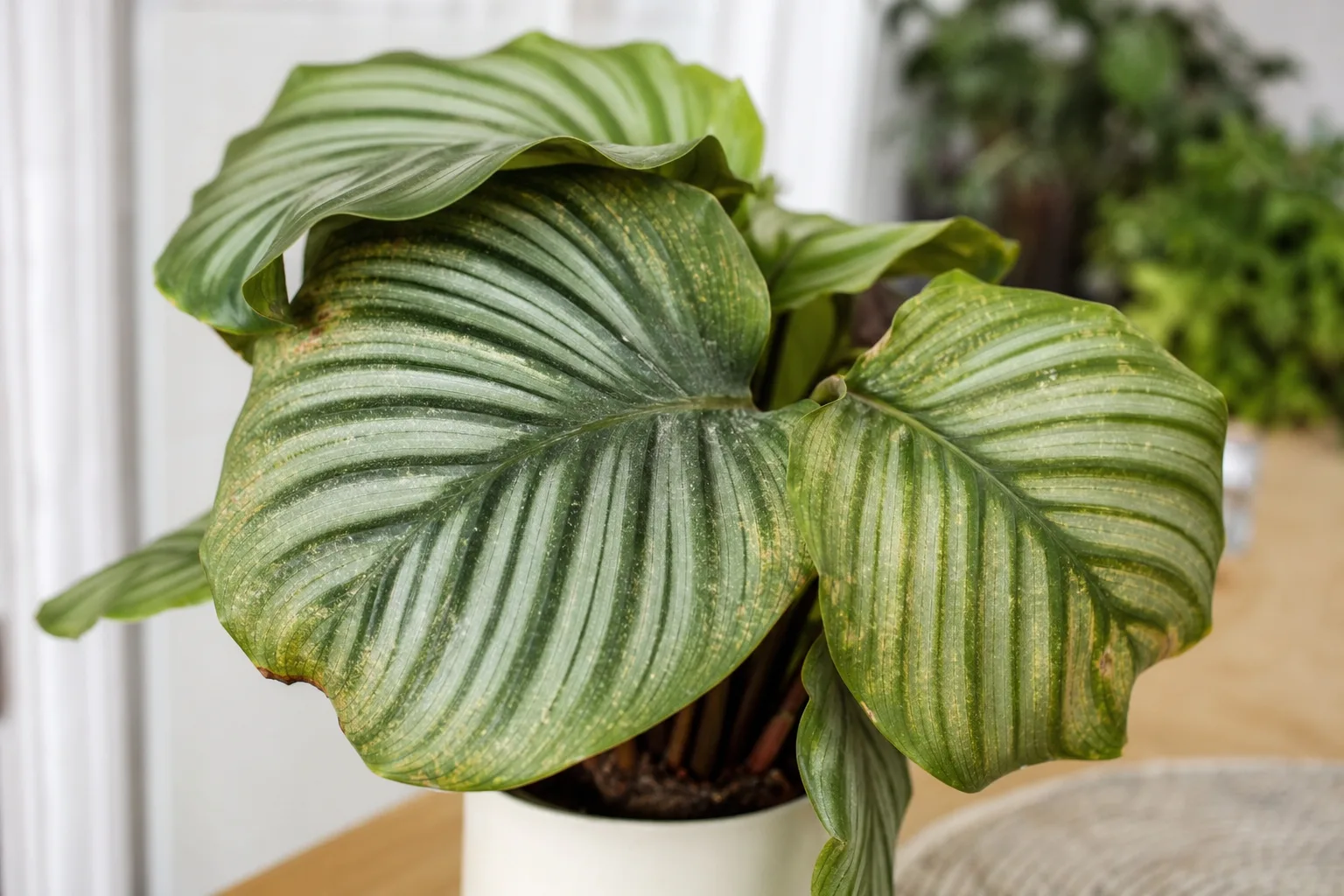
Spider Mites on Calathea Orbifolia: Causes, Checks & Fixes
This guide covers spider mites on Calathea Orbifolia. See also the general Spider Mites guide, watering, and light pages for this plant.
Spider Mites on Calathea Orbifolia: Causes, Checks & Fixes
Quick answer
Spider mites on Calathea Orbifolia (Goeppertia orbifolia) are tiny sap-feeding arachnids-most often the two-spotted spider mite (Tetranychus urticae)-that thrive when large round silver-banded leaves lose moisture in warm, dry indoor air. Outbreaks peak after winter heating pulls room humidity into the 20–30% range. The damage shows as fine yellow or white stippling on blade surfaces and delicate webbing tucked at petiole bases where wide leaves meet the stem.
First step: isolate the plant and rinse every leaf underside with lukewarm water in a sink or shower. Mites live and feed on the pale undersides of Orbifolia’s 12-inch blades, not on the glossy silver stripes you see from above. Knock down active colonies before raising humidity or adding sprays-environmental correction alone rarely clears an established infestation.
Full species context: Calathea Orbifolia overview. Shared Marantaceae guidance: spider mites on Calathea.
Why Calathea Orbifolia gets spider mites
Orbifolia evolved in Bolivian rainforest understory, where filtered light and steady ambient moisture keep broad leaves hydrated. Indoors, NC State Extension recommends high humidity of at least 60% for Goeppertia orbifolia to thrive-far above what most heated winter rooms provide.
The species’ oversized round leaves-often 12 inches (30 cm) across on long petioles-create a large transpiring surface. When relative humidity drops near heat registers, sunny winter window glass, or forced-air vents, the plant loses leaf moisture faster than roots replace it. Spider mites thrive in warm, dry conditions and multiply quickly on stressed foliage. Orbifolia’s sensitivity to dry air is documented in the same extension profile that lists spider mites among pests to monitor on this species.
Winter is the usual outbreak window. A plant that looked perfect in September develops crispy margins from low humidity by February-and stippling on pale undersides by March if mites colonize behind the humidity drop. Dry air and mites often appear together; fixing humidity prevents reinfestation but does not replace active mite removal once stippling spreads.
Stress does not summon mites from nowhere, but an Orbifolia already struggling with low humidity, tap-water brown tips, or recent Calathea Orbifolia repotting guide has fewer resources to outgrow feeding damage. Treat the pests first, then address separate care issues once populations are under control.
Orbifolia shares a shelf with other prayer plants-Maranta, Stromanthe, Ctenanthe-that also favor humid air. Mites walk between pots on shared trays; inspect neighbors when you find webbing on one Orbifolia blade.
What spider mites look like on Calathea Orbifolia
Typical mite signs on Orbifolia:
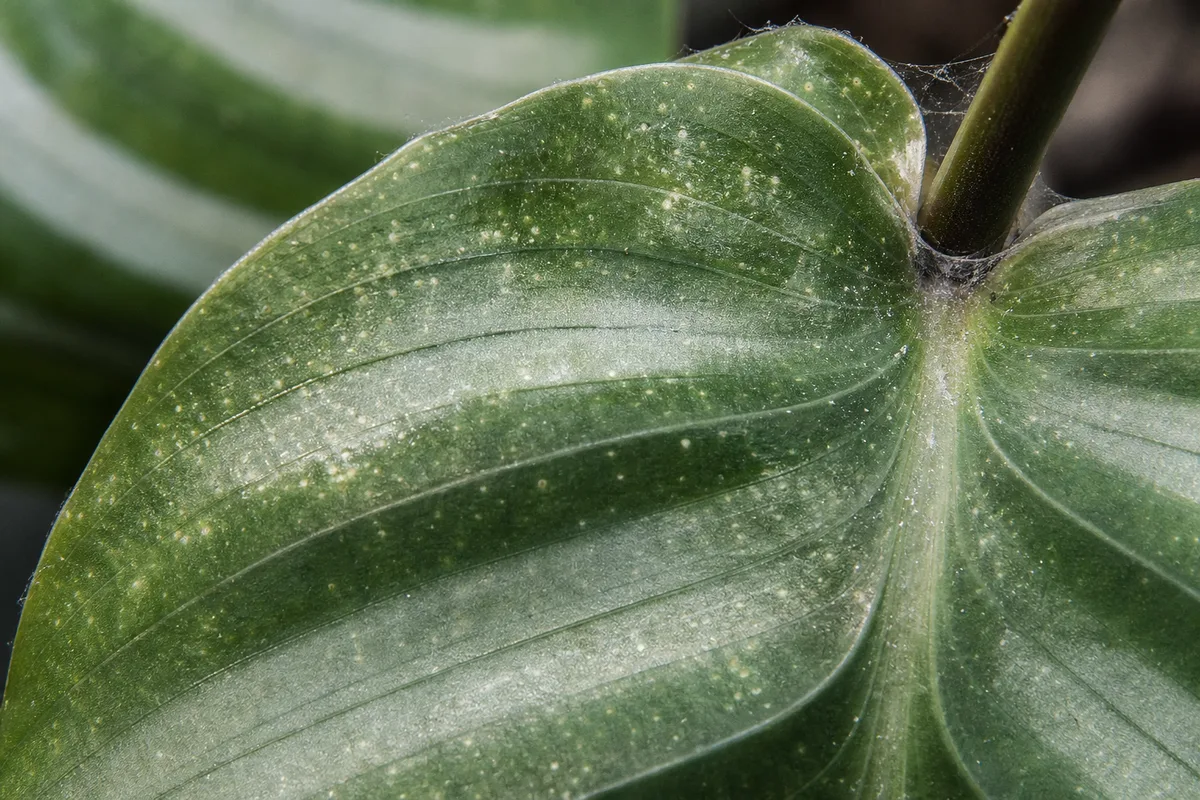
Spider Mites symptoms on Calathea Orbifolia - compare with healthy tissue on the same plant.
- Thousands of tiny yellow or white dots (stippling from emptied leaf cells) scattered across leaf surfaces, often most visible on the pale green to silver underside
- Bronzing or dulling of silver-green banding as feeding empties leaf cells
- Fine silk webbing at petiole bases, along midribs, or between overlapping round blades-not the fluffy cotton of mealybugs
- Gritty texture on undersides when you run a finger along the midrib
- Leaves that feel papery or limp on heavily stippled blades while petioles stay firm
On Orbifolia, each damaged leaf is a visible percentage of the whole plant-one heavily stippled 12-inch round blade dominates the pot’s appearance in a way a small Marantaceae cultivar leaf does not. Silver banding can mask early stippling until bronzing spreads across enough cells to dull the contrast between stripes.
Unfurl-stage vulnerability: New rolled spears are thin and pale as they open. Mites feeding on an unfurling blade cause permanent scarring on that showpiece leaf-Orbifolia does not heal mechanical or pest damage on mature foliage. You wait for the next growth flush for a clean replacement, which can take weeks on this moderately slow grower.
Heavy infestations cause stippled blades to crisp and drop, sometimes with yellowing that overlaps the mite pattern.
Lookalike symptoms to rule out
Orbifolia’s #1 confusion is dry-air edge crisping without mites-the same winter humidity drop that invites mites also browns margins independently.
| What you see | Likely cause | Key difference |
|---|---|---|
| Fine dot stippling + webbing on undersides | Spider mites | Moving specks on white paper; silk at petiole bases |
| Even brown crisping on margins, no dots | Low humidity | RH below 50% at canopy; no webbing; soil moisture normal |
| Sharp brown lines on newest unfurling leaves | Tap-water / brown tips | Fluoride burn on fresh tissue; no stippling pattern |
| Silvery trails and black specks, no webbing | Thrips | Faster-moving insects; elongated bodies under magnification |
| White cottony tufts in crown joints | Mealybugs | Waxy clusters; pink smear when crushed; no dot stippling |
| Bleached tan patches on window-facing side | Direct sun scorch | One-sided damage; see light guide |
Routing rule: If only leaf edges are crisp with no stippling, no webbing, and no gritty undersides, check low humidity first-Orbifolia shows dry-air damage faster than most houseplants, and spraying mites you do not have adds unnecessary stress.
How to confirm the cause
Work through these checks before committing to a full chemical routine:
- White-paper tap test - Hold white paper under a suspect leaf and tap the blade firmly. Slow-moving specks confirm spider mites; fast jumpers may be thrips instead.
- Underside inspection - Tilt each large round leaf and look at the pale underside in bright light. Stippling concentrates where mites pierce cells; webbing appears at the petiole junction.
- Magnification check - A 10× hand lens reveals oval mites and fine silk strands invisible to casual glances on glossy silver banding.
- Webbing location - Mite silk is fine and sheet-like at leaf bases. Mealybug wax is cottony in crown overlap zones. Mineral spray residue wipes off dry.
- Humidity reading - Place a hygrometer at canopy height. RH below 40% with stippling strongly supports mites plus dry-air stress; crisp edges alone without dots point to humidity, not pests.
- Neighbor scan - Check other Marantaceae and broad-leaf tropicals on the same shelf. Matching stippling on multiple pots confirms spread, not a single-plant watering error.
If you find moving specks plus stippling on undersides, you have spider mites-not a humidity or watering issue alone.
First fix for Calathea Orbifolia
Move the plant away from others, then rinse every leaf underside with lukewarm water.
Isolation stops mites from walking to adjacent pots on shared trays. Washing mites from leaves with a forceful spray of water is effective on houseplants when you repeat the rinse on a schedule-especially on Orbifolia’s smooth glossy foliage where water runs off cleanly without trapping moisture in fuzzy leaf hairs.
Rinse protocol:
- Support each large petiole with one hand; direct water at the underside with the other
- Work from the crown outward so runoff does not carry mites onto clean lower blades
- Repeat every 3 to 5 days for two to three weeks-mite eggs hatch on a cycle that requires multiple treatments
- Let leaves dry in bright indirect light with gentle airflow; do not return a dripping plant to a dark corner
After the first rinse pass, raise humidity toward 60% with a room humidifier-not misting alone. NC State Extension recommends high humidity of at least 60% for this species; dry air after rinsing lets mites rebound within days.
Do not shower the crown so heavily that water pools at the rhizome for hours-Orbifolia grows from a clumping rhizome at the soil surface, and soggy crowns invite rot unrelated to the pests. Water the soil per our watering guide without flooding the center on day one.
When rinses alone are not enough
If webbing returns after three rinse cycles:
- Apply insecticidal soap or horticultural oil labeled for spider mites on houseplants
- Spray undersides thoroughly-contact products only kill mites the spray touches
- Repeat at 5- to 7-day intervals until webbing stops appearing for two consecutive weeks
- Spot-test one lower leaf and wait 24 hours before treating the whole plant-Orbifolia’s thin leaves can show phytotoxicity from oils in direct sun or on drought-stressed tissue
Do not use general insecticides labeled only for insects-mites need miticides, oils, or soaps that contact the arachnid body. Systemic imidacloprid does not control spider mites.
Light vs. moderate vs. heavy infestation
Light (stippling on one or two lower leaves, no webbing): Isolate, rinse every 4 days for two weeks, raise humidity. Skip sprays on day one.
Moderate (stippling on multiple blades, fine webbing at petiole bases): Add insecticidal soap or horticultural oil after the second rinse. Continue rinses between spray days.
Heavy (bronzing across most foliage, webbing on new unfurls, mites on neighboring plants): Isolate the entire group. Combine rinses, labeled sprays, and humidity correction. Consider discarding only after six to eight weeks of failure with collapsing petioles and no clean new growth.
Recovery timeline
Stippling stops spreading within one to two weeks of consistent rinse-and-humidity treatment when colonies were caught early. New leaves should emerge clean if humidity and watering stabilize-watch the next rolled spear, not the old stippled blades.
What damaged tissue will not do:
- Stippled or bronzed areas do not turn green again on the same leaf
- A scarred unfurl keeps its marks until the plant replaces that leaf naturally
- One damaged 12-inch round blade stays visible for months on a slow-growing Orbifolia
Realistic recovery example: A grower raised room humidity from 28% to 55% with a humidifier, rinsed undersides every 4 days for two weeks, and applied insecticidal soap once at day 10 when fine webbing persisted at two petiole bases. Stippling stopped spreading by week three; the next unfurl opened with clean silver banding by week five. Older stippled outer leaves remained blemished until trimmed or naturally replaced.
Judge success by clean new unfurls and no fresh webbing for two consecutive weekly inspections-not by old blades recovering their stripe contrast.
Mistakes to avoid
Do not assume insecticides labeled for aphids or general “plant insects” kill mites-mites are arachnids, not insects, and many insecticides miss them entirely.
Do not spray horticultural oil on Orbifolia in direct afternoon sun or on drought-stressed leaves. Thin Marantaceae blades burn easily; move to bright indirect light during treatment weeks.
Do not leave the rhizome crown soaking after repeated shower treatments. Orbifolia is smooth-leaved, not fuzzy-the old template warning about “fuzzy-leaved plants” does not apply here, but crown moisture rot is the real risk on this species.
Do not confuse dry-edge crisping (no stippling, no webbing) with mite damage and reach for sprays. Route to low humidity first.
Do not return an isolated plant to a shared shelf after one clear inspection. Two consecutive weekly checks with no new stippling are a safer standard.
Do not increase fertilizer hoping to push past damage-that produces tender tissue mites prefer.
Calathea species are non-toxic to dogs and cats per the ASPCA-relevant when choosing where to isolate a treated plant, not because mites themselves are a pet emergency.
Calathea Orbifolia care cross-check during treatment
While treating mites, keep basic care steady without stacking major changes:
- Humidity at 50% minimum, 60–70% ideal-run a humidifier through treatment. See low humidity if edges crisp during recovery.
- Water when the top inch of mix begins to dry-avoid bone-dry drought stress during spray weeks, but do not keep the crown soggy. See our watering guide.
- Light in bright indirect exposure-do not move into direct sun while foliage is oil-treated. NC State recommends bright indirect light or partial shade.
- Water quality - use filtered or rainwater if your Orbifolia already shows tip browning; fluoride stress does not cause mites but slows recovery on damaged blades.
- Airflow enough to dry leaf surfaces after rinses, but avoid cold drafts that curl leaves and mimic distress.
Fixing mites does not require repotting, changing water type, and relocating three variables at once unless a separate problem is confirmed.
How to prevent spider mites next time
Keep relative humidity at 50% minimum and 60–70% ideal through winter heating season with a room humidifier sized for the space-not misting alone, which raises moisture for minutes rather than hours on Orbifolia’s large leaf surface.
Inspect pale undersides of the largest outer leaves weekly from November through March, when indoor air dries fastest. Regular inspection catches pest colonies before webbing spreads.
Quarantine new plants for two weeks before placing them near Orbifolia or other prayer plants. Retailers often miss early colonies hidden on leaf undersides behind large round foliage.
Avoid positioning the pot beside heat registers, radiators, or sunny winter glass where leaf moisture drops fastest and mite reproduction accelerates in warm dry air.
Group Orbifolia with other tropicals for shared transpiration humidity, but leave enough space that leaves do not touch between pots-mites use leaf contact as a bridge.
When dividing at repotting, inspect each division’s undersides before potting. Mites transfer on shared tools and trays.
When to worry
Treat as urgent when webbing spreads across multiple round leaves within days, stippling bronzes whole blades, or neighboring Marantaceae in the same tray show matching damage. Fast spread means active reproduction-isolate the entire group, not just one pot.
Consider discarding a severely weakened plant only after persistent treatment across six to eight weeks fails and no clean unfurls appear despite stable humidity and repeated labeled sprays. Orbifolia is generally recoverable from moderate infestations if new growth stays possible-give up when most petioles collapse, leaves drop in clusters, and mites rebound within days of every rinse.
Fine stippling on a single lower leaf with no webbing is worth monitoring, not panicking-confirm with the tap test before escalating to oils.
Conclusion
Spider mites on Calathea Orbifolia follow dry winter air onto large silver-banded blades where stippling is impossible to miss once it spreads-confirmation means inspecting pale undersides and running the white-paper tap test, not guessing from crispy edges alone. Isolate first, rinse undersides on a 3- to 5-day schedule, raise humidity toward 60%, and add labeled soap or oil only if webbing persists. That focused path clears most home infestations while protecting the rest of your prayer plant collection from a pest that thrives in the same dry conditions that crisp Orbifolia’s showpiece leaves.
For baseline care and prevention: Calathea Orbifolia overview. If edges are crisp with no stippling: low humidity.
When to use this page vs other Calathea Orbifolia guides
- Calathea Orbifolia watering guide - Use for routine moisture checks before assuming spider mites is the main issue.
- Calathea Orbifolia problems hub - Browse all 16 common issues on this species.
- Low Humidity on Calathea Orbifolia - Different entry point when symptoms overlap with spider mites.
- Slow Growth on Calathea Orbifolia - Different entry point when symptoms overlap with spider mites.