Aphids on Calathea Orbifolia: Causes, Checks & Fixes
Quick answer
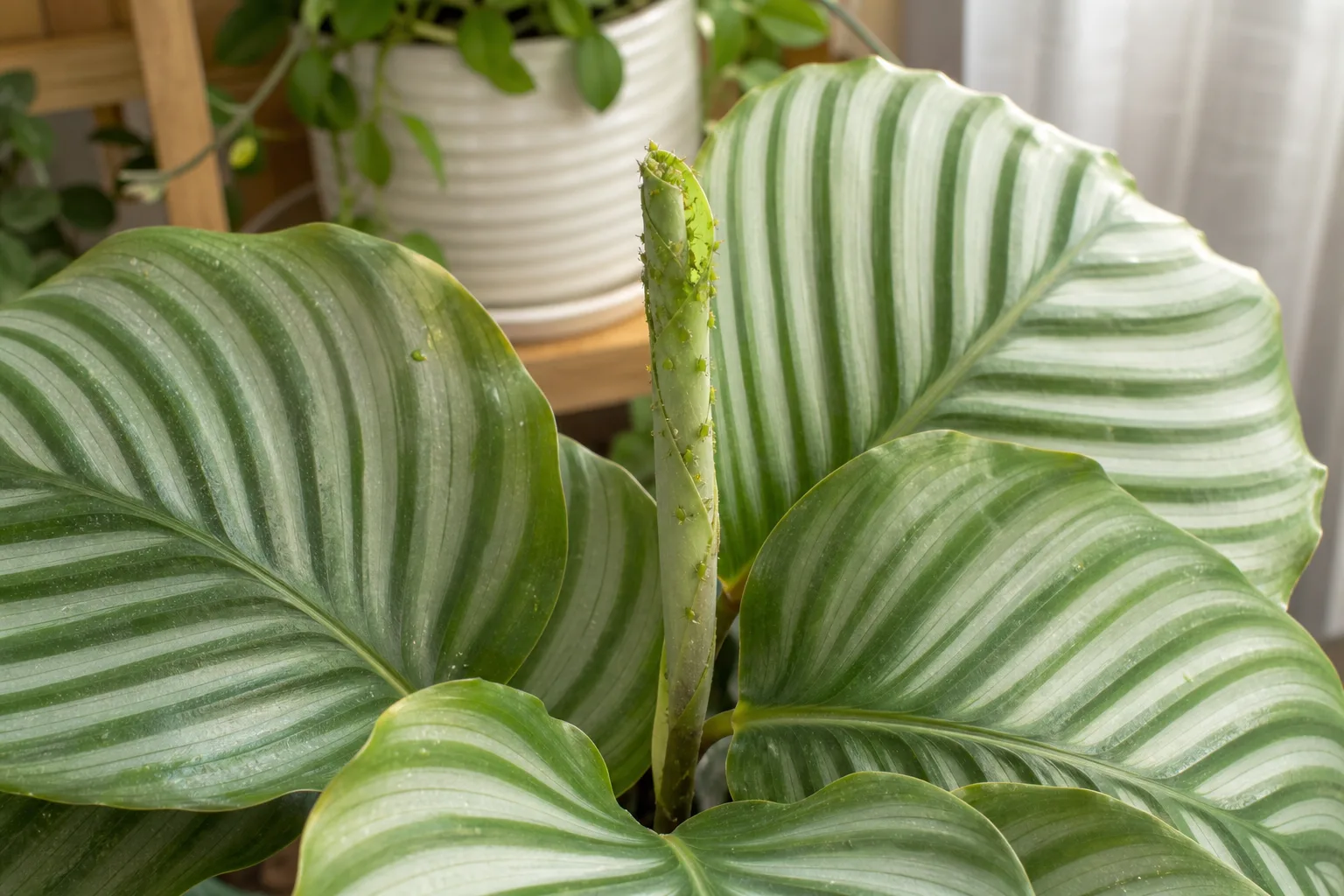
Aphids on Calathea Orbifolia cluster on unfurling leaves and stem tips. First step: isolate the plant and rinse leaf undersides with lukewarm filtered water before any spray.
Aphids on Calathea Orbifolia: Causes, Checks & Fixes
This guide covers aphids on Calathea Orbifolia. See also the general Aphids guide, watering, and light pages for this plant.
Aphids on Calathea Orbifolia: Causes, Checks & Fixes
Quick answer
Aphids on Calathea Orbifolia are small sap-sucking insects that colonize tender new growth-the unfurling leaf, fresh petioles, and stem tips where the plant is pushing its next broad blade. On Orbifolia, the damage shows up fast because one distorted new leaf changes the whole silhouette of the plant.
First step: isolate the plant and rinse leaf undersides with lukewarm filtered or rainwater. Hold the pot at an angle in a sink or shower, spray from below through the foliage, and let water run off without soaking the crown overnight. Confirm live insects before reaching for soap or oil-Calathea leaves mark easily and old blade damage does not heal.
Why Calathea Orbifolia gets aphids
Aphids usually arrive on a new purchase, an open window near outdoor plants, or a neighboring infested pot. They are generalists indoors and will feed on Calathea even though they prefer soft, nitrogen-rich new shoots on almost any houseplant.
Several traits of Orbifolia culture make aphid problems easy to miss and slow to fix. The plant grows large round leaves that overlap, giving aphids sheltered feeding sites on undersides and at petiole bases. High humidity-Orbifolia wants 60% or more-does not prevent aphids, but sticky honeydew on broad silver-green blades is very visible once colonies build. Slow growth in low light means a damaged unfurling leaf sits distorted for weeks, looking like a humidity or water-quality problem when insects are the real cause.
Over-fertilized Orbifolia with soft, fast leaf growth is especially attractive. Crowded shelves also spread pests: grower guidance for Calathea Orbifolia overview emphasizes room for leaves and airflow around the crown, and tight groupings make it easier for crawlers and winged adults to move pot to pot without you noticing.
What aphids look like on Calathea Orbifolia
Aphids are soft-bodied, pear-shaped insects roughly 1/16 to 1/8 inch long. They may be green, black, brown, pink, or yellow, and they often cluster on the undersides of young leaves, along petioles, and at the point where new growth emerges from the crown. Mature outer blades may look fine while the center of the plant holds dense colonies.
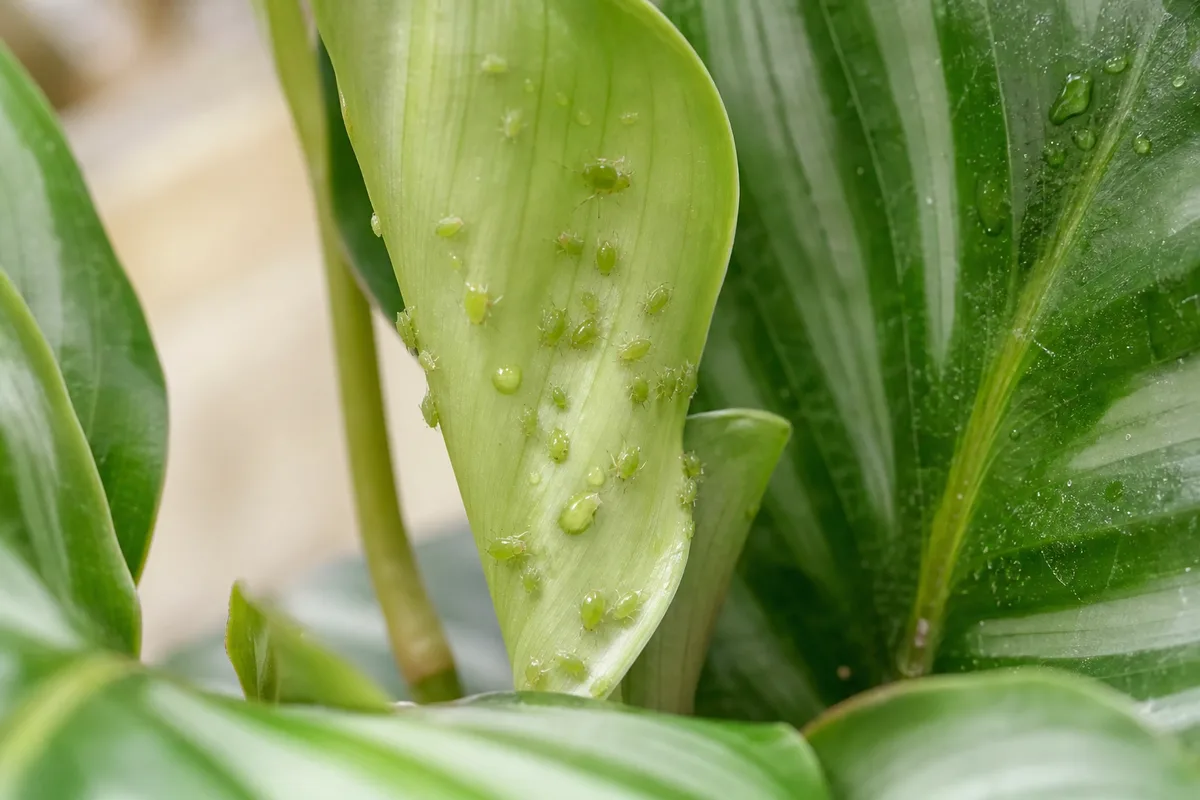
Soft aphids clustered on new Orbifolia growth at the crown - shiny honeydew on silver-banded leaves confirms sap feeding, not tap-water spots.
Honeydew-a shiny, sticky residue on leaf surfaces-is a common secondary sign. On Orbifolia’s broad leaves, droplets stand out against the silver banding and may drip onto lower foliage. Sooty mold can follow, showing as fine black speckles that wipe off but return if aphids remain. White flecks on leaves or stems are often shed exoskeletons from molting aphids, not hard-water spots or dust.
Heavy feeding can curl the edge of an unfurling leaf, pale new tissue, and slow the next blade. Because Orbifolia leaves do not repair large blemishes, even a short aphid attack on one new leaf can leave a permanent wrinkle or twist once the blade hardens.
How to confirm the cause
Work in good light with a magnifying glass. Check in this order:
- The newest rolled or partially open leaf at the crown.
- Petiole bases where leaves meet the stem-aphids often hide in the tight junction.
- Undersides of the two innermost leaf rows.
- Neighboring Calathea, Maranta, and any plants on the same shelf or windowsill.
Crush one insect with a swab. Aphids leave a green or pink smear; perlite, dust, or dried water spots do not. Tap a suspect leaf over white paper-live aphids move slowly compared with thrips, which jump quickly.
Lookalikes to rule out
Mealybugs form white cottony masses in leaf axils and crown crevices rather than dense groups of exposed pear-shaped insects on tender shoots.
Scale insects attach as immobile bumps on stems and midribs; they do not cluster as moving soft bodies on new growth.
Spider mites cause fine stippling and webbing, especially in dry air-not sticky honeydew with slow-moving soft insects.
Low humidity or tap-water damage causes crisp brown edges on mature leaves without clustered insects on new growth. If only old blade margins are affected and the newest leaf opens clean, aphids are unlikely.
If you see sticky leaves but no insects, check for ants farming aphids on nearby plants before assuming Orbifolia is clear.
First fix for Calathea Orbifolia
Isolate the plant away from your collection first. Isolation stops winged aphids and crawlers from spreading to other pots on the same shelf.
Then rinse the plant thoroughly with lukewarm water using filtered or rainwater. Tilt the pot, support the crown, and spray from below so water hits leaf undersides and petioles where aphids feed. Wrap the pot in plastic if needed to keep mix from washing out. Let foliage air-dry in Calathea Orbifolia light guide-not direct sun, which can burn wet Calathea leaves.
Repeat the rinse every three to four days until two consecutive checks find no live insects. Aphids reproduce quickly indoors; one wash rarely clears an established colony.
If rinsing is not enough
For colonies that remain after a week of rinsing, use a product labeled for houseplants-typically insecticidal soap or neem oil-and test one leaf first. Wait 48 hours before treating the whole plant because Calathea foliage can react to sprays, especially in hot or direct light. Apply in the evening or away from windows, cover undersides and stems thoroughly, and never use homemade dish soap, which can burn leaves.
Dab individual aphids on tight crown clusters with a cotton swab dipped in 70% isopropyl alcohol when a spray would soak too much tissue at once. Remove a heavily infested unfurling leaf with clean scissors if insects are buried inside a rolled blade you cannot reach.
Recovery timeline
Light infestations often clear within one to two weeks of consistent rinsing or combined rinsing and spot treatment. Check new growth and petiole bases weekly for at least a month because nymphs hatch on staggered schedules.
Judge success by the next leaf opening without curl, no fresh honeydew on broad blades, and no live insects-not by whether an old damaged leaf returns to perfect form. Badly twisted or yellowed leaves may never fully recover; trim them once the plant is insect-free and producing healthy new growth.
Signs the problem is worsening include sooty mold spreading across multiple blades, ants visiting the pot, stunted unfurling leaves, and aphids appearing on plants within a few feet of the original host.
What not to do
Do not spray cold tap water or harsh detergents on Orbifolia foliage. This species is already sensitive to water quality; cold shocks and soap burns add permanent marks on top of pest damage.
Do not apply insecticidal soap or oil in direct sun or when the room is hot-the combination stresses Calathea leaves and can cause spotting that looks like sunburn.
Do not fertilize while the plant is under pest stress. Soft new growth from extra nitrogen gives aphids more food exactly when you want the plant to recover slowly.
Do not return Orbifolia to a shared shelf until you have checked it clear for two full weeks. Do not assume one rinse finished the job-indoor aphid populations rarely collapse without repeated treatment.
How to prevent aphids next time
Quarantine every new Calathea Orbifolia for at least two weeks before placing it near your collection. Inspect unfurling leaves and petiole bases under magnification during that period, matching the buying check this species already needs: clean newest leaf, no sticky residue, no collapsed crown.
Fold pest checks into your normal watering routine. When you test whether the top 2 cm of mix is dry, lift inner leaves and scan stem tips and the next rolled blade. Give Orbifolia physical space so leaves do not rub walls or neighboring pots-crowding reduces airflow and makes colonies harder to see.
Feed lightly during active growth only. Steady, moderate growth is less attractive than over-fertilized soft shoots. When buying, examine the crown center closely; a clean outer row of broad leaves can hide an infested new leaf inside.
When to worry
Escalate immediately if honeydew covers multiple blades, sooty mold is spreading, ants are climbing the pot, or aphids appear on several plants in the same room. A few insects on one new leaf can wait for isolation and rinsing if caught early.
If dense colonies persist after three weeks of consistent treatment, or if new leaves stop unfurling entirely, consider pruning the worst affected growth and treating remaining stems, or discarding a severely compromised plant before the infestation spreads through a Calathea collection.
Conclusion
Aphids on Calathea Orbifolia are a contact-and-isolation problem more than a mystery disease. Confirm them on new growth and petiole bases, isolate, rinse undersides with lukewarm filtered water, and only then add labeled sprays if needed-testing first because broad Calathea blades do not forgive burn. Prevent recurrence with quarantine, weekly crown checks, and moderate feeding so the next oversized leaf opens clean.
When to use this page vs other Calathea Orbifolia guides
- Calathea Orbifolia watering guide - Use for routine moisture checks before assuming aphids is the main issue.
- Calathea Orbifolia problems hub - Browse all 16 common issues on this species.
- Mealybugs on Calathea Orbifolia - Different entry point when symptoms overlap with aphids.
- Spider Mites on Calathea Orbifolia - Different entry point when symptoms overlap with aphids.
- Yellow Leaves on Calathea Orbifolia - Different entry point when symptoms overlap with aphids.