Blue Star Fern Pruning: When, How, and What to Cut First
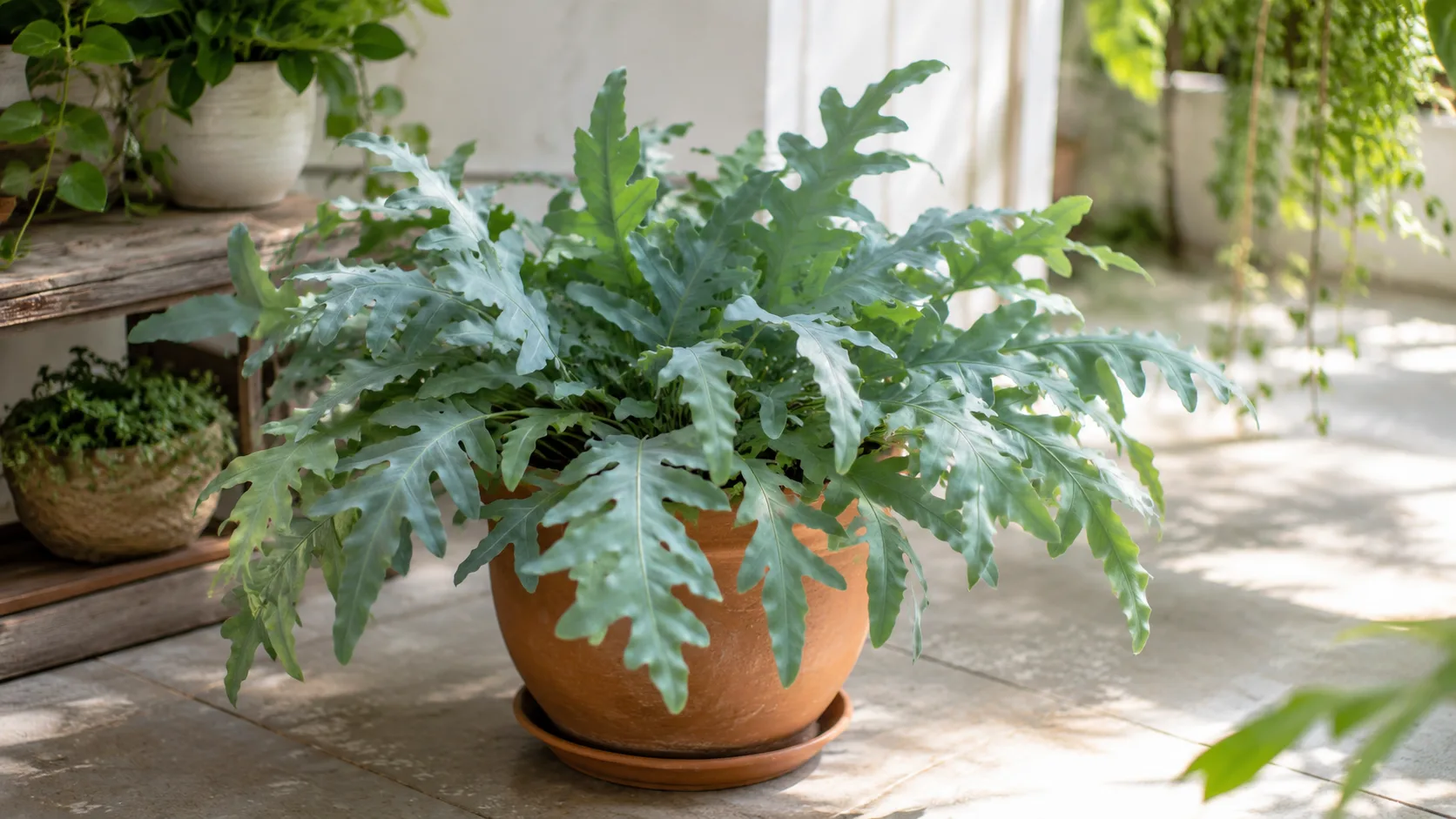
Blue Star Fern Pruning: When, How, and What to Cut First
Blue Star Fern Pruning: When, How, and What to Cut First
Quick Answer
Start by removing one fully dead or brown frond at the base where its stipe meets the rhizome - not by trimming tips across the whole plant. Blue Star Fern (Phlebodium aureum) grows from creeping golden rhizomes on the soil surface, and each frond is a single arching leaf that will not branch from a mid-blade cut. Dead tissue can come off any time of year; thinning green fronds belongs in late winter through early summer when new stipes are actively emerging.
When to Prune Blue Star Fern
Blue Star Fern does not need scheduled hard cutbacks to survive. Most indoor plants stay healthy with occasional grooming - removing spent blades, opening crowded centers, and trimming outer spread when rhizomes have filled a wide shallow pot.
Remove immediately: fronds that are fully brown, yellow and limp from base to tip, mushy at the stipe base, broken after handling, or heavily infested with pests you can isolate by removing that blade.
Plan for active growth: structural thinning, removing multiple older green fronds, or reducing overall spread. Indoors, that window is usually late winter through early summer, when daylight increases and room temperatures stay consistently warm. NC State Extension describes Blue Star Fern overview as an evergreen epiphyte that spreads via creeping rhizomes and performs best with partial shade, good air circulation, and a moist but not soggy substrate - conditions that align with faster recovery during the warm season.
Avoid heavy green-tissue removal in late fall and winter, when lower light and dry heating air slow new frond production. One dead frond in December is fine; removing a third of living blades in a dim room is not.
Year-Round Cleanup vs Seasonal Thinning
Year-round cleanup means tracing a declining stipe to the rhizome and snipping once at the base. Seasonal thinning means selectively removing older outer fronds, crossing blades, or excess spread while the rhizome is pushing new growth - always staying within the one-third rule described below.
A practical rhythm: quick checks every two to three weeks in spring and summer, monthly in slower months. Remove dead tissue during quick checks; save shape work for one early-spring session if the plant actually needs it.
When Not to Prune
Hold off when many fronds yellow at once - that pattern usually signals overwatering on Blue Star Fern, cold drafts, or root stress, not a need for scissors. Pause when the plant was just repotted or moved; let it stabilize before removing green tissue. Do not prune sori on healthy green fronds - those brown spots are normal spore cases, not scale insects. Skip heavy cuts when the rhizome feels soft, smells sour, or sits buried under mix; expose and stabilize the rhizome first.
What Pruning Does for Blue Star Fern
Pruning on this fern is sanitation and shape control, not a trigger for bushier branching the way pinching works on coleus or pothos. Removing dead fronds reduces decay against healthy tissue, improves airflow through the crown, and makes pest inspection easier on stipe bases and rhizome tips. Trimming outer arching blades controls footprint on a shelf or in a hanging basket when rhizomes have spread horizontally.
What pruning cannot fix: leggy new fronds from insufficient Blue Star Fern light guide, chronic brown tips from dry air or hard tap water, or mushy rhizomes from overwatering. Those need care corrections - light, humidity, Blue Star Fern watering guide, or rhizome exposure - not repeated trimming in the same conditions.
What to Check Before You Cut
Before any session, rotate the pot and inspect four things:
- Rhizome firmness - golden, scaly stems should feel firm and rest on the mix surface, not buried.
- Mix moisture - soggy soil plus yellowing often means hold scissors and fix drainage first.
- Frond undersides - look for spider mite stippling, mealybug cotton, or scale on stipes rather than on sori.
- New growth - coiled emerging stipes mean the plant can replace removed fronds; no new growth in winter means go lighter.
Work in bright light so you can see where each stipe attaches without guessing.
Rhizomes, Fronds, and Sori
Understanding three structures prevents the most common pruning errors.
Rhizomes are the fuzzy golden-brown creeping stems that should sit on the potting surface. Fronds emerge from the upper side; roots grow downward. NC State Extension notes that rhizomes densely covered in golden scales are a defining feature of Phlebodium aureum, an herbaceous rhizomatous epiphyte in the Polypodiaceae family.
Fronds consist of a stipe (stalk) and deeply lobed blue-green blade. You cut through the stipe when removing a whole frond.
Sori are round spore cases arranged in rows on the underside of mature fronds. They are reproductive tissue, not pests or disease. Flora of North America describes sori running along each side of the costae on mature fronds of this species. Uniform, slightly raised brown spots on an otherwise healthy blade should be left alone.
The First Cut to Make
Remove one dead or fully brown frond at the rhizome base before touching any green tissue.
Trace the brown blade down its stipe to where it meets the rhizome. Hold the stipe gently - do not yank - and cut once, cleanly, parallel to the rhizome surface, as close as possible without nicking golden scales. Repeat for each fully dead frond before deciding whether shaping or thinning is needed.
This order matters because dead tissue sheds no useful energy, can hold moisture after misting, and obscures whether stipe bases are rotting. Clearing it first gives you an accurate picture of rhizome health and remaining green photosynthetic area.
How to Prune Blue Star Fern Step by Step
- Inspect rhizome placement, mix moisture, and frond undersides.
- Sterilize sharp scissors or bypass shears with 70% isopropyl alcohol.
- Remove dead and damaged fronds at the rhizome base.
- Confirm sori are not pests before touching green blade undersides.
- Thin crossing or overcrowding fronds if needed, staying within the one-third rule.
- Trim outer spread by removing selected whole fronds at the base - not tip-shearing the entire plant.
- Step back after every two or three green-frond removals; gaps show quickly on this open-textured fern.
- Bag and discard trimmings rather than composting indoors.
- Re-wipe tools before the next plant.
Do not apply wound sealant, cinnamon, or pruning paste to cut stipes. Fern tissue heals best when cuts are clean and air-dry normally.
Removing Dead, Brown, and Yellow Fronds
Cut at the base whenever most of the blade is crisp, the stipe is brown and limp, or pest damage is concentrated on that frond. Brown tips alone on an otherwise firm green frond do not always require whole-frond removal - outer pinnae senesce first in dry homes, and correcting humidity or watering may stop further tip dieback. If only the last few inches of a long otherwise healthy frond are damaged, you may trim the tip cosmetically; the cut margin will brown slightly and will not green up again. Most indoor growers prefer removing the entire older frond at the base in spring for a cleaner silhouette.
When multiple fronds fail simultaneously, treat that as a diagnostic signal. Check whether rhizomes were buried during Blue Star Fern repotting guide, whether the pot sits in runoff water, and whether firm golden rhizome tissue remains before stripping more green blades.
Thinning and Containing Spread
Leggy, wide-spaced lobes usually mean the plant wants brighter indirect light - an east window, a few feet from a south or west window with sheer curtain, or supplemental grow lighting - not shorter stipes from mid-frond cuts.
To reduce footprint, remove selected outermost whole fronds at the rhizome rather than shearing all tips to one length, which fights the plant’s natural arching habit. If rhizomes circle the pot surface tightly with few new stipes, repot into a wider shallow container before aggressive frond removal - pruning leaves while the rhizome is cramped removes photosynthetic area without fixing the constraint.
Where to Cut - and What Not to Cut
Cut here: the stipe base where it emerges from the rhizome, leaving a clean tan slice a few millimeters above golden tissue - not a long stub, not a gouge in the rhizome.
Do not cut here: mid-stipe or mid-blade on living fronds expecting neat regrowth; healthy rhizome tissue during grooming; sori on green blades; green fronds just because the plant looks asymmetric - blue star ferns are naturally irregular arching specimens.
If two stipes attach close together, cut each separately rather than bundling rhizome tissue into one snip.
How Much You Can Safely Remove
Follow the one-third rule: remove no more than one-third of living fronds in a single session. If the plant is severely overcrowded, thin in stages spaced three to four weeks apart during active growth.
Dead and fully brown fronds do not count toward the one-third limit because they no longer photosynthesize. Green tissue does. Removing half the living fronds in a dry winter room shocks the rhizome and can cause widespread yellowing or a long pause before new stipes appear.
Tools and Sanitation
Sharp bypass pruning shears, household scissors, or floral snips handle soft stipes cleanly. Dull blades crush tissue and leave edges that brown slowly.
Keep 70% isopropyl alcohol and a cloth nearby. Iowa State University Extension recommends wiping or dipping pruning equipment in alcohol and removing visible debris first so disinfectant contacts the blade. Sterilize before starting, between plants, and after cuts on mushy or diseased tissue.
Gloves are optional - Phlebodium aureum is non-toxic to cats and dogs per BBC Gardeners’ World, with no irritating sap - but gloves help when handling dusty dead fronds.
Aftercare and Recovery
Return the plant to stable conditions after pruning. Do not move from dim shade to harsh direct sun the same day. Hold fertilizer for two to three weeks after moderate to heavy sessions; resume diluted feeding only when new stipes unfurl.
Water based on mix moisture, not habit. Fewer fronds transpire less water, so overwatering after pruning is a common rhizome-rot trigger. Keep humidity at or above roughly 40–50% if room air is dry.
Expect new fronds within two to four weeks during active season after light cleanup, and four to eight weeks after heavier thinning. Out-of-season pruning can take much longer.
Signs Pruning Worked
New stipes emerge from rhizome tissue behind cut points. Remaining blades look cleaner. Cut stipe bases dry tan without blackening or oozing. The plant holds its blue-green color on new growth rather than continuing widespread decline.
Signs You Cut Too Much or Too Soon
Blackening stipe bases, rhizome soft spots spreading from a nick, widespread yellowing of remaining fronds, or no new growth after six weeks in warm bright conditions despite firm rhizomes. Stop cutting, stabilize care, and inspect root and rhizome health before removing more green tissue.
Chronic leggy new fronds after otherwise correct grooming point to insufficient light. Chronic tip browning on fresh fronds points to humidity, watering inconsistency, or mineral buildup - fix inputs before the next session.
Mistakes to Avoid
Mid-frond stubs on living blades brown slowly and never produce a replacement tip. Cut whole fronds at the rhizome instead.
Damaging or burying rhizomes is the highest-stakes error - the rhizome is both stem and storage organ. Never slice through golden tissue during grooming, and never mound fresh mix over exposed rhizomes after repotting.
Scraping sori damages healthy reproductive tissue and opens wounds on green blades.
Pruning without fixing light or watering produces repeated legginess and tip burn - you trim while the plant stays in a dim, dry corner and wonder why it never looks full.
Shearing into a tight ball destroys the natural cascading silhouette and leaves uneven gaps.
Removing too much in winter removes photosynthetic capacity while growth is paused.
Confusing grooming with division surgery - cutting rhizomes in half for propagation is a repotting task, not everyday pruning. Division pieces often have some fronds trimmed so they do not topple while rooting; that is propagation aftercare, not shelf grooming.
Conclusion
Blue Star Fern pruning works when you treat it as rhizome-aware grooming: remove dead fronds at the stipe base, protect golden creeping stems from cuts and burial, distinguish sori from pests, and limit green-tissue removal to one-third per session during active growth. Start with one clearly dead frond, assess rhizome health before shaping, and let new stipes confirm recovery before cutting again. Done this way, Phlebodium aureum stays clean and manageable without the long stall that follows overambitious cuts in the wrong season or at the wrong point on the blade.
When to use this page vs other Blue Star Fern guides
- Blue Star Fern overview - Start here for whole-plant context before deep-diving this topic.
- Blue Star Fern problems hub - Jump to symptom-specific fix guides when this care topic does not resolve the issue.
- Leggy Growth on Blue Star Fern - Escalate here when pruning adjustments are not enough.
- Slow Growth on Blue Star Fern - Escalate here when pruning adjustments are not enough.
- Brown Tips on Blue Star Fern - Escalate here when pruning adjustments are not enough.