Aphids on Blue Star Fern: Causes, Checks & Fixes
Quick answer
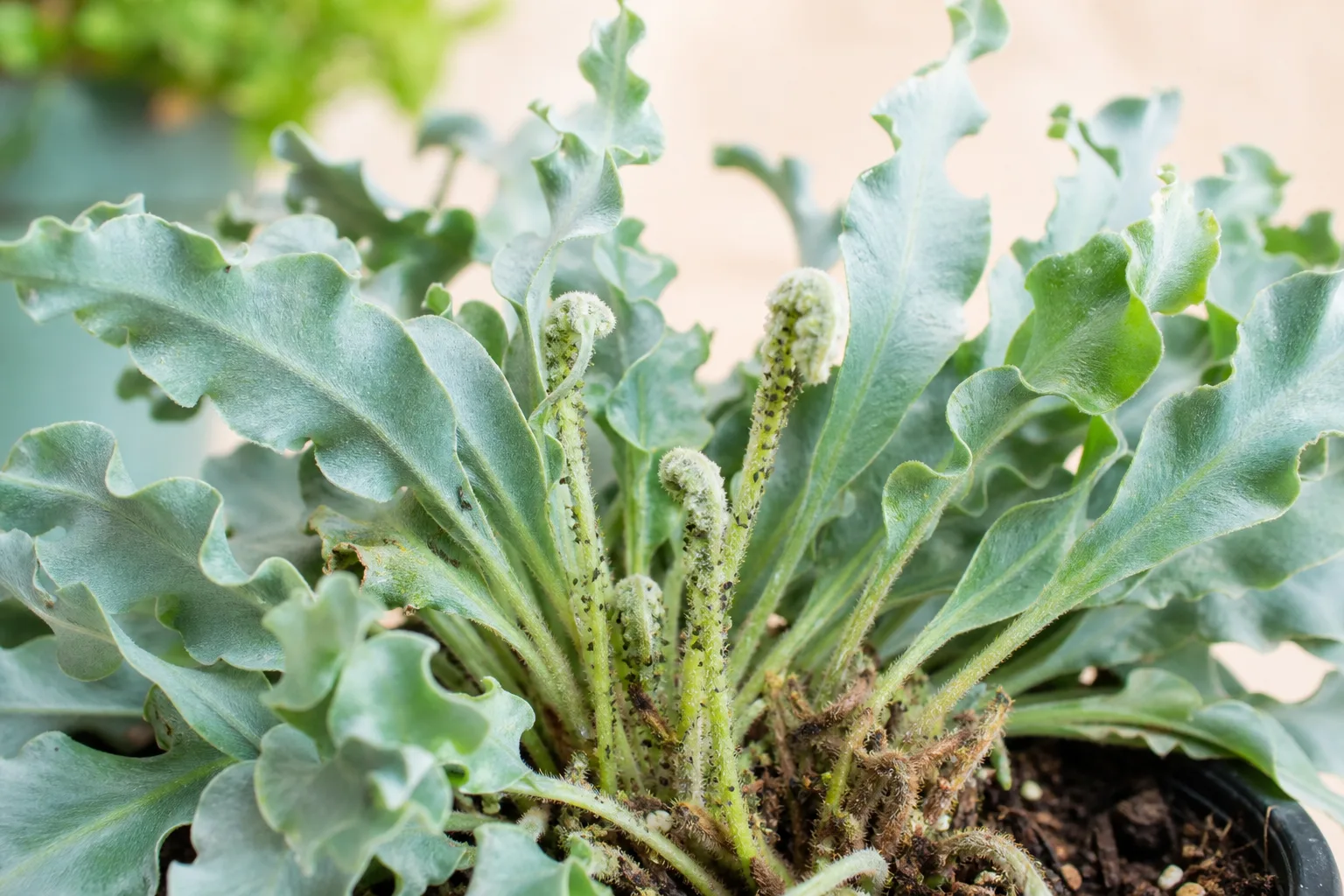
Aphids on Blue Star Fern cluster on unfurling fronds and soft rhizome tips. First step: isolate the plant and rinse colonies off with lukewarm water before any spray.
Aphids on Blue Star Fern: Causes, Checks & Fixes
This guide covers aphids on Blue Star Fern. See also the general Aphids guide, watering, and light pages for this plant.
Aphids on Blue Star Fern: Causes, Checks & Fixes
Quick answer
Aphids on Blue Star Fern (Phlebodium aureum) are small soft-bodied sap feeders that settle on the tenderest tissue: unfurling fronds, young pinnae, and the pale tips of creeping rhizomes. They are less common on this fern than spider mites or fungus gnats, but when they appear they multiply fast on lush new growth.
First step: isolate the plant and rinse visible colonies off with lukewarm water. Tilt the pot, work from the sides, and direct water across frond undersides and rhizome tips-avoid flooding the crown the way you would when treating a succulent. Once insects are knocked down, confirm live aphids remain before reaching for soap or oil.
What aphids look like on Blue Star Fern
On Blue Star Fern, aphids usually show up as pinhead-sized clusters on:
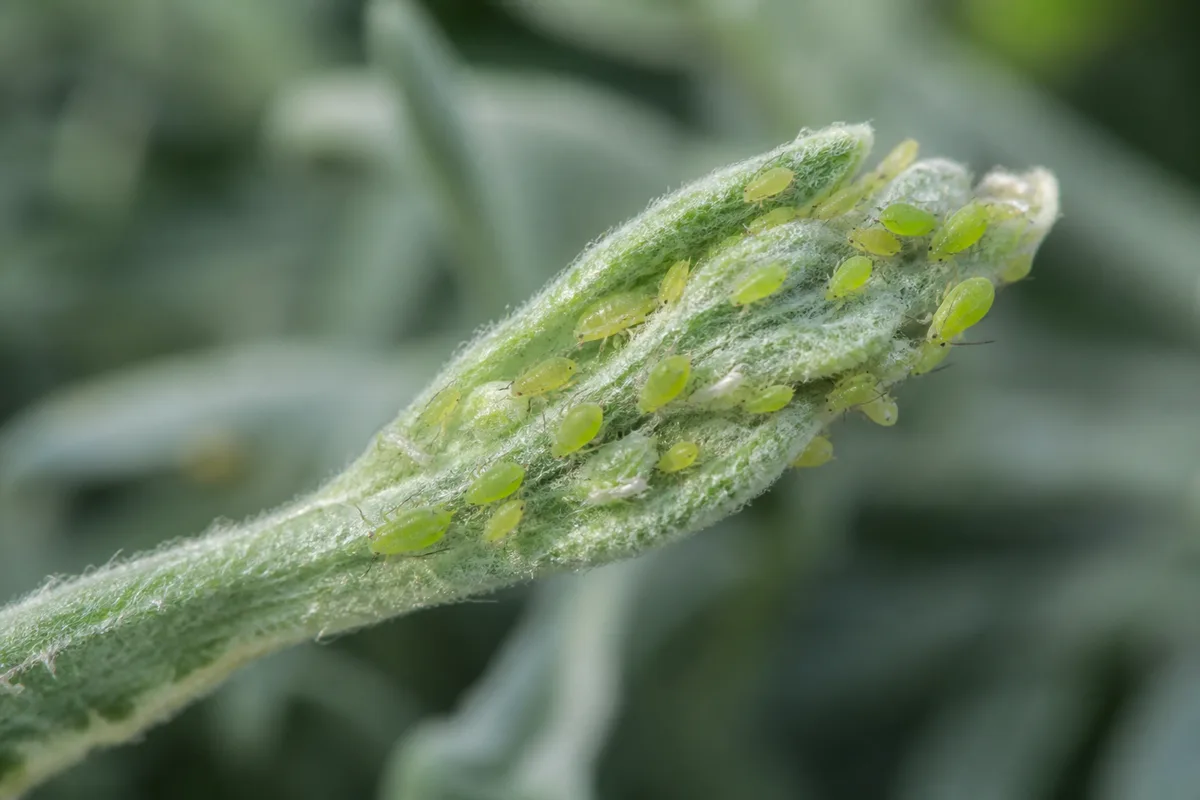
Aphids symptoms on Blue Star Fern - compare with healthy tissue on the same plant.
- The curled tip of a frond still opening
- The joint where a petiole meets the rhizome
- Soft new rhizome growth pushing past the pot rim
Individual aphids are pear-shaped, often green but sometimes black, gray, or pale. You can usually see short legs and antennae with a hand lens. When numbers build, you may notice:
- Sticky, shiny honeydew on frond surfaces or the pot rim
- Ants on the pot, saucer, or nearby shelf
- Black sooty mold growing on honeydew
- Curling or stunting of young pinnae while older fronds still look normal
Blue Star Fern’s blue-gray, slightly fuzzy fronds can make small insects harder to spot than on smooth-leaved houseplants. Slow down at the newest growth-that is where colonies start, not on mature fronds lower on the plant.
Do not confuse spores with pests
Healthy Blue Star Fern fronds carry regular rows of brown or orange spore cases (sori) on the undersides. These are symmetrical, fixed in place, and part of normal fern reproduction. Aphids move when prodded, cluster randomly, and often leave stickiness behind. If you see dots but no movement and no honeydew, you are probably looking at spores-not an infestation.
Why Blue Star Fern gets aphids
Aphids are generalists indoors. They arrive on new purchases, cuttings, open windows, or from infested neighbors on a plant shelf. Blue Star Fern does not attract aphids because of anything unique to ferns-it attracts them for the same reason many houseplants do: soft, actively growing tissue.
Several Blue Star Fern habits make certain spots easy targets:
- Rhizome-driven growth. New fronds emerge from creeping rhizomes at the soil surface or over the pot edge. Those tips stay tender longer than a single flush on a stemmy houseplant.
- Steady humidity and feeding. A well-fed fern pushing spring or summer fronds produces the kind of lush tissue aphids prefer. Heavy nitrogen fertilizer makes shoots softer and more vulnerable.
- Grouped placement. Many growers cluster ferns for humidity. One infested pot can seed aphids onto a nearby Blue Star Fern within days.
- Indoor conditions without predators. Outdoors, lady beetles and lacewings knock populations back. Inside, missing that balance lets a few hitchhikers become a colony before you notice.
Stress alone rarely causes aphids, but a fern already struggling with low humidity or overwatering on Blue Star Fern heals more slowly after feeding damage. Fix pests first; adjust care second.
How to confirm the cause
Work through these checks in order:
- Location on the plant. Aphids on tender new fronds and rhizome tips fit the diagnosis. Uniform brown stippling on older fronds with fine webbing points to spider mites instead.
- Movement test. Touch a suspect cluster with a toothpick. Aphids shift or drop; mealybugs smear white wax; scale stays glued in place.
- Honeydew. Shiny sticky residue on fronds or the table confirms sap feeders. Mineral dust from hard water wipes away dry and powdery.
- Underside inspection. Peel back a curling young frond gently. Aphids hide in the fold where sprays miss if you only treat the top surface.
- Neighbor plants. Scan ferns, pothos, herbs, and anything on the same shelf. Shared aphids often mean multiple pots need isolation.
- Recent introductions. A new plant within the last month is the most likely source even if that pot looks clean today.
If rinsing removes all insects and nothing returns within a week, you may have caught a small hitchhiker batch early. Recheck before assuming the problem is gone.
First fix for Blue Star Fern
Move the fern away from other plants and rinse off every colony you can see.
Place the pot in a sink or shower. Use lukewarm, gentle water-not icy and not hot. Support fronds with one hand and rinse undersides and rhizome tips with the other. Let the pot drain fully before returning it to its spot.
This single step matters on Blue Star Fern because:
- It knocks down numbers without coating fuzzy fronds in product on day one.
- It washes away honeydew that feeds sooty mold.
- It lets you see how many live aphids remain after mechanical removal.
Do not pour water directly into the crown or soak the rhizome mat the way some care guides warn against for routine watering. Ferns are sensitive to crown rot when the center stays wet; rinse thoroughly but briefly, then drain.
After the rinse, dry your inspection: if live aphids remain, plan a labeled insecticidal soap follow-up-not dish soap mixed at random.
Step-by-step recovery
Once the plant is isolated and rinsed, continue in this order based on severity:
Light infestation (a few clusters on one or two new fronds)
- Repeat the sink rinse every three to four days for two weeks, directing water into curled young fronds.
- Wipe honeydew off frond surfaces with a damp cloth so mold does not take hold.
- Hold fertilizer until new growth looks clean for two weeks-feeding stressed ferns does not help recovery.
Moderate infestation (multiple fronds, sticky leaves, ants present)
- After the initial rinse and a few hours of dry time, apply insecticidal soap labeled for houseplants, covering aphids on frond undersides, petioles, and rhizome tips.
- Test one frond first and wait 24 hours. Blue Star Fern’s pubescent leaves can react to soaps and oils; a small test patch prevents whole-plant damage.
- Repeat soap applications every five to seven days until you see no live aphids for two consecutive checks. Contact sprays do not kill eggs; missing one cycle lets nymphs mature and lay again.
- Keep the plant isolated until you have gone at least two weeks with no new colonies.
Heavy infestation (distorted growth throughout, mold, spread to neighbors)
- Trim off severely curled or blackened young fronds with clean scissors. Bag and discard them; do not compost indoors.
- Treat the remaining plant with insecticidal soap as above. Horticultural oil can supplement soap on tough clusters, but only after a frond test and never on a wilted or heat-stressed plant.
- Inspect and treat every plant that shared the shelf. Isolating only the Blue Star Fern while mites or aphids remain on a neighbor guarantees reinfestation.
- If ants are farming aphids on the pot, wipe the saucer and stand with soapy water and consider a band of sticky tape around the pot base to block ant access while you clear the insects.
Avoid systemic insecticides unless you have exhausted contact options and accept label restrictions. Many systemics are unnecessary for a single indoor fern and carry broader toxicity concerns.
Recovery timeline
Expect visible aphid numbers to drop within one to two treatment cycles after a thorough rinse plus soap. Because aphids reproduce quickly, the critical window is the first two weeks-missing repeats lets nymphs restart the colony.
Signs recovery is working:
- No new honeydew on frond tips
- Unfurling fronds open without tight corkscrew curling
- Fresh blue-green fronds emerging cleanly from rhizomes
- Ant traffic on the pot slowing or stopping
Signs the problem is worsening:
- Curling spreads to successive new fronds despite rinsing
- Sooty mold covers large frond areas
- Winged aphids appear-often a sign the colony is overcrowded and spreading
- Nearby plants develop the same sticky residue
Damaged pinnae on older fronds do not fully un-curl. Judge success by new frond quality, not by old leaves returning to perfect shape.
Lookalike symptoms
| What you see | Likely cause | How to tell apart |
|---|---|---|
| Ordered brown dots on frond undersides | Normal spores (sori) | Fixed pattern, no stickiness, no movement |
| White cottony masses in frond axils | Mealybugs | Waxy coating; smears when crushed |
| Brown bumps glued to petioles | Scale | Does not move; hard shell |
| Fine stippling with webbing | Spider mites | Mites are specks; damage on older fronds in dry air |
| Black sooty film alone | Honeydew from past or current sap feeders | Search for live insects; wipe reveals sticky base layer |
Getting the pest right matters because alcohol swabs that work on mealybugs can spot-burn fuzzy Blue Star Fern tissue, and oil sprays aimed at mites may be overkill for a small aphid patch caught early.
Mistakes to avoid
- Spraying before isolating. Aphids walk and winged forms fly short distances; treat the shelf, not just one pot.
- Using homemade dish-soap mixes. Household detergents burn fern fronds more often than products labeled for plants.
- Soaking the crown during “shower treatment.” Crown rot is a real risk on Phlebodium when the rhizome heart stays wet-rinse, then drain.
- One-and-done treatment. Contact sprays leave no residual activity; eggs hatch within days.
- Feeding to “help recovery.” Soft nitrogen-rich flushes attract the next wave of aphids.
- Composting trimmed infested fronds indoors. Crawlers can migrate back to clean pots.
- Ignoring ants. Ants protect aphids from predators; clearing honeydew trails helps control stick.
Blue Star Fern care cross-check
After pests are under control, make sure baseline care is not slowing rebound:
- Light: Medium to Blue Star Fern light guide supports steady frond production without the scorch that weakens tissue.
- Water: Let the top 3 cm dry before watering; soggy mix stresses roots while you are fighting foliar pests.
- Humidity: Aim for 40–60%. Low humidity hurts ferns but favors spider mites more than aphids-still worth correcting after treatment.
- Rhizome space: Crowded shallow pots are normal for Blue Star Fern overview; avoid burying surface rhizomes deeper during panic Blue Star Fern repotting guide.
- Fertilizer: Resume half-strength monthly feeding only when new fronds look healthy.
Pest damage and cultural stress stack. A fern that was overwatered before aphids arrived will push fewer clean fronds even after insects are gone.
How to prevent aphids next time
- Quarantine new plants for at least two weeks before placing them beside your Blue Star Fern.
- Inspect frond tips weekly during active growth-early colonies rinse off in seconds.
- Feed lightly. Steady growth beats forced flushes from heavy fertilizer.
- Rotate placement occasionally so you see frond undersides instead of only the blue top surface.
- Keep windows screened if you summer plants outdoors; aphids re-enter easily.
- Maintain airflow between pots so fronds dry after rinsing and honeydew does not linger.
Prevention is mostly early detection. Blue Star Fern is pet-safe, which makes regular handling during checks easier than on toxic plants you may avoid touching-but still wash hands between pots to limit spread.
When to worry
Most aphid outbreaks on a mature Blue Star Fern are manageable with isolation, rinsing, and repeated contact treatment. Worry more when:
- Most new fronds are distorted and the rhizome looks shriveled or smells sour-pest stress may overlap with rot, which needs a separate root inspection.
- The infestation returns within days after three proper soap cycles-look for an untreated neighbor plant or ants re-establishing colonies.
- The fern stops producing fronds entirely for more than a month after treatment while older leaves yellow-roots or watering may need review, not more spraying.
A single missed frond tip can restart the cycle. When in doubt, cut the worst affected new growth, rinse again, and restart the two-week isolation clock rather than assuming one shower fixed everything.
Conclusion
Aphids on Blue Star Fern are a contact and monitoring problem, not a mystery disease. They favor unfurling fronds and rhizome tips, leave honeydew you can feel, and yield to consistent mechanical removal plus labeled soap-provided you isolate early, protect the crown from prolonged soaking, and repeat treatment until nymphs stop hatching. Spores on frond undersides are normal; moving, sticky clusters are not. Clear the insects, hold fertilizer briefly, and judge recovery by the next clean fronds your rhizome sends up-not by old curled leaves smoothing out overnight.
When to use this page vs other Blue Star Fern guides
- Blue Star Fern watering guide - Use for routine moisture checks before assuming aphids is the main issue.
- Blue Star Fern problems hub - Browse all 16 common issues on this species.
- Mealybugs on Blue Star Fern - Different entry point when symptoms overlap with aphids.
- Spider Mites on Blue Star Fern - Different entry point when symptoms overlap with aphids.
- Yellow Leaves on Blue Star Fern - Different entry point when symptoms overlap with aphids.