Alocasia Polly Pruning: Corm-Safe Petiole Cuts for a Slow
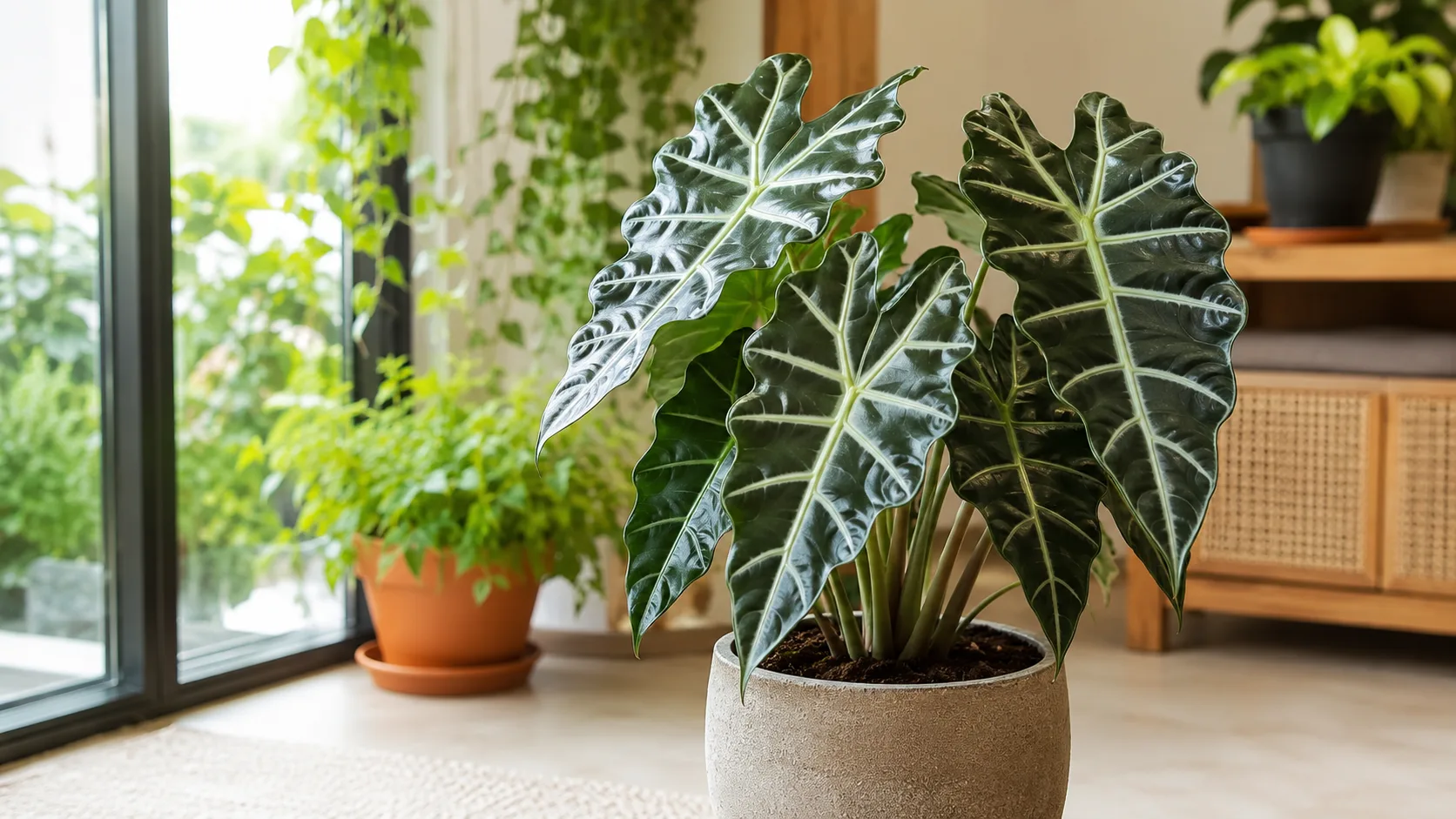
Alocasia Polly Pruning: Corm-Safe Petiole Cuts for a Slow Grower
Alocasia Polly Pruning: Corm-Safe Petiole Cuts for a Slow Grower
Quick Answer - Confirm Senescence Before Any Cut
First action: Inspect the plant in good light, then remove only leaves that are fully yellow, fully brown, or clearly diseased - cut the petiole 1–2 cm above the central crown with a sharp, alcohol-sterilized blade. Do not twist attached petioles off, do not cut into the crown, and do not remove partially green foliage just because it looks tired.
Alocasia Polly (Alocasia × amazonica ‘Polly’) is a slow-growing corm plant that usually holds only three to seven leaves indoors. Pruning here means sanitation and crown protection, not shaping a canopy. For full care context - light, watering rhythm, and dormancy - see the Alocasia Polly watering guide and light guide.
Sap safety: All parts contain calcium oxalate crystals. Wear nitrile gloves when cutting. If sap contacts skin, wash with soap and water. If sap enters eyes, rinse with clean water for at least 15 minutes and seek medical care. For human ingestion, contact Poison Control at 1-800-222-1222. Pets that chew plant tissue need a veterinarian; call ASPCA Animal Poison Control at (888) 426-4435 if ingestion is suspected.
Reviewed by LeafyPixels Review Board · Author: sai-ananth
Why Polly Pruning Is Leaf Cleanup, Not Shaping
Polly belongs to the Araceae family. NC State Extension describes alocasias as tender tropicals with bold foliage held singly atop long petioles; below soil, the engine is a corm that stores water and carbohydrates. The RHS lists Alocasia × amazonica ‘Polly’ as one of the most widely available compact cultivars, with striking dark-green, silver-veined leaves on a smaller frame than many Amazonica specimens.
New leaves do not emerge from existing petioles the way pothos vines back-bud after a trim. Each fresh blade unfurls from the central crown on its own petiole. Cut a living leaf and that specific leaf is gone; the plant will not branch from the wound. Because Polly grows slowly indoors, pruning is rarely about size control - the legitimate reasons to cut are dead, damaged, or spent growth.
New spears come from the crown, not old petioles
Each Polly leaf is a temporary solar panel feeding the corm. When a new spear unfurls, the oldest outer leaf often yellows - planned senescence as the plant reclaims mobile nutrients. The RHS Alocasia growing guide states that alocasias need “no pruning or training … other than removing fading or dead leaves, cutting them off at the base.” That single sentence should frame your expectations.
What RHS and extension sources recommend
Beyond dead-leaf removal, the main horticultural guidance is restraint and safe handling. The RHS recommends wearing gloves because alocasia sap can irritate skin. NC State Extension documents calcium oxalate crystals causing contact dermatitis on contact. Those facts matter at the moment of the cut, when sap leaks from a fresh petiole wound.
Polly vs Alocasia Amazonica: What Changes on a Compact Plant
Polly and Alocasia Amazonica share the same hybrid group (Alocasia × amazonica) and the same corm-first pruning logic: remove finished leaves at the petiole base; never shear for shape. The practical differences are scale and recovery speed.
| Factor | Alocasia Polly | Alocasia Amazonica |
|---|---|---|
| Typical indoor leaf count | 3–7 leaves | Often more on mature specimens |
| Mature height indoors | Roughly 45–60 cm | Taller, more upright specimens common |
| Recovery after one leaf cut | Often 3–8 weeks in cool rooms | Often 2–6 weeks in comparable conditions |
| Size control | Division at repotting in a 12–15 cm pot | Division or larger-pot management |
If you also grow the larger Amazonica form, see our companion Alocasia Amazonica pruning guide for specimen-scale notes. On Polly, treat every leaf as a larger percentage of the plant’s photosynthetic capacity.
What to Inspect Before You Cut
Walk the plant in good light before touching shears:
- Which leaves are finished? Fully yellow or brown blades with loose or detachable petioles belong on the cut list.
- Is the crown firm? Press gently at the soil surface above the corm. A firm crown with collapsing old petioles suggests dormancy or normal aging. A soft, foul-smelling crown suggests rot - see root rot on Alocasia Polly.
- Are multiple leaves failing together? Clustered yellowing often traces to overwatering, underwatering on Alocasia Polly, low humidity, or cold drafts - pruning alone will not fix that pattern. Start with the yellow leaves guide.
- Is new growth active? A fresh unfurling spear means the corm has energy to spare; removing one finished lower leaf is low risk.
- Pests on cut candidates? Check undersides for spider mites or sticky residue before debris falls into the pot.
Senescence vs stress yellowing
On a healthy Polly, the oldest leaf nearest the soil often yellows while a new spear unfurls above. That paired pattern is normal senescence, not a crisis.
| Signal | Normal senescence | Stress pattern |
|---|---|---|
| Leaf count affected | Usually one outer leaf | Two or more at once |
| Speed | Gradual over 1–3 weeks | Fast collapse |
| Soil moisture | Matches your normal dry-down | Often wet or bone dry |
| Petiole feel | Dry, papery, may detach with gentle tug | Soft, mushy, or foul at base |
| New spear | Present or recently unfurled | Absent while decline spreads |
| First action | Wait for 90%+ yellow, then one cut | Fix watering and roots before cutting |
If only the oldest leaf is fading while a new one opens, you are watching nutrient recycling - not an urgent trim.
Crown, corm, pests, and soil moisture
A firm corm feels dense through the drainage hole or when you gently probe the soil surface - like a potato, not a sponge. Decaying petiole stubs sitting on damp soil attract fungus gnats. Remove finished stubs, but keep partially green leaves in place during dormancy.
When to Prune Alocasia Polly
Routine finished-leaf removal
The safest window for routine cleanup is late spring through early summer, when bright indirect light and warm room temperatures (18–26°C / 65–80°F) support new spear production. Remove a leaf only when it is at least 90% yellow or brown, or when the petiole releases with a gentle tug - a sign the plant has finished reclaiming mobile nutrients back into the corm.
Emergency rot or disease cuts
Mushy, blackened, or foul-smelling petiole bases should be removed immediately, regardless of season. Soft tissue at the crown is an active rot threat and should not wait for spring. Sterilize your blade between each cut if disease is present.
When to wait
Hold off on cosmetic pruning when:
- The leaf still has substantial green tissue and a firm, anchored petiole
- Several leaves are yellowing at once - fix care first
- The plant is entering dormancy with partially green leaves still attached
- You have just repotted or moved the plant - let the corm stabilize first
- An active spear is still unfurling - wait until it hardens before removing a neighboring senescent leaf
The First Cut to Make
Remove one fully finished leaf at the petiole base. Sterilize bypass pruners or sharp scissors with 70% isopropyl alcohol, put on gloves, hold the yellowed petiole steady, and make a single clean cut 1–2 cm above the central crown, leaving a short stub.
That one cut is the entire first session for most owners. Do not stack additional removals, brown-tip cosmetic trims, and repotting on the same day. Polly recovers better from small, deliberate cuts than from a multi-task overhaul.
How to Prune Alocasia Polly Step by Step
Tools, oxalate sap safety, and sterilization
Polly petioles are fleshy and easy to crush. Use sharp bypass pruners or fine garden scissors - dull blades tear tissue and enlarge the wound surface where pathogens enter.
University of Minnesota Extension recommends cleaning visible sap and debris from blades, then disinfecting with 70% isopropyl alcohol and letting the blade air-dry 30–60 seconds before cutting. Re-sterilize when moving from a diseased leaf to healthy tissue or between plants in a collection.
Wear nitrile gloves. The ASPCA lists elephant’s ear as toxic to cats and dogs, causing oral irritation, drooling, and vomiting if chewed. Sap can irritate skin and eyes during pruning - keep cut material away from pets and children.
Where to cut on the petiole
You cut the petiole, not the leaf blade. The correct position is at the base of the petiole, close to the crown but not flush into it.
- Do: Single perpendicular cut 1–2 cm above the crown, leaving a stub that dries and calluses
- Do not: Cut into the central growing point where new leaves emerge
- Do not: Twist, snap, or yank attached petioles - torn vascular tissue heals slowly and invites soft rot
If Polly produces a rare indoor flower stalk, cut spent flower heads at the base so the corm redirects energy into foliage.
Disposal and cleanup
Collect every cut petiole and dropped leaf from the soil surface. Decaying debris in a damp pot attracts fungus gnats and gives rot organisms a foothold. Discard diseased material in household trash, not compost. Wipe tools with alcohol, wash gloves, and wash hands with soap and water.
How Much Foliage You Can Safely Remove on a 3–7 Leaf Plant
On a typical indoor Polly, one fully yellow leaf per session is the practical ceiling during active growth. That is roughly 15–25% of foliage on a five-leaf plant and up to one-third on a three-leaf plant - already a meaningful draw on corm reserves.
Each leaf is a small solar panel feeding the corm. Strip too many at once and Polly draws down stored reserves to push the next spear - a slow process indoors that can delay growth for weeks. If several leaves need removal, spread the work across sessions two to three weeks apart during active growth.
The only exception is active rot at the crown, which should be cut away immediately even if that means removing more tissue in one day.
What Not to Cut
- Partially green leaves, even if edges are brown or the blade looks uneven - the plant is still extracting nutrients
- The central crown or emerging spears - damage here stalls regrowth for a long time on a slow cultivar
- Healthy leaves for symmetry - Polly is naturally architectural, not perfectly uniform
- Leaf tips for cosmetics - new blades emerge full-size from the corm; tip trims do not train shape
Pruning cannot fix legginess from low light, chronic overwatering, or spider mite damage. Correct the underlying stress, then remove only leaves that do not recover.
Shaping Polly Without Shears
Real shape control on Alocasia Polly is rotation and light, not cutting. Petioles bend toward the strongest window; rotate the pot a quarter turn every week or two for a more upright, balanced silhouette.
If the plant has outgrown its space, division at repotting - separating offsets or corms in spring - is the practical size-control method rather than aggressive top pruning. See the Alocasia Polly repotting guide for timing and technique. You cannot limit height by trimming leaf tips; new blades emerge full-size from the corm on long petioles.
Pruning During Dormancy
Polly often slows or drops leaves when temperatures fall below about 15°C (59°F), daylight shortens, or humidity drops in winter. The RHS Alocasia growing guide notes that alocasias may enter dormancy under cooler or darker conditions, consolidating resources in the corm while foliage yellows.
During dormancy:
- Remove only fully yellow, fully brown, or clearly diseased leaves
- Keep any partially green leaves - the corm is still feeding from them
- Reduce watering per the watering guide - barely moist, not wet
- Do not repot until active growth resumes in spring
If all leaves drop and the pot looks empty, the corm is often still alive. Trim dead petioles back to short dry stubs, keep the soil barely moist, place the pot in a warm bright spot, and wait. Leafless winter dormancy is normal - new growth typically returns when light and warmth improve, though Polly may take longer than larger Alocasia specimens to push the first spring spear.
Aftercare and Recovery Timeline
First 48 hours
Keep fresh petiole cuts dry. Avoid misting directly onto the stub, overhead watering, or saturating the crown area. Bottom-watering dry soil is fine. Ambient room humidity is acceptable, but the cut surface needs to callus before it stays constantly wet.
Hold off on fertilizer until the plant is actively growing again - at least two to four weeks after a routine leaf removal, and not at all during dormancy.
Recovery timeline and success signs
After a single yellow-leaf removal during active growth, the stub should dry to a light tan within a few days. On a warm, bright indoor Polly, watch for a new spear within roughly three to eight weeks - slower than many larger Alocasia specimens and often delayed when room temperatures stay below 18°C (64°F).
Warning signs of too-aggressive or badly timed pruning include:
- No new growth for more than eight to ten weeks during warm, bright conditions
- Softening at the crown or spreading brown rot from the cut stub
- Additional leaf collapse beyond the one you removed
If rot appears at the crown, stop routine pruning, improve airflow, reduce watering, and remove only clearly necrotic tissue with sterilized tools.
Common Pruning Mistakes
- Cutting green or half-yellow leaves - wastes corm energy on a plant that cannot replace foliage quickly
- Over-pruning several leaves at once - shocks a slow grower carrying only a handful of blades
- Flush cuts into the crown - exposes the only growing point to rot
- Twisting petioles off by hand - leaves ragged wounds that heal slowly
- Unsterilized shears - moves pathogens between plants and into fresh cuts
- Pruning for looks during a care crisis - yellow clusters need watering, light, or root fixes first
- Expecting bushier growth from pruning - Polly does not branch; fullness comes from corm health and even light
When Not to Prune
- Active root rot or soft corm - prioritize drying out, airflow, and possibly repotting before cosmetic cuts
- Mid-unfurl spear - wait until the new leaf hardens
- Same day as repotting or major care changes - let the corm stabilize
- Several yellow leaves with wet soil - diagnose overwatering before removing more foliage
- Winter hold pattern with partly green leaves - the corm is still banking energy
If You Remember Three Things
- Protect the crown - cut petioles 1–2 cm above it, never into the growing point where spears emerge.
- Confirm senescence - on a 3–7 leaf Polly, wait until a leaf is fully finished before cutting; one leaf per session during active growth.
- Fix stress before shears - multi-leaf yellowing means care or roots, not a trimming problem.
When to use this page vs other Alocasia Polly guides
- Alocasia Polly overview - Start here for whole-plant context before deep-diving this topic.
- Alocasia Polly problems hub - Jump to symptom-specific fix guides when this care topic does not resolve the issue.
- Leggy Growth on Alocasia Polly - Escalate here when pruning adjustments are not enough.
- Slow Growth on Alocasia Polly - Escalate here when pruning adjustments are not enough.
- Brown Tips on Alocasia Polly - Escalate here when pruning adjustments are not enough.