35 Colorful Flowers and Foliage for Every Garden
Compare 35 colorful flowers and foliage plants by season, sun, and shade. Find the right picks for containers, borders, pollinators, and lower-maintenance color.

A colorful garden is easier to plan when you choose plants for a real place, not for a photograph. Start with the bed’s hours of sun, the soil’s drainage, how much watering you can keep up with, and the season when you want the strongest display. Then choose a small palette and repeat it across flowers, leaves, and bloom times.
The 35 plants below range from bulbs that make a brief spring show to annuals that flower for months, leafy shade plants, and perennials that return. Bloom dates shift with climate, cultivar, and planting time, so use the season labels as a planning guide rather than a promise.
Start With the Conditions, Not Just the Color
Before buying plants, watch the garden through a typical day. “Full sun” usually means about six or more hours of direct light, but hot afternoon sun can be harder on a plant than morning light; a bright north-facing wall, dappled tree shade, and deep shade are also different situations. A plant tagged “shade tolerant” may still need several hours of indirect or filtered light to flower well.
Drainage matters just as much. A sunny bed with heavy, waterlogged soil is not a good match for a drought-tolerant blanket flower or lavender, while a dry, exposed slope is a poor home for a moisture-loving fuchsia. Improve the planting area broadly with organic matter when appropriate, but do not create a rich, soggy pocket around a plant that needs lean, fast-draining soil.
Next, decide what “color” means for your garden. Blooms are the obvious choice, but foliage can hold the composition together for weeks before and after flowers fade. The color-planning advice from Gardener’s Path starts with the garden’s setting and a limited palette; Garden Gate’s plant-combination guide also shows how contrasting shapes and foliage keep a border interesting. Pick one dominant hue, add one supporting color, and treat green, silver, or dark leaves as the buffer between louder blooms.
Finally, look at each plant’s mature width as well as its height. A six-inch seedling can become a three-foot mound by midsummer, and a tall sunflower can shade shorter neighbors. Leave enough room for air to move through foliage, access for watering and pruning, and the shape of the plant when it is full size.
35 Colorful Picks for Bloom, Foliage, and Season
Use the list as a menu. You do not need all 35 plants; choosing a handful that share light and water needs usually makes a stronger, easier-to-maintain bed than collecting one of everything.
Early Spring Through Mid-Spring Color
Spring color often comes from bulbs and corms planted the previous autumn, with cool-season pansies filling gaps. Some spring ephemerals disappear after blooming, so place them where later foliage can cover the space rather than expecting the same plants to carry the bed all summer.

1. Bearded iris (Iris germanica) — The ruffled standards and falls can carry several colors in one bloom, making iris a natural focal point rather than a background filler. Give bearded types sun and drainage, and keep rhizomes near the soil surface instead of burying them under a thick mulch layer. Iris is a large genus with species adapted to very different conditions, so check the exact type before applying a general iris care rule; North Carolina Extension’s overview explains that range.
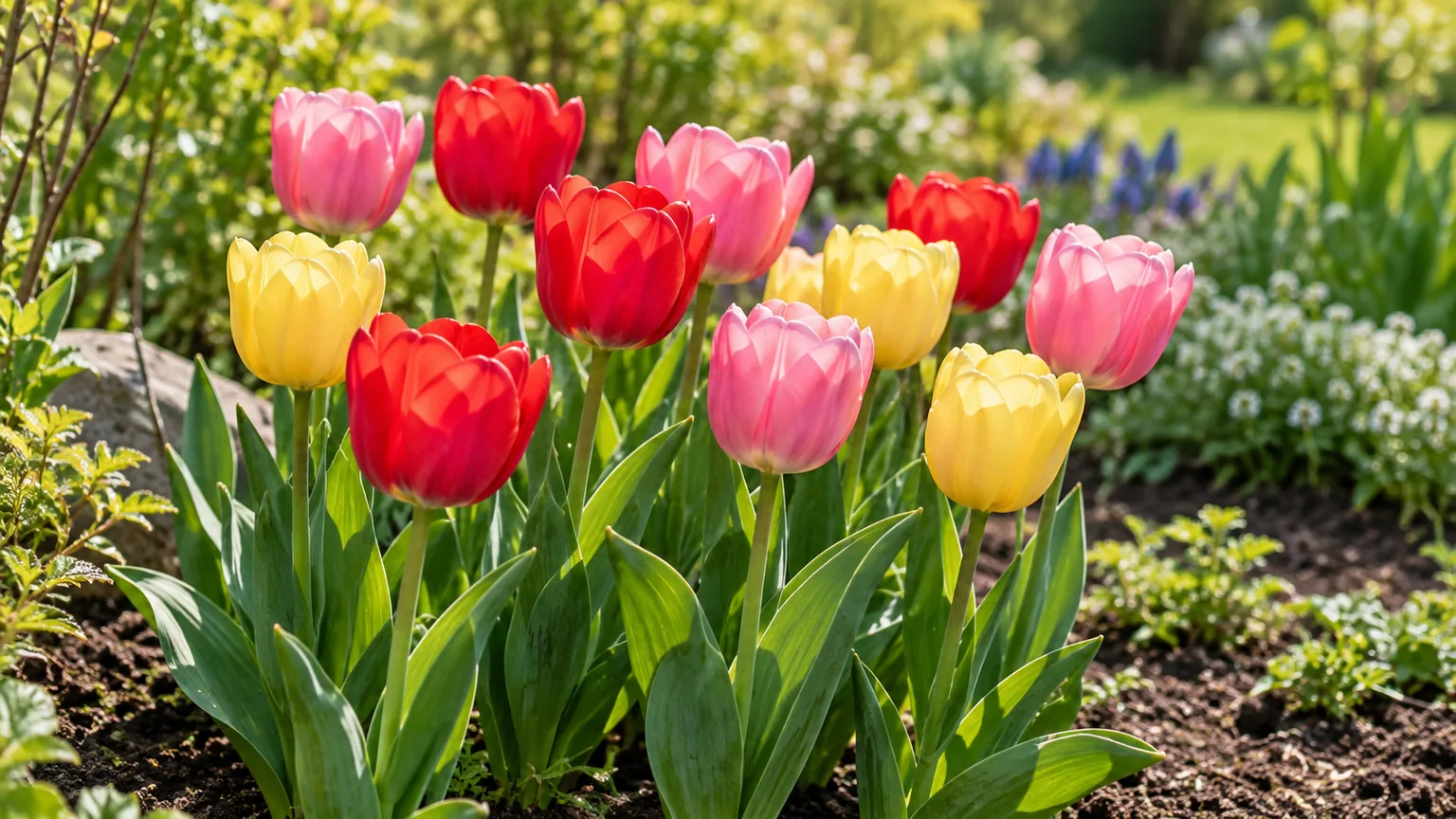
2. Tulip (Tulipa spp.) — Tulips provide one of the cleanest blocks of spring color, from pale pastels to saturated red, orange, and purple. Plant bulbs in fall for spring flowers; in warm-winter areas, many tulips behave more like a one-season display than a dependable perennial, so treat them as an annual accent unless your local climate and cultivar are a good match.
3. Daffodil (Narcissus spp.) — Daffodils are useful for cheerful yellow, white, and orange flowers that often return for years in a suitable climate and well-drained bed. Let the leaves yellow naturally after bloom so the bulb can replenish energy; hiding the foliage among later perennials is more reliable than cutting it off early.
4. Hyacinth (Hyacinthus orientalis) — Hyacinths pair dense flower spikes with strong fragrance, so a small group near a path or doorway can have more impact than a scattered row. They are spring bulbs, not summer color plants; combine them with later foliage or annuals that can take over after their leaves fade.
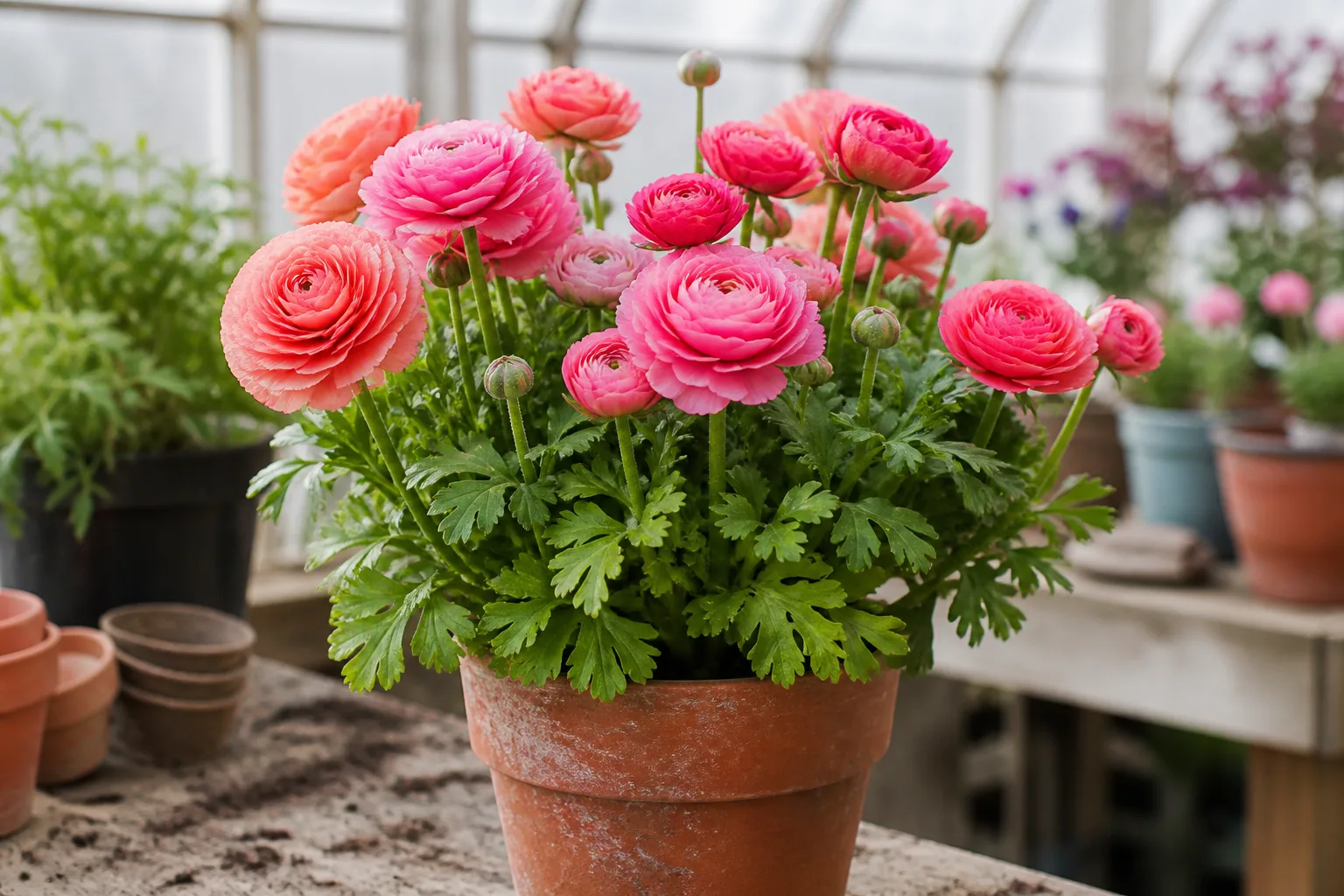
5. Persian buttercup (Ranunculus asiaticus) — These layered, rose-like flowers deliver intense spring reds, pinks, oranges, and yellows, particularly in cool weather. Their corms need a cool growing window and well-drained soil; in mild-winter regions they may be planted in fall, while colder areas often treat them as a spring-planted seasonal crop rather than a hardy perennial.
6. Oriental poppy (Papaver orientale) — A large orange, red, pink, or plum poppy makes a brief but unmistakable late-spring statement. It can go dormant after flowering, leaving a gap; place later-growing companions around it, and avoid moving an established plant because its deep root resents disturbance.
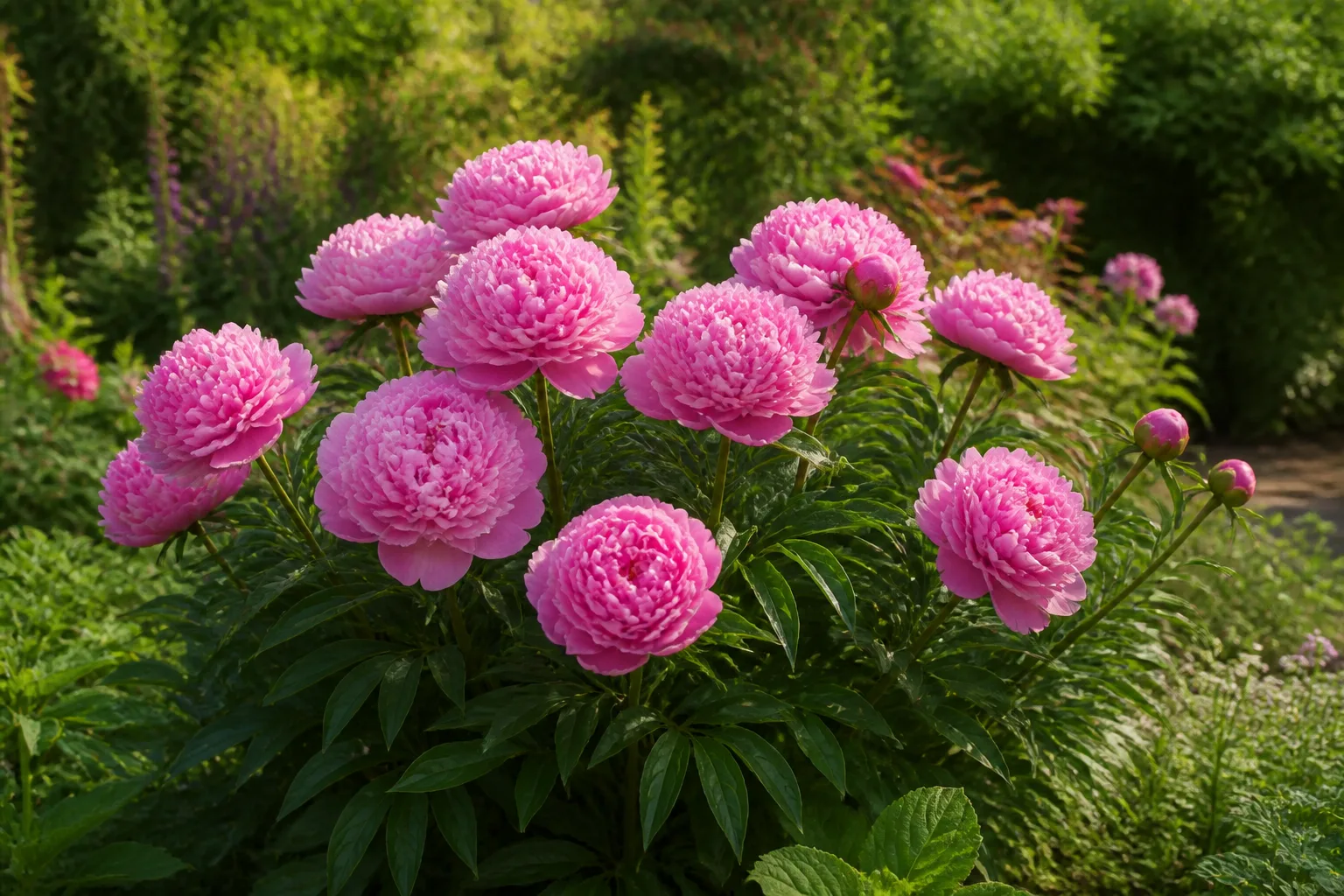
7. Peony (Paeonia spp.) — Peonies bring large, often fragrant blooms in late spring, then remain useful as leafy mounds after the petals fall. They are long-lived, so choose a permanent spot with space and sun rather than squeezing them into a temporary annual bed; flower color and form depend on the cultivar.
8. Virginia bluebell (Mertensia virginica) — This spring woodland perennial opens pink buds that mature to blue bells, then naturally retreats as the canopy fills in. It suits moist, shaded or partly shaded areas in regions where it is adapted; plant it with ferns or other shade foliage that can cover its summer dormancy.
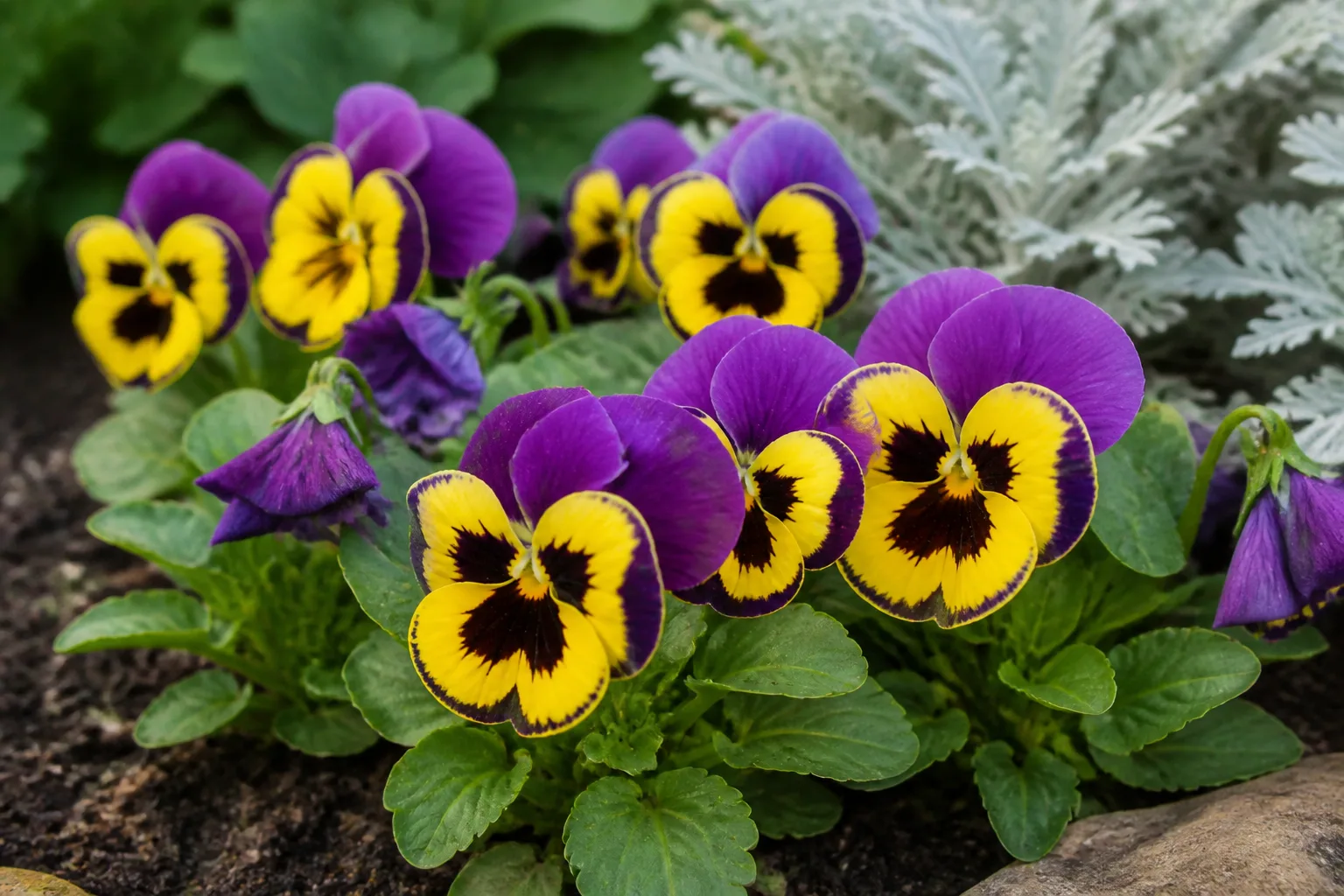
9. Pansy (Viola × wittrockiana) — Pansies are a reliable way to add clear, contrasting faces of purple, yellow, blue, white, or red when the weather is cool. Use them in spring and fall containers or bed edges, but expect flowering to slow in summer heat; shade in the afternoon can extend the display in warm areas.
Summer Flowers for Sunny Beds
The most dependable summer color comes from plants matched to the heat and moisture pattern of the bed. Annuals can flower through much of the growing season when deadheaded and watered, while perennials usually offer a shorter bloom window but return year after year.
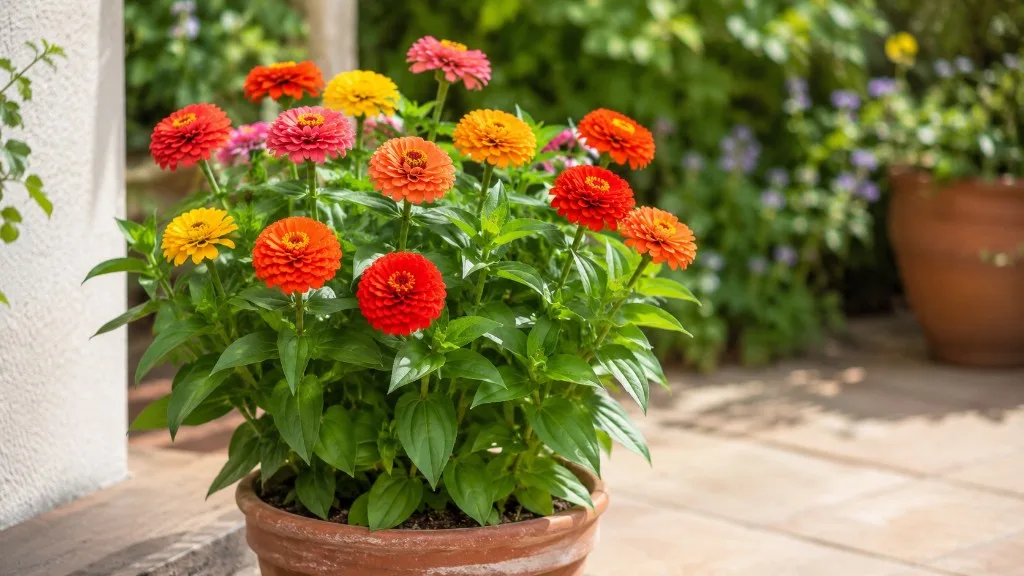
10. Blanket flower (Gaillardia × grandiflora) — Red, orange, and yellow daisy-like blooms suit hot, sunny beds and naturalistic borders. Let soil drain freely; wet winter soil can shorten the life of a plant that otherwise handles dry spells well once established.
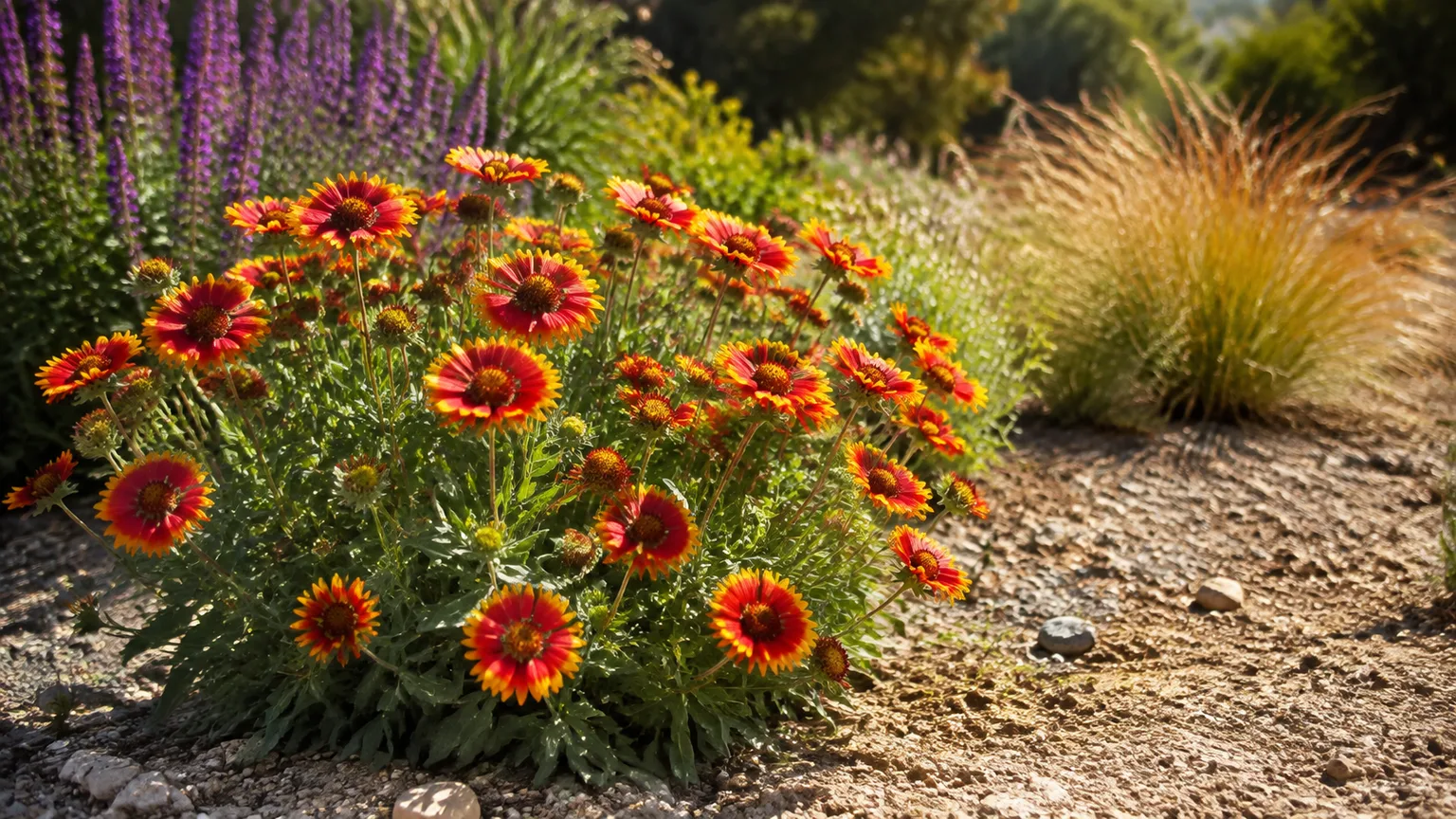
11. Zinnia (Zinnia elegans) — Zinnias deliver broad color range and long summer-to-frost flowering from seed or nursery starts. Crowded, humid foliage is prone to powdery mildew, so space plants according to the label and water the soil rather than routinely wetting leaves. Choose disease-resistant cultivars where mildew is a recurring problem; NC State Extension’s profile notes the range of garden forms.
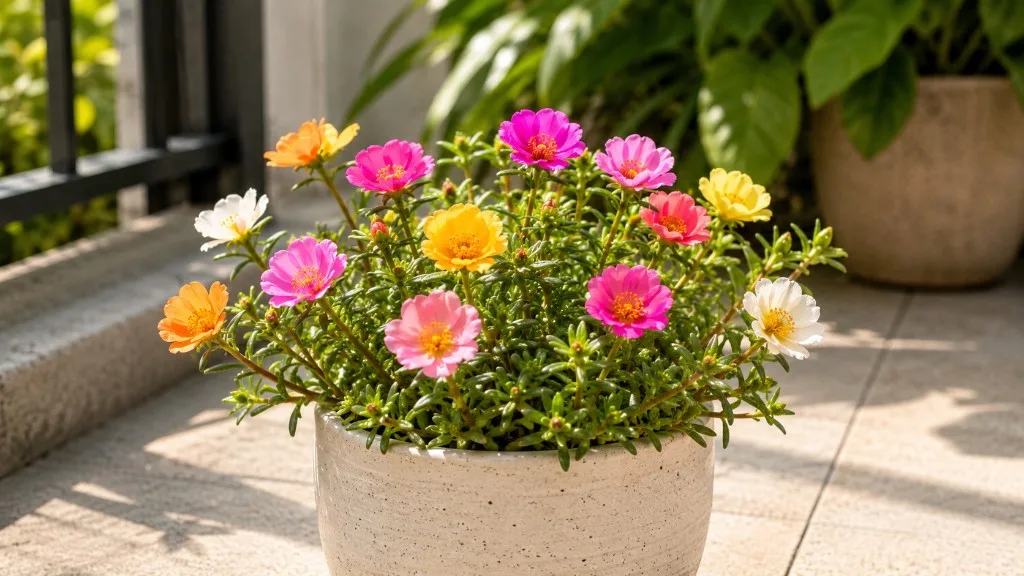
12. Moss rose (Portulaca grandiflora) — This low annual has succulent leaves and jewel-bright flowers for hot edges, containers, and places that dry quickly. It is a poor choice for shade or damp soil, and many cultivars close their flowers on cloudy days or at night, so the color is strongest in sun.
13. Tropical hibiscus (Hibiscus rosa-sinensis) — Oversized flowers make tropical hibiscus a high-impact warm-season container or patio plant. It needs warmth, sun to light shade, and regular moisture during active growth; it cannot be left outdoors through freezing weather, so plan for overwintering or grow it as a seasonal accent.
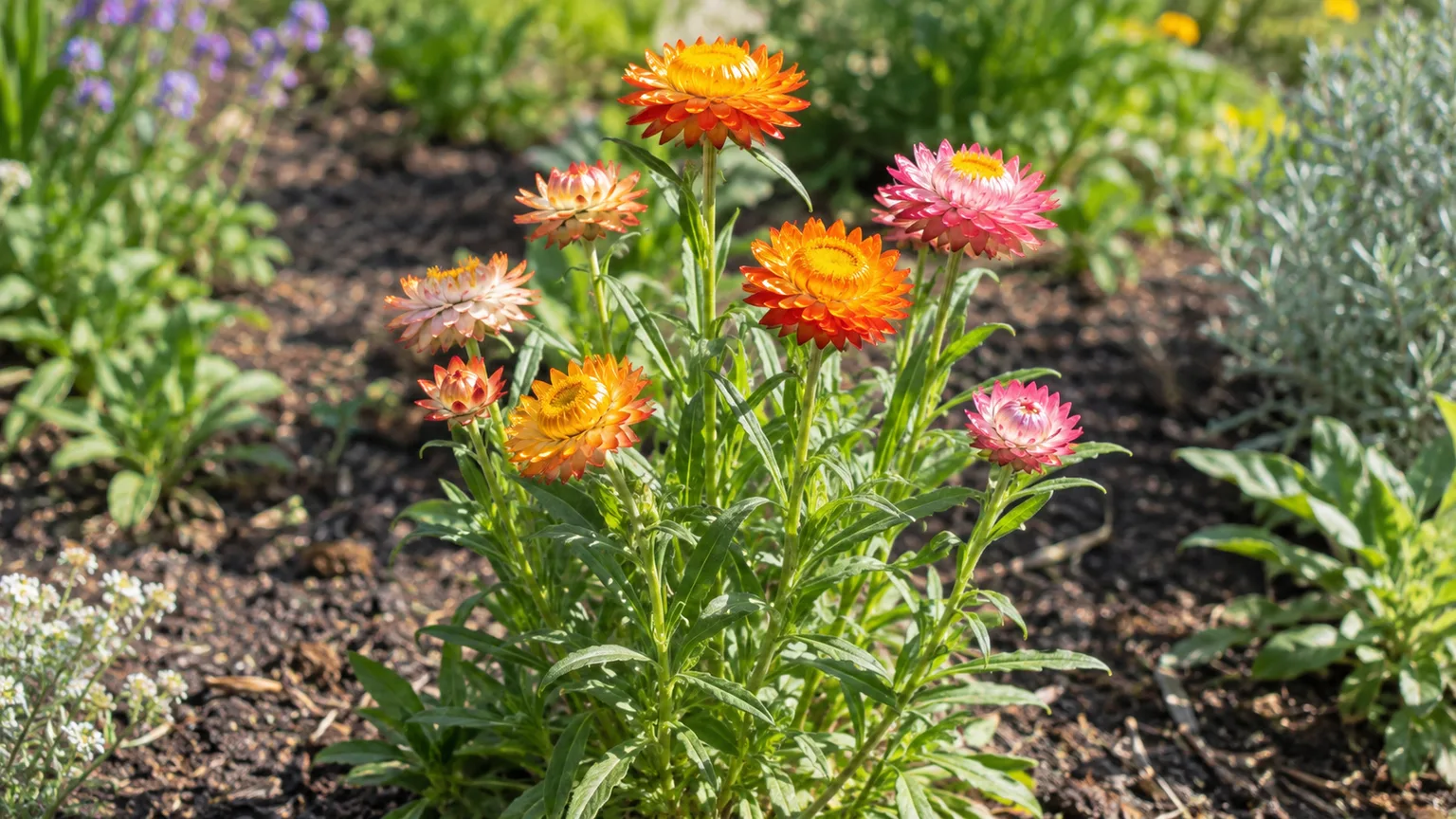
14. Strawflower (Xerochrysum bracteatum) — Strawflower’s papery blooms hold their color after cutting, making it valuable both in a border and for dried arrangements. Give taller cultivars room and support if they flop; cutting flowers regularly can also keep the plant productive and tidy.
15. Lantana (Lantana camara) — Rounded flower clusters may shift from yellow to orange, pink, or red as they mature, and the plant handles heat well once established. It can spread or reseed in warm regions; check local invasive-plant guidance before planting, and do not assume a compact or low-fruit cultivar removes that regional concern.
16. Daylily (Hemerocallis spp.) — Daylilies offer a wide range of colors and bloom periods, with arching leaves that still look orderly after an individual flower fades. They are perennial clumps rather than true lilies, but they are not safe for every household: ASPCA lists Hemerocallis as toxic to cats, so avoid them where cats can chew the plants and contact a veterinarian promptly after suspected ingestion.

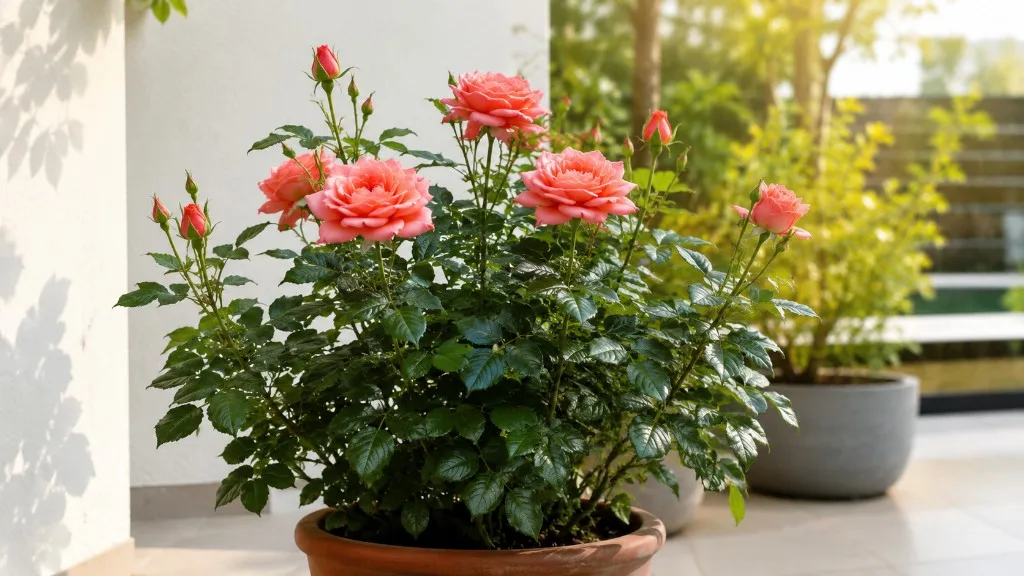
17. Rose (Rosa spp.) — Roses can anchor a sunny border with repeat blooms, fragrance, and a familiar range of colors. Select a disease-resistant shrub rose suited to your climate if you want easier care; hybrid tea roses may offer formal cut flowers but often need more pruning and disease monitoring than landscape shrub types.
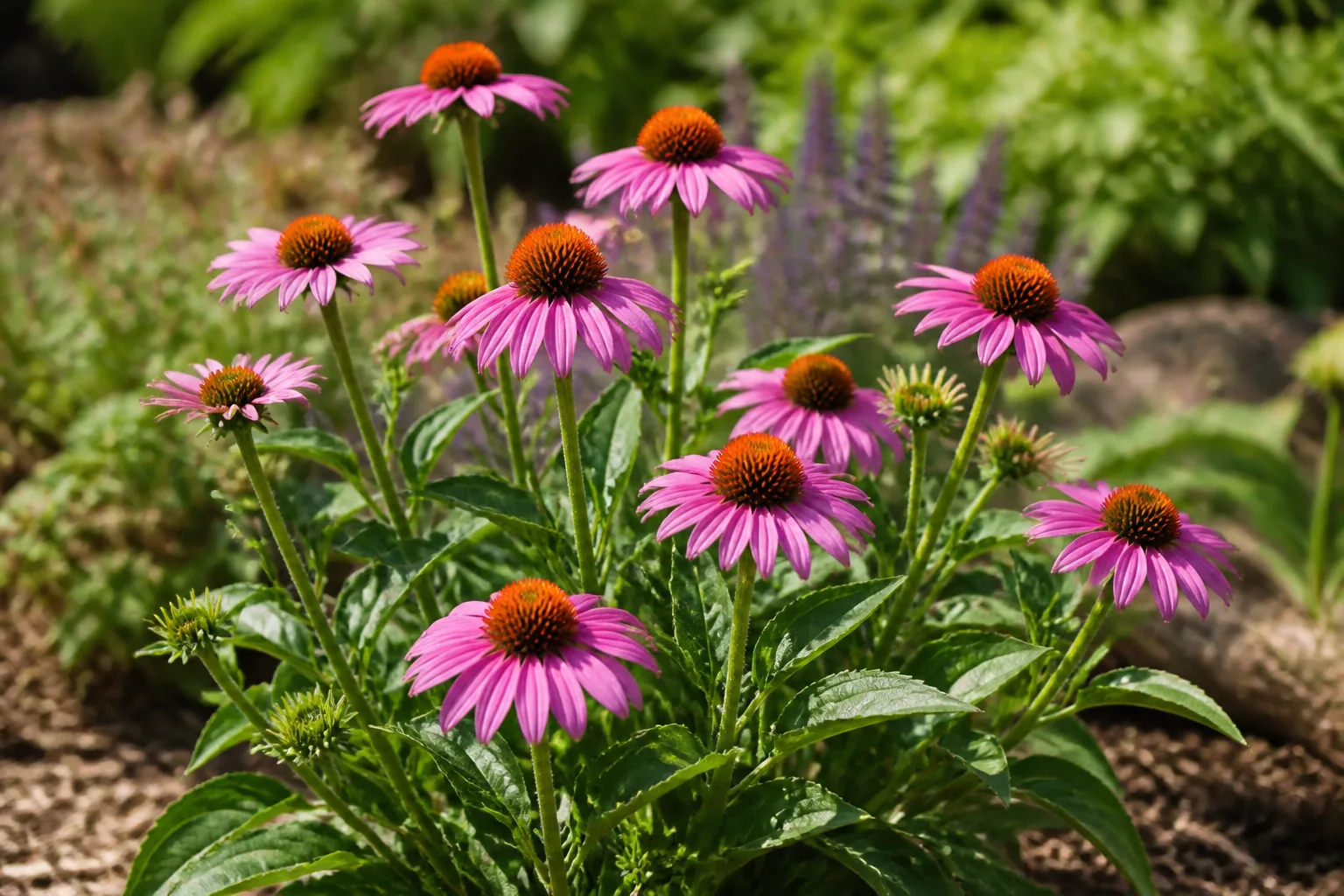
18. Coneflower (Echinacea spp.) — Purple and pink are classic, with modern cultivars adding orange, white, yellow, and other shades. The daisy-like flowers draw pollinators, and the seed heads can feed birds and add winter structure if you leave some standing rather than deadheading every stem.
19. Dahlia (Dahlia spp.) — Dahlias range from small single flowers to dinner-plate blooms in nearly every warm and cool shade. They reward a sunny, fertile, evenly watered bed, but large-flowered or tall varieties may need stakes and winter tuber storage where the ground freezes.
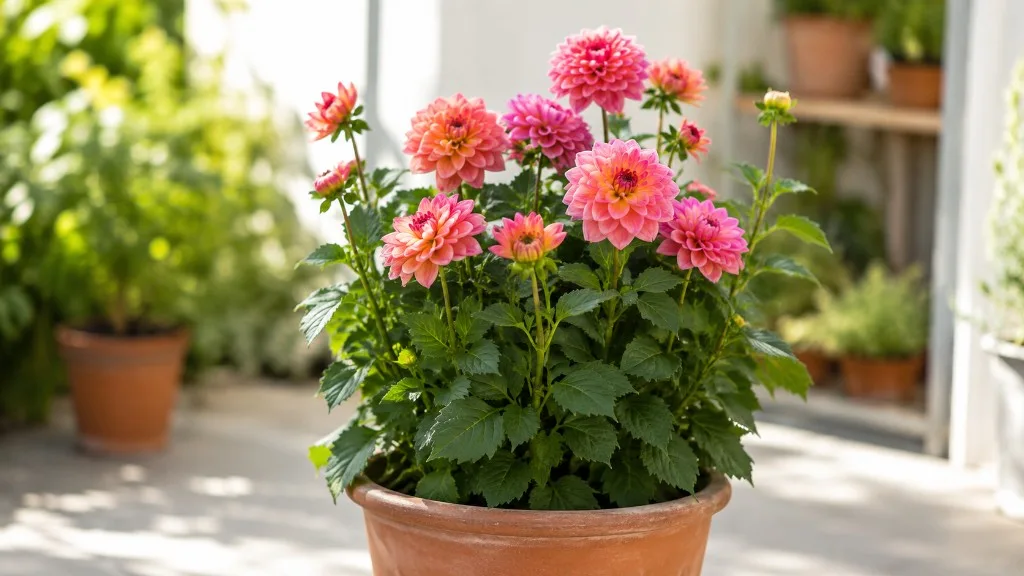
20. Canna lily (Canna spp.) — Cannas earn their space through both tropical-looking foliage and bright summer flower spikes. Their height makes them useful at the back of a bed or as a container centerpiece; in cold climates, plan to lift and store rhizomes if you want to keep them for next year.

21. Lavender (Lavandula spp.) — Lavender combines purple flower spikes, silver foliage, and fragrance, especially in sunny, dry borders. Good drainage is non-negotiable: heavy, wet soil is a more common cause of decline than lack of fertilizer, and cultivars differ in winter hardiness.
22. Dianthus (Dianthus spp.) — Fringed petals in pink, red, white, or purple bring fine detail to bed edges and rock gardens. Most dianthus prefer sun and drainage, and they look best where air can circulate; choose a locally hardy perennial type rather than assuming every dianthus is long-lived.
Colorful Foliage and Flowers for Shade
Shade is not one uniform condition. Coleus can be grown for its leaves, coral bells for a low mound of colored foliage, and fuchsia for hanging flowers, but the cultivar and the number of hours of light still matter. The NC State Plant Toolbox’s coleus profile lists cultivars with different sun tolerances, which is why a plant tag is more useful than a blanket “coleus likes shade” rule.
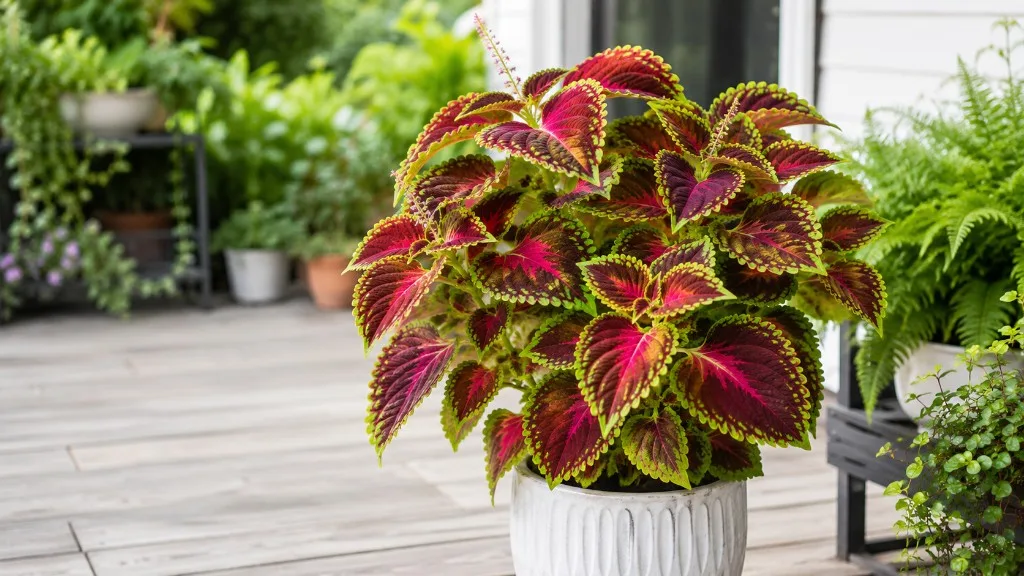
23. Coleus (Plectranthus scutellarioides) — Coleus is one of the strongest choices when the goal is color between blooms: leaves can be lime, copper, burgundy, pink, or patterned. Many cultivars prefer partial shade, while some tolerate sun; pinch flower spikes if you want the display to stay focused on foliage.
24. Coral bells (Heuchera spp.) — Coral bells form compact mounds of foliage in plum, caramel, lime, silver, and near-black, with small flowers on airy stems. They are a useful foreground plant beneath taller flowers; in hot climates, afternoon shade and well-drained soil help prevent leaf scorch and crown stress.
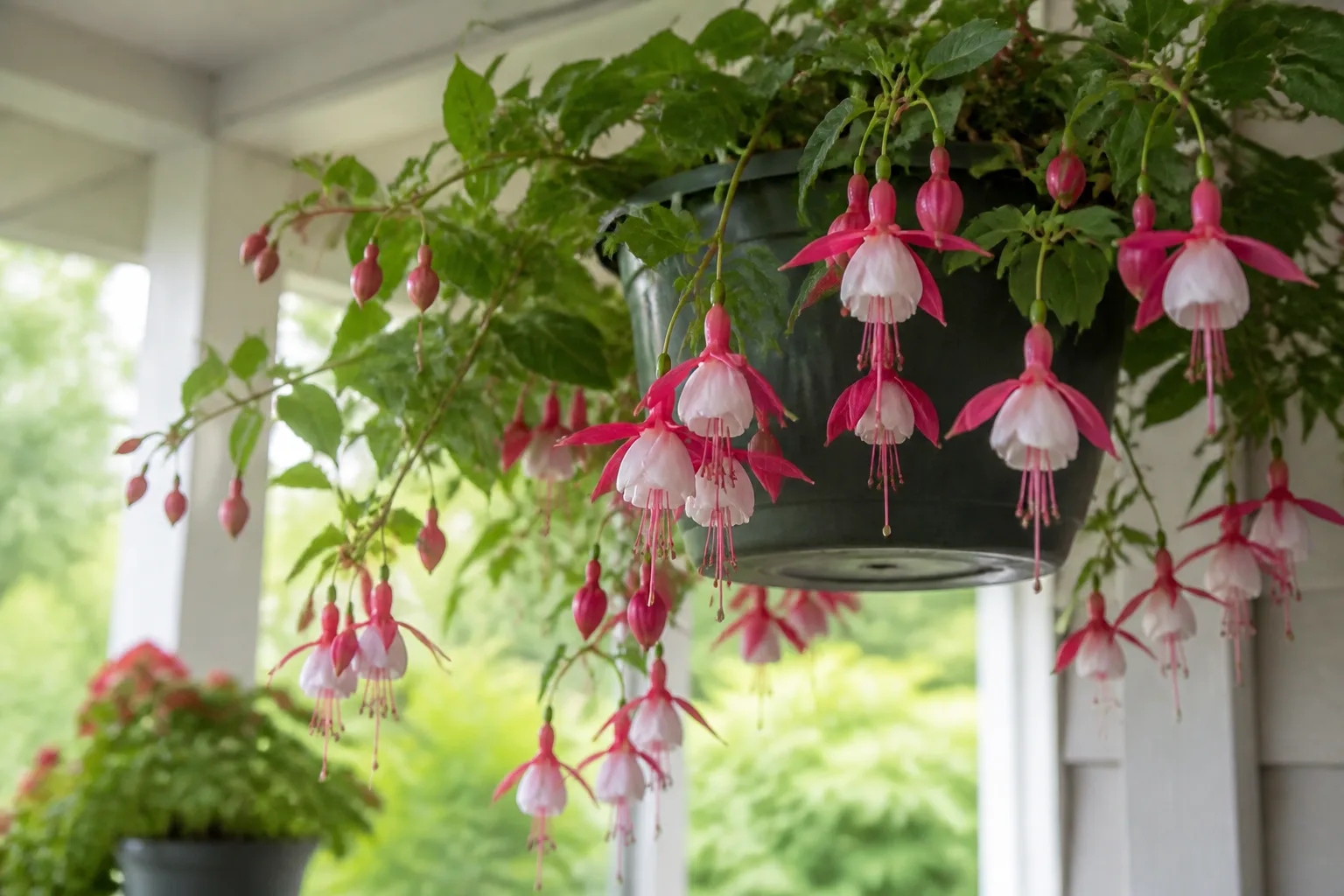
25. Fuchsia (Fuchsia spp.) — Pendulous two-tone flowers make fuchsia a natural choice for a hanging basket or shaded porch container. It prefers bright filtered light, steady moisture, and shelter from hot afternoon sun; a basket that dries out repeatedly may drop buds even if the plant survives.
26. Hydrangea (Hydrangea spp.) — Hydrangeas contribute large flower clusters and broad leaves, but the genus includes shrubs and climbers with different sizes and light needs. Match the species and cultivar to your space first; flower color is not equally changeable across all hydrangeas, so do not buy a white panicle type expecting soil adjustments to turn it blue.
27. Balloon flower (Platycodon grandiflorus) — Balloon-shaped buds open into starry blue, violet, pink, or white flowers in summer. The compact perennial works at the front or middle of a border and pairs well with low foliage, while its upright stems add a different shape from round, daisy-like blooms.
28. Clematis (Clematis spp.) — Clematis adds vertical color where a bed has little ground space, climbing a trellis, fence, or obelisk. Give the vine support and protect its root zone from baking heat; pruning depends on the species or cultivar group, so keep the plant label before trimming it hard.
Late-Summer Into Fall Color
Late-season plants are what keep a garden from looking finished in July. Combine warm-colored annuals with aster and butterfly weed for a pollinator-friendly look, then leave some seed heads if birds, winter texture, or self-seeding matter to you.

29. New England aster (Symphyotrichum novae-angliae) — Purple and pink daisy flowers bring color when many spring perennials are done, and the blooms are useful to late-season pollinators. Many cultivars grow tall; give them room, pinch early if a shorter, bushier plant is desired, or stake them before they lean.
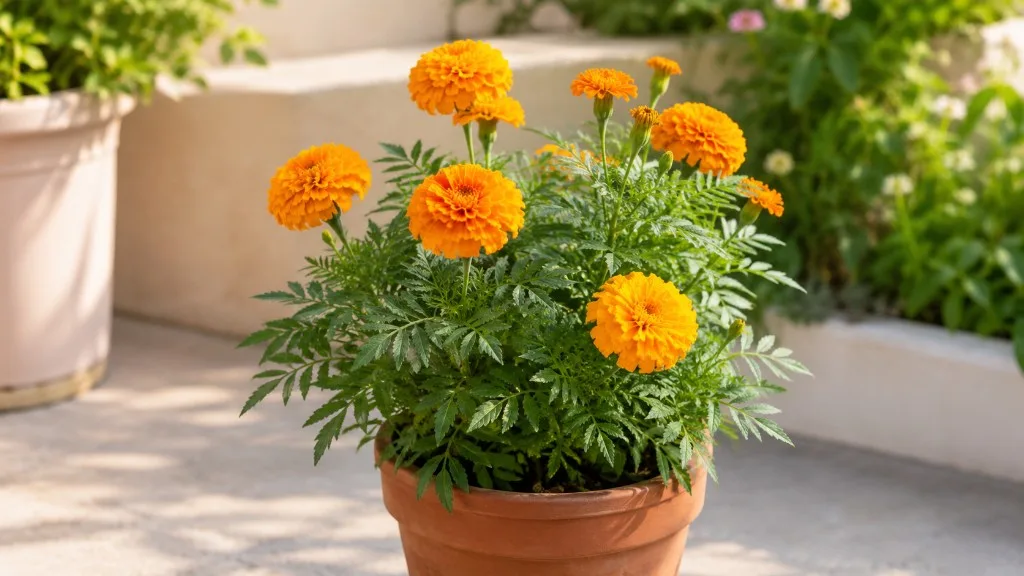
30. Marigold (Tagetes spp.) — Marigolds give reliable yellow, orange, and rust tones in beds and pots from warm weather into frost. Deadhead for a tidier, longer display, and avoid relying on them as a guaranteed pest barrier; their strongest value is dependable color and easy seasonal replacement.
31. Sweet pea (Lathyrus odoratus) — Sweet peas bring fragrant pink, purple, red, and white flowers to a trellis or cutting patch, but they perform best in cool weather. In hot-summer regions, plant them early enough for spring bloom instead of expecting them to peak through midsummer heat.
32. Sunflower (Helianthus annuus) — Sunflowers can be lemon yellow, gold, rust, burgundy, or branching multi-flowered forms, from compact pots to tall back-of-border screens. Check the mature height on the seed packet: a row of tall plants can shade neighbors, while branching cultivars may need extra width.
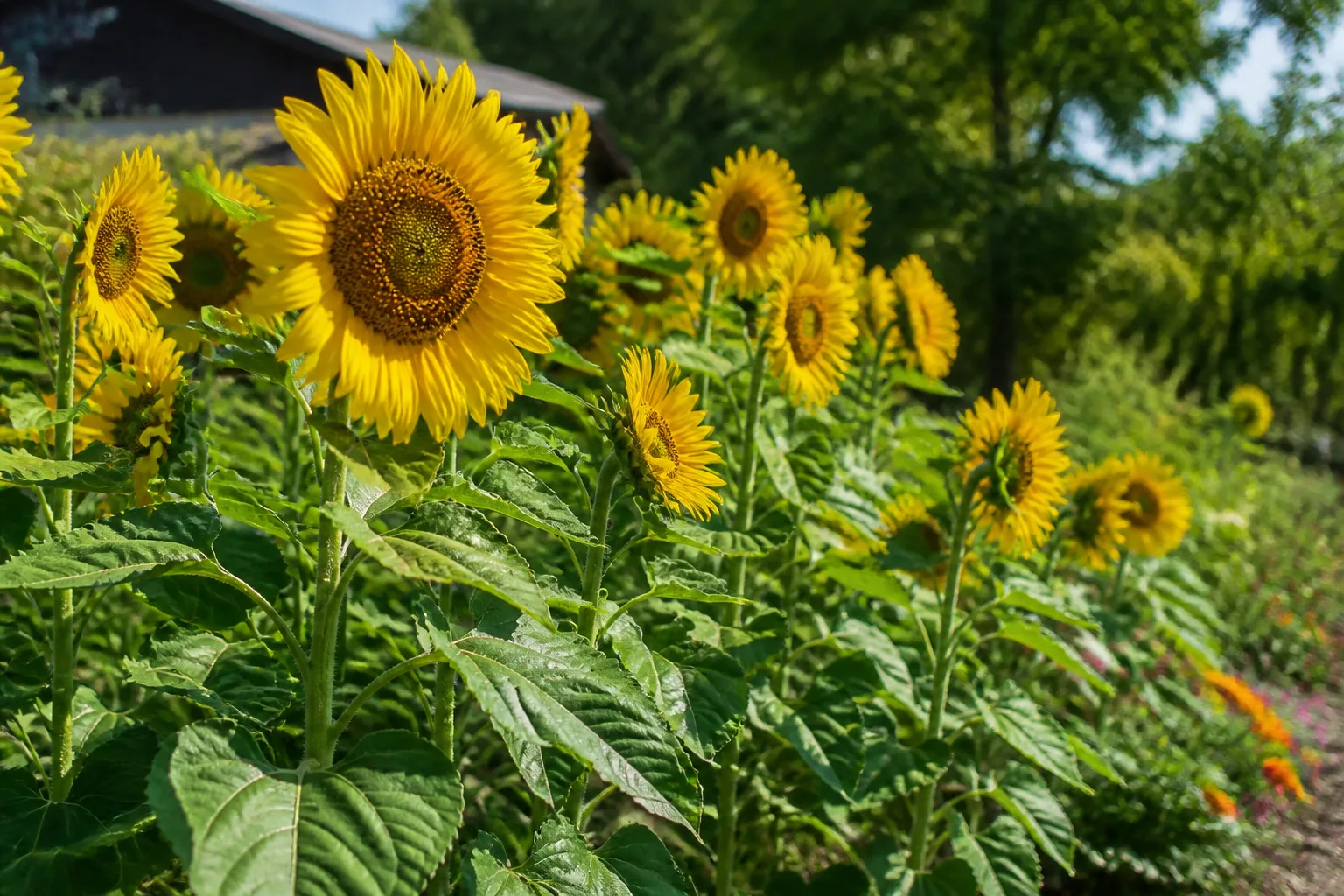
33. Mexican sunflower (Tithonia rotundifolia) — Orange-red flowers and tall stems make Mexican sunflower a bold late-summer accent, particularly in a sunny pollinator bed. It is an annual in most gardens, appreciates room and warmth, and may need staking in windy sites; do not plant it at the front of a narrow bed.
34. Butterfly weed (Asclepias tuberosa) — This orange native milkweed offers a strong block of color and serves as a host plant for monarch caterpillars in its native range. It establishes slowly and forms a deep root, so choose the site carefully and avoid repeatedly moving it; seed-grown plants may take time to flower.
35. Nasturtium (Tropaeolum spp.) — Nasturtium’s round leaves and red, orange, or yellow flowers spill over bed edges and containers, giving a softer shape than upright spikes. It is usually grown as a warm-season annual in cold climates and can be perennial in frost-free regions; lean soil often produces more flowers than heavily fertilized soil.
How to Combine Colorful Plants Without Visual Clutter
A garden does not need every color to feel colorful. A limited palette repeated in several places often looks fuller and more intentional than a collection of unrelated one-off plants. The color schemes in Epic Gardening’s design overview and the examples from Gardener’s Path are useful starting points, but your house, paving, and the light in the bed should have the final say.
Choose a Leading Color and Repeat It
Choose one color family to lead: for example, orange and gold from blanket flower, marigold, and Mexican sunflower. Use one contrasting accent such as purple from lavender, iris, or aster, and repeat that accent in more than one spot so the eye can travel through the bed. If you prefer a calm look, stay with neighboring colors such as pink, purple, and blue; for a stronger effect, pair colors across the wheel but keep one as the dominant color.
White, silver, and dark foliage can act like visual punctuation. Silver lavender leaves cool warm flowers, while burgundy coleus or coral bells makes lime and pale blooms stand out. Repeating foliage color is especially useful when flowering plants bloom at different times.
Use Height, Texture, and Bloom Overlap
Place tall sunflowers, cannas, and large asters where they will not block shorter neighbors or windows. Use mounded plants such as coral bells and dianthus along the front edge, and let clematis or trailing nasturtium add a vertical or cascading line. Different flower shapes also help: combine a few large, rounded dahlia or peony flowers with upright spikes from lavender or hyacinth and smaller daisy forms from zinnia, aster, or coneflower.
Plan a small overlap between bloom windows rather than expecting every plant to flower continuously. Spring bulbs can fade into foliage from peonies and iris; summer annuals can fill open pockets; late asters and Mexican sunflowers can carry the border toward fall. This succession is more resilient than building the whole display around one brief peak.
Make a Colorful Garden Last From Spring to Frost
In colder climates, start with hardy spring bulbs and perennials, then add warm-season annuals after frost risk has passed. In hot climates, pansies and sweet peas may be better for the cool season, while lantana, portulaca, and tropical hibiscus handle the hottest months. Local planting calendars are more useful than copying a fixed month from a garden in another region.
Use containers to test a color combination before committing to a large bed. Containers are also a practical place for tender plants such as tropical hibiscus and cannas: you can move them to shelter or store them when temperatures fall. For a lower-maintenance border, use perennials as the backbone and reserve annuals for a few gaps that need quick color.
Plant and Care Steps That Protect the Display
Prepare Soil and Space for Mature Size
Remove weeds and loosen compacted soil over the full planting area; do not dig only a tiny hole and leave dense soil around it. Follow each plant label for mature spacing and planting depth, especially for bulbs, corms, and rhizomes, which should not all be buried alike. If a plant repeatedly fails in one spot, test drainage and light before adding more fertilizer.
Set the tallest plants where they will not shade low growers, and group plants with similar water needs. That makes irrigation simpler and helps prevent the common mistake of overwatering a drought-adapted plant to satisfy its thirstier neighbor. Mulch can reduce weeds and moisture swings, but keep it away from crowns and iris rhizomes.
Water Young Plants by Their Root Zone
New transplants need consistent moisture while roots establish, but “water more” is not a universal fix. Check the soil an inch or two below the surface and water deeply when the root zone is drying; sandy beds and containers may need more frequent checks than heavier soil. Water in the morning when possible and direct it toward the soil rather than routinely soaking foliage.
After establishment, adjust to the plant rather than following a calendar. Blanket flower, lavender, and portulaca usually prefer better drainage and less frequent watering than fuchsia, hydrangea, or a newly planted annual in a small pot. If leaves wilt during a hot afternoon but recover overnight, check soil moisture before adding water; wilting alone does not prove the plant is dry.
Common Mistakes That Drain Color or Damage Plants
Deadhead Selectively and Keep Useful Structure
Deadheading can encourage new flowers on some annuals and repeat bloomers, but it will not extend every plant’s season. Leave seed heads on coneflowers and sunflowers if you want bird food or winter form, and let spring bulb foliage fade naturally. Remove diseased material promptly, but do not cut back healthy leaves just because the flowers are finished.
Avoid fertilizing every plant on the same schedule. Excess nitrogen can push leafy growth at the expense of flowers, and plants adapted to lean soil can become floppy or short-lived in overly rich beds. Use a soil test and the plant label before adding amendments.
Match Plant Safety and Spread to Your Household
The list includes plants that can be toxic to pets, and common names can conceal important differences. ASPCA identifies daylilies (Hemerocallis spp.) as toxic to cats; if a cat may have eaten one, contact a veterinarian or animal poison-control service promptly. For any other plant, check the exact botanical name against a current veterinary or poison-control reference rather than assuming that “garden flower” means safe.
Also check regional invasive-plant lists before planting lantana or allowing a vigorous annual to reseed. A plant that behaves neatly in a short-season garden can spread aggressively in a warmer climate. Deadhead before seed set when you want to limit self-sowing, and choose a locally recommended alternative if the plant is restricted in your area.
Conclusion
The best colorful garden is a mix of plants that suit the same conditions and take turns carrying the display. Start with your light and drainage, then choose a leading palette, layer flowers with foliage, and overlap spring, summer, and fall color. A few well-matched plants repeated in deliberate groups will usually look brighter and be easier to care for than a bed filled with every color at once.