33 Best Plants That Grow in Water Indoors
Discover 33 plants that grow in water indoors, from pothos and lucky bamboo to paperwhites and orchids, with setup, light, water, and safety tips.
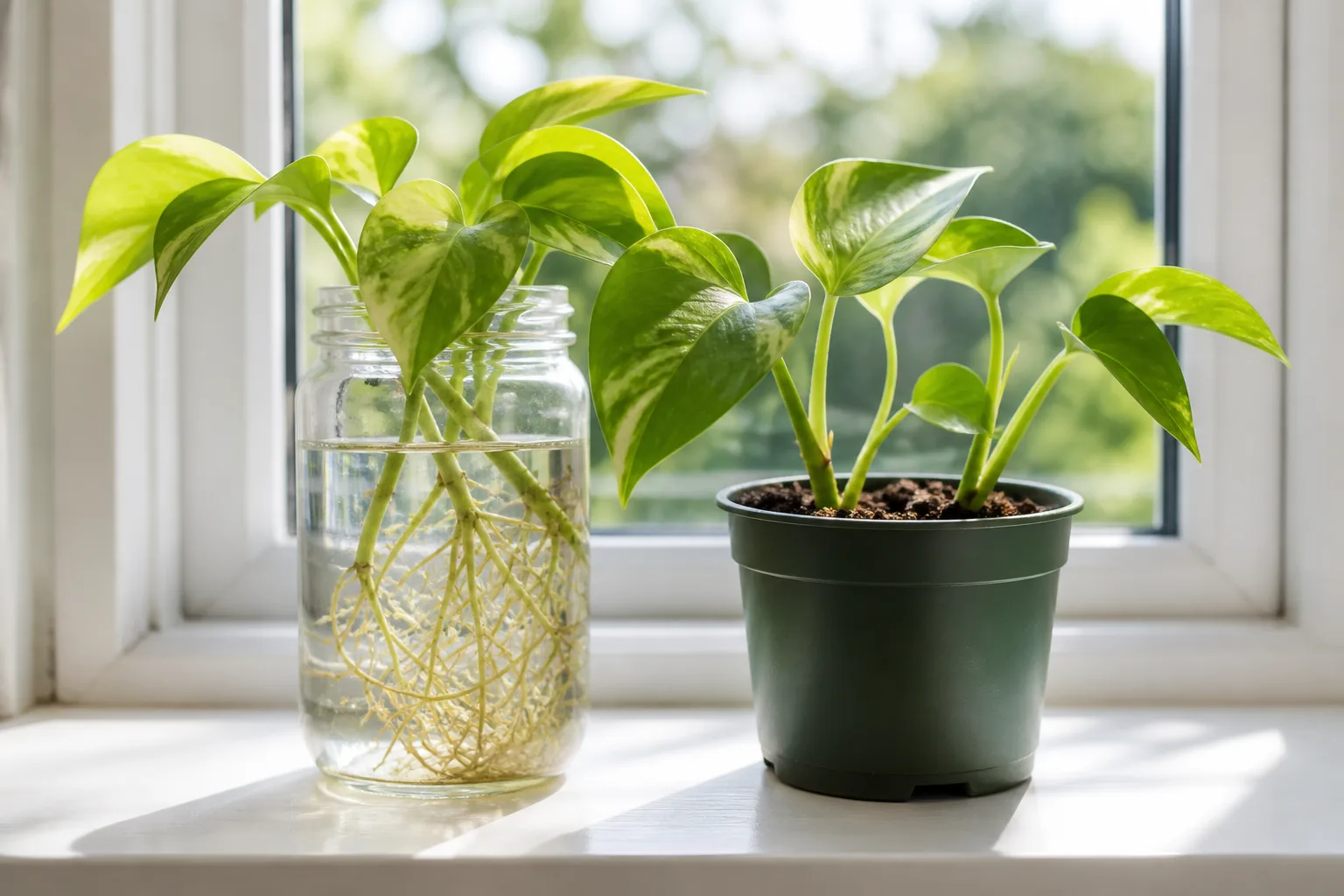
Yes, you can grow many houseplants in water indoors—but “grow in water” describes three different projects. Water propagation means rooting a cutting until it is ready for soil. Vase culture means keeping a rooted cutting or division in water as a living display. Long-term water culture means supporting new growth with light, oxygen, clean water, and nutrients instead of potting mix.
The easiest place to begin is a healthy cutting with at least one leaf node: pothos, heartleaf philodendron, monstera, spiderwort, coleus, mint, and lucky bamboo are forgiving choices. Plants with bulbs, rhizomes, succulent leaves, or delicate soil roots need a more specific setup, and a few plants on this list are best treated as short-term displays or propagation projects.
The list below keeps those differences visible. Choose the group that matches your goal, then follow the water line and cleaning rules so a pretty jar does not become a stagnant root-rot experiment.
What “growing in water” actually means
A cutting can live in water because its stem or node can produce new water-adapted roots. That does not mean every mature plant pulled from soil will tolerate having its existing root ball permanently submerged. Soil roots have developed in a different balance of air and moisture, so moving a large plant directly into a vase can cause transplant shock and decay; long-term water-growing guidance from Epic Gardening likewise recommends starting with cuttings for plants that can adapt to the method Epic Gardening’s water-growing guide.
There is also a difference between roots in water and a plant submerged in water. For most houseplants, only the roots or a few stem nodes belong below the water line. Leaves, petioles, crowns, and succulent stems should stay dry. Paperwhites and lotus are exceptions because they are being forced or grown as bulbous or aquatic plants, not treated like an ordinary foliage cutting.
Think of the method as a small hydroponic system, even when the container is only a drinking glass. Soil normally supplies physical support, water, air spaces, and mineral nutrients. In a vase, you provide those jobs separately with a stable vessel, a careful water level, light, occasional complete fertilizer, and regular cleaning.
How to choose a plant for your water setup
Start with your display and maintenance habits rather than the plant’s photograph. If you want a nearly foolproof first attempt, choose a node-forming vine and root a small cutting. If you want an upright centerpiece, use lucky bamboo or a cane-forming dracaena. If you want flowers, accept that bulbs and orchids have specialized rules and that water culture may be seasonal or advanced.
The most useful choice is often the plant you already have. A vigorous parent plant can spare a clean cutting without losing its shape, and several small cuttings can share a jar while they root. Avoid yellow, pest-damaged, soft, or recently stressed material; water does not rescue weak tissue.
Use the following quick guide before you cut:
| Goal | Best starting choices | What goes in the water | Realistic expectation |
|---|---|---|---|
| Easiest long-term display | Pothos, heartleaf philodendron, monstera, spiderwort | One or two stem nodes | New growth is possible with light and dilute nutrients |
| Upright centerpiece | Lucky bamboo, dracaena, ti plant | Cane or stem base; leaves stay dry | Long-lasting if water stays clean and the vessel is stable |
| Fast kitchen harvest | Mint, rosemary | Stem bases or new-growth cuttings | Best in a bright window; harvest keeps the plant compact |
| Propagation project | African violet, begonia, spider plant, pancake plant | Leaf, stem, plantlet, or offset depending on species | Move to soil when the new plant is established if growth stalls |
| Seasonal color | Paperwhite narcissus, caladium, sweet potato vine | Bulb base, tuber section, or rooted vine | Attractive display, but not necessarily a permanent water plant |
| Advanced experiment | Moth orchid, string of hearts, fiddle-leaf fig, croton | Partial roots or a node-bearing stem | More sensitive to wetness, light, and acclimation |
The 33 best plants at a glance
These are the 33 requested choices, but they are not interchangeable. The plant profiles identify the starting material and the main limitation so you can tell an easy water-rooted vine from a plant that merely survives in a vase for a while.
Easiest stem-cutting plants
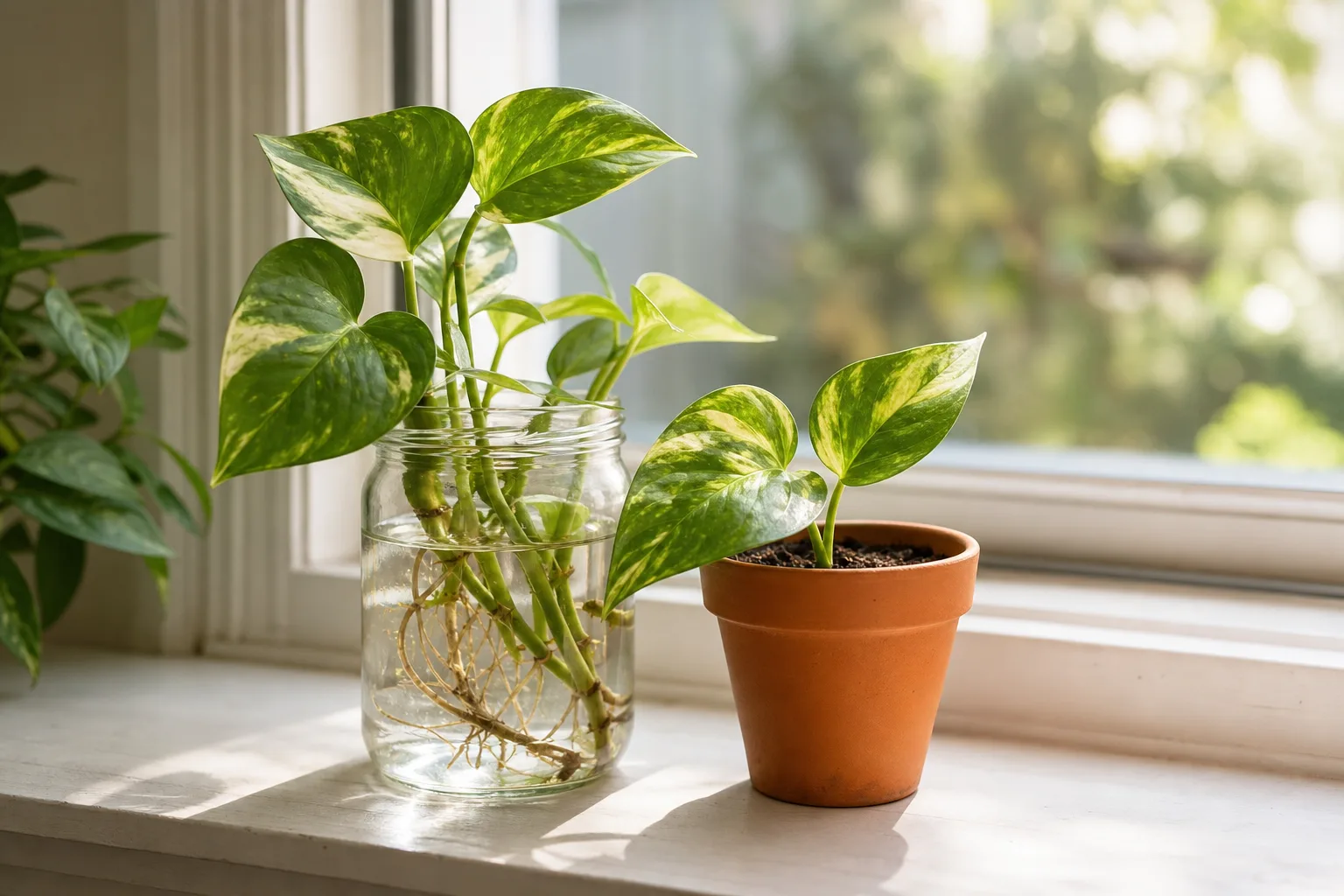
1. Pothos (Epipremnum aureum) is the best beginner choice for a trailing display. Cut just below a node, remove any leaf that would sit underwater, and submerge one or two nodes; NC State Extension notes that pothos vines readily root in water and prefer bright, indirect light NC State’s Plant Toolbox profile for pothos. It can stay in water long-term when you add very dilute complete fertilizer after roots form, but expect slower growth than in a well-fed pot.
2. Heartleaf philodendron (Philodendron hederaceum) roots readily from a node-bearing vine and keeps a graceful shape in a narrow-necked bottle. Give it bright, indirect light and enough water to cover a node without wetting the leaves. Cuttings are the better starting point; a washed soil root ball is more likely to sulk or rot while it adjusts.
3. Monstera (Monstera deliciosa) makes a dramatic water display, but the cutting must include a node. An aerial root is useful but not a substitute for a node if you want new growth. Use a heavy, stable vase for large leaves, keep the stem and foliage above the water line, and plan to trim dead roots rather than letting a dense root mass fill the vessel.
4. Spiderwort or inch plant (Tradescantia zebrina) roots quickly from the bumps at its nodes and produces colorful trailing growth in bright, filtered light. It is a good way to use pruned stems, but water-grown vines can become top-heavy. Refresh the water and pinch the growing tips when the display begins to sprawl.
5. Coleus (Plectranthus scutellarioides) is one of the fastest ways to turn a summer plant into an indoor vase. Use a soft tip cutting with lower leaves removed and give it bright, indirect light. Coleus is especially useful as a seasonal water-grown plant; if it becomes pale or leggy, root new tips rather than trying to maintain an old, exhausted stem.
6. Begonia (Begonia spp.) offers both stem and leaf propagation options, although a healthy stem cutting is the simplest route for a water display. Wax begonias are forgiving, while rex and tuberous begonias need more patience and careful support. Keep broad leaves out of the water, change the water when it clouds, and move a new plant to an airy medium if the stem base softens.
7. Impatiens (Impatiens spp.) roots from soft stem tips and can be overwintered in a bright indoor jar. It prefers even moisture and moderate light rather than harsh sun through hot glass. Treat it as a seasonal project unless the plant continues producing firm new growth; soft stems and submerged leaves deteriorate quickly.
8. English ivy (Hedera helix) roots from stem cuttings and drapes nicely over a shelf. Keep the water clean and the leaves dry, and provide bright, indirect light so the vine does not become thin. English ivy can be invasive outdoors in some regions, so keep discarded cuttings and rooted material contained rather than planting it casually outside.
9. Arrowhead vine (Syngonium podophyllum) forms roots at stem nodes and adapts well to a narrow vase. It is a strong choice if you want a fuller display from several short cuttings, but its growth changes as the plant matures. Trim it before the leaves and stems become too heavy for the container.
10. Chinese evergreen (Aglaonema spp.) can be rooted from a healthy stem section with lower leaves removed. It tolerates lower indoor light better than many plants here, although bright, indirect light is more reliable for new growth and variegation. A narrow-necked vessel can support its floppy foliage, while a wide glass gives roots room but needs a heavier base.
11. Dracaena (Dracaena spp.) grows from cane or top cuttings, with the lower stem in water and only a small tuft of leaves above it. It is slower than pothos but makes a clean upright display. Use a weak complete liquid fertilizer only after roots and new growth appear, and do not leave fallen leaves or soft cane tissue in the vase.
12. Ti plant (Cordyline fruticosa) roots from a warm, healthy cane or tip cutting. Keep it in bright, filtered light and away from cold drafts; it will not appreciate a chilly windowsill or a vase that loses water overnight. Its narrow leaves are easier to keep above the water line than broad, low-growing foliage.
13. Aluminum plant (Pilea cadierei) has patterned leaves and upright stems that look good when several cuttings share a taller vessel. Cut below a node, strip the lower leaves, and give it bright, indirect light. Replace older cuttings when the stem becomes bare rather than burying a leafless length deep in the water.
14. Prayer plant (Maranta leuconeura) can root from a node-bearing stem cutting, but it is slower and less forgiving than pothos. Use soft, indirect light, warm temperatures, and clean water; the leaves should never rest on the surface. If it produces roots but no new foliage, move the young plant to a lightly moist, airy potting medium rather than adding more fertilizer.
15. Mint (Mentha spp.) is fast, fragrant, and useful in a sunny kitchen window. Place a clean stem cutting in water with the lower leaves removed, harvest the tips often, and keep the water line from falling below the roots. Mint can stay productive for a while in water, but it needs more light and nutrients than a decorative low-light vine.
16. Rosemary (Salvia rosmarinus) roots more slowly from fresh, non-flowering tips than mint does. Use a bright window, change the water before it smells stale, and choose a firm green stem rather than a woody piece. Water is excellent for starting rosemary cuttings or keeping a small kitchen sprig going; soil is usually the better long-term home for a large, woody plant.
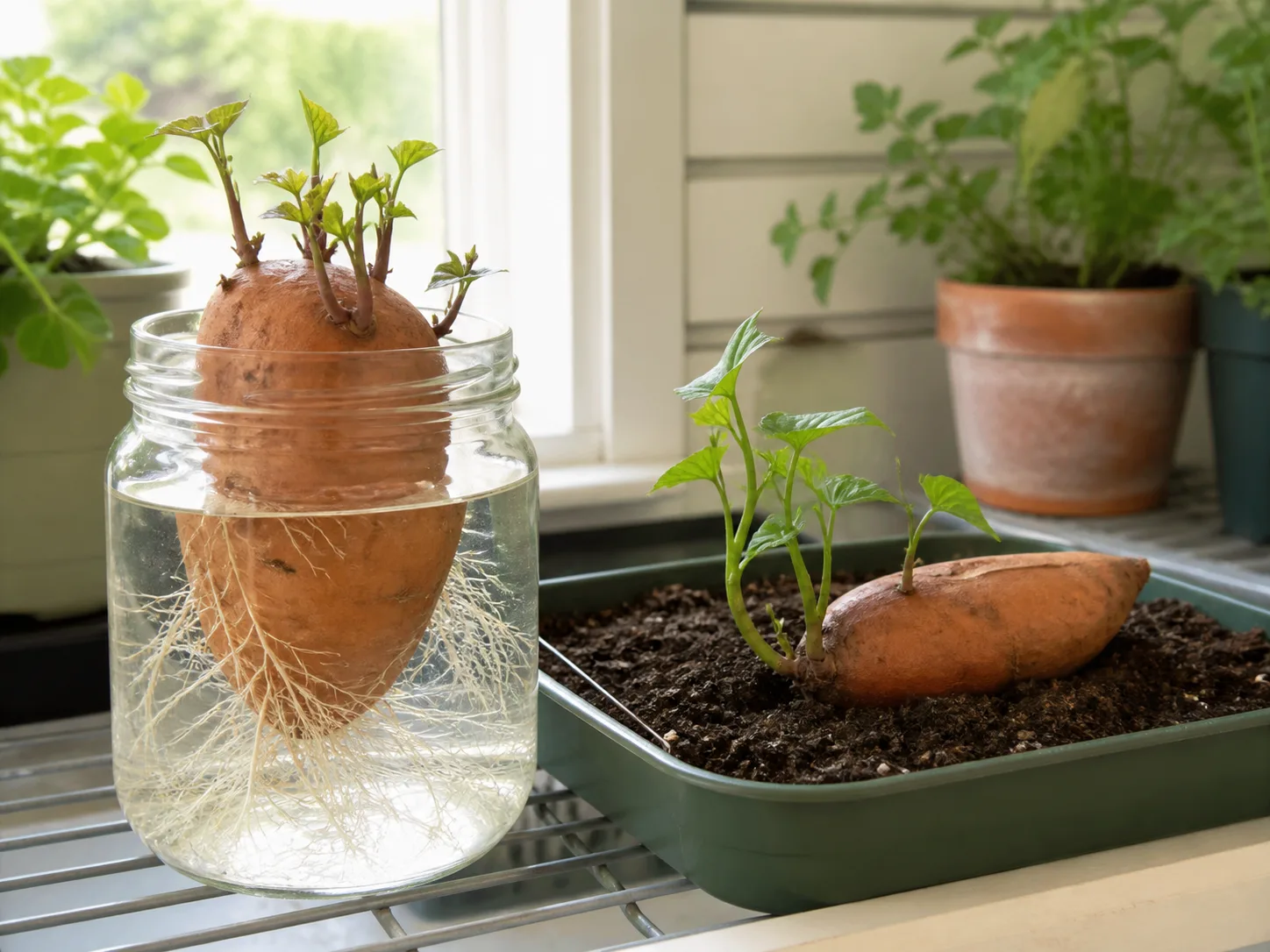
17. Sweet potato vine (Ipomoea batatas) can be started from a stem cutting or from a tuber suspended over water. If using a tuber, keep only the lower end in water and support the rest above the rim so it does not rot. The vine needs strong light and regular trimming, and it is best viewed as a vigorous seasonal display rather than a compact permanent centerpiece.
18. String of hearts (Ceropegia woodii) can root from small vine sections, but its succulent leaves and thin stems make it less tolerant of a high water line. Group several cuttings, keep only the nodes or roots wet, and provide bright, indirect light. It is a good propagation experiment, not the first choice for someone who wants a constantly topped-up vase.
Plants for rooted sections, plantlets, or divisions
19. Baby’s tears (Soleirolia soleirolii) forms a delicate mat of tiny leaves that can adapt to water when a rooted cluster is supported carefully. Keep every leaf above the water because submerged foliage rots quickly. A small mesh support or narrow opening helps hold the stems in place, and a shallow water display is usually more realistic than an open, deep vase.
20. Spider plant (Chlorophytum comosum) is easiest from one of its plantlets, not from a random leaf. Suspend the little plantlet so its base or emerging roots touch water while the leaves remain dry. Bright, indirect light and frequent checks keep the water from dropping below the roots; once the plantlet is established, you can either keep it in water with nutrients or pot it.
21. Pancake plant or Chinese money plant (Pilea peperomioides) is best started from a small offset separated from the parent plant. A young offset with a little root tissue transitions more easily than a large soil-grown plant. Use a small vessel at first, keep the round leaves above water, and move to soil if the plant becomes top-heavy without making new roots or leaves.
22. Peace lily (Spathiphyllum spp.) cannot be made into a new plant from an ordinary leaf or stem cutting. Divide an established clump, rinse the roots gently, and suspend the crown above the water while the roots hang below it. This can make an elegant display, but a narrow vase or support is essential because a constantly wet crown invites rot.
23. Stingray alocasia (Alocasia ‘Stingray’) is an advanced choice for a water-grown display. Start with a small division or a piece that has its own roots rather than cutting a leaf, and keep the growing point above water. Give it warmth and bright, indirect light, inspect the roots often, and return it to a free-draining medium if the corm or base becomes soft.
24. Caladium (Caladium spp.) can be grown temporarily from a tuber section or a small rooted division in warm conditions. Anchor the plant without burying its crown, protect the foliage from intense direct sun through glass, and change the water when it clouds. Caladiums are seasonal and may go dormant; declining leaves do not automatically mean more fertilizer is needed.
25. African violet (Saintpaulia / Streptocarpus sect. Saintpaulia) is primarily a water-propagation plant. Put a healthy leaf with a short stem into a narrow-necked bottle so the leaf blade stays dry; a plantlet can form at the base after roots develop. Use soft, bright light and patience, then pot the young plant once it has a crown of its own.
26. Moth orchid (Phalaenopsis spp.) can be grown in water only with an orchid-specific wet-dry rhythm. Keep the leaves and crown dry, allow part of the root system to dry between water exposures, and never assume that a vase filled to the same height every day is safe. This is a better project for an orchid grower who can monitor roots closely than for a first jar experiment.
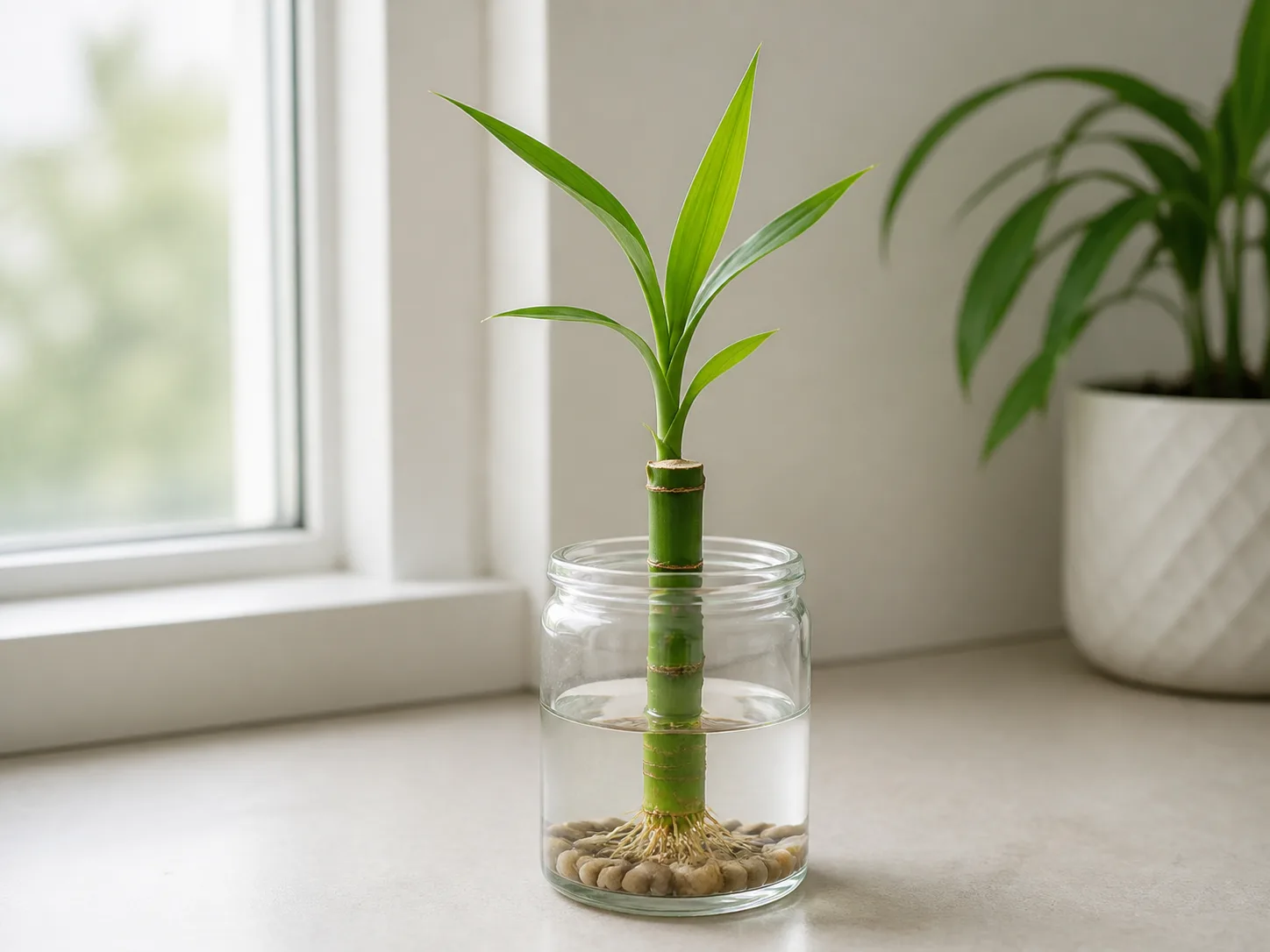
27. Lucky bamboo (Dracaena sanderiana) is the most dependable upright plant in the list. It is not true bamboo; NC State Extension identifies it as a tropical perennial that can grow indoors in chlorine-free water, with weekly water changes, weak liquid fertilizer, and pebbles for support NC State’s lucky bamboo profile. Keep the canes and leaves above the water, provide bright but indirect light, and use a weighted vessel because tall stems topple easily.
28. Dieffenbachia (Dieffenbachia spp.) roots from cane or tip cuttings and can produce a strong vertical display while young. Use a firm cutting with a node, keep the lower stem in clean water, and place it in indirect light. It can become top-heavy and is toxic if chewed, so choose a stable, inaccessible location and treat water culture as a controlled display rather than a reason to let the plant grow unchecked.
29. Croton (Codiaeum variegatum) can root from stem cuttings, but it is a fussy choice because it wants warmth, strong light, and a steady environment. A sudden move from a bright nursery to a dim water vase can cause leaf drop. Start with a small cutting, keep the water warm and clean, and pot it once the roots are sufficient if new growth stalls.
30. Fiddle-leaf fig (Ficus lyrata) is best treated as a stem-cutting experiment. A single leaf may remain green in water, but without a piece of stem containing a node it will not make a new plant. Use a sturdy vessel, bright filtered light, and a clean cut; do not expect a leaf-only display to turn into a branching fiddle-leaf fig.
31. Sweetheart hoya (Hoya kerrii) needs a node-bearing stem if you want a vine. The familiar single heart-shaped leaf sold in small pots can root or remain alive, but it usually cannot produce a new trailing plant without a growth node. Keep the water line low, give bright indirect light, and treat the cutting as a slow, careful project rather than a high-water plant.
Herbs, bulbs, tubers, and aquatic choices
32. Paperwhite narcissus (Narcissus papyraceus) is designed for indoor bulb forcing in water. Set the bulbs on pebbles so only the bottom touches the water; do not submerge the bulb itself. Give the developing foliage bright light and support the flower stems with close spacing or a stable vessel, then compost the spent display or follow the bulb’s appropriate aftercare rather than expecting year-round vase growth.
33. Lotus (Nelumbo spp.) is a true aquatic plant, so it belongs in a different category from houseplant cuttings. A dwarf lotus needs a wide, shallow container, an anchored rhizome, strong light, and aquatic nutrients; a dark indoor corner will not produce a healthy flowering plant. Choose lotus only if you can provide a sunny, warm setup and accept that it is closer to a water garden than a windowsill houseplant.
Step-by-step: start a cutting in water
The following method works for most node-forming stems, including pothos, philodendron, monstera, spiderwort, coleus, arrowhead vine, dracaena, and mint. It is intentionally conservative: a small, clean cutting is easier to monitor and much less likely to rot than a whole plant crowded into a jar.
- Choose healthy growth. Select a firm, pest-free stem with at least one visible node and one or two healthy leaves. A cutting with two or three nodes gives you options, but more stem in the water is not automatically better.
- Make a clean cut. Use sharp, clean snips and cut just below a node. The node is the point where a leaf, bud, or aerial root emerges; it is the tissue most likely to produce new roots.
- Remove submerged leaves. Strip off leaves on the lower part of the stem. A leaf sitting in water breaks down, feeds microbes, and can pull decay into the stem.
- Set the water line. Fill a clean vessel so one or two nodes are under water and the leaves, petioles, crown, and upper stem are above it. If the cutting cannot stand up, use a narrow-necked jar or a clean support rather than adding more water.
- Place it in the right light. Most foliage cuttings want bright, indirect light. Herbs such as mint and rosemary need a brighter window for useful new growth, but even they can scorch when a clear glass magnifies direct afternoon sun.
- Watch before feeding. Check the water every few days. Top it up if roots are exposed, but replace it when it becomes cloudy, smelly, slimy, or visibly dirty. Wait until roots and new growth appear before adding fertilizer.
BBC Gardeners’ World uses the same basic sequence for water-rooted stem cuttings: remove lower leaves, submerge only the lower portion, keep the jar warm and bright, and replace the water weekly while roots develop BBC Gardeners’ World’s propagation guidance. Rooting speed varies widely, so use firm new roots and active growth—not a calendar alone—to decide whether the plant is ready for soil or long-term water culture.
Make the cut at a node
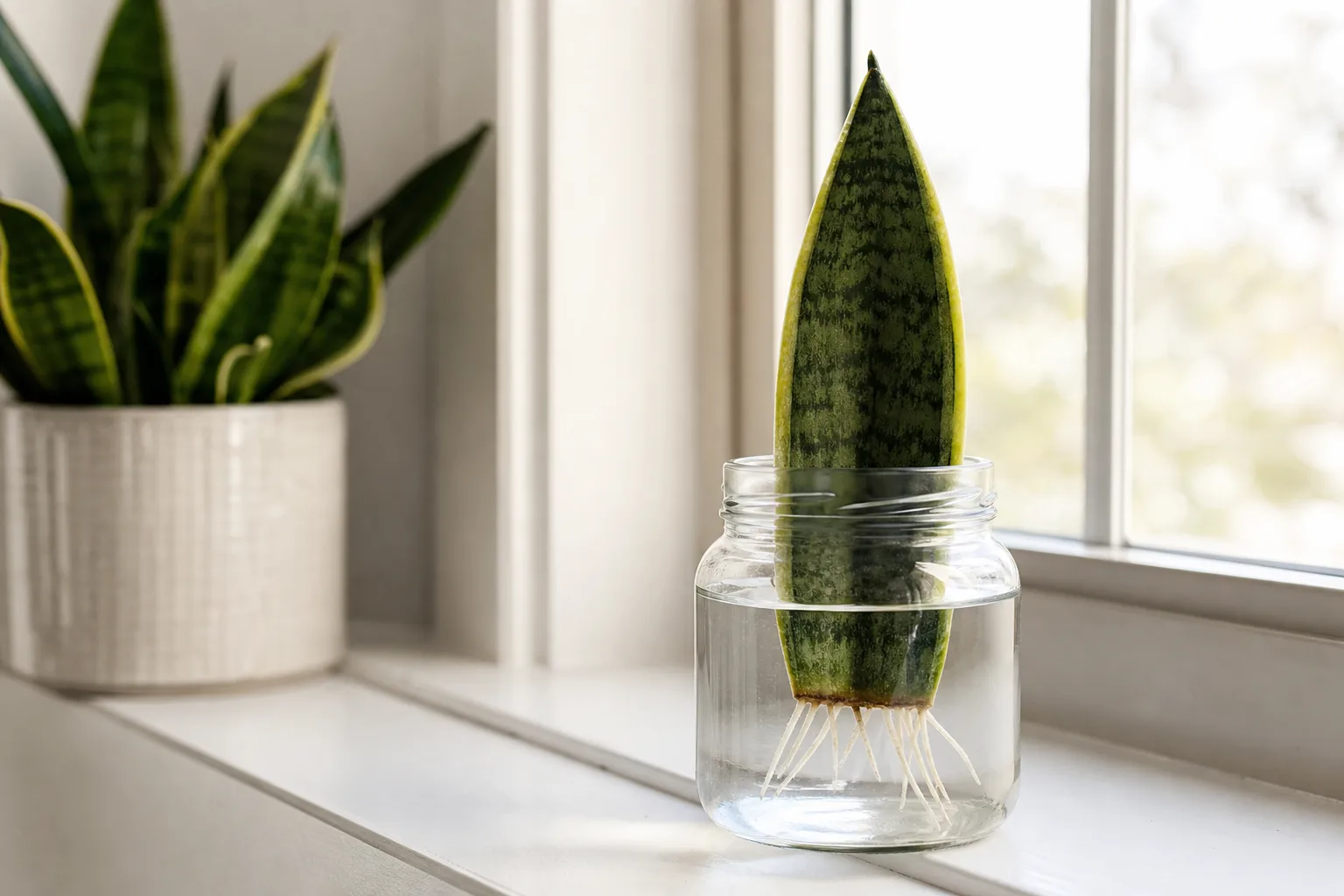
The cut below a node is the most important detail. A leaf by itself cannot produce a vine on plants such as pothos or philodendron, and a leaf-only fiddle-leaf fig display will not become a new tree. For cane plants, use a section with a viable bud or node; for spider plants and pancake plants, use a plantlet or offset that already has the tissue needed to continue growth.
Avoid taking a huge cutting from a weak parent plant. Large leaves lose water while roots are forming, and the cutting may wilt before it can use the water in the jar. If the leaves are oversized, root a shorter section or remove one leaf rather than burying a long, bare stem.
Fit the cutting to the vessel
The vessel needs to hold the plant upright without forcing the foliage into the water. A narrow-necked bottle is useful for a single stem; a wide, heavy vase suits monstera or several trailing cuttings. Clear glass makes water level and root condition easy to inspect, but light also encourages algae. Epic Gardening recommends visibility for monitoring while noting that darker glass can reduce algae; that is a better compromise than hiding an unhealthy root system in an opaque container Epic Gardening on long-term water culture.
Pebbles can stabilize canes, bulbs, and top-heavy cuttings, but they should not turn a plant into a sealed, dirty terrarium. Rinse stones before use, leave air space around the stem, and make sure the potting crown or cut surface is not pressed into constantly wet gravel.
Light and location for water-grown plants
Water does not replace light. Put most foliage plants near bright, indirect light, such as a bright room a little back from an unobstructed window or a filtered east-facing window. Low light may keep a cutting alive while it uses stored energy, but it will not reliably support new leaves, variegation, or a strong root system.
Herbs, lotus, and some colorful foliage plants need more intensity. Mint and rosemary can go closer to a bright window, while lotus needs several hours of strong sun and a wide container. Monitor a clear vase on a hot sill: the water can warm quickly, leaves can scorch, and algae can bloom faster.
Keep vases away from heating vents, air conditioners, and cold glass at night. Stable temperature matters more than a precise number for most indoor cuttings. If a plant wilts after a location change, check the water line and roots before moving it again; repeated changes make it harder to tell whether the problem is light, temperature, or decay.
Water quality and change schedule

Start with clean drinking water. Ordinary tap water works for many resilient plants, but very hard, softened, salty, or heavily treated water can contribute to leaf-edge damage or mineral buildup. If a plant repeatedly declines despite clean jars and good light, test a filtered water change rather than assuming that every tap-water treatment can be removed by leaving the glass on the counter overnight.
There is no single correct interval for every vase. Check the water line every few days, top up when roots are exposed, and replace the water at least weekly while a fresh cutting is rooting. For established displays, a clean plant in a small jar may go seven to fourteen days, while a warm, sunny, nutrient-fed vase may need attention sooner.
Change the water immediately if it turns cloudy, develops an odor, feels slimy, or contains fallen leaves. Rinse the roots gently, wash the vessel, and refill with fresh water. When roots fill the jar, remove dead sections with clean snips and leave healthy roots intact; repeated aggressive root cutting creates a new stress problem.
Fertilizer for long-term growth
An unrooted cutting does not need fertilizer in its first water. It is using stored energy while roots form, and excess salts can damage tender tissue. Once you see healthy roots and new growth, use a complete liquid or hydroponic fertilizer according to its label, diluted conservatively for the small volume of a vase.
Begin with a weak dose—about one-quarter of a normal soil-strength application is a cautious starting point for many small displays—and feed less often than you would a plant in active potting mix. Epic Gardening emphasizes that water-grown plants need nutrients because soil is no longer supplying them, but also warns that too much fertilizer can overload roots and encourage algae Epic Gardening’s long-term water-care guide.
Do not use compost, compost tea, or a handful of garden fertilizer in a vase. Those materials can cloud the water and add microbes or salts that are difficult to control. If the plant shows yellowing after feeding, replace the solution with plain water, inspect the roots, and wait for recovery before trying a weaker dose.
Troubleshooting roots, algae, and leaves
Water-grown plants tell you a lot when the vessel is easy to inspect. Look at the roots, water, stem, and leaves together rather than treating yellow foliage with fertilizer automatically.
Brown or mushy roots
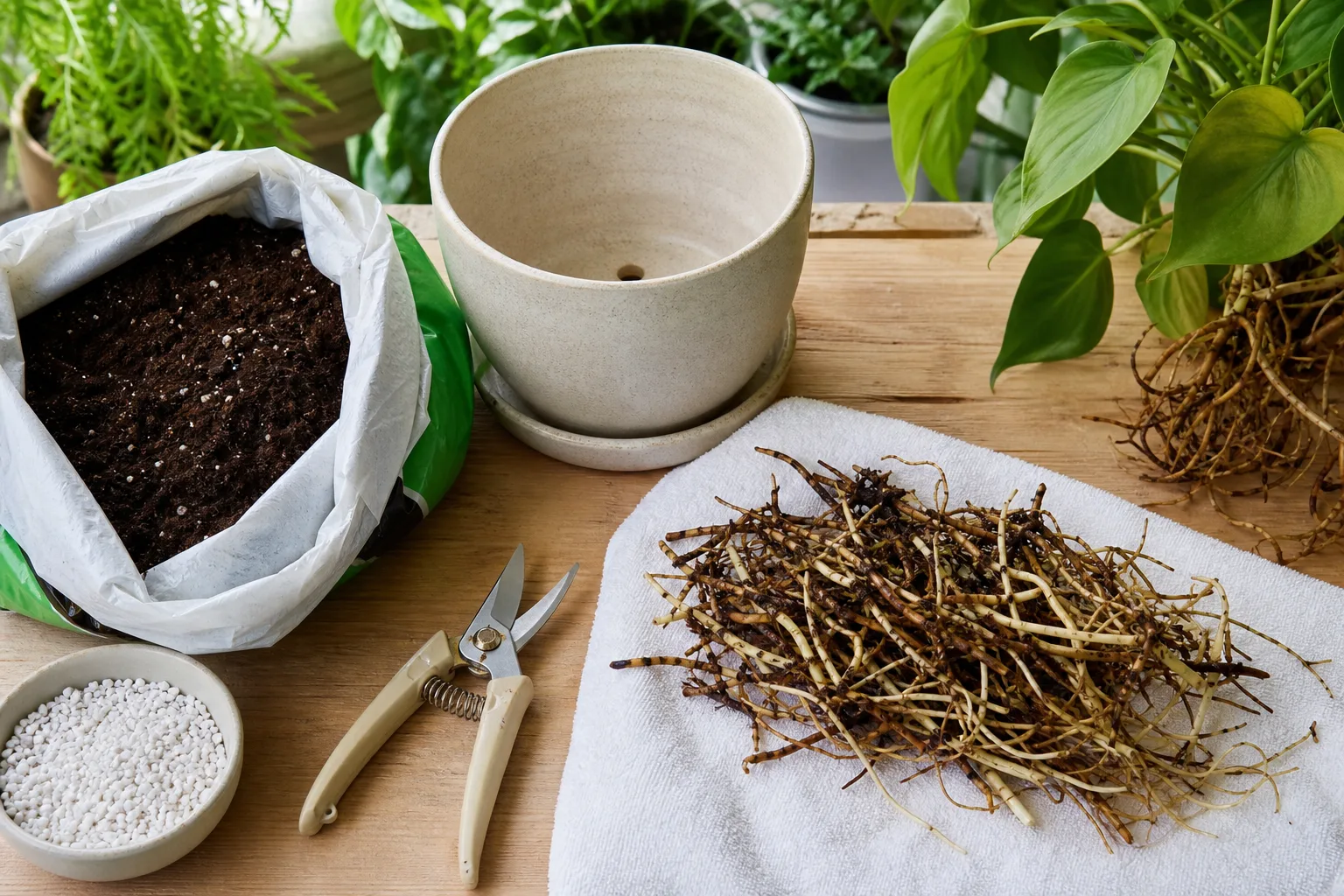
Healthy new water roots are usually firm and pale, although color varies by plant. Brown roots that are soft, slimy, hollow, or foul-smelling indicate decay. Remove the plant, rinse away loosened material, cut back only the dead portion with clean snips, and place the firm tissue in a washed vessel with a lower water line. If the stem or crown is mushy, recut above the damage or discard the cutting; more water will not reverse rot.
If roots are dry and brittle instead, the water line probably fell below them or the vase sits in excessive heat. Top up with fresh water, move the display out of harsh sun, and remove damaged roots gradually. Never compensate for a drying root by submerging leaves or the crown.
Yellow leaves, no new growth, or algae
Yellowing can follow root damage, low light, nutrient deficiency, cold stress, or natural leaf age. Start with the roots and water. If the roots are firm but the plant has no new growth, improve light before increasing fertilizer; if the roots are healthy and the plant is actively growing but pale, a cautious complete nutrient may help.
Green film or strings of algae usually mean the vase receives too much light for the available nutrients and cleaning routine. Scrub the empty vessel, rinse the roots, reduce direct sun on the water, and feed less. Clear glass is useful, but it is not a requirement; an amber or lightly shaded vessel can reduce algae as long as you can still inspect the plant periodically.
Leaves falling into the water, a slipping cutting, and repeated cloudy water are setup problems rather than mysteries. Raise the foliage, reduce the water depth, support the stem, and use a smaller cutting. If a soil-grown plant repeatedly wilts after being moved to water, return it to an airy potting mix or restart with a fresh cutting from the healthiest growth.
Safety, pets, and edible herbs
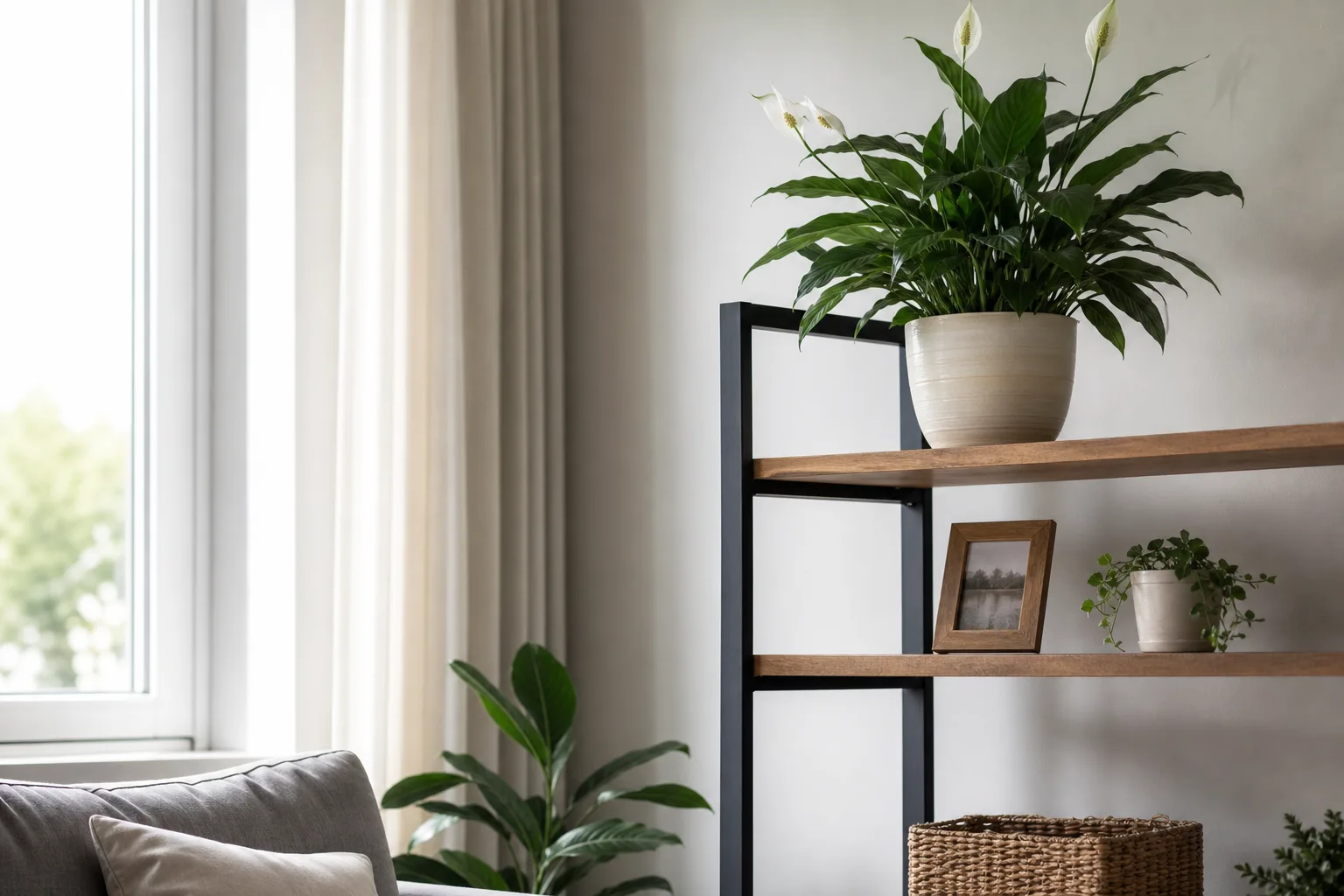
Growing a plant in water does not remove its natural compounds or make it safe to chew. ASPCA lists pothos as toxic to dogs, cats, and horses because of insoluble calcium oxalates, and lists peace lily and dieffenbachia as toxic to dogs and cats with oral-irritation symptoms ASPCA’s toxic and non-toxic plant database, ASPCA’s pothos profile, ASPCA’s peace lily profile, ASPCA’s dieffenbachia profile. Keep those vases behind a barrier or choose a plant after checking the exact species in a current veterinary poison-control database.
The water itself is not a pet-safe drinking supply. Fertilizer residue, decaying plant tissue, and microorganisms can make a vase unattractive or unsafe to ingest even when the plant is listed as non-toxic. Use stable containers that pets cannot knock over, clean spills promptly, and seek veterinary advice if a pet chews a plant or drinks treated water.
Mint and rosemary are edible plants, but only use a clean food-safe vessel and keep fertilizer out of any water intended for consumption. Harvest leaves from a healthy, correctly identified plant, wash them before use, and do not treat decorative, nutrient-fed water as a food source.
Conclusion
For the easiest first jar, choose pothos, heartleaf philodendron, spiderwort, coleus, mint, spider plant, or lucky bamboo. Start with a clean node-bearing cutting or a true plantlet, keep the leaves and crown above water, and watch the roots instead of following a rigid calendar.
For the rest of the list, match the method to the plant: divisions for peace lilies and alocasias, offsets for pancake plants, leaf cuttings for African violets, bulbs on pebbles for paperwhites, partial wet-dry exposure for moth orchids, and a sunny aquatic container for lotus. Long-term water culture is rewarding because the roots are visible, but it still requires light, nutrients, oxygen, and hygiene. If a plant repeatedly shows soft roots or stalled growth, moving it back to soil—or taking a fresh cutting—is the successful choice, not a failure.