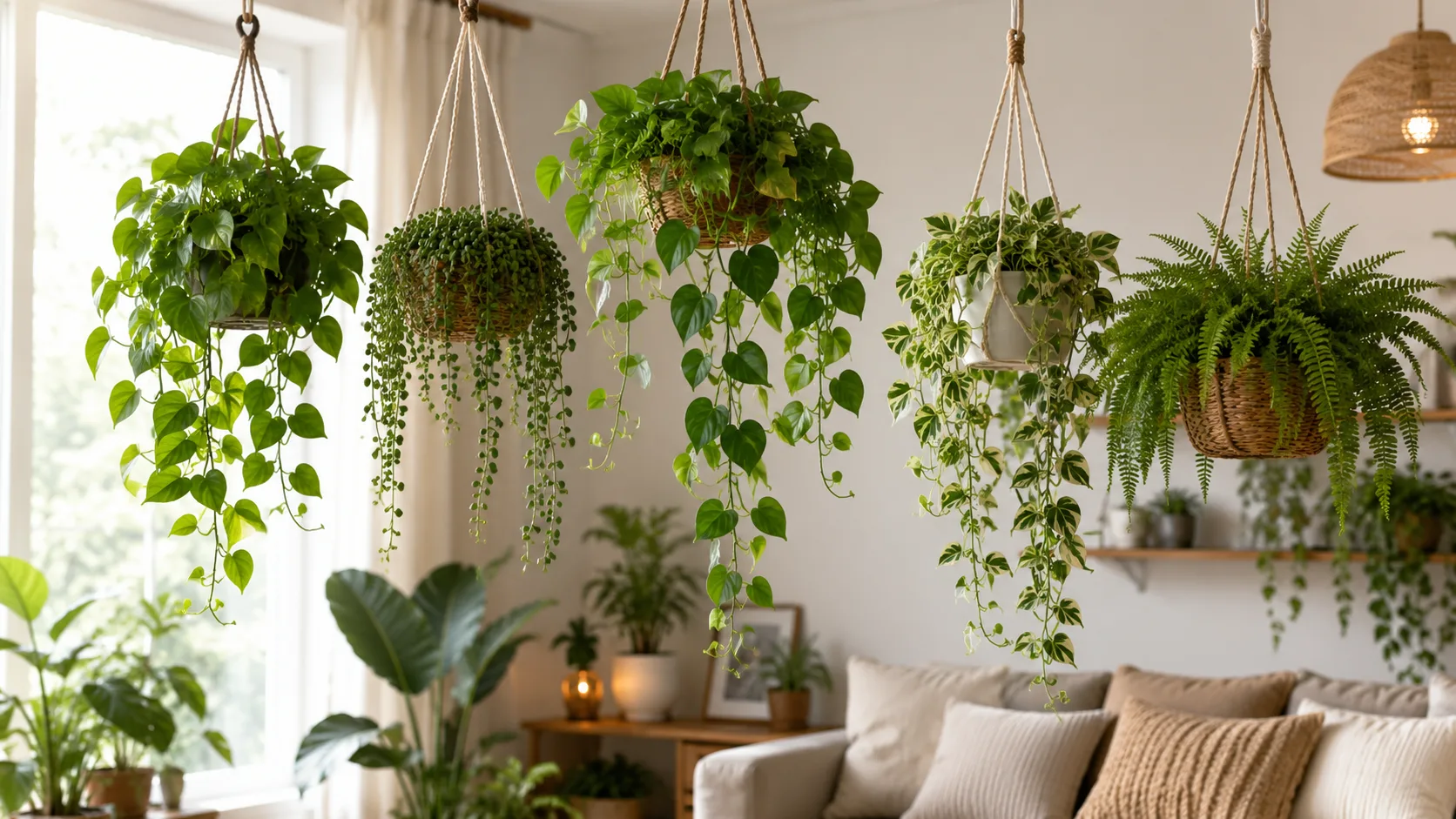
Hanging plants turn unused ceiling height into greenery—valuable in apartments where floor space is already spoken for. The best hanging indoor plants are species with natural trailing or cascading habits, pots that drain cleanly when you lower them to the sink, and light tolerance that matches where your hook actually lives—not just where the photo looked good on social media.
This guide compares ten trailing picks by cascade speed, watering reality in elevated baskets, pet notes, and species care on LeafyPixels. For apartment layout context, see Best Plants for Small Apartments. For bright filtered light picks that also trail, see Best Plants for Indirect Light.
The ten best hanging indoor plants are pothos, heartleaf philodendron, spider plant, English ivy, tradescantia zebrina, Swedish ivy, hoya, string of hearts, string of pearls, and burro’s tail. Fast tropical vines forgive more mistakes than succulent strands—do not hang pearls beside a north-facing hook and expect pothos performance.
What Makes a Good Hanging Houseplant
Trailing stems that lengthen without staking.
Manageable weight when soil is wet—verify hook rating.
Even light access—rotate baskets monthly; top often shades bottom.
Drainage discipline—hanging pots that never drain rot faster than floor pots.
Traffic clearance—trails that snag doorways or hair earn a trim.
Editor note (watering workflow): Renters who will not lower baskets to the sink rarely succeed with hanging plants. Choose a detachable hanger or accept pothos in a shelf cachepot instead of a true ceiling hook if logistics block sink watering.
Quick Pick: Best Hanging Plant for Your Hook
For easiest trailing growth, choose pothos or philodendron.
For pet-friendlier options (still not edible), choose spider plant or Swedish ivy—hang high if cats chew.
For fast color, choose tradescantia zebrina in bright indirect light.
For waxy blooms eventually, choose hoya—slow but stunning when light is stable.
For succulent cascades, choose string of pearls, string of hearts, or burro’s tail on the brightest hook only.
For classic dense green, choose English ivy—toxic to pets; excellent in pet-free bright rooms.
How We Chose These Ten Plants
Ranked from LeafyPixels data by:
- Documented trailing habit indoors in containers.
- Basket performance — stems cascade without constant staking.
- Forgiveness gradient — from beginner pothos to specialty hoya.
- Care cluster depth on site.
Hanging Plant Comparison Table
Pothos
Best placement: Ceiling hook near east or south window, or bright living room
Light need: Medium to bright indirect
Water: Top dry-down
Difficulty: Easy
Main hanging risk: Water running on floor if you do not drain at sink
Pothos is the default hanging basket plant—fast length, easy propagation, and tolerance of typical home humidity.
Placement tip: Trim when vines reach door height; root cuttings in water.
Common mistake: Leaving basket permanently overhead without ever soaking the whole root ball—dry pockets form on bottom soil.
Useful care guides:
Heartleaf Philodendron
Best placement: Hook over desk or sofa side table
Light need: Medium to bright indirect
Water: Moderate
Difficulty: Easy
Main hanging risk: Sparse top if light is one-sided
Philodendron trails softer and heart-shaped compared to pothos—similar care, slightly gentler look in macramé hangers.
Placement tip: Rotate basket a quarter turn weekly.
Common mistake: Hanging in a north-only hook expecting fast fill—growth continues but leaves stay small.
Useful care guides:
Spider Plant
Best placement: Bright kitchen or living room hook
Light need: Bright indirect for spiderettes
Water: Moderate
Difficulty: Easy
Main hanging risk: Cats batting spiderettes
Spider plant combines arching leaves and baby plantlets—excellent non-toxic hanger for many pet homes if placed high.
Placement tip: Snip spiderettes if cats treat them as toys.
Common mistake: Low hook in cat territory—chewed tips despite non-toxic status.
Useful care guides:
English Ivy
Best placement: Bright pet-free room, office hook
Light need: Bright indirect
Water: Moderate; steady moisture
Difficulty: Easy to medium
Main hanging risk: Spider mites in dry winter air
English ivy builds dense green curtains fast in bright filtered light. ASPCA lists it toxic to cats and dogs—avoid in chewing-prone pet homes.
Placement tip: Mist humidity or group plants in winter if mites appear.
Common mistake: Assuming ivy tolerates dim hooks because it is “classic”—leggy sparse vines follow.
Useful care guides:
Tradescantia Zebrina
Best placement: Bright hook with colored accent wall
Light need: Bright indirect
Water: Moderate
Difficulty: Easy
Main hanging risk: Purple fades in low light
Tradescantia zebrina (wandering dude) adds stripe color quickly—pinch tips to branch.
Placement tip: Pinch pruned tips root easily in water for fuller baskets.
Common mistake: Hanging beside pothos on the same dim hook—tradescantia needs more brightness to keep silver-purple contrast.
Useful care guides:
Swedish Ivy
Best placement: Bright kitchen or bedroom hook
Light need: Bright indirect
Water: Moderate
Difficulty: Easy
Main hanging risk: Confusion with toxic true ivies
Swedish ivy (Plectranthus verticillatus) is not true ivy—ASPCA non-toxic, soft scalloped leaves, forgiving trails.
Placement tip: Trim when basket looks one-sided toward window.
Common mistake: Buying “ivy” without checking botanical name—safety and care differ.
Useful care guides:
Hoya
Best placement: Bright stable hook; avoid moving when budding
Light need: Bright indirect
Water: Dry–moderate
Difficulty: Medium
Main hanging risk: Bud blast after relocation
Hoya is the slow-reward hanger—waxy leaves and fragrant umbels when light and stability align.
Placement tip: Do not rotate or move when peduncles form.
Common mistake: Overwatering because leaves look succulent-thick—hoya still rots in wet baskets.
Useful care guides:
String of Hearts
Best placement: High bright hook, out of traffic
Light need: Bright indirect
Water: Dry between soaks
Difficulty: Medium
Main hanging risk: Rot from overhead misting
String of hearts (Ceropegia woodii) forms delicate chains with marbled leaves—stunning in bright hanging pots.
Placement tip: Bottom-water to keep tubers dry at soil surface.
Common mistake: Misting only instead of full soak cycles—tubers shrivel.
Useful care guides:
String of Pearls
Best placement: Brightest indoor hook
Light need: Bright indirect
Water: Dry; pearls pucker when thirsty
Difficulty: Medium
Main hanging risk: Strand breakage in walkways
String of pearls is the iconic succulent hanger—needs light and drought discipline, not pothos habits.
Placement tip: Hang above furniture, not walking paths—pearls detach when brushed.
Common mistake: North-window hook with weekly deep watering—root rot follows.
Useful care guides:
Burro’s Tail
Best placement: Bright sunroom or south-facing hook
Light need: Bright to direct sun
Water: Very dry
Difficulty: Medium
Main hanging risk: Leaf knock-off from bumps
Burro’s tail (Sedum morganianum) builds plump blue-green tails in strong light—ASPCA non-toxic, but physically fragile.
Placement tip: Hang where children and pets cannot brush past.
Common mistake: Handling tails during every water check—leaves fall at light touch.
Useful care guides:
Hanging Basket Mistakes to Avoid
- No drainage — Decorative baskets without liner pots rot roots.
- Never lowering to water — Top-down spritz misses dry root cores.
- Hook too low — Trails snag doors, pets, and people.
- Same hook for pothos and pearls — Light and water needs differ sharply.
- Ignoring weight — Wet soil plus long vines stress cheap adhesive hooks.
Conclusion
Hang pothos or philodendron first if you want fast, forgiving trails. Choose spider plant or Swedish ivy when ASPCA non-toxic listings matter. Save string of pearls, string of hearts, and burro’s tail for your brightest hook with dry-soil discipline. Hoya rewards patience; tradescantia rewards brightness with color; English ivy fills fast in pet-free bright rooms.
Install one hook at the measured bright spot, water at the sink for a month, then decide if a second basket is worth the workflow.
Related guides
How This List Was Reviewed