Faded Leaves on Swedish Ivy: Causes, Checks & Fixes
Quick answer
Faded leaves on Swedish Ivy lose their glossy green depth and look washed-out or bleached-not crisp brown. First step: decide whether leaves are pale with stretched gaps between pairs (need brighter indirect light) or whitened on the sun-facing side (pull back from harsh direct rays).
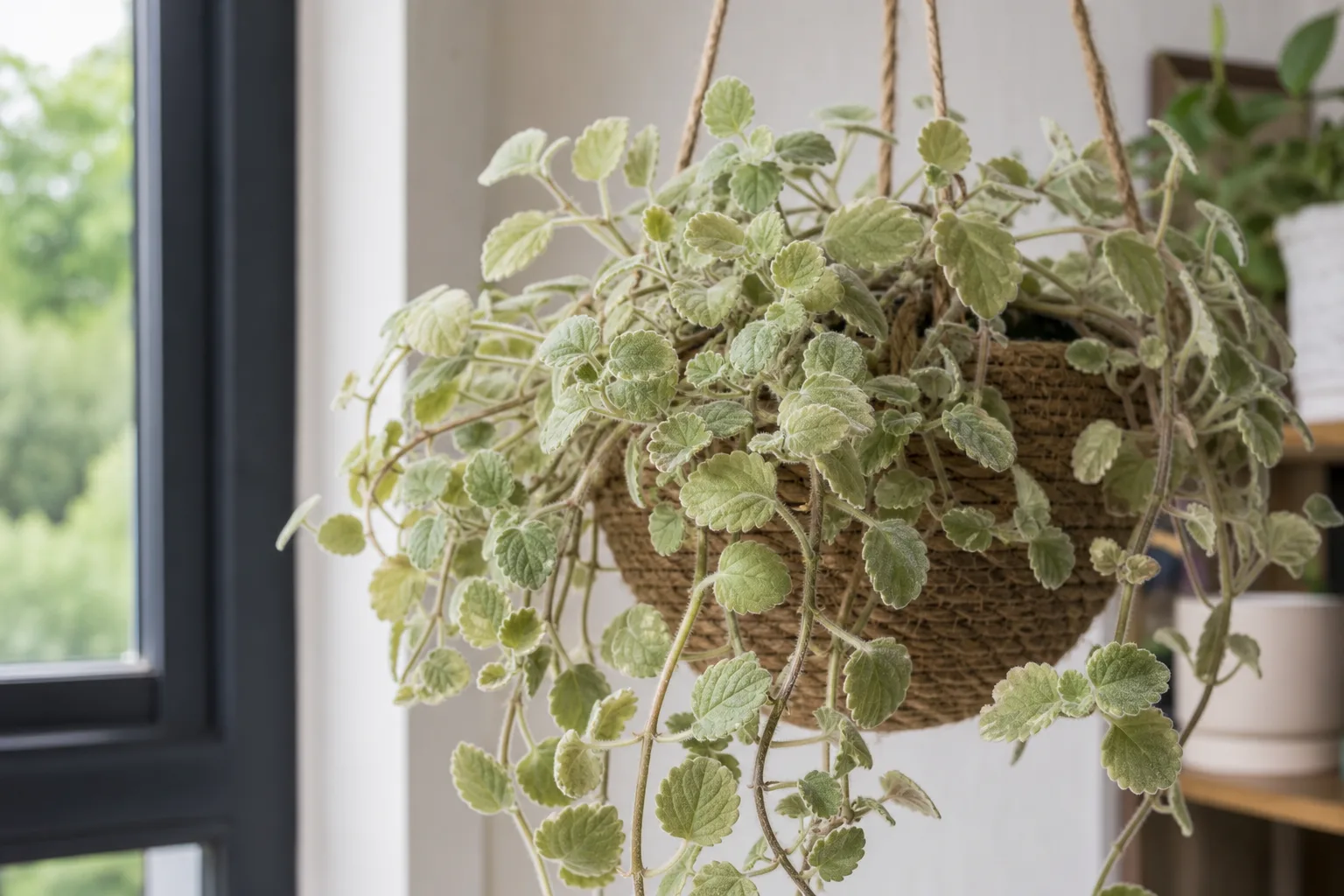
Faded Leaves on Swedish Ivy: Causes, Checks & Fixes
This guide covers faded leaves on Swedish Ivy. See also the general Faded Leaves guide, watering, and light pages for this plant.
Faded Leaves on Swedish Ivy: Causes, Checks & Fixes
Quick answer
Faded leaves on Swedish Ivy (Plectranthus australis, often sold as P. verticillatus) lose the plant’s signature glossy green depth and look washed-out, dull, or bleached-not necessarily yellow or brown. Healthy runners should read as rich green with a slight sheen; faded plants look flat, pale yellow-green, or whitened on the sun-facing side.
First step: decide which light mistake you have. If leaves are uniformly pale with long gaps between pairs and stems reach toward windows, move the pot to bright indirect light within about 60–90 cm of an east or filtered west window. If leaves show crispy bleached patches on the side facing harsh sun, pull the plant back from direct midday rays and acclimate more slowly. Do not fertilize, repot, or water heavily on the same day.
What faded leaves look like on Swedish Ivy
On this fast-growing trailer, fade is a color and gloss problem more than dead tissue. The scalloped, rounded leaves should look plump and shiny in good light. Faded Swedish Ivy shows:
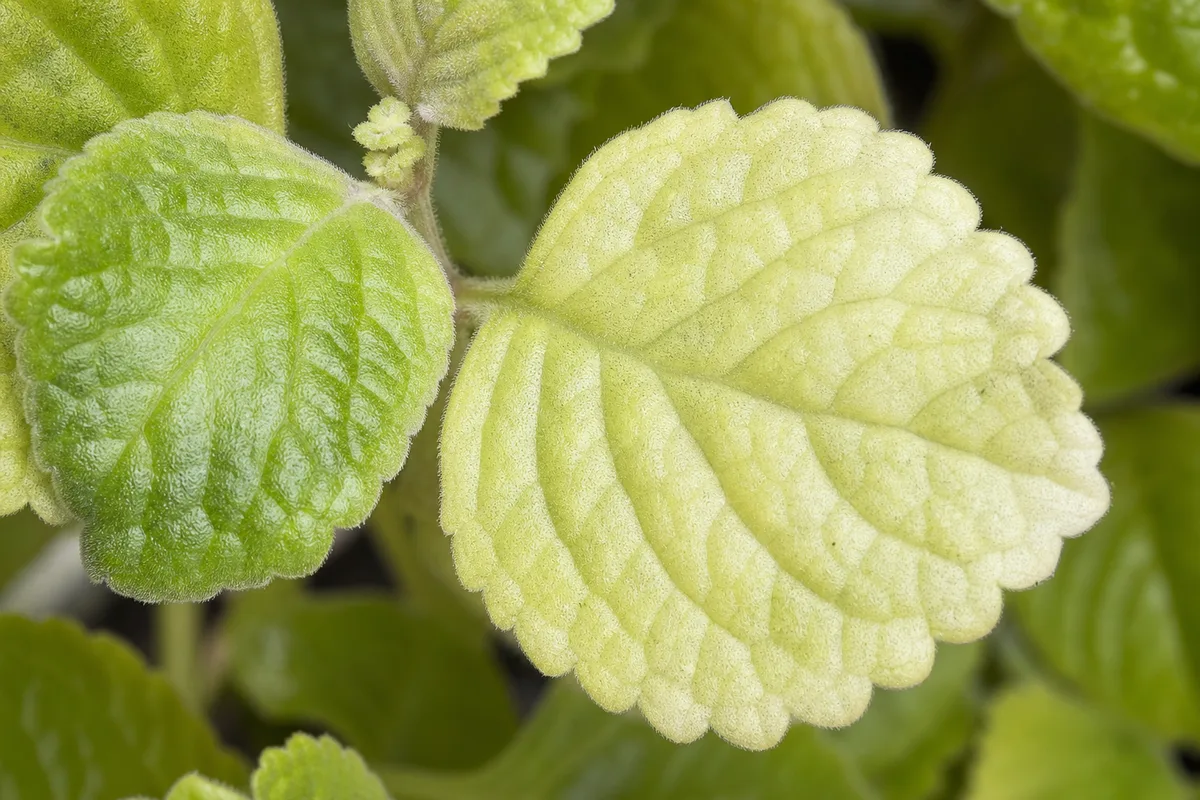
Faded Leaves symptoms on Swedish Ivy - compare with healthy tissue on the same plant.
- Washed-out yellow-green or dull olive across multiple leaves-not one old leaf at the base alone
- Loss of gloss; foliage looks matte or thin instead of succulent-shiny
- Smaller new leaves emerging paler than older ones on the same stem
- Long gaps between leaf pairs paired with pale color-etiolation and fade often arrive together
- Bleached or whitened patches on sun-facing leaves after a sudden move to a brighter sill-different from uniform wash-out
- Fine webbing and stippling on undersides with pale tops-spider mites mimic light fade but need pest treatment
What fade is not: Bright yellow leaves with limp stems and heavy wet soil point to overwatering or root rot-see yellow-leaves guidance instead. Crisp brown edges with dry lightweight soil suggest underwatering. Dull, droopy leaves in too much light can look faded but stems stay tight without the stretch pattern of low light-Swedish Ivy leaves turn dull and droopy when light is excessive.
Why Swedish Ivy gets faded leaves
Insufficient light is the most common indoor cause. Swedish Ivy evolved as a ground-covering trailer from South Africa that grows in bright, filtered exposures-not deep interior shade. Missouri Botanical Garden recommends bright, mostly sunny houseplant placement. When photons are scarce, chlorophyll production drops, new leaves emerge smaller and paler, and indoor plants stretch and become spindly as they reach for windows.
Too much direct sun causes a different fade pattern: bleached, papery, or tan patches on leaves that face harsh rays. Outdoors, Swedish Ivy must stay in shade because direct sun burns the leaves. Indoors, a south-facing sill in midsummer can scorch tissue that was grown in dim light-especially variegated cultivars where white zones bleach first.
Spider mites weaken foliage and cause pale, stippled leaves with webbing underneath. UF/IFAS notes that pale leaves with webby material on undersides may signal spider mites on Swedish Ivy-confirm before assuming light alone is wrong.
Seasonal daylight drop can dull color in winter even if the pot never moved. The same east window delivers less energy from November through February; a plant that looked fine in summer may fade by December without a placement or supplemental-light adjustment.
Low light also slows water use. Growers often keep watering on a summer schedule while growth stalls-so mix stays wet longer. Pale leaves plus wet soil raise root-rot risk; faded color from weak light and yellowing from soggy roots can overlap on the same basket.
How to confirm the cause
Work through these checks before changing anything else:
- Light direction and pattern - Are leaves uniformly pale with stretched spacing? That favors insufficient light. Bleached patches on one side only favor too much direct sun.
- Window distance - Within 60–90 cm of east or filtered west glass is ideal. More than 1.5 m back, or a hook centered in a windowless alcove, is suspect for wash-out fade.
- New vs. old leaf color - Compare the three newest leaves on the longest runner to leaves near the soil. Paler recent growth means current light is too weak-not a fertilizer shortage.
- Midday sun test - Watch the pot around noon. If direct sunbeams hit leaves for long stretches through clear south or west glass, scorch risk is real.
- Pest check - Hold a runner up to light and inspect undersides for webbing, stippling, or moving specks. Wipe a white paper towel along a leaf underside; red or green streaks confirm mites.
- Soil and stem firmness - If stems are limp and soil smells sour while leaves yellow, treat as a water/root issue alongside any light correction.
- Season context - Temporary dullness in cool winter with firm stems and soil that still dries on schedule may be rest. Months of progressive wash-out with stretch is a placement problem.
If spacing is tight, color is rich green, and new tips look glossy, light is probably adequate-even if winter growth is slow.
First fix for Swedish Ivy
If leaves are washed-out and stretched: move the pot to your brightest suitable window-east or filtered west preferred-and place it within 60–90 cm of the glass.
That single placement change addresses the most common cause. Do not jump a shade-grown plant straight into harsh midday south sun-acclimate over five to seven days with a sheer curtain if needed.
If leaves show bleached or crispy sun-facing patches: pull the plant back from direct midday rays-shift to an east window, add a sheer curtain on south or west glass, or move the pot 30–60 cm farther from the pane. Increase light gradually when correcting low light; decrease intensity gradually when correcting scorch.
If webbing and stippling confirm spider mites: rinse leaf undersides thoroughly in the sink first, then treat with insecticidal soap per label directions if pests persist-light correction alone will not fix mite damage.
Pick one primary action from what you confirmed. Skip fertilizer, Swedish Ivy repotting guide, and heavy pruning on day one.
Step-by-step recovery
After the initial light or pest fix:
- Acclimate over one week when increasing or decreasing intensity-prevents new scorch on pale leaves adapted to shade.
- Adjust watering to the new dry-down rate - Brighter light dries mix faster; dim light slows it. Water when the top inch of soil feels dry.
- Rotate the pot weekly - Even exposure prevents one-sided fade and lean.
- Pinch stem tips once new growth darkens - Trim new stem tips regularly above a leaf pair to encourage branching after light improves.
- Add supplemental lighting if the best window is still weak - Full-spectrum LED 30–45 cm above the crown for 12–14 hours daily through dark months.
- Trim washed-out runners after new tips look healthy - Old pale tissue along bare internodes will not re-green; cut back to a firm node or root trimmings to fill the basket.
Do not increase watering to “help” a pale plant-that adds rot risk without restoring color.
Recovery timeline
Expect two to three weeks before obvious change. New leaves at growing tips should look darker, larger, and glossier within three to six weeks during active growth. Winter corrections may show little progress until spring daylight lengthens-that is normal if stems stay firm and soil dries on schedule.
Sun-bleached patches on old leaves are permanent-trim if unsightly. Judge recovery by new foliage color and spacing, not by expecting washed-out leaves to deepen overnight.
Lookalike symptoms to rule out
Not enough light overlaps heavily-long stretch with pale leaves is the same root cause; our dedicated low-light guide goes deeper on placement. Yellow leaves with mushy stems and sour wet soil point to overwatering or root rot, not simple wash-out. Underwatering crisps leaf edges with dry soil throughout the pot; spacing usually stays normal.
Too much direct light produces dull, limp, or scorched patches-not uniform pale stretch. Spider mites add webbing and stippling-treat pests before blaming light. Nutrient deficiency is uncommon on Swedish Ivy in fresh mix; correct light and watering before guessing hunger.
Mistakes to avoid
Do not leave a faded basket on a decorative shelf far from glass-it will keep washing out.
Do not move a shade-adapted plant into harsh midday south sun in one step.
Do not fertilize pale leaves hoping to restore gloss-feed only after light is corrected and new growth looks normal.
Do not assume all fade means more light-bleached sun-facing patches need less intensity, not a brighter sill.
Do not ignore webbing on undersides while rearranging windows-mites and light stress can coexist on a weak plant.
Do not expect old bare, pale runners to fill in without pinching or trimming.
Swedish Ivy care cross-check
Fade sits at the intersection of light and watering. Bright indirect exposure pairs with well-draining mix and watering when the top inch dries. Swedish Ivy stores some moisture in semi-succulent stems, so a dim plant watered like an active summer basket often sits wet too long.
Temperature comfort runs about 16–24°C (60–75°F). Average household humidity is fine. Swedish Ivy is non-toxic to cats and dogs, so brighter window placement does not create a pet-safety tradeoff.
How to prevent faded leaves next time
Hang at window height within arm’s reach of east or filtered west glass-not in a bright-looking room center.
Clean windows seasonally and reduce obstructions that block usable light.
Rotate weekly and pinch tips during active growth once color looks rich.
Acclimate before seasonal moves to brighter sills or outdoor shade patios.
Supplement with grow lights from late fall through early spring if winter fade returns every year.
When buying, choose baskets with tight leaf spacing and deep green gloss-plants already washed-out with long bare sections were likely grown in insufficient light.
When to worry
Act promptly when pale foliage combines with wet, sour soil and soft stems at the base-that pattern can slide into root rot. Also worry if spider mite webbing spreads quickly despite rinsing.
Uniform wash-out without rot is rarely fatal-correct placement and wait for new leaves. Sun-bleached patches alone are cosmetic unless the whole plant was shocked into leaf drop within days of a harsh move.
Conclusion
Faded leaves on Swedish Ivy are a light signal first: washed-out gloss with stretch means move brighter; bleached sun-facing patches mean pull back. Check for spider mites before you rearrange furniture. Fix placement or pests, adjust watering to match the new dry-down rate, and read recovery on new tips-not old pale runners. Get light right and this easy trailer returns the glossy cascade it is known for.
When to use this page vs other Swedish Ivy guides
- Swedish Ivy watering guide - Use for routine moisture checks before assuming faded leaves is the main issue.
- Swedish Ivy problems hub - Browse all 18 common issues on this species.