Mealybugs on String of Pearls: Causes, Checks & Fixes
Quick answer
Mealybugs on String of Pearls hide where trailing strands overlap at the crown and soil line. First step: isolate the plant and dab visible bugs with 70% isopropyl alcohol on a cotton swab before spraying anything.
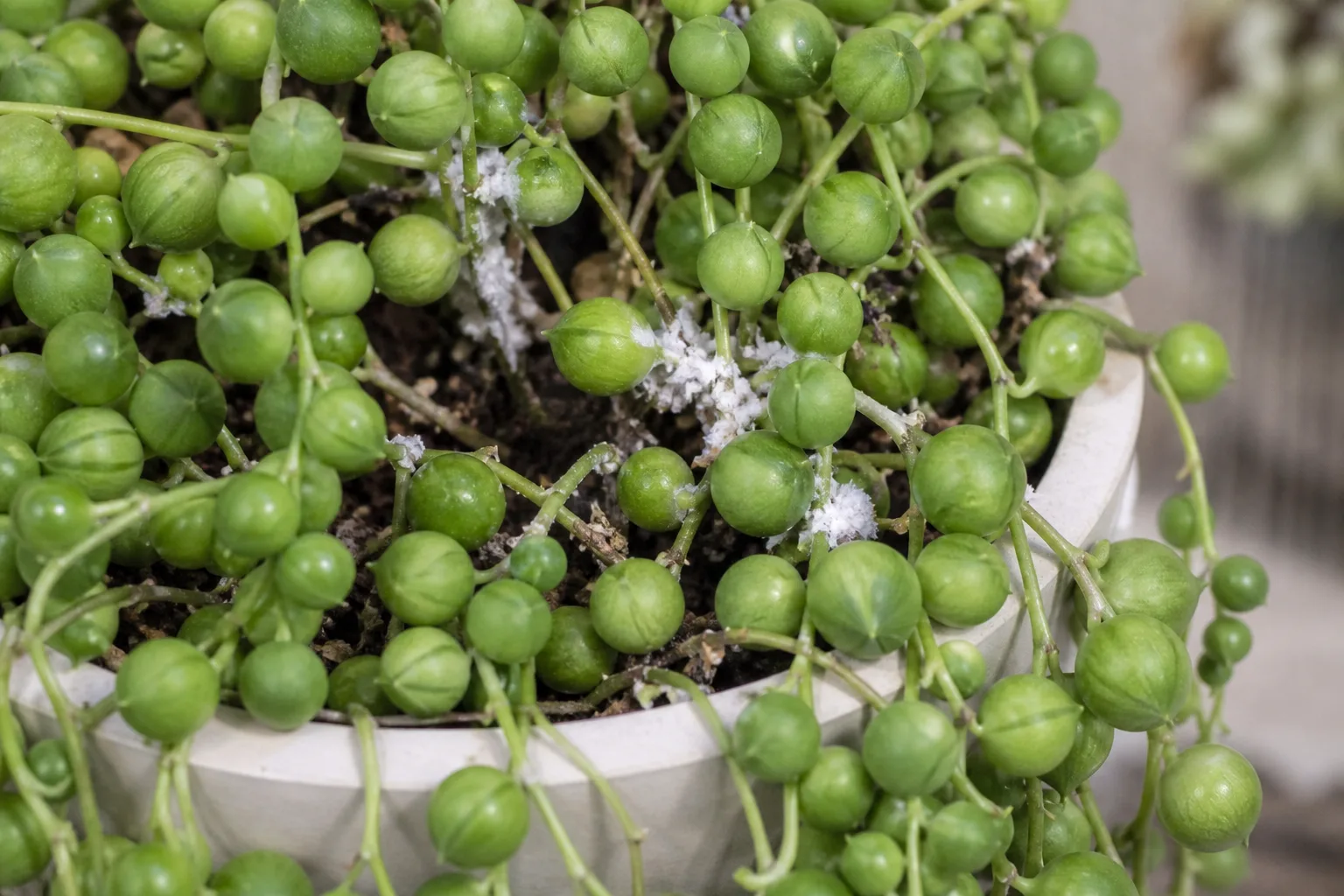
Mealybugs on String of Pearls: Causes, Checks & Fixes
This guide covers mealybugs on String of Pearls. See also the general Mealybugs guide, watering, and light pages for this plant.
Mealybugs on String of Pearls: Causes, Checks & Fixes
Quick answer
Mealybugs are a common houseplant pest on String of Pearls (Curio rowleyanus). They colonize exactly where String of Pearls overview is hardest to inspect: the crown where trailing strands overlap, plus the soil line and tight joints between spherical pearls. White cottony masses suck sap, weaken strands, and leave sticky honeydew that can attract ants and sooty mold.
First step: isolate the plant and dab every visible mealybug with 70% isopropyl alcohol on a cotton swab. Work strand by strand through the crown before you spray anything. String of Pearls rots easily if the crown stays wet, so confirm pests manually first rather than soaking the plant on day one.
What mealybugs look like on String of Pearls
On this succulent, mealybugs rarely announce themselves on open pearl surfaces. They tuck into protected spots-between touching leaves, in branch crotches, and near the soil-which on String of Pearls means:
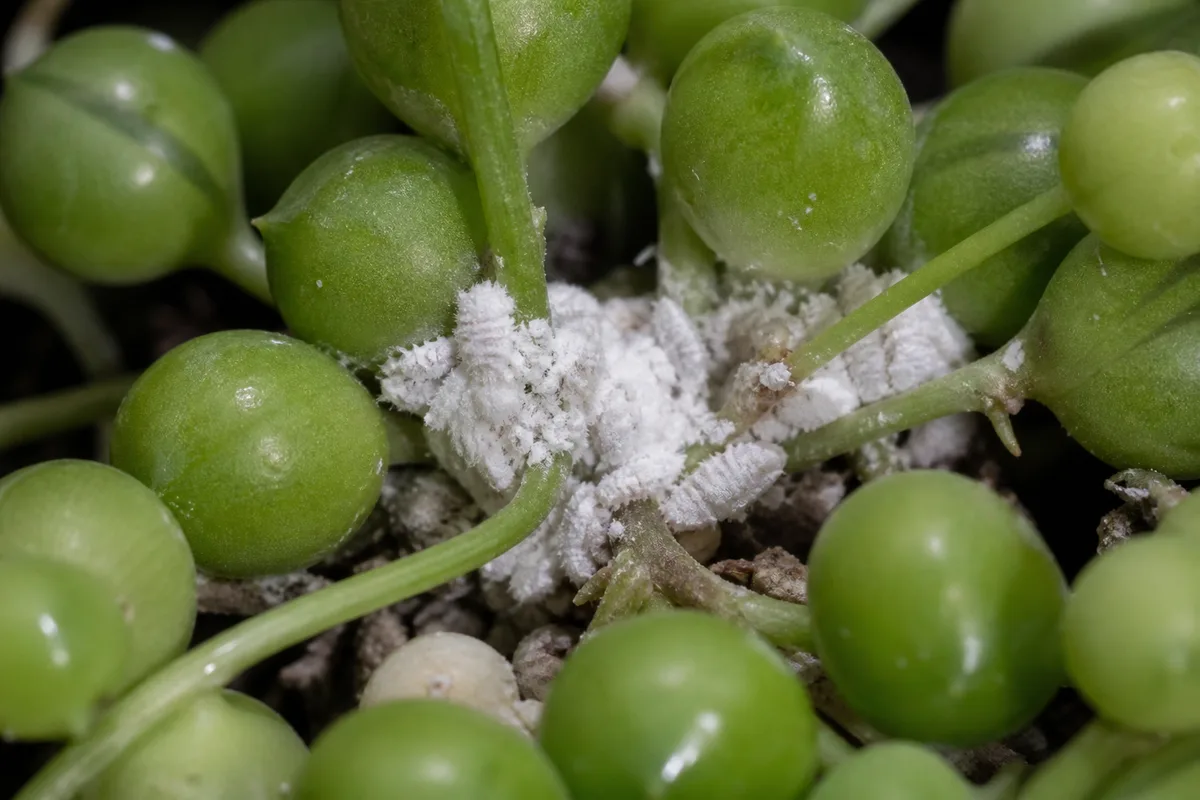
Mealybugs symptoms on String of Pearls - compare with healthy tissue on the same plant.
- White cottony patches nestled where strands emerge from the soil or fork from each other
- Tiny white grains along a strand joint if you look with a hand lens
- Sticky pearls or hanging strands from honeydew drips
- Black sooty mold on upper pearls below heavy feeding zones
- Ant trails on pot rims or shelf edges farming honeydew below
- Shriveled or stalled new pearls on infested tips while older beads look normal
Do not confuse mealybugs with the plant’s normal features. Each pearl has a translucent epidermal window on top-that pale stripe is healthy anatomy, not pest wax. Mealybugs form fluffy clusters you can lift with a swab, usually in groups rather than evenly spaced dots.
Root mealybugs are possible on succulents. They look like white deposits on roots and may explain decline when stems look clean. If pearls shrivel, soil smells off, and no crown bugs appear, unpot and rinse roots gently before assuming underwatering on String of Pearls.
Why String of Pearls gets mealybugs
String of Pearls is not more pest-proof than other succulents, but its growth habit makes infestations easy to miss and hard to treat. Long trailing strands create a dense mat at the crown where mealybugs hide in tight crevices. A hanging basket looked perfect from below can harbor a colony at the soil line for weeks.
Common entry routes:
- New plants without quarantine - mealybugs hitchhike on nursery stock and spread to neighbors on shared shelves
- Soft, overwatered tissue - String of Pearls stores water in pearls and rots when crowns stay damp; stressed succulents attract sap feeders faster than firm, well-drained plants
- Indoor warmth year-round - Greenhouse and houseplant settings favor mealybug reproduction because cold does not knock populations back
- Crowded hanging displays - strands touching between baskets give crawlers a bridge
- Ant protection - ants harvest honeydew and shield mealybugs from predators, slowing natural cleanup
Missouri Botanical Garden notes to watch for aphids and mealybugs on this species. NC State Extension lists mealybugs among insects to monitor on String of Pearls, alongside the rot risk from soggy soil-two problems that often overlap when owners overwater a pest-weakened plant.
How to confirm the cause
Work through these checks in order:
- Crown inspection - Lift trailing strands and part them at the soil line. Mealybugs cluster where stems overlap, not randomly across every pearl.
- Joint check - Follow a suspect strand pearl by pearl. Cottony wax at nodes confirms mealybugs; uniform window stripes on each bead do not.
- Sticky test - Honeydew feels tacky and may collect dust. Rinse one strand-if stickiness returns within days with new white fluff, pests are active.
- Ant and mold scan - Ants on the pot or black film on pearls below the crown strongly suggest sap feeders above.
- Neighbor plants - Check other succulents on the same shelf. Mealybugs spread slowly but steadily between touching foliage and shared tools.
- Root check if stems look clean - Unpot only if the plant keeps declining with dry soil and no crown bugs. White soil-line deposits on roots point to root mealybugs.
If you find cottony clusters that move when disturbed (or leave a wet smear when dabbed with alcohol), the diagnosis is confirmed. Powdery dry white on soil surface alone may be mineral or mold-not mealybugs.
First fix for String of Pearls
Move the plant away from others, then dab each visible mealybug with a cotton swab soaked in 70% isopropyl alcohol.
This matches UC IPM spot-treatment guidance for houseplant mealybugs: direct contact kills adults and removes wax-covered clusters you can reach. Work in good light. Slide a swab into crown crevices, along the soil line, and under strand forks. Crush egg sacs when you see cottony white masses.
Before treating the whole plant, test alcohol on one pearl and wait one to two days to check for burn on sensitive succulent tissue. Most String of Pearls tolerate swab dabbing well; avoid drenching the entire crown with liquid on day one.
Do not repot, fertilize, or heavy-water while starting treatment. String of Pearls rots quickly when crowns stay wet. Wear gloves when handling many strands-the sap can irritate skin and the plant is toxic to cats and dogs.
Step-by-step recovery
After the initial alcohol dabs:
- Repeat swab treatment every five to seven days for at least two weeks to catch newly hatched crawlers that emerge without wax.
- Apply insecticidal soap or horticultural oil if colonies persist after several swab sessions. UC IPM notes these products work best on younger nymphs with less wax-cover crown crevices thoroughly and follow label intervals.
- Avoid soaking the crown during sprays. Treat in morning, let strands dry the same day, and keep soil on the dry side between waterings.
- Manage ants on shelves or pot rims so natural predators can reach mealybugs if you grow plants outdoors in summer.
- Trim only dead strands after pests are gone-not live infested strands you can still treat. Cuttings from infested tissue can carry crawlers.
- Unpot for root mealybugs if decline continues with clean stems. Wash roots and repot in fresh, fast-draining mix, discarding old soil away from other plants.
Keep the plant isolated until you see no new cottony masses for at least two weeks. Mealybug control often requires repeated cycles because eggs and hidden adults survive single treatments.
Recovery timeline
Manual alcohol dabs show results within days when colonies are small and crown-focused. A full treatment course with soap or oil may take two to four weeks with weekly repeats. New pearls at treated strand tips should look plump and green-that is your best recovery signal.
Old shriveled beads on damaged sections do not refill. Judge success by clean new growth and firm crowns, not by every legacy pearl returning to perfect shape. String of Pearls grows slowly compared with leafy houseplants; allow several weeks before deciding treatment failed.
Lookalike symptoms to rule out
Normal pearl windows - Each bead has a pale translucent stripe on top for light penetration. It is symmetrical on every pearl, not a random cottony clump.
Powdery mildew or mineral dust - Dry white film on pearl surfaces without insects, honeydew, or ants. Wipes off without revealing live bugs underneath.
Spider mites - Fine stippling and silk webbing at strand tips, usually in hot dry air. Mites are tiny moving specks, not cottony clusters.
Aphids - Soft green or black groups on tender new tips; less common on String of Pearls but possible. MOBOT lists aphids as a watch item on this plant.
overwatering on String of Pearls shrivel - Mushy pearls at the crown with sour soil and no cottony wax. Rot and mealybugs can coexist when crowns stay damp-address both, but do not treat rot with more water.
Mistakes to avoid
Do not stop after one alcohol session-eggs hatch on a rolling schedule and crawlers resettle in crown folds.
Do not shower the whole basket until you have dabbed what you can. Waterlogged crowns rot faster than mealybugs disappear.
Do not return the plant to a mixed shelf after a single clear day. Two weeks minimum with no new cotton confirms control.
Do not compost infested trimmings near other succulents. Bag and discard material that held egg sacs.
Do not increase fertilizer on a pest-hit plant. Nitrogen pushes tender growth where mealybugs prefer to feed.
Do not ignore ants. Honeydew farming keeps colonies alive even when you kill visible bugs.
How to prevent mealybugs next time
Quarantine new String of Pearls and other succulents for at least two weeks before hanging them near existing plants. Inspect crowns, soil lines, and pot drainage holes on arrival.
Scout monthly by lifting strands at the crown-the first place mealybugs colonize on dense trailing growth. A hand lens catches early crawlers before cotton builds up.
Keep the String of Pearls watering guide this plant needs: allow mix to dry between waterings and avoid letting crowns sit wet. Firm, well-drained plants resist pests better than soft overfed ones.
Place in bright part shade with sharp drainage-adequate light supports steady growth without the lush weak tissue that follows excess nitrogen and moisture.
Wash hands and tools after handling infested plants. Mealybug crawlers hitchhike on shears and shared watering cans.
When to worry
Treat as urgent when cottony colonies cover most of the crown, ants swarm the pot, or multiple strands shrivel while soil stays appropriately dry. That pattern suggests heavy sap loss or root mealybugs, not a few isolated bugs.
Consider discarding rather than endless retreatment when the crown is mushy from rot and mealybugs fill every crevice-UC IPM recommends removing heavily infested houseplants before neighbors become infected. Propagate from clean upper strands only if enough firm tissue remains above the damaged crown.
A handful of cottony spots on one strand is manageable with isolation and swab treatment. Scale your response to colony size, not panic.
Conclusion
Mealybugs on String of Pearls hide where strands pile up at the crown, so the fix starts with isolation and careful alcohol dabs-not a blind spray that soaks a rot-prone succulent. Confirm cottony clusters, treat on a weekly schedule until crawlers stop appearing, and judge recovery by firm new pearls. Quarantine new baskets and keep crowns dry, and you catch most reinfestations before they trail down the whole plant.
When to use this page vs other String of Pearls guides
- String of Pearls watering guide - Use for routine moisture checks before assuming mealybugs is the main issue.
- String of Pearls problems hub - Browse all 17 common issues on this species.
- Yellow Leaves on String of Pearls - Different entry point when symptoms overlap with mealybugs.
- Slow Growth on String of Pearls - Different entry point when symptoms overlap with mealybugs.
- Spider Mites on String of Pearls - Different entry point when symptoms overlap with mealybugs.