Spider Mites on String of Pearls: Causes, Checks & Fixes
Quick answer
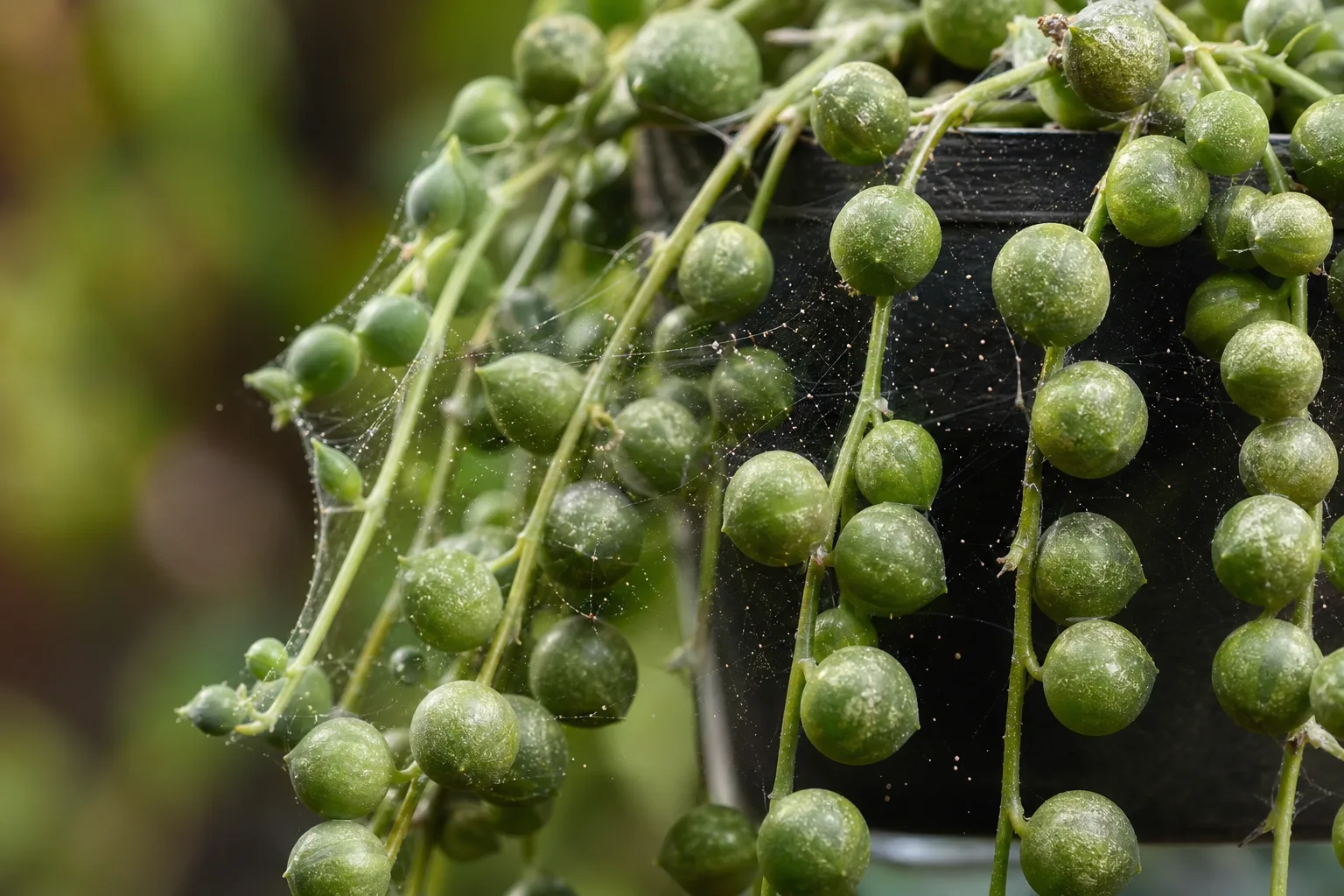
Spider mites on String of Pearls show as pale stippling on pearls and fine silk at strand tips, especially in hot dry air near sunny windows. First step: isolate the plant and tap a strand over white paper to confirm moving specks before rinsing or spraying.
Spider Mites on String of Pearls: Causes, Checks & Fixes
This guide covers spider mites on String of Pearls. See also the general Spider Mites guide, watering, and light pages for this plant.
Spider Mites on String of Pearls: Causes, Checks & Fixes
Quick answer
Spider mites are tiny sap-sucking arachnids that thrive in warm, dry indoor air-the same microclimate String of Pearls (Curio rowleyanus) often gets in a bright hanging basket above a heating vent or sunny window. They pierce the small spherical leaves and leave pale stippling, dull color, and eventually fine silk webbing between pearls.
First step: isolate the plant and tap one trailing strand over white paper. If specks crawl across the paper, you have active mites. Confirm before you rinse, spray, or prune-underwatering on String of Pearls and sun scorch also dull pearls, but they do not produce moving dots or silk at bead junctions.
What spider mites look like on String of Pearls
On this succulent, each “pearl” is a modified leaf roughly a quarter inch across with a translucent epidermal window along one side. Mite feeding shows up as:
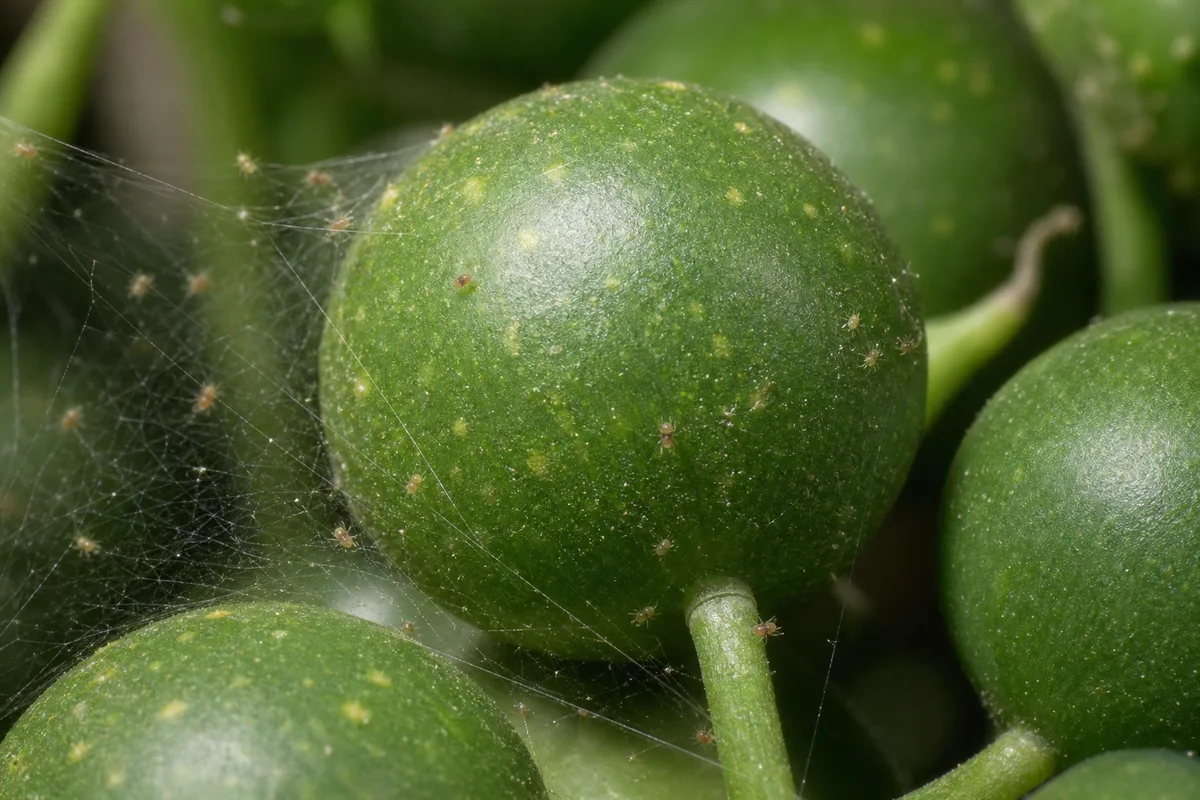
Spider Mites symptoms on String of Pearls - compare with healthy tissue on the same plant.
- Pale yellow or bronze pinpricks scattered across individual pearls, often most visible on the window stripe
- Dull, dusty-looking strands that lose their usual plump lime-green gloss
- Fine silk webbing at pearl-to-stem joints, strand tips, or between overlapping trails-usually a mid-to-late infestation sign
- Tiny moving specks on strand undersides; adults are about 1/50 inch long and may look greenish, amber, or orange-red
String of Pearls hangs downward, so damage often starts on the upper, sun-exposed side of the basket and works inward where strands overlap. Mites hide on the thin green stems beneath the beads, not in potting mix.
Because pearls are small and spaced along long trails, a light stipple pattern can look like general “fading” until you compare a healthy strand from the back of the plant to a suspect one near the window.
Why String of Pearls gets spider mites
This plant evolved for dry South African scrub with infrequent rain and sharp drainage. Indoors, that translates to low humidity, bright light, and careful watering-conditions that overlap heavily with what spider mites prefer.
Several factors stack on String of Pearls overview:
Hot, dry window air. A south- or west-facing hanging basket heats up daily. Warm air above a radiator or HVAC vent speeds mite reproduction while the plant’s preferred humidity stays low.
Low humidity is normal here. String of Pearls tolerates humidity below 40%. Mites also favor dry environments, so you are not going to “dry them out” with the cultural conditions this plant already wants.
Dust and reduced airflow on trailing stems. Dust on pearls cuts light to the epidermal window and can attract spider mites on houseplants in general. Dense overlapping strands limit airflow through the crown.
Stress from wrong watering. Overwatering causes root rot; underwatering shrivels pearls. Either stress weakens the plant while mites continue feeding on foliage.
Collection spread. Mites crawl between touching plants and drift on air currents. One infested basket on a crowded plant shelf can seed neighbors within days.
University of Minnesota Extension notes that succulents and cacti tend to see fewer spider mite outbreaks than palms or fiddle-leaf figs-but they are not immune. A stressed String of Pearls in a hot dry pocket can still build a large population before you notice webbing.
How to confirm the cause
Work through these checks before treating:
- White-paper tap test - Hold paper under a strand and tap or shake gently. Moving specks confirm mites. Static dust does not crawl.
- Webbing check - Fine silk at pearl joints or between strands points to mites. No webbing with uniformly wrinkled pearls suggests underwatering instead.
- Stippling pattern - Random pale dots on scattered pearls fit mite feeding. Even brown scorch on the sun-facing side only suggests direct sun damage, not pests.
- Mealybug rule-out - White cottony masses clustered at the soil-line crown mean mealybugs, not mites. Mites are mobile specks with silk, not cotton patches.
- Soil moisture - Stick a finger into the mix. Soggy soil with yellow pearls may be rot or overwatering; firm dry soil with dull pearls may be drought. Mites can coexist with either, but your rinse plan must not waterlog an already wet pot.
- Neighbor inspection - Check plants within two feet on the same shelf, especially those whose leaves touch the basket.
If tap tests are negative, no webbing appears, and pearls plump up after a deep soak, hold off on pesticides and fix light or watering first.
First fix for String of Pearls
Move the basket away from healthy plants and tap-test one strand over white paper to confirm live mites.
Isolation limits spread while you decide whether you are treating an active infestation or a lookalike problem. Bagging is optional at this stage; distance and a separate room are enough for most homes.
Do not spray oil or soap until you see moving specks or clear stippling plus webbing. Do not drench the pot “just in case”-String of Pearls rots quickly when the crown sits in wet mix.
Step-by-step recovery
After confirmation, work in this order:
- Quarantine - Place the basket alone in a cooler room if possible. Moving infested plants away from healthy ones reduces migration while you treat.
- Physical rinse - In a sink or outdoors, use lukewarm water and gentle pressure along strand undersides and pearl junctions. Support trailing stems so they do not snap. Let the pot drain fully; do not let water pool at the crown. Repeat rinses every few days knock down adults without chemicals.
- Contact treatment - When soap or horticultural oil is needed, choose a product labeled for spider mites on ornamentals and follow the label exactly. Cover all strand surfaces, especially undersides. Insecticidal soap and horticultural oil work on contact and usually require repeat applications.
- Repeat on a schedule - Treat every five to seven days for at least three cycles to catch newly hatched mites. One spray rarely clears eggs.
- Trim only if necessary - Remove strands that are mostly bare silk and bronze pearls to lower pest load and improve spray coverage. Healthy plump pearls with light stippling can stay.
- Monitor the collection - Inspect quarantined and nearby plants weekly with a lens for six weeks. Wash hands and tools after handling infested plants so mites do not hitch a ride.
Avoid heavy nitrogen fertilizer during recovery; lush soft growth is easier for mites to exploit. Hold feed until new pearls look clean for two weeks.
Recovery timeline
One to two weeks: Active webbing should stop spreading after the first rinse-and-treat cycle if coverage was thorough.
Three to four weeks: Two to three full treatment rounds should break the egg hatch cycle. New stippling on fresh pearls means you missed a strand or need another cycle.
One to three months: String of Pearls grows slowly compared with upright houseplants. Expect clean new pearls along stems rather than instant full baskets. Old stippled beads remain marked.
Signs of success: Fresh green pearls without new dots, no fresh silk, and tap tests that show zero or near-zero movers.
Signs of failure: Webbing returns within days after treatment, pearls drop in clusters, or stems shrivel from the crown downward-separate rot from mites by checking whether the base is mushy in wet soil.
Lookalike symptoms
- Underwatering - Wrinkled, deflated pearls on dry soil; no stippling pattern, webbing, or crawling specks. Pearls plump within 24 hours after a thorough soak.
- Sun scorch - Brown or reddish pearls on the direct-sun side only; damage is localized to exposure, not random stippling throughout the basket.
- Mealybugs - White cottony clumps at the crown and nodes; sticky honeydew may follow. No fine silk sheets between every pearl.
- Normal dust - Wipes off with a damp cloth; does not move on paper and does not cause stippling underneath.
- Overwatering / root rot - Mushy pearls near the soil line, sour smell, wet mix for days. Fix drainage first; mites may be secondary.
What not to do
Do not soak the crown during repeated rinses-wet soil at the stem base invites rot on a plant that already dies easily from soggy mix.
Do not stop after one spray-eggs survive and hatch within days.
Do not spray only the top of hanging strands-mites live on undersides and at pearl joints.
Do not use strong horticultural oil in direct hot sun on the same window where the basket already lives; treat in morning shade or move the plant briefly while foliage dries.
Do not assume low humidity will cure the infestation-this plant already lives dry; you need physical removal and labeled contact treatments.
Wear gloves when handling sap; String of Pearls is toxic to cats and dogs and sap can irritate skin.
How to prevent spider mites next time
- Scout weekly in winter and when baskets return indoors from summer patios-tap-test suspicious strands before damage spreads.
- Rinse strands lightly a few times during warm months to remove dust; let the pot drain completely each time.
- Quarantine new plants for two weeks away from the main collection.
- Space hanging baskets so trails do not touch neighbor foliage.
- Keep watering on a dry-down schedule in bright partial shade with sharp drainage-firm pearls resist pests better than stressed, shriveled, or rot-weakened plants.
- Inspect when moving plants from outdoor summer hang to indoor heating season-that transition is when dry warm air spikes mite pressure.
When to worry
Discard or permanently isolate only if most strands are webbed, pearls are dropping faster than you can treat, and three full treatment cycles failed. Severe infestations may not be worth saving in a shared collection-bag the plant before removal so mites do not scatter.
Act urgently when webbing bridges between plants on a shelf, when the crown softens in wet soil (rot plus mites need different fixes), or when you cannot physically reach all trailing strands for thorough spray coverage in a very mature basket.
For most owners, consistent isolation, repeated rinsing, and three labeled soap or oil cycles save the plant. Recovery is measured in clean new pearls, not restored old beads.
When to use this page vs other String of Pearls guides
- String of Pearls watering guide - Use for routine moisture checks before assuming spider mites is the main issue.
- String of Pearls problems hub - Browse all 17 common issues on this species.
- Low Humidity on String of Pearls - Different entry point when symptoms overlap with spider mites.
- Slow Growth on String of Pearls - Different entry point when symptoms overlap with spider mites.