Aphids on String of Pearls: Causes, Checks & Fixes
Quick answer
Aphids on String of Pearls gather on soft strand tips and new pearls, sucking sap and leaving sticky honeydew. First step: isolate the plant and blast aphids off strand tips with water while keeping the crown as dry as possible.
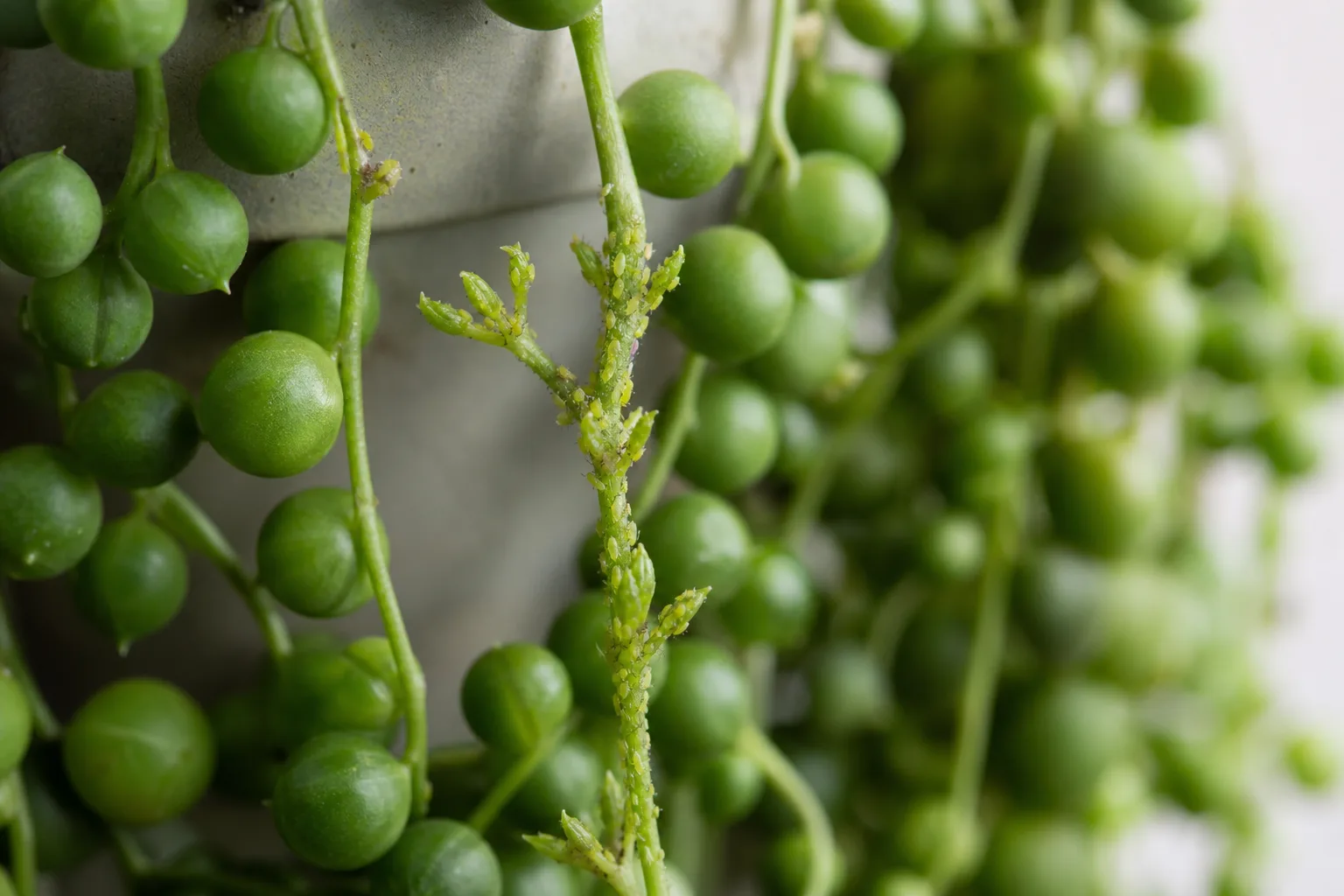
Aphids on String of Pearls: Causes, Checks & Fixes
This guide covers aphids on String of Pearls. See also the general Aphids guide, watering, and light pages for this plant.
Aphids on String of Pearls: Causes, Checks & Fixes
Quick answer
Aphids are common soft-bodied houseplant pests that can colonize String of Pearls (Curio rowleyanus). The Missouri Botanical Garden lists aphids and mealybugs among pests to watch on String of Pearls overview. They cluster on the softest tissue-new pearl tips and young strand ends-pierce sap, and excrete sticky honeydew that can attract ants and sooty mold.
First step: isolate the plant and blast aphids off strand tips with a firm water spray while keeping the crown as dry as you can. String of Pearls stores water in its beads and rots easily when the soil line and overlapping stems stay wet. Confirm live aphids with a hand lens before reaching for sprays.
Why String of Pearls gets aphids
String of Pearls is a trailing succulent whose spherical leaves are modified for water storage in dry climates. NC State Extension notes the plant is very particular about watering and light-stress from overwatering on String of Pearls, underwatering on String of Pearls, or poor light weakens defenses and makes any pest harder to shake.
Aphids target tender new growth. During spring and summer active growth, String of Pearls pushes soft pearl tips along long trailing strands-the exact tissue aphids prefer on stems and buds. Hanging baskets amplify the problem: strands drape together, aphids hide in overlapping stems, and honeydew drips onto lower pearls where you may not look until stickiness spreads.
Indoor collections often pick up aphids from new nursery plants, open windows in warm weather, or baskets moved outdoors for summer and brought back inside without quarantine. Aphid populations can increase rapidly when each adult produces many live offspring in favorable conditions.
High-nitrogen feeding makes matters worse. Missouri Botanical Garden notes aphids multiply faster with high nitrogen levels-soft lush shoots on any houseplant invite colonization. String of Pearls needs only light fertilizer during active growth; pushing nitrogen while the plant is already stressed creates aphid-friendly tissue without helping recovery.
Ants often appear before you spot the aphids themselves. Ants harvest honeydew and protect aphid colonies from predators, making control harder until both are addressed.
What aphids look like on String of Pearls
Typical aphid signs:
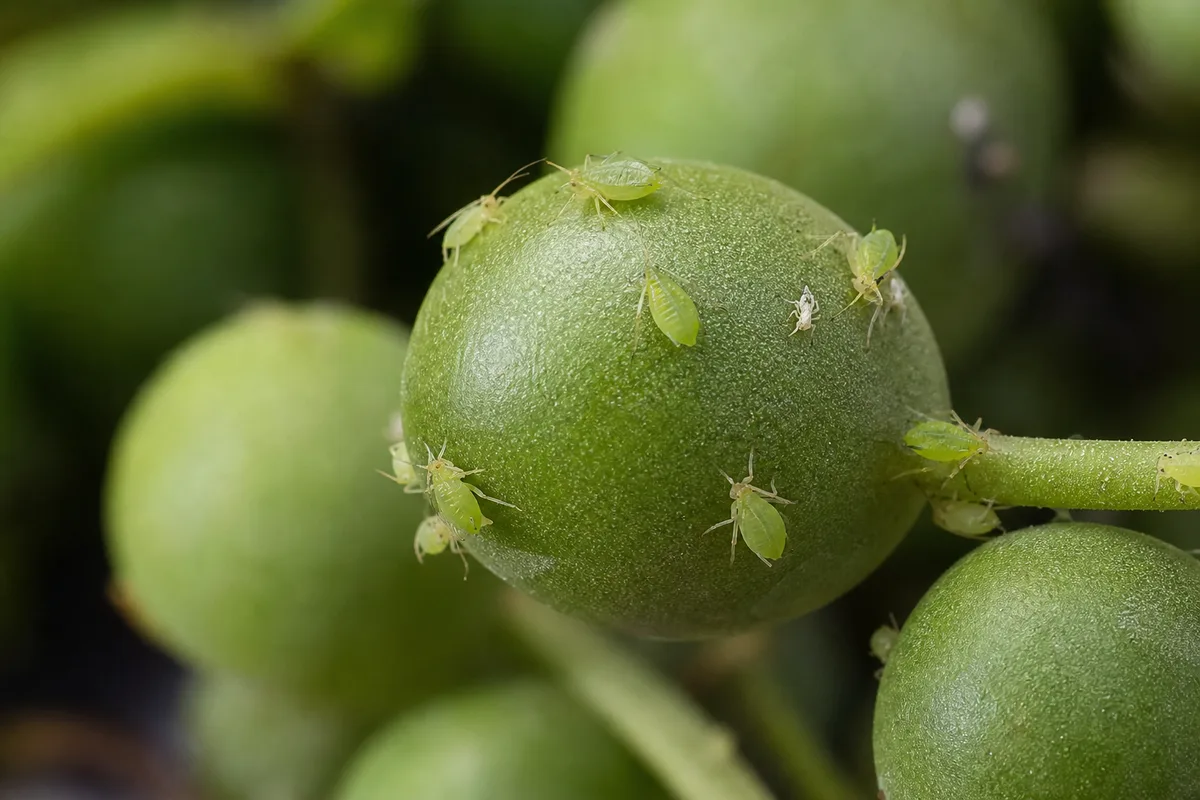
Aphids symptoms on String of Pearls - compare with healthy tissue on the same plant.
- Pinhead-sized pear-shaped insects in green, black, pink, or yellow on strand tips and new pearls
- Clusters at the growing end of trailing stems, not buried deep in the crown
- Sticky, shiny pearls or pot surfaces from honeydew
- Ant trails on basket chains, pot rims, or shelves below the plant
- Yellowing or slight curling of young pearls when feeding is heavy
- Black sooty mold on honeydew-coated beads (wipes off once insects are gone)
- Whitish cast skins left behind after aphids molt
What healthy String of Pearls looks like instead:
- Firm, plump green pearls with uniform color along the strand
- Dry, non-tacky leaf surfaces
- No visible insects on strand tips under magnification
- Wrinkled pearls from underwatering feel dry and collapse evenly-not sticky with insect clusters
Because each pearl is a tiny leaf with a translucent epidermal window for photosynthesis, heavy sap loss on new tips shows up quickly as dull, shrunken, or distorted beads before older pearls are affected.
How to confirm the cause
Work through these checks in order:
- Location on the plant - Aphids cluster on soft strand tips and new pearls. Cottony white masses where strands overlap at the soil line point to mealybugs instead.
- Hand-lens inspection - Aphids have soft pear-shaped bodies with visible legs and antennae. Mealybugs look like tiny grains in white wax; spider mites are nearly invisible without magnification and leave stippling or fine webbing.
- Stickiness test - Honeydew feels tacky and may attract ants. Underwatered pearls wrinkle but stay dry to the touch.
- Shake or blow test - Aphids on strand tips move slowly when disturbed; whiteflies would fly in a cloud (uncommon on String of Pearls but worth ruling out on mixed shelves).
- Recent history - New purchase, outdoor summer hanging, open window, or a neighbor plant with sticky leaves strongly suggests aphids over cultural problems.
- Soil moisture check - Confirm the pot is not waterlogged. Overwatering alone causes mushy stems and pearl drop without insect clusters-but wet stressed plants are easier aphid targets.
If you find soft-bodied insects on strand tips plus stickiness, you have aphids. If pearls are wrinkled, dry, and insect-free, look at underwatering before treating for pests.
First fix for String of Pearls
Move the plant away from others, then rinse aphids off strand tips with a firm stream of water-tilt the pot so water runs down the trailing strands and away from the crown.
This matches extension guidance to knock aphids off with water and UMN recommendations to wash indoor plants in a sink or shower. Hold strands over a sink or tub and spray tips directly. Avoid soaking the crown where strands emerge from soil-String of Pearls rots in soggy conditions and wet overlapping stems invite fungal problems.
Let the plant dry in String of Pearls light guide the same day. Do not water immediately after rinsing unless the soil was already due-extra moisture at the root zone compounds stress.
Do not spray insecticide on day one without confirming insects. Do not fertilize a pest-hit plant hoping to push new growth-that produces more tender tissue aphids prefer.
Step-by-step recovery
After the initial rinse and isolation:
- Repeat water blasts every two to three days until hand-lens checks show no live aphids on strand tips.
- Apply insecticidal soap if colonies persist after several rinses. Mist strand tips and young pearls lightly; soap must contact insects directly. Repeat every four to seven days through at least two to three cycles to catch newly hatched nymphs.
- Work strand by strand with a cotton swab dipped in 70% isopropyl alcohol for tight clusters the spray missed-especially where pearls bunch at nodes.
- Manage ants on basket hooks or shelves. Ant stakes or barriers help predators reach aphids; controlling aphids alone is harder while ants protect colonies.
- Wash sooty mold off sticky pearls with plain water once honeydew production stops. Trim individual beads that stay heavily coated if they no longer look healthy.
- Prune badly infested strand sections with clean scissors if aphids hide inside curled or distorted tips that sprays cannot reach. UC IPM recommends pruning infested stems when contact sprays miss hidden colonies.
Keep the plant quarantined until you see no new aphids for at least two weeks. Check strand tips weekly-eggs and nymphs are easy to miss on first pass.
Recovery timeline
Water knockdown shows results within two to three days when colonies are small and confined to a few strand tips. A full soap course may take one to two weeks with label-interval repeats. Because trailing String of Pearls grows slowly compared with upright houseplants, expect one to three weeks before new pearls along treated strands look plump and clean again.
Old pearls that yellowed or distorted under heavy feeding will not revert-judge recovery by healthy new tips and resumed strand elongation, not by the appearance of older damaged beads.
Lookalike symptoms to rule out
Mealybugs leave white cottony wax patches where strands overlap at the crown and soil line-not loose pear-shaped clusters on open strand tips. Treatment overlaps, but mealybugs need alcohol dabbing in crevices water sprays miss.
Spider mites cause fine stippling and webbing on pearls, not typically heavy stickiness. Mites thrive in hot dry air; confirm with a white-paper tap test under magnification.
Underwatering shrinks pearls uniformly along strands without insects or tackiness. Water thoroughly once and beads should plump within a day if drought was the cause.
Overwatering causes mushy stems, pearl drop, and crown collapse-not clustered soft insects on tips. Rot needs dry-down and possible String of Pearls repotting guide, not repeated soap sprays.
Normal pearl senescence drops occasional old beads from inner strands while tips stay firm and pest-free-no stickiness or insect clusters involved.
Mistakes to avoid
Do not soak the crown during rinsing. Wet overlapping stems at the soil line are a common route to rot on this species.
Do not use dish soap or homemade detergents. Extension sources warn these can burn foliage; use products labeled for plants.
Do not stop after one treatment. Aphids reproduce quickly and eggs hatch within days-plan for repeated cycles.
Do not increase watering or fertilizer during an active infestation. Stressed succulents need stable dry-down care, not growth pushes that feed aphids.
Do not ignore ants. Honeydew farming protects aphid colonies from the lady beetles and lacewings that would otherwise help.
Do not handle strands bare-handed if sap contacts skin. String of Pearls sap can irritate skin and the plant is toxic to cats and dogs-keep treated plants out of pet reach.
String of Pearls care cross-check
While treating aphids, keep baseline care steady:
- Light - Bright indirect light with some morning direct sun. Missouri Botanical Garden recommends part shade for this succulent; weak light slows recovery and stretches strands.
- Water - Let the mix dry between waterings. Overwatering during pest stress invites rot on an already weakened plant.
- Drainage - Fast-draining cactus mix in a pot with drainage holes. Never let the pot sit in a saucer of water.
- Humidity - Low indoor humidity suits this plant; do not mist for “pest prevention”-wet crowns cause more problems than they solve.
Fix care drift only after aphids are controlled. Changing light, pot, and watering all at once makes it hard to tell whether recovery or new stress is driving what you see.
How to prevent aphids next time
Scout strand tips weekly during spring and summer active growth-the window when String of Pearls pushes soft new pearls aphids prefer.
Quarantine new hanging baskets for at least two weeks before placing them near existing trailing plants. Inspect tops and undersides of leaves when you water-on this plant, that means strand tips and pearl clusters, not broad flat leaves.
Avoid excess nitrogen during the growing season. Light balanced fertilizer at quarter strength once or twice in spring is enough; lush soft shoots attract aphids without speeding the slow trailing growth you actually want.
When moving baskets outdoors for summer, check for aphids before bringing them back inside. Open windows on warm days can also introduce winged aphids to indoor collections.
Preserve beneficial insects when possible. Lady beetles and lacewings feed on aphids-avoid broad-spectrum sprays unless infestations are severe.
Keep plants healthy with appropriate light and dry-down watering. Vigorous plants resist pests better than stressed ones.
When to worry
Treat as urgent when aphid colonies cover most strand tips, ants swarm the crown, new growth stops for multiple weeks, or sooty mold coats large sections of trailing stems. Sap loss on a slow-growing succulent adds up faster than it looks-waiting until pearls shrivel along entire strands makes recovery much harder.
Consider removing and replacing severely declining plants rather than fighting endless reinfestation on a rot-prone basket with few healthy strands left. Propagate clean tip cuttings from unaffected sections only after you are confident aphids are gone.
A few aphids on one strand tip caught early is not urgent. Isolate, rinse, and monitor before escalating to chemical controls.
Conclusion
Aphids on String of Pearls show up on soft strand tips and new pearls, leaving sticky honeydew that can spread to the whole basket if ignored. Isolate first, blast them off with water while keeping the crown dry, then repeat or follow with insecticidal soap if needed. Trailing growth recovers slowly-watch new pearl tips, not old damaged beads, to know your treatment worked. Steady light, sharp drainage, and weekly scouting during active growth prevent most reinfestations without putting this rot-sensitive succulent at risk.
When to use this page vs other String of Pearls guides
- String of Pearls watering guide - Use for routine moisture checks before assuming aphids is the main issue.
- String of Pearls problems hub - Browse all 17 common issues on this species.
- Mealybugs on String of Pearls - Different entry point when symptoms overlap with aphids.
- Spider Mites on String of Pearls - Different entry point when symptoms overlap with aphids.
- Yellow Leaves on String of Pearls - Different entry point when symptoms overlap with aphids.