Flowers Turning Brown on String of Hearts: Causes, Checks &
Quick answer
Brown tips on fresh String of Hearts blooms are normal-the tubular flowers have a fuzzy brown corolla mouth by design. When whole lantern-shaped blooms dry and crumble, that is spent senescence. First step: snip off fully brown spent flowers; if unopened buds brown before opening, move the plant out of cold drafts and stop changing water or placement.
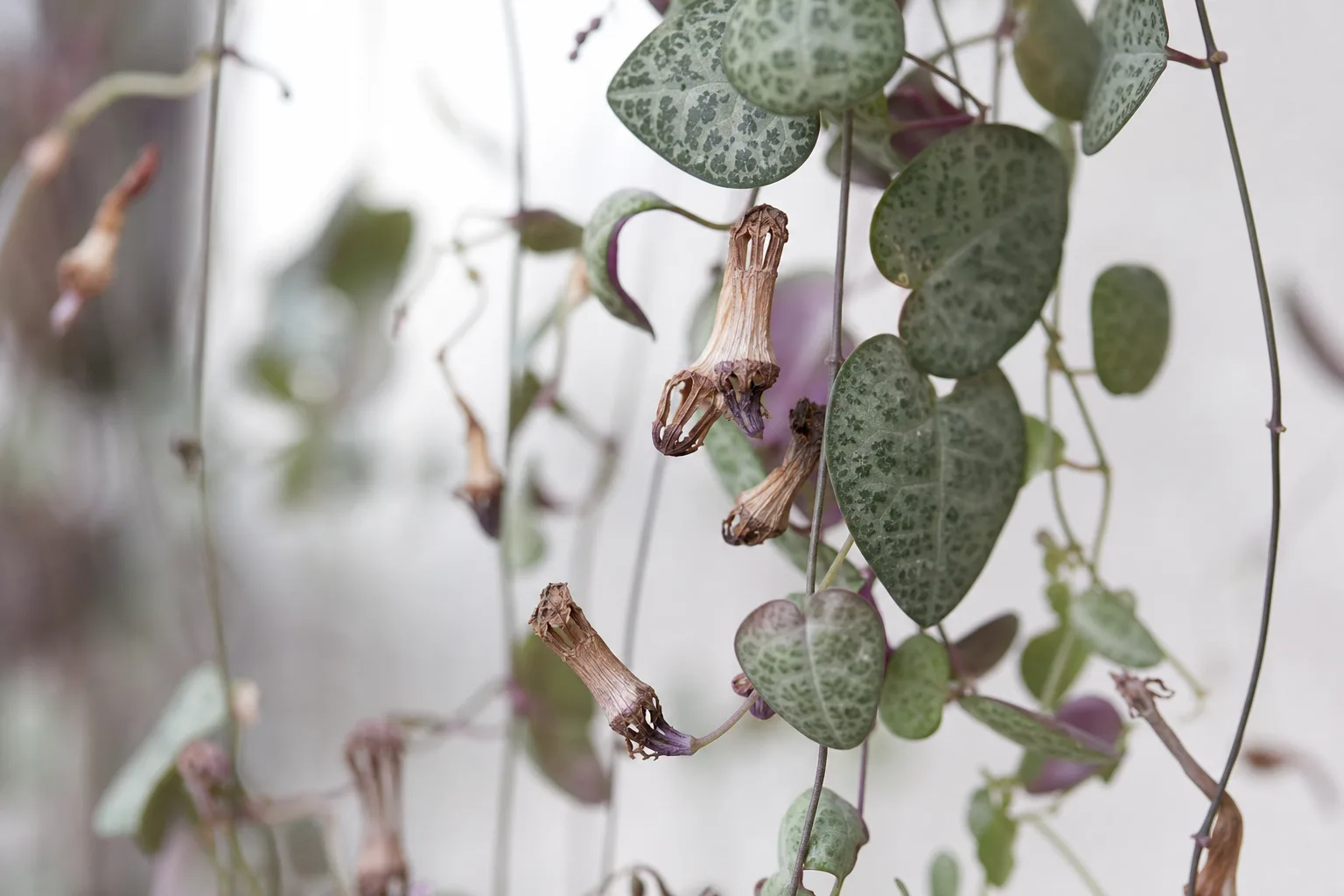
Flowers Turning Brown on String of Hearts: Causes, Checks & Fixes
This guide covers flowers turning brown on String of Hearts. See also the general Flowers Turning Brown guide, watering, and light pages for this plant.
Flowers Turning Brown on String of Hearts: Causes, Checks & Fixes
Quick answer
Brown on String of Hearts (Ceropegia woodii) flowers confuses many growers because the fresh blooms already look partly brown. The small tubular flowers are purple to purplish-white with a bulbous base and a darker, hairy corolla mouth that reads as brown even when the flower is healthy. That tip is part of the fly-pollination design-not rot.
When the entire lantern-shaped bloom dries, shrivels, and turns uniformly tan-brown over several days, the flower has finished its natural cycle. String of Hearts is grown mainly for trailing foliage; blooms appear primarily in summer and fall and fade quickly once pollination completes.
First step: snip off fully dried brown flowers at the stem node. If unopened buds are turning soft brown before they open-especially after a cold draft, repot, or watering swing-move the plant to stable bright light above 60°F and hold care steady without String of Hearts repotting guide until new buds form.
What brown flowers look like on String of Hearts
String of Hearts produces inch-long tubular blooms along pink-purple trailing stems-often between the heart-shaped leaves and bead-like aerial tubers. Brown patterns fall into four common groups:
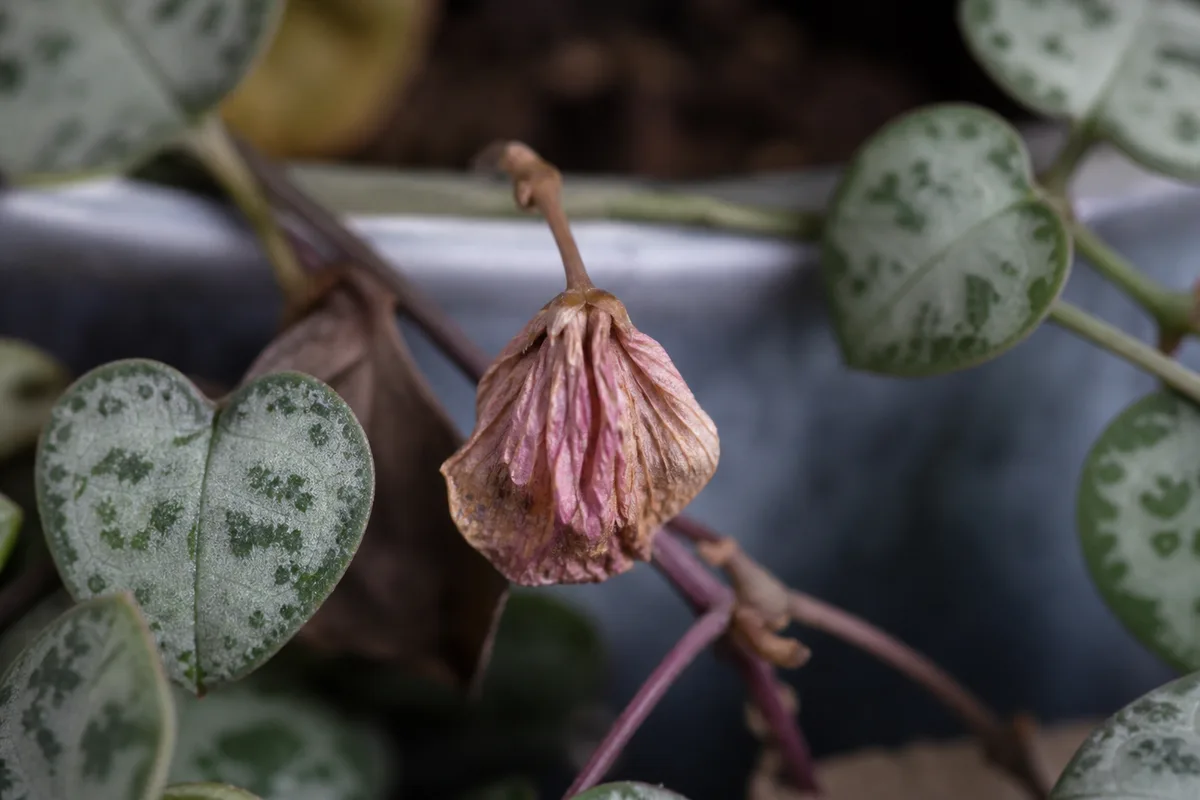
Flowers Turning Brown symptoms on String of Hearts - compare with healthy tissue on the same plant.
Normal corolla tip (not a problem). Open flowers show pale magenta or pink tubes with a fuzzy darker tip at the fused petal cage. Downward-pointing hairs line the corolla to trap small flies for pollination. The tip looks brownish from day one. If the tube is plump and attached firmly, the plant is blooming normally.
Spent-bloom senescence (expected). After one to two weeks, the whole flower dries evenly-tube, bulbous base, and tip all shrink to papery tan-brown. Tissue feels dry and crisp, not mushy. The bloom stays on the strand until you remove it. Nearby leaves remain plump and marbled; strands keep growing.
Stress bud abort (problem). Tight buds turn soft brown or tan before the tube opens. This often follows cold exposure, a recent move, repotting, or letting soil swing from bone-dry to soggy during bud set. Tissue may feel slightly wet at the base. Multiple buds on the same strand fail together while foliage still looks okay-a timing clue.
Environmental scorch or cold burn (less common). Prolonged cold below about 60°F can brown buds and cause winter damage on tender succulents. Rare direct midday sun on exposed blooms may crisp petal tissue at the cage opening. Leaf sunburn elsewhere on the same plant supports light stress over normal aging.
Less often, mealybugs at nodes drain sap and cause buds to shrivel brown without opening. Look for white cottony clusters where flowers attach to stems.
Why String of Hearts flowers turn brown
Ceropegia woodii evolved in arid Southern African hillsides as a drought-tolerant succulent vine. Its flowers are specialized traps, not long-lasting display blooms-and indoor culture can push buds into failure when conditions shift.
Natural pollination and fade. Flies enter the tubular corolla and are held by hairs until pollination finishes; hairs then wither and the insect departs. After that cycle, the flower has no further purpose and dries brown on the vine. Deadheading is cosmetic-it does not rescue brown tissue, but it keeps trailing strands tidy.
Short bloom display by design. Blooms are under one inch and tubular, showy to enthusiasts but not long-lived like hibiscus or orchid sprays. Expect each flower to senesce within days to roughly two weeks indoors. Brown at end of life is normal, not disease.
Cold and draft stress during bud set. String of Hearts prefers warm indoor conditions-keep winter temperatures above 60°F. Air-conditioning vents, winter window sills, and unheated rooms can brown unopened buds overnight while leaves look fine. The plant is sensitive to sustained cool below about 60°F during active growth.
Watering swings while buds form. This species should be watered only when dry and tolerates drought better than soggy soil. Letting mix go bone-dry mid-bud-set, then flooding, stresses tuberous roots. Overwatering during bloom keeps roots wet and can yellow leaves while buds abort brown-rot risk outweighs flower recovery.
Recent repot or relocation. Like many flowering houseplants, String of Hearts drops or browns buds after environmental shock even when long-term placement improves. Stabilize light and water before expecting blooms after a move. Repotting during visible bud formation commonly aborts flowers.
Insufficient light for bud development. Blooming needs the same String of Hearts light guide-and some direct morning sun-that keeps leaves dark green and silver-marbled. Vines in dim corners may produce few flowers; buds that do form often fail to open cleanly and brown at the tip without expanding.
High humidity and stagnant air. Native habitat is arid. Steamy bathrooms or crowded humid shelves slow drying on senescing blooms and can soften tissue at the bulbous base. Moderate household humidity (roughly 30–50%) suits String of Hearts overview better than tropical fern conditions.
How to confirm the cause
Work through these checks in order-the answer usually appears before sprays or fertilizer:
- Tip-only vs whole-flower brown - Dark fuzzy mouth on a plump open tube means normal anatomy. Uniform dry brown on the entire bloom means senescence.
- Opened or still closed - Did the flower ever show a full pink-purple tube? Closed buds browning from the base suggest stress, not aging.
- Temperature at the hanging spot - Measure overnight near the pot. Below 60°F with failing buds implicates cold; stable warm room with only dry spent blooms at tips implicates normal fade.
- Recent changes - Repot, room move, vacation dry-down, or heavy watering within the last two weeks aligns with bud abort.
- Soil moisture and tuber firmness - Dry light pot with firm aerial tubers fits drought stress on buds. Wet heavy pot with soft tubers suggests overwatering-address roots before expecting flowers.
- Light on the strand - Do leaves show deep marbling and purple undersides? Pale stretched foliage with brown buds points to weak light.
- Pest check at nodes - Mealybugs or scale at flower bases cause localized bud collapse without whole-plant wilt.
If only open blooms are dry-brown and the plant sits in bright stable care, deadheading is enough. If multiple closed buds brown after a cold night, fix placement and temperature first.
First fix for String of Hearts
Remove fully dried brown flowers with clean scissors; if unopened buds are browning, move the plant to stable bright light above 60°F and stop changing care.
Snip spent blooms where the flower stalk meets the vine. Discard dry tissue-do not compost mushy buds if mold is present. Do not pull flowers, which tears thin pink stems.
If buds aborted after cold or drafts: relocate away from AC vents and cold glass. Maintain temperatures above 60°F through winter. Hold watering steady-water when mix is mostly dry, not on a calendar spike.
If soil was soggy: skip watering until the pot feels light and tubers are firm. Confirm drainage holes flow. Do not repot during recovery unless tubers are mushy.
If soil was bone-dry: water deeply once until excess exits the pot, then return to dry-down rhythm. Do not flood repeatedly.
Do not fertilize stressed plants to force blooms. Do not repot while recovering buds unless root rot on String of Hearts is confirmed. One environmental correction beats stacking interventions.
Step-by-step recovery
Once spent flowers are removed and placement is stable:
- Hold bright indirect light with some morning sun for two to three weeks without moving the hanging basket while new buds swell.
- Water when the top half of mix is dry-typically every 10–14 days in summer, less in winter dormancy when watering should be reduced.
- Deadhead each dried lantern bloom as it appears so strands look clean and you can spot new buds easily.
- Scout nodes every four to five days for fresh tubular buds forming between leaves and tubers.
- Resume diluted balanced feed at quarter strength only after new healthy leaves unfurl and at least one clean bloom opens-monthly at most during active growth.
- Treat mealybugs at nodes with alcohol on a cotton swab if pests caused bud failure-only after moisture is stable.
Recovery timeline
Dry brown spent blooms are cosmetic-remove them anytime. New buds typically appear within two to four weeks during spring and summer when light increases and care stays stable. Buds lost to a single cold night may need three to six weeks before the vine tries again.
Brown petals do not regain color. Judge success by fresh tubular blooms opening with plump pink-purple tubes, not by old tissue reviving.
Lookalike symptoms
Bud drop - Green buds detach and fall off intact. Brown flowers stay attached as dried or mushy tissue on the stem. See bud-drop guidance if buds vanish rather than brown in place.
Faded flowers without brown necrosis - Pale washed-out tubes in weak light may look dull before browning. Improve light before assuming disease.
Brown leaves on the same strand - Sunburn or rot browns foliage while flowers may still try to open. Scorched leaves feel crisp; rot pairs with wet soil and soft tubers.
Aerial tuber browning - Bead-like tubers darkening at nodes is separate from flower fade. Firm brown tuber husks can be normal; soft mushy tubers signal rot.
Mistakes to avoid
Do not panic over the dark fuzzy tip on a fresh open bloom-that is normal Ceropegia anatomy. Do not mist flowers or overhead-water trailing strands; wet tubular blooms soften at the base in humid stagnant air. Do not move or repot a budded plant hoping to “help” it bloom-environmental shock aborts buds. Do not keep the pot below 60°F all winter and expect summer-quality blooms. Do not flood after seeing brown flowers when soil is already wet-String of Hearts is easily killed by overwatering. Do not apply full-strength fertilizer on a stressed vine.
String of Hearts care cross-check
Flowering ties directly to baseline care on this species. Bright indirect light with some morning sun keeps leaves darkly marbled-pale green leaves mean blooms are unlikely. Fast-draining cactus-style mix and dry-down watering protect tuberous roots. The plant likes to be slightly crowded; unnecessary repotting during bloom season aborts flowers. Mature vines over two years flower more readily than fresh cuttings still rooting.
How to prevent brown flowers next time
Site String of Hearts where it receives strong indirect light without blasting midday sun on the whole basket. Water only when mix is mostly or completely dry. Keep winter temps above 60°F and away from cold glass. Avoid repotting or room changes while tubular buds are visible. Remove spent blooms promptly. Maintain moderate humidity-not steamy terrarium conditions. Let the plant rest in winter with reduced water and no fertilizer, then resume steady care as light increases in spring.
When to worry
Routine dry brown lantern blooms at strand tips after a week or two of open display are expected. Worry when every new bud browns soft before opening for multiple weeks, stems soften at the crown while soil stays wet, cold exposure below 50°F (10°C) persists, or no flowers attempt for a full growing season despite dark marbled foliage and mature vine length. Those patterns point to chronic stress, rot, or immaturity-not normal senescence.
Conclusion
Brown on String of Hearts flowers is often two different stories: the normal fuzzy dark tip on a healthy tubular bloom, and the dry tan whole flower that finished its short life. Snip spent blooms, keep the vine warm and brightly lit, and water only when dry. Fresh lantern flowers on trailing strands within weeks mean your plant is fine; repeated soft brown buds on wet or cold culture mean fix the environment before the next bloom cycle.
When to use this page vs other String of Hearts guides
- String of Hearts watering guide - Use for routine moisture checks before assuming flowers turning brown is the main issue.
- String of Hearts problems hub - Browse all 45 common issues on this species.