Faded Flowers on String of Hearts: Causes, Checks & Fixes
Quick answer
Faded flowers on String of Hearts are often normal-each small tubular bloom opens purple-pink, then washes out after a few days. First step: check whether only older open flowers look dull while leaves and new buds stay firm; if so, snip spent blooms at the node. If buds fade before opening, move the pot to stable bright indirect light and stop changing water or placement.
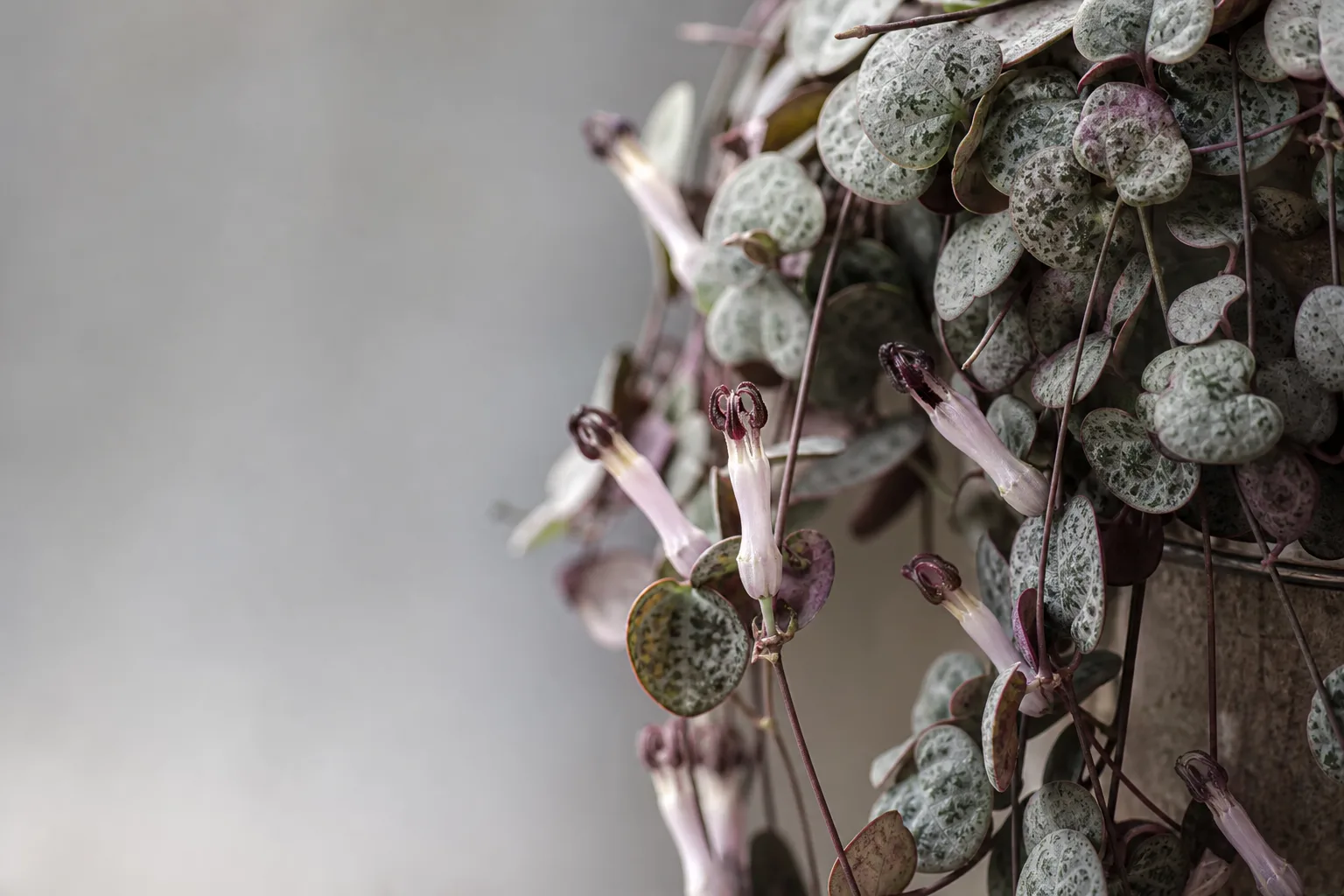
Faded Flowers on String of Hearts: Causes, Checks & Fixes
This guide covers faded flowers on String of Hearts. See also the general Faded Flowers guide, watering, and light pages for this plant.
Faded Flowers on String of Hearts: Causes, Checks & Fixes
Quick answer
Faded flowers on String of Hearts (Ceropegia woodii) usually fall into one of two categories. Most of the time, fading is normal bloom aging-this trailing semi-succulent produces small tubular purple to purplish-white flowers less than an inch long at vine nodes in summer and fall. Each bloom opens, holds color briefly, then washes out to pale lavender or tan before drying. That short display is expected on a plant grown mainly for its heart-shaped foliage, not showy long-lasting petals.
First step: look at the node where each flower attaches. If only fully opened tubular blooms look dull while leaves stay firm and newer buds still look plump, treat it as normal senescence and snip spent flowers at the base with clean scissors. If unopened buds brown or shrivel before they color up, skip deadheading for now-move the pot to stable bright indirect sunlight and hold watering and placement steady until the next bloom cycle.
What faded flowers look like on String of Hearts
Healthy String of Hearts flowers are tubular, purple to purplish-white, and less than one inch long. They hang from pink wiry stems at nodes between the heart-shaped leaves and the bead-like aerial tubers. Up close, the waxy tube shape resembles a tiny lantern-interesting, but not orchid-scale drama.
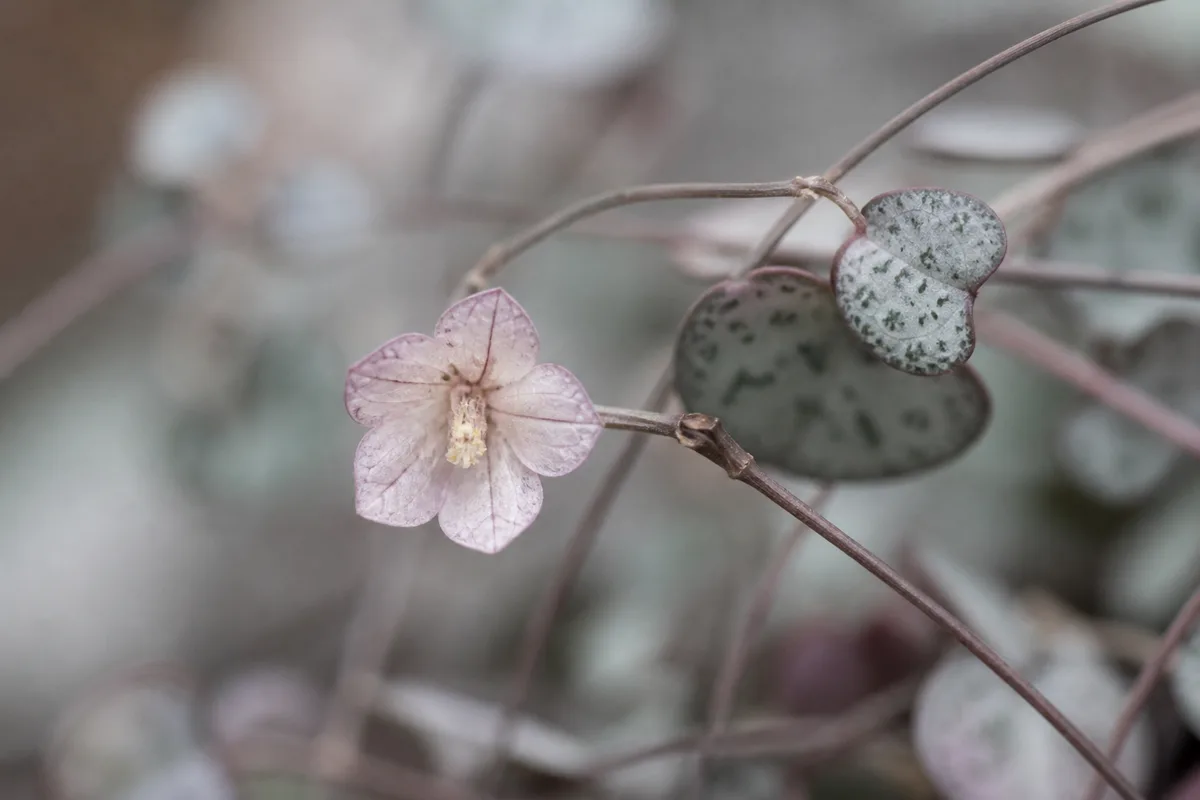
Faded Flowers symptoms on String of Hearts - compare with healthy tissue on the same plant.
Normal fading (most common on blooming plants):
- Color wash-out on open blooms only - purple-pink tubes turn pale lavender, grey-pink, or tan over several days
- Dry, papery flower tubes - spent blooms feel crisp at the tip while the vine and leaves stay firm
- New buds still developing - plump unopened tubes at other nodes while older ones fade
- Leaves unchanged - silver marbling and purple leaf undersides stay strong; no widespread yellowing
Premature or stress-related fading:
- Buds brown before opening - tubes shrivel at the tip while still closed
- Flowers collapse quickly after opening - full color lasts only a day or two instead of a normal short run
- Concurrent leaf stress - soft flat hearts, yellowing, or wide gaps between leaves alongside dull blooms
- Bud drop after a move or repot on String of Hearts - all flowers abort within days of environmental shock
What fading is not: A few dried flower tubes on an otherwise vigorous vine in late summer is not disease. String of Hearts is not carnivorous even though insects occasionally get trapped inside the flower tubes-that is normal pollination biology, not a pest crisis.
Why String of Hearts gets faded flowers
Ceropegia woodii evolved on sun-exposed hillsides in Southern Africa. Its small tubular blooms are built for a brief pollinator visit, not weeks of indoor display. Several factors determine whether flowers hold color or fade fast:
Natural petal and tube senescence. Individual blooms are short-lived by design. Once pollination window passes-or indoors, when the flower simply ages out-pigments break down and the tube bleaches. On a mature plant in good light, new flowers can appear at other nodes while older ones fade. That turnover is normal.
Insufficient light during bloom. String of Hearts needs bright, indirect sunlight to bloom and to maintain healthy tissue. Vines in dim corners may produce weak, pale flowers that fade almost immediately-or skip blooming entirely. Low light also slows water use, so mix stays wet longer and tubers stress-a combo that weakens blooms.
Inconsistent watering while buds form. This species stores water in tuberous roots and aerial tubercles. Chronic underwatering during active growth makes leaves thin and flat; blooms on stressed vines often open dull and collapse quickly. Overwatering is worse long term-soggy mix and soft tubers stop the plant from supporting flowers at all.
Dry air, drafts, and temperature swings. Heat vents and cold drafts dry tender buds quickly on flowering houseplants. String of Hearts tolerates low humidity, but a bud sitting above a radiator or in a cold window draft can fade or abort faster than one in stable air. Severe heat and water stress during bloom can brown buds and blossoms on any flowering plant.
Recent String of Hearts repotting guide, relocation, or handling. Moving a budded vine to a new room or fresh mix redirects energy away from flowers. Bud drop and rapid fade after shipping or repotting are common even when long-term placement was correct.
Plant immaturity. Young String of Hearts with few tubers and short vines often skip flowers entirely. When they do bloom, the first few cycles may produce small, quick-fading tubes until the root system matures.
How to confirm the cause
Work through these checks before changing multiple variables at once:
- Bloom age pattern - Are only the oldest open tubes faded while newer buds at other nodes look full? That confirms normal senescence.
- Leaf texture check - Firm, plump hearts with strong marbling mean the vine is hydrated and likely cycling blooms normally. Soft, flat leaves point to underwatering or root stress affecting flower quality.
- Light audit - Note window direction and distance. Within 60–90 cm of an east or filtered west window supports bloom; a dim shelf across the room does not.
- Soil moisture history - Stick a finger deep in the mix. If the pot stayed wet two weeks after watering during summer growth, overwatering may be suppressing blooms. Bone-dry soil with wilting leaves suggests drought stress on open flowers.
- Draft and vent scan - Feel for hot or cold air moving across the hanging strands. Buds above registers or leaky winter windows fade faster.
- Recent changes - Repot, move, or heavy pruning within the last two weeks? Environmental shock often explains sudden total fade or bud drop.
- Maturity check - A new cutting or tiny pot with thin vines may simply be too young for sustained bloom. Mature plants with bead-like tubers along several feet of vine bloom more readily.
If open flowers fade gradually on an otherwise firm plant in good light, deadheading is the main action. If buds abort before color or every bloom collapses within a day, prioritize light stability and watering correction.
First fix for String of Hearts
Snip fully spent tubular blooms at the node where they attach to the vine-only when leaves and newer buds stay healthy.
Use clean scissors or pinch below the faded tube, leaving the leaf pair and tuber at that node intact. Deadheading does not harm String of Hearts; it tidies the cascade and redirects energy from finished blooms toward vine growth and future flowers. You can also leave dried tubes to drop naturally-they may form small horn-shaped seed pods if pollinated, though that is uncommon indoors.
Do not deadhead as the first move if buds are browning before they open or the whole plant looks stressed. In that case, move the pot to stable String of Hearts light guide and hold off on repotting, fertilizing, or watering changes for one week while you observe.
Step-by-step recovery
After the initial deadhead-or-stabilize decision:
- Improve light if blooms were weak or short-lived - Move within 60–90 cm of an east window or filtered west exposure. Bright indirect sunlight supports both foliage and flower production on this semi-succulent.
- Match watering to dry-down - Water when the mix is mostly or completely dry, roughly every 10–14 days in summer but adjusted to your window and pot size. Never let soggy soil sit under a budded vine.
- Clear drafts - Shift hanging baskets away from heat vents, air-conditioning blasts, and cold window panes in winter.
- Support slight day-night temperature difference - Flowering houseplants often benefit when night temperatures run 10–15°F cooler than daytime, which can intensify flower color and extend bloom life. Avoid sudden large swings.
- Wait out repotting - If buds are present, defer repotting until after the bloom flush finishes unless tubers are soft and rotting.
- Feed lightly only after stability - If new growth looks normal after light and water correction, apply diluted balanced fertilizer at quarter to half strength every four to six weeks during active growth. Do not fertilize a stressed, fading plant hoping to force color.
Optional tidying: remove dried tubes weekly during peak bloom season for a cleaner look. Leaving them causes no harm.
Recovery timeline
Individual String of Hearts flowers last only a few days to roughly two weeks under good conditions-judge the plant, not each tube. After correcting light or watering stress, expect two to three weeks before you see confidently colored new blooms on mature vines. Young plants may skip a full season.
Signs the fix is working: new tubular buds swell at nodes, open in stronger purple-pink, and hold color for a normal short span while leaves stay plump and marbled. Winter dormancy may pause flowering entirely with reduced watering-that is normal, not failed recovery.
Lookalike symptoms to rule out
No flowers at all is a different problem-usually immaturity, insufficient light, or chronic overwatering-not faded blooms on an actively flowering vine.
Flowers turning brown with soft stems on wet soil suggests rot or cold damage rather than cosmetic fade. Inspect tubers if stems mush at the crown.
Bud drop after repotting mirrors generic flowering-houseplant stress; stabilize environment and wait for the next cycle rather than repeatedly repotting.
Mealybugs at nodes leave white wax near flower bases and weaken buds. Confirm with visual inspection-pests need alcohol or horticultural soap treatment, not just deadheading.
Leggy growth with pale leaves and no blooms points to chronic low light affecting the whole plant, not isolated flower aging.
Mistakes to avoid
Do not assume every faded tube is a crisis-routine senescence on a healthy vine is expected.
Do not repot or relocate while buds are forming hoping to “refresh” the plant. That often drops every flower.
Do not increase watering to “save” fading blooms on soggy soil-tuberous roots rot in stale moisture.
Do not blast a budded vine with harsh midday south sun after months in shade. Gradual light increases prevent scorched leaves.
Do not fertilize heavily during fade or bud drop. Nitrogen pushes leaf growth, not better flowers, on a stressed succulent vine.
Do not pull dried tubes off by yanking the strand-you can break the wiry stem. Cut or pinch cleanly at the base.
String of Hearts care cross-check
Flowering sits on top of baseline care: bright indirect light with some direct morning sun, fast-draining cactus-style mix, and watering only when the pot is mostly dry. Tubers along the vines store water-so a dim, overwatered basket rarely blooms well and any flowers that do appear fade fast.
Temperature comfort runs about 18–27°C (65–80°F). Low humidity is acceptable; this is not an orchid-style humidity problem unless dry furnace air sits directly on buds. Mature, slightly root-crowded plants often bloom more willingly than freshly repotted sparse cuttings.
How to prevent faded flowers next time
Grow String of Hearts where it gets real brightness, not ambient room glow. East and filtered west windows at hanging height beat decorative hooks far from glass.
Keep watering tied to soil dry-down, not a calendar-especially after seasonal light changes when evaporation rate shifts.
Avoid moving the basket during visible bud formation. Complete repots in spring before the main summer bloom window when possible.
Maintain stable temperatures and keep strands off draft paths. A modest cooler night period supports longer-lasting color on indoor flowers.
Build maturity before expecting showy bloom-thick tuber chains and several feet of vine indicate a plant ready to flower.
When to worry
Routine fade on open blooms while the vine stays firm is cosmetic, not urgent. Act promptly when every bud browns before opening, tubers feel soft on wet mix, or mealybugs infest multiple nodes-those patterns threaten the whole plant, not just old flowers.
Also escalate if fading coincides with yellowing leaves, sour-smelling soil, and stem mush at the base. That is root or stem trouble masquerading as a bloom issue.
Chronic quick collapse of every flower in good light on a mature plant may mean hidden pest pressure or a failing root zone-unpot and inspect tubers if leaves also decline.
Conclusion
Faded flowers on String of Hearts are usually the natural end of a short-lived tubular bloom-not a sign your trailing vine is failing. Snip spent tubes when leaves and new buds look healthy; stabilize bright light and watering when buds fade before they open. This semi-succulent rewards patience with jeweled foliage year-round and occasional lantern-like flowers at the nodes-get the baseline care right and fading becomes a small tidying task rather than a mystery.
When to use this page vs other String of Hearts guides
- String of Hearts watering guide - Use for routine moisture checks before assuming faded flowers is the main issue.
- String of Hearts problems hub - Browse all 45 common issues on this species.