Satin Pothos Propagation: Water or Soil Stem-Cutting Guide
Satin Pothos Propagation: Water or Soil Stem-Cutting Guide
Satin Pothos Propagation: Water or Soil Stem-Cutting Guide
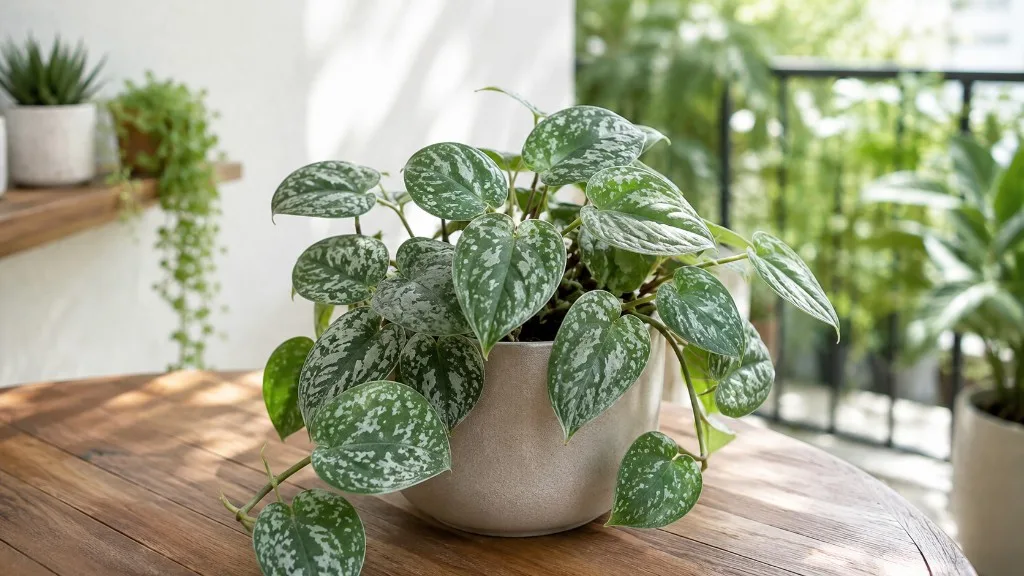
If you landed here through our satin-philodendron URL, you are growing Scindapsus pictus - the trailing vine sold as satin pothos, silver satin pothos, or sometimes mislabeled silver philodendron. It is neither a true pothos (Epipremnum) nor a philodendron, but it roots the same aroid way: a stem section with a submerged node becomes a genetically identical clone. That matters because satin pothos grows more slowly than golden pothos, its thick semi-succulent leaves lose water fast on unrooted cuttings, and silver patterning on cultivars like ‘Argyraeus’ and ‘Exotica’ only copies reliably through cuttings - not seeds.
Reviewed by the LeafyPixels Review Board against NC State Extension and Missouri Botanical Garden guidance on Scindapsus pictus propagation. Author: sai-ananth.
This guide covers water and soil/perlite stem-cuttings methods for home growers. If you prefer sphagnum moss propagation, see our companion page on Scindapsus pictus propagation - same species, different medium emphasis. After rooting, pair this workflow with our repotting, watering, and pruning guides so the new plant settles without shock.
Why Satin Pothos Propagation Starts With Nodes, Not Leaves
The most expensive mistake in satin pothos propagation is also the most common on social media: floating a detached silver leaf in a jar and waiting for a vine that never arrives. Aroids root from stem nodes - the swollen joints where leaves and aerial roots emerge - not from leaf blades alone. NC State Extension lists stem cuttings as the recommended propagation strategy for Scindapsus pictus, and every successful home method in this guide depends on placing at least one healthy node in water or moist medium while upper leaves stay above the rooting zone.
Not a Pothos, Not a Philodendron: Scindapsus pictus Taxonomy
Scindapsus pictus belongs to the Araceae family alongside monstera, philodendron, and true pothos. Native to Southeast Asia - Bangladesh, Borneo, Java, Malaysia, the Philippines, and surrounding regions - it climbs tree trunks in humid forest understory and roots wherever stem tissue contacts moist bark. Indoor propagation mimics that restart: wound the stem below a node, supply warmth and oxygenated moisture, and adventitious roots form from meristematic cells at the node ring.
The trade-name confusion matters practically. Golden pothos (Epipremnum aureum) pushes water roots quickly and tolerates rough handling; satin pothos does not. Treating them as interchangeable leads to premature transplanting, cold-window failures, and the false conclusion that Scindapsus is “hard to propagate” when the real issue is pacing and leaf dehydration on unrooted cuttings.
Silver Variegation Cloning: Why Cuttings Beat Seeds
Satin pothos is grown for painted-looking silver markings, not flowers. Indoor plants rarely bloom, and seed offspring would not duplicate a cultivar’s exact pattern. Stem cuttings clone the parent genetically, which is why nurseries multiply ‘Argyraeus’, ‘Exotica’, and ‘Silvery Ann’ from vine segments rather than seed trays. If you love the silver splashes on your shelf plant, cuttings are the only dependable way to reproduce that look in a second pot or a friend’s windowsill.
Water or Soil/Perlite - Which Method Fits Your Goal
Both routes work on Scindapsus pictus. Your choice should match how you like to monitor progress and how soon you need a potted plant - not which method is “correct.”
Choose water when you want visible root feedback, are teaching propagation to someone new, or plan to pot up within a few weeks anyway. Choose perlite or a light soilless mix when you dislike water changes, want roots adapted to porous mix from day one, or tend to leave cuttings in jars until aquatic roots become fragile. Many experienced growers root in water for monitoring, then shift to mix once roots reach about 2.5 cm (1 inch).
Water vs Soil Comparison Table
| Factor | Water rooting | Soil or perlite rooting |
|---|---|---|
| Root visibility | Excellent - roots visible in jar | Limited unless you unwrap |
| Typical indoor pace | Often 2–4 weeks to usable roots | Often 3–5 weeks before tug-test resistance |
| Main failure mode | Stagnant water, submerged leaves | Oversaturated compacted mix |
| Transition step | Required before long-term potting | Usually minimal |
| Best for | Visual learners, quick shares, single jars | Direct potting, batch propagation |
| Scindapsus note | Semi-succulent leaves tolerate short water phase well | Humidity dome helps first two weeks |
How This Guide Differs From the Moss-Method Page
LeafyPixels hosts two propagation URLs for the same species: this satin-philodendron page (water and soil/perlite focus) and Scindapsus pictus propagation (adds sphagnum moss as a primary method). Use this page if you want jar or perlite workflows; use the moss page if you prefer moss-rooted cuttings that often acclimate to soil with less transplant shock than long water roots. Both require nodes, Satin Philodendron light guide, and warm room temperatures - the medium changes monitoring style, not biology.
Best Time to Propagate Satin Pothos
Missouri Botanical Garden recommends 4-inch stem cuttings taken in spring or early summer for Scindapsus pictus ‘Argyraeus’. That timing aligns with active growth, when the parent pushes firm new leaves and short internodes. Spring through early fall is ideal for most temperate indoor growers; winter propagation can succeed if you supply consistent warmth above about 18°C (65°F) and bright indirect light per our light guide, but cool windowsills stretch timelines and raise rot risk when water changes slip.
Read the parent plant, not only the calendar. Take cuttings when vines show crisp silver patterning, firm stems, and visible new extension - not immediately after shipping, repotting, or a drought cycle. Stressed tissue roots more slowly and inherits the same care problems in a new container.
Tools, Materials, and Safety Basics
Gather sharp bypass pruners, 70% isopropyl alcohol for blade disinfection, clear jars or small pots with drainage holes, room-temperature water or pre-moistened propagation mix, optional clear humidity dome, and labels if you run multiple cultivars. For soilless rooting, use perlite, half perlite and half coco coir, or houseplant mix amended heavily with perlite and orchid bark - the same airy profile described in our soil guide.
Keep propagation stations away from pets. The ASPCA lists Scindapsus species as toxic to dogs and cats due to insoluble calcium oxalate crystals that cause oral irritation, drooling, vomiting, and difficulty swallowing. If a pet ingests plant tissue, call ASPCA Poison Control at (888) 426-4435 or your veterinarian promptly. Propagation trimmings belong in the trash, not on a floor where curious animals can reach them.
Node Anatomy and Choosing the Right Cuttings
A node looks like a slight ring or bump on the fleshy stem, often with a tiny aerial root nub before you cut. That nub is optional but signals active tissue. Submerge or bury the node - never a bare internode alone - and roots emerge from cells at the ring. Illinois Extension notes that stem cuttings should include nodes where leaves emerge, typically three to six inches long with lower foliage removed before insertion.
Start from a healthy parent: firm leaves with bright silver markings, no sticky pest residue, no chronic yellowing from root stress. Satin pothos stems tear easily - snip leaves cleanly rather than ripping them off. Prefer tip cuttings or divide a long vine into sections, each with at least one node and one leaf; two nodes add insurance if one fails. Avoid mushy, blackened, or shriveled segments even when the jar still holds water.
Worked example: A 10 cm (4-inch) ‘Argyraeus’ tip cutting taken in late May, placed in a clear jar at roughly 21°C (70°F) beside an east window, showed first root bumps at day 14 and reached 2.5 cm (1 inch) water roots by day 28 - ready for a 9 cm pot of chunky aroid mix. A golden pothos cutting in the same jar that week rooted visibly by day 7. That gap is normal for Scindapsus, not a sign your cutting failed.
Leggy-Basket Multi-Cutting Refill Workflow
Leggy satin pothos - long bare runners with leaves only at the tips - is a display problem propagation solves cleanly. Take four to six tip cuttings from healthy vine ends, root them in water or perlite, and once established plant them back into the parent pot alongside the trimmed base. You can also cut the bare parent stem back to a node near the soil after replacements root, redirecting energy into bushier crown growth. Because satin pothos is a slow grower compared with golden pothos, batching several cuttings into one pot produces fullness faster than waiting for a single vine to branch. See our pruning guide for shaping the mother plant before you strip vines for cuttings.
Cultivar Notes: ‘Argyraeus’ vs ‘Exotica’
Both cultivars clone faithfully from node-bearing cuttings - the silver pattern on the parent is the pattern you should expect on the offspring. ‘Argyraeus’ tends toward smaller leaves with silver edges; ‘Exotica’ often shows larger leaves with more scattered silver blotches. Neither reverts to plain green from correct stem propagation alone; pale new growth usually signals low light rather than failed cloning. If variegation fidelity matters, take cuttings from the most strongly patterned vines on the parent, not from etiolated runners stretching toward a dim corner.
Preparing Satin Pothos Cuttings Step by Step
Step 1 - Select and cut: Choose a healthy vine and slice a 10–15 cm (4–6 inch) section just below a node with sterilized pruners. Long bare runners can yield multiple sections if each piece keeps at least one node and one leaf.
Step 2 - Strip lower leaves: Remove all foliage from the lower third that will sit underwater or underground. Submerged satin pothos leaves rot within days and foul the medium.
Step 3 - Confirm node placement: Verify at least one node - ideally two on longer cuttings - will contact water or moist mix. Aerial root nubs are a bonus.
Step 4 - Optional hormone: Most home growers do not need rooting hormone on Scindapsus pictus. A light powder dip may help marginally on older stem sections in cool rooms.
Step 5 - Insert immediately: Place the cutting in water or pre-moistened medium within minutes. Delay increases dehydration on semi-succulent leaves.
Wayne County NC Extension guidance on houseplant propagation recommends removing the lower one-third of foliage, inserting stems into moist medium or water until roots form, then potting once roots are about 2.5 cm (1 inch) long - the same transplant threshold this guide uses for satin pothos.
Method 1: Rooting Cuttings in Water
Water propagation is the most visible route for satin pothos. Submerge one or two lower nodes while all leaves stay above the waterline. Use a clear jar in bright, indirect light at room temperatures NC State recommends between 65 and 85°F for Satin Philodendron overview as a houseplant. Room-temperature tap water is fine in most municipalities.
Change water when it clouds, smells stale, or develops slime - typically every three to seven days. Remove any leaf that falls in immediately. Do not fertilize the jar; the cutting cannot use salts until it has roots in mix. Narrow-mouth jars help keep satin pothos stems upright without bending nodes away from the waterline, but avoid crowding so many cuttings that stems rub and wounds stay wet. Expect visible root initials in about two to three weeks under warm bright conditions, with 2.5–5 cm (1–2 inch) roots often forming by the third to fifth week. Cool rooms and stressed parent material stretch that schedule without indicating failure if the stem stays firm.
White or pale root initials at the node are the first sign of success on silver-patterned stems where the node ring can be hard to see against matte green tissue. Once roots branch, they gain strength quickly - pot up before they tangle into a dense mat that is painful to untangle without breakage.
Transplant when roots reach roughly 2.5 cm (1 inch) - long enough to anchor but not so long that fragile aquatic roots break during potting. Waiting until water roots exceed 10 cm (4 inches) often makes the shift to soil harder.
Method 2: Rooting Cuttings in Soil or Perlite
Soilless propagation hides roots but produces them in conditions closer to the final pot. Fill a small drained container with pre-moistened perlite-heavy mix, make a planting hole with a pencil, and bury at least one node without scraping the stem. Firm lightly so the cutting stands without compacting air out of the medium.
Water once to settle, then keep moisture evenly damp like a wrung-out sponge - never saturated mud. A clear humidity dome or bag propped so plastic does not touch leaves reduces wilting on thick-leafed cuttings during the first two weeks; vent daily to limit mold. Perlite alone drains fast and suits growers who tend to overwater; a perlite-and-coco blend holds a touch more even moisture for slow-rooting Scindapsus without going soggy. After three to four weeks, a gentle upward tug that meets slight resistance suggests anchoring. New vine growth or a fresh silver leaf is a stronger success signal than impatience alone.
Soil-rooted satin pothos cuttings sometimes look stalled while building roots underground - leaves may sit unchanged for two weeks even when the stem is firm. That pause is normal on this species; resist the urge to keep adding water if the medium already feels like a wrung-out sponge.
When roots are confirmed, move to a small individual pot with well-draining aroid mix matching mature satin pothos culture in our soil guide.
Building the Right Rooting Environment
Roots respond to warmth, light, oxygen, and stable moisture more than to additives. A cutting on a bright counter at 21°C (70°F) usually outperforms a dim shelf with rooting powder and cold nights.
Light, Warmth, and Slower-Than-Golden-Pothos Expectations
Place cuttings in bright, indirect light - an east window or a few feet back from south glass behind sheer curtain. Direct sun through glass overheats water jars and can bleach silver leaf patterning. Keep air temperatures above about 18°C (65°F); bottom heat helps in cool rooms if water temperature does not exceed the mid-20s °C.
Satin pothos is a slow-growing tropical evergreen compared with golden pothos. Under identical jars and light, expect roughly one to two extra weeks before satin pothos matches golden pothos root length - practitioner observation, not a failure of technique. Read firm stems and healthy leaves instead of comparing calendars to a faster cousin.
Humidity matters most for soil-rooted cuttings without domes and for jars in dry air-conditioned rooms. Group containers or keep cuttings away from heating vents to limit edge wilting on single-leaf sections.
Transplanting Rooted Cuttings Into Mix
Water-to-soil transition is where many projects stall. Use a 9–10 cm (3.5–4 inch) pot with drainage and moist chunky aroid mix - not an oversized hanging basket. Set roots naturally in the hole, backfill gently, water once to settle, then let the top 2–3 cm approach dryness before watering again per our watering guide. Fresh transplants with water-adapted roots are vulnerable to overwatering; drowning them recreates anaerobic conditions without the jar’s visibility.
Hold fertilizer until new leaves open; then a diluted balanced feed at half strength is enough. Temporary wilt for a few days after transplant is common; new growth within one to three weeks signals success. For pot size, timing, and mix details beyond the first week, follow our repotting guide.
Troubleshooting Common Propagation Failures
Black mushy stem base in water - rot from submerged leaves, stale water, or weak tissue. Discard mushy portions, recut to firm green stem above a node, clean the jar, restart. Switch to perlite if rot repeats.
Shriveled stem, dull leaves - dehydration in dry air or too much leaf area for a rootless cutting. Trim an oversized leaf, add a humidity dome for soil cuttings, move away from heat vents. Thick satin leaves often recover once roots form if the stem is still firm.
No roots after many weeks in a cold dim spot - environment, not species incompatibility. Warm the setup and brighten indirect light before restarting.
Roots in water but collapse after potting - oversized pot or mix that stays too wet. Repot smaller with chunkier mix; water lightly until new growth appears.
Algae-heavy sunny jar - move to indirect light and refresh water. Combined with heat spikes, algae accelerates stem decline.
When rot and wilting coincide, the cutting is usually past saving. Take a fresh tip from healthier tissue rather than nursing a slimy stem for weeks. Document your jar setup and room temperature when you succeed - that personal baseline beats any generic rooting calendar for slow Scindapsus cuttings.
Conclusion
Satin pothos propagation rewards patience and node discipline: take 4–6 inch cuttings with submerged nodes, root in clean water or moist perlite in warm bright indirect light, and pot when roots reach about 2.5 cm (1 inch). This species roots slower than golden pothos - plan an extra week or two, batch cuttings when refilling leggy baskets, and clone cultivars from the best-patterned vines. For moss rooting, use the Scindapsus pictus propagation companion; for post-rooting care, link through watering, repotting, and light guides before expecting a full trailing display.
When to use this page vs other Satin Philodendron guides
- Satin Philodendron overview - Start here for whole-plant context before deep-diving this topic.
- Satin Philodendron problems hub - Jump to symptom-specific fix guides when this care topic does not resolve the issue.