Satin Pothos Soil Mix: Scindapsus pictus Guide
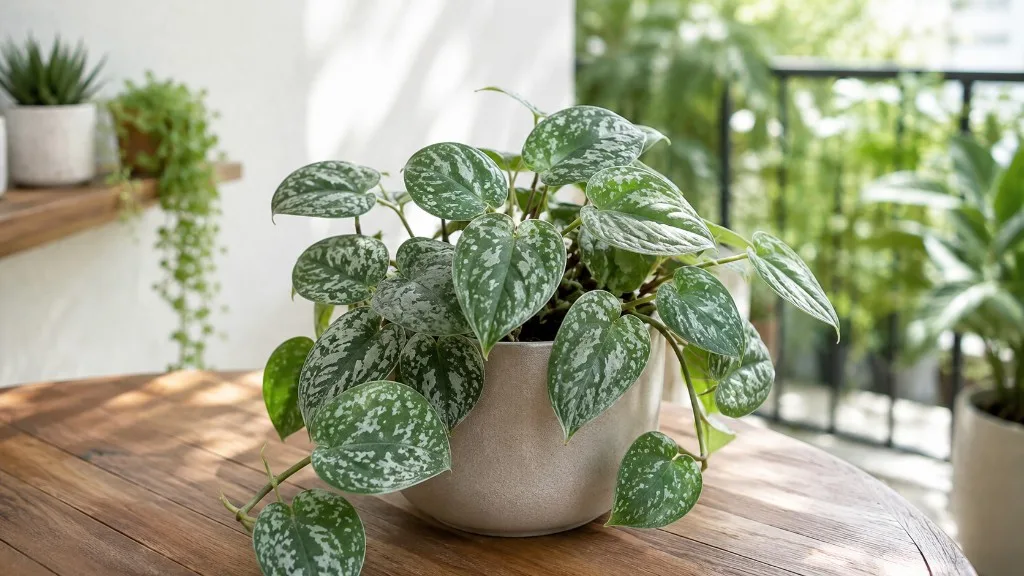
Satin Pothos Soil Mix: Scindapsus pictus Guide
Satin Pothos Soil Mix: Scindapsus pictus Guide
If you landed on our satin-philodendron URL, you are growing Scindapsus pictus — the trailing vine sold as satin pothos, silver satin pothos, or sometimes mislabeled silver philodendron. It is neither a true pothos (Epipremnum) nor a philodendron, but it shares the aroid preference for moist, well-drained substrate with enough structure that roots breathe between waterings. Satin pothos soil is the hidden system that decides whether those silver-splashed leaves stay firm and glossy or slowly yellow while the mix at the bottom stays wet for days. Get the blend, pot, and refresh rhythm right and Scindapsus pictus trails quietly for years. Get them wrong and even careful watering on a calendar fails.
The practical target for most homes is a chunky, well-draining aroid mix — roughly 2 parts indoor potting mix, 1 part perlite, and 1 part orchid bark by volume — in a pot with drainage holes, refreshed before peat collapses into anaerobic mud. Pair that with water when the top one to two inches dry and slightly acidic pH below 6.0. This guide covers why soil structure matters for this slower-growing aroid, DIY ratios, ingredient roles, pH and pot rules, repot timing, propagation substrates, failure diagnostics, and cultivar tweaks. For whole-plant context, start at the Satin Philodendron overview.
Why Satin Pothos Soil Matters More Than the Label Suggests
Retail tags lump satin pothos with golden pothos because both trail from hanging baskets and tolerate ordinary indoor light. Biology does not follow the tag. Scindapsus pictus is a slow-growing tropical evergreen climber in the Araceae family that climbs tree trunks by aerial rootlets in Bangladesh and Malesia. Those roots evolved in loose forest debris — bark chips, leaf litter, and open organic pockets — not in dense, waterlogged peat. Indoors, the closest analogue is chunky mix with real air spaces, not “more peat for moisture.”
The forgiveness trap hits harder on Scindapsus than on Epipremnum. A golden pothos in heavy mix under dim light may look merely slow for months before collapse. Satin pothos often sends earlier warnings — inward leaf curl, soft petioles, yellow lower leaves — while the bottom of the pot stays wet. NC State Extension notes that root rot may occur in poorly drained or wet soils and that yellow leaves may signal overwatering. Those symptoms frequently trace to substrate failure, not a single bad watering day.
Scindapsus pictus vs true pothos and philodendron mixes
True pothos (Epipremnum aureum) grows faster and tolerates slightly more retentive mix in the same light. Heartleaf philodendrons share similar aroid structure but differ in root thickness and dry-down speed. Scindapsus pictus sits in the middle on drought tolerance — it handles brief dry spells better than a fern, but Missouri Botanical Garden warns that roots may rot in poorly drained soils and recommends a peaty potting mix kept consistently moist during the growing season with reduced watering in winter.
If you already mix soil for pothos at 2:1:1, you are close. For satin pothos in the same room, expect the pot to dry one to two days slower and consider 5–10% more perlite or bark in humid, low-light corners. Do not copy a golden pothos schedule without checking your pot — Scindapsus shows stress sooner when the core stays wet.
What Scindapsus pictus Roots Need from Substrate
The best soil for satin pothos balances three jobs: drainage (excess water exits after each soak), aeration (oxygen reaches roots between waterings), and moisture retention (the plant is not dust-dry before the next check). Well-drained does not mean desert-fast. NC State Extension lists moist conditions with good drainage and high organic matter for houseplant culture — moist means the root zone should not swing from mud to dust every week.
When you unpot a healthy plant, you will see relatively fine roots plus short aerial rootlets along stems. Those aerial roots pull humidity from air; the pot roots anchor and supply most water. Unlike thick-rhizome plants, Scindapsus fine roots lose function quickly when oxygen is cut off. They need pore spaces — channels between particles — that stay open even when the mix is damp.
Healthy roots are white to tan and firm. Mushy, dark, hollow roots with a sour smell mean the substrate already failed, usually from compaction, overwatering, or both. Because decline is gradual, repot inspection is often the first time a grower realizes soil has been wrong for months.
Aeration, drainage, and moisture in balance
On the seconds scale, water should drain freely so roots are never submerged in a saturated block. On the hours-to-days scale, the organic fraction should hold enough water that you are not watering every other day in normal indoor light. Perlite, pumice, and coarse bark provide air channels; peat, coco coir, or quality potting soil provide the moisture reservoir.
| Property | What satin pothos needs | What goes wrong when missing |
|---|---|---|
| Drainage | Water exits freely after each watering | Root rot, sour smell, chronic yellow leaves |
| Aeration | Visible air pockets, chunky texture | Slow growth, weak roots, sudden wilt on wet soil |
| Moisture retention | Mix dries top-down over several days | Daily curl, crispy edges, stress swings |
The Best DIY Aroid Soil Mix for Satin Pothos
The most reliable Scindapsus pictus soil mix mimics loose tropical debris while staying practical for indoor pots. You can buy a commercial aroid blend or amend standard indoor potting soil until it behaves the same way.
Core recipe by volume
Mix dry ingredients thoroughly in a bucket before potting:
- 2 parts quality indoor potting mix — nutrient base and fine-root anchoring
- 1 part perlite (#3 or #4 grade stays chunkier longer) — drainage and air pockets
- 1 part orchid bark or pine bark fines — long-lasting structure mimicking forest debris
That 2:1:1 ratio produces mix that dries evenly from the top down — the pattern satin pothos prefers when you water on moisture checks. An alternative expressed as percentages: 40% potting mix, 30% perlite, 20% orchid bark, 10% coco coir or worm castings. Both land in the same functional range extension services describe for aroids: high organic matter with good drainage.
Optional small additions:
- 5–10% worm castings — mild slow nutrition at repot; skip if you fertilize heavily
- Small handful of horticultural charcoal per gallon — odor control in humid rooms; not required
- 10% coco coir — moisture buffer in very dry homes; reduce if mix already feels heavy
After mixing, squeeze a moist handful: it should hold shape briefly, then crumble — not clump into a wet ball or fall apart like dry sand.
Adjusting ratios for dry vs humid homes
The same recipe performs differently in a steamy bathroom versus an air-conditioned office.
Dry homes (humidity below 35%, heavy heating): increase potting mix or coco coir to 50% of total volume, keep perlite at 25–30%, bark at 15–20%. Symptoms of overly drainage-heavy blend include frequent wilt, dull silver patterning, and pots feather-light two days after watering.
Humid rooms (above 55% humidity, shaded bathrooms): increase perlite to 35% and bark to 25–30%, dropping base mix to 30–35%. Watch for sour smell, fungus gnats, and soft yellow leaves with wet stems.
Pot material matters too. Unglazed terra-cotta pulls moisture through walls; plastic and glazed ceramic hold it longer. A plastic hanging basket in bright light may need chunkier mix than a terra-cotta shelf pot in the same room.
Can You Use Regular Potting Soil for Satin Pothos?
Yes — as a base, not as the finished product. Start with standard indoor potting soil, then amend before potting: add at least 25–30% perlite and 15–20% orchid bark so it drains fast enough. Unamended mix often stays wet too long indoors, especially in low light, and leads to root problems even when watering seems conservative.
Read the bag label. If the first ingredients are peat, perlite, and forest products, extra perlite and bark often suffice. Moisture-control formulas with water-absorbing crystals are a poor fit; they extend wet time when Scindapsus wants a real dry-down between drinks.
Cactus or succulent mix alone is usually too lean unless blended 50/50 with indoor potting mix and still amended with bark. Straight cactus mix in moderate light dries unevenly and offers little anchoring for trailing vines.
Never use garden soil, topsoil, or outdoor bed soil in containers. It compacts, carries pests, and drains unpredictably indoors.
Ingredient Guide: Perlite, Orchid Bark, Coco Coir, and Peat
Understanding ingredients turns a recipe into a decision framework.
Indoor potting mix supplies organic base, starter nutrients, and fine structure young roots grip. Most use peat or coco coir with limestone for pH buffering. Avoid outdoor or moisture-control variants.
Perlite is expanded volcanic glass — lightweight, sterile, highest-impact amendment for drainage. Pumice substitutes at similar volume if you prefer heavier particles that do not float when you water aggressively.
Orchid bark adds large chunks that mimic debris epiphytic roots encounter. Bark breaks down over 12–24 months, one reason to refresh mix periodically even if the plant is not root-bound.
Coco coir holds moisture with more open structure than fine peat and rewets more easily after drying. Useful in dry homes; risky as a large fraction in humid, low-light setups unless perlite and bark rise accordingly.
Peat moss retains well but compacts over time. Pairing it with perlite and bark is what makes peat workable for aroids rather than suffocating.
pH Targets for Scindapsus pictus
Satin pothos prefers slightly acidic soil. NC State Extension lists soil pH as acid (below 6.0) with high organic matter — a practical target window of 5.5–6.5 for most indoor growers. In that band, nitrogen, phosphorus, potassium, and micronutrients remain available. Most quality indoor potting mixes buffer near 6.0 thanks to peat acidity balanced with limestone.
Obsessive pH tuning is rarely necessary. If the plant grows steadily, new leaves unfurl with normal silver variegation, and you repot every 18–24 months into fresh mix, pH usually takes care of itself. Consider testing when new growth stays pale despite good light and conservative watering, or when white salt crust builds on the soil surface from hard tap water and fertilizer.
Anaerobic wet mix shifts root biology faster than a slightly off pH ever will. Fix drainage before chasing lime or sulfur additives.
Drainage Holes, Pot Size, and Cachepot Rules
Even perfect satin pothos soil fails in a pot that traps water. Drainage holes are non-negotiable for long-term indoor culture. Container plants need water to drain freely so roots have adequate air. After watering, excess must exit within minutes, not pool for days.
The gravel layer myth persists, but a layer of coarse material at the bottom hinders rather than helps drainage in containers. Fill the pot uniformly with the same aroid mix from bottom to top.
Pot size interacts directly with soil performance. Choose a pot only one size larger — about 1 to 2 inches (2 to 5 cm) wider — at repot. Oversized pots hold excess wet mix around roots that cannot use it, especially in low light. See the full Satin Philodendron repotting guide for step-by-step workflow.
Cachepots without holes are fine only if the inner nursery pot drains freely and you empty standing water after every watering. Never let the bottom sit in a permanent puddle.
Hanging baskets vs shelf pots
Hanging baskets dry unevenly and faster on exposed sides than floor pots because airflow wraps the container. The top surface may look dry while the shaded center stays damp — or the opposite if dense foliage shades the rim. Always check depth, not just the visible top layer. Lift the basket: light usually means water; heavy means wait.
Standard shelf pots hold moisture longer. Trailing stems that cover the soil surface slow surface evaporation; chunkier mix resists the compaction that worsens this pattern. After repotting into a larger hanging basket, expect slower dry-down until roots explore the new volume — a common moment growers overwater freshly repotted satin pothos because they keep the old schedule.
When to Refresh or Repot Satin Pothos
Scindapsus pictus does not demand annual repotting, but mix refresh every 18–24 months — or when symptoms appear — prevents slow decline. Repot when roots emerge from drainage holes, water channels down the sides without wetting the core, growth stalls despite good light, mix smells sour, or fungus gnats persist after watering adjustments.
Avoid repotting brand-new nursery plants on day one unless mix is clearly failing or pests are visible. Quarantine, learn the drying rhythm for two to four weeks, then repot if needed. Best timing is spring through early summer when roots establish faster in warm conditions.
Peat-based mixes decompose as microbes and roots work the structure. Signs of breakdown include mix that feels dense and smooth instead of chunky when moist, water sitting on the surface before soaking, and bark chips soft, dark, and fragmented. Refresh by repotting into new aroid blend, teasing away the outer third of old mix without destroying all roots.
Hold fertilizer for four to six weeks after repotting while roots map the new space. Fresh commercial mix may already include slow-release nutrients.
Propagation and Fresh-Cutting Soil Blend
Propagation mix should drain slightly faster than established plant mix because small pots and few roots stay wet longer. A workable satin pothos propagation blend:
- 1 part indoor potting mix
- 1 part perlite
- 1 part fine to medium orchid bark
Stem cuttings with nodes also root in water or sphagnum-perlite mixes — see the Satin Philodendron propagation guide. Soil propagations fail when growers use dense peat alone in small pots and keep them saturated “to help rooting.” Roots need oxygen and stable moisture, not swamp conditions.
Keep propagations in bright indirect light. Water when the top centimeter dries. Transition rooted cuttings to standard aroid mix once roots are 3–5 cm (about 1–2 inches) and hold soil when you tug gently.
Soil Failure Symptoms and Quick Fixes
Soil problems announce themselves before every leaf yellows if you know what to check. Run diagnostics on the root zone, not only the foliage.
Chronic yellow leaves on multiple stems while you water on a reasonable schedule often mean roots sit wet too long. Check the bottom drainage hole — if mix there is wet while the top is merely “kind of dry,” your blend or pot size is wrong. Cross-check yellow leaves on Satin Philodendron to separate soil failure from habit.
Sour, swampy, or musty smell signals anaerobic breakdown. Healthy mix smells earthy. Sour odor means repot and trim mushy roots — see root rot — not another week of “letting it dry out.”
Fungus gnats in large numbers point to surface moisture persisting for days. Fixing drainage and drying the top 2–3 cm between waterings breaks the cycle faster than sticky traps alone.
Water runs down the sides without wetting the core — hydrophobic or shrunken mix pulled away from pot walls. Submerge the pot briefly to rewet, then plan refresh at repot.
Slow or stunted new growth in good light may mean compacted mix. Gently slip the plant out: white healthy roots should fill the pot; brown mush or a solid wet mass confirm soil failure.
The one-minute drainage test
After a full watering, water should exit drainage holes within 30–60 seconds and not pool on the surface for an hour. Lift the pot the next day: it should feel lighter than immediately after watering but not feather-light unless your room is very dry. Insert a skewer to mid-pot depth — damp at depth with a dry top inch matches the moist, well-drained rhythm NC State describes. If the skewer comes out wet at depth while the top looks ready, the mix may be too retentive or the pot oversized.
Fresh mix smells earthy. Sour odor around the root ball means roots may be losing oxygen even before leaves show the full problem.
Common Satin Pothos Soil Mistakes
The failures show up repeatedly:
- Using unamended bagged potting soil in low light — fastest path to chronic wet roots
- Oversized pots “so it can grow” — excess wet mix, not faster growth
- Gravel drainage layers — do not work; uniform chunky mix does
- Garden soil indoors — compaction, pests, unpredictable drainage
- Repotting on arrival or while stressed — compounds shock unless roots are rotting
- Cachepots holding standing water — negates well-draining mix instantly
- Water-retaining crystals — extend wet time when Scindapsus wants partial dry-down
- Ignoring breakdown — waiting until half the vine yellows before refreshing mix
- Matching golden pothos timing without adjusting for slower Scindapsus dry-down
- Assuming cactus mix alone is safe — creates drought stress and weak vines
Scindapsus survives many mistakes temporarily, which is why they persist. Long-term vigor — firm silver leaves, steady new growth, quick recovery from brief dry spells — tracks soil structure more closely than most care tags admit.
Pet safety note: Scindapsus pictus is toxic to cats and dogs per the ASPCA, containing insoluble calcium oxalate crystals that cause oral irritation if chewed. Soil and fertilizer are not pet-safe either; keep pots out of reach.
Cultivar Notes: Argyraeus, Exotica, and Silvery Ann
Nearly every satin pothos in stores is a cultivar of Scindapsus pictus. Soil mechanics are shared, but leaf thickness and light level change dry-down speed. NC State lists cultivars including ‘Argyraeus’, ‘Exotica’, and ‘Silvery Ann’ with varying silver pattern density.
‘Argyraeus’ — smaller leaves, often in brighter spots — may dry slightly faster; the default 2:1:1 mix usually works.
‘Exotica’ — larger, heart-shaped leaves with heavy silver splash — transpires more in warm bright windows; check hanging baskets every few days but do not compensate with heavier peat.
‘Silvery Ann’ — broad, light green leaves with large silver splotches — in dim corners, lean chunkier (more perlite and bark) so pattern does not fade from etiolation while roots sit wet.
Variegation does not require a different genus formula. It requires mix that dries at the speed your light and pot allow while keeping roots oxygenated.
Conclusion
Satin pothos soil comes down to a few principles that never change even when the room does: chunky, well-draining aroid mix with perlite and bark, moist but never soggy root zone, slightly acidic pH supported by quality potting base, drainage holes and sensible pot size, and refresh before peat collapses. The default 2:1:1 blend — two parts indoor potting mix, one part perlite, one part orchid bark — matches how Scindapsus pictus roots in loose tropical debris while staying practical for shelves and hanging baskets.
Adjust toward more bark and perlite in humid, low-light rooms; slightly more organic base in dry, bright conditions. Repot every 18–24 months or when drainage fails, water on soil checks not memory, and inspect roots when yellow leaves persist despite conservative habits. Get the substrate right and this slow, silver-flecked aroid rewards you with trailing growth that actually earns its place — without the quiet root rot that heavy peat hides until it is too late.
When to use this page vs other Satin Philodendron guides
- Satin Philodendron overview — Start here for whole-plant context before deep-diving this topic.
- Satin Philodendron problems hub — Jump to symptom-specific fix guides when this care topic does not resolve the issue.