Yellow Leaves on Satin Philodendron: Causes, Checks & Fixes
Quick answer
Yellow leaves on satin philodendron (Scindapsus pictus) most often mean overwatering-lower silver leaves dull and chlorose while the pot stays heavy. First step: stop watering until the top 2–3 cm of mix is dry, then check light and leaf pattern before assuming thirst or fertilizer deficiency.
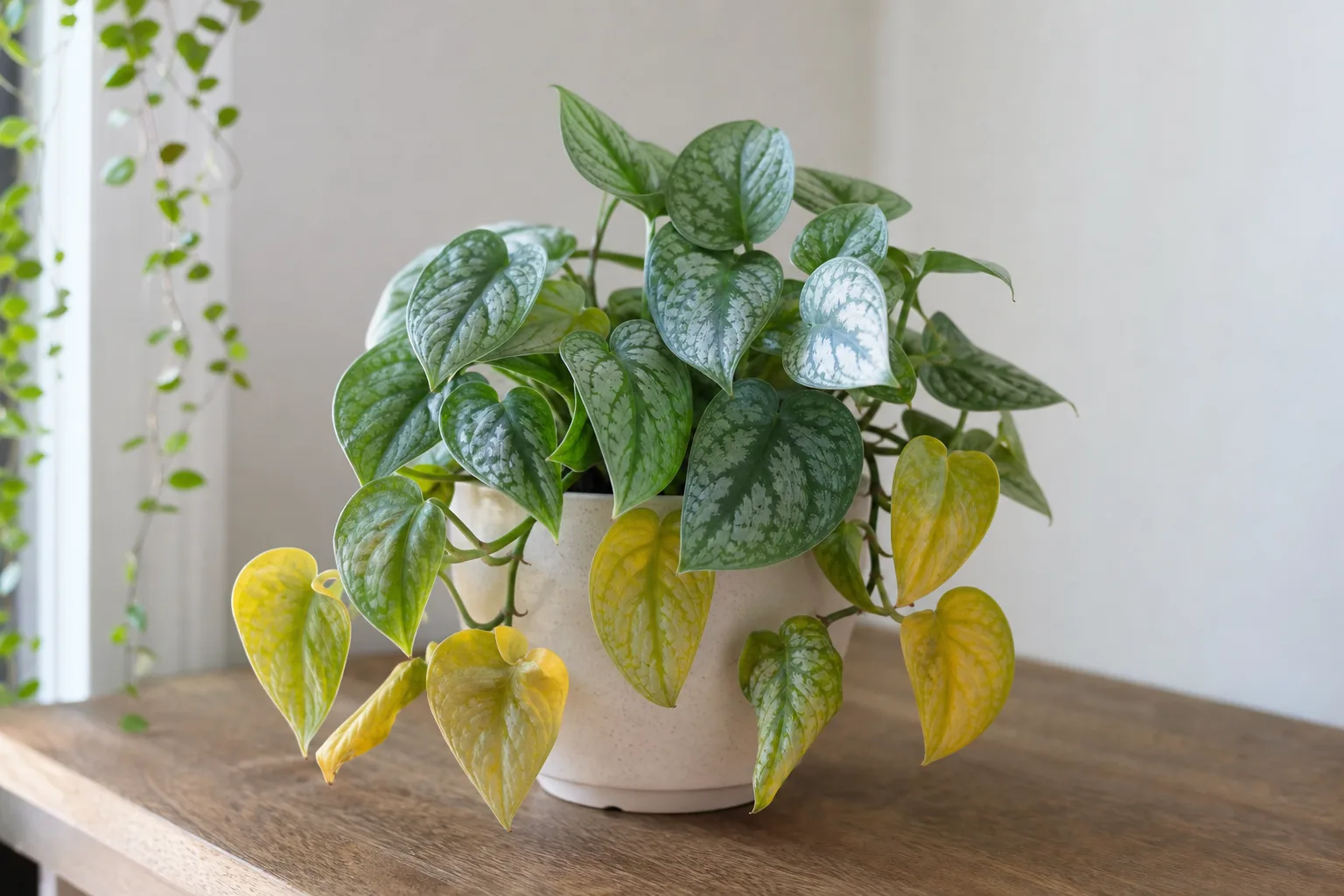
Yellow Leaves on Satin Philodendron: Causes, Checks & Fixes
This guide covers yellow leaves on Satin Philodendron. See also the general Yellow Leaves guide, watering, and light pages for this plant.
Yellow Leaves on Satin Philodendron: Causes, Checks & Fixes
Quick answer
Yellow leaves on satin philodendron-the retail label for Scindapsus pictus-are a symptom hub problem: the colour change can mean overwatering, underwatering, low light, cold drafts, pests, natural aging, or nutrient lockout from wet roots. Yellow leaves may be a sign of overwatering on this species, especially when lower leaves dull and chlorose while the mix stays damp.
First step: stop watering until the top 2–3 cm of mix is fully dry. Lift the pot, note whether yellowing is one old bottom leaf or spreading up the vine, and do not fertilize or repot on day one unless soil smells sour or the stem base is already soft.
Symptom hub - use this page vs. sibling guides
This page routes any yellowing on retail-labeled satin philodendron through pattern checks before you pick a deep-dive fix. Sibling pages handle one confirmed cause end-to-end:
| You already know… | Use this page instead |
|---|---|
| Soil stays wet, gnats, wilt on damp mix | Overwatering - rescue protocol |
| Mushy roots, sour smell, collapsing base | Root rot - trim and repot |
| Bone-dry mix, inward curl, light pot | Underwatering - soak workflow |
| Silver fade on new growth, leggy stems | Not enough light - variegation recovery |
| Stippling and webbing on undersides | Spider mites - pest treatment |
Stay here when you see yellow but have not yet matched wet vs. dry soil, aging vs. stress spread, or deficiency lookalikes. For routine dry-down rhythm, see the watering guide. For one-paragraph species context, see the Scindapsus pictus overview.
Also known as Scindapsus pictus (satin pothos)
Nurseries sell Scindapsus pictus as satin philodendron, satin pothos, or silver pothos-neither a true philodendron nor a pothos. Velvety, silver-blotched heart-shaped leaves on matte dark green identify the plant. Fixes below apply to Argyraeus, Exotica, and other cultivars. Satin pothos contains insoluble calcium oxalate crystals toxic to cats and dogs if ingested-wear gloves when pruning yellow tissue if you have pets.
What yellow leaves look like on satin philodendron
Healthy satin philodendron holds olive-green to dark green leaves with crisp silver bands and a satin sheen. Yellowing shows up in patterns that point to different causes:
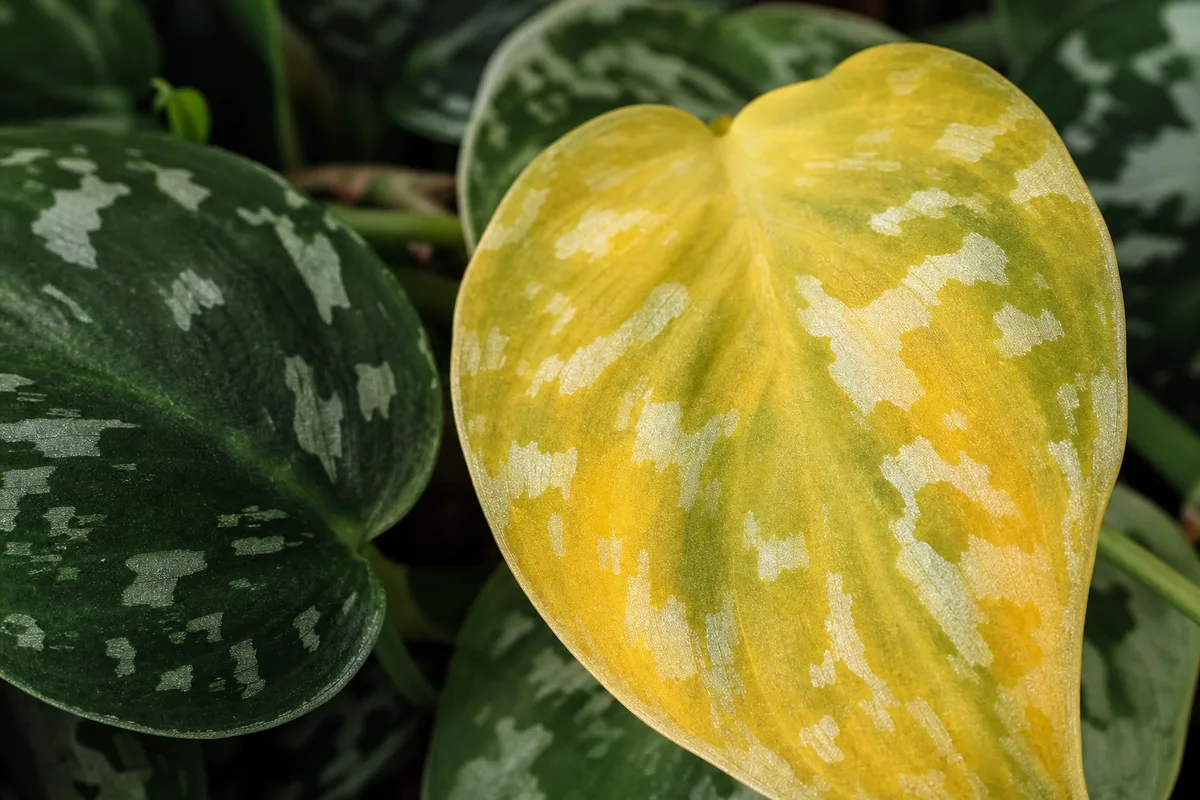
Yellow Leaves symptoms on Satin Philodendron - compare with healthy tissue on the same plant.
- Lower, older leaves yellow first while petioles stay firm-often overwatering or natural aging
- Silver blotches dull or wash out before full yellow-light stress, root stress, or both
- Multiple leaves yellow at once with limp stems and wet soil-root failure or advancing rot
- Inward leaf curl with dry, light pot-underwatering; curling leaves may be a sign of underwatering on Scindapsus
- One bottom leaf yellows slowly while vines keep producing marked new leaves-likely normal turnover
- Stippling, webbing, or pale specks on undersides-spider mites draining moisture
Photo check (mild aging): One matte silver-blotched leaf at the basket bottom turning uniform butter-yellow while upper vines stay firm and marked-stems rigid, pot weight normal for your watering rhythm.
Photo check (wet-root stress): Three or more lower leaves losing silver sheen and chlorosing within a week; pot lifts heavy days after the last drink; petioles starting to soften while mix at 2–3 cm depth feels clammy.
Scindapsus has thinner, satin-textured leaves than thick succulents-they show stress faster when roots or light are off. Yellow tissue that has fully chlorosed will not re-green; judge recovery by new growth, not old leaves.
Most likely causes on satin philodendron
Overwatering (most common)
Chronic wet soil suffocates aroid roots. In poorly drained or wet soils, root rot may occur, and stressed roots cannot move water even when the mix feels moist-the classic heavy pot with limp leaves. Scindapsus pictus is slow-growing, so owners keep watering on a summer schedule through dim winter months when the plant barely transpires. Trailing vines in hanging baskets hide wet crowns: the surface dries while the root ball stays saturated.
Low light compounding wet soil
Insufficient light slows photosynthesis and water use. Soil stays wet longer, turning a safe watering volume into overwatering. Separately, low light fades silver on new leaves-plain green new growth with wide internode spacing signals light deficit before widespread yellowing. See not enough light and light requirements.
Underwatering
Repeated drought kills fine roots; lower leaves yellow as the plant sheds tissue it cannot support. Look for a light dry pot and inward curl that perks after a thorough soak. See underwatering when soil is bone dry several centimeters down.
Natural aging
Trailing vines naturally shed the oldest leaves near the soil or basket bottom. One leaf yellowing every few weeks on an otherwise vigorous plant with firm stems and predictable dry-down is normal-not a crisis.
Cold drafts and temperature swings
Scindapsus prefers stable room temperatures roughly 65–85°F (18–29°C). Missouri Botanical Garden notes damage below 60°F. Cold air from winter windows, AC vents, or radiators can yellow foliage suddenly without changing your watering schedule.
Pests and disease
Spider mites, mealybugs, and scale drain sap and accelerate yellowing-especially on stressed plants in dry winter air. Fungal leaf spot is uncommon indoors but can yellow patches with brown centres. Scout leaf undersides weekly during active growth.
Nutrient deficiency lookalikes (usually wet roots first)
Owners sometimes assume yellow satin leaves need fertilizer. On Scindapsus pictus, the more common story is induced chlorosis: roots in oxygen-poor wet mix cannot absorb iron or manganese even when those nutrients sit in the soil. RHS chlorosis guidance notes that interveinal chlorosis on younger leaves often signals manganese, iron, or magnesium deficiency-but leaf yellowing also occurs under waterlogged conditions when roots cannot function.
How to split them on this vine:
| Clue | Wet-root / overwatering mimic | True deficiency (less common indoors) |
|---|---|---|
| Soil at 2–3 cm | Wet or clammy for days | Normal dry-down on schedule |
| Leaf texture | Soft, limp, sometimes dull silver first | Firm leaves with green veins and yellow between |
| Leaf position | Lower leaves first, often several at once | Newer growth affected first for iron-type patterns |
| Root check | Brown, mushy, or sour smell | Firm pale roots in appropriately dry mix |
| First fix | Dry-down, drainage, light-not fertilizer | Balanced feed only after roots and moisture are stable |
If wet soil and soft stems accompany yellowing, fix moisture and inspect roots before any fertilizer. Fertilizing a waterlogged satin pothos worsens salt stress on already failing roots.
How to confirm the cause
Work through these checks in order-soil moisture and pot weight come before repotting or fertilizer:
- Soil moisture at 2–3 cm - Wet or clammy mix with yellow lower leaves points to overwatering. Bone dry with limp curl points to underwatering.
- Pot weight - Heavy days after watering with limp foliage means failing roots, not thirst.
- Leaf pattern - One old bottom leaf vs. five leaves in a week tells different stories.
- Silver on new growth - Faded or plain green new leaves with wet soil suggest light plus water mismatch; faded new leaves with normal dry-down suggest light alone.
- Stem firmness - Soft base at soil line escalates to root inspection.
- Smell and pests - Sour mix or stippling on undersides narrow the diagnosis.
- Light reality - Count usable bright indirect hours at the canopy.
Quick decision tree: wet vs. dry vs. aging vs. pests
| Your check | Most likely cause | First action | Urgency |
|---|---|---|---|
| Heavy pot, wet at 2–3 cm, dull lower silver leaves | Overwatering | Stop water until top 2–3 cm dries | High |
| Light pot, dry mix, inward curl | Underwatering | One deep soak, then normal dry-down | Medium |
| One old bottom leaf, firm vine, normal weight | Natural aging | Remove spent leaf only | Low |
| Plain green new leaves, long internodes, damp soil | Low light + slow dry-down | Brighter indirect light; fix watering after | Medium |
| Interveinal yellow on new leaves, firm stems, dry mix on schedule | Possible deficiency | Light balanced feed at half strength after confirming roots | Low–medium |
| Stippling, webbing, spreading pale specks | Spider mites | Isolate; rinse undersides; see mite guide | Medium–high |
| Sour smell, soft stem base, rapid spread | Root rot | Same-day unpot per root rot guide | Urgent |
If wet soil, sour smell, and spreading yellow align, escalate to overwatering and root rot.
First fix by diagnosis branch
Default first fix (when unsure): stop watering until the top 2–3 cm of mix is fully dry.
Branch from there:
- Wet heavy pot, limp lower leaves: Empty saucer water. Tilt hanging baskets to drain. Do not add water because silver leaves look pale-confirm soil first. If mix stayed wet more than a week with spreading yellow or sour smell, unpot after surface dries slightly: trim mushy tissue and repot into fresh airy mix with perlite.
- Dry light pot, inward curl: One thorough soak may be correct-see underwatering.
- One slow bottom leaf, firm growth: Remove the yellow leaf; no other change if dry-down is normal.
- Silver fade on new growth, leggy stems: Improve bright indirect light before increasing water.
Make one change at a time. Do not fertilize, repot heavily, and prune all yellow leaves on the same day.
Step-by-step recovery and timeline
Mild yellowing: wet soil, firm stem, limited spread
- Pause water until the top 2–3 cm dries.
- Move to bright indirect light-not direct afternoon sun-so remaining roots can dry the mix predictably. Avoid direct sun on Scindapsus foliage.
- Remove fully yellow leaves at the base.
- Resume watering only when the top 2–3 cm is dry again.
Timeline: Predictable pot dry-down within one to two weeks; at least one new silver-marked leaf within two to four weeks.
Moderate: sour smell, gnats, or wilt with wet soil
- Unpot and inspect roots. Healthy aroid roots are firm and pale; rotted roots are brown and mushy.
- Trim rotted tissue, repot into well-draining mix with perlite and bark.
- Water lightly once to settle, then wait for dry-down before the next drink.
- Hold fertilizer until new growth appears.
Timeline: Four to eight weeks before new foliage looks normal-Scindapsus’s slow growth is not failure.
Severe: soft stem base or collapsing vines
Follow root rot immediately. Propagate a firm stem cutting with a node if the base is gone.
Field note: winter overwatering recovery (Exotica, January 2026)
A trailing Scindapsus pictus ‘Exotica’ in a 15 cm hanging basket on a north-facing bookcase developed three lower yellow leaves over ten days in January. Top 2 cm felt damp; pot weight stayed heavy despite dim winter light and a weekly watering habit carried over from summer. Owner paused water for twelve days until the top half of mix dried, moved the basket roughly one metre toward an east-facing window, and removed fully yellow leaves at the petiole base. First firm new silver-marked leaf appeared at day 28; predictable dry-down returned by week three. No repot or fertilizer was needed-dry-down plus brighter indirect light stopped spread. Lesson for satin pothos: slow winter growth plus retail “philodendron” watering expectations keep baskets wet long before leaves show widespread collapse.
Lookalike symptoms to rule out
Wilting with wet soil - Root failure, not thirst. See overwatering and wilting.
Wilting with dry soil - Underwatering. One deep soak; foliage should perk within hours if roots are healthy.
Silver fade without yellow - Low light before chlorosis. Fix light first; existing leaves cannot regain silver sheen.
Brown tips on firm stems - Often low humidity, not yellow-leaf causes. See low humidity.
Whole vine collapse overnight - May be advanced rot or cold shock-not simple aging.
Uniform interveinal yellow on new leaves with dry soil and firm roots - Consider deficiency only after ruling out water and light; see nutrient table above.
What not to do
- Watering pale leaves when soil is already wet-worsens root decline
- Fertilizing a yellowing stressed plant hoping to push green-wait for stable new growth and normal dry-down
- Repotting into a much larger pot-excess mix stays wet longer
- Direct afternoon sun to dry soil faster-direct sunlight is not tolerated on Scindapsus foliage
- Assuming all yellowing is disease before checking water, light, and weight
- Misting instead of fixing root-zone moisture-does not dry wet peat
How to prevent yellow leaves next time
Water when the top 2–3 cm is dry-not on a fixed calendar. Missouri Botanical Garden recommends reducing watering over winter when growth slows; cool rooms plus wet soil yellow leaves fast.
Keep satin philodendron in bright indirect light so the plant uses water steadily and holds silver variegation. Use drainage holes, perlite-amended mix, and empty saucers within 30 minutes. Scout leaf undersides during active growth. Our watering guide covers seasonal rhythm; our soil guide covers mix structure that prevents chronic wetness.
When to worry - escalation ladder
| Level | Signs | Action |
|---|---|---|
| Routine | One bottom leaf yellowing slowly; firm stems; normal dry-down | Remove leaf; align watering with soil dryness |
| This week | Several lower leaves dulling; pot heavy; no sour smell yet | Stop water; brighter indirect light; recheck in 7–10 days |
| Urgent | Multiple leaves per week on wet mix; gnats; wilt on damp soil | Unpot and inspect roots; follow overwatering |
| Same day | Soft stem base; sour smell; collapsing vines | Root rot protocol; propagate backup cutting if needed |
Escalate quickly when yellowing reaches multiple leaves within a week while soil stays wet, stems soften at nodes, new growth emerges small and pale despite adequate light, or pests spread to fresh silver-marked leaves.
Related satin philodendron guides by scenario
- Satin philodendron care hub - species baseline
- Scindapsus pictus overview - botanical-name hub
- Watering - dry-down rhythm and winter reduction
- Overwatering - wet-soil rescue when yellow confirms saturation
- Root rot - mushy roots and stem collapse
- Underwatering - curl on light dry pots
- Not enough light - silver fade before yellow
- Spider mites - stippling and webbing
- Mold on soil - early wet-soil alarm before leaf yellow
Related tool
Use the Yellow Leaves Diagnosis Tool to narrow causes for yellow leaves on this plant before changing multiple variables at once.