Best Soil for Scindapsus Pictus: Mix, Drainage
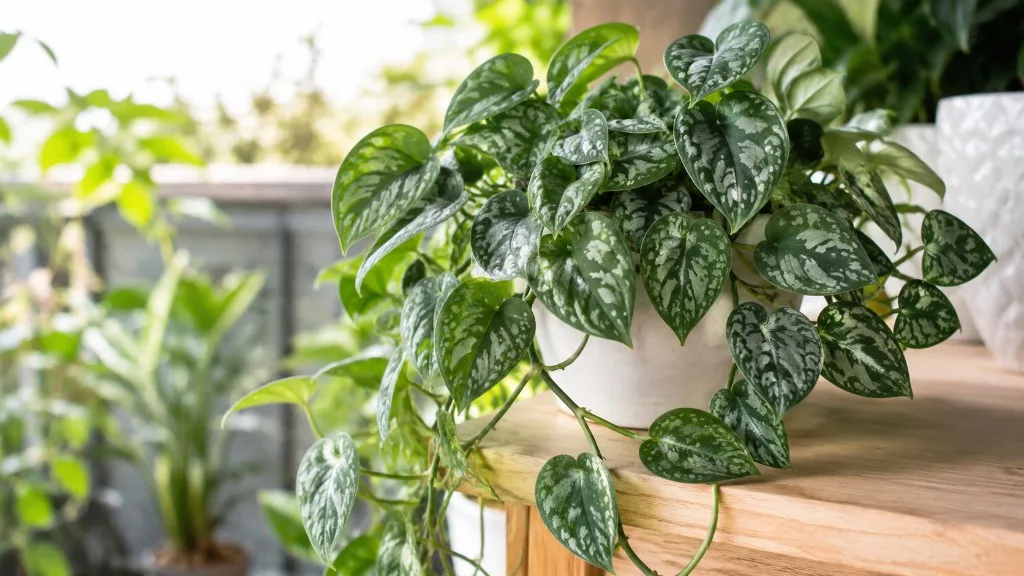
Best Soil for Scindapsus Pictus: Mix, Drainage, and Repotting
Best Soil for Scindapsus Pictus: Mix, Drainage, and Repotting
Scindapsus pictus - the silver-flecked vine most people call satin pothos or silver satin pothos - does not need exotic soil science. It needs a well-draining, airy aroid mix with enough organic matter to hold moisture between waterings, enough perlite and bark to keep oxygen moving through the root zone, a pot with a real drainage hole, and a grower who understands that Scindapsus Pictus overview tolerates dryness far better than it tolerates soggy mix. Get those pieces aligned and Scindapsus pictus will trail quietly from a shelf or climbing pole for years, pushing out new leaves with that distinctive silver variegation. Get them wrong and the same plant yellows, wilts, and rots from the roots up while the surface still looks damp enough to feel safe.
This guide covers what Scindapsus pictus roots actually need from their substrate, the aroid mix recipe most indoor growers settle on, how each ingredient earns its place, the pH window that supports nutrient uptake, why compacted or waterlogged soil is the silent killer, how to choose a pot that works with your mix rather than against it, when and how to repot without shocking the plant, and how to adjust the recipe for your specific room.
If symptoms persist, see the Brown Tips on Scindapsus Pictus guide.
Why Soil Quality Matters for Scindapsus Pictus
Soil is not a background detail for Scindapsus pictus. It is the system that decides how much oxygen reaches the roots after every watering, how long moisture sits in the lower half of the pot, and whether a well-intentioned Tuesday watering becomes a week of anaerobic conditions around fine rootlets. Scindapsus pictus shows stress on a slower timeline than some houseplants - a yellow leaf today might be the visible tip of a root problem that started when the mix compacted six weeks ago and stopped draining.
The plant is often grouped with pothos because both are trailing aroids that look good in hanging baskets, but Scindapsus pictus is not Epipremnum. It grows more slowly, prefers slightly drier intervals between waterings, and is generally less forgiving of waterlogged substrate. That difference matters when you choose soil. A mix that keeps a golden pothos happy in a bright kitchen may keep a Scindapsus pictus too wet in a dim bedroom where the pot dries half as fast.
Scindapsus pictus is native to the tropical forests of Southeast Asia - Bangladesh, Borneo, Java, Malaysia, the Philippines, Sulawesi, Sumatra, and Thailand - where it climbs trees and spreads across the forest floor in loose, organic debris. That natural habitat is rich in bark fragments, leaf litter, and mineral grit that holds moisture after rain but never sits in standing water. Your indoor pot is a compressed version of that environment. The job of good soil is to replicate the airflow and moisture rhythm, not to replicate rainforest mud.
How Scindapsus roots behave in a pot
When you unpot a healthy Scindapsus pictus, you will see a network of relatively fine roots mixed with short aerial rootlets along the stems. Those aerial roots absorb ambient humidity, but the terrestrial root system in the pot is what anchors the plant and pulls up most of its water and nutrients. Unlike thick-rhizome plants such as ZZ plants or snake plants, Scindapsus roots lose function quickly when oxygen is cut off. They need pore spaces - tiny air channels between particles - that stay open even when the mix is damp.
Healthy roots are white to tan, firm, and smell earthy. Mushy, dark, or hollow roots with a sour or swampy odor mean the substrate has already failed, usually from compaction, overwatering, or both. Because Scindapsus pictus declines gradually, inspecting the root ball during repot is often the first time a grower realizes the soil system has been wrong for months. That inspection is worth doing before you assume the problem is light or fertilizer.
What Scindapsus Pictus Needs from Its Substrate
The best soil for Scindapsus pictus balances three jobs at once: it holds enough moisture in its organic component to keep roots evenly damp between waterings, it drains excess water within seconds of a thorough soak, and it maintains open structure so air can move back into the root zone in the hours after watering. A mix that does only one of those well will fail in a pot.
Well-draining does not mean fast-drying desert mix. Scindapsus pictus is more drought-tolerant than many tropical houseplants, but it still wants consistency - lightly moist, not wet, not dust-dry - between waterings. A substrate that swings from swampy to bone dry in a single week stresses fine roots more than a steady moderate moisture level. The mix should support that rhythm rather than fight it.
Aeration vs moisture retention
Think of aeration and moisture retention as two jobs on two timescales. On the seconds scale, water should drain freely so roots are never submerged in a saturated block. On the hours-to-days scale, the organic fraction of the mix should hold enough water that you are not watering every other day in normal indoor conditions. Perlite, pumice, or coarse bark provide the air channels; peat, coco coir, or quality potting soil provide the moisture reservoir.
Most published aroid guidance lands in a similar zone: roughly 30 to 45 percent moisture-holding base, 25 to 40 percent structural bark, and 20 to 30 percent mineral aggregate such as perlite or pumice, with optional small amounts of worm castings or compost for slow nutrients. Scindapsus pictus sits comfortably in that range. You do not need a separate genus-specific formula unless your home environment pushes you toward one end or the other - which the adjustment section at the end covers.
The Best Well-Draining Aroid Soil Mix
The most reliable Scindapsus pictus soil mix is a chunky aroid blend built from ingredients you can buy at any garden center. It mimics the loose organic debris these plants root into in nature while staying practical for indoor pots. You can purchase a commercial aroid mix and use it straight, or amend a standard indoor potting soil until it behaves the same way.
If you buy pre-made mix, look for one that lists bark, perlite, and coco coir or peat among the first ingredients - not just peat and compost with a dusting of perlite on top. If you mix your own, the recipe below is a proven starting point that you can tune once you learn how fast your pot dries in your room.
Core DIY recipe by volume
Mix these components thoroughly in a bucket before potting:
- 40% high-quality indoor potting mix - structure and light moisture retention
- 30% perlite (#3 or #4 grade stays chunkier longer) - drainage and consistent air pockets
- 20% orchid bark or pine bark chips - long-lasting chunkiness and root grip
- 10% coco coir or worm castings - even moisture distribution and gentle organic nutrition
That ratio produces a mix that drains within seconds after a full watering, stays open for twelve to twenty-four months before bark breakdown becomes noticeable, and holds enough moisture that most growers water when the top two to three inches feel dry rather than when the entire pot is crispy. If your home is warm and bright and pots dry fast, reduce perlite slightly and increase bark. If your home is cool and dim and pots stay wet too long, increase perlite and bark and reduce the peat-heavy base.
What each ingredient does
Potting mix is the foundation. Choose a peat- or coco-based indoor formula without water-retention crystals or heavy compost that compacts quickly. It gives the blend body and holds the first wave of moisture after watering.
Perlites job is not decorative. It creates uniform air pockets throughout the entire volume of the mix - something bark alone cannot replicate because bark tends to float toward the top and break down unevenly. Aim for 25 to 35 percent perlite in the final blend if you are starting from dense commercial soil. Skipping perlite because bark looks chunky enough is one of the most common DIY mistakes.
Orchid bark adds structure that lasts longer than perlite alone. Scindapsus pictus roots naturally grip woody debris as they climb in the wild, and bark fragments give mature roots something to anchor against in a pot. Fine bark breaks down faster; coarse orchid-grade bark lasts longer between repots.
Coco coir resists compaction better than peat over time and holds moisture evenly. Worm castings add slow-release nutrients and microbial activity - use a small amount, roughly five to ten percent, not a third of the mix, or you risk holding too much moisture in a dim room.
Optional additions that help but are not required: horticultural charcoal (five to ten percent) for odor control and long-term mix stability, and a small amount of pumice if you prefer it over perlite in your climate.
Target pH for Scindapsus Pictus: 5.5 to 6.8
Scindapsus pictus prefers slightly acidic soil with a pH between 5.5 and 6.8. NC State Extension lists acidic soil (pH below 6.0) and good drainage as cultural requirements for this species outdoors. Most peat- and coco-based potting mixes land in that range out of the bag.
You do not need a pH meter for every repot. If new growth looks pale, leaf edges brown despite correct watering, or the plant stalls in an otherwise good spot, pH drift from tap-water minerals or decomposed peat is worth checking. Flushing the pot with distilled or rainwater until water runs clear from the drainage hole, then refreshing the top third of mix or Scindapsus Pictus repotting guide into new substrate, usually resolves mild salt and pH stress faster than adding more fertilizer.
Can You Use Regular Potting Soil?
Yes - with amendments. Regular potting soil alone is too dense for long-term Scindapsus pictus care in most indoor setups. Unamended mix compacts within months, reduces airflow, and holds water longer around the roots than this plant prefers. That does not mean you must throw away the bag in your garage. It means you treat standard potting soil as roughly forty percent of a custom blend, then add perlite and bark until the finished mix feels light, crumbly, and drains in seconds when you pour water through a handful.
The test is simple. Grab a moist handful of your blend and squeeze it. It should hold together briefly, then crumble apart when you poke it. If it forms a tight wet ball that stays solid, add more perlite and bark before potting. If it falls apart instantly and feels gritty with almost no cohesion, add a little more base mix or coco coir so roots have somewhere to hold moisture between waterings.
Chunky Aroid Mix vs Lighter Pothos-Style Mix
Because Scindapsus pictus is often sold next to pothos, growers frequently ask whether the soil should be identical. The honest answer is similar but not always identical.
A lighter pothos-style mix - roughly two parts potting soil to one part perlite - works well for Scindapsus pictus in bright, warm rooms where pots dry predictably every seven to ten days. That simpler blend is easier to mix and cheaper to maintain. A chunkier aroid mix with twenty percent or more bark is better when the plant lives in low light, a cool room, a large decorative pot, or a hanging basket that dries unevenly. The extra structure keeps the root zone aerated even when the top surface feels dry but the center is still damp.
Scindapsus pictus is slightly less rot-resistant than Epipremnum pothos in practice, so err toward more drainage rather than less when you are unsure. If your pothos and Scindapsus pictus share a shelf, give the Scindapsus the chunkier mix or the smaller pot - not the other way around.
Why Heavy, Waterlogged Soil Causes Root Rot
Root rot is the most serious soil-related disease in Scindapsus pictus care, and it develops when mix stays wet too long for oxygen to return to the root zone. Fungi and bacteria that are harmless in airy damp soil become aggressive in waterlogged anaerobic conditions. NC State Extension notes that in poorly drained or wet soils, root rot may occur. The plant does not announce root rot with a single dramatic leaf drop. It yellows slowly, loses turgor on random leaves, and stops producing new growth while the stem base may still look fine.
Heavy peat that has compacted after two years behaves like a sponge that never releases water. Moisture-control potting mixes with water-retention gel make the problem worse in low light. Oversized pots hold a large volume of wet mix that the root system never dries out. A drainage layer of gravel at the bottom of a pot does not fix any of these - water still sits in the saturated zone above the gravel, and the gravel reduces usable root space.
Early warning signs in the root zone
Catch soil failure before rot spreads by watching for these signals:
- Water sits on the surface for minutes after watering instead of soaking in immediately
- The pot feels heavy days after you thought it should be dry
- A sour, stagnant, or swampy smell when you lift the plant or slide a finger near the drainage hole
- Yellow leaves with soft petioles, especially on lower vines, while watering habits have not changed
- Fungus gnats breeding in constantly wet surface soil
- Roots visible through drainage holes are brown and mushy rather than firm and white
If you see several of these together, unpot the plant, inspect the roots, trim any mushy tissue with clean scissors, and repot into fresh dry mix before resuming a conservative Scindapsus Pictus watering guide. Hold off watering for five to seven days after a rot recovery repot so damaged roots are not asked to drink in a still-recovering zone.
Choosing the Right Pot for Your Soil Mix
Even perfect Scindapsus pictus potting soil fails in the wrong container. The pot must have a functional drainage hole - not a decorative indent, not a layer of gravel, not hope. Terracotta dries faster and forgives slightly heavy mix; plastic retains moisture longer and pairs well with chunkier substrate; glazed ceramic looks good but demands excellent drainage and careful watering. Match the pot material to how fast your room dries the mix.
Size matters as much as material. Repot into a container only one to two inches larger in diameter than the current root ball. An oversized pot holds a large volume of mix the roots do not reach, and that unused mix stays wet longest - exactly where rot starts. Scindapsus pictus does not need a mansion. It needs a pot sized to the roots with soil that dries on a predictable schedule.
If you use a decorative cachepot, grow in a nursery pot with holes and lift it out to water, or ensure water never sits in the outer shell for more than fifteen minutes after a soak. Standing water at the bottom of a cachepot is the same as no drainage hole from the root’s perspective.
When and How to Repot Scindapsus Pictus
Repot when roots circle the bottom, emerge from drainage holes, water runs straight through without absorbing, or the mix has clearly broken down into fine compacted peat - usually every eighteen to twenty-four months for an actively growing plant. Spring, when daylight lengthens and new growth resumes, is the safest window. Avoid repotting a stressed plant unless the roots or soil are clearly the problem.
Do not repot on day one after bringing a plant home unless the nursery mix is visibly failing or pests are present. Quarantine new plants, learn how fast the existing pot dries in your room, and repot once the plant has acclimated.
Step-by-step repotting without shock
- Water lightly one to two days before repotting so the root ball is flexible but not soggy
- Choose a pot one size up with a drainage hole; add a shallow layer of fresh mix at the bottom - no gravel layer
- Slide the plant out and inspect roots; trim only mushy or dead tissue with sterilized pruners
- Loosen the outer quarter of the old root ball if it is circling hard; leave the interior intact
- Place the plant so the stem sits at the same depth as before - burying nodes too deep invites stem rot
- Backfill with fresh aroid mix, tapping the pot gently to settle gaps without compacting
- Water lightly to settle the mix, then place in Scindapsus Pictus light guide and wait until the top two inches dry before the next full soak
After repotting, skip fertilizer for four to six weeks while roots re-establish. The fresh mix and worm castings if you use them provide enough nutrition for that recovery period.
Refreshing Old Soil Without a Full Repot
Full repotting is not always necessary. If the plant is not rootbound but the mix has compacted on top or smells stale, refresh the upper third of the substrate instead. Slide off the top layer carefully, replace it with fresh aroid mix, and water lightly. This buys another growing season without disturbing roots.
Top-dressing with worm castings in spring adds gentle nutrition without changing drainage structure. Avoid burying stem nodes under heavy new soil during a refresh - Scindapsus pictus stems rot easily if buried too deep in wet mix.
If water channels down the sides of the pot and out the bottom without wetting the center - a sign the peat has shrunk away from the walls - a full repot is the better fix. Surface refresh alone will not reopen a hydrophobic core.
Common Soil Mistakes to Avoid
The same errors show up repeatedly in Scindapsus pictus troubleshooting threads, and most are soil-related even when the grower blames watering first.
Using garden soil or topsoil indoors is the fastest way to compact a pot and invite gnats, rot, and nutrient imbalance. Outdoor soil is for outdoor beds, not houseplant containers.
Relying on cactus or succulent mix without amendment gives too little moisture retention for a tropical aroid in most homes. Cactus mix works only if you blend it with potting soil and coco coir so the final product holds moisture longer than straight grit.
Adding a gravel drainage layer does not improve drainage and reduces root volume. Physics does not support the myth - water stops at the boundary between fine soil and coarse gravel.
Choosing moisture-control potting mix in a low-light room keeps the root zone wetter than Scindapsus pictus prefers. These formulas are designed for outdoor planters that dry fast, not dim indoor shelves.
Repotting into a much larger pot to “give it room to grow” creates a wet dead zone that roots avoid. Size up slowly.
Skipping the drainage hole because a decorative pot looks better guarantees rot eventually. Grow in a liner pot or drill a hole.
Adjusting Your Mix for Your Home Environment
The recipe on the bag is a starting point, not a law. Your room’s light, temperature, humidity, and pot type change how fast mix dries, and that changes how chunky your blend should be.
In warm, bright, dry rooms where pots lighten every five to seven days, a lighter mix with twenty to twenty-five percent perlite and less bark is usually enough. In cool, dim, or humid rooms where pots stay wet ten days or more, push toward thirty-five percent perlite and twenty-five percent bark, use terracotta, and consider a slightly smaller pot than you would in a bright kitchen.
Hanging baskets dry from the bottom and top simultaneously but can stay wet in the center if the mix is too peat-heavy. Mounting higher in the room often means warmer air and faster drying - adjust watering before you change soil if only the basket location changed.
If you run a humidifier and keep ambient humidity above fifty percent, aerial roots along the stems absorb more ambient moisture, and the terrestrial root zone can tolerate slightly more drainage than in a dry winter room with forced-air heat. Watch leaf texture: soft, thin new leaves sometimes mean the mix is drying too fast; yellow soft leaves with wet soil mean the opposite.
Conclusion
The best soil for Scindapsus pictus is an airy, well-draining aroid mix - roughly forty percent quality potting base, thirty percent perlite, twenty percent bark, and ten percent coco coir or worm castings - in a pot with a real drainage hole sized only one to two inches larger than the root ball. Target pH 5.5 to 6.8, amend regular potting soil rather than using it straight, and refresh or repot when the mix compacts, smells sour, or stops absorbing water evenly.
Scindapsus pictus is not a true pothos, and it pays to give it slightly chunkier, better-aerated soil than you might use for Epipremnum in the same room. Most vine decline traces back to the root zone long before fertilizer or light become the limiting factor - so when leaves yellow despite what feels like careful watering, inspect the mix and the roots before you change anything else. Get the substrate right once, adjust it for your home’s drying speed, and this slow, elegant vine rewards you with years of silver-patterned growth without drama.
When to use this page vs other Scindapsus Pictus guides
- Scindapsus Pictus overview - Start here for whole-plant context before deep-diving this topic.
- Scindapsus Pictus problems hub - Jump to symptom-specific fix guides when this care topic does not resolve the issue.