Brown Tips on Scindapsus Pictus: Causes, Checks & Fixes
Quick answer
Brown tips on Scindapsus Pictus are usually environmental-low humidity, fluoride or salts in tap water, or dry spells between heavy soakings. First step: switch to room-temperature filtered or rainwater and water only after the top half of soil dries.
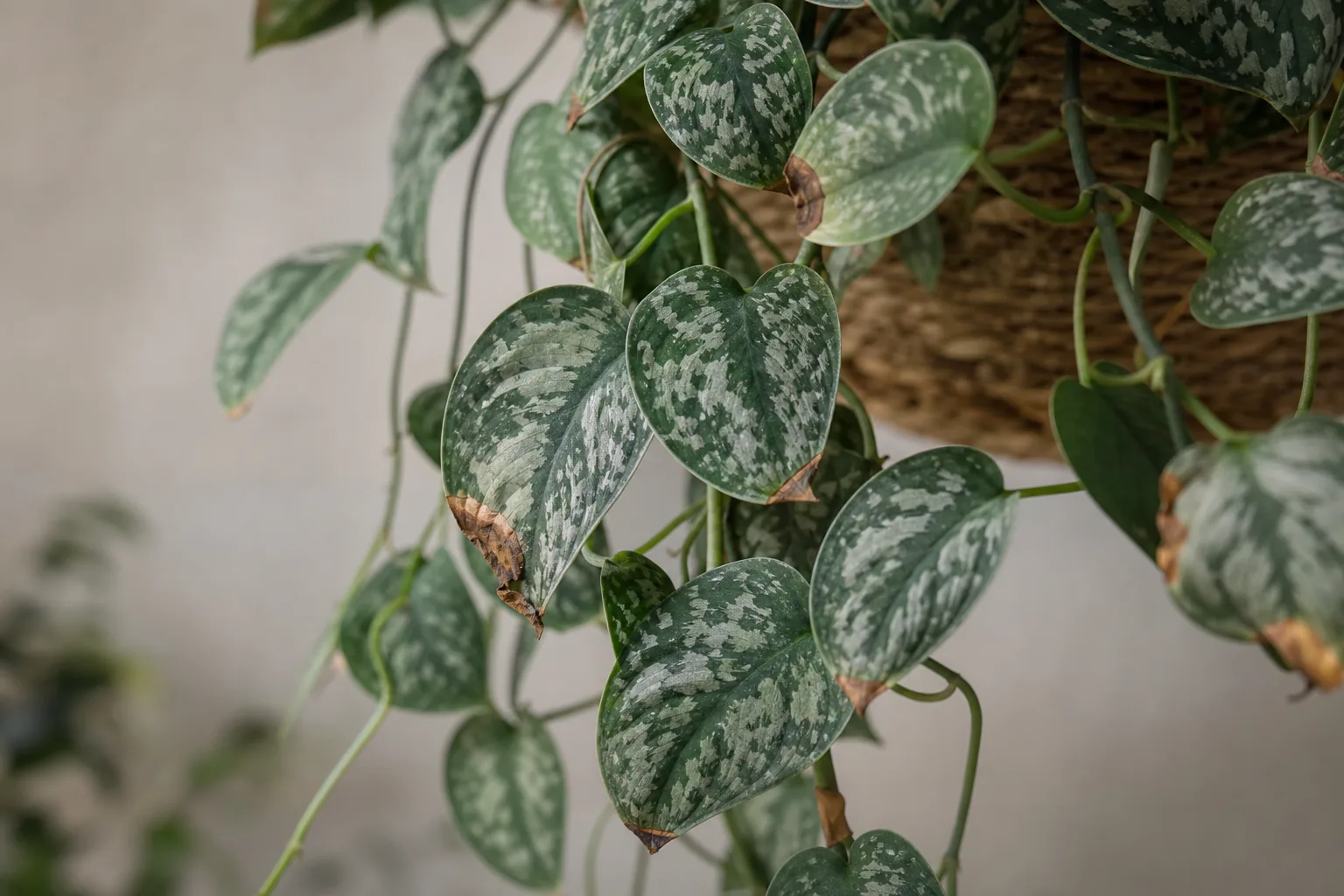
Brown Tips on Scindapsus Pictus: Causes, Checks & Fixes
This guide covers brown tips on Scindapsus Pictus. See also the general Brown Tips guide, watering, and light pages for this plant.
Brown Tips on Scindapsus Pictus: Causes, Checks & Fixes
Quick answer
Brown tips on Scindapsus Pictus (Scindapsus pictus, often sold as Satin Pothos or Silver Pothos) almost always trace to water balance at the leaf edge-not fungal disease. The farthest point on each satin-textured, silver-blotched leaf dries first when humidity is low, tap water carries fluoride or mineral salts, or roots alternate between drought and saturation.
First step: switch to room-temperature filtered or rainwater and water only after the top half of soil is dry. Scindapsus pictus is an aroid that stores little moisture in its thin leaf tissue compared with succulents; margin burn often appears before the whole leaf yellows. Fix water source and rhythm before Scindapsus Pictus repotting guide, fertilizing, or spraying fungicides.
What brown tips look like on Scindapsus Pictus
Healthy Scindapsus pictus leaves are ovate with heart-shaped bases, matte green above with irregular silver-gray blotches, and paler beneath. Tip burn on Scindapsus Pictus overview usually shows as:
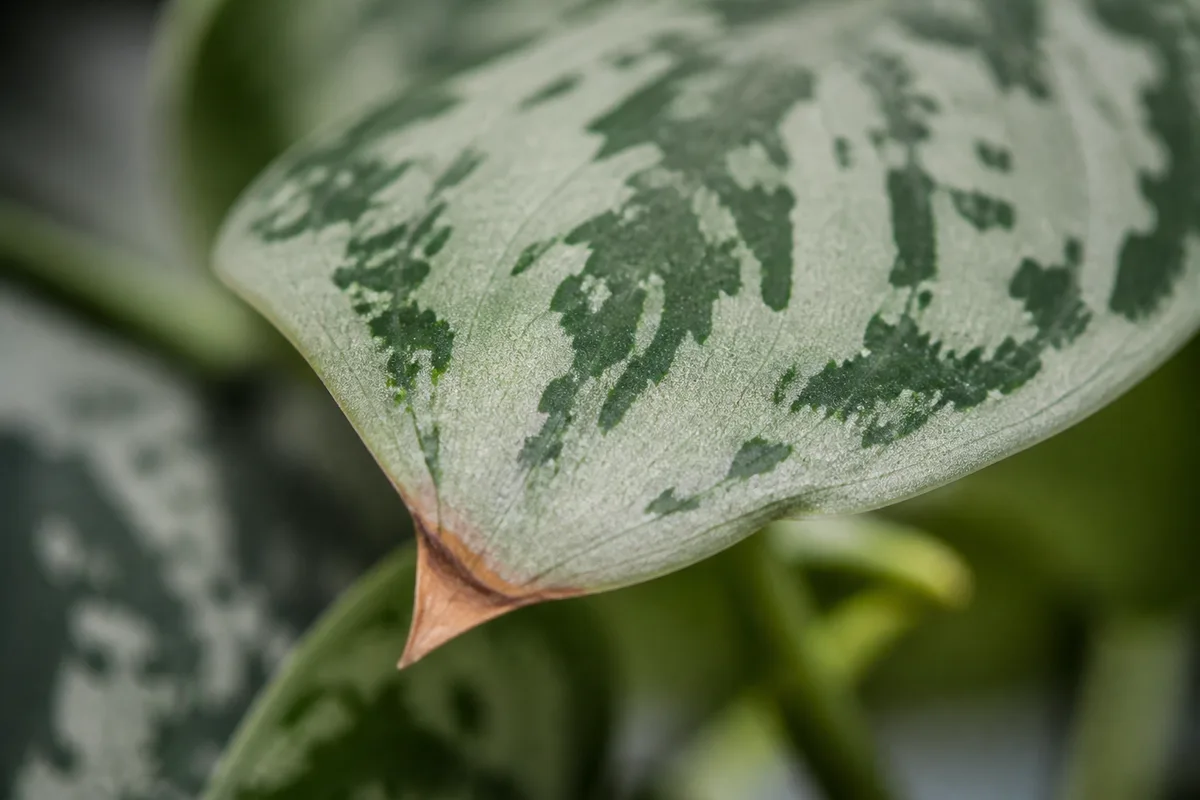
Brown Tips symptoms on Scindapsus Pictus - compare with healthy tissue on the same plant.
- Dry, tan-to-brown crispy edges at the leaf point only, while the silver pattern and mid-leaf tissue stay green
- Firm stems and petioles-the vine does not collapse or feel mushy
- Damage that may creep slightly down margins but rarely covers the whole blade at once
- Older leaves affected first on trailing sections farthest from the pot, where transpiration stress hits hardest
- No round wet spots, halos, or fuzzy growth typical of fungal leaf spot
When several leaves on the same vine show identical tip browning after weeks of tap watering in a dry room, the pattern fits environmental margin burn. Random scattered patches with yellow halos suggest a different problem-usually not simple tip necrosis.
Why Scindapsus Pictus gets brown tips
This trailing aroid evolved in humid Southeast Asian forests. Indoors it tolerates average homes, but its thin satin leaves lose moisture quickly when air is dry or roots deliver water unevenly.
Low humidity is a leading cause. Scindapsus pictus grows best around 40–60% relative humidity in home culture. Below that-common near heating vents, air conditioning, or winter radiators-leaf margins desiccate while the rest of the blade still looks healthy. Trailing vines near drafty windows suffer first because exposed leaf tips transpire faster than sheltered growth near the pot.
Fluoride and mineral salts in tap water concentrate at leaf margins as water evaporates. Scindapsus is moderately sensitive among houseplants; months of untreated tap water in fluoridated municipalities often produce the classic brown tip with a faint yellow border. White crust on the soil surface points to salt buildup from hard water or excess fertilizer drawing moisture away from root tips.
Inconsistent watering stresses aroid roots. Scindapsus pictus wants moist, well-drained potting soil but not constant saturation. Letting the top half go bone dry, then flooding the pot, damages fine feeder roots. Those roots cannot hydrate leaf edges reliably, so tips brown even though you “watered recently.”
Direct sun or cold drafts scorch or chill leaf tissue at the margins. Missouri Botanical Garden notes that Scindapsus pictus needs bright indirect light and should avoid direct sun indoors. A sudden move to a south-facing sill can crisp tips within days. Air below about 60°F (15°C) near a winter window also injures tropical foliage.
Fertilizer burn shows as brown tips plus dark green, overly lush growth or white salt crust on soil. Scindapsus needs only light feeding during active growth-not fertilizer as a fix for browning.
How to confirm the cause
Work through these checks in order:
- Tip texture and stem firmness - Crispy dry tips with firm stems point to humidity or water quality. Soft brown tissue at the base with wet soil suggests rot instead.
- Water source - Have you used straight tap water for months? Does your municipality fluoridate? Switching water is the fastest test for mineral-related tip burn.
- Soil moisture rhythm - Stick a finger 4–5 cm deep. If the top half stays wet for a week while tips brown, overwatering may be damaging roots. If it goes dust-dry between heavy soakings, underwatering swings are likely.
- Humidity reading - Place a hygrometer near the plant for a day. Readings below 40% support low-humidity tip burn, especially in winter.
- Light and placement - Did tips appear after moving closer to a window or heat source? Direct sun beams and hot dry air from vents accelerate margin drying.
- Soil surface - White or tan crust indicates salt accumulation. Flush before assuming the plant needs more fertilizer.
- New growth check - Inspect the newest leaf at each vine tip. Clean new leaves with only older ones browned confirms an environmental cause you can correct going forward.
If firm roots, dry crispy tips only, and stable trailing growth all align, you rarely need to unpot. Unpot only when soil smells sour, stems soften, or lower leaves yellow while the mix stays wet.
First fix for Scindapsus Pictus
Switch to room-temperature filtered or rainwater and water thoroughly only when the top half of soil is dry.
Pour until water runs from drainage holes, then empty the saucer. Use enough volume to rehydrate the root ball without leaving the pot sitting in standing water-NC State Extension notes that poorly drained wet soils can cause root rot on this species, which is a different problem from cosmetic tip burn.
Do not increase watering to “help” browned leaves; soggy roots make margin damage worse. Do not reach for fungicide-tip necrosis on Scindapsus pictus is almost never a foliar disease when texture is dry and stems are firm.
Step-by-step recovery
After the water switch:
- Hold fertilizer for four to six weeks while the plant stabilizes. Resume half-strength balanced liquid feed monthly only during active spring and summer growth.
- Raise local humidity toward 40–60% if readings are low. A small humidifier near the plant, grouping with other tropicals, or a pebble tray (pot above water line) helps more than occasional misting on satin leaves.
- Flush salt buildup if white crust is visible. Slowly run room-temperature filtered water through the pot at roughly three times the pot volume, letting it drain freely each time.
- Move out of direct sun and cold drafts if placement changed recently. Bright indirect light a few feet from a window suits trailing Scindapsus better than harsh midday rays.
- Trim fully dead tip tissue with clean scissors, following the natural leaf curve and leaving a thin brown margin so you do not cut into living green cells. Wear gloves if sap irritates skin-Scindapsus pictus contains calcium oxalate crystals toxic to pets.
- Stabilize the schedule - track pot weight or soil dryness at the top 4–5 cm rather than watering on a fixed calendar. Summer drying is faster than winter rest.
Skip repotting unless roots circle densely, water runs straight through in seconds, or salt crust persists after flushing. A stressed trailing vine recovers faster when culture fixes than when disturbed unnecessarily.
Recovery timeline
Filtered water and stable watering show results on new leaves within two to four weeks in active growth. Existing brown tips stay brown permanently-cosmetic trimming is optional.
Humidity improvements during winter heating season may take a full month before new growth arrives with clean margins. If tips keep appearing on fresh leaves after six weeks of corrected care, re-check for hidden overwatering, draft exposure, or very hard tap water that filtration does not fully address.
Judge success by clean new heart-shaped leaves at vine tips, not by old damaged foliage re-greening.
Lookalike symptoms to rule out
Root rot and overwatering yellow lower leaves, soften stems at the soil line, and leave soil wet for days. Brown is soft and spreads from the base upward-not confined to dry crispy tips on firm vines.
Underwatering curls leaves and pulls soil away from pot edges before tips brown. The whole leaf may feel thin and limp, not just the margin crispy.
Fungal leaf spot produces round brown patches with yellow halos, often after wet foliage sits in stagnant air-not uniform margin necrosis on otherwise firm leaves.
Spider mites cause stippling, fine webbing, and dull gray leaves-not typically isolated tip burn alone. Mites surge when humidity is very low; check undersides with a hand lens if stippling accompanies browning.
Sun scorch bleaches or browns large sections of leaves facing the window, not just the tip point. Move the plant and watch whether only the sun-facing side was hit.
Mistakes to avoid
Do not water more frequently because tips look “dry”-Scindapsus pictus tip burn is usually an air or water-quality issue, not thirst from the soil surface alone.
Do not rely on misting alone for humidity. Brief mist evaporates quickly and can leave satin leaves wet long enough to encourage fungal issues in poor airflow.
Do not increase fertilizer to push new growth on a stressed plant. Salt buildup from overfeeding burns margins further.
Do not cut deep into healthy green tissue when trimming tips-follow the leaf shape and leave a sliver of brown edge.
Do not assume every brown tip needs repotting or pesticide. Confirm the environmental pattern first.
How to prevent brown tips next time
Keep filtered or rainwater at room temperature as your default water source in fluoridated or hard-water areas.
Water when the top half of soil dries, roughly every 7–10 days in summer and less often in cooler months when growth slows-always confirm with your finger rather than a calendar.
Maintain 40–60% humidity near the plant during heating and air-conditioning seasons.
Place the vine in bright indirect light at room temperatures of 65 to 85°F (18–29°C) and away from cold window glass in winter.
Feed lightly during active growth and flush the pot with plain filtered water two or three times a year to prevent salt crust.
Pinch or trim trailing sections that accumulate cosmetic old tip damage so energy goes to fresh growth at the vine tips.
When to worry
Cosmetic tip burn on a few older leaves with firm stems and clean new growth is not urgent. Treat as urgent when brown spreads with mushy stems, soil stays wet and smells sour, most new leaves emerge already browned, or yellowing climbs the vine despite adjusted watering-that pattern warrants unpotting to inspect roots for rot.
Replace the plant only if the root ball is mostly mushy and new growth stops for months after corrective care. Scindapsus pictus propagates easily from stem cuttings if you need to salvage healthy sections from a declining pot.
Conclusion
Brown tips on Scindapsus Pictus look alarming on those silver-patterned satin leaves, but the fix is usually straightforward: better water, steadier soil moisture, and enough humidity for a tropical trailing aroid. Switch water first, confirm dryness before each drink, and watch new leaves-not old tips-for proof the plant is recovering.
When to use this page vs other Scindapsus Pictus guides
- Scindapsus Pictus watering guide - Use for routine moisture checks before assuming brown tips is the main issue.
- Scindapsus Pictus problems hub - Browse all 3 common issues on this species.
- Yellow Leaves on Scindapsus Pictus - Different entry point when symptoms overlap with brown tips.