Scindapsus Pictus Fertilizer: When, How, and Mistakes
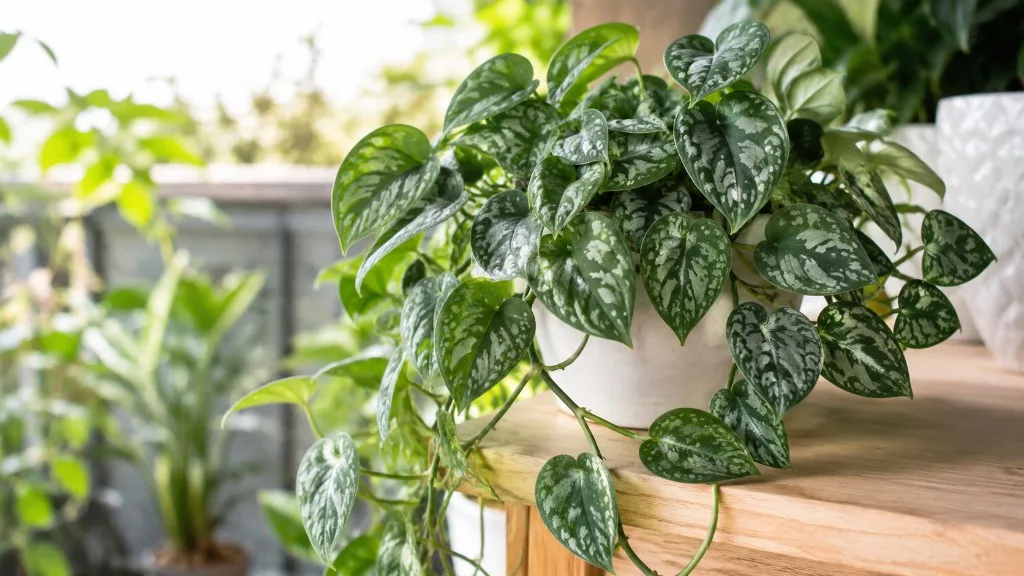
Scindapsus Pictus Fertilizer: When, How, and Mistakes to Avoid
Scindapsus Pictus Fertilizer: When, How, and Mistakes to Avoid
Scindapsus pictus fertilizer decisions are simpler than the internet makes them sound - and more consequential than most growers realize. Scindapsus pictus, widely sold as satin pothos or silver pothos, is grown almost entirely for its matte, silver-splashed foliage on trailing stems. It is not a true pothos (Epipremnum), and it does not behave like one at the fertilizer bottle. This aroid evolved on nutrient-poor forest floors in Southeast Asia, where roots scrape by on thin organic matter and slow decomposition. Indoors, that history translates into a plant that benefits from light, conservative feeding during active growth and punishes heavy-handed schedules with brown leaf tips, salt crust on the soil, and dark green leaves that lose the soft silver variegation you bought the plant for.
The practical goal for most home growers is straightforward: use a balanced or foliage-leaning water-soluble fertilizer at half the label strength, apply it every four to six weeks from spring through early fall while the plant is actively producing new leaves, and pause entirely in late fall and winter. Water onto moist soil, never onto dry roots. Avoid high-phosphorus bloom boosters - Scindapsus pictus is a foliage plant, and excess phosphorus adds salt load without improving the look you care about. A plant in Scindapsus Pictus light guide on a warm shelf may sit at the shorter end of that interval; one in moderate light in a large hanging basket may need the longer end. Freshly repotted or stressed plants need none until they recover.
This guide covers when to fertilize, how much to use, which products work best, how to read deficiency versus burn, and the mistakes that cause more damage than skipping a month ever would.
Why Fertilizer Matters for Scindapsus Pictus
Scindapsus pictus is a moderate-growing trailing aroid that can reach up to 3 m long in cultivation when given support, a moss pole, or room to cascade from a hanging basket. That growth is steady rather than explosive - slower than many true pothos cultivars - but it still pulls nitrogen, phosphorus, potassium, and trace elements out of the potting mix every time it unfurls a new heart-shaped leaf. Watering leaches some of those nutrients over time. Root growth and microbial activity consume others. Fertilizer replaces what the plant uses, but only up to the point its roots can absorb without salt damage.
RHS advises applying a balanced liquid fertilizer monthly when Scindapsus pictus is in growth and watering sparingly at other times. Think of feeding as maintenance for active growth - not a rescue for pale leaves caused by too little light, drought stress, or waterlogged mix. Fix light and water first, then feed at half strength with periodic salt flushing. More fertilizer does not create more silver; it often creates burn and dark green reversion.
When to Fertilize Scindapsus Pictus: Active Growth vs Rest
Timing is the first decision, and it follows the plant’s metabolism more than the calendar on your wall. Feed when Scindapsus pictus is actively producing new leaves and extending stems, and stop when growth slows sharply. Outdoors in warm climates, that rhythm tracks long days and stable warmth. Indoors, heated rooms and supplemental light can extend the window - but most houseplant Scindapsus pictus still slow noticeably in late fall and winter, even when old foliage stays upright and attractive.
Lower light and shorter days reduce new shoot production even when trailing stems still look full, so unused nutrients accumulate as salts - a common path to Brown Tips on Scindapsus Pictus and weak spring growth.
Spring and Summer Feeding Window
Start feeding when you see fresh growth at stem tips - new leaves unfurling with the characteristic silver mottling or speckling of your cultivar, nodes swelling, and roots visibly active if you gently check the drainage hole or slip the plant from its pot. In most temperate indoor setups, that window runs from mid-spring through early fall, roughly April through September, though your exact dates depend on room temperature, light, and whether the plant sits near a south-facing window or under grow lights.
During this active window, a half-strength balanced or foliage-leaning liquid feed every four to six weeks works for most container plants. Faster growers in bright light and small pots may sit at four weeks; established plants in moderate light or fresh Scindapsus Pictus repotting guide mix may stretch to six to eight weeks without looking hungry. Both are reasonable if new leaves keep their silver pattern, internodes stay reasonably short for the cultivar, and the soil surface stays free of heavy salt crust.
| Month (temperate climate) | Growth phase | Feeding guidance |
|---|---|---|
| March–April | Waking up, new shoots | Start half-strength liquid if active growth visible |
| May–August | Peak foliage production | Every 4–6 weeks; bright light on shorter end |
| September | Slowing slightly | Reduce to every 6–8 weeks or taper off |
| October | Wind-down | Final light feed if still growing, then pause |
| November–February | Low growth indoors | No fertilizer for typical setups |
Watch the plant, not just the calendar: stable variegation on new leaves means timing is right; static growth means fix light and water first. Brighter indirect light during active growth supports the monthly fertilizer schedule Missouri Botanical Garden recommends for container specimens.
Fall Taper and Winter Pause
Taper feeding in early to mid-fall as day length drops and night temperatures cool. One practical approach: give a final half-strength feed in early fall if you still see new growth, then stop entirely from late fall through winter. Most indoor Scindapsus pictus do fine with no fertilizer from November through February, especially in cooler rooms or north-facing windows.
University of Maryland Extension notes that excessive fertilizer is a primary cause of high soluble salts in indoor plants, with brown leaf tips and marginal necrosis (University of Maryland Extension - Fertilizer Toxicity). Exception: under strong grow lights with continuous new growth, feed lightly at half strength every six to eight weeks and watch for salt crust - but skipping winter feeds is still safer.
Best Fertilizer Type for Scindapsus Pictus
The best Scindapsus pictus fertilizer for most homes is a complete, water-soluble, balanced or foliage-leaning houseplant formula with nitrogen adequate for leafy growth and phosphorus kept moderate. You want nitrogen for green tissue and healthy silver contrast on variegated cultivars, phosphorus for root function at modest levels, and potassium for overall vigor and stress tolerance. Micronutrients on the label - iron, magnesium, manganese - matter because pale new growth on otherwise well-watered plants sometimes traces to trace-element gaps rather than macronutrient hunger.
Avoid shopping by the word “pothos” on the bottle unless you already trust the brand’s dosing guidance. Scindapsus pictus is often sold beside true pothos and inherits their feeding myths. A standard balanced indoor formula used conservatively outperforms most specialty products applied at label strength.
Balanced and Foliage-Leaning NPK Ratios
A 10-10-10 or 20-20-20 water-soluble fertilizer diluted to half strength is the default recommendation across horticultural sources for satin pothos. Equal ratios keep feeding simple when your main goal is steady foliage, not flowers or fruit - Scindapsus pictus rarely blooms indoors, and phosphorus-heavy feeding adds salt without improving the display.
Many growers prefer a foliage-leaning ratio such as 9-3-6, 3-1-2, or 12-4-8 for vegetative growth. University of Maryland Extension notes that excessive fertilizer is a primary cause of high soluble salts in indoor plants. Skip high-phosphorus bloom boosters - they add salt without improving silver foliage. Mix at half label strength, apply to moist soil until a little drains, and discard saucer runoff. Pick water-soluble formulas with micronutrients listed; urea-free options are a refinement, not a requirement.
Organic Options and What to Skip
Organic liquids - fish emulsion, compost tea, worm casting tea - work at half strength or weaker, applied monthly at most. Slow-release granules and fertilizer spikes in small pots often burn shallow roots; skip liquid for two to three months if slow-release is already in the mix. Skip foliar feeding for routine care.
Pet note: Scindapsus pictus contains calcium oxalate crystals like other Araceae plants and causes oral irritation if chewed. Keep plants and fertilizer runoff out of reach of pets.
How Much Fertilizer to Use on Scindapsus Pictus
If you remember one number, make it half strength - never full label strength on a container-grown Scindapsus pictus unless the label specifically targets fast-growing outdoor annuals and you have experience leaching salts regularly.
Scindapsus pictus is a light to moderate feeder and more salt-sensitive than many true pothos. Cut label rates to one-half; use quarter strength for tip-burn history or young cuttings. Example: 1 tablespoon per gallon becomes 1½ teaspoons per gallon. Measure with a spoon or syringe. Faded silver on new foliage usually means light or water stress, not hunger.
How Often to Fertilize Scindapsus Pictus
Frequency should follow growth rate, light level, container size, and salt management - not guilt about whether you are “doing enough.”
For most container Scindapsus pictus indoors:
- Every 4 to 6 weeks with half-strength balanced or foliage-leaning liquid from mid-spring through early fall
- Every 6 to 8 weeks if the plant is in moderate light, a large pot, or you also used slow-release at repotting
- Once in early fall at half strength if growth is still visible, then stop
- No fertilizer from late fall through winter for typical room-grown plants
- Optional light feed every 6 to 8 weeks only if the plant keeps actively growing under bright light or grow lights in winter
Plain water between feeds beats fertilizer at every watering, which stacks salts faster than this slow-growing aroid can use them. Four to six weeks is the safer default for most indoor setups.
| Situation | Suggested frequency | Strength |
|---|---|---|
| Active growth, bright light, small pot | Every 4 weeks | Half label strength |
| Active growth, moderate light, container | Every 4–6 weeks | Half label strength |
| Large hanging basket, moderate light | Every 6–8 weeks | Half label strength |
| Early fall, slowing growth | Once, then pause | Half strength |
| Winter indoors, low light | Skip | - |
| Winter under grow lights, new shoots | Every 6–8 weeks | Half strength |
| After repotting into fresh mix | Wait 4–6 weeks | Then resume half strength |
| Recovering from over-fertilizing | Pause 4–6 weeks | Flush; resume at half strength |
The table is a starting framework. Your room, cultivar, water quality, and watering habits matter. An Argyraeus in a sunny east window may sit at the shorter interval. An Exotica in a dim corner may need the longer one - though dim light usually calls for better light, not more fertilizer. Scindapsus pictus in hard tap water also carries a double mineral load; if you see tip burn while feeding modestly, test your water or switch to filtered or rainwater before increasing fertilizer.
Step-by-Step: How to Feed Scindapsus Pictus Safely
Safe feeding is mostly about order of operations. The fertilizer brand matters less than whether the soil was moist first, whether the plant was stressed, and whether salts were already accumulating.
Here is a reliable routine:
- Check the calendar and the plant. Confirm you are inside the active growth window and see new leaves or extending stems. If it is winter and nothing is growing, stop here.
- Inspect for salt crust or tip burn. White or yellowish residue on the soil or pot rim means skip feeding and flush instead.
- Water with plain water if the top layer feels dry. Bring the root zone to evenly moist before any fertilizer touches it. Never pour fertilizer onto dry soil - salts concentrate at the root surface and burn tissue on this shallow-rooted aroid.
- Mix fertilizer at half strength in room-temperature water in a watering can with a narrow spout.
- Apply slowly and evenly across the soil surface, directing solution away from the leaf crown and silver-marked foliage. Stop when a little water drains from the bottom.
- Discard drainage from the saucer within 30 minutes.
- Mark the date on a calendar or plant note so you do not double-feed in an enthusiastic week.
Some growers alternate feeding with a plain-water flush every third watering during the active season to keep salts from climbing.
Pre-Feed Checks and the Moist-Soil Rule
Before every feed, run a quick three-point check: soil moisture, newest leaf color and variegation, and season.
If the upper mix is dry, water with plain water first - fertilizer on dry roots burns quickly. If the pot is wet, wait. Check newest leaves for stable silver markings; dark green reversion may mean excess nitrogen, not hunger. Active growth gets food; winter gets plain water.
Signs Your Scindapsus Pictus Needs More Nutrition
Under-fertilizing is real but less common than over-fertilizing on container Scindapsus pictus, especially when plants start in nutrient-enriched potting mix. Most “hungry” diagnoses are actually low light, inconsistent watering, root rot from poor drainage, or natural decline of older leaves on long trailing stems.
When a plant truly needs more nutrients, signs are gradual and appear on new growth while older leaves still look reasonably healthy:
- Slower leaf production during peak spring and summer despite good light and moisture
- Uniformly paler new leaves, not isolated yellow spots from pests or disease
- Smaller new leaves than the previous generation, with thinner stems and longer internodes than the cultivar usually shows in your conditions
- Reduced silver contrast on new foliage when light is adequate - a subtle dulling rather than the dark-green reversion caused by excess nitrogen
- Overall lack of vigor after more than a season in the same depleted mix with no feeding
If only older lower leaves yellow while new growth looks fine, suspect natural senescence, overwatering, or underwatering before fertilizer. Trailing Scindapsus pictus drops older leaves periodically as stems lengthen; that is not automatically a nutrient call.
When you do increase feeding, move from every six weeks to every four weeks at half strength for one season - not from monthly to double dose overnight. Scindapsus pictus responds to frequency adjustments more safely than concentration spikes.
Signs of Over-Fertilizing and Salt Buildup
Over-fertilizing is the dominant fertilizer problem on Scindapsus pictus. Symptoms often appear one to two weeks after a too-strong or too-frequent feed, or gradually when salts accumulate from winter feeding, hard water, and never flushing.
Watch for these signals:
- Brown, crispy leaf tips and margins, especially on newer leaves or after a recent feed
- White or yellowish crust on the soil surface, pot rim, or drainage holes
- Sudden leaf curl, wilt, or drop despite moist soil - roots are damaged and cannot take up water effectively
- Excessively dark green new growth with reduced silver variegation - sometimes from excess nitrogen rather than healthy vigor
- Stunted new growth with burnt edges on the smallest unfurling leaves
- Increased pest susceptibility when stressed roots weaken the plant, though pests alone are not proof of over-feeding
High soluble salts cause osmotic stress - burn looks like drought even when soil is wet (University of Maryland Extension - Fertilizer Toxicity). Hard water plus fertilizer creates a double mineral load; test or filter water before increasing feeds.
How to Flush Scindapsus Pictus After Over-Feeding
If you suspect burn, stop fertilizing immediately and leach the soil. Flushing is the rescue tool when salts get ahead of you.
- Move the pot to a sink, tub, or outdoor spot where copious drainage is acceptable.
- Water slowly with plain room-temperature water until water runs freely from the drainage holes. Let it drain completely.
- Repeat two to three times over 30–60 minutes, allowing full drainage between passes. The goal is to pull dissolved salts out of the root zone, not to leave the plant sitting in soggy mix for days.
- Pause all feeding for 4–6 weeks while you monitor new growth.
- Resume at half strength only when new leaves emerge without burnt margins and salt crust is gone.
Judge recovery by new growth, not old damage. Most plants rebound within one or two new leaf cycles once salts drop.
Seasonal and Situational Adjustments
Seasonal feeding includes transitions, not just on/off switches. In late summer, stretch the interval before stopping entirely. If you pinch long bare stems to encourage bushier growth, stay on your half-strength schedule rather than doubling doses - new shoots need consistency, not shock.
After Repotting, Stress, and Cultivar Differences
After repotting into fresh potting mix that already contains fertilizer or compost, wait four to six weeks before the first liquid feed. Many commercial mixes include starter charge; doubling up causes immediate tip burn on shallow roots.
After stress - drought wilt, cold draft damage, pest infestation, or mechanical injury - hold food until the plant shows stable new growth. Fertilizer on damaged roots adds salt stress when the plant cannot process it.
Cultivar differences: Argyraeus may need less frequent feeding in moderate light; Exotica in brighter spots may sit at four weeks but burns easily if light and feeding both jump at once. Match frequency to your plant’s growth rate, not a generic pothos schedule. Cuttings need no fertilizer until roots are established; hydroponic culture uses separate quarter-strength aquatic formulas.
Fertilizer and Other Scindapsus Pictus Care
Fertilizer only works when light, water, and soil are already in range. Scindapsus pictus in bright indirect light uses nutrients faster than one in deep shade, where leggy growth and pale silver are usually light problems, not hunger. Consistently moist but well-drained mix - allowed to dry partially between waterings - keeps uptake steady; fertilizing waterlogged roots only adds salt stress.
Target soil pH 6.0 to 6.5; most indoor mixes land close enough. Track any slow-release already in the mix so liquid feeds do not stack. Fix underlying care imbalances before increasing fertilizer to “strengthen” a stressed plant.
Common Scindapsus Pictus Fertilizer Mistakes
The failures that show up most often are predictable: full label strength in containers, bloom booster or high-phosphorus feeds that add salt without improving foliage, fertilizer at every watering that stacks salts, dry-soil application that burns shallow roots, winter feeding on a plant that only looks active, ignoring white salt crust, feeding stressed or newly repotted plants, treating Scindapsus pictus like a hungry pothos, and adding more fertilizer when pale or dull silver leaves actually mean too little light. A satin pothos in a bright kitchen and a silver pothos in a dim hallway are not the same - match the schedule to the root zone, light level, and growth rate you actually observe.
Conclusion
Scindapsus pictus fertilizer success comes down to matching a conservative, foliage-first feeding plan to real growth - not to a rigid calendar that ignores your light, pot size, and season. Use a balanced or foliage-leaning water-soluble formula at half strength, feed every four to six weeks during active spring and summer growth, and stop in late fall and winter unless you are running strong grow lights and seeing continuous new leaves. Keep phosphorus moderate by avoiding bloom boosters; excess salt dulls silver variegation and burns tips faster than it improves trailing length. Water onto moist soil, flush salts when crust appears, and pause feeding after repotting or stress.
When in doubt, less is more. Watch new growth: stable silver markings mean your rhythm is working; brown tips and white crust mean pull back, flush, and fix light and water first.
When to use this page vs other Scindapsus Pictus guides
- Scindapsus Pictus overview - Start here for whole-plant context before deep-diving this topic.
- Scindapsus Pictus problems hub - Jump to symptom-specific fix guides when this care topic does not resolve the issue.
Related Scindapsus Pictus guides
- Scindapsus Pictus overview
- Scindapsus Pictus watering
- Scindapsus Pictus light
- Scindapsus Pictus soil
- Scindapsus Pictus propagation
- Scindapsus Pictus repotting
- Scindapsus Pictus problems
Related tool
Try the Fertilizer Dilution Calculator with scindapsus-pictus pre-selected to estimate needs for your setup.