Satin Pothos Watering Guide: Schedule and Soil Checks
Satin Pothos Watering Guide: Schedule and Soil Checks
Satin Pothos Watering Guide: Schedule and Soil Checks
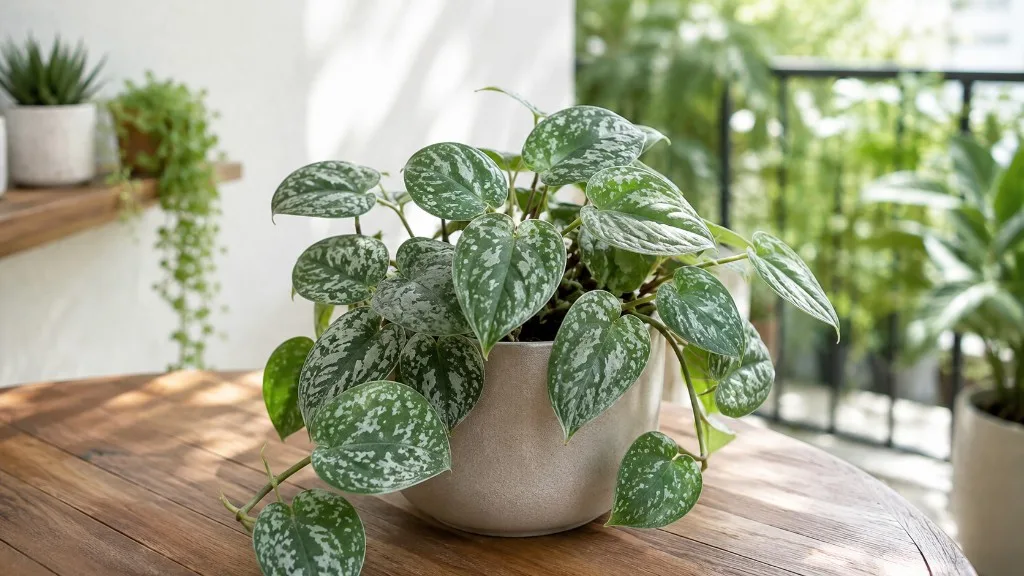
Satin pothos looks effortless on a shelf or in a hanging basket until you treat it like a cactus or a bog plant. The silvery, heart-shaped leaves want steady access to moisture, the roots want air, and the plant will punish both extremes with yellow lower leaves, inward curling, or a limp vine that collapses without warning. The fix is not a calendar that says “water every Sunday.” The fix is a short routine: check the soil, water deeply when the root zone is ready, let the pot drain, and adjust for season, pot size, and light. Satin pothos (Scindapsus pictus) is a slow-growing tropical vine in the Araceae family, native to Bangladesh and Malesia. It climbs tree trunks in the wild using aerial rootlets and is grown indoors for its matte, silver-splashed foliage. Despite the common name, it is not a true pothos (Epipremnum) and not a philodendron - but it shares the aroid preference for moist, well-drained soil with a real dry-down between drinks. This guide gives you the checks, the realistic schedules, and the mistakes that turn a lush trailing satin pothos into a yellowing, soggy disappointment.
If symptoms persist, see the Leaf Drop on Satin Philodendron guide.
Why Satin Pothos Watering Looks Simple Until It Is Not
Satin pothos sends mixed signals on purpose - or at least it feels that way. Leaves can curl inward when the plant is dry, but they can also curl when humidity is low while the soil is fine. Yellow lower leaves can mean too much water, but they can also mean the plant is aging, sitting in too little light, or recovering from a cold draft. That overlap is why beginners either water on autopilot every week or freeze up and underwater until the stems go crispy at the edges.
The core confusion comes from treating satin pothos like a drought-tolerant succulent or like a moisture-loving fern. It is neither. Satin pothos prefers bright indirect light and moist, well-drained potting soil as a houseplant, with room temperatures of 65 to 85°F. Moist means the root zone should not swing from dust to mud. Well-drained means excess water leaves the pot instead of pooling around the roots. The extension toolbox also notes that root rot from wet soils is among the plant problems to monitor - a direct warning that overwatering is the more common failure mode indoors.
Satin pothos also changes its water appetite as conditions shift. A cutting with shallow roots in a four-inch nursery pot cannot tolerate the same dry-down cycle a mature trailing plant in a six-inch pot handles for a few days. A plant in bright indirect light on a warm east window transpires far more water than the same cultivar sitting in a dim hallway. Watering satin pothos well means reading the plant’s current stage and environment, not memorizing one interval from a care tag.
How Much Water Satin Pothos Actually Needs
A useful starting principle for all satin pothos is a thorough soak that wets the full root ball, followed by a partial dry-down before the next drink - not a fixed volume per week. In practice, that means watering slowly until moisture moves through the entire mix and exits the drainage holes rather than a daily sprinkle that only dampens the surface. NC State Extension notes that yellow leaves may be a sign of overwatering and curling leaves may signal underwatering](https://plants.ces.ncsu.edu/plants/scindapsus-pictus/) - both reasons to confirm soil moisture at depth before pouring. In warm, bright stretches, the dry-down window shrinks and checks become more frequent; in cool, dim months, the same pot may hold moisture much longer.
Container satin pothos breaks simple weekly math on purpose. A hanging basket exposes soil to heat and airflow on all sides. A small plastic pot on a sunny windowsill dries faster than a ceramic cachepot in a shaded corner. Missouri Botanical Garden notes that for Scindapsus pictus ‘Argyraeus’, growers should keep soil consistently moist during the growing season but reduce watering over winter - a seasonal pairing that prevents the classic mistake of summer frequency in a dormant plant. In pots, you become the rain, the humidity, and the drainage system.
The amount of water per session matters less than how thoroughly you rewet the root ball. A half-cup dribbled on the surface every morning often keeps the top wet while the center stays dry - then the plant curls its leaves, you add more sips, and the roots never get a coherent drink. Water until moisture moves through the full depth of the mix and exits the drainage holes. Then stop until the top one to two inches approach dry again. That cycle - full drink, partial dry-down, full drink - is the rhythm satin pothos prefers.
How Often to Water Satin Pothos Indoors
Indoor satin pothos usually needs watering every 7 to 14 days during active growth in warm conditions, but the honest answer is always “when the top one to two inches of soil feel dry.” A bright east or west window in summer may push you toward every five to seven days. A cooler north-facing room in spring may stretch toward ten to fourteen days. A small hanging basket in dry, air-conditioned air can surprise you by drying in four or five days. The schedule is a guess until you confirm it against your room.
Check indoor satin pothos at least every three to four days during the growing season. Do not water by default. Run the moisture checks first, then water or walk away. After two weeks in the same spot, you will know whether your plant behaves like a weekly satin pothos or a ten-day satin pothos. That personal baseline is more accurate than any blog chart because it accounts for your pot material, your mix, and your light.
Indoor humidity changes the interval more than beginners expect. Satin pothos thrives in moderate to high humidity - roughly fifty to seventy percent - but heated winter rooms with humidity below thirty percent pull moisture from leaves and soil faster. Do not compensate by leaving the soil constantly wet - high humidity plus soggy mix invites fungal problems when airflow is weak. Instead, raise humidity around the plant with grouping, a pebble tray, or a humidifier while still allowing the soil to dry at the top between waterings.
Finger Test, Skewer Probe, and Pot Weight
The finger test is the fastest daily check. Press your finger into the mix one to two inches deep near the pot edge, not against the stem. If the soil feels cool and clings slightly at depth, wait. If it feels dry and crumbly at that depth, water. If only the surface is dry but your finger comes out with damp particles below, wait - surface colour lies, especially on peat-based mixes that look pale when the top half centimeter is dry.
The pot weight test is the most reliable signal for repeat growers. Lift the pot right after a thorough watering and notice the weight. Lift it every few days. A pot that feels dramatically lighter has lost much of its available moisture. Combine weight with the finger test when you are unsure: light pot plus dry top two inches equals water; heavy pot plus wilted or curled leaves equals trouble, not thirst.
A wooden skewer works as a low-tech backup. Insert it to mid-pot depth, wait sixty seconds, pull it out. Damp means wait; dry with a light pot means water. A soil moisture meter can help if you struggle to read peat mixes by touch - aim to water when the reading suggests the upper root zone has dried while deeper soil still holds some moisture, not when the entire profile is saturated.
Satin pothos has one signal that confuses beginners: inward leaf curl. When the plant is genuinely dry, leaves may curl toward the midrib to reduce surface area - then relax within a few hours after a thorough watering. That quick recovery points to thirst. If curling persists into the next morning despite wet soil, the problem is not underwatering. Low humidity can mimic drought curl even when soil moisture is adequate, which is why the finger test still decides.
Satin Pothos vs True Pothos Watering Needs
Retail tags often lump satin pothos (Scindapsus pictus) with golden pothos (Epipremnum aureum) because both are trailing aroids sold as easy houseplants. Satin pothos belongs to genus Scindapsus, not Epipremnum, though both are popular vining plants. For watering, the practical overlap is large: both prefer a dry-down cycle, both hate standing in soggy soil, and both show yellow leaves when roots stay wet too long.
The differences matter at the margins. Satin pothos is generally slower-growing than Epipremnum pothos, which means it often uses water slightly less aggressively in the same pot and light. Its matte, textured leaves can show drought stress through curl sooner than a thick golden pothos leaf might. True pothos tolerates occasional neglect more bluntly; satin pothos rewards consistency. If you already water Epipremnum well - check top inch or two, soak, drain - you are ninety percent of the way to watering Scindapsus correctly. Just do not assume identical timing; your satin pothos may need water a day or two later than a pothos in the same room.
Seasonal Watering Schedule for Satin Pothos
Satin pothos is a tropical evergreen, but its water use still tracks temperature, day length, and growth speed. A seasonal framework helps you anticipate change without locking into bad habits.
In spring, expect the dry-down window to shorten as new growth appears - often every seven to ten days. In summer, bright windows and hanging baskets may need water every five to seven days; shaded shelves may stay on ten to fourteen days. In fall and winter, stretch intervals and verify with soil checks; cool dim rooms may need water only every fourteen to twenty-one days. Reduce frequency, not thoroughness - when you do water, water fully.
Summer Growth and Winter Slowdown
Summer mistakes cluster around two extremes: forgetting the hanging basket on a hot windowsill, and watering every Sunday out of habit even when the mix is still wet from Tuesday. Heat increases evaporation and transpiration; it does not suspend the need for drainage. If satin pothos wilts at midday and perks up by evening without your intervention, that may be heat stress or low humidity, not drought. If it stays wilted or curled into the next morning, check moisture.
Winter slowdown does not mean neglect. Satin pothos dislikes cold wet feet - NC State Extension warns that cooler air and direct sunlight damage foliage, and cold plus wet soil is a poor combination. A pot that took seven days to dry in July may take eighteen in January. Adjust by check, not by memory of summer frequency. If growth has stopped entirely, you are maintaining the root zone, not feeding active vines - still water when dry, but expect longer gaps.
Watering Satin Pothos by Pot Size and Growth Stage
Pot size changes the schedule immediately, often more than season. A four-inch nursery pot dries fast and may need water every five to seven days in summer sun. A six-inch container holds more buffer and may go ten to fourteen days between sessions in the same location. After Satin Philodendron repotting guide into a larger pot, expect slower dry-down until roots fill the new volume - many growers overwater freshly repotted satin pothos because they keep the old schedule.
Fresh cuttings need gentle, even moisture; mature trailing plants transpire more in warm weather, so check often even if you water weekly. Rootbound plants channel water down the pot wall while the core stays dry - if water runs through instantly, suspect a tight root ball before blaming underwatering.
Hanging Baskets vs Standard Pots
Hanging baskets dry unevenly and faster than floor pots because airflow wraps the container. The top surface may look dry while the bottom stays damp - or the opposite, if dense foliage shades the soil surface while the exposed pot wall loses moisture quickly. Always check depth, not just the visible top layer. Lift the basket: a light hanger usually means water; a heavy one means wait.
Standard pots on shelves hold moisture longer than hanging baskets. Cachepots without drainage are the fastest path to root rot - always lift the inner pot to water, drain fully, then return it. Part trailing vines and aim the spout at soil, not leaves.
The Right Way to Water Satin Pothos Without Damaging Foliage
Technique matters because sloppy watering wastes your checks. Water slowly and deeply at room temperature until drainage appears, then discard excess from the tray. Overhead splashing is convenient but wets leaves unnecessarily and can splash soil-borne pathogens upward.
Water slowly enough for the mix to absorb rather than shed water down the inside wall of the pot. Dry peat sometimes becomes hydrophobic - water runs around the root ball and out the bottom while the center stays dry. If that happens, water in two passes five minutes apart, or bottom-water the pot in a tray until the surface darkens, then drain completely.
Always empty the saucer within thirty minutes of watering. Standing water re-saturates the bottom root zone, blocks oxygen, and causes the classic paradox: wilting plant, wet soil. If you use a decorative cachepot, lift the inner pot to water, drain fully, then return it.
For most homes, morning watering is the best default. It aligns with the plant’s peak water use during warm daylight hours and gives any incidental moisture around the crown time to evaporate. If your only reliable time is evening, still prioritize soil-level watering and skip showering the leaves before a cool night.
Avoid letting the soil dry out completely for long stretches. NC State Extension recommends moist, well-drained potting soil for houseplant culture - complete desiccation stresses roots and leads to wilting and crispy edges. Satin pothos is not a desert plant; it wants a dry-down, not a drought.
Signs You Are Overwatering Satin Pothos
Overwatering is the silent killer because the plant looks thirsty while the roots are failing. Watch for these patterns together, not in isolation:
Wilting or limp vines despite wet soil is the hallmark. Roots damaged by low oxygen cannot transport water, so leaves droop even though moisture is present. If you respond by adding more water, you accelerate the decline. NC State Extension links yellow leaves to overwatering and notes that root rot may occur in poorly drained or wet soils.
Yellow lower leaves often appear when the root zone stays wet too long. Older leaves yellow first; new growth may look pale or stunted. That pattern matches the extension warning that yellow leaves may be a sign of overwatering, with declining foliage often progressing from the bottom up.
Soft stems, musty mix, and mushy roots suggest advanced trouble. If several signs align, stop watering, improve airflow, confirm drainage, and inspect roots. Trim damaged tissue, repot into fresh mix, and resume only when the top two inches dry.
Signs Your Satin Pothos Is Thirsty or Underwatered
Underwatered satin pothos is usually more straightforward. The plant tells you earlier, and recovery is faster if you act before leaves crisp.
Inward leaf curl is a classic drought signal for Scindapsus. Leaves fold toward the midrib to conserve moisture, then relax after a thorough drink. If curl resolves within a few hours of watering, thirst was likely the cause.
Dry, crumbly soil pulling away from the pot edge means the root ball went too dry. Rewater in stages if water runs straight through cracks along the wall - first a modest pour to swell the mix, wait ten minutes, then water again until drainage appears.
Crispy brown edges on older leaves can mean chronic underwatering or low humidity - check soil first, then raise humidity if the mix is already moist. When rehydrating a dry pot, water until drainage appears, wait ten minutes, water again, then drain completely.
Soil Mix and Drainage as Hidden Watering Factors
Your watering skill cannot overcome a bad mix. Satin pothos wants moist, well-drained potting soil with high organic matter, good drainage, and acidic pH - enough structure to hold moisture without compacting. Dense, aged indoor mix that has collapsed into a brick will stay wet on top and repel water in the center - the perfect trap for well-meaning weekly watering.
Root rot may occur in poorly drained or wet soils, so avoid heavy garden soil or clay-based mixes that retain too much moisture in containers. “Well-drained” in a pot means holes, elevation from saucer water, and a mix that does not smear when squeezed.
Drainage holes are non-negotiable in containers. Decorative pots without holes, or holes blocked by roots or debris, are the fastest path to overwatering symptoms despite careful attention. If your pot dries unevenly, the plant may be rootbound or the mix may have separated - repotting into fresh medium often stabilizes watering behavior more than changing your calendar.
Water Quality, Temperature, and Timing
Satin pothos is not as finicky as some houseplants about water chemistry, but temperature and timing still matter. Room-temperature water - roughly 65 to 75°F - avoids shocking roots, especially in winter when cold tap water can slow uptake. Very cold water on a warm windowsill stresses a tropical plant mid-drink.
Tap water is fine in most homes; let heavily chlorinated water sit overnight if you prefer. Morning watering aligns with daytime transpiration and gives splashed leaves time to dry. Evening watering works if you aim at the soil and drain the saucer before night.
Humidity, Light, and How They Change Water Needs
Light is the biggest driver of water use after pot size. A plant moved from a shaded bathroom to a bright kitchen window may need water twice as often until you recalibrate. Direct sun is not tolerated - NC State Extension notes that direct sunlight and cooler air damage foliage - but even bright indirect light accelerates drying compared to deep shade.
Humidity changes leaf signals without always changing soil speed. Low humidity below forty percent can cause leaf curl and crisp edges even when the root zone is appropriately moist. Raising humidity with grouping, a pebble tray, or a humidifier addresses the leaf problem; drowning the soil does not. Conversely, a humid bathroom may slow soil drying while keeping leaves happy - adjust checks accordingly.
Temperature within the 65 to 85°F comfort zone supports steady water use. Below 60°F, growth slows and soil stays wet longer - Missouri Botanical Garden warns that cooler air may damage foliage. Above ordinary room heat near a radiator, small pots can dry in days. Place the pot where temperature is stable, then let soil checks - not the thermostat alone - guide frequency.
Common Satin Pothos Watering Mistakes and Quick Fixes
Mistake: Watering on a calendar. Fix: Use the calendar as a reminder to check soil, not as a trigger to pour. Two plants in the same room can differ by several days.
Mistake: Daily sips instead of full drinks. Fix: Water until drainage, then let the top one to two inches approach dry. Sips keep the surface wet and the core thirsty.
Mistake: Leaving runoff in the saucer. Fix: Empty saucers and cachepots after every watering. Roots need air as much as water.
Mistake: Chasing leaf curl with water without checking. Fix: Curl plus light dry pot means drought; curl plus heavy wet pot means root stress or low humidity. Different problems, different fixes.
Mistake: Ignoring pot size after repotting. Fix: Reset expectations after upsizing. Larger pots dry more slowly until roots explore the volume.
Mistake: Using garden soil in small pots. Fix: Use porous potting mix with perlite and bark. Garden soil compacts in containers and suffocates roots.
Mistake: Assuming satin pothos equals pothos timing. Fix: Start with the same check-first method, but expect Scindapsus to dry slightly slower and show curl sooner when neglected.
Root Rot, Yellow Leaves, and Curling Leaves
These three symptoms overlap enough to cause panic, but the soil check usually separates them.
Root rot follows chronic wet soil: yellow lower leaves, limp vine, mushy roots, sour smell. Fix drainage, trim damaged roots, repot, and pause watering until the top two inches dry.
Yellow leaves from overwatering start at the bottom and progress upward while soil stays wet. Yellow leaves from underwatering often come with dry soil, light pot weight, and crispy edges. Natural aging drops one older leaf occasionally with no other stress signs - do not overhaul your watering for a single yellow leaf on an otherwise healthy vine.
Curling leaves from underwatering relax after a thorough drink. Curling from low humidity persists until humidity rises, even if soil is fine. Curling with wet soil and decline suggests root failure - stop watering and inspect.
If you are unsure, weigh the pot and probe the top two inches before changing anything. One corrective action beats three panicked ones.
Building a Simple Weekly Watering Routine
You do not need a spreadsheet. You need a repeatable loop that respects how satin pothos actually behaves.
Every three to four days in warm weather: Finger-test the top one to two inches, lift the pot if unsure, water deeply only when dry at depth, and empty saucers. Every seven to ten days in active growth works as a check reminder for many indoor plants, but yours may differ. In cool winter, stretch to two or three weeks between checks - small pots near heating vents still dry faster than you expect. Once a week, evaluate new leaf quality and lower yellowing, then adjust your interval by a day or two. If you move a pot to brighter light, reset the routine.
Conclusion
Watering satin pothos well comes down to a few principles that never change even when the calendar does: check soil moisture before you pour, water deeply until drainage appears, let the top one to two inches dry between drinks, and adjust for light, pot size, humidity, and season. Indoor plants often land on a seven-to-fourteen-day rhythm during active growth in warm conditions; hanging baskets in bright windows may need water closer to every five to seven days; cool winter rooms may stretch toward two or three weeks between thorough soaks. Overwatering and underwatering both cause distress signals - yellow leaves, curl, wilting - which is why the finger test and pot weight test matter more than any single schedule.
Satin pothos rewards consistency, not fussiness. Give it moist, well-drained soil with a real dry-down cycle, keep leaves dry when you can, drain every saucer, and respond to what the plant and pot tell you each check. Do that and you will spend less time rescuing limp silver vines and more time enjoying foliage that actually earns its place on the shelf or in the hanging basket.
When to use this page vs other Satin Philodendron guides
- Satin Philodendron overview - Start here for whole-plant context before deep-diving this topic.
- Satin Philodendron problems hub - Jump to symptom-specific fix guides when this care topic does not resolve the issue.
Related Satin Philodendron guides
- Satin Philodendron overview
- Satin Philodendron light
- Satin Philodendron soil
- Satin Philodendron propagation
- Satin Philodendron fertilizer
- Satin Philodendron repotting
- Satin Philodendron problems
Related tool
Try the Plant Watering Calculator with satin-philodendron pre-selected to estimate needs for your setup.