Satin Philodendron Fertilizer Guide: Schedule & NPK
Satin Philodendron Fertilizer Guide: Schedule & NPK
Satin Philodendron Fertilizer Guide: Schedule & NPK
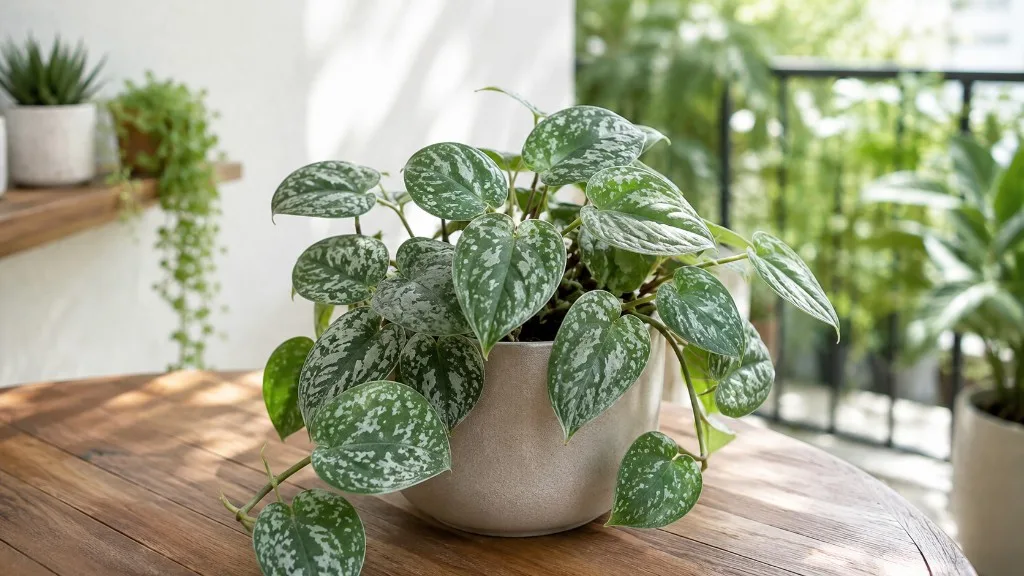
Satin philodendron fertilizer decisions start with the right plant on the label. Philodendron brandtianum — the silver-marked climbing aroid sold as satin philodendron, silver leaf philodendron, or “brandi” philodendron — is a moderately fast-growing tropical vine in the Araceae family, native to South American rainforests where nutrition arrives in small, washed-down doses rather than rich, constantly fertilized potting soil. Indoors it trails from shelves and hanging baskets or climbs a moss pole, pushing heart-shaped leaves splashed in olive green and silver. That growth uses nitrogen, phosphorus, and potassium steadily in bright months and almost none when days shorten. Feed lightly during active growth, dilute to half the label strength, and pause when new leaves stop — and you get compact vines with sharp silver patterning instead of salt crust, brown tips, and leggy pale stems.
This guide covers Philodendron brandtianum specifically. For shared philodendron mechanics across cultivars, see the genus fertilizer guide. Pair feeding with the watering, light, soil, repotting, and propagation guides so fertilizer supports a stable plant rather than masking root or placement problems.
Quick Answer: Half-Strength Balanced Liquid During Active Growth
Satin philodendron does best with a complete water-soluble balanced fertilizer such as 10-10-10 or 20-20-20, diluted to half the label strength, applied every four to six weeks from mid-spring through early fall while new leaves are unfurling. Use the shorter interval for fast climbers in bright indirect light or small pots; stretch to every six to eight weeks in moderate light or if slow-release fertilizer is already in the mix.
Pause entirely from late fall through winter for typical indoor rooms without strong grow lights. Illinois Extension advises fertilizing houseplants only when actively growing, typically once every one to three months between March and September, and warns that excess fertilizer burns roots — especially when growth slows in dim light. Iowa State Extension recommends fertilizing philodendrons lightly once or twice a month during active spring and summer growth with a balanced all-purpose product — the half-strength liquid schedule here sits inside that conservative range.
Never feed dry soil, newly repotted plants (wait three to four weeks), or vines showing white salt crust — flush with plain water first. Judge success by compact new growth: short internodes, normal leaf size, crisp silver markings, and no white residue on the soil rim.
Why Satin Philodendron Feeding Follows Silver Aroid Vine Biology
Botanically, satin philodendron is Philodendron brandtianum, a hemi-epiphytic philodendron that climbs tree trunks in humid forest understories and sends aerial roots along stems. The Royal Horticultural Society philodendron growing guide notes that most philodendrons start on branches or ground and root into support as they climb — a habit that explains why brandtianum produces aerial roots on trailing stems and why those roots absorb moisture (and some nutrients) when kept humid against a moss pole, but should not receive undiluted fertilizer poured directly onto exposed tissue.
Unlike an upright self-heading philodendron, a long brandtianum specimen builds continuous stem and leaf mass along the vine. Each new node is another silver-splashed leaf drawing nitrogen for tissue expansion. In bright east or filtered south light, a 15 cm basket can add 30–50 cm of vine in a single growing season; that pace is why brandtianum often needs the four-week end of the feeding range while a dim-corner plant may need six to eight weeks — or no fertilizer at all until you improve light.
How Moderate Vining Changes Nutrient Demand
Nutrient demand tracks growth rate × leaf area × light, not pot brand. A brandtianum in roughly 500–900 foot-candles at the canopy metabolizes faster than the same plant three meters from a north pane. Faster metabolism means faster uptake — and faster salt accumulation when you water thoroughly, which is what correct watering requires.
Feeding vignette (home observation, temperate indoor room): Two 15 cm hanging brandtianum started on the same half-strength monthly schedule in May. Plant A hung 0.5 m from an east window (~700 foot-candles at top leaves); Plant B sat on a dim interior shelf (~150 foot-candles). By September, Plant A showed 2–3 cm internodes, firm silver-marked new leaves, and tolerated feeding every four weeks without salt crust. Plant B stretched to 5–7 cm internodes, pale green new growth with faded silver, and looked worse after monthly feeds — pale leaves traced to light deficit, not hunger. After moving Plant B closer to the window and pausing fertilizer six weeks, the next two new leaves shortened internodes and regained silver contrast; feeding resumed at six-week intervals only after growth stabilized.
That pattern is why this guide emphasizes light-adjusted frequency over a single monthly rule copied from generic heartleaf templates.
Silver Markings and Misreading Deficiency
The silver splashing on juvenile P. brandtianum leaves is functional camouflage in bright filtered canopy light, not a separate nutrient requirement. Excess nitrogen from heavy feeding can still push weak, leggy stems and dull, overly dark green new leaves where silver contrast disappears — a cosmetic change that looks like “the plant is finally happy” until salt burn follows on the next leaf.
Distinguish three common pale-or-brown patterns before you change fertilizer:
- Salt burn: brown crispy margins on newer leaves, white/yellow crust on soil or pot rim, wilt on moist soil — flush and pause feed
- Light deficit: uniform pale green new growth with faded silver, long internodes, vine leaning toward window — improve light before feeding more
- Chronic overwatering: yellowing from base, sour mix smell, soft stems — fix watering and roots; fertilizer worsens salt load in soggy mix
Clemson HGIC warns that too much fertilizer can cause tips of leaves to curl and brown on philodendrons — the same marginal damage brandtianum shows on silver-marked foliage before older leaves do.
When to Fertilize Philodendron brandtianum
Timing follows metabolism, not guilt. Feed when brandtianum is actively producing new leaves and extending stems, and stop when growth slows sharply. Indoors, that rhythm tracks longer days, warmer rooms, and usable light at the leaf surface.
Nebraska Extension advises not to fertilize dormant plants because unused nutrients build harmful fertilizer salts in soil. Determine activity by new leaves, side shoots, or visible vine extension — not by whether old trailing foliage still looks green. A brandtianum that appears “alive” through December in a short-day room may produce almost no new nodes while salts accumulate from continued summer-style feeding.
Spring and Summer Feeding Window
Start feeding when you see fresh shoots — new leaves unfurling with silver patterning, roots active if you gently inspect, and the top 2–3 cm of mix drying on your normal watering rhythm. In temperate climates that usually means mid-spring through early fall, roughly April through September depending on room temperature and window exposure.
During this window, half-strength balanced liquid every four to six weeks suits most container brandtianum. Fast climbers in bright light or 12–15 cm baskets often sit at four weeks; established plants in moderate light or nutrient-enriched mix may need only six weeks. Both are acceptable if new growth stays compact and the soil surface stays free of heavy crust.
Fall Taper and Winter Pause
Taper in early to mid-fall as day length drops. A final half-strength feed in early fall is reasonable if you still see new nodes forming; then stop entirely from late fall through winter — roughly November through February for typical room-grown plants without strong grow lights.
Exception: If you run supplemental grow lights 12–14 hours daily and the plant keeps pushing new leaves all winter, you may feed lightly at half strength every eight to ten weeks — but watch for salt crust more aggressively. Skipping winter feeds remains safer than forcing growth with nutrients roots cannot process in low-metabolism conditions. Illinois Extension overwinter guidance notes that most houseplants need less water and fertilizer once brought indoors for winter.
Month-by-Month Feeding Schedule
Use this table as a framework, then adjust by light, pot size, and visible growth. Temperate Northern Hemisphere months shown; shift three to four weeks in subtropical climates where indoor growth continues longer.
| Month | Growth phase | Feeding guidance |
|---|---|---|
| January–February | Low indoor growth | No fertilizer for typical setups |
| March–April | Waking up, new shoots | Start half-strength liquid when active growth visible |
| May–August | Peak trailing/climbing growth | Every 4–6 weeks; bright-light baskets on shorter end |
| September | Slowing slightly | Every 6–8 weeks or taper off |
| October | Wind-down | Final light feed if still growing, then pause |
| November–December | Rest period | No fertilizer unless strong grow lights + new leaves |
Pair the schedule with a monthly plain-water flush in hard-water homes or small hanging baskets — leaching every four to six months prevents crust that brandtianum shows on leaf margins before many glossy philodendrons do. Illinois Extension recommends leaching pots every four to six months with a large volume of plain water to reduce salt buildup.
Best Fertilizer Type and NPK for Satin Philodendron
Philodendron brandtianum does not require fertilizer to survive — The Spruce brandtianum care guide lists feeding as optional during spring and summer — but light feeding supports lusher silver-marked foliage when light, water, and drainage are already correct. A balanced NPK such as 10-10-10 or 20-20-20 supplies proportional nitrogen for leaf expansion, phosphorus for root function, and potassium for overall vigor without skewing soil chemistry toward excess nitrogen alone.
Clemson HGIC indoor plant fertilizing guidance recommends a complete balanced fertilizer for foliage plants, such as 20-20-20, with water-soluble forms preferred because dilute solutions reduce fertilizer burn potential. That matches brandtianum’s role as a foliage vine, not a flowering houseplant.
Balanced Liquid vs Slow-Release
Water-soluble liquid is the default for satin philodendron because you can dial dose and frequency by season and pause instantly when the plant stresses. Mix at half label strength — Iowa State houseplant care guidance instructs using general all-purpose fertilizers at half or quarter the outdoor rate because houseplants grow slower indoors.
Slow-release granules or spikes can work in larger floor pots on moss poles but are risky in small hanging baskets where salts concentrate in limited soil volume. If your potting mix already includes three- to six-month slow-release fertilizer — common in commercial blends — treat that as an active feed source and delay additional liquid until the label window expires. Nebraska Extension notes that repotting into slow-release-enriched mix may eliminate the need for supplemental fertilizer for months.
Avoid high-nitrogen lawn or garden formulas, urea-heavy cheap blends, and slow-release pellets buried against fine roots after repotting — all raise burn risk on a plant whose juvenile silver leaves show damage early.
Organic Options and Fish Emulsion
Worm castings top-dressed lightly or compost tea diluted 1:10 can supplement biology without sharp salt spikes. Fish emulsion at half strength or weaker during active growth works if you tolerate odor and monitor fungus gnats — water soil only and keep liquid off wet foliage to avoid leaf spotting.
Organic feeds are harder to dose precisely than synthetic 10-10-10 at half strength. They suit experienced growers who flush salts regularly; beginners should start with balanced synthetic liquid for predictable results, then experiment once the plant shows stable compact growth.
How to Apply Fertilizer Safely
Application technique matters as much as product choice. Fertilizer belongs in moist root-zone soil, not on dry roots, not as foliar spray on routine care, and not stacked with repotting, propagation, and heavy pruning on the same week.
Pre-Feed Moisture Check
Always water lightly first if the top 2–3 cm of mix is dry, then apply fertilizer solution so nutrients distribute through moist soil rather than concentrating on dry root hairs. Iowa State Extension recommends waiting at least two to four weeks after repotting before regular fertilizing because most potting mixes contain starter nutrients — immediate feeding stacks salts on tender new roots.
Skip feeding when the plant is wilting from drought, recently repotted, freshly propagated (first six to eight weeks), showing pest damage, or sitting in soggy mix from overwatering. Fix the underlying condition first; fertilizer rarely rescues yellow leaves or root rot caused by water and drainage mistakes.
Dilution Examples at Half Strength
Read your product label first — strengths vary. Common examples:
| Label rate | Half-strength houseplant dose |
|---|---|
| 1 tsp per gallon | ½ tsp per gallon |
| 1 tbsp per gallon | 1½ tsp per gallon |
| 5 ml per liter | 2.5 ml per liter |
Apply slowly across the soil surface until a small amount drains from holes — enough to wet the root ball, not to flood a saucer you leave sitting. Empty the saucer after feeding. Do not pour fertilizer onto aerial roots or moss poles; wet the potting mix at the base only.
Wear gloves if sap irritates skin — all philodendron parts contain calcium oxalate crystals toxic to people and pets if chewed. Keep fertilizer bottles away from children and animals.
Signs Your Plant Needs More or Less Feed
Needs more (after ruling out light and water): gradual size reduction on new leaves over two to three months of peak summer growth despite adequate light and correct watering; uniform pale new growth without long internodes; plant in same depleted mix 18+ months with no repot and no slow-release remaining.
Needs less or pause: brown crispy leaf tips especially on newest leaves; white or yellow crust on soil rim or clay pot; wilting on wet soil after recent feeds; sudden lower leaf drop after summer feeding spree; no new growth for weeks but you kept monthly full-strength doses through winter.
Probably light, not fertilizer: long internodes, vine reaching toward window, silver pattern fading on new leaves while older leaves look normal — move to brighter indirect light before increasing feed. RHS philodendron guidance notes philodendrons become leggy with fewer, smaller leaves in insufficient light — the same pattern brandtianum shows when growers misread pale vines as under-fertilization.
Persistent slow growth with good light, correct watering, and regular half-strength feeding for a full season may indicate root-bound conditions or depleted mix — see repotting before doubling fertilizer strength.
Over-Fertilizing and Salt Burn Recovery
Over-fertilizing is more common than under-fertilizing on satin philodendron because the plant looks hungry when it is actually stressed by salts or low light. Clemson HGIC lists curled, brown leaf tips as a classic philodendron response to excess fertilizer. Brandtianum announces trouble on silver-marked juvenile leaves where crisp brown zones appear while the leaf is still expanding.
Other signs: white mineral crust on soil surface; brown roots with intact stem; fungus gnats in constantly moist fertilized mix; wilting despite wet soil as salts prevent water uptake — the same mechanism Nebraska Extension describes when fertilizer salt concentration rises.
Stop feeding immediately when two or more signs appear together. Trim only fully dead leaf tissue; do not remove partially damaged silver leaves unless more than half the blade is necrotic.
Flush Protocol for Crispy Tips
- Scrape off up to ¼ inch of crusty surface soil if a hard salt layer exists.
- Place the pot in a sink or tub where water drains freely.
- Pour plain room-temperature water slowly through the mix until twice the pot’s water-holding volume has run through — for a 15 cm pot holding ~4 cups, use ~8 cups total in repeated pours.
- Let drain completely; empty the saucer.
- Pause fertilizer four to six weeks; resume at half strength only when new growth looks healthy and no crust returns.
If flush fails and crust rebuilds within weeks, repot into fresh airy mix — see repotting guide — and hold feed for a month. Severe burn on a small basket may require propagating healthy stem tips per the propagation guide while discarding salt-saturated root mass.
Fertilizer After Repotting, Propagation, and Stress
After repotting: Wait three to four weeks minimum before the first liquid feed. Fresh mix often includes starter fertilizer; feeding immediately stacks nutrients and commonly burns margins on the next silver leaf. Resume at half strength only when you see stable new growth and the plant is neither wilted nor sitting in soggy mix.
After propagation: Rooted cuttings in fresh mix need six to eight weeks without fertilizer while roots establish — the same hold Iowa State Extension recommends after repotting. Water-only care until the first new leaf hardens off, then begin the normal four- to six-week schedule the following spring if growth continues.
After pest treatment or pruning: Skip one feed cycle. Stressed tissue redirects energy to repair; nutrients applied during recovery often accumulate unused. Resume when new nodes appear on trimmed vines — coordinate with pruning so you are not stacking stressors.
After moving outdoors for summer: Acclimate light first; hold fertilizer two weeks until the plant stops minor transplant droop. Outdoor humidity and rain leach salts faster — you may need slightly more frequent but still half-strength feeds in peak summer, never full label rate.
Conclusion
Satin philodendron (Philodendron brandtianum) rewards conservative feeding: half-strength balanced liquid every four to six weeks while new silver-marked leaves appear from spring through early fall, then silence the bottle through winter unless strong grow lights keep the vine actively growing. Match frequency to light and pot size, not a calendar copied from faster pothos schedules. Flush salts every few months in small baskets, wait after repotting, and treat pale leggy vines as a light problem first. When light, water, and drainage are right, light fertilizer helps brandtianum fill a moss pole or trailing shelf with the olive-and-silver foliage that makes this species worth the extra attention — without the brown tips that come from feeding a plant that needed better placement, not more nitrogen.