Spider Mites on Satin Philodendron: Causes, Checks & Fixes
Quick answer
Spider mites on satin philodendron show as pale stippling on silver-blotched leaves and fine webbing at vine nodes-often in winter dry air. First step: isolate the plant and rinse every leaf underside with lukewarm water before applying any spray.
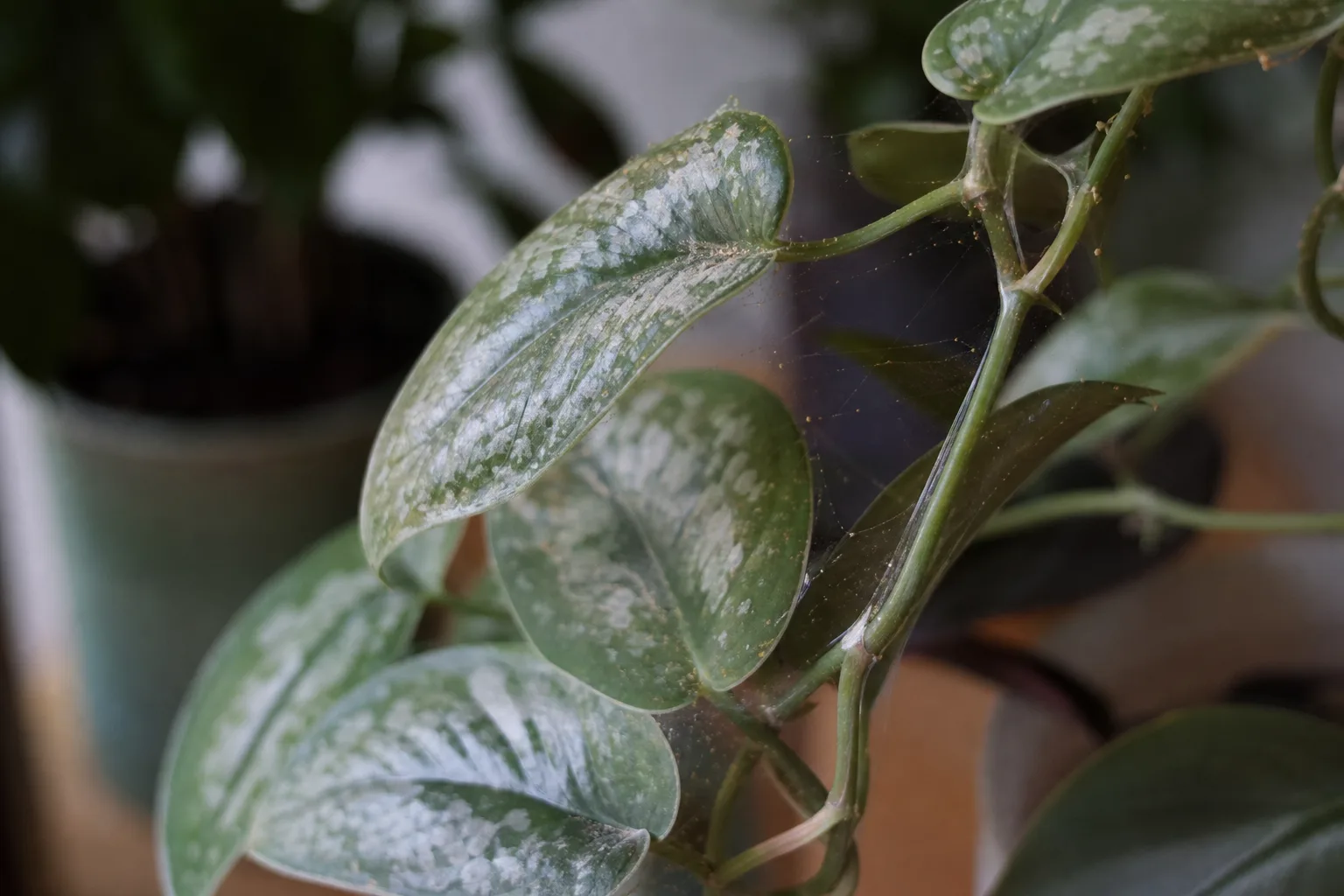
Spider Mites on Satin Philodendron: Causes, Checks & Fixes
This guide covers spider mites on Satin Philodendron. See also the general Spider Mites guide, watering, and light pages for this plant.
Spider Mites on Satin Philodendron: Causes, Checks & Fixes
Quick answer
If your plant arrived labeled satin philodendron, check the leaves: silvery matte texture on heart-shaped foliage points to Scindapsus pictus - often sold as satin pothos or silver pothos, not a true philodendron. Spider mites on this trailing vine usually announce themselves as pale speckles across the satin-silver leaf surface, not as obvious bugs. The twospotted spider mite (Tetranychus urticae) is the most common houseplant species and thrives in warm, dry indoor air. Missouri Botanical Garden notes that scale and mites may appear on this trailing aroid, and winter heating often triggers outbreaks before you notice webbing.
First step: isolate the plant and rinse every leaf underside with lukewarm water. Mites feed on the matte pale undersides of heart-shaped satin leaves and hide along vine nodes where leaves meet stems. A thorough rinse knocks down live mites and eggs before you decide whether a spray is needed. Do not reach for pesticide on day one-confirm active mites first. For the same species under its botanical name, see our Scindapsus pictus spider mites guide.
Why satin philodendron gets spider mites
Satin Philodendron overview is not unusually pest-prone when culture is steady, but its growth habit creates many feeding sites. Long trailing vines carry dozens of overlapping leaves, and each matte underside is a sheltered surface where mites can build colonies unnoticed. North Carolina Extension recommends monitoring scale, mites, mealybugs, and thrips on Scindapsus pictus-pests that all favor stressed foliage in crowded indoor setups.
Dry air is the main trigger. Satin philodendron tolerates 40–60% humidity per our watering guide, but forced-air heat in winter can drop room humidity far below that range. The twospotted spider mite prefers hot, dry weather and completes its life cycle in as little as five days under warm conditions, so populations can explode while you are still blaming faded variegation on low light. Dry air and mites overlap heavily-see low humidity on satin philodendron when crisp tips and stippling appear together near heating vents.
Placement matters. Vines draped near sunny windows, heating vents, or running radiators lose moisture faster and attract mites. Underwatered pots add stress: this species tolerates some drought, but chronically dry soil weakens leaves and makes stippling spread faster once feeding starts. Mites also hitchhike on new nursery plants, shared cuttings, and outdoor summer outings-then spread across a shelf when trailing leaves touch neighbors.
What spider mite damage looks like on satin philodendron
On Scindapsus pictus, early damage is easy to misread because the natural silver splashing already varies leaf to leaf.
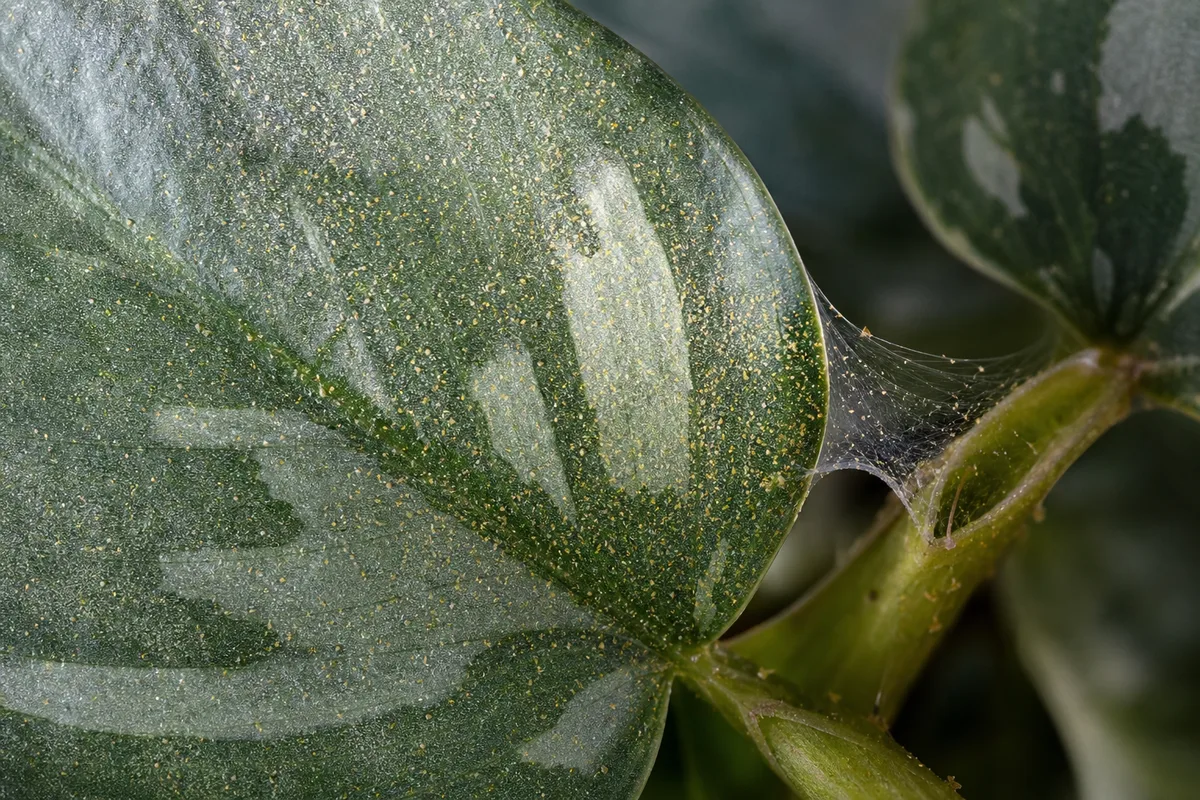
Spider Mites symptoms on Satin Philodendron - compare with healthy tissue on the same plant.
Early feeding:
- Tiny yellow, white, or silvery stipples scattered across the upper leaf surface
- Satin blotches look dull or washed out compared with healthy leaves on the same vine
- Matte leaf undersides feel gritty or show faint webbing at the midrib
Moderate infestation:
- Bronze or gray cast over formerly bright silver patterning
- Fine silk threads between leaf pairs and at petiole joints
- Leaf edges curl slightly and feel papery dry-not the crisp curl of underwatering
Heavy infestation:
- Widespread webbing along vine lengths
- Yellowing lower leaves that drop while upper leaves still show stippling
- New unfurling leaves small, twisted, or stuck half-open
The white paper tap test is the fastest field check: hold white paper under a suspect leaf, tap the blade sharply, and watch for pinhead-sized moving specks. Mites are arachnids, not insects-eight legs, not six-and magnification makes the difference between dust and a live colony.
How to confirm the cause
Work through these checks in order before you treat:
- Pattern on the vine - Stippling scattered across many leaves on one plant points to mites. Uniform yellowing of only the lowest leaves with wet soil suggests overwatering instead.
- Underside inspection - Lift trailing stems and examine matte backs with a 10× lens. Look for mites, amber eggs, cast skins, and fine webbing.
- Paper tap test - Confirm slow-moving specks that leave a greenish smear when crushed.
- Webbing location - Mite silk is fine and patchy at nodes. Mealybugs leave white cottony masses, not sheer web strands.
- Environmental context - Is the plant near a heater, heat pump vent, or south-facing glass in winter? Dry warm microclimates favor mites.
- Neighbor check - Inspect plants whose leaves touch this vine. Mites move by leaf contact, walking, or drifting on webbing.
- Soil moisture - Push a finger 4–5 cm into the mix. Bone-dry soil plus stippling means drought stress may be compounding mite damage; soggy soil with yellowing alone is a different problem.
If you see stippling and live mites on undersides, the diagnosis is confirmed. If leaves look dull but no mites, webbing, or moving specks appear, look at light and watering before spraying.
First fix for satin philodendron
Move the plant away from all other houseplants and rinse every leaf underside under lukewarm running water.
Use a shower spray or sink faucet with gentle pressure. Support each vine with one hand and direct water across the matte leaf backs and node crevices where mites cluster. Wrap the pot in a plastic bag so soil stays in place. Let foliage dry in Satin Philodendron light guide the same day-this species needs good light, but avoid applying oils or soaps while leaves are still dripping.
This single step physically removes mites and eggs and is the safest opening move on a pet-toxic aroid you may be handling often. Colorado State Extension recommends hosing small houseplants in the sink or shower and repeating at one- to two-week intervals while populations persist.
After the rinse, inspect again with white paper. If mites remain or stippling spreads within three days, move to secondary treatment-do not wait until webbing covers the vine.
Step-by-step recovery
Once isolation and the first rinse are done, follow this sequence based on severity:
Light to moderate infestations
- Rinse undersides thoroughly every five to seven days for at least three cycles. Mite eggs survive a single wash; UF/IFAS notes two or more applications at five- to seven-day intervals are required because most sprays do not kill eggs.
- Raise humidity around the plant to the 40–60% range it prefers-use a humidifier or pebble tray, not heavy misting that keeps leaves wet overnight.
- Move the pot off heat vents and out of hot dry drafts while keeping bright indirect light so the vine stays vigorous.
- Prune only leaves that are more than half bronzed or tightly webbed. Bag and discard prunings; do not compost infested tissue indoors.
Moderate to heavy infestations
- Continue weekly rinsing.
- After foliage dries, apply horticultural oil at summer rate or insecticidal soap labeled for mites. Cover undersides completely-contact products have no residual effect and only kill mites the spray touches.
- Treat every five to seven days for three full cycles minimum. Stop when paper-tap tests show no live mites and new stippling halts.
- Inspect every plant that shared a shelf or had leaf contact. Treat or rinse neighbors if you find early stippling.
When to escalate or discard
If webbing returns within 48 hours after three soap or oil cycles, the population may be too entrenched for a shared indoor collection. Colorado State Extension advises discarding severely infested houseplants when they pose a reinfestation risk. Taking cuttings from clean upper growth is an option only if the top nodes show zero webbing and you root them in an isolated quarantine space.
Recovery timeline
Stippled satin tissue does not turn green again-judge recovery by new growth, not old leaves.
- Days 1–3: Live mite count should drop after the first thorough rinse.
- Week 1–2: Stippling stops spreading; existing speckles may look unchanged.
- Week 2–4: New leaves unfurl with crisp silver variegation and no fresh dots.
- Week 4+: Trim bronzed old leaves for appearance once two or three clean leaves have opened.
If new growth stays small or webbed after three treatment cycles, the root system may be too depleted to support recovery on that vine. Healthy roots in well-draining mix with stable humidity still produce new satin leaves within a month when mites are truly gone.
Lookalike symptoms
Several satin philodendron problems mimic early mite damage:
| What you see | Likely cause | How to tell it apart |
|---|---|---|
| Dull silver blotches, no webbing, no moving specks | Low light or natural leaf aging | Lower leaves only; no underside grit or stipple pattern |
| Crispy brown leaf edges, dry soil pulling from pot | Underwatering | Soil very light; no paper-tap mites |
| Yellow lower leaves, heavy wet pot | Overwatering or root rot | Mushy stems; soil stays damp; no webbing |
| White cottony clusters at nodes | Mealybugs | Waxy blobs, not fine silk threads |
| Silvery streaks on new leaves | Thrips | Scraped surface trails; insects visible with a lens |
| Uniform pale leaves on whole plant | Too much direct sun | Bleaching on sun-facing side; no stipple dots |
Dust on matte undersides can look like stippling until you wipe a leaf-dust wipes off; feeding scars do not.
Mistakes to avoid
- Spraying only the glossy upper leaf surface. Mites feed underneath; top-only sprays miss the colony.
- Stopping after one good rinse. Eggs hatch in cycles; weekly repetition is standard for light infestations.
- Using dish soap mixes. Commercial insecticidal soap is formulated for plants; homemade detergents can burn foliage.
- Applying oil or soap in direct sun. Leaf scorch on satin foliage is permanent. Treat in morning light, let dry before strong afternoon sun.
- Ignoring neighboring plants. Mites spread before symptoms show on the next pot.
- Fertilizing during active infestation. Recovery comes from pest control and stable culture, not extra nitrogen on stressed vines.
- Misting heavily instead of raising room humidity. Surface mist evaporates quickly in dry heat and can encourage fungal spots without suppressing mites.
Satin philodendron care cross-check
While treating mites, keep the basics steady so the vine can outgrow damage:
- Light: Medium to bright indirect light per our light guide-dim corners slow recovery and keep soil wet too long.
- Water: Water when the top half of soil is dry per the watering guide; drought stress and mite stress together stall new leaves.
- Humidity: Target 40–60%. Dry winter air is the condition mites exploit most-see low humidity if crisp tips accompany stippling.
- Soil: Well-draining potting mix with perlite; soggy roots weaken the plant but do not cause mite stippling.
- Handling safety: Scindapsus pictus is toxic to cats and dogs. Wash hands after rinsing vines and keep treated plants off pet-accessible shelves.
How to prevent spider mites next time
Prevention on this plant is mostly environmental vigilance during heating season:
- Inspect matte leaf undersides and node joints weekly from fall through early spring.
- Run a humidifier or pebble tray when indoor humidity drops below 40%.
- Keep trailing vines away from heat vents and radiators; rotate hanging baskets so all sides get stable light and airflow.
- Quarantine new plants and cuttings for two weeks before mixing them with established vines.
- Rinse dusty leaves monthly with lukewarm water-dusty foliage in dry rooms is a common precursor to outbreaks.
- Maintain even watering so leaves stay firm; avoid long drought cycles that stress satin foliage.
Healthy vines in appropriate humidity tolerate low mite levels better than weak plants, but do not rely on plant strength alone once stippling is visible-intervene early.
When to worry
Escalate quickly if:
- Webbing spans multiple leaves and returns within days after rinsing
- New leaves emerge deformed, webbed, or fail to unfurl
- Stippling spreads to plants that never touched the original pot
- More than half the foliage is bronzed and dropping despite three treatment cycles
At that point, protect the rest of your collection by isolating or discarding the worst vine, treating all exposed neighbors, and reviewing winter humidity where the shelf sits. Satin philodendron is resilient when roots are sound-most moderate infestations clear with isolation, repeated rinsing, and targeted soap or oil. Severe, collection-wide outbreaks are the scenario where starting fresh from clean cuttings or replacing the plant costs less than months of reinfestation.
Pet safety note
The ASPCA lists Scindapsus pictus as toxic to cats and dogs due to insoluble calcium oxalate crystals. Spider mites themselves are not a pet hazard, but keep treated plants out of reach until sprays dry. Hang baskets high and contact your veterinarian or ASPCA Poison Control at (888) 426-4435 if ingestion is suspected during or after treatment.
Related Satin Philodendron problems
- Satin philodendron overview - Light, watering, humidity, and general care for Scindapsus pictus
- Watering satin philodendron - Moisture rhythm during pest recovery
- Light for satin philodendron - Bright indirect placement without scorching satin leaves
- Low humidity - Dry winter air that triggers mite outbreaks
- Mealybugs - Cottony wax at nodes without stippling
- Root rot - Sour mix and soft stems without webbing
- Overwatering - Yellow lower leaves on chronically wet mix
- Scindapsus pictus spider mites - Full botanical-slug guide for the same species
Conclusion
Spider mites on satin philodendron - botanically Scindapsus pictus - are a dry-air and persistence pest on trailing silver-marked vines, not a mystery disease. Pale stippling on satin blotches and fine webbing at nodes tell you where to look; the paper-tap test confirms live mites before you spray. Isolate first, rinse undersides thoroughly, repeat every five to seven days, and judge success by clean new silver-marked growth at vine tips - not by perfect older leaves. For full species context and care rhythm, see the satin philodendron overview.
When to use this page vs other Satin Philodendron guides
- Satin Philodendron watering guide - Use for routine moisture checks before assuming spider mites is the main issue.
- Satin Philodendron problems hub - Browse all 5 common issues on this species.
- Leaf Drop on Satin Philodendron - Different entry point when symptoms overlap with spider mites.