Leggy Growth on Satin Philodendron: Causes, Checks & Fixes
Quick answer
Leggy growth on satin philodendron is etiolation from insufficient light-long bare internodes, smaller leaves, and vines leaning toward the window. First step: move to bright indirect light within 30 cm of an east or filtered south window, then prune long bare stems after new compact growth appears.
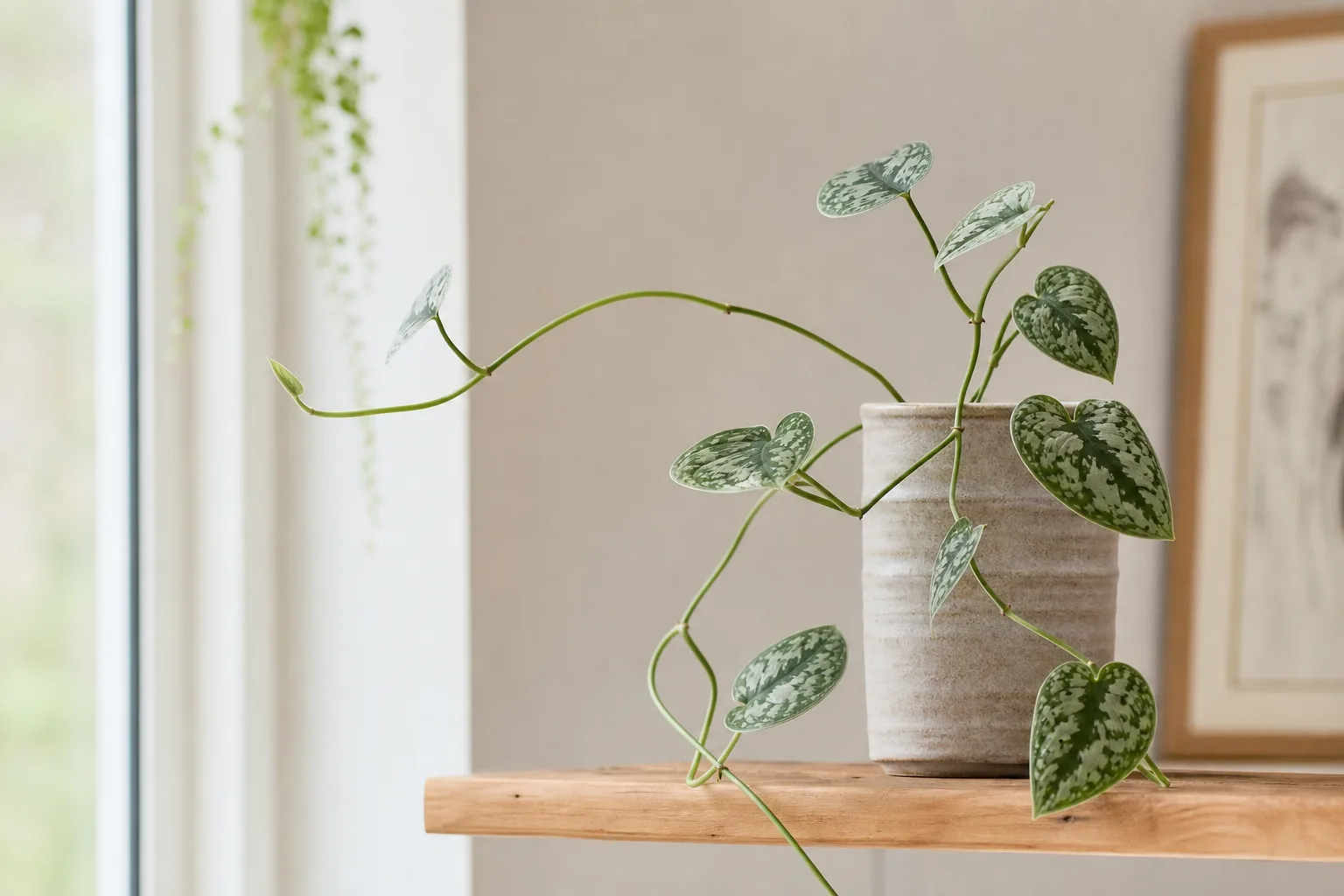
Leggy Growth on Satin Philodendron: Causes, Checks & Fixes
This guide covers leggy growth on Satin Philodendron. See also the general Leggy Growth guide, watering, and light pages for this plant.
Leggy Growth on Satin Philodendron: Causes, Checks & Fixes
Quick answer
Leggy growth on satin philodendron is almost always insufficient light, not a fertilizer shortage. Retail labels call this plant satin philodendron, satin pothos, or silver pothos, but the silver-blotched vine is Scindapsus pictus-a slow-growing tropical climber, not a true philodendron. In dim placement it etiolates: stems stretch toward photons, internodes lengthen, new heart-shaped leaves shrink, and the signature silver pattern dulls toward plain green.
First step: move the pot to bright indirect light-typically within 30 cm of an east-facing window or behind a sheer curtain on south or west exposure. Do not repot, fertilize heavily, or cut back entire vines on day one. Let the plant respond to better light for two to three weeks, then prune bare leaders above a node once compact new growth proves placement is working.
Leggy growth vs not enough light - when to use this page
Both problems trace to low light on the same species, but they answer different search questions.
Use our not enough light guide when you are diagnosing faded silver on new leaves, soil that stays damp too long, or whether your window placement is bright enough in the first place. That page focuses on the light gauge-variegation loss and placement bands.
This page is for already-stretched vines: long bare gaps between leaves, one-sided lean in hanging baskets, and the prune-and-fill workflow after you know light was too low. For proactive window placement, grow lights, and why silver fades before stems stretch, see the satin philodendron light guide. For node cuts, the one-third rule, and mite checks during trim, see pruning.
Nurseries sell Scindapsus pictus under several names. Our overview guide explains how to tell this species from golden pothos or heartleaf philodendron. All fixes below apply to common cultivars such as Argyraeus, Exotica, and Silvery Ann.
What leggy growth looks like on satin philodendron
Healthy satin philodendron holds ovate heart-shaped leaves every few centimeters along the vine, each blade matte green with irregular silver-gray blotches on the upper surface. Leggy etiolation tells a different story:
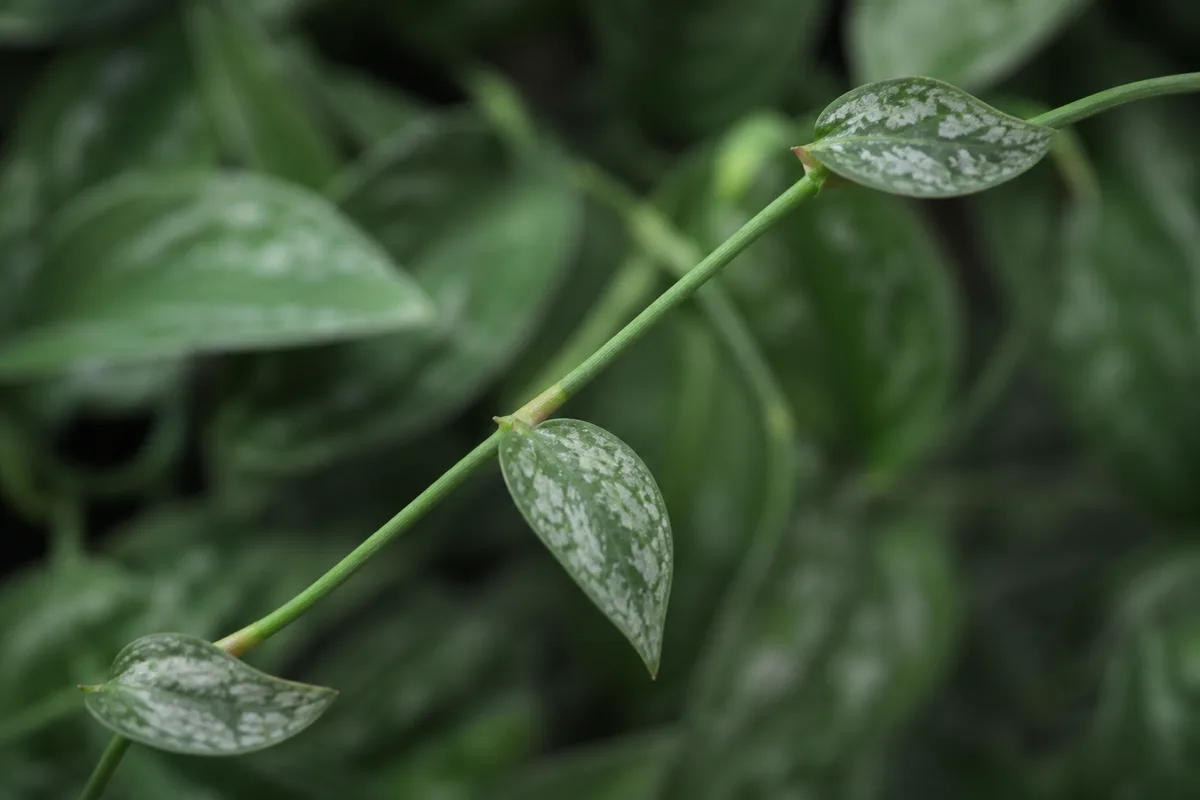
Leggy Growth symptoms on Satin Philodendron - compare with healthy tissue on the same plant.
- Long internodes - gaps of 8–15 cm or more between leaves, noticeably longer than older compact sections on the same stem
- Smaller new blades - newest heart-shaped leaves are reduced compared with foliage produced when the plant had better light
- Faded silver pattern - blotches look pale, muddy, or less defined; the satin sheen dulls on weak new growth before older leaves fully green out
- Directional lean - trailing stems bend toward the window or lamp; one side of a hanging basket stays dense while the shaded side stretches first
- Bare lower stems - older leaves drop or were never replaced, leaving naked vine sections that will not sprout leaves on their own
- Slow dry-down - top mix stays damp for days because photosynthesis and transpiration drop in dim corners
This is not the same as healthy trailing length. A well-lit Scindapsus pictus produces dense foliage along the vine even as it cascades from a shelf or basket. Sparse leaves on long naked stems mean the plant is searching for light, not thriving.
Why satin philodendron gets leggy
Insufficient light is the primary cause
Leggy growth is etiolation-a growth response when daily light falls below what supports compact tissue. Indoor plants become spindly as they stretch to reach for more light, and the same plant in brighter exposure would be more compact with normal-size leaves. NC State Extension notes satin pothos prefers bright indirect light indoors; in hallways, interior rooms far from glass, or north corners with little ambient bounce, vines elongate faster than they produce leaves.
Because Scindapsus pictus is a slow-growing climber, etiolation can look gradual-you notice bare stems only after several months of dim placement. The silver variegation is light-sensitive: without enough photons, new leaves invest less in the reflective blotches that define the cultivar. Our light guide explains why old faded leaves never regain silver-only new growth reflects improved conditions.
Secondary factors that make legginess worse
Uneven light on hanging baskets. Trailing pots often receive strong light on the window side only. The back face stretches while the front looks fine, masking the problem until the whole vine is sparse.
Winter light drop. Shorter days and lower sun angle reduce effective brightness even if you never moved the pot. Legginess that appears between October and March often tracks seasonal light, not a sudden care failure.
Over-fertilizing in low light. Extra nitrogen can push weak elongated shoots when the plant cannot photosynthesize enough to support dense tissue. It does not replace photons and can stress roots while stems still stretch.
Overwatering paired with dim light. Scindapsus in weak light uses water slowly. Keeping the same watering calendar as summer-or soaking because leaves look limp-leaves soil wet while growth stalls. Yellow leaves may signal overwatering; that pattern commonly overlaps with leggy vines in dark corners. See our overwatering guide when wet soil and yellow lower leaves accompany stretch.
How to confirm the cause
Work through these checks before pruning or repotting:
- Light distance and direction - Is the pot more than 1.5–2 m from the nearest window with no grow lamp? Does the vine lean toward one light source?
- New versus old leaf comparison - Are the newest leaves smaller and less silver than leaves produced six months ago on the same vine? That confirms ongoing light stress.
- Internode spacing trend - Measure gaps between three consecutive new leaves. If spacing is widening over time, light is still too low even if the plant is alive.
- Soil moisture at depth - Push your finger 2–3 cm into the mix. Wet soil in a dim spot suggests slow uptake; adjust watering after you improve light, not before.
- Rule out pests and rot - Leggy stems with firm green tissue and no webbing, scale, or mushy nodes point to light. Soft brown bases with sour smell mean rot-fix drainage and moisture, not just placement.
- Season check - If legginess appeared in winter and the pot has not moved, seasonal light drop is likely; plan brighter placement or supplemental lighting rather than fertilizer.
If long internodes, lean, and dull new silver pattern all align, you have confirmed low-light etiolation on this species.
First fix for satin philodendron
Move the plant to brighter indirect light and leave it there for two to three weeks before any other major change.
Practical targets for most homes:
- East window - Gentle morning sun, bright indirect light the rest of the day; ideal for satin foliage
- Sheer-filtered south or west window - Strong indirect light without hot afternoon rays on the leaves
- Within 30 cm of the glass - Farther than that, intensity drops quickly; light intensity decreases rapidly with distance from the source
If the plant came from very dim conditions, shift it over three to five days rather than jumping to the brightest sill-pale silver leaves can scorch if acclimation is skipped. Direct sun is not tolerated indoors on window glass for this species.
Do not fertilize, repot, or prune heavily on day one. Let the plant respond to better light first; new node spacing tells you whether placement is working. For grow-light distance and duration when natural light is insufficient, see our light guide.
Step-by-step recovery
After the plant sits in improved light for about two to three weeks:
- Rotate the pot weekly so both sides of a hanger or shelf receive similar exposure and stems stop one-sided stretching.
- Adjust watering - In brighter light the top 2–3 cm of mix dries faster; water when that zone is dry, not on a fixed calendar from the dim corner.
- Pinch or cut long bare vines just above a node once you see two or three new leaves with tighter spacing at a stem tip. Pinching stems helps keep the plant tidy and activates buds below the cut. Follow our pruning guide for clean cuts and the one-third rule on severely stretched baskets.
- Propagate the healthiest cuttings - Sections with firm nodes and good silver pattern root easily in water; replant them in the same pot to fill bare areas while the parent regrows. See propagation for water-rooting steps.
- Add supplemental light in dark winters - A full-spectrum LED grow lamp 30–45 cm above the canopy for 10–14 hours daily can hold compact growth when natural light is insufficient.
- Optional support - Training vines up a moss pole or trellis can encourage slightly larger leaves on some cultivars, but it does not replace adequate light for fixing etiolation.
Stagger hard pruning on a stressed plant: remove one or two long bare leaders at a time rather than cutting the entire vine to the soil line in one session.
Wear gloves when trimming-satin pothos contains calcium oxalate crystals toxic to pets if ingested, and sap can irritate skin.
Recovery timeline
Light correction shows in new growth, not old stretched tissue. Within two to four weeks of better placement, watch for:
- Shorter gaps between emerging leaves on the newest tip
- Slightly larger heart-shaped blades with sharper silver blotches
- Stems that stop leaning once rotated regularly
- Faster, more predictable soil dry-down as the plant resumes normal transpiration
Existing elongated internodes do not shrink back-that stem length is permanent. Judge success by compact new sections after a pinch, not by expecting bare vine to leaf out along its length without pruning or pinning nodes to soil.
Full visual recovery on a badly etiolated basket may take two to three growing seasons of consistent light plus periodic pinching and filling in with cuttings. Scindapsus pictus grows slowly even in good conditions, so patience matters more than on faster pothos cousins.
Lookalike symptoms to rule out
Not enough light (general) overlaps with leggy growth but may emphasize overall pale foliage and variegation fade before extreme internode stretch. Treat both with brighter indirect placement; use our not enough light guide for placement-first diagnosis.
Overwatering and root issues show yellow lower leaves, mushy stems, or sour soil-not primarily long bare internodes with firm green tissue. Fix moisture before assuming light alone will solve yellowing. See overwatering and root rot when wet mix and soft bases accompany stretch.
Underwatering causes curling leaves and very dry, light pot weight. Stems may look thin but internode spacing usually does not widen the way etiolation does.
Normal slow growth - NC State lists slow growth rate for this species. Compact vines that simply add length slowly in adequate light are healthy; leggy means spacing is widening and leaves are shrinking.
Spider mites cause stippling and fine webbing on satin undersides, not uniform internode stretching. Inspect during pruning-our pruning guide covers mite checks on silver-marked leaves.
Mistakes to avoid
Do not reach for fertilizer first. Without enough light, nutrients cannot produce dense satin foliage and may burn roots in soil that stays wet.
Do not keep watering on the old schedule after moving to brighter light-or worse, water more because leaves look limp in a dim wet pot.
Do not move from deep shade to harsh direct afternoon sun in one step. Acclimate over several days to prevent scorched silver leaves.
Do not assume long vines equal health. Bare stem with occasional small leaves is the plant compensating for low light, not vigorous growth.
Do not prune everything before fixing light. Cuts without photons produce another round of weak, stretched shoots.
Do not expect bare internodes to sprout leaves without pinning nodes to moist soil or taking cuttings-adventitious buds on naked vine rarely activate on their own indoors.
How to prevent leggy growth next time
Place satin philodendron where bright indirect light is realistic most of the day, not only where the basket looks decorative. Partial shade with bright indirect light matches its indoor culture needs.
Rotate pots weekly on shelves and hangers. Pinch tips after compact new growth establishes to encourage branching from lower nodes, as described in our pruning guide.
Match watering to how fast the top 2–3 cm of mix dries in your light level-brighter spots need more frequent checks; dim spots need less water, not more attention through feeding.
In winter, accept slower extension or add a grow lamp rather than letting vines stretch for months until spring. Window bands and lamp setup live in the light guide.
When to worry
Leggy growth alone is not an emergency. It is reversible through light and shaping.
Escalate care when legginess pairs with yellow mushy lower stems and wet sour soil-that suggests root stress from overwatering in low light, not etiolation alone. Soft collapsing vines, widespread leaf drop in days, or pest webbing and sticky residue need separate diagnosis before you pin everything on placement.
If new leaves stay small and green-gray with weak silver pattern after six weeks in clearly brighter indirect light, the spot may still be too dim-move closer to the window or add supplemental lighting rather than waiting another season.
Conclusion
Leggy satin philodendron vines are a light problem first. Brighter indirect exposure stops the stretch; pinching and cuttings restore a full basket because old bare internodes will not compact on their own. Fix placement, adjust watering to match the new growth rate, then shape the vine once new satin leaves prove the spot is working. For placement bands and grow lights, bookmark the light guide; for node cuts and propagation to fill bare stems, pair this page with pruning and propagation.
Related tool
Use the Plant Problem Diagnosis Tool to narrow causes for leggy growth on this plant before changing multiple variables at once.