Ponytail Palm Fertilizer: When, How, and Mistakes to Avoid
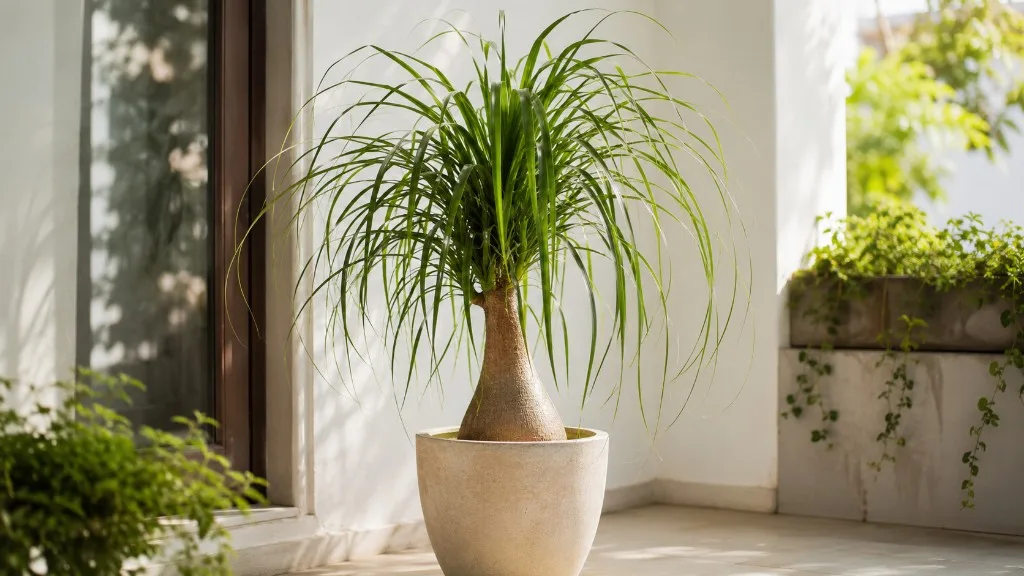
Ponytail Palm Fertilizer: When, How, and Mistakes to Avoid
Ponytail Palm Fertilizer: When, How, and Mistakes to Avoid
Ponytail palm fertilizer is one of the most misunderstood routines in houseplant care - not because feeding is complicated, but because Beaucarnea recurvata looks like a palm while behaving like a drought-adapted caudiciform succulent. The swollen elephant-foot base stores water and buffers nutrient uptake; growth is slow; and University of Wisconsin Extension recommends feeding once or twice during the growing season, not the monthly half-strength schedule many foliage houseplants tolerate. Owners who treat ponytail palm like a parlor palm or pothos often see exactly what extension guides warn about: brown leaf tips from excessive fertilizer or accumulated salts.
The baseline routine for most indoor B. recurvata is simple: diluted cactus or succulent balanced liquid fertilizer, one to two applications between spring and late summer, applied only when the plant is actively flushing new leaves and the soil is moist from a recent soak. Pause entirely from late autumn through early spring when growth slows and winter watering drops sharply. Never feed dry, stressed, or newly repotted plants. If you remember one rule, make it less is more - skipping a season is safer than doubling down after pale growth.
This guide covers why caudiciform biology changes every feeding decision, a reconciled schedule table, product and dilution choices, a step-by-step routine, over- and under-feeding symptoms, salt-flush recovery, seasonal adjustments, and how fertilizer fits the wider ponytail palm care hub alongside light, watering, and soil guidance.
Why Ponytail Palm Fertilizer Is Different from True Palms
Ponytail palm is not a true palm - it belongs to the asparagus family and evolved in semi-desert southeastern Mexico on rocky, fast-draining ground where summer rain arrives in bursts and winter stays dry. NC State Extension describes it as drought tolerant, slow growing, and suited to well-drained cactus and succulent soils in a sunny window. That native rhythm means nutrient demand stays low year-round and spikes only modestly when new strap leaves push from the crown during warm, bright months.
True palms and fast foliage houseplants often accept monthly balanced liquid feed at half label strength because they metabolize water and nitrogen quickly in peat-based mixes. Ponytail palm does not. Its caudex - the greatly swollen trunk base - stores water and slows the plant’s response to both drought and excess salts. Fertilizer applied on a tropical-houseplant calendar concentrates minerals in a small pot that dries slowly between deep soaks, which is why leaf tips dry brown indoors from too much fertilizer or salt buildup even when watering looks reasonable on the surface.
Caudiciform Slow Metabolism and Lean Nutrient Needs
A caudiciform succulent builds biomass slowly. UF/IFAS classifies ponytail palm as fine-textured and slow growing, and container specimens typically remain far smaller than their 30-foot habitat potential. Slow metabolism means roots extract nutrients gradually; the caudex buffers short deficits but cannot protect fine roots from salt burn when feed arrives too often or too strong.
In practical terms, ponytail palm tolerates skipped feeding seasons far better than it tolerates monthly houseplant-strength doses in a snug pot. Pale, slow new growth in a dim room usually reflects insufficient light, not starvation - adding nitrogen before fixing placement often worsens salt load without speeding growth. Feed only after light and drainage are already in range.
Why Owners Over-Feed Plants That Look Like Palms
The common name sets a trap. Ponytail palm’s fountain of arching leaves reads “tropical foliage” at the garden center, so buyers reach for the same 20-20-20 bottle they use on philodendrons. Marketing labels that say “palm fertilizer” reinforce the mistake even though high-nitrogen palm formulas are wrong for this species. Ponytail palm needs lean, balanced cactus-style feeding - not foliage-push nitrogen and not palm-specific micronutrient blends unless you already own them and dilute heavily.
Another psychological driver is visible caudex size. A plump base looks like a plant that “must need food,” when the opposite is often true: large specimens in small pots accumulate salts faster because the same mineral dose lands in less soil volume. Mature ponytail palms in gritty cactus mix may need fewer applications than a young plant in active summer flush, not more.
When to Fertilize Ponytail Palm
Timing matters more than calendar reminders. Fertilizer supports growth that is already happening; it cannot force a dormant plant to flush leaves in a dark winter room.
Active Growth Signals Worth Feeding
Feed when all three conditions align:
- New leaf activity - fresh strap leaves emerging from the crown, brighter green than the oldest foliage.
- Warm, bright season - roughly spring through late summer when the plant sits in strong indirect or direct light and pot dry-down speeds up.
- Moist, not soggy, root zone - soil was soaked within the last few days and the pot drains freely; never apply fertilizer to dust-dry mix.
Wisconsin Extension anchors frequency to the growing season - the same window when summer rainfall occurs in habitat and when indoor growers increase (but still space) deep watering. If your ponytail palm has not pushed new growth in eight weeks despite good light, fix light or roots before feeding.
When to Hold Feed Entirely
Do not fertilize when any of these apply:
- Late autumn through early spring when growth stalls and winter watering is reduced significantly to prevent rot.
- Dry soil - water thoroughly first, or wait until the next scheduled soak day.
- Recent repot - hold 4–6 weeks after Ponytail Palm repotting guide into fresh mix; many commercial cactus blends already contain starter fertilizer.
- Stress signals - yellowing with wet soil, soft caudex, mealybug or scale outbreaks, or active brown-tip salt burn. Correct the stressor, then resume feed next growing season if needed.
Feeding a struggling ponytail palm is like adding espresso to someone running a fever - the plant cannot metabolize the input, and salts stack in the root zone.
How Often and How Much to Feed
There is one authoritative baseline and one optional upgrade for exceptional summer growth. Mixing them without labeling the difference is how care guides contradict themselves.
The Authoritative Once-or-Twice Growing-Season Schedule
For most indoor Beaucarnea recurvata, follow University of Wisconsin Extension: fertilize once or twice during the growing season. That usually means:
| Setup | Applications per year | Dilution | Notes |
|---|---|---|---|
| Typical bright indoor ponytail palm | 2 (mid-spring + mid-summer) | Quarter to half label strength | Default for beginners |
| Mature specimen, slow flush, small pot | 1 (early summer only) | Quarter strength | Reduces salt risk |
| Young plant, strong south window, fast summer growth | 2, optionally 3–4 at quarter strength | Quarter strength only | Still far below monthly half-strength |
Space applications at least 8–10 weeks apart on the twice-per-year plan. Pour plain water between feeds - ponytail palm does better with a clear soak-and-feed rhythm than constant low-dose fertilizer in every watering.
Optional Monthly Quarter-Strength for Fast Summer Growth
Some experienced growers in very bright, warm rooms apply quarter-strength balanced liquid every 4–6 weeks only during peak summer - never in winter, never on dry soil. That is more aggressive than HGIC’s once-or-twice recommendation and increases salt risk in plastic pots or peat-heavy mixes. Treat it as an optional ceiling, not the default. If you see white crust on the soil surface or tip burn, drop back to twice per season and flush salts (see below).
Do not use monthly half-strength houseplant feed on ponytail palm unless you enjoy trimming irreversible brown tips. Half strength twice a year matches extension guidance; half strength twelve times a year does not.
What Fertilizer to Use for Beaucarnea recurvata
Product choice is simpler than the fertilizer aisle suggests: balanced cactus or succulent liquid fertilizer, diluted, applied to moist soil.
Cactus and Succulent Balanced Liquid vs Houseplant Feed
Wisconsin Extension instructs growers to use a well-drained soil mix as would be used for cactus - the same cultural lane applies to fertilizer. A balanced cactus/succulent formula (often labeled 2-7-7, 5-5-5, or similar low-nitrogen blends) matches low nutrient demand better than high-nitrogen lawn or palm products.
If you only own general houseplant fertilizer labeled 10-10-10 or 20-20-20, it can work at quarter to half dilution for one or two seasonal applications - not because ponytail palm craves nitrogen, but because a dilute balanced dose supplies minor nutrients without pushing soft, salt-prone growth. Avoid urea-heavy lawn fertilizers, slow-release pellets in small pots, and foliar sprays - ponytail palm does not absorb meaningful nutrition through its tough strap leaves, and slow-release pellets desynchronize with winter dry-down.
Dilution Strength That Avoids Salt Burn
Quarter to half the label’s recommended dilution is the safe indoor range for seasonal feeding. Measure with a syringe or small spoon - “a splash” is how salt crises start. If the label says one teaspoon per gallon for weekly feeding, ponytail palm might receive one-quarter teaspoon per gallon for a twice-season application, or half teaspoon if you feed only once.
Hard tap water already carries calcium and magnesium salts. Fertilizer adds more. In a 6-inch pot that dries every two to three weeks, minerals concentrate at the soil surface - the white crust you can scrape with a fingernail. Dilution is not timidity; it is caudiciform insurance.
Step-by-Step Feeding Routine
- Confirm growth and season - new leaves active; calendar between late March and August in most temperate homes.
- Check soil moisture - if dry, water deeply and wait 24 hours; fertilizer goes on moist mix only.
- Mix fertilizer - balanced cactus/succulent liquid at quarter to half label strength in your watering can.
- Apply evenly - pour slowly across the soil surface until a little exits the drainage hole; keep solution off the leaf crown.
- Empty the saucer - never let the pot sit in fertilizer runoff.
- Log the date - twice per season is easy to forget; a phone note prevents accidental triple feeding.
- Resume plain soak-and-dry watering - no fertilizer in the next one or two drinks.
If you repotted this spring into fresh gritty cactus mix, skip step 3 until the plant has settled at least one month and pushed visible new growth.
Signs You Are Feeding Correctly vs Too Much vs Too Little
Use symptoms together - single brown tips happen on old leaves naturally.
| Observation | Likely meaning | Action |
|---|---|---|
| Steady new strap leaves, deep green color, no salt crust | Feeding (or skipping) is appropriate | Maintain schedule |
| White mineral crust on soil surface | Salt accumulation - often over-feeding or hard water | Scrape crust lightly; flush pot; reduce frequency |
| Brown, dry leaf tips spreading on newest leaves | Excessive fertilizer or accumulated salts | Flush; pause feed 4–6 weeks; trim dead tips only |
| Very slow growth, pale new leaves, good light confirmed | Possible low nutrients or still root-bound / low light | Rule out light first; one diluted summer feed if all else is sound |
| Sudden leaf drop after feeding | Root burn on dry or damaged roots | Flush; hold feed until next season |
Old brown tips do not regreen after you fix salts - trim them for appearance and wait for healthy new foliage to confirm recovery.
Common Ponytail Palm Fertilizer Mistakes
Feeding on a monthly houseplant calendar is the most common error. Ponytail palm is not a pothos. Twice per growing season beats twelve diluted doses that stack minerals in a small root zone.
Applying fertilizer to dry soil burns fine roots instantly. Always water first.
Using full label strength because “the plant looks hungry” - the caudex always looks plump. Full strength belongs on fast annuals, not slow caudiciforms.
Feeding every watering with a weak solution still builds salts faster than ponytail palm uses them, especially in cachepots that trap runoff.
Ignoring salt load until tips are crispy across the crown. A quarterly plain-water flush through the drainage hole - not fertilizer water - helps in hard-water homes even when you feed lean.
Chasing nitrogen for “fuller foliage” - ponytail palm is not grown for leaf mass. Extra nitrogen softens tissue and invites tip burn without speeding caudex development.
Salt Flush and Recovery After Over-Fertilizing
If you over-fed or see crust and widespread tip burn:
- Stop fertilizer immediately.
- Place the pot in a sink or tub. Slowly pour plain room-temperature water through the mix until runoff flows clear - roughly 3–4 pot volumes for a 6–8 inch container. This is an editorial best practice for salt reduction; extension sources cite salt accumulation as the problem rather than prescribing exact flush volumes.
- Let the pot drain completely - caudex rot follows if the root zone stays soggy for days.
- Pause feeding 4–6 weeks minimum - through the rest of the growing season if burn was severe.
- Trim only dead tip tissue with clean scissors; living green tissue stays.
- Resume next spring at quarter strength once, not a doubled dose to “make up” for lost time.
If brown tips appeared after you increased feed while winter watering was still high, fix the watering rhythm first - salts and soggy roots compound.
Seasonal Feeding Adjustments
Early spring - resume only when new growth appears and you are back on a regular soak-and-dry schedule. First feed of the year can be quarter strength.
Peak summer - brightest light and fastest dry-down; second application fits here if you use twice-season feeding. Optional monthly quarter-strength only if growth is visibly strong and salts are absent.
Late summer taper - skip a planned feed if growth slows in August; the plant is winding down.
Autumn through winter - no fertilizer. Pair with reduced winter watering so the caudex rests in mostly dry gritty mix.
After repot - fresh mix, disturbed roots, no feed for 4–6 weeks unless you used completely inert grit with zero starter charge (rare with bagged products).
How Fertilizer Connects to Light, Water, and Soil
Fertilizer is the last layer, not the first fix.
Light drives photosynthesis and nutrient demand. A ponytail palm in a bright south window may use a second summer feed; the same plant in a north room needs no feed until you improve light - pale leaves there are almost never a fertilizer deficiency.
Watering rhythm controls salt concentration. Deep, infrequent soaks with full dry-down between drinks mimic habitat and prevent fertilizer salts from sitting in a permanently damp root zone. Never fertilize on the same day you discover soggy soil - that is a watering emergency, not a feeding day.
Soil structure determines how fast salts flush. Fast-draining cactus mix with perlite sheds minerals at each soak; dense peat in an oversized pot traps them. Repotting into proper grit is often more effective than doubling fertilizer after years of slow decline.
For the full care picture - caudex biology, placement, and problem diagnosis - start at the ponytail palm overview. If tips browned after feeding, compare symptoms on the brown tips guide.
How We Wrote and Verified This Guide
Author: sai-ananth · Reviewed by: LeafyPixels Review Board · Reviewed: 2026-06-15
Methodology: Feeding recommendations were checked against Beaucarnea recurvata extension guidance (University of Wisconsin HGIC frequency and salt-burn warnings, UF/IFAS growth habit, NC State cultural requirements, Missouri Botanical Garden native habitat context) and cross-checked with LeafyPixels ponytail palm watering, light, and soil data so fertilizer advice matches established soak-and-dry and caudex-safe culture.
Key sources used in this guide:
- UW Extension HGIC - ponytail palm - once-or-twice seasonal feed; brown tips from fertilizer/salts; winter watering reduction; cactus mix culture
- UF/IFAS - Beaucarnea recurvata - slow growth classification
- NC State Extension Plant Toolbox - drought tolerance, rocky poor soils, winter dry preference
- Missouri Botanical Garden Plant Finder - semi-desert native range, container culture
- ASPCA - ponytail palm non-toxic listing - pet safety context for stored fertilizer bottles and chewed leaves
Pet note: ASPCA lists Beaucarnea recurvata as non-toxic to dogs, cats, and horses. Concentrated liquid fertilizer and salty soil crust are still hazardous if ingested - store bottles locked and contact your vet if a pet drinks fertilizer solution.
Conclusion
Ponytail palm fertilizer success comes down to respecting caudiciform biology: once or twice per growing season with diluted cactus-style balanced liquid on moist soil, then plain water and a winter pause while growth sleeps. That schedule aligns with University of Wisconsin Extension and prevents the salt crust and brown tips that send owners searching for fixes. If growth is pale, upgrade light and confirm drainage before you upgrade feed. If tips burned after an enthusiastic monthly routine, flush, pause, and trim - the caudex forgives lean years far more willingly than it forgives salt.
When to use this page vs other Ponytail Palm guides
- Ponytail Palm overview - Start here for whole-plant context before deep-diving this topic.
- Ponytail Palm problems hub - Jump to symptom-specific fix guides when this care topic does not resolve the issue.