Best Soil for Philodendron White Knight: Mix & Drainage
Best Soil for Philodendron White Knight: Mix & Drainage
Best Soil for Philodendron White Knight: Mix & Drainage
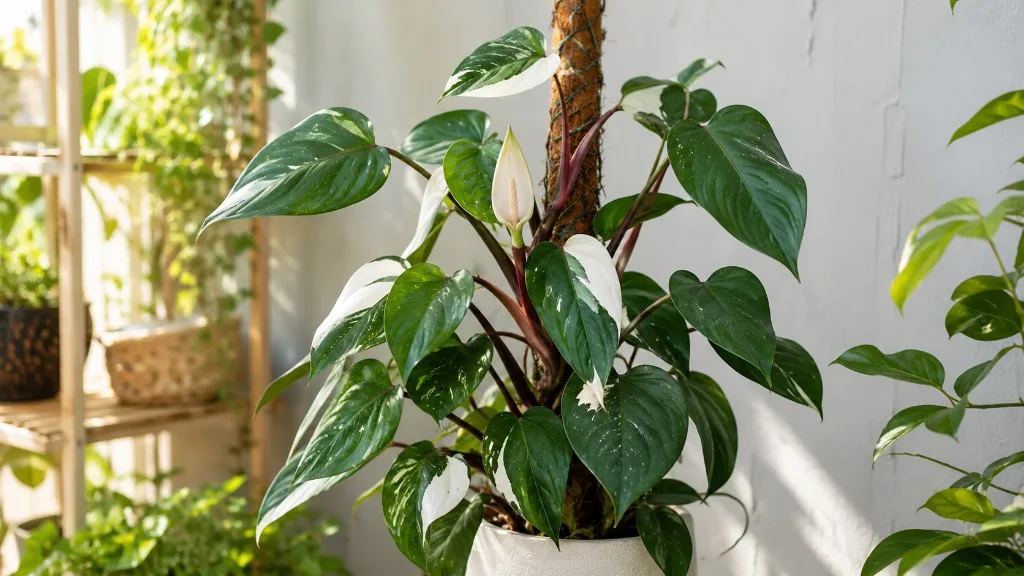
Philodendron White Knight soil is where collector dreams meet root-zone physics. Philodendron erubescens ‘White Knight’ is a climbing aroid with burgundy stems, sectoral white variegation, and a growth pace slower than plain green philodendron vines - not because the species is fragile in abstract, but because pale leaf tissue produces less chlorophyll and transpires less aggressively. That biology changes how fast your pot should dry between waterings, which means the mix cannot be a generic bag label. NC State Extension describes P. erubescens as preferring moist, well-drained organic soil, partial shade, high humidity, and temperatures between 65 and 85°F (18–29°C) - the same comfort band that supports healthy indoor roots. What extensions rarely spell out for collectors is the percentage framework behind “well-drained,” the propagation-medium trap when you buy a wet stick still in dense sphagnum, or how a slow variegated climber on a moss pole holds moisture differently than a tabletop cutting in a four-inch pot.
This guide gives you an exact starting mix, room and pot adjustments, drainage tests that measure soil success - not leaf striping aesthetics - a full repot walkthrough, propagation-medium transition steps, troubleshooting for soft nodes and sour smell, and how White Knight soil needs differ from Pink Princess on the same parent species. For watering rhythm after you fix the mix, see the watering guide. For rooting cuttings before they reach mature mix, see propagation.
Why White Knight Soil Is Not Generic Potting Mix
Heavy peat-based indoor potting soil compacts within months. Water channels down the pot walls while the center stays stale. Roots lose oxygen. For any philodendron, that is risky. For White Knight - often sold as a recently rooted cutting with a vulnerable node and expensive variegation - it is the fastest route to root rot and a soft burgundy stem base. Iowa State University Extension notes that philodendrons prefer to stay evenly moist but not wet, and should not sit in soggy soil or saucers of standing water. The soil’s job is to hold enough moisture for those feeder roots between drinks while maintaining air pockets perlite and bark create.
White Knight is not a self-heading philodendron like Birkin and not a drought-tolerant succulent. It is a climbing erubescens cultivar that in habitat winds up rainforest trees in Colombia with aerial roots exploring loose organic debris. Indoors, you recreate that structure in a pot: chunky, open, slightly moisture-retentive but never waterlogged. Bagged “indoor plant soil” alone usually fails that test without amendment.
How Variegated Growth Changes Dry-Down
Heavily variegated leaves transpire less than all-green foliage because white sectors contain less chlorophyll. A White Knight in the same pot size as a green heartleaf philodendron often dries more slowly - not because it needs swampy soil, but because it uses less water per week. Many growers interpret slow dry-down as permission to pack more peat into the mix. The opposite is safer: keep the mix airy, then adjust watering and light rather than adding moisture-retentive components that punish the node zone.
Slow growth also means roots rebuild slowly after repot stress. A bad soil choice lingers longer on White Knight than on a fast-growing Brasil pothos. That is why getting the mix right before you chase fertilizer or brighter windows matters. If leaves yellow while the mix stays wet, read overwatering and yellow leaves - but fix the root zone first.
The Core Mix: Percentages and Components
Stop repeating “chunky aroid mix” without numbers. Here is a starting framework for an established White Knight in a four- to six-inch pot with drainage holes:
| Component | Percentage | Role |
|---|---|---|
| Quality indoor potting mix | 40% | Base organic matter and minor nutrients |
| Perlite or pumice | 30% | Drainage and air pockets |
| Orchid bark (medium grade) | 30% | Chunk structure; mimics epiphytic root environment |
Blend dry in a tub until the texture looks like coarse granola - not mud, not dust. Pre-moisten slightly before potting so dry peat does not repel the first watering. SDSU Extension recommends a well-drained potting mix for philodendrons and replacing soil every two years to reduce salt buildup - a useful maintenance anchor for indoor containers extensions often mention but collectors skip.
Base Recipe for Established Climbers
For a mature White Knight climbing a moss pole with active roots filling most of the pot, the 40/30/30 blend above is the default. Optional additions:
- 5–10% horticultural charcoal - helps keep mix fresh in humid rooms; common in aroid blends though not required.
- 5% worm castings - light nutrient boost at repot; not a substitute for fertilizer during growth season.
Do not exceed 50% peat-heavy potting mix. If your room runs humid (above 60%) and pots stay wet five or more days after watering, shift toward 35% potting mix, 35% perlite, 30% bark instead.
Lighter Mix for Recent Cuttings
Cuttings rooted in the last eight to twelve weeks - especially those recently moved from water or sphagnum - benefit from a slightly more open blend while roots toughen:
- 30% potting mix
- 40% perlite
- 30% orchid bark
Match the propagation guide perlite-heavy profile. Transition toward the established 40/30/30 recipe at the next repot once roots circle the pot gently and new leaves open without wilting.
Adjusting the Mix for Your Room and Pot
The ratio is a starting point, not a law. Your room’s evaporation rate matters as much as the label on the bark bag.
Humid vs Dry Rooms
In humid homes (55–70% relative humidity, common for White Knight collectors), increase perlite or bark by five to ten percentage points. Moist air slows leaf transpiration; the pot dries slower. In dry, heated winter air, you may keep the 40/30/30 baseline but must pair it with consistent watering checks - dry air does not justify dense soil.
Moss Pole and Root Volume
A White Knight on a moss pole in a tall nursery pot has more vertical root run and often more aerial roots exploring damp moss. The lower pot mix should still drain within a day after watering. Many growers keep the pole moss moist while the pot mix follows dry-down rules - two moisture zones, one plant. If only the pole is wet but the pot mix sours, the pot - not the pole - needs more bark and perlite.
Oversized pots are a hidden soil problem: extra mix holds water without extra roots. Iowa State Extension notes philodendrons do well slightly pot-bound because soil dries faster between waterings. Size up only one inch at a time when roots circle the bottom.
Drainage Speed: How to Test Whether Your Mix Works
Soil success is measurable. You do not need to judge drainage by whether new leaves show crisp white striping - that is a light question. Use these soil-specific checks:
One-minute surface test: After a full watering, water should sink within seconds, not pool on top for minutes. Persistent pooling means hydrophobic peat or compaction - flush or refresh.
Twenty-four-hour weight test: The pot should feel lighter the next day but not bone dry. If it stays heavy and cool at the bottom after 48 hours in bright indirect light, the mix retains too much water for your conditions.
Root-zone smell test: Lift the pot and sniff near the drainage hole. Earthy is good. Sour, swampy, or rotten means anaerobic conditions - see mold on soil and inspect roots.
Skewer probe: A dry wooden skewer pushed to the bottom should come out slightly cool and faintly damp two days after watering - not wet, not dusty.
Pot Choice and Drainage Holes
A drainage hole is non-negotiable for long-term White Knight care. SDSU Extension ties philodendron health to well-drained mix in functional containers. Decorative cachepots without drainage turn even a perfect aroid blend into a standing-water bath. If you must use a cover pot, remove the nursery pot to water at the sink, drain fully, then replace.
Terracotta speeds dry-down - helpful in humid rooms or for growers who tend to overwater. Plastic and glazed ceramic retain moisture longer; pair with more perlite if pots stay wet too long. Pebbles at the bottom do not create a drainage layer; they reduce soil volume and can raise the water table. Fix the mix and holes instead.
pH, Salts, and When to Flush the Mix
NC State Extension lists P. erubescens soil pH preference as acid to neutral (below 6.0 through 8.0), with high organic matter and good drainage. A practical indoor target for White Knight is pH 5.5–6.5 - slightly acidic, typical of peat-based potting mixes amended with bark.
White tissue on leaves shows fertilizer and salt stress sooner than green tissue. If white sectors brown at the margins while roots look healthy, suspect salt crust on the soil surface before blaming light. Flush the pot with plain water until runoff runs clear, or refresh mix at repot. SDSU Extension’s two-year soil replacement guidance is a good interval for salt-prone indoor philodendrons in small pots.
When to Refresh or Repot Philodendron White Knight
Refresh mix when:
- Water sits on the surface or runs straight down the sides (hydrophobic peat)
- Soil smells sour or musty
- Roots emerge from drainage holes or circle densely at the bottom
- The plant dries in under three days every cycle (underpotted or mix too airy for current roots)
- The plant stays wet more than seven to ten days after watering in normal light (mix too dense or pot too large)
- You bought a plant still in dense seller sphagnum or coir more than two months ago
Repot during active growth - spring through early summer for most temperate homes - not during obvious stress, pest outbreaks, or immediately after shipping. White Knight recovers slowly from repot shock; timing matters.
How to Repot Philodendron White Knight Step by Step
- Water lightly two days before if the mix is bone dry - easier to remove without shattering roots. Skip if mix is already wet or sour.
- Choose a pot one inch larger with drainage. Prepare fresh 40/30/30 mix (or cutting blend if recently rooted).
- Unpot gently. Support the stem base; never yank by the leaves. White tissue tears easily.
- Inspect roots. Trim mushy brown sections with clean shears. Healthy aroid roots are firm, white to tan. A soft node at the stem base is rot, not normal - see troubleshooting below.
- Remove old compacted soil from the outer third of the root ball. Leave the inner core if roots are fragile.
- Place in new pot so the node sits at the same depth - do not bury the stem deeper hoping for stability. Burying nodes in wet mix invites rot on cuttings.
- Backfill with pre-moistened mix, tapping the pot to settle without compressing.
- Water once to settle, drain fully, then wait until the top 3–5 cm (1–2 inches) approach dryness before the next soak - same logic as the watering guide.
- Hold fertilizer two to four weeks until new growth shows the roots are functioning.
For a dedicated repot timing and moss-pole reset angle, the repotting guide complements this soil-focused walkthrough.
Transitioning Out of Seller Propagation Medium
The most common White Knight soil failure is not wrong perlite ratios - it is never leaving the seller’s dense sphagnum or coir plug. Collectors buy a beautiful burgundy stem with a white stripe; the medium stays wet around the node for weeks in a dim corner; the node goes soft.
Transition protocol:
- Unpot within the first two to four weeks home if the medium looks like straight moss, feels spongy, or waterlogs easily - unless the plant is clearly stressed from shipping; then wait one week.
- Tease away at least the outer half of the propagation medium. Do not rip through active white roots.
- Pot into the lighter cutting blend (30/40/30) in a small pot with drainage - not a huge decorative pot.
- Match bright indirect light and moderate humidity. Low light plus wet moss is the classic node-rot setup.
- Watch the node for firmness, not leaf perfection. Cosmetic brown on old white tissue is common; a squishy stem base is not.
Soil Mistakes That Harm White Knight Roots
Using unamended bagged soil - compacts and suffocates erubescens roots within a season.
Oversized pots “so it can grow” - wet reservoir around a small root ball.
Cachepots with standing water - wicks back into drainage holes within hours.
Repotting purely for variegation loss - a soil change will not fix genetic reversion; see pruning instead.
Burying nodes deeper at repot - especially deadly for cuttings still establishing.
Ignoring propagation medium - treating a wet stick like an established climber.
Adding sand or stones at the bottom - does not improve drainage; reduces effective root volume.
Refreshing soil with fertilizer instead of new mix - salts accumulate while structure collapses.
Troubleshooting: Wet Mix, Soft Nodes, or Sour Smell
| Symptom | Likely cause | First action |
|---|---|---|
| Sour smell, fungus gnats | Chronic wet mix | Stop watering; inspect roots; repot into fresh open mix |
| Soft node, firm leaves | Wet dense medium at stem base | Unpot, trim rot, repot shallower in perlite-heavy blend |
| Dry crust, water runs off sides | Hydrophobic peat | Bottom-soak 20 minutes, drain; plan full refresh |
| Wet top, dry center on skewer | Channeling in compacted mix | Repot with fresh blend; water slowly in passes |
| Salt white crust on soil | Fertilizer buildup | Flush or repot; ease feeding after recovery |
If roots are mushy and smell foul, treat as root rot - trim, dry briefly, repot smaller.
White Knight vs Pink Princess Soil Needs
Both are variegated P. erubescens cultivars. The baseline 40/30/30 aroid mix suits both. Differences are subtle:
| Factor | White Knight | Pink Princess |
|---|---|---|
| Stem ID | Burgundy-purple with white striping | Green to pink-red tones |
| Typical growth speed | Slow; heavy white sectors | Moderate; more green tissue often |
| Dry-down in same pot | Often slower | Often slightly faster |
| Buyer risk | Dense propagation medium on cuttings | Similar, but more established plants in nurseries |
Pink Princess may tolerate slightly more organic matter in humid grow tents. White Knight in the same tent often needs more perlite because slow transpiration plus humidity equals long wet cycles. Do not copy a Pink Princess soil thread verbatim - confirm dry-down with skewer and weight tests in your room.
Know Your Plant and Pet Safety
Philodendron erubescens ‘White Knight’ is a climbing tropical perennial in the arum family, native to Colombia, typically reaching about three feet tall and sixteen inches wide indoors for the species - though a supported White Knight on a pole can exceed that over years. Burgundy stems with white longitudinal striping distinguish it from White Wizard (green stems) and Pink Princess (pink tones).
Pet and child safety: Philodendrons contain calcium oxalate crystals toxic to cats, dogs, and humans if ingested. Iowa State Extension documents mouth pain, swelling, drooling, and vomiting from ingestion. The ASPCA lists philodendron as toxic to dogs and cats. NC State lists low-severity oxalate poisoning and possible contact dermatitis from sap on sensitive skin. Keep White Knight out of reach of pets and children; wear gloves if sap contact irritates you.
For the full care picture - light, humidity, support - start with the overview.
Conclusion
Philodendron White Knight soil succeeds when the mix is chunky, measurable, and matched to slow variegated growth - not when it repeats a vague “aroid mix” label four times in one paragraph. Start with 40% potting mix, 30% perlite, 30% orchid bark for established climbers; open the blend for recent cuttings; test drainage with weight, skewer, and smell checks; and repot on a one-inch-up schedule when roots or mix structure demand it. The highest-impact skill for new buyers is transitioning out of dense seller propagation medium before the node rots - firm burgundy tissue at the stem base matters more than a perfect white leaf on day one.
Pair this mix with the watering guide dry-down rhythm, confirm light supports steady growth, and link problems back to the root zone before you change three variables at once. Soil is the system that decides how much oxygen and moisture every root gets after each drink - get the ratios, the pot, and the transition right, and White Knight becomes a steady climber instead of a rescue project.
Reviewed by the LeafyPixels Review Board against NC State Philodendron erubescens data, Iowa State and SDSU philodendron houseplant guidance, and practical indoor container constraints (June 2026).
When to use this page vs other Philodendron White Knight guides
- Philodendron White Knight overview - Start here for whole-plant context before deep-diving this topic.
- Philodendron White Knight problems hub - Jump to symptom-specific fix guides when this care topic does not resolve the issue.
- Root Rot on Philodendron White Knight - Escalate here when soil adjustments are not enough.