Watering Philodendron White Knight: Schedule, Soil Checks &
Watering Philodendron White Knight: Schedule, Soil Checks & Mistakes
Watering Philodendron White Knight: Schedule, Soil Checks & Mistakes
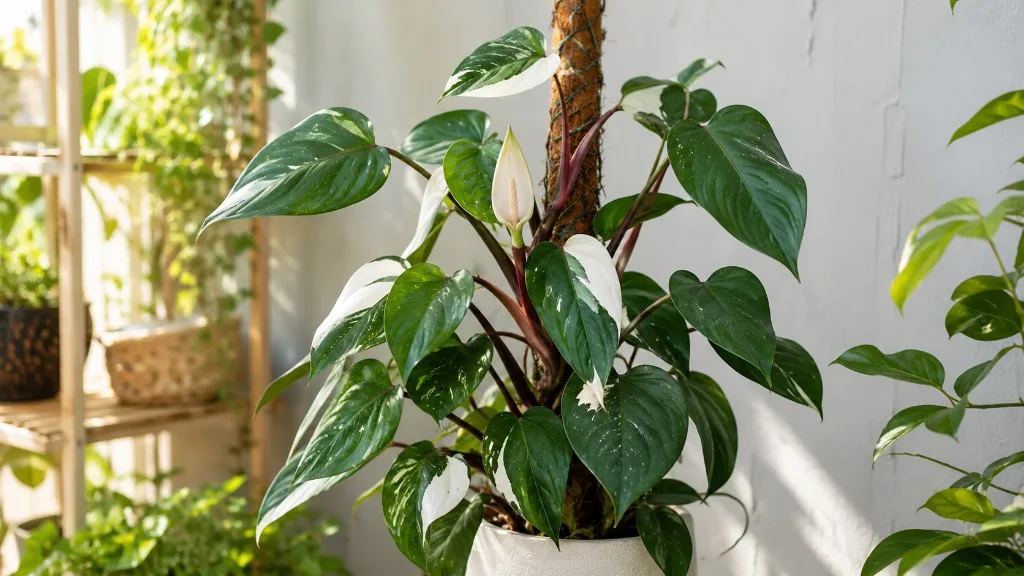
Philodendron White Knight watering fails when growers treat a slow variegated climber like a drought-tolerant pothos or a thirsty calathea. Philodendron erubescens ‘White Knight’ is a climbing aroid native to Colombia with white patches on dark stems and fragile white leaf tissue that punishes both chronic soggy mix and wild dry-wet swings. NC State lists erubescens as preferring consistently moist, well-drained soil - not wet, not desert - checked at the root zone before every drink.
SDSU Extension recommends allowing the top 3–5 cm to dry before watering philodendrons again, then soaking thoroughly. That dry-down depth is your primary signal. Calendar ranges like 7–10 days in summer and 10–14 days in winter are starting reminders to check, not rules. Light, pot size, variegation level, and chunky mix all rewrite the interval.
This guide covers check-first watering, soak-and-drain technique, seasonal tables, variegation-specific dry-down, over/under diagnostics, common mistakes, recovery, and links to the White Knight cluster.
Why White Knight Watering Depends on the Pot, Not the Calendar
White Knight is a variegated erubescens climber - slower and less thirsty than all-green heartleaf philodendron in the same pot, but less drought-tolerant than a pothos when roots are healthy. The parent species reaches roughly 3 feet tall and 16 inches wide indoors as a climbing plant; White Knight often grows more deliberately because heavily white leaves produce less photosynthetic energy.
That biology means two errors dominate: overwatering on a weekly autopilot because the plant “looks tropical,” and underwatering after overwatering when scared roots are already damaged. The fix is the same loop: check 3–5 cm depth → soak if dry → drain → wait until dry again.
Light Couples Directly to Water Use
SDSU Extension places philodendrons in bright indirect light - brighter than many beginners provide. A White Knight moved closer to a window uses water faster; the same plant in a dim corner may hold moisture twice as long. When you change light, change your check frequency before you change the watering can volume.
How Often to Water Philodendron White Knight
Use this table as a check reminder, not a pour schedule:
| Season / conditions | Typical check interval | Dry-down target |
|---|---|---|
| Active growth, bright indirect light | Every 5–7 days | Top 3–5 cm dry |
| Active growth, moderate light | Every 7–10 days | Top 3–5 cm dry |
| Cool winter, lower light | Every 10–14 days or longer | Top 3–5 cm dry |
| Recently repotted or rootbound | Irregular 2–3 weeks | Confirm at depth, not rim |
Summer heuristic: many indoor White Knight plants in 15–18 cm pots need water roughly every 7–10 days once the top 3–5 cm is dry. Winter heuristic: often 10–14 days or more - roots use less water when growth slows. A plant under grow lights through winter may stay on the summer end of the range.
Heavily variegated specimens with large white leaf sections may dry slower than a Pink Princess in the same mix - less green tissue, less transpiration. That is not permission to keep soil wetter; it is a reason to trust the finger test over a neighbor’s schedule.
The Best Soil Moisture Checks
Surface color lies on chunky aroid mix. Use at least one method every time:
Finger or knuckle test: Insert your finger 3–5 cm deep. Cool, clinging soil means wait. Dry, crumbly soil at that depth means water.
Skewer or chopstick: Push dry wood to the pot bottom. Darkening or sticking means moisture remains.
Pot weight: Lift after a fresh watering - that is your wet baseline. Noticeable lightness plus dry depth means proceed.
Judge root-zone moisture, not leaf droop alone. White Knight leaves can look slightly soft in afternoon heat even when soil is adequate.
How to Water White Knight Cleanly
- Confirm top 3–5 cm is dry and the pot feels lighter than after last watering
- Use room-temperature water; avoid cold shock on tropical roots
- Apply slowly at the soil line, not over white leaf surfaces
- Continue until water runs from drainage holes
- Empty the saucer within 30 minutes - Clemson HGIC emphasizes drainage for long-term aroid health
- If using a cachepot, lift the inner pot to drain; never leave standing runoff
Avoid daily sips that keep the surface damp while the center stays unevenly wet. One thorough soak followed by a real dry-down beats frequent shallow sprinkles.
Overwatering vs Underwatering on White Knight
| Signal | Overwatering | Underwatering |
|---|---|---|
| Soil at 3–5 cm | Wet, cool, heavy pot | Dry, light pot |
| Leaves | Yellow lower leaves; wilt despite wet soil | Curling, drooping, dry edges |
| Stems / nodes | Soft, dark nodes at soil line | Firm stems; mix shrunk from pot wall |
| White tissue | Brown patches after chronic wet feet | Crisp brown from repeated drought |
| Smell | Sour, musty mix | Neutral |
Signs You Are Watering Too Much
Watch for yellow lower leaves, soft nodes at the soil line, and overwatering-related root decline - NC State notes erubescens is sensitive to wet conditions. Wet-soil wilt - limp leaves with a heavy pot - means roots are damaged, not thirsty. Fungus gnats and soil that stays dark for a week after watering point to chronic moisture.
Overwatering is more likely with low light, no drainage hole, oversized pots, or dense peat-heavy mix. See root rot on White Knight if nodes soften.
Signs You Waited Too Long
Underwatering shows as drooping leaves, dry mix pulling from pot walls, and crisp edges on white sections after repeated dry cycles. One dry episode usually recovers after a slow, deep soak. Chronic drought damages fine roots and produces small new leaves with reduced white pattern.
Rehydrate with one full watering, drain completely, wait 24 hours before judging. Do not compensate with daily sips.
Common White Knight Watering Mistakes
- Weekly calendar watering without checking. Fix: 3–5 cm dry test every time.
- Copying Pink Princess or green erubescens schedules blindly. Fix: same parent species, different variegation - confirm your pot’s dry-down.
- Leaving cachepot runoff sitting. Fix: lift, drain, return.
- Misting white leaves instead of watering soil. Fix: base water; manage humidity separately.
- Watering immediately after buying a nursery pot. Fix: check moisture - retail mix is often wet; roots may be bound and dry unevenly.
- Interpreting wet-soil wilt as thirst. Fix: stop watering; inspect drainage and roots.
- Winter summer-frequency watering in a dim room. Fix: extend intervals when growth slows.
Recovery After Overwatering
Stop watering. Move to brighter indirect light if the plant was in shade - light helps dry-down and root recovery. Empty saucers. Let the top half of mix dry before considering another soak. If nodes soften or soil smells sour, unpot, trim mushy roots, and repot into fresh chunky aroid mix with a drainage hole.
Recovery timeline: 1–3 weeks for early cases with firm stem tissue above damage. Severe crown rot may not be reversible - prevention through check-first watering is far easier.
Seasonal Watering Changes
Spring–summer: growth and climbing extension increase water use - check more often, still wait for 3–5 cm dry-down.
Autumn: shorten intervals gradually as light drops.
Winter: reduce frequency sharply; skip fertilizer until spring unless under strong grow lights.
After Philodendron White Knight repotting guide, roots explore new mix unevenly for 2–3 weeks - check at depth, not only at the rim. After propagation rooting, newly potted cuttings need even moisture without sogginess until established - see White Knight propagation.
Pet Safety
Philodendron erubescens causes low-severity oxalate poisoning if chewed. The ASPCA lists philodendron as toxic to cats and dogs. Spilled saucer water and chewed leaves both pose risk - keep White Knight out of pet reach.
When to use this page vs other Philodendron White Knight guides
- Philodendron White Knight overview - Start here for whole-plant context before deep-diving this topic.
- Philodendron White Knight problems hub - Jump to symptom-specific fix guides when this care topic does not resolve the issue.
- Root Rot on Philodendron White Knight - Escalate here when watering adjustments are not enough.
Related Philodendron White Knight guides
- Philodendron White Knight overview
- Philodendron White Knight light
- Philodendron White Knight soil
- Philodendron White Knight propagation
- Philodendron White Knight fertilizer
- Philodendron White Knight repotting
- Root Rot on Philodendron White Knight
- Philodendron White Knight problems
Conclusion
Philodendron White Knight watering succeeds when you check the top 3–5 cm before every drink, soak and drain completely, and adjust for variegation, light, and season - not when you follow a fixed weekly app reminder. Summer often lands near 7–10 days between checks in bright rooms; winter often stretches to 10–14 days or more. Overwatering brings yellow leaves, soft nodes, and wet-soil wilt; underwatering brings crisp white edges and light pots that recover after one deep soak. Firm nodes, balanced new white-and-green leaves, and mix that cycles dry at depth mean your rhythm works.