Philodendron White Knight Repotting: When, How, and Mistakes
Philodendron White Knight Repotting: When, How, and Mistakes
Philodendron White Knight Repotting: When, How, and Mistakes
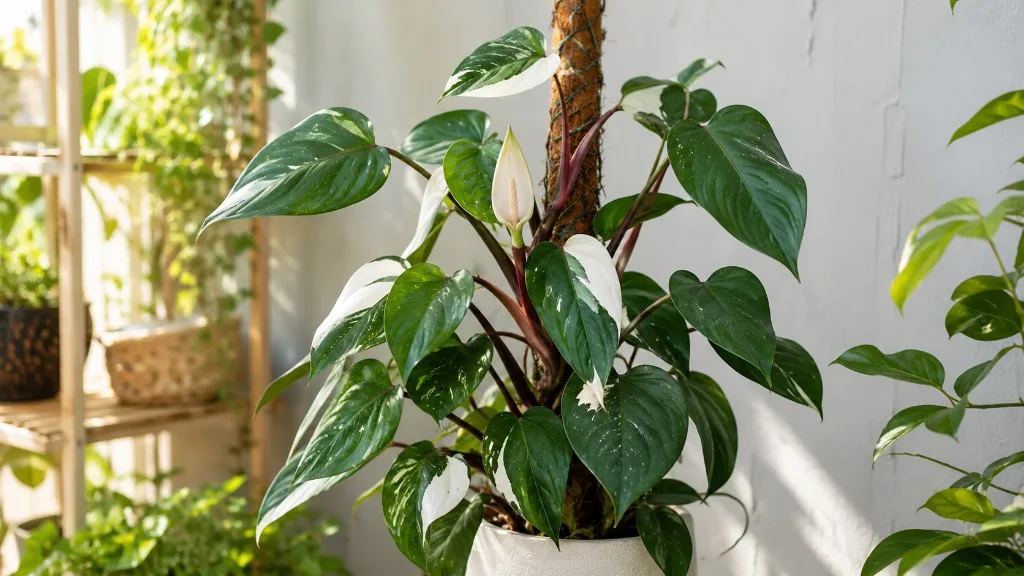
Philodendron White Knight (Philodendron erubescens ‘White Knight’) is a collector-grade climbing aroid with burgundy stems, sectoral white variegation, and a growth pace noticeably slower than plain green philodendron vines. That slower metabolism changes repotting math. White Knight tolerates being slightly tight in a pot better than a fast-growing Brasil pothos, but it punishes oversized containers and dense, stale mix far more harshly once the expensive node zone stays wet. Repotting is not a calendar ritual you perform because twelve months passed. It is the maintenance window where you inspect roots, refresh the chunky aroid mix defined on the soil guide, reset or extend the moss pole, and confirm white stem striping is still stable before new leaves unfurl.
Done in spring or early summer with a one-size-up pot and the 40/30/30 blend from the soil page, most White Knight repots are uneventful: an hour of careful work, mild wilt for a few days, and the first new variegated leaf within three to five weeks on a healthy specimen. Done in an oversized plastic pot with bare-rooted trauma during a variegation flush, the same operation can leave you staring at green reversion on new growth and a soft burgundy node that takes months to recover. This guide covers when to repot, how to handle moss poles, what mix ratios to use, step-by-step procedure, variegation diagnostics after shock, and the mistakes that turn a routine upgrade into a rescue project.
Quick Decision: Repot Now, Emergency Only, or Wait
Before you gather tools, classify the situation. White Knight rarely needs emergency intervention, but root rot on Philodendron White Knight and severe binding do not improve by waiting for a prettier calendar date.
| Situation | Action | Timing |
|---|---|---|
| Two or more root-bound signals during active growth | Routine repot - one size up, fresh 40/30/30 mix, moss pole check | Spring or early summer |
| Mushy roots, sour smell, soft node | Emergency repot - trim rot, lighter perlite-heavy mix, no fertilizer | Immediately, regardless of season |
| Single yellow leaf, variegation fade, or slight tightness only | Defer - fix light or watering first | Reassess in 4–6 weeks |
| Dense seller sphagnum within first month home | Early transition repot - move to 30/40/30 cutting blend | Within 2–4 weeks if node is firm |
| Plant pushing strong new variegated leaves | Optional deferral - repot after flush if not urgent | Next spring if roots are manageable |
When in doubt and roots are white and firm, waiting until spring costs less than repotting a stable plant in deep winter just because the pot looks small from across the room.
Why Repotting Matters for White Knight
Repotting solves three problems that eventually show up as leaf and stem symptoms if you ignore them: circling roots that cannot absorb water evenly, potting mix that has lost its airy structure and holds water too long, and salt buildup from tap water and fertilizer that damages fine root hairs. For any philodendron, stagnant wet soil is dangerous. For White Knight - often sold as a recently rooted cutting with a vulnerable node and slow variegated growth - it is the fastest route to root rot and stem-base collapse.
What fresh mix and root room fix for slow variegated climbers
Fresh mix restores air pockets perlite and orchid bark create. Extra root room lets new white root tips spread outward instead of spiraling, which directly improves the plant’s ability to take up water after each cycle described in the watering guide. You will notice the difference in pot behavior. A root-bound White Knight often stays wet at the center while the top dries fast, or dries unevenly because water channels down the pot walls without wetting the dense root mat.
A repot is also the only easy moment to inspect roots for rot - brown, mushy, sour-smelling tissue that needs trimming before it spreads. Catching rot during repot is far simpler than diagnosing it from yellow leaves alone, especially when variegated tissue naturally shows cosmetic blemishes on older leaves. NC State Extension notes that overwatering causes root rot in P. erubescens; repotting with fresh, open mix is the structural fix that watering adjustments alone cannot provide once mix has collapsed.
Heavily variegated leaves transpire less than all-green foliage because white sectors contain less chlorophyll. White Knight in the same pot size as a green heartleaf philodendron often dries more slowly - not because it wants swampy soil, but because it uses less water per week. That is why repotting into an oversized container is especially risky on this cultivar: excess soil volume stays wet long after the slow root system can use it.
Signs Your White Knight Needs Repotting
The clearest sign is visual: roots circling the bottom when you slip the plant partway out, or emerging from drainage holes. Less obvious but equally reliable signals include water that runs straight through without absorbing, a plant that wilts days after a thorough watering despite moist-looking surface mix, and growth that stalls even though light and feeding have not changed. Illinois Extension lists roots through drainage holes, roots on the soil surface, a root-filled soil mass, smaller new leaves, and wilting between normal waterings as repot indicators. When two or more appear together during active growth, repotting is usually the right move.
Do not repot simply because one leaf yellowed or variegation faded slightly. Yellowing can mean overwatering, cold drafts, or natural aging. Variegation loss can mean insufficient light before it means tight roots. Repotting a plant already stressed for unrelated reasons adds another variable. Confirm the root zone is the bottleneck before you commit.
Root-bound and drainage signals
Lift the pot and inspect the bottom first. Slide the plant out gently - if the root ball holds a perfect pot-shaped mold with little visible mix on the sides, you are looking at classic root-binding. Circling white roots at the bottom are not automatically an emergency, but they tell you the plant has been asking for space. On White Knight, the root mass can look dense relative to the thin burgundy stems above, which is why checking the bottom matters more than judging by leaf count alone.
Fast drainage after watering sounds healthy until you realize water is bypassing a hydrophobic center. If the pot feels light again within an hour of a thorough soak, the mix may be spent. Slow drainage combined with sour smell or a soft node points to rot requiring immediate attention. A white crust on the soil surface often signals salt buildup - SDSU Extension recommends replacing philodendron soil every two years to reduce salt and chemical buildup in containers.
Best Time of Year to Repot
Timing matters because White Knight recovers fastest when it is already geared for growth. Spring through early summer is the safest window for most indoor growers, when Illinois Extension recommends repotting during active growth. Rising temperatures and lengthening days trigger root development, so the plant can colonize fresh mix before winter slowdown. Repot on a mild day, keep ordinary indoor warmth between 65 and 85°F (18–29°C) as NC State specifies for P. erubescens, and provide bright indirect light - not direct sun on freshly disturbed roots.
Spring and early summer windows
During active growth, White Knight can start showing new turgid leaves within two to four weeks after a well-executed repot - a working heuristic for warm, bright homes, not a guarantee. Roots begin exploring fresh mix almost immediately if temperatures are stable and the soil stays evenly moist but not soggy. This is also the best time to combine repotting with propagation if you plan to take a cutting from a node with strong white striping, because the parent vine has energy to branch after the move.
If you missed spring, early summer is still workable. Avoid repotting during the hottest week if your home lacks air conditioning and the plant sits in a sun-adjacent window. Heat plus transplant stress can produce more wilting than the same repot in moderate conditions.
When winter repotting is still justified
Winter repotting is a backup plan, not a default. Growth slows, days are short, and a disturbed root system sits in wet mix longer because the slow variegated plant is not pulling water actively. Skip winter repotting if the plant is merely slightly tight but still producing occasional new leaves and watering normally.
Repot in winter only when delay would clearly harm the plant: severe root-binding with repeated wilting, active root rot requiring trimming and fresh mix, or a pot that has cracked. If you must repot then, use a modest size increase, keep temperatures above roughly 18°C (65°F), provide bright indirect light, and water more cautiously - let the top 3–5 cm dry further between waterings until new growth appears, matching the dry-down rhythm on the watering guide.
Choosing the Right Pot Size and Material
The safe rule for White Knight: go up only 2–5 cm (1–2 inches) in diameter - one nursery pot size, not two. A 12 cm (4.7-inch) nursery pot moves to 15 cm (6 inches), not 20 cm. Jumping larger holds excess moisture around a small root system and commonly leads to rot or prolonged wilting before roots colonize the new volume. Iowa State Extension notes philodendrons do well slightly pot-bound because soil dries more quickly; the goal is relief from binding, not a mansion.
Every pot needs a drainage hole. Decorative cachepots without drainage cause standing water at the bottom even when the top inch looks fine. Water at the sink, drain fully, then return the nursery pot to any cover pot.
Terracotta vs plastic after upsize
Terracotta breathes through porous walls and helps excess moisture exit faster - useful if your home runs humid or you tend to water generously after repot. Expect the pot to dry one to two days faster than plastic in the same conditions, and adjust the watering check accordingly.
Plastic retains moisture longer, which can help in dry, bright rooms but increases rot risk after upsize if you do not reduce water volume. After any repot into fresh mix, the root zone holds more water than before even at the same pot diameter; adding a larger plastic pot compounds that effect. Many collectors use plastic nursery pots inside cover pots for flexibility and monitor dry-down with finger tests rather than calendar rules.
Soil Mix for Repotting White Knight
Stop guessing at “chunky aroid mix.” For an established White Knight in a four- to six-inch pot, use the 40/30/30 blend from the soil guide:
| Component | Percentage | Role |
|---|---|---|
| Quality indoor potting mix | 40% | Base organic matter |
| Perlite or pumice | 30% | Drainage and air pockets |
| Medium orchid bark | 30% | Chunk structure for epiphytic roots |
Target pH 5.5–6.5 and a texture like coarse granola - not mud. Recently rooted cuttings still toughening roots benefit from a more open 30/40/30 blend until the next repot. Do not reuse old mix, which loses structure and may carry pathogens. Do not repot into plain bagged indoor soil without perlite and bark amendment; Iowa State Extension warns philodendrons should not sit in soggy soils or saucers of standing water, and dense peat-heavy mix makes that outcome likely indoors.
Pre-moisten blend slightly before potting so dry peat does not repel the first watering. If you are transitioning from dense seller sphagnum within the first month home, see the soil guide’s propagation-medium section rather than jumping straight to the mature 40/30/30 ratio on a fragile node.
Moss Pole and Stake Reset During Repot
White Knight is a climbing erubescens cultivar. NC State Extension describes P. erubescens as a climber that indoors can grow on a moss pole or trellis. Indoors, a moss pole or coir totem encourages larger leaves and gives aerial roots a target - the same support structure you should install or reset during repot, not by shoving a thick pole into an established root ball mid-cycle.
The correct time to add or extend a moss pole is during repot, when the root ball is out and you can seat the pole in the bottom of the empty pot without severing half the root system. Place the pole firmly in the new container before positioning the plant. Orient the stem so aerial roots face the moss. Fill with mix while tapping the pot sides to settle medium around roots and the pole base - firm enough for stability, not packed so tight that air pockets disappear.
If the existing pole is shorter than the vine, add an extension during this repot rather than forcing the plant to lean. Secure the stem with soft ties or velcro plant tape; do not cinch burgundy tissue tightly enough to scar. Keep moss lightly moist, not soaking wet - a sodden pole in a fresh repot slows root-zone dry-down. For long-term climbing behavior and larger foliage, see the overview guide placement notes on bright indirect light paired with support.
Step-by-Step: How to Repot Without Shock
Worked example: A White Knight in a 12 cm nursery pot shows circling roots and fast post-watering dry-down in early April. You upsize to 15 cm, refresh 40/30/30 mix, reposition the moss pole one node higher, and see mild wilt on days 3–5. The first new white-striped leaf appears around week 4 - a typical recovery arc in a warm, bright home, not a promise for every specimen.
Follow these steps in order:
- Water lightly the day before so the root ball holds together but is not soggy. Dry, brittle roots snap; waterlogged roots tear.
- Prepare the new pot with drainage hole, pre-moistened 40/30/30 mix, moss pole seated if needed, and clean scissors nearby.
- Remove the plant by tipping the pot and supporting the base. Never pull by variegated leaves - white tissue tears easily.
- Inspect roots. White and firm is healthy. Trim brown or mushy roots back to clean tissue with sterilized scissors. Remove only circling roots at the bottom and sides; do not bare-root unless rescuing rot.
- Check the node zone. The burgundy stem base should feel firm. Soft tissue means rot - trim, repot shallower in perlite-heavier mix, and improve light before fertilizing.
- Position in the new pot one size up, at the same soil line as before. Illinois Extension warns to replant at the same depth - burying the node deeper invites stem rot on erubescens types.
- Fill around the root ball in stages, tapping the pot to settle mix without compacting. Attach the stem to the moss pole with soft ties.
- Water once lightly to settle medium - enough to moisten, not a full soak that saturates an oversized fresh volume.
- Place in bright indirect light, out of direct sun for 7–10 days. Avoid fertilizing for at least one month while roots re-establish.
- Monitor stem color and new leaf size weekly. Stable white striping on new burgundy stems is the best recovery signal; uniformly smaller, greener leaves suggest ongoing stress - hold water, confirm light, and wait before any second intervention.
Mild wilting or a brief growth pause for 1–2 weeks is normal transplant shock. Full root re-establishment commonly takes 4–6 weeks in warm indoor conditions - label that as a home-climate heuristic, not laboratory data. New growth in expected size and variegation pattern means the repot succeeded; damaged old leaves will not revert to perfect white, but new foliage tells the truth.
Variegation and Stem Color After Repot
White Knight variegation lives in both leaves and burgundy stems with white striping. After repot shock, watch new growth, not old cosmetic blemishes. Stable white sectors on new stems and balanced green-and-white leaf patterns mean the plant is recovering. Temporary smaller leaves or slightly muted white are common in the first flush after disturbance - especially if you repotted during an active growth spurt.
Green reversion on several consecutive new leaves - solid green stems where white striping existed before - can signal stress from low light, oversize pot rot, or repotting combined with other changes (new window, fertilizer, pruning) stacked in the same week. Fix one variable at a time. Move to brighter indirect light if variegation was fading before repot; do not chase whiteness with direct sun that browns pale tissue.
Repotting during an aggressive variegation flush can stress patterning temporarily. If roots are healthy and the plant is not root-bound, deferring until the flush finishes is reasonable. If roots are circling and mix is sour, repot anyway - chronic binding hurts more than a week of mild pattern instability. Do not repot solely because variegation faded; confirm roots and light first, as the overview notes on controlled brightness over maximum sun.
Unlike Pink Princess, which shows pink sectoral splashes on dark leaves, White Knight diagnostics lean on stem striping stability and node firmness. A soft node after repot is always more urgent than a leaf with browned white tips.
Common Repotting Mistakes and Recovery
Two mistakes dominate White Knight repot failures: jumping to a much larger pot, and disturbing the root ball more than necessary. Both produce weeks of limp stems, lost leaves, and - on variegated cultivars - green reversion on new growth while roots struggle in wet, under-colonized soil.
Too-large pot and bare-rooting errors
A large pot holds moisture the small root system cannot use. The result is often root rot before the plant fills the new space. One pot size up is the safe rule. If you already overshot, stop heavy watering, confirm drainage, and let the top third of mix dry fully between cautious drinks until white root tips appear at the pot edge.
Bare-rooting strips fine root hairs that absorb water and nutrients. Keep some original mix around the root ball when you repot and tease only the bottom and sides to remove circling roots. Full bare-rooting is reserved for rot rescue, not routine upgrades. Recovery from bare-root shock on slow White Knight can exceed six weeks - longer than the same operation on a fast green philodendron.
Other common errors: fertilizing immediately after repot (wait at least one month), repotting because of unrelated yellow leaves (fix watering first), stacking repot + propagation + light move in one weekend, and reusing compacted old mix. If several leaves drop but the node stays firm and new roots are white after inspection, patience and stable bright indirect light usually outperform another repot within the same month.
Pet Safety During Repot
White Knight contains insoluble calcium oxalate crystals that irritate mouth and stomach tissue if chewed or ingested, as ASPCA documents for philodendron species. Repotting is messy - soil, trimmed roots, and sap on hands - which increases the chance pets investigate the work area.
Repot on a table pets cannot reach. Bag trimmed roots and old mix immediately. Wash hands before handling animals. Wipe sap from tools and surfaces. If a pet chews foliage or soil during or after repot, contact your veterinarian with the plant identification and symptoms - oral irritation, drooling, or difficulty swallowing. The plant is toxic to cats and dogs per ASPCA; keep it out of reach on shelves or moss-pole setups away from jumping surfaces.
Conclusion
White Knight repotting succeeds when you treat it as a climbing, slow variegated erubescens - not a generic philodendron on autopilot. Repot in spring or early summer when two or more root-bound signals align, move up only 2–5 cm, fill with the 40/30/30 chunky mix from the soil guide, reset the moss pole while the root ball is free, and read recovery on new stem striping and leaf size rather than old cosmetic damage. Hold fertilizer for a month, water lightly until roots colonize fresh volume, and defer repot when yellow leaves or variegation fade are clearly light or watering problems instead of root congestion. One careful repot beats three panic interventions stacked in a stressed month.
When to use this page vs other Philodendron White Knight guides
- Philodendron White Knight overview - Start here for whole-plant context before deep-diving this topic.
- Philodendron White Knight problems hub - Jump to symptom-specific fix guides when this care topic does not resolve the issue.
- Root Rot on Philodendron White Knight - Escalate here when repotting adjustments are not enough.