How to Propagate Philodendron White Knight: Node Cuttings
How to Propagate Philodendron White Knight: Node Cuttings Guide
How to Propagate Philodendron White Knight: Node Cuttings Guide
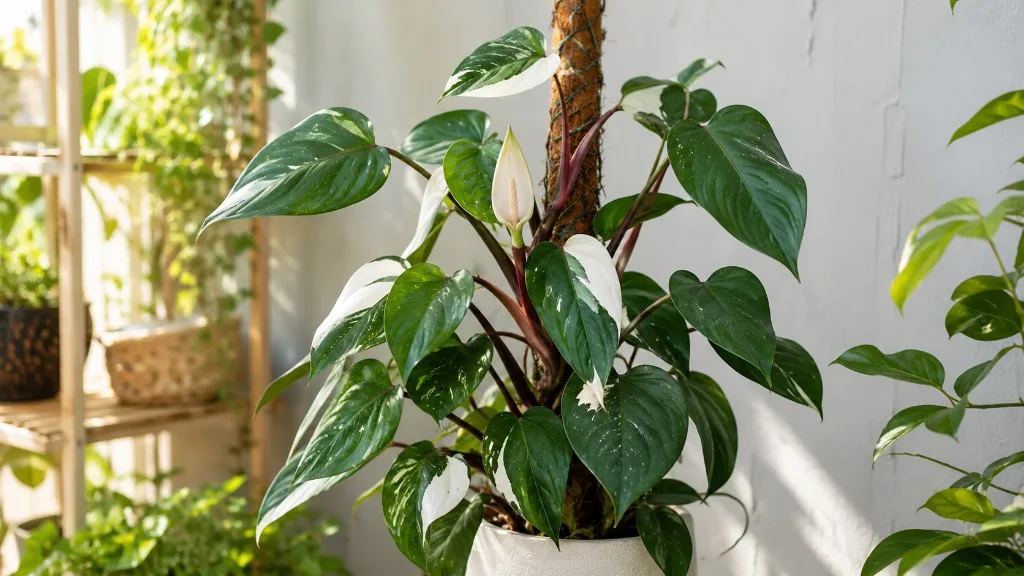
Philodendron White Knight propagation succeeds or fails at the node - the swollen joint on a burgundy-purple stem where leaves attach and adventitious roots can emerge. White Knight is a variegated Philodendron erubescens climbing cultivar, not a self-heading philodendron and not a velvet-leaved species. The standard home method is stem cuttings with at least one node, rooted in water, moist sphagnum moss, or a perlite-heavy aroid mix. Iowa State University Extension notes that trailing philodendron stem sections 3 to 6 inches long with lower leaves removed readily root in water or perlite, while NC State Extension lists stem cutting as the recommended propagation strategy for P. erubescens. What makes White Knight harder than a plain green heartleaf philodendron is not the rooting mechanics - it is chimeric variegation: cloned offspring inherit the parent’s tendency toward white-and-green patterning, but individual new leaves can still revert toward solid green or overly white tissue depending on which stem you cut and how stable the meristem layers are.
This guide walks through parent-stem selection on burgundy stems, three rooting methods, humidity-box setup, the 2–6 week rooting window most growers see indoors, water-to-soil transition at 2–5 cm (roughly 1–2 inches) of root length, and realistic variegation expectations after the first few new leaves. If you need the full mature-plant context first, start with the Philodendron White Knight overview - this page goes deeper on procedure alone.
Why White Knight Propagation Starts With Nodes, Not Leaves
The most expensive beginner mistake on collector philodendrons is placing a detached leaf - even a spectacular half-moon white leaf - in water and waiting for a plant that never arrives. Aroids root from stem nodes, not from leaf blades alone. Illinois Extension defines a node as the point where a leaf emerges, sometimes visible as a bump or raised ring on the stem. On White Knight, that bump sits on dark burgundy to purple-red petioles and stems with white longitudinal striping. Cut just below the node so the submerged or buried zone includes living stem tissue capable of producing roots and, eventually, a new shoot.
Each cutting needs at least one node and one healthy leaf for most home setups; many growers prefer two nodes on slow variegated climbers because the second node provides backup if the first fails. UF/IFAS plant propagation education modules explain why leaf cuttings fail for chimeral variegated cultivars: new shoots regenerate from deeper meristem layers that may not carry the same color pattern as the parent leaf surface. For White Knight, treat stem cuttings as the only reliable route - not leaf propagation, not division of a single stem unless you deliberately separate rooted offsets from a multi-stem retail pot.
Climbing Erubescens Anatomy on Burgundy Stems
Philodendron erubescens is a climbing tropical vine in the Araceae family, native to Colombia, where it clings to trees in rainforest understory. Indoors, NC State Extension describes typical houseplant dimensions around 3 feet tall and 16 inches wide, though a supported White Knight on a moss pole can exceed that over years. The species prefers partial shade, high humidity, moist well-drained organic soil, and temperatures between 65 and 85°F (18–29°C) - the same comfort band that supports rooting cuttings.
White Knight differs from the species type in sectoral white variegation on leaves and burgundy stems with white striping. Before you propagate mislabeled stock, verify stem color: White Wizard has green stems with white striping and no burgundy; White Princess shows pink or rosy stem tones alongside white markings. Leaf pattern alone is unreliable because all three cultivars can produce similar green-and-white foliage. Propagate only after you confirm burgundy-purple stem striping consistent with White Knight.
Chimeric Variegation and What Clones Inherit
White Knight’s white patches reflect chimeric tissue - meristems with genetically distinct cell layers, as described in UF/IFAS genetic selection modules on chimeras. Variegated leaves often result when a colorless layer shows through at margins or sectors while green layers photosynthesize elsewhere. Chimeral reversion is common: variegated plants can produce all-green shoots (more vigorous, less chlorophyll-limited) or overly white shoots (weak, slow). Stem cuttings preserve meristem structure better than leaves, but each clone still expresses variegation imperfectly - expect similar striping tendency, not a photocopy of every future leaf.
Propagate from stems showing repeatable burgundy-white patterning across several nodes, not from the single whitest leaf on the plant. Avoid reverting solid-green shoots unless you accept green offspring. The best long-term White Knight is not the whitest specimen; it is the one that keeps growing balanced variegation - the same principle covered in the pruning guide when you trim reversion on the parent.
Choosing Water, Sphagnum Moss, or Perlite Mix
All three methods work for erubescens-type node cuttings. Your choice depends on how you like to monitor progress and how soon you need a potted plant.
| Factor | Water | Sphagnum moss | Perlite-heavy mix |
|---|---|---|---|
| Root visibility | Excellent | Good if using clear cup | Limited |
| Typical indoor timeline | Often 2–4 weeks | Often 2–5 weeks | Often 3–6 weeks |
| Rot risk | Stale water, submerged leaves | Staying soggy without airflow | Oversaturated compacted mix |
| Transition to final pot | Required | Moderate | Minimal |
| Best for | Beginners, wet sticks, visual checks | Collector cuttings, humidity lovers | Direct potting, multiple cuttings |
| Supplies | Jar, fresh water | Moss, clear box or cup | Perlite + pot with drainage |
Water is the fastest feedback loop and the standard route for wet sticks (node-only imports still establishing roots). Sphagnum moss balances moisture and oxygen - common in collector propagation because burgundy stems stay firm without sitting in anaerobic mud. Perlite-heavy aroid mix - aligned with the soil guide profile of potting mix, perlite, and orchid bark - roots cuttings closer to long-term conditions but hides progress until you gently inspect or feel resistance.
Best Time to Propagate Philodendron White Knight
Root fastest when the parent plant is actively growing - typically spring through early summer in temperate homes, whenever you see firm new leaves unfurling and stems are turgid rather than limp. Illinois Extension recommends stem cuttings during active growth in spring or summer, though success is possible year-round if light and warmth stay stable. Avoid taking material immediately after shipping, mid–root rot on Philodendron White Knight recovery, or during obvious pest outbreaks.
White Knight’s variegated tissue grows slower than plain green philodendron vines because pale sections produce less chlorophyll. Cool rooms below 18°C (65°F) or dim corners stretch rooting toward the six-week end of the range even when the calendar says summer. Match propagation timing to plant readiness, not a holiday weekend project. If the parent recently had watering stress or light shock, wait until new growth looks normal before cutting.
Tools, Materials, and Safety During Cutting
Gather supplies before you cut so wounds do not dehydrate on the counter.
Cutting tools: Sharp bypass pruners or a razor - disinfected with 70% isopropyl alcohol between plants if pests or rot have been present.
Containers: Clear jars for water; small pots with drainage for moss and perlite; optional clear propagation box or humidity dome.
Media: Fresh room-temperature water; long-fiber sphagnum moistened like a wrung sponge; perlite or perlite-heavy aroid mix pre-moistened.
Labels: Date and method - variegated batches look identical for weeks.
Safety: Philodendron species contain calcium oxalate crystals. NC State lists contact dermatitis from sap and oral irritation if ingested. Iowa State Extension warns philodendrons are poisonous to humans, dogs, and cats, causing mouth pain, drooling, vomiting, and difficult swallowing. Wear gloves if sap irritates your skin; wash hands after handling cut stems; keep jars and trimmings away from pets and children. The ASPCA classifies philodendron as toxic to cats and dogs - propagation trimmings belong in the trash, not on a floor where a curious pet can chew them.
Selecting the Best Parent Stem Before You Cut
Start with a healthy parent pushing clean growth - not a rescue project unless you deliberately take only the firmest unaffected section. White Knight cuttings from stressed vines root slowly, revert faster, or rot at the node when energy reserves are depleted.
Walk the plant stem-by-stem before blades touch tissue. Prefer vines with firm burgundy stems, one or two recently hardened leaves, and visible white striping on the stem itself - not only on a single dramatic leaf. Include aerial roots at a node when present; Iowa State Extension notes stem sections with aerial roots tend to root more reliably.
Stable Burgundy-White Striping Versus Reverting Tissue
Stable parent material shows mixed green-and-white leaves and repeatable white streaks on burgundy stems across multiple nodes - evidence the chimera is expressing consistently, not on its last white leaf before reverting. Reverting tissue is mostly solid green for several growth cycles, often with faster internode spacing and weaker stem striping; cuttings from that tissue usually produce green offspring, which defeats the purpose of propagating White Knight.
Over-white tissue - leaves that are mostly white with little green - photosynthesizes poorly and roots slowly. Do not choose the whitest leaf on the plant; choose the best-balanced stem. If the parent shows mixed reverting and stable shoots, propagate only from stable sections and prune reverting stems on the mother plant separately.
Preparing Node Cuttings Step by Step
Step 1 - Plan each cutting. Decide water, moss, or perlite before cutting. Aim for 10–15 cm (4–6 inches) of stem with one or two nodes on the portion you will submerge or bury, plus at least one healthy leaf above.
Step 2 - Cut below the node. Slice just beneath the lowest node you intend to root, one clean pass without crushing burgundy tissue.
Step 3 - Strip lower leaves. Remove any leaf or sheath that would sit underwater or underground. Only the node zone and stem should contact moisture.
Step 4 - Confirm orientation. The node must sit in the rooting zone. A leaf pointing upward with the node submerged is correct; an upside-down stick with no node in water is not.
Step 5 - Optional rooting hormone. Iowa State Extension lists rooting hormone as optional for perlite propagation; erubescens cuttings often root without it in warm bright conditions. Hormone may help marginally in cool rooms - not required in clean water setups.
Step 6 - Insert immediately. Place in water, moss, or mix within minutes. Delay increases dehydration and contamination on slow variegated tissue.
Method 1: Rooting White Knight Cuttings in Water
Water propagation is the most visible method and the default for wet sticks still establishing their first roots.
Fill a clear jar with fresh room-temperature water. Submerge at least one node fully while keeping all leaves above the waterline. Set the jar in bright, indirect light - the same band White Knight prefers in mature light care - not direct sun that overheats the water and bleaches white leaf sections.
Change water when it looks cloudy or smells stale, or every three to seven days as a routine. Remove any leaf that drops into the water immediately. Multiple cuttings can share one wide jar if nodes stay submerged and stems do not crush each other.
Under warm bright conditions, expect visible root initials in about two weeks, with transplant-ready roots often forming in two to four weeks - the middle of the 2–6 week range White Knight growers commonly report. Variegated cuttings can sit at the slower end. Do not fertilize water; salts burn tissue before roots function.
When roots reach 2–5 cm (about 1–2 inches), move to soil - waiting until water roots grow excessively long makes the transition harder because aquatic roots are fragile and structurally different from soil roots.
Method 2: Rooting in Sphagnum Moss
Sphagnum balances moisture and oxygen - valuable for slow-rooting variegated cuttings that rot in stagnant water or dense soil.
Moisten long-fiber sphagnum until it feels like a wrung-out sponge - damp throughout, not dripping. Pack lightly around the node in a small clear cup or propagation box. Bury at least one node; keep leaves above the moss line. Cover with a clear lid or bag supported so plastic does not touch foliage, mimicking the humidity White Knight evolved with in Colombian understory.
Open the cover briefly each day to exchange air and prevent mold - the same venting discipline described in overview propagation practice. Keep moss consistently moist, never waterlogged mud. Roots typically form in two to five weeks depending on warmth and node vigor.
When roots bind the moss lightly and reach 2–5 cm, pot into chunky aroid mix in a small container with drainage. Tease moss away gently rather than ripping roots.
Method 3: Rooting in Perlite-Heavy Aroid Mix
Direct-to-mix propagation skips a water transition and suits growers who want cuttings in individual pots from day one.
Fill a small pot with pre-moistened perlite or a perlite-heavy aroid blend matching mature soil recommendations. Use a pencil to make a planting hole; insert the cutting so one or two nodes sit below the surface without burying leaves. Firm mix lightly for stability without excluding air.
Water once to settle, then maintain even dampness - like a wrung sponge - never saturated anaerobic mud. A clear humidity dome or bag reduces wilting the first week; vent daily. Illinois Extension advises bright light without direct sun and a plastic cover to keep humidity high during stem rooting.
Check progress after three to four weeks with a gentle upward tug - resistance suggests anchoring roots. No resistance is not immediate failure if the stem stays firm. Expect three to six weeks for strong roots on variegated erubescens cuttings in mix, often slower than water in the same room.
Building the Right Rooting Environment
Roots respond to warmth, bright indirect light, oxygen, and stable moisture more than to brand-name additives.
Humidity Box Protocol and Daily Venting
A propagation box - clear storage tub or specialized case - holds multiple White Knight cuttings at 55–70% relative humidity without drowning stems. Place cuttings in jars, moss cups, or small pots inside; close the lid; set the box in bright indirect light. Vent daily for one to two minutes to prevent mold on burgundy stems and white leaf tissue. Condensation coating every surface means the box is too sealed or too warm - crack the lid longer.
Keep ambient temperatures above 18°C (65°F) and ideally 21–27°C (70–80°F) for fastest rooting. Bottom heat helps in cool rooms if it does not overheat water jars - measure water temperature, not just air. Grouping cuttings raises local humidity modestly; avoid placing boxes on radiators or drafty window sills that swing temperature daily.
Transplanting Rooted Cuttings Into Soil
Moving water- or moss-rooted White Knight to soil is where many projects fail - not from absent roots, but from oversized pots and oversaturated mix after transplant.
Use a small pot with drainage - often 9–10 cm (3.5–4 inches) for a single cutting - filled with chunky aroid mix. Make a hole, guide roots naturally without cramming, and bury the node that was submerged. Water once to settle, then allow the top 2–3 cm to approach dryness before the next drink - gentler than a mature plant but still airy. See the repotting guide for pot sizing logic when the seedling outgrows its first container.
Hold fertilizer until new leaves open - usually two to four weeks after transplant. Early salts burn limited roots. Expect mild wilt for a few days after water-to-soil moves; persistent collapse usually means too much water in too large a pot.
Aftercare During and After Rooting
During rooting, stability beats interference. Do not pull cuttings daily for photos. Do not add fertilizer to water or moss. For water jars, cleanliness matters; for moss and perlite, consistent dampness without sogginess matters more than a rigid calendar.
After transplant, treat seedlings like gentler versions of the parent: bright indirect light per the light guide, humidity toward 55–70% when practical, and watering that follows pot dry-down per the watering guide. Add a moss pole or coco support early if you want larger leaves - climbing erubescens types produce bigger foliage when aerial roots attach.
Pinch or trim once the plant is rooted and pushing new burgundy stems if you want bushier growth rather than one long runner. Multiple rooted cuttings in one pot create a fuller display faster - useful when replacing a leggy parent.
Variegation Expectations in Propagated Offspring
A successful White Knight propagation produces a genetic clone of the parent stem - same species, same cultivar tendency - but not a guarantee on every future leaf. UF/IFAS chimeral reversion guidance applies: expect occasional all-green shoots (prune them if you want to preserve variegation) or weak overly white leaves (reduce stress, avoid hard pruning until balance returns).
Assess variegation only after two or three new leaves on the rooted cutting - the first leaf after rooting sometimes looks atypical while the meristem stabilizes. Burgundy stem striping on new growth is as important as leaf white patches; stems reverting to plain green often precede green foliage. If offspring drift from the parent’s pattern, compare light and fertilizer against cluster guides before assuming propagation failed genetically.
Common Propagation Problems and Recovery
Most failures trace to missing nodes, submerged leaves, stale water, cold, or oversaturated mix - not to White Knight being impossible.
Black mushy node in water: Rot from weak tissue or stagnant water. Discard mushy sections, recut to firm burgundy stem above the next node if enough material remains, clean the jar, restart. Switch to moss or perlite if water rot repeats.
Green stem, no roots for many weeks: Often no node submerged, internodal stem underwater, or environment too cold and dim. Confirm a node sits below the waterline; move to warmer brighter location before declaring failure.
Wilting with firm stem: Low humidity or too much leaf surface for root mass. Vent humidity boxes less aggressively if mold is absent; move away from dry heat vents.
Mold on moss or stems: Reduce enclosure time, vent daily, avoid soggy moss. Remove affected surface moss; keep firm nodes.
Roots in water but collapse after potting: Classic overwatering in an oversized pot. Repot into smaller container with airy mix; water lightly until new growth resumes.
When rot and wilting coincide, start fresh from healthy parent tissue rather than nursing a slimy stem for months.
When Not to Propagate White Knight
Do not propagate as a first response to every problem. Active root rot, pest infestations, severe dehydration, or post-shipping collapse on the parent need stabilization first - or take only clearly clean material from unaffected stems.
Skip propagation from mostly reverting green shoots if you want White Knight offspring. Avoid cutting during active reversion cleanup until you have identified stable tissue. Wet sticks with soft nodes need rescue rooting in moss or water, not immediate dense soil - but a mushy node is rot, not a propagation delay.
Propagation is a backup plan and a sharing tool - not a cure for bad watering, light, or pest conditions on the parent.
When to use this page vs other Philodendron White Knight guides
- Philodendron White Knight overview - Start here for whole-plant context before deep-diving this topic.
- Philodendron White Knight problems hub - Jump to symptom-specific fix guides when this care topic does not resolve the issue.
Related Philodendron White Knight guides
- Philodendron White Knight overview
- Philodendron White Knight watering
- Philodendron White Knight light
- Philodendron White Knight soil
- Philodendron White Knight fertilizer
- Philodendron White Knight repotting
- Philodendron White Knight problems
Conclusion
Propagating Philodendron White Knight comes down to burgundy-stem node cuttings from stable parent material, rooted in water, sphagnum moss, or perlite-heavy mix under bright indirect light and warm, vented humidity. Expect roots in roughly two to six weeks, pot up at 2–5 cm of root length into chunky aroid mix, and assess variegation on new stem striping and leaves - not on the first leaf alone. Chimeric clones inherit tendency, not perfection; choose stems with repeatable white-on-burgundy patterning, keep sap and trimmings away from pets, and treat rot or reversion early rather than hoping passive waiting fixes bad material. Master node placement, clean moisture, and patient aftercare, and White Knight propagation becomes a reliable collector skill instead of a lottery on a pretty leaf.