How to Prune Philodendron White Knight: Nodes, Timing &
How to Prune Philodendron White Knight: Nodes, Timing & Limits
How to Prune Philodendron White Knight: Nodes, Timing & Limits
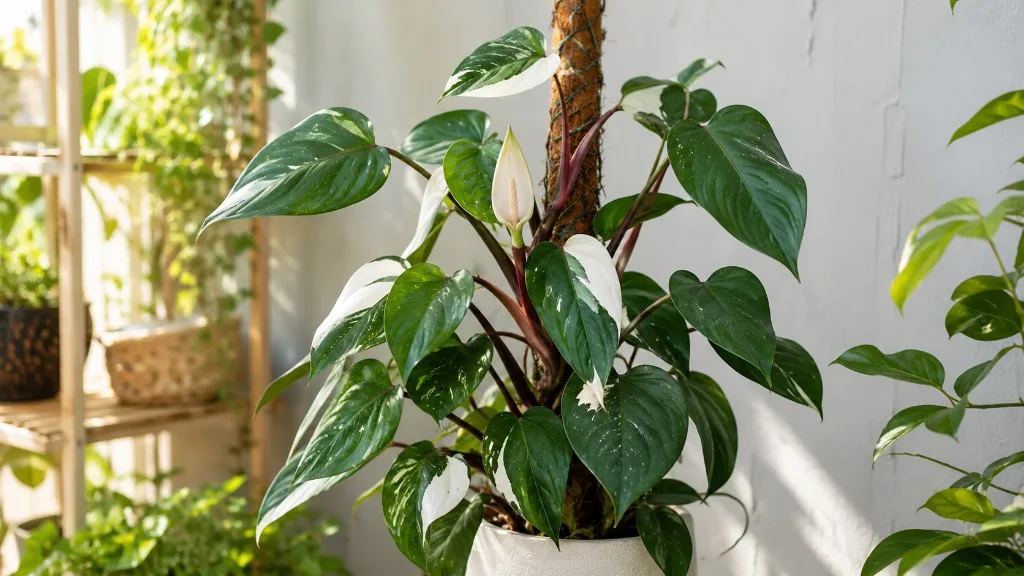
Philodendron White Knight (Philodendron erubescens ‘White Knight’) is a slow, variegated climbing erubescens where white patches on dark stems look stunning but cost the plant energy. Start by removing only dead, brown, or collapsed leaves at the petiole base with clean scissors - that is the one safe cut any time, before you decide whether structural or variegation pruning is needed. White tissue browns easily and cannot recover; green reverted stems and leggy vines come second, and only when the plant is actively growing with firm nodes and Philodendron White Knight light guide.
NC State Extension describes P. erubescens as a climbing tropical vine that branches from nodes when the terminal bud is removed. White Knight follows that pattern, but variegated tissue photosynthesizes less than green tissue, so recovery takes longer than on plain green pothos or heartleaf philodendron. Pruning shapes the vine, redirects energy away from reverted sections, and produces cuttings - yet it cannot replace adequate light for holding white variegation.
Wear gloves when cutting. ASPCA lists philodendron as toxic to cats and dogs because of calcium oxalate crystals in the sap.
What Pruning Does for White Knight
Pruning serves four distinct jobs on this cultivar:
- Sanitation - remove brown, collapsed, or pest-damaged white sections that will not green up
- Reversion control - cut back stems producing consecutive all-green leaves toward nodes that previously showed balanced variegation
- Shape and bushiness - shorten leggy vines above nodes so lateral buds activate and the base fills in on a moss pole or trellis
- Propagation - harvest stem sections with stable white-and-green pattern for rooting
Pruning does not guarantee whiter leaves on the next unfurl. Genetics, light, and the node you cut from determine the next leaf - scissors only redirect which growth point activates.
What to Check Before You Cut
Walk the vine stem by stem before touching structure.
Reading Variegation on the Stem
Trace each vine from the newest leaf backward. Note whether the last three to five leaves show balanced white-and-green patterning, mostly green (reversion), or mostly white (low chlorophyll stress). Check the stem itself - White Knight often shows white streaking on dark purple-brown petioles and internodes when variegation is stable. A stem with white markings on the stem and balanced leaves is a better anchor point than a single dramatic half-moon leaf followed by all-green growth.
Variegation is carried through nodes, not individual leaves alone. Cutting back to a node that previously produced good patterning gives the best odds of balanced regrowth - not a certainty, but the only pruning lever you have.
Signs the Plant Is Not Ready
Delay structural cuts when you see:
- A soft node or stalled unfurling spear on a recently purchased cutting
- Mostly white new leaves on a stressed plant - hard pruning removes the little photosynthetic tissue left
- Recent Philodendron White Knight repotting guide within the last two to three weeks on an unsettled root system
- Yellowing across multiple leaves from overwatering - fix moisture and light before cutting live tissue
Emergency removal of fully brown or mushy leaves is still fine; hold back on shortening healthy vines until the plant stabilizes.
When to Prune White Knight
Dead or damaged leaves: any time, as the first action.
Reversion removal and leggy vine cutbacks: late spring through early summer when the plant is in active growth indoors. NC State Extension philodendron guidance notes spring as the best season for repotting and propagation - the same active-growth window supports clean recovery after node cuts.
Light maintenance tip-pinching: mid to late summer on established specimens with firm growth.
Avoid heavy pruning in low winter light or on newly rooted cuttings still establishing in dense propagation medium. White Knight cuttings are often sold before they are truly settled; the first trouble sign is a soft node, not cosmetic browning on old white tissue.
Where to Cut - Node Placement
Nodes are the swollen points where leaves and aerial roots attach. On climbing erubescens types, new shoots emerge from buds at or just below the node when the tip is removed.
Cut 6–10 mm above the node at a slight angle with sharp, sterilized pruners. Wipe blades with rubbing alcohol between stems, especially if any leaf spot or rot is present. NC State Extension stem-cutting guidance stresses clean tools to prevent disease transfer between cuts.
Never cut mid-internode. A stub without a node dies back without activating lateral growth - you lose length and gain nothing.
For reversion, trace the all-green stem to where it joins variegated growth or to the last node that produced a leaf with visible white patterning. Cut above that node, keeping variegated stems intact.
For bushiness, shorten long vines to a node two-thirds of the way back toward the pot. Multiple moderate cuts across sessions beat one drastic chop on a slow variegated plant.
How to Prune White Knight Step by Step
- Inspect the last five leaves on each stem for variegation trend and stem markings.
- Sterilize pruners; put on gloves; keep pets away from cut material.
- Remove fully brown, collapsed, or pest-damaged leaves at the petiole base - no node cut needed for single leaves.
- Identify one stem needing attention (reversion, legginess, or lopsided growth) - work one vine at a time.
- Cut 6–10 mm above the chosen node at a slight angle.
- Pause and reassess before the next stem - variegated erubescens types recover slowly.
- Tie remaining vines to a moss pole or trellis so new growth climbs rather than sprawls.
- Set aside the cutting from the best-variegated section for propagation; discard or label reverted material separately.
Do not touch unfurling spears - white tissue marks permanently if the new leaf is bumped during trimming.
How Much You Can Safely Remove
Treat one-third of total foliage as a ceiling per session, not a target. White Knight often tolerates less because heavily variegated leaves produce less energy than green ones. Count only live, photosynthesizing tissue - fully dead or brown leaves do not count toward the limit but should still be removed first.
On large specimens needing rejuvenation, stage work across two sessions four to six weeks apart in spring and early summer. A small plant with only four to six leaves should rarely lose more than one stem section at a time.
Pruning for Reversion and Excessive Whiteness
Mostly green new leaves for three or more consecutive growth cycles signal reversion. Increase bright indirect light gradually, then cut the reverted stem back to a node below the reversion point where prior leaves or stem tissue showed white streaking. Do not wait until the entire vine is green - earlier intervention keeps variegated sections dominant.
Mostly white new leaves mean the plant lacks chlorophyll to sustain itself. Reduce stress, improve light without harsh direct sun on white sections, and avoid hard pruning until balanced growth returns. The best long-term White Knight is not the whitest specimen - it is the one that keeps growing.
Pruning cannot fix reversion caused by dim light alone. If you cut without improving placement, the next leaf often emerges green again.
Pruning Leggy or Damaged Growth
Leggy vines with long bare internodes between sparse leaves respond to shortening above a lower node during active growth. Pair the cut with brighter indirect light and moss pole support so the next leaves size up rather than stretch.
Brown tips on white sections are usually environmental (low humidity, sap damage, or light stress) - trim only the dead edge or remove the whole leaf if more than half the blade is compromised. Yellow leaves from overwatering should not be pruned aggressively until Philodendron White Knight watering guide stabilizes; otherwise new yellowing simply replaces what you removed.
Propagation From Pruning Cuttings
Stem sections with at least one node and one leaf root in water, sphagnum moss, or chunky aroid mix. Select cuttings from stems showing repeatable white-and-green pattern across multiple nodes - not a single show leaf and not all-green reverted material. Reverted cuttings root easily but produce green offspring.
Iowa State Extension confirms philodendron propagates readily from node-bearing stem cuttings. Keep humidity at 55–70% and warmth steady while roots form over two to four weeks.
Label cuttings by variegation quality so you do not accidentally pot up a reverted clone.
Aftercare and Recovery
After pruning:
- Keep bright indirect light - essential for variegation; hot direct sun scorches white patches first
- Maintain 55–70% humidity for clean unfurling; RHS philodendron guidance notes tropical climbers prefer warm, humid conditions
- Water when the top 3–5 cm of mix dries - do not compensate for lost leaves by overwatering
- Hold fertilizer two to three weeks until a new spear is visible
- Secure vines to support so new growth climbs vertically
New spears on established plants may take four to eight weeks to appear. The next leaf’s variegation reflects genetics, light, and node selection - not a fertilizer spike. Patience matches White Knight’s natural pace.
Signs pruning worked: a new spear unfurls from the cut node or a lower node, lateral stems branch on shortened vines, and reverted sections stop dominating new growth.
Signs pruning was too aggressive or badly timed: stalled spears for more than eight weeks, continued yellowing, soft nodes, or new leaves emerging smaller and paler than before.
Mistakes to Avoid
- Hard-pruning a heavily white, stressed plant - removes the little green tissue keeping it alive
- Waiting until the whole vine reverts - harder to recover balanced patterning
- Cutting without improving light - next leaves emerge green regardless of node choice
- Propagating reverted green sections - wastes months growing a plain green philodendron
- Damaging unfurling spears during cleanup - white tissue scars permanently
- Cutting mid-internode - no branching, dead stub
- Skipping gloves and pet safety - oxalate sap irritates skin; cuttings are toxic to pets
- Stacking repotting, fertilizer, and hard pruning on the same week - pick one stressor at a time
Conclusion
Philodendron White Knight pruning is variegation-aware vine management on a slow climbing erubescens. Remove dead white tissue first, then cut above nodes on reverted or leggy stems during active spring growth - conservatively, one vine at a time, never more than one-third of live foliage per session. Bright indirect light, moss pole support, and balanced nodes preserve white variegation over time; scissors redirect growth but do not create it alone.
When to use this page vs other Philodendron White Knight guides
- Philodendron White Knight overview - Start here for whole-plant context before deep-diving this topic.
- Philodendron White Knight problems hub - Jump to symptom-specific fix guides when this care topic does not resolve the issue.
- Leggy Growth on Philodendron White Knight - Escalate here when pruning adjustments are not enough.
- Plant Leaning on Philodendron White Knight - Escalate here when pruning adjustments are not enough.
- Brown Tips on Philodendron White Knight - Escalate here when pruning adjustments are not enough.
Related Philodendron White Knight guides
- Philodendron White Knight overview
- Philodendron White Knight watering
- Philodendron White Knight light
- Philodendron White Knight soil
- Philodendron White Knight propagation
- Philodendron White Knight fertilizer
- Leggy Growth on Philodendron White Knight
- Plant Leaning on Philodendron White Knight
- Brown Tips on Philodendron White Knight
- Philodendron White Knight problems