Yellow Leaves on Philodendron Selloum: Causes, Checks &
Quick answer
Yellow leaves on Philodendron Selloum are usually caused by overwatering in winter when growth slows and the large leaf mass uses less water. First step: reduce winter watering and allow the top 5 cm of mix to dry before watering again.
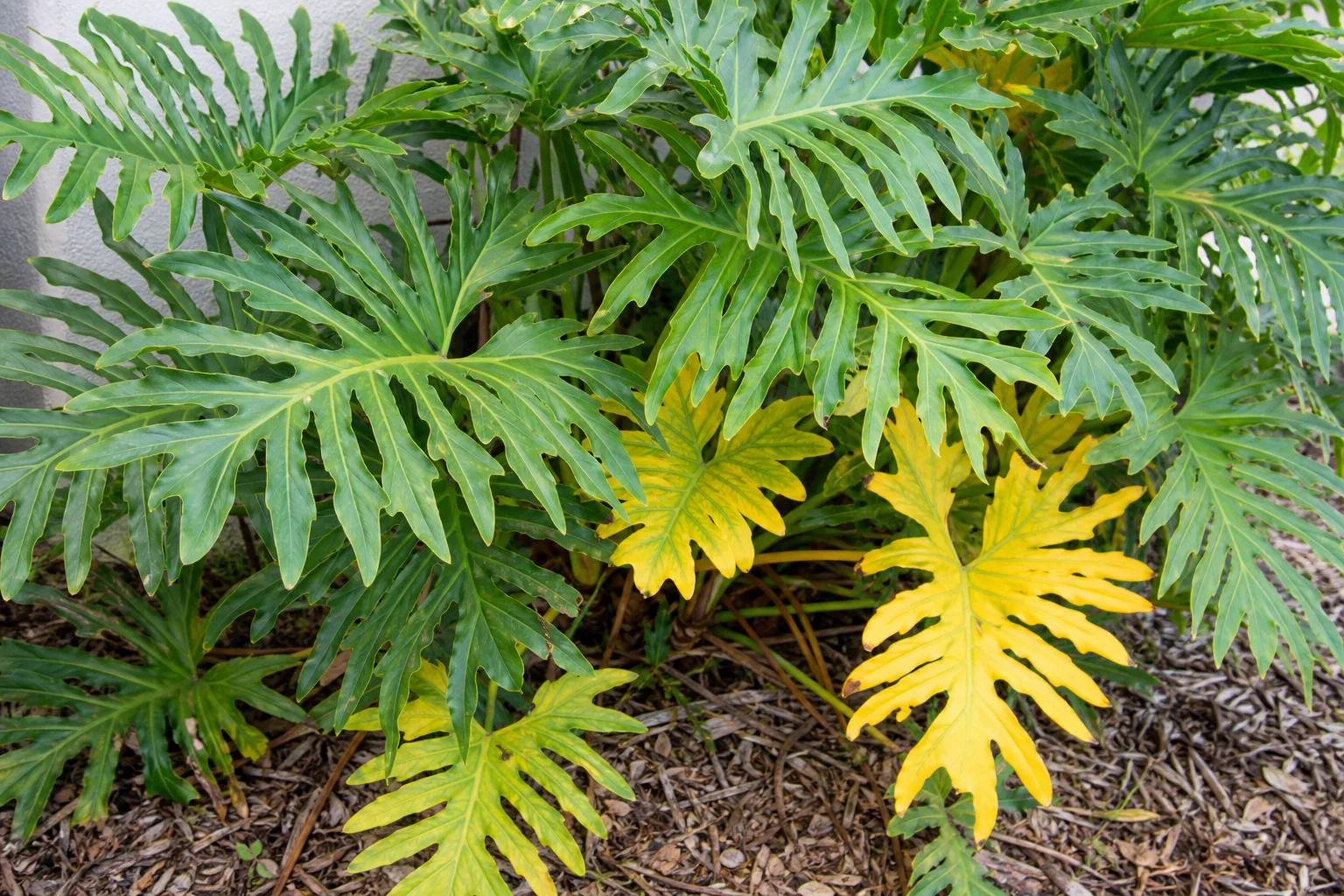
Yellow Leaves on Philodendron Selloum: Causes, Checks & Fixes
This guide covers yellow leaves on Philodendron Selloum. See also the general Yellow Leaves guide, watering, and light pages for this plant.
Yellow Leaves on Philodendron Selloum: Causes, Checks & Fixes
Quick answer
Yellow leaves on Philodendron Selloum are usually caused by overwatering in winter when growth slows and the large leaf mass uses less water. First step: reduce winter watering and allow the top 5 cm of mix to dry before watering again.
Philodendron Selloum (Thaumatophyllum bipinnatifidum) is a self-heading tree philodendron with massive lobed leaves on long petioles. That leaf area transpires heavily in warm, bright conditions, which can fool you into thinking the plant always needs frequent water. When days shorten and indoor growth slows, the same schedule keeps the chunky mix wet too long, roots lose oxygen, and older foliage yellows first. The fix is almost always seasonal watering correction before fertilizer, Philodendron Selloum repotting guide, or pruning.
Why Philodendron Selloum gets yellow leaves
Winter overwatering when growth slows is the most common cause on Philodendron Selloum overview. Clemson HGIC notes that overwatering decreases oxygen available for root growth and that yellowing is most often a symptom of excess moisture, not drought. On a large Selloum in a roomy pot, winter light drop and cooler room temperatures slow water uptake while the same weekly watering keeps the root zone saturated. Missouri Botanical Garden lists root rot in overly moist soils as a primary problem on tree philodendron - yellow lower leaves are often the above-ground warning before soft roots appear.
Dense or poorly draining mix compounds the issue. Selloum wants consistent moisture but not waterlogged soil. A heavy peat mix in an oversized decorative pot holds water at the bottom while the top 5 cm feels merely cool, not truly dry. Penn State Extension lists overwatering among causes of old-leaf yellowing alongside natural aging and nutrient issues; on Selloum, wet soil plus clustered lower yellowing points to roots, not nitrogen alone.
Low light in winter slows photosynthesis and transpiration, so an already generous Philodendron Selloum watering guide becomes excessive. Tree philodendron tolerates part shade but grows best in bright filtered light. A Selloum pushed into a dim corner from October onward uses far less water than it did in summer beside a bright window.
Natural aging also yellows the lowest leaves one at a time on an otherwise firm plant. That is normal on a mature self-header shedding older crown leaves. Concern starts when multiple lower leaves yellow within the same week, new growth looks pale, or yellowing climbs the stem.
Underwatering and chronic drought cause yellowing too, but the pot feels light, mix pulls away from the sides, and leaf edges may crisp before full yellow. Large Selloums in small pots can dry fast in summer air conditioning; do not assume every yellow leaf means wet roots.
Nutrient deficiency shows as generalized pale yellowing, sometimes with darker green veins (chlorosis). Penn State’s philodendron disease guide notes magnesium deficiency as a cause of V-shaped yellow areas, especially in cool conditions. Rule out watering first; fertilizing stressed, waterlogged roots worsens yellowing.
What yellow leaves look like on Philodendron Selloum
On this plant, pattern matters more than a single blemished leaf:
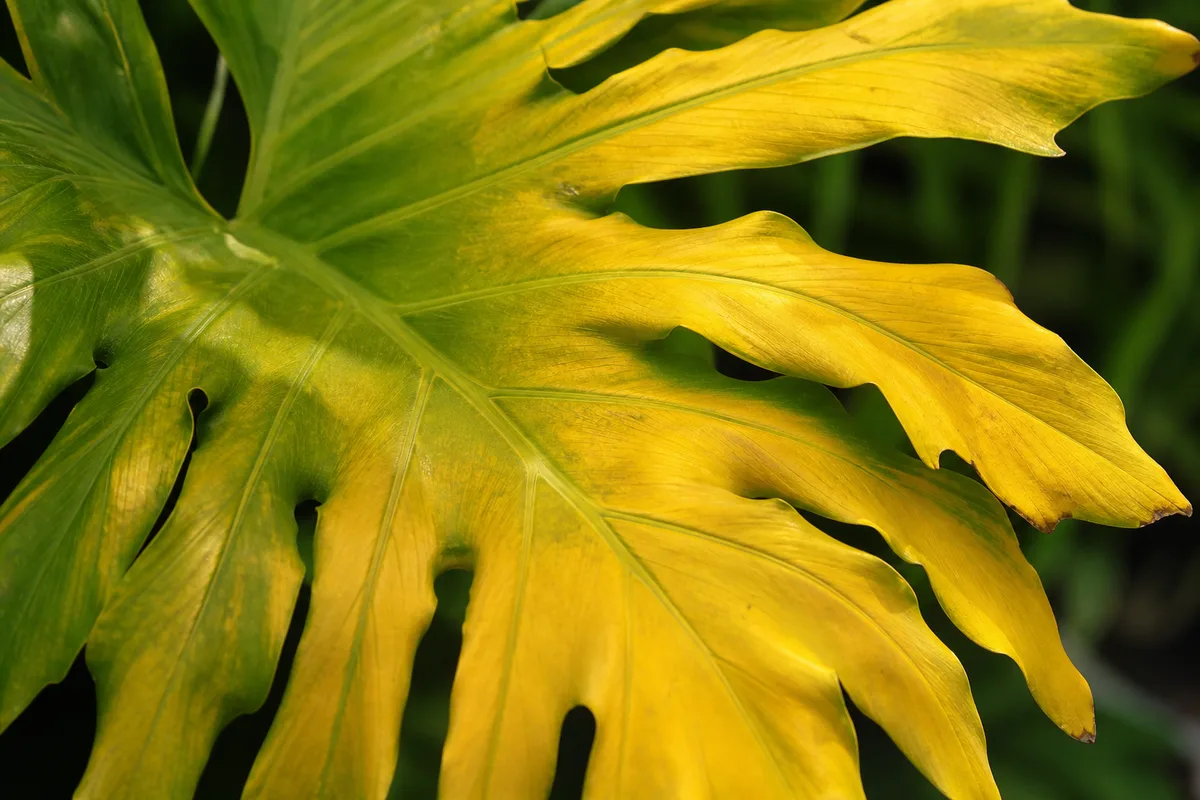
Yellow Leaves symptoms on Philodendron Selloum - compare with healthy tissue on the same plant.
- Lower, older lobes yellow first, often the largest leaves closest to the soil line, while the upper crown still looks green for a while
- Leaf may soften slightly and hang on a limp petiole when overwatering is the cause, unlike the crisp dryness of drought stress
- Veins may stay green briefly before the whole blade turns chartreuse then yellow
- Soil stays damp on the surface or 5 cm down for more than a week after you last watered
- Pot feels heavy when lifted, and drainage saucer may still hold water
- New leaves emerge smaller or pale when roots have been stressed for weeks
- One or two bottom leaves yellow slowly on an otherwise vigorous plant - likely normal turnover on a large self-heading philodendron
Selloum leaves do not yellow in neat uniform patches the way sun-scorched fiddle-leaf figs might. Watch clusters on the lower crown and whether the problem tracks your winter watering calendar.
How to confirm the cause
Use this inspection order before changing multiple variables:
- Season and recent schedule - Are you still watering every 7–10 days in late fall or winter? Selloum typically needs 14–21 days between drinks when growth slows.
- Top 5 cm moisture - Insert your finger or a skewer. If it comes out wet or cool-damp when you expected dry, overwatering is likely. Clemson HGIC recommends checking the top 1 to 2 inches before adding water.
- Pot weight and drainage - Lift the pot. Heavy days after watering suggests slow dry-down. Confirm holes are open and no saucer water sits beneath the root ball.
- Yellowing pattern - Multiple lower leaves at once plus wet soil points to roots. A single old leaf on a firm plant may be aging only.
- New growth - Pale or stunted emerging lobes mean ongoing stress; act on watering and light before fertilizing.
- Root check if unsure - If soil smells sour or yellowing spreads upward, unpot and look for firm white roots versus brown, mushy tissue. Missouri Botanical Garden warns that overly moist soils invite root rot on tree philodendron.
Lookalike symptoms to rule out
Underwatering - Pot light, soil gap at rim, leaf tips brown and brittle, petioles still relatively firm. Rehydrate thoroughly once, then reset schedule.
Low humidity alone - More often causes brown tips on large leaf margins than full yellow blades. If only edges brown and soil moisture is correct, humidity near 50–60% may help, but do not increase watering.
Cold draft or AC blast - Dark green to brown blotches between veins can follow cold injury on philodendrons. Move away from vents; do not water more.
Pests - Spider mites on large Selloum leaves show stippling and webbing on undersides. Yellowing from mites is usually speckled, not solid lower-leaf chlorosis with wet soil.
First fix for Philodendron Selloum
Reduce winter watering and wait for the top 5 cm to dry. Skip the next scheduled drink if the skewer test shows moisture. In winter, aim for 14–21 days between thorough waterings unless the pot dries faster in a warm, bright room. In summer active growth, return to 7–10 days only when the top 5 cm is dry.
When you do water, soak until runoff exits the drainage holes, then empty the saucer. Do not let a large Selloum sit in standing water - Clemson HGIC states this contributes to root decline and yellowing.
Make this one change for two to three weeks before repotting or feeding. Stacking corrections hides what worked.
If soil stays wet beyond three weeks after you cut back, improve light slightly or check whether the mix is too dense for the pot size. Only then consider repotting into chunky aroid mix with perlite and orchid bark.
Step-by-step recovery
- Pause watering until the top 5 cm is dry. For severely wet pots, tip the plant slightly and blot excess saucer water daily.
- Move to bright, indirect light if the plant has been in deep shade. Better light speeds dry-down and supports new growth without direct sun that scorches large lobes.
- Remove fully yellow leaves at the petiole base with clean snips. Leave partially green leaves in place; they still photosynthesize.
- Resume watering on the seasonal rhythm - 7–10 days in summer, 14–21 days in winter - always confirming dryness at 5 cm depth first.
- Monitor new leaves for the next four to six weeks. Firm, glossy emerging lobes mean roots are recovering.
- Repot only if needed - sour smell, mushy roots, or mix that never dries despite corrected watering. Use fresh chunky aroid mix and a pot with multiple drainage holes sized to the root mass, not the leaf spread.
If roots are mostly firm and smell neutral, recovery without repotting is common once watering matches season and light.
Recovery timeline
Mild winter overwatering often stabilizes within one to two weeks after you lengthen the dry interval. You should see no new yellow leaves and slightly firmer petioles on the lower crown. New full-size lobes may take four to six weeks to appear because Selloum is not a fast annual producer in low winter light.
Moderate root stress with several yellow lower leaves can need six to eight weeks and a spring light increase before growth looks normal. Fully yellow blades will not revert to deep green; success means the yellowing line stops moving up the plant.
Advanced root rot with soft stem bases is a separate problem - see the root rot guide and act within days, not weeks.
What not to do
- Do not keep watering on a summer calendar through winter.
- Do not fertilize a yellowing, wet-rooted Selloum to “green it up” - salts stress damaged roots further.
- Do not repot into a much larger pot; extra wet soil volume slows drying on a plant already prone to moisture-related root problems.
- Do not prune half the crown at once unless leaves are fully yellow; the plant needs foliage to recover.
- Do not assume yellow leaves mean more water because large leaves look droopy - check soil first.
- Do not ignore sour soil smell hoping the next dry spell fixes rot that is already established.
Philodendron Selloum care cross-check
Align these basics with the yellow-leaf diagnosis:
- Light: Bright to medium indirect light. Part shade works, but very dim spots extend dry-down time and invite overwatering mistakes.
- Water: Top 5 cm dry before each drink; roughly 7–10 days in summer, 14–21 days in winter for many indoor pots.
- Soil: Chunky aroid mix with perlite and orchid bark in a container with drainage holes.
- Humidity: 50–60% supports large leaf health but does not replace correct watering.
- Pets: Philodendron Selloum is toxic to cats and dogs due to insoluble calcium oxalate crystals. Wear gloves when pruning yellow leaves if sap irritates skin, and keep fallen foliage away from pets.
If one condition changed recently - moved indoors, new heater, shorter days - correct that factor first.
How to prevent yellow leaves next time
- Seasonally adjust watering when you turn on heating or move the plant away from a bright window for winter.
- Always test the top 5 cm instead of watering on autopilot; large leaf transpiration varies with temperature and light.
- Use airy mix and clear drainage so oxygen reaches the substantial root system a mature Selloum develops.
- Empty saucers within 15–30 minutes of watering.
- Refresh compacted mix every 1–2 years so winter dry-down stays predictable.
- Inspect weekly in winter when problems build quietly; one yellow lower leaf is easier to fix than a crown full of pale lobes.
When to worry
Escalate quickly if:
- Yellowing spreads to new emerging leaves
- Multiple large leaves yellow within 7–10 days
- Soil smells sour or fungal despite dry surface
- Petiole bases feel soft or collapse
- The plant wilts while soil is still wet
Those patterns suggest root rot or advanced anaerobic soil, not a single aged leaf. Unpot, trim mushy roots, and repot in fresh mix if more than a third of the root mass is decayed.
Conclusion
Yellow leaves on Philodendron Selloum usually trace back to winter overwatering when a large, slow-growing plant keeps getting summer-frequency drinks in wet, slow-drying mix. Confirm with damp soil at 5 cm depth, lower-leaf pattern, and heavy pot weight; fix by lengthening the winter dry interval and emptying saucers. Rule out underwatering, cold, and pests by pattern before feeding or repotting. Judge recovery on new firm lobes, not old yellow ones turning green. Match watering to season and light, and this statement philodendron stays stable for years.
When to use this page vs other Philodendron Selloum guides
- Philodendron Selloum watering guide - Use for routine moisture checks before assuming yellow leaves is the main issue.
- Philodendron Selloum problems hub - Browse all 4 common issues on this species.
- Root Rot on Philodendron Selloum - Different entry point when symptoms overlap with yellow leaves.