How to Propagate Philodendron Selloum: Division Guide
How to Propagate Philodendron Selloum: Division Guide
How to Propagate Philodendron Selloum: Division Guide
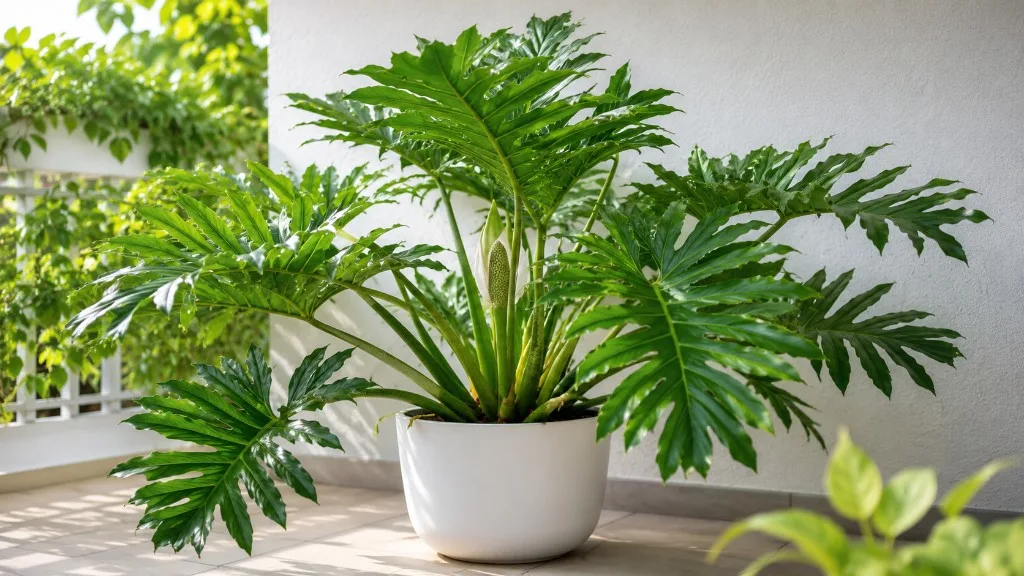
Philodendron Selloum propagation at home starts with one biological fact: Thaumatophyllum bipinnatifidum - still sold as Philodendron selloum, Hope, or tree philodendron - is a self-heading shrub, not a trailing vine you can snip and drop in a water jar. Large nursery specimens often carry multiple crowns in one pot, which makes division at repot the easiest, highest-confidence method. Woody trunk stem cuttings with nodes and aerial roots work as an advanced salvage path when you must reduce height or recover tissue above rot - slower and less forgiving than splitting a healthy multi-crown root ball.
The propagation mistake that wastes the most Selloum material is treating it like heartleaf philodendron: taking a leaf without a node, dividing a single-crown juvenile too early, or letting a thick trunk cutting sit in stale water until the tissue rots. Iowa State Extension notes that non-trailing philodendrons propagate from offsets, division, or stem sections with at least two nodes, and that sections containing aerial roots tend to root more reliably. On a mature tree philodendron, that translates into crown separation during repotting first - trunk surgery only when you understand node placement on a thick stem.
This guide covers method selection, timing, tools and pet safety, a numbered division-at-repot workflow, advanced woody trunk cuttings, rooting environment specs, troubleshooting, and links to the full Philodendron Selloum overview and sibling care pages.
Guide by sai-ananth. Reviewed against NC State Extension, Iowa State Extension, and Clemson HGIC philodendron guidance by LeafyPixels Review Board.
Why Division Beats Vine Cuttings on Self-Heading Selloum
Trailing philodendrons - heartleaf, Brasil, micans - produce long internodes with obvious nodes you can cut every few inches. Selloum does not. It grows upward from a central crown (or several basal crowns on mature plants), builds a trunk-like stem as lower petioles drop, and may send adventitious aerial roots along that stem in humid conditions. NC State Extension describes the species as a large non-climbing shrub that can develop aerial roots and a trunk-like stem outdoors; indoors you see a scaled-down version of the same architecture.
Self-Heading Shrub Anatomy (Not a Trailing Philodendron)
Each crown is a cluster of petioles and leaves emerging from one growth point at or near soil level. On a pot with two or three crowns, each crown already has its own root mass - you are separating existing plants, not inventing new ones from leaf tissue. Clemson HGIC contrasts vining philodendrons with self-heading types that send leaves from a heavy clump at the base; tree philodendron is explicitly self-heading with deeply cut leaves on an erect stem that can outgrow most homes.
That growth habit is why division beats random leaf cuttings: you keep stems, roots, and crown tissue that already function together. Vine-style water propagation is a secondary tool for node-bearing trunk sections, not the default playbook. Whole crown divisions pulled from soil fail in water jars because large established root systems rot in standing water - node sections with a single submerged joint succeed where intact root balls do not.
When Your Plant Is Mature Enough to Divide
Do not divide a single-crown juvenile just because you want a second plant. Wait until the specimen shows at least two distinct crown clusters - separate leaf rosettes with their own stem bases - or obvious basal offsets you can trace to roots. On many indoor plants that means several years of growth in a generous pot.
Nursery pre-cluster surprise: Large floor specimens sometimes arrive in one decorative pot with two or three crowns already rooted together - the grower started separate liners in a single container. Brush outer mix away at the soil line before you assume you have a single plant; you may be ready to divide on the first repot even if the plant looks like one bush from above.
A practical readiness checklist before you commit to cutting:
- Two or more crown clusters visible at the soil line, or offsets with attached roots
- Firm white roots when you slide the plant partway out - not mushy, sour-smelling tissue
- Active growth - a new leaf unfurling or firm petioles, not widespread yellowing
- Room and pots ready for pieces that may each reach 4–10 feet tall and wide indoors per NC State Extension
If only one crown exists, grow the plant larger or refresh the top mix at repot instead of forcing division.
Method Selection: Division vs. Woody Trunk Cuttings
| Method | Best for | Confidence | Minimum material | Typical timeline |
|---|---|---|---|---|
| Division at repot | Multi-crown pots, size control | High | 2–3+ stems + solid root wedge per piece | 2–4 weeks to settle; new leaves same season |
| Basal offset separation | Small pups at soil line | High | Offset with own roots + leaves | 2–4 weeks |
| Woody trunk cutting | Salvage, reduce height | Medium–low | Trunk section with ≥2 nodes, aerial roots preferred | 4–8+ weeks to root; slower in cool rooms |
| Water rooting (cuttings only) | Monitoring root progress | Medium | Node-bearing trunk section | Roots in weeks; pot-up adds time |
| Leaf without node | - | None | - | Will not produce a plant |
Choose division when crowns are obvious, roots are healthy, and you can lift the root ball during repot. Each division already photosynthesizes with multiple large leaves, so you get full-sized plants faster than trunk salvage.
Choose trunk cuttings when you must remove a tall woody section - storm damage, ceiling clearance on a lone-trunk specimen after failed height planning, or salvage above rot - and the cutting includes real nodes, not just petiole scars. Iowa State Extension allows stem sections with at least two nodes for non-trailing types and recommends aerial-root-bearing sections when possible. Before you cut a single trunk for height, measure finished ceiling clearance - a rooted trunk section still grows upward from its crown, and Selloum does not stay small.
Never choose leaf-only material. Aroid buds live at nodes on the stem; a detached leaf may linger decoratively but cannot build a new crown.
Best Time to Propagate Philodendron Selloum
Propagate during active growth - roughly spring through early fall indoors when light and warmth support root repair. Clemson HGIC notes philodendrons may be propagated at any season from stem cuttings, and that overcrowded plants can be repotted at any season with offsets divided during repot; for large Selloum, early spring as new leaves start still gives the longest recovery window.
Avoid propagating:
- Immediately after shipping - wait two to three weeks
- During active root rot on Philodendron Selloum or pest outbreaks - stabilize first
- Mid-winter in a cold dim room unless you add grow lights and keep temperatures in the 65–84°F (18–29°C) comfort band Missouri Botanical Garden recommends for indoor culture
- The same week as a major repot, hard prune, and fertilizer push - stack one stressor at a time
Timing is about plant condition, not calendar superstition. A healthy multi-crown specimen pushing clean growth in September beats a stressed plant in April.
Tools, Materials, and Safety
Gather before you cut a plant that may weigh more than you expect:
- Sharp bypass pruners for petioles; serrated knife or pruning saw for thick root masses and woody trunks
- 70% isopropyl alcohol or 10% bleach solution (1:9) to wipe blades between cuts
- Nitrile gloves - calcium oxalate sap irritates skin on sensitive people
- Fresh chunky aroid mix - see soil guide - plus pots with drainage holes sized to each division
- Clear jar or vase (water method), perlite or moist sphagnum (mix method), optional rooting hormone
- Drop cloth, helper, and knee pads - mature Selloum root balls are heavy
- Optional heat mat set near 75°F (24°C) to speed cutting roots indoors
Work on a stable surface away from pets and children. Have paper towels for sap.
Sap, Pets, and Clean Blades
Tree philodendron is toxic to cats and dogs per the ASPCA listing for lacy tree philodendron. The toxic principle is insoluble calcium oxalate crystals - the same raphides listed for tree philodendron - causing oral pain, drooling, vomiting, and difficulty swallowing if chewed. Clemson HGIC states all parts are toxic if eaten and recommends keeping plants from pets and young children.
During propagation:
- Wear gloves when cutting; wash sap off skin promptly
- Dispose of trimmings in a closed bin pets cannot raid
- Call ASPCA Poison Control at (888) 426-4435 and your veterinarian if ingestion is suspected
- Sterilize blades between divisions, especially if any tissue looked diseased
Propagation creates tempting fresh leaves on the floor - treat trimmings like toxic waste, not compost decor.
Division at Repot: Step by Step
Division pairs naturally with repotting. Plan a two-person lift for large specimens.
- Water the day before so the root ball holds together.
- Tip the pot and slide the plant out without yanking the trunk.
- Brush away outer mix to expose where crowns connect and where roots diverge.
- Identify natural seams - gaps between crown clusters where roots part with gentle pulling.
- Cut only where necessary - use a sterile knife or saw through shared root tissue; avoid shredding.
- Verify each division has at least two to three healthy stems and a fist-sized or larger root portion with white, firm roots.
- Pot each division at the same depth as before, in fresh chunky aroid mix, firm lightly, water once until a little drains, empty the saucer.
- Place in bright indirect light per light guide - no direct sun on stressed leaves.
- Hold fertilizer four to six weeks; follow watering rhythm that lets the top 5 cm dry without bone-dry shock on large leaf mass.
Identifying Natural Crown Separations
Look at the soil line first. Multiple crowns show as separate petiole clusters emerging from distinct bases an inch or two apart. Gently wiggle each cluster - if it moves independently with roots attached, it may separate by hand. Shared woody tissue between crowns means a clean saw cut through the connecting base, always leaving roots under each piece.
Aerial roots on the trunk are bonus anchors; you can guide them into the new pot but do not bury the crown itself. Aerial roots absorb moisture in habitat; indoors they supplement stability more than they replace a proper root ball.
Minimum Stems and Roots per Division
Each new plant needs enough leaf area to photosynthesize and enough root mass to support water uptake after separation shock. Practical minimums for Selloum:
- At least two to three firm green stems (petioles with healthy leaves) per division
- A dedicated root wedge - not a few stray threads - with majority white roots
- One crown growth point that can push the next leaf
Smaller pieces can survive but stall for months while rebuilding roots. Iowa State Extension recommends offsets with roots be gently separated and potted - the same standard applies to manual crown splits.
If a division looks thin on roots, pot it slightly shallower, keep humidity 50–60%, and resist overwatering.
Division Readiness: Go/No-Go Checklist
Run every signal before you cut. One “no-go” in the critical rows means wait or repot only.
| Signal | Go | No-go |
|---|---|---|
| Crowns visible at soil line | Two or more distinct clusters or rooted offsets | Single crown only |
| Root health | Mostly white, firm roots; no sour smell | Mushy, black, or foul-smelling roots |
| Active growth | New leaf unfurling or firm petioles | Widespread yellowing or collapse |
| Pots ready | One appropriately sized pot per division with drainage | Only one oversize pot for all pieces |
| Pest status | Clean or treated parent | Active mealybug, scale, or mite outbreak |
| Season / room | Warm bright room or supplemental light | Cold dim winter room with no heat mat plan |
| Your goal | Multiply healthy plant or control size | Rescue chronic overwatering without fixing care |
Divide now when crowns, roots, growth, and pots all read “go.” Wait for a second crown when only the crowns row fails. Repot without dividing when roots are healthy but crowns are fused - refresh mix and grow another season.
Potting and Initial Aftercare
Match pot diameter to root mass plus one size up - oversize pots stay wet and rot fresh cuts. Worked example: If the root wedge across the widest point is roughly 15 cm (6 inches), choose a pot 18–20 cm (7–8 inches) in diameter - not a 30 cm floor pot “so it never needs repotting again.” Fresh divisions in wet-foot oversize containers are a common post-propagation rot trigger.
Large leaves transpire heavily; a division with three full-size lobes may wilt once even with correct watering because leaf mass still exceeds what reduced roots can supply - mist does not replace roots, stable mix moisture does. Optional: remove one oldest lower leaf per division if wilting persists after one careful soak.
Division timeline (canonical): Expect two to four weeks before roots actively explore new mix, then new leaf unfurling within the same growing season when light and drainage are strong. Cool dim rooms can double that window.
Stem Cuttings on Woody Trunks (Advanced)
When division is impossible - single trunk, height reduction, salvage - take a trunk section with nodes, not a leaf.
Finding Nodes and Aerial Roots
On woody Selloum, a node is the swollen joint where a petiole (and often an aerial root) attached to the trunk. Older scars remain visible as rings or bumps after leaves drop. Stem sections need at least two nodes on non-trailing philodendrons, and aerial roots improve reliability.
Cut below a node with sterile shears, 6–12 inches (15–30 cm) of trunk if possible, including one or two nodes in the rooting zone. Maintain orientation - upside-down stem sections will not root.
Callusing, Water, and Chunky Mix Options
Let the cut callus two to six hours on a clean counter before rooting - reduces rot entry on thick tissue.
Water method: Submerge the lowest node in a clear jar of room-temperature water; support the heavy cutting so it does not crush tissue. Change water weekly or when cloudy until roots are several inches long, then pot in chunky mix.
Mix method: Plant in moist perlite or well-drained potting mix, burying one node with the aerial root if present; optional rooting hormone on the cut face. Cover with a clear bag or propagation box for humidity, vent daily.
Bottom heat near 75°F (24°C) speeds rooting but is optional - especially useful in cool spring rooms.
Trunk-cutting timeline (canonical): Often four to eight weeks or more before firm roots and the first new leaf - longer in cool rooms or on old single-trunk specimens with few aerial roots. Transition to normal watering only after roots resist a gentle tug and new growth appears.
Building the Right Rooting Environment
Whether you divided or cut, fresh Selloum material wants:
- Bright indirect light - same placement logic as mature plants in the light guide; avoid direct sun on wilted divisions
- 50–60% humidity - helpful for large leaf mass; a humidifier beats occasional misting
- Temperatures 65–84°F (18–29°C) - growth stalls below 60°F indoors
- Aerated, moist-not-soggy mix - roots need oxygen; stale wet peat kills divisions faster than underwatering
- Patience - do not repot again for at least six to eight weeks unless rot appears
NC State Extension Gardener Handbook emphasizes high humidity and indirect light for cuttings and warm medium for root development - the same principles apply to large aroid divisions indoors.
Common Propagation Problems and Recovery
| Symptom | Likely cause | Recovery |
|---|---|---|
| Mushy stem base or black nodes | Rot from wet mix, stale water | Cut above rot, callus, restart in fresh medium; see root rot recovery |
| Division wilts with wet soil | Roots damaged; pot too large | Reduce water, confirm drainage, optional leaf removal |
| Cutting shrivels in water | No viable node, or water not changed | Verify nodes; refresh water weekly |
| Yellowing on all divisions | Overwater + low light combo | Improve light; let top 5 cm dry |
| No new growth after 8+ weeks | Cool room, weak division size | Add heat mat; verify division had enough roots - consider cutting losses |
| Sour smell from pot | Anaerobic mix | Unpot, trim rot, repot smaller, brighter light |
Collapsing divisions with firm roots often mean underwatering on a huge leaf mass - soak once, then stabilize. Collapsing with mushy roots mean rot - act fast using the numbered steps in the root rot guide.
When Not to Propagate
Do not propagate as a first response to every problem:
- Active root rot on the parent - salvage only clean crowns after triage per root rot guidance
- Spider mites or scale - treat pests before spreading hitchhikers to new pots; see spider mites if needed
- Single-crown immature plant - grow it larger first
- Immediately after purchase - acclimate, then propagate
- Because the plant is too big for the room - consider donation or ceiling-clearance planning before hacking a lone trunk; propagation multiplies size problems unless you divide multi-crown pots intentionally
Propagation multiplies healthy plants. It does not fix chronic overwatering in dim corners.
For the full care picture after rooting, see the Philodendron Selloum overview, plus guides on light, watering, soil, fertilizer, repotting, and pruning.
Conclusion
Use this escalation ladder when propagation results disappoint - not a recap of method basics:
If divisions are firm, mix dries on schedule, and new leaves unfurl within the division timeline (2–4 weeks to settle, same-season growth): Continue the light, watering, and delayed-fertilizer routine. Judge success on leaves two and three, not day five.
If the plant looks static for two to four weeks but crowns are firm and soil dries normally: That is normal division stall - hold steady and resist overwatering “to help it along.”
If only one crown exists and you wanted two plants: Wait and grow - propagation cannot invent offsets that are not there yet. Repot into a slightly larger pot instead of forcing a split.
If the base turns mushy, mix smells sour, or crowns collapse while wet: That is propagation failure from rot or insufficient roots. Unpot, trim black tissue, and follow the root rot guide - do not re-divide until surviving tissue is healthy.
If you must salvage a lone woody trunk and nodes are sparse or aerial roots absent: Trunk cutting success is medium–low confidence - consider whether donation or ceiling planning beats a futile jar experiment. When fewer than two honest nodes are present, trunk salvage is unlikely to produce a full plant.
If new growth stalls past eight weeks on a weak split: Cut losses or retry with bottom heat - a division with one stem and thread roots rarely recovers faster by waiting indefinitely.
Common propagation questions
Which propagation method works best for Philodendron Selloum? Division at repot is usually best for self-heading Selloum with multiple crowns or basal offsets in one pot. Each separated piece keeps stems, roots, and a growth point that already work together. Woody trunk cuttings with at least two nodes and preferably aerial roots are an advanced option when you must reduce height or salvage tissue - slower and less reliable than division on a healthy multi-crown plant.
How many stems does each Selloum division need? Aim for at least two to three firm green stems (healthy petioles and leaves) plus a substantial root wedge with mostly white, firm roots on each division. Smaller splits with one stem and few roots may survive but often stall for months while rebuilding. Single-crown juvenile plants should not be divided until a second crown or offset develops.
Can I propagate Selloum from a leaf without a node? No. Like other aroids, Selloum needs stem node tissue - the joint where leaves and aerial roots meet the trunk - to produce a new crown. A leaf or petiole without node tissue may linger in water but will not become a full plant.
How long until divided Selloum sections show new growth? Expect two to four weeks for roots to settle in fresh mix after division, then new leaf unfurling within the same growing season if light, drainage, and watering are strong. Cool dim winter rooms can double that timeline. Trunk cuttings typically take longer - often four to eight weeks or more before firm roots and the first new leaf.
Can I propagate Philodendron Selloum in water? Water works for node-bearing trunk sections, not for whole crown divisions pulled from soil. Submerge the lowest node, change water weekly or when cloudy, and pot into chunky aroid mix once roots are several inches long. Divisions potted directly after separation should stay in moist mix - not a jar - because large established root systems rot in standing water.
Should I divide my Selloum or just repot into a bigger pot? Divide when the go/no-go table reads “go” on crowns and roots - you want more plants or size control without one oversized root ball. Repot only - same or one size up - when you have a single healthy crown, roots are firm but not crowded, or crowns are fused and not ready to separate. Forcing division on a one-crown plant produces weak pieces; refreshing mix in a larger pot is the better move until a second crown appears.
When to use this page vs other Philodendron Selloum guides
- Philodendron Selloum overview - Start here for whole-plant context before deep-diving this topic.
- Philodendron Selloum problems hub - Jump to symptom-specific fix guides when this care topic does not resolve the issue.