How to Prune Philodendron Selloum: When, Where & What to Cut
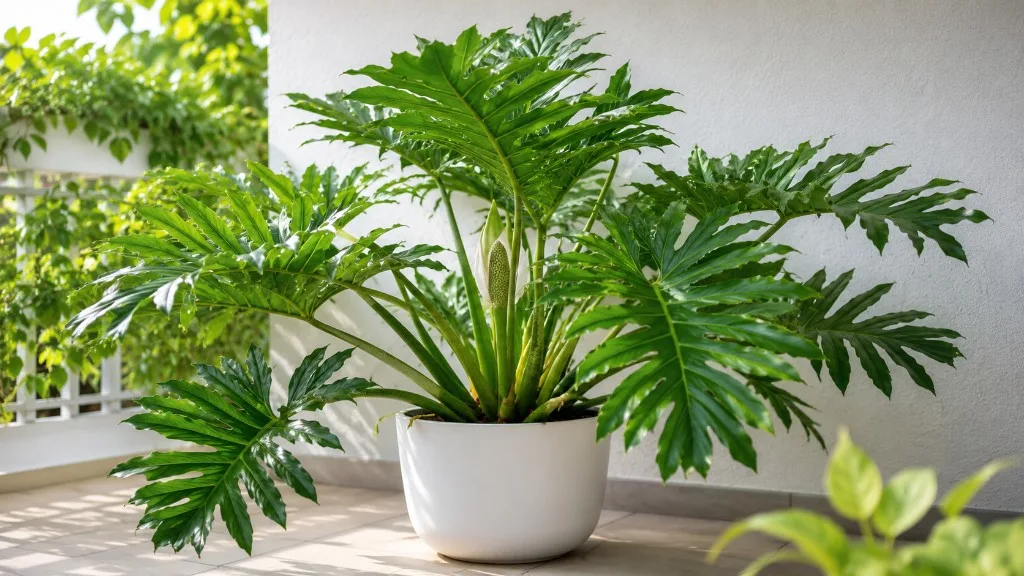
How to Prune Philodendron Selloum: When, Where & What to Cut
How to Prune Philodendron Selloum: When, Where & What to Cut
Philodendron Selloum - now classified as Thaumatophyllum bipinnatifidum - is a self-heading tree philodendron, not a vining species you pinch above nodes. Indoors it builds a thick trunk-like stem with massive lobed leaves spiraling from a single crown at the top. First, inspect the lowest leaves and remove any that are fully yellow or brown by cutting the petiole flush at the trunk scar - that is the routine starting point before you consider division or any live-leaf removal.
Do not treat Selloum like Heartleaf Philodendron or Brasil. Cutting the top off the main trunk does not activate dormant buds along bare wood the way it might on a dracaena or ficus. New foliage emerges from the central crown; lower leaves senesce naturally as the stem elongates, leaving ringed leaf scars on an increasingly visible trunk. NC State Extension describes tree philodendron as an upright woody broadleaf evergreen that can reach 4–10 feet tall and 6–10 feet wide indoors, with stout stems bearing distinctive leaf scars and adventitious roots.
Why Pruning Matters for Philodendron Selloum
Pruning on Philodendron Selloum overview is mostly hygiene, inspection, and footprint management - not hedge shaping or tip pinching for bushiness.
Routine reasons to prune include:
- Removing spent lower leaves so decaying petiole tissue does not sit against the trunk where moisture collects
- Exposing the trunk gradually as a deliberate aesthetic - the scarred stem is part of the plant’s architectural appeal
- Dividing basal offsets when the clump outgrows the room or pot
- Emergency removal of torn, diseased, or pest-damaged leaves after mechanical injury
What pruning cannot do is dramatically shorten a mature single-trunk specimen while keeping one plant. Clemson HGIC notes self-heading philodendrons send leaves from a heavy clump at the base and eventually become very large - size control means division or choosing a smaller cultivar, not repeated crown stripping.
Large leaf mass also means each removed leaf represents significant photosynthetic area. Yellow leaves from overwatering, root rot, or low light need the underlying care fixed before you strip half the crown.
What to Check Before You Cut
Walk the plant in good light and separate three patterns:
- Normal lower-leaf senescence - one or two bottom leaves fully yellow while upper crown leaves stay firm, glossy, and dark green. Common as the trunk elongates.
- Widespread yellowing - multiple leaves at different heights, soft stems, or soil that stays wet for weeks. Pruning leaves alone will not fix root stress.
- Physical damage - torn lobes from traffic, brittle petiole breaks, or pest scarring on undersides.
Clemson HGIC warns that yellowing of lower leaves plus dying growing tips can signal too little light or overwatering on self-heading types. Fix light and Philodendron Selloum watering guide before aggressive live-leaf removal.
Check the soil line for basal pups - smaller crowns with their own leaves and roots. Pups are your lever for size reduction, not trunk topping.
The First Cut to Make
Remove one fully yellow or brown leaf at the trunk base.
Use sharp bypass pruners or a knife. Cut the petiole where it meets the trunk scar - clean and flush, without gouging the stem tissue beneath. Leave green leaves alone on the first pass even if you want a shorter silhouette.
If every lower leaf is yellow because the plant sits in dim wet soil, correct placement and watering first, then remove the spent foliage once new growth looks stable.
When to Prune Philodendron Selloum
Dead or fully yellow leaves: any time of year once you have confirmed the leaf is spent, not mid-decline from active root failure.
Multiple live leaves or division work: late spring through early summer when the plant is actively growing. Clemson HGIC recommends Philodendron Selloum repotting guide overcrowded philodendrons at any season but notes offsets can be divided during repot - spring aligns with fastest root recovery on large specimens.
Avoid major live-leaf removal or division immediately after repotting, a cold move, or a pest treatment cycle. Give the plant two weeks to settle unless damaged tissue needs urgent removal.
Where to Cut (and What to Avoid)
Leaf removal
Cut at the petiole base where it attaches to the trunk. The stem bears distinctive leaf scars surrounded by stiff scales - your cut should sit at that junction, not halfway up the petiole and not into healthy trunk tissue.
Basal division
Separate offsets at the soil line during spring repot. Each division needs roots plus several healthy leaves on its own crown. Use a clean knife or saw for thick root masses.
Do not cut
- The main trunk top expecting multi-head branching - self-headers do not respond like dracaena
- Green crown leaves solely to reduce height - you weaken the only active growing point
- Mid-petiole stubs - they brown, invite decay, and look worse than a flush trunk cut
- All aerial roots on a tall specimen without assessing stability - adventitious roots support size as the plant ages, per NC State Extension
How to Prune Philodendron Selloum Step by Step
Routine dead-leaf cleanup
- Identify leaves that are more than half yellow or fully brown with dry petioles.
- Sterilize pruners with 70% isopropyl alcohol.
- Hold the petiole gently - they are brittle on self-heading types and snap easily if bumped.
- Cut flush at the trunk scar. Wipe sap if it drips.
- Inspect the exposed trunk for scale, mealybug hiding spots, or soft rot where old tissue sat.
Repeat as lower leaves naturally senesce over seasons. Many owners remove two to four lower leaves per year on mature plants.
Dividing basal pups for size control
- Water lightly the day before so roots are hydrated but not soggy.
- Unpot in spring. Shake away loose mix to expose the root ball and pup connections.
- Identify offsets with independent roots and at least three to four leaves.
- Cut or gently tease apart, keeping each section’s root mass intact.
- Repot each division in chunky aroid mix with drainage holes; match prior pot depth.
- Place in Philodendron Selloum light guide, hold fertilizer two to three weeks, and water when the top 5 cm dries.
Division reduces footprint more predictably than stripping green leaves from a single crown.
How Much You Can Safely Remove
Dead or fully yellow leaves: remove all of them - they no longer support the plant.
Live green leaves: limit to about one-third of total foliage in one session during active growth. Selloum leaves are enormous; removing half the crown at once can stall a plant already stressed by root-bound conditions or winter overwatering.
Stage heavy cleanup across two spring sessions four to six weeks apart if years of dead petioles have accumulated at the base.
Division is different - you are splitting the plant, not defoliating one crown. Still, weak pups with minimal roots should stay attached until they mature.
Tools and Safety
Use sharp bypass pruners for petioles, a serrated knife or pruning saw for thick division cuts, and alcohol between plants if you recently trimmed diseased tissue.
Wear gloves. NC State Extension lists calcium oxalate crystals in all parts with low poison severity but notes sap causes contact dermatitis. The ASPCA lists philodendron selloum as toxic to cats and dogs - bag trimmings and keep tools out of reach.
Aftercare and Recovery Timeline
After dead-leaf removal, no special aftercare beyond normal rhythm: bright indirect light, water when the top 5 cm dries, and 50–60% humidity if your air is dry.
After division, expect two to four weeks before new roots actively explore fresh mix. New leaves from each pup typically appear within the same active season if light and roots are strong.
Hold fertilizer briefly after either procedure, then resume light feeding during spring and summer growth.
Signs Pruning Worked - or Went Too Far
Worked:
- Trunk looks clean with no rotting petiole stubs
- Upper crown leaves remain firm and glossy
- After division, each pup shows new leaf unfurling within weeks
- Lower leaf drop slows once care issues are corrected
Too far or badly timed:
- Crown leaves wilt or yellow within days of mass green-leaf removal
- Soft brown patches appear on the trunk where cuts gouged tissue
- A lone pup division fails to root and collapses - often insufficient roots were attached
- Plant stalls through an entire growing season after winter division
Mistakes to Avoid
Topping the trunk like a dracaena - no new heads emerge from the cut; you risk crown loss on a single-stem specimen.
Stripping green leaves for ceiling clearance without a division plan - you starve the one crown that produces all new foliage.
Ignoring root-bound yellowing - if many leaves yellow at once and roots circle the pot, repot or divide in spring instead of repeated leaf stripping.
Removing a single weak pup and leaving an unbalanced parent top-heavy on a narrow base.
Treating Selloum like Monstera - monstera vines branch from nodes above cuts; Selloum does not.
When Not to Prune
Skip live-leaf removal and division when:
- The plant was repotted or moved within the last two weeks
- Widespread yellowing is active and you have not corrected watering or root issues
- The plant is in winter dormancy with no new growth - dead leaves only
- You cannot identify whether a pup has adequate roots - wait until spring repot when the root ball is visible
Conclusion
Philodendron Selloum pruning is trunk-base hygiene and spring division, not vine-style shaping. Start by removing fully spent lower leaves at the petiole scar, divide basal pups when the clump outgrows your space, and avoid topping the main trunk. Match cuts to this self-heading growth habit and the plant keeps its architectural trunk for decades indoors.
When to use this page vs other Philodendron Selloum guides
- Philodendron Selloum overview - Start here for whole-plant context before deep-diving this topic.
- Philodendron Selloum problems hub - Jump to symptom-specific fix guides when this care topic does not resolve the issue.
- Brown Tips on Philodendron Selloum - Escalate here when pruning adjustments are not enough.