Philodendron Selloum Light Needs: Best Window, Sun &
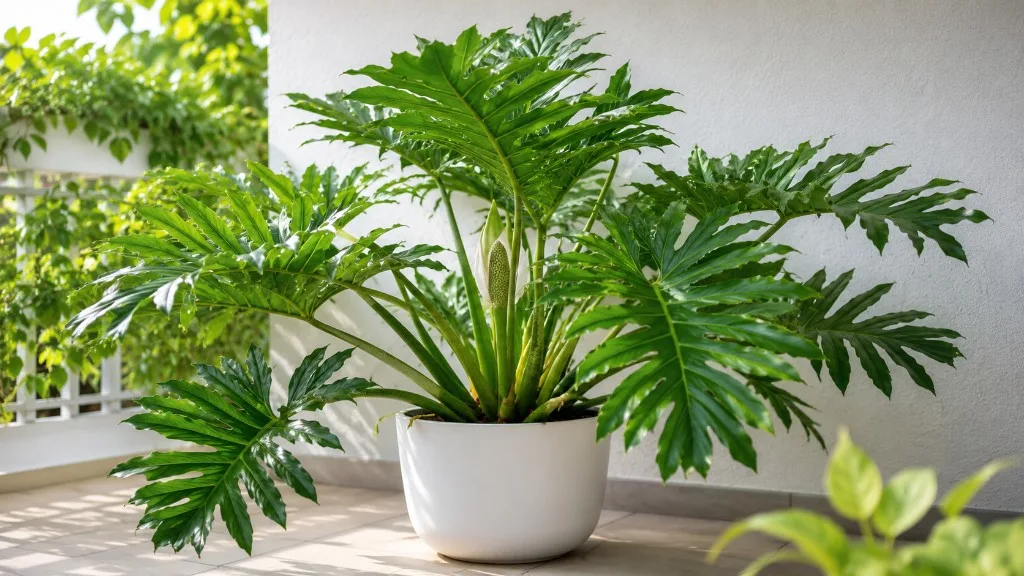
Philodendron Selloum Light Needs: Best Window, Sun & Warning Signs
Philodendron Selloum Light Needs: Best Window, Sun & Warning Signs
Philodendron Selloum - the name most nurseries still print on the tag - is actually Thaumatophyllum bipinnatifidum, a self-heading shrub with massive deeply lobed leaves, not a trailing philodendron you can tuck into a dim corner and forget. That distinction matters the moment you bring home a floor specimen that may eventually reach 4 to 10 feet tall and 6 to 10 feet wide indoors. Light on a selloum is not a decorative afterthought. It controls leaf size, lobe depth, petiole length, dry-down speed, and whether sun damage becomes permanent scars on leaves too large to replace quickly.
The most common mistake is judging by how bright the room looks instead of how much usable light reaches the crown - the rosette of new leaves at the top of the plant. NC State Extension is explicit that tree philodendron prefers high light and tolerates lower light only as a survival band. Missouri Botanical Garden lists outdoor culture as part shade and warns that full direct sun scorches leaves. Indoors, the practical translation is bright filtered light for most of the day - not a single vague “medium indirect” label repeated until it means nothing.
This guide covers how much light selloum actually wants, why large self-heading crowns behave differently from vining philodendrons, window-by-direction placement with distance guidance, direct sun and acclimation limits, honest low-light consequences (including smaller leaves with fewer lobes), grow-light starting specs, safe relocation for heavy pots, warning signs, and how light couples to watering. For the full species picture, start with the Philodendron Selloum overview. For watering rhythm tied to brightness, see the watering guide. For mix and drainage that keep bright-light watering safe, see soil guidance.
How Much Light Thaumatophyllum bipinnatifidum Actually Wants Indoors
Selloum wants bright, filtered light for most of the day - the indoor equivalent of dappled sunlight or partial shade (roughly 2 to 6 hours of direct sun outdoors) per NC State’s cultural classification. That is brighter than the generic “medium indirect” phrase pasted across templated houseplant pages. Think of it as strong ambient brightness at the leaf surface without prolonged harsh midday beams on glossy tissue.
NC State lists tree philodendron as preferring high light with tolerance for lower light - not co-equal targets. Missouri Botanical Garden’s part shade outdoor guidance maps cleanly to bright east windows, filtered south or west glass, or several feet back from unshaded panes indoors. The plant is not a deep-shade specialist like some calatheas, and it is not a full-sun succulent. It sits in the high-bright-indirect band where large aroid leaves photosynthesize heavily without scorching.
Optimal vs Tolerated Light Ranges
Optimal (preferred): Bright filtered light - roughly the brightness at 2 to 5 feet (60 to 150 cm) from an east-facing window, or behind a sheer curtain on south or west glass with a clear soft shadow at the crown on a clear day. New leaves should emerge large, glossy, deeply lobed, with firm petioles and no bleach.
Tolerated (survival): Lower indirect light - north windows in bright climates, interior rooms with reflected light, or office corners several meters from glass. Selloum may keep existing leaves here for months, but NC State warns that low light and over-watering produce smaller leaves with fewer or no lobes. Label this band honestly: maintenance, not display quality, unless you supplement with a grow light.
Too much: Unfiltered afternoon sun through south or west glass pressed against hot pane on unacclimated foliage. Both NC State and Missouri Botanical Garden note that full sun can cause leaf scorch. A few hours of gentle morning east sun is a different exposure - cooler, shorter, easier to acclimate.
Foot-Candles and Lux at the Crown
UF/IFAS notes that human eyes adapt so well indoors that terms like “bright indirect light” can mislead - measuring at the plant helps (UF/IFAS light for houseplants). UF/IFAS classifies 500 to 1,000 foot-candles as high indoor light (near windows with some direct or strong filtered exposure) and 100 to 500 fc as medium (near windows without direct sun). Selloum’s NC State high-light preference aligns best with the upper medium to high band at the crown, not the 75 to 150 fc survival zone deep in a room.
| Placement (typical home) | Approximate foot-candles at crown | Approximate lux | Expected selloum response |
|---|---|---|---|
| 2–4 ft from unobstructed east window | 400–800 fc | 4,000–8,000 lux | Ideal default: deep lobing on new leaves |
| Behind sheer on south/west; 4–6 ft back | 300–600 fc | 3,000–6,000 lux | Strong growth with filtration; watch summer heat |
| Bright north window, 1–3 ft from glass | 150–350 fc | 1,500–3,500 lux | Maintenance; slower flush, monitor petiole stretch |
| Interior floor, no window path | 75–150 fc | 750–1,500 lux | Smaller lobes, lean, wet-soil risk |
| Unfiltered south sill, midday summer | 2,000+ fc | 20,000+ lux | Scorch risk without acclimation |
Field test without a meter: on a clear day, hold your hand between the newest leaf and the window. A soft shadow with readable edges usually indicates bright filtered light selloum prefers. A faint or absent shadow means the room looks lit to your eyes but the crown is underpowered. A crisp dark shadow on leaf tissue at noon means direct sun - pull back, filter, or acclimate slowly.
Why Light Matters More on a Large Self-Heading Shrub
Most online philodendron advice assumes a climbing or trailing plant that can send a vine toward a window and still produce leaves along the stem. Thaumatophyllum bipinnatifidum is self-heading - it grows upward and outward from a central crown, building its own structure rather than attaching to a moss pole. Missouri Botanical Garden describes it as a large, non-climbing, semi-woody shrub with huge glossy leaves on long petioles from a rosette-like configuration.
That architecture changes every light decision. You cannot coil a searching stem toward the glass. The entire crown must receive adequate brightness, or the plant elongates petioles and leans toward the brightest vector. Individual leaves are massive - NC State notes they can reach up to 4 feet long - so each leaf must capture enough photons to justify its water and nutrient cost. A dim corner that keeps a small pothos alive will slowly degrade a selloum’s leaf architecture.
Crown Height, Petiole Length, and Lower-Canopy Shading
On a mature floor specimen, upper leaves intercept window light and shade lower foliage naturally. Light at the pot rim can be adequate while the crown still stretches - or the reverse, where the top scorches on hot glass while lower leaves yellow on wet soil in shade. Measure and observe at crown height, not floor level.
Long petioles also press against window panes in tight placements. Hot or cold glass contact on glossy leaves and petioles causes localized damage separate from general room brightness. Leave air space between foliage and pane, especially on south and west exposures in summer. Ceiling height matters too: NC Extension notes selloum may become too large for smaller homes - a plant that outgrows its vertical clearance often ends up with the crown pushed into dim upper room air while lower leaves still look acceptable briefly.
Worked example: a 1.2 m floor selloum 1 m from an east window often produces firm 60 cm petioles and deeply lobed new leaves every few weeks in summer. The same plant 3 m from the only window may show 90 cm petioles within two months, a leaning crown, and shallow lobing - without any pest involved. The fix is brightness, not fertilizer.
Best Window Placement (East, North, West, South Compared)
Window direction is a starting point. Overhangs, tint, sheer curtains, outdoor tree shade, and pot distance all change intensity at the crown. Still, compass orientation gives a reliable first guess in the northern hemisphere.
Place selloum where plant-facing brightness is strong for most of the day - not where the pot looks best in the room layout. Rotate the container a quarter turn every one to two weeks if growth leans toward the glass. For the full watering rhythm that pairs with bright placement, see the watering guide.
| Window | Light character | Best pot distance (starting point) | Selloum notes |
|---|---|---|---|
| East | Cool morning direct + bright indirect day | 2–4 ft (60–120 cm) from glass | Safest default; gentle direct hours, then steady ambient |
| North | Gentle indirect all day; weaker in winter | 1–3 ft from glass | Maintenance band; expect slower growth unless supplemented |
| South | Highest total daily intensity | 4–6 ft back or sheer curtain | Excellent with diffusion; scorch risk if pressed to hot pane |
| West | Strong late-afternoon sun + heat | 4–6 ft or sheer; monitor summer | Viable with caution; heat load exceeds east |
An east-facing window is the default sweet spot for most selloum specimens: enough brightness to satisfy NC State’s high-light preference without the midsummer heat load unfiltered south glass places on 4-foot glossy leaves. A south-facing window is the performance choice when you want maximum indoor leaf size and can manage distance or sheer fabric. North works for maintenance in bright climates but often lands in the tolerated band at mid and high latitudes in winter.
Distance From Glass, Rotation, and Ceiling Clearance
Light falls off fast with distance. A pot on the sill can receive several times the foot-candles of the same plant six feet back on a bookshelf. For selloum floor specimens approaching 1 to 2 m crown height, measure at the top of the newest leaf, not the pot rim. If the crown approaches the ceiling, consider a lower stand or a brighter room - pushing the plant into upper dim air while leaves press hot glass is a common failure mode in apartments.
If you use a sheer curtain, aim for filtered brightness, not a dark room. The goal is to knock down direct beam intensity while keeping ambient levels in the bright-indirect band UF/IFAS associates with 500 to 1,000 fc near windows.
Direct Sun: What Selloum Tolerates With Acclimation
Not as a default. NC State lists dappled sunlight and partial shade - indoor translation is bright ambient light with limited direct rays, not an unfiltered south sill with afternoon sun on nursery-shade leaves.
Selloum can handle some direct sun when acclimated and when exposure is gentle: typically morning east glass for one to three hours, or filtered south or west through sheer fabric. Leaves formed in shop dim light lack the pigment and structural toughness for sudden high-intensity exposure. Moving a low-light plant directly onto a hot south sill in July is how bleached patches and crisp sun-facing tissue appear in a single afternoon - and on selloum, old scorch does not heal on leaves that may live for years.
Watch for direct-sun stress signals: chalky bleached areas that do not green up, crisp brown patches on the leaf face nearest the glass, curling during peak hours, and sudden leaf collapse after a move. Missouri Botanical Garden explicitly notes full direct sun scorches leaves on Philodendron Selloum overview. Judge recovery by new leaves after you pull back or filter - not by hoping old damaged tissue will recover.
Low Light: Smaller Leaves, Fewer Lobes, and Slower Growth
Selloum tolerates lower light better than many showy aroids, which is why large specimens survive in lobbies and dim corners. That tolerance is not preference. NC State is explicit: low light and over-watering will cause leaves to be smaller with fewer or no lobes. The signature deeply dissected foliage - the reason you bought the plant - degrades first.
In low light, expect slower growth, smaller new leaves, shallower lobing, longer petioles, and a crown that leans toward the brightest vector. The plant may look “fine” for months while leaf architecture quietly declines. If new leaves open small, pale, or barely lobed, the plant is telling you brightness is now the limiting factor - see also the not enough light and leggy growth problem guides.
Why Dim Corners Increase Overwatering Risk
Light and watering are coupled on large aroids even though watering gets blamed first. Brighter light increases photosynthesis and transpiration; dim light slows both. A watering schedule that worked on a bright windowsill will overwater the same selloum in a dim corner because the root zone stays saturated longer - the classic pairing behind yellow leaves and root rot when light is weak and soil stays wet.
If you must keep selloum in a low-light room, reduce watering frequency and accept smaller lobes, or add artificial light. Do not fertilize heavily to “fix” dim growth - energy input is the bottleneck.
Grow Lights for Floor Specimens
When natural glass falls short - north winter, interior rooms, or shaded apartments - a full-spectrum grow light closes the gap more reliably than ceiling fluorescents alone. Selloum responds well to supplemental light because its large leaves capture photons efficiently and NC State’s high-light preference stalls visibly when underpowered.
University of Minnesota Extension recommends 12 to 14 hours daily for foliage houseplants under supplemental lights, with fixtures 12 to 24 inches above the canopy (UMN Extension lighting guide). Iowa State Extension suggests similar 12 to 14 hour photoperiods for general supplemental setups, with LED fixtures 12 to 24 inches from foliage (Iowa State supplemental lights).
Hours, Distance, and Spectrum Starting Points
Fixture: full-spectrum white LED labeled for houseplants, roughly 4000K to 6500K. UF/IFAS notes plants grow better under a broad spectrum of colors; “cool white” or “daylight” bulbs work for general foliage (UF/IFAS light for houseplants).
Distance: start 12 to 18 inches (30 to 45 cm) above the crown for a floor specimen. Large-canopy shrubs need wide coverage - a single narrow bulb over the center leaves outer lobes in shadow. Use a bar or panel spanning the pot, or rotate every few days under a clip-on lamp.
Duration: 10 to 12 hours daily during active indoor growth is a practical starting point; 12 to 14 hours if the plant shows continued stretch toward the lamp. Use a timer for consistency. Cap total daily light below 16 hours - plants still need a dark period (Iowa State supplemental lights).
Heat check: if leaf tissue feels uncomfortably warm under the beam, raise the fixture. Grow lights should deliver steady plant-facing brightness, not leaf-cooking heat.
When you add a grow light, increase watering checks slightly after two weeks - brighter total daily light raises transpiration. Link light changes to the watering guide rather than keeping an old dim-room schedule.
Moving or Acclimating Without Scorching Large Leaves
Sudden light jumps are how otherwise healthy selloums scorch, curl, or stall after a well-intentioned move to a brighter window - especially heavy floor specimens you cannot easily shuttle daily. Use a staged protocol for plants grown in nursery shade or shop dim shelves.
Days 1 to 3: place the pot in the target room but 4 to 6 feet back from the goal window. Days 4 to 7: move halfway to the final distance. Days 8 to 14: settle at 2 to 4 feet from east glass or behind sheer on south or west, unless bleach appears - then hold an extra week at the last safe distance.
One change at a time: do not combine a major light upgrade with Philodendron Selloum repotting guide, heavy feeding, or division in the same week. Read the newest leaf before adjusting water or fertilizer. For propagation timing after a move, see the propagation guide.
Warning Signs: Too Much vs Too Little Light
The page title promises warning signs - here is the consolidated reference for large self-heading selloum. Read new growth after any placement change; old scars from a previous location will not reverse.
Selloum-Specific Symptom Comparison
| Signal | Too much sun / heat | Too little light |
|---|---|---|
| New leaf size | Normal or reduced after scorch event | Smaller than prior leaves |
| Lobe depth | N/A - scorch dominates | Shallower lobes or none (NC State) |
| Petiole length | May shorten if stress is heat-only | Noticeably longer; crown opens wider |
| Crown shape | Crisp damage on sun-facing side | Lean toward window |
| Leaf color | Bleached, pale, or yellow-white patches | Dull green; muted gloss |
| Lower leaves | Sudden crisp edges after move | Yellow lower leaves if pot stays wet |
| Soil dry-down | Fast near hot glass | Slow; wet mix for weeks |
| Timeline after move | Hours to days | Weeks to months |
Too much sun - act fast: move back 12 to 24 inches, add sheer fabric, or shift to east exposure. Old scorch on large lobes is permanent - focus on protecting incoming leaves.
Too little light - act gradually: step the pot closer to the window over 7 to 14 days or add a grow light. Reduce watering to match slower metabolism. If tips brown on otherwise healthy tissue in bright rooms, salt buildup may be involved - see brown tips guidance; in dim wet pots, fix light first.
Light and Watering: Why Bright Placement Changes Your Schedule
Light is the throttle on selloum metabolism even though watering gets blamed first. A brighter plant transpires more water through its large leaf mass; a dim plant dries slowly and invites anaerobic soil. NC State notes the species does not tolerate drought but also warns of root rot in overly damp soil - the reconciliation is moist root zone, aerated mix, dry surface between waterings, with frequency tied to actual dry-down in your light level.
After any light increase, check soil moisture more frequently for the first month, but still wait until the top layer is dry before soaking - see the watering guide for the finger-test rhythm. After a light decrease, extend dry intervals and skip fertilizer until new growth confirms the plant is still active. Do not fertilize a plant in obvious survival mode; you cannot feed your way out of insufficient light.
Seasonal shift matters: winter drops day length and sun angle; a placement that worked in June may land in the tolerated band by December. If growth stalls without other changes, move closer to glass, adjust sheer on south windows for more winter intensity, or extend grow-light hours by two hours. Reverse the adjustment in late spring if summer heat builds on west glass.
Reflected glare can intensify south-window exposure beyond what the compass direction suggests. Light-colored pavement, snow cover, or a neighboring white wall can bounce additional radiation onto glossy selloum leaves pressed near the glass. If scorch appears on the window-facing lobe despite sheer fabric, check for reflection paths before assuming the plant needs less total daylight - sometimes the fix is rotation, a few inches of setback, or filtering the lower pane rather than moving the entire specimen to a dim room.
Practical Checks: New-Growth Test and Seasonal Tweaks
New-growth test: judge light by the newest leaf on the crown, not by whether older lobes from a previous location still look green. Old scorch and old stretch do not reverse, but new growth should be firm, glossy, and deeply lobed for the plant’s age. If the latest leaf is smaller or shallower than the one before it, brightness is trending wrong even when the plant still “looks fine” from across the room.
Rotation: self-heading selloums lean toward the brightest vector when light is uneven. A quarter turn every one to two weeks keeps the crown balanced and prevents one side from hogging window exposure while the opposite petioles elongate in shade.
Buying check: choose a specimen with firm new growth and leaves not creased from nursery crowding. Soft petioles on a wet heavy pot in a dim shop corner often mean the plant arrives already under-lighted - plan acclimation before expecting dramatic new lobes in the first month.
Phone lux app: measure at the newest leaf, not the floor. A crown reading near 4,000 to 8,000 lux beside east glass on a clear morning is common; the same room may read 800 lux at the sofa - too dim for the floor specimen you placed “near the window” but actually set across the room.
One-variable rule: when light looks wrong, fix placement first and wait for one new leaf before changing water, fertilizer, or pot size. Stacking multiple stressors after a move makes it impossible to read which adjustment helped.
Seasonal re-check: revisit crown brightness in late winter when growth stalls - sun angle and day length often drop a formerly ideal placement into the tolerated band without any other care change.
Self-Heading Selloum vs Climbing Philodendrons
Heartleaf, Brasil, and Micans philodendrons tolerate lower light longer because vining species can allocate growth along a searching stem and often carry smaller individual leaves. Selloum’s massive lobed leaves and upright self-heading habit mean each leaf must pay its own photosynthetic rent - dim survival shows up as shallower lobing and longer petioles, not as a discreetly longer vine you can coil.
Unlike Monstera deliciosa - also sold as “split-leaf philodendron” but a different genus that climbs and develops fenestrations - selloum forms a trunk-like stem and produces lobed but unperforated leaves from a central crown without needing support. Light advice for trailing philodendrons or climbing monsteras does not transfer cleanly: selloum needs crown-level brightness and floor space, not a moss pole toward a skylight.
For mix and pot size that keep bright-light watering forgiving on a large root ball, see the soil guide.
Conclusion
Philodendron Selloum light needs reduce to a distinction floor-specimen growers must respect: tolerance is not preference. Thaumatophyllum bipinnatifidum will endure lower indoor light longer than many showy aroids, but NC State lists it as a plant that prefers high light, and Missouri Botanical Garden warns that full direct sun scorches leaves. Indoors, that means bright filtered light for most of the day - roughly 2 to 4 feet from an east window, or filtered south or west glass - with the crown receiving a soft readable shadow on a clear day.
Place the pot where new leaves prove the light works - deep lobing, firm petioles, no bleach - not where the room looks decorated. Acclimate shop plants over 7 to 14 days before parking them against hot south glass. Treat deep interior rooms as survival placements unless you add a full-spectrum LED for 10 to 14 hours daily. When something looks wrong, read the newest leaf, use the symptom table to separate scorch from shallow lobing, and adjust one variable at a time - light first, then water. Old sunburn never heals on massive lobes, but the right window today still produces the glossy split foliage that makes this species worth the floor space. For the full care picture, start with the overview, then watering, soil, and propagation guides.
When to use this page vs other Philodendron Selloum guides
- Philodendron Selloum overview - Start here for whole-plant context before deep-diving this topic.
- Philodendron Selloum problems hub - Jump to symptom-specific fix guides when this care topic does not resolve the issue.