Spider Mites on Philodendron Selloum: Causes, Checks & Fixes
Quick answer
Spider mites on Philodendron Selloum are usually triggered by dry indoor heating on a large leaf surface. First step: rinse leaf undersides thoroughly, apply neem oil, and raise humidity toward 50–60% while isolating the plant from neighbors.
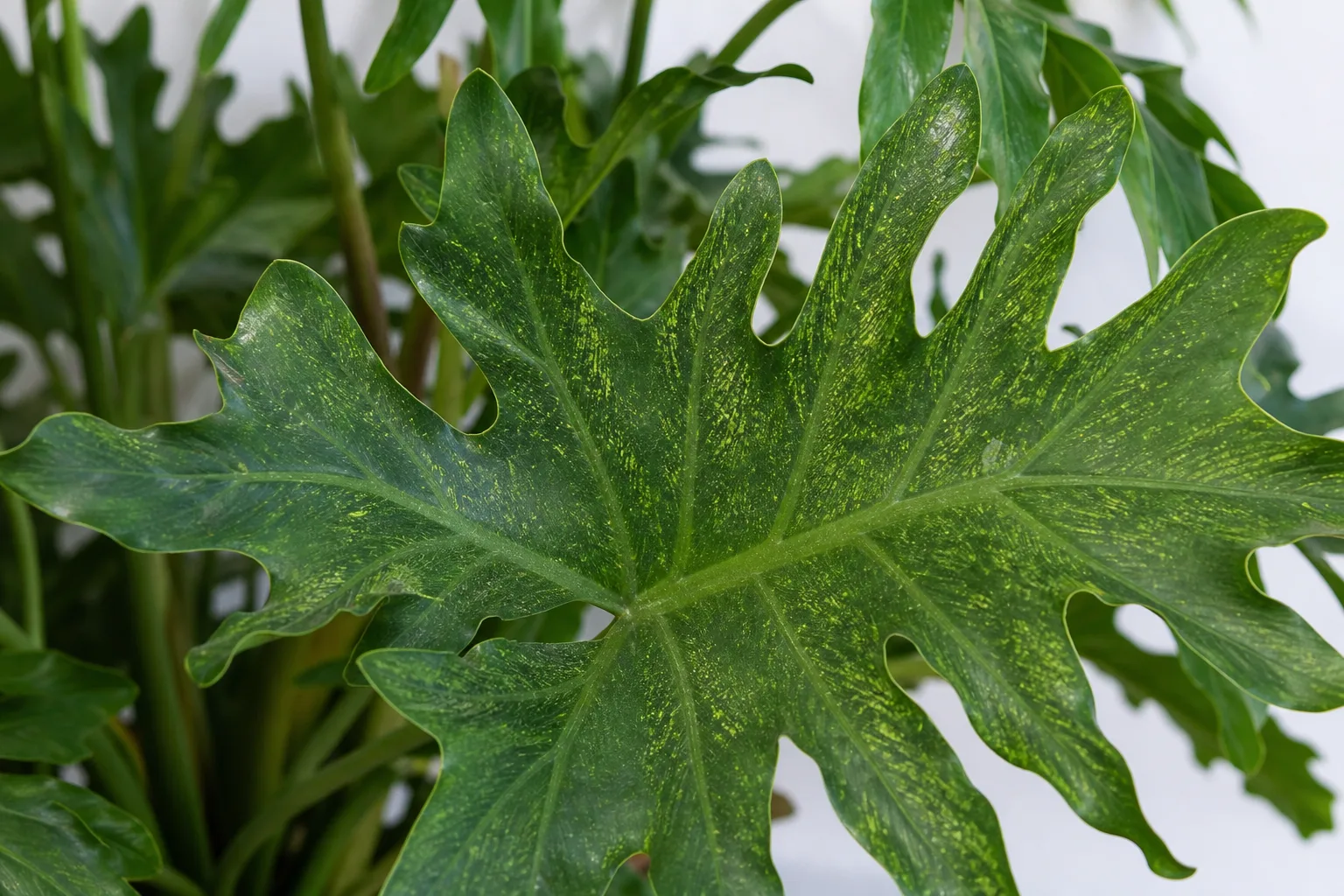
Spider Mites on Philodendron Selloum: Causes, Checks & Fixes
This guide covers spider mites on Philodendron Selloum. See also the general Spider Mites guide, watering, and light pages for this plant.
Spider Mites on Philodendron Selloum: Causes, Checks & Fixes
Quick answer
Spider mites on Philodendron Selloum are usually triggered by dry indoor heating on a large leaf surface. First step: rinse leaf undersides thoroughly, apply neem oil, and raise humidity toward 50–60% while isolating the plant from neighbors.
Philodendron Selloum (Thaumatophyllum bipinnatifidum) is a self-heading tree philodendron with deeply lobed leaves that can reach several feet long on mature plants. That canopy presents a huge feeding surface in a single pot, so mite damage shows up as widespread stippling and dull color long before you notice individual pests. Winter is the danger window: forced-air heat drops humidity while the plant still carries substantial leaf mass, exactly the warm, dry pattern spider mites prefer indoors.
Why Philodendron Selloum gets spider mites
The most common trigger on Philodendron Selloum overview is dry indoor heating acting on an oversized leaf surface. Selloum transpires heavily through its lobed foliage; when humidity falls below the 50–60% range this plant grows best in, leaf edges may brown first, but spider mites exploit the same dry air to reproduce rapidly in warm, dry conditions.
University of Minnesota Extension notes that philodendrons tend to see more spider mite outbreaks than succulents, snake plants, or pothos. That is not because Selloum is weak-it is large, evergreen, and kept in the same rooms where people crank heat in winter. A floor specimen near a register or a wide window baking in low-humidity sun becomes a mite incubator while the soil may still be appropriately moist.
Placement details matter on this plant:
- Heat vents and radiators - Forced air dries the canopy within days while roots stay wet enough that drought stress is not the main issue.
- Large leaf area per pot - Missouri Botanical Garden describes Selloum as a large non-climbing shrub with huge, deeply dissected evergreen leaves; more surface area means more sap-feeding sites and more hiding spots on undersides.
- Crowded collections - Mites crawl short distances or drift on air currents; a wide Selloum touching neighboring foliage shares pests quickly.
- Skipped underside checks - The split lobes fold and overlap; stippling on upper surfaces is often visible only after weeks of feeding on the underside.
Underwatering alone rarely causes the fine speckling pattern mites leave, but a stressed Selloum in dry air recovers more slowly after treatment. Fix the environment and the pest load together.
What spider mites look like on Philodendron Selloum
On this plant, damage reads differently from a small-leaved philodendron because each leaf is a billboard:
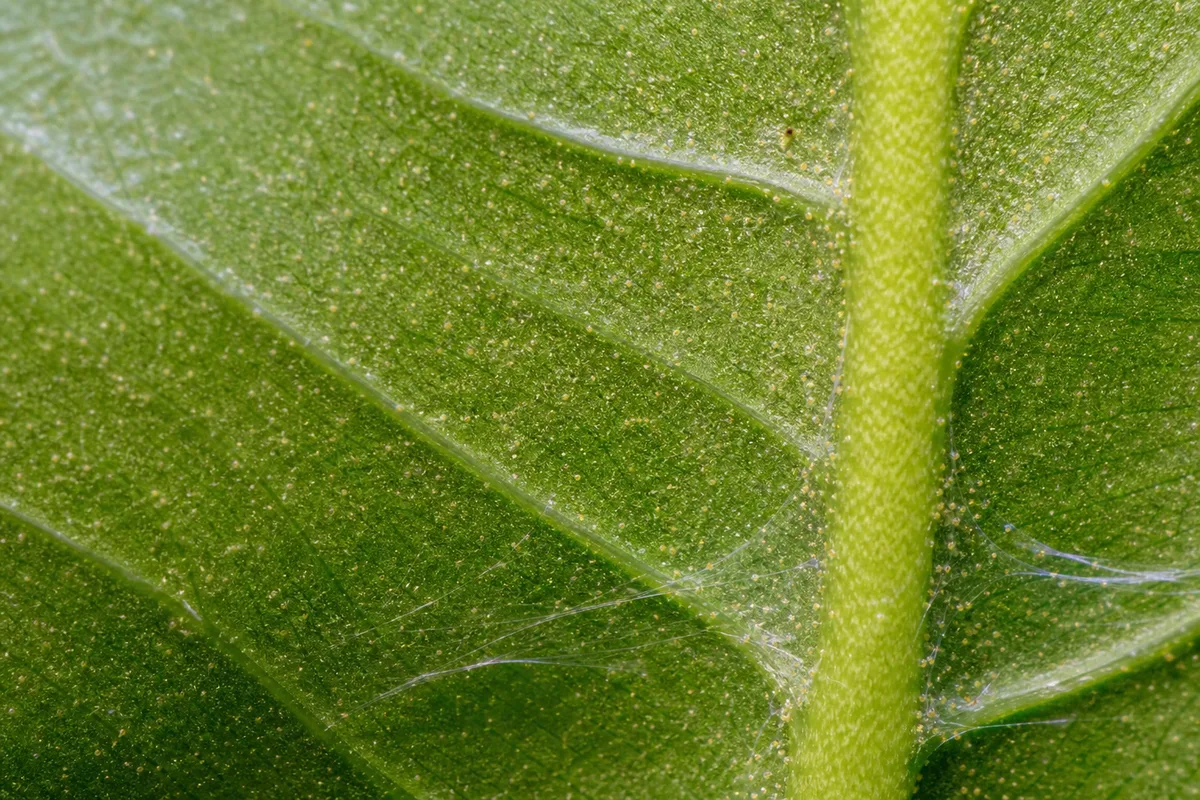
Spider Mites symptoms on Philodendron Selloum - compare with healthy tissue on the same plant.
- Pale yellow or white stippling across individual lobes, often starting on the oldest, outermost leaves closest to heat sources
- Dull, dusty, or bronzed leaf color that makes the whole plant look faded even when watering is correct
- Fine silk webbing at petiole joints, between lobes, or at the base of new unfurling leaves-a late sign that populations are already high
- Tiny moving specks on leaf undersides; the twospotted spider mite is the usual houseplant species and produces conspicuous webbing
- Distorted or stuck new leaves if mites colonize the crown before foliage expands
Selloum’s glossy green lobes turn matte and slightly rough where cells collapse from sap removal. That texture difference is a useful clue compared with smooth underwatering wilt or uniform low-humidity tip burn.
How to confirm the cause
Do not treat from a single dull leaf. Use this order:
- Environment check - Note heat vents, humidifier use, and recent weather. Mites spike when humidity is low and temperatures are warm.
- Paper tap test - Hold white paper under a suspect lobe and tap the leaf sharply. Slow-moving orange, red, or green specks that smear green when crushed are mites, not dust.
- Underside inspection - Lift large lobes gently and check with a hand lens or phone macro mode. Look for mites, amber eggs, cast skins, and early webbing along main veins.
- Webbing scan - Search petiole axils and the crown on new growth. Webbing without stippling still warrants treatment.
- Neighbor plants - Scan other broad-leaved plants on the same shelf; shared symptoms suggest active spread.
Lookalike symptoms to rule out
Low humidity without pests causes crisp brown tips and sometimes wedge-shaped dry patches, but not uniform pinprick stippling or webbing. Thrips leave silvery scrape marks and black fecal specks; adults are visible without magnification. Dust wipes off; mite stippling does not. Normal aging yellows the lowest leaf occasionally while the rest stay glossy. Overwatering yellows leaves with wet, heavy soil and no speckle pattern.
First fix for Philodendron Selloum
Isolate the plant, then rinse and oil on the same day.
- Move Selloum away from the collection - Even a few feet of separation slows crawl-and-drift spread while you treat.
- Shower the foliage - Colorado State Extension recommends washing small plants with a forceful jet of water and wiping larger ones with a soft, damp cloth. For Selloum, support each long petiole and rinse every lobe underside in the sink or shower; repeat weekly while mites persist.
- Apply neem oil or horticultural oil - After leaves dry, spray thoroughly-including petioles, stem, and both lobe surfaces. Horticultural oils are among the most effective houseplant controls for spider mites. Follow label dilution; test one lobe first if the plant recently suffered sun stress.
- Raise humidity toward 50–60% - Run a humidifier near the plant, not just a pebble tray, when heating is on. CSU Extension lists increasing humidity around the plant as a fundamental mite-management step alongside washing.
Make this one coordinated correction before Philodendron Selloum repotting guide, fertilizing, or pruning heavily. Selloum does not need a root overhaul for a foliar pest.
Step-by-step recovery
After the first rinse-and-oil session:
- Repeat treatment every 5–7 days for at least three cycles - Mite eggs survive a single spray; Minnesota Extension notes that repeat applications are usually necessary with soaps and plant oils.
- Keep rinsing between oil days if populations were heavy-physical removal cuts numbers before the next hatch.
- Prune only the worst lobes - Remove a fully bronzed leaf if it is mostly webbing and little green tissue remains; bag and discard it. Leave partially stippled foliage in place until new growth looks clean.
- Treat nearby philodendrons and figs at the same time - CSU advises treating all susceptible houseplants simultaneously so survivors do not reinfect Selloum.
- Track new crown leaves - The next two unfurling leaves should show fewer speckles if control is working.
Avoid spraying oils in direct sun on Selloum; large lobes scorch easily. Morning application with leaves dry by evening is safer.
Recovery timeline
Light stippling on a few outer lobes often stabilizes within two to three weekly treatment rounds if humidity improves. Moderate cases with crown webbing may need four to six weeks before new growth looks consistently clean. Severely bronzed leaves will not regain their former gloss; use unfurling lobes and absent new webbing as your progress markers.
If speckling spreads to fresh leaves after three full treatment cycles, escalate-reinspect neighbors, switch to a labeled miticide if oils were incomplete, or consider discarding a severely infested small specimen in a shared room. Minnesota Extension recommends discarding plants when most of the foliage is covered, which is rare on a large Selloum but possible on a young plant.
What not to do
- Do not spray only the upper lobe surfaces; mites concentrate on undersides and petiole joints.
- Do not stop after one good rinse when webbing was visible-eggs hatch on a cycle.
- Do not blast cold water on a chilled plant; use lukewarm water as UMN suggests for washing foliage.
- Do not apply neem oil in bright direct sun on large Selloum leaves.
- Do not use general broad-spectrum insecticides indoors without reading labels; Colorado State notes some products aggravate spider mite problems by killing predators.
- Do not fertilize a mite-stressed Selloum until new growth is clean and watering is back on rhythm.
How to prevent spider mites next time
Match prevention to how this plant is actually grown: big leaves, warm room, winter heat.
- Run a humidifier to hold 50–60% relative humidity in the plant’s zone during heating season.
- Rinse or wipe lobes monthly in winter, especially the undersides of the largest leaves.
- Quarantine new plants for two to three weeks before placing them within leaf-touch distance of Selloum.
- Keep the pot off direct vent paths; redirect registers or move the plant a few feet away.
- Inspect during watering - Tap-test one lobe every week when indoor air is dry.
- Maintain spacing between collection plants so you can see undersides without lifting an entire canopy.
Selloum rewards boring consistency: stable light, chunked aroid mix that drains well, and humidity support beat reactive spraying after damage is already visible across the canopy.
When to worry
Escalate quickly if:
- Webbing is visible across multiple leaves or between lobes at the crown
- New leaves emerge torn, stuck, or heavily speckled
- Leaf drop accelerates despite rinsing and oil treatments
- Mites reappear on fresh growth after three weekly treatment rounds
- Several plants in the same room show stippling at once
Medium severity is normal for this pairing in dry winters, but Selloum’s size means late detection can leave hundreds of lobes infested before webbing is obvious. Same-day isolation and repeated washing plus oil are warranted once webbing is confirmed.
Conclusion
Spider mites on Philodendron Selloum are an environmental pest problem as much as a spray problem: dry heated air on a massive lobed canopy lets populations explode while the plant still looks merely “off.” Confirm with stippling, underside mites, and the paper tap test; act by isolating, rinsing every lobe underside, applying neem or horticultural oil on a 5–7 day schedule, and raising humidity toward 50–60%. Judge success by clean new crown leaves, not by old lobes regaining perfect color-and inspect philodendrons nearby before you declare the room clear.
When to use this page vs other Philodendron Selloum guides
- Philodendron Selloum watering guide - Use for routine moisture checks before assuming spider mites is the main issue.
- Philodendron Selloum problems hub - Browse all 4 common issues on this species.