Thin Stems on Philodendron Gloriosum: Causes, Checks & Fixes
Quick answer
Thin stems on Philodendron Gloriosum usually mean the crawling rhizome and petioles are stretching in too little light-not that this species should have a thick trunk. Wiry runners with small pale velvet leaves and long gaps between nodes need bright filtered light first. Move within a few feet of an east or filtered west window before you fertilize, repot, or bury the rhizome deeper.
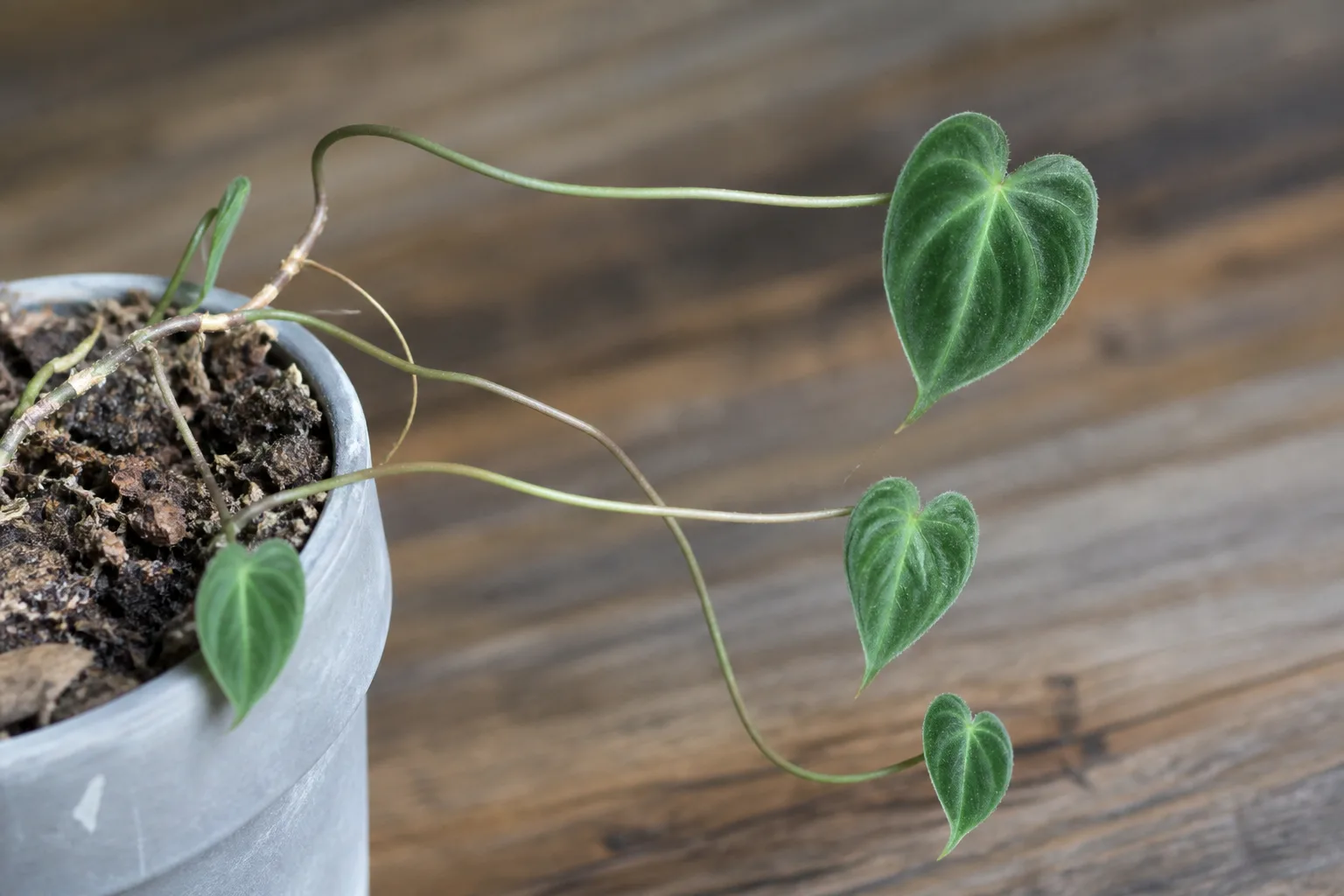
Thin Stems on Philodendron Gloriosum: Causes, Checks & Fixes
This guide covers thin stems on Philodendron Gloriosum. See also the general Thin Stems guide, watering, and light pages for this plant.
Thin Stems on Philodendron Gloriosum: Causes, Checks & Fixes
Quick answer
Philodendron Gloriosum is a creeping terrestrial philodendron that advances on a horizontal rhizome-not a vining climber. Thin stems become a problem when the rhizome runner and petioles look wiry, fragile, and unable to hold leaf weight-long bare gaps between nodes, small pale velvet blades on the newest leaves, and a crawler that leans hard toward the brightest window.
The most common indoor trigger is insufficient light. In dim corners, Gloriosum stretches toward the nearest light source and builds elongated, weak stem tissue-a form of etiolation. Large velvet leaves cost more energy to build than heartleaf types; Philodendron Gloriosum overview needs brighter exposure than the low-light survival minimum many philodendrons tolerate.
First fix: move the wide pot to bright filtered light within a few feet of an east window or filtered west exposure. Acclimate over 7–10 days if it has lived in a dark spot for months. Do not fertilize, repot, bury the rhizome deeper, or install a moss pole on day one-give the crawler usable light first, then adjust rhizome placement once new growth shows tighter nodes and firmer petioles.
What thin stems look like on Philodendron Gloriosum
Healthy Gloriosum holds a firm rhizome on or just above the mix surface, with petioles sturdy enough to support expanding velvet hearts and sequential leaves spaced at a steady crawl-not bunched, but not pencil-thin either. Mature specimens in good light produce impressively broad blades on relatively short, stiff petioles.
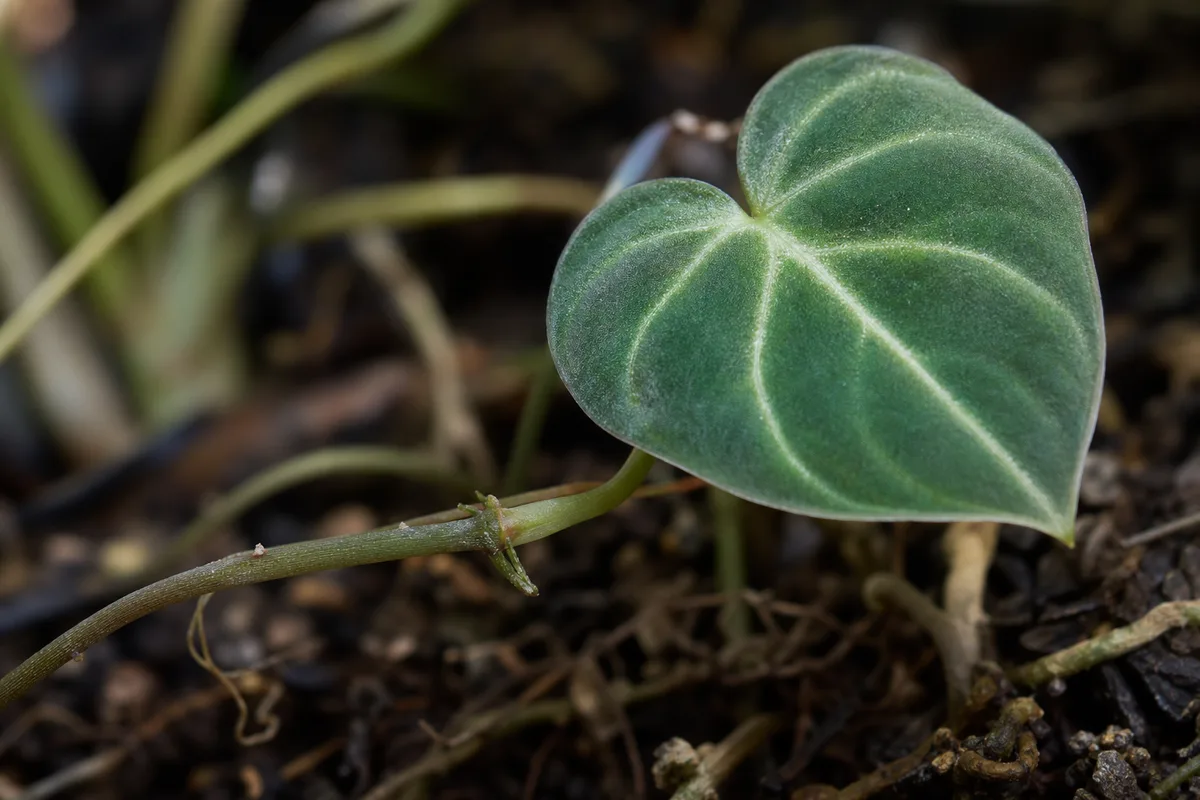
Thin Stems symptoms on Philodendron Gloriosum - compare with healthy tissue on the same plant.
Problem thin stems show a different pattern:
- Wiry rhizome runner that flexes easily when you lift the leaf instead of feeling like firm green tissue
- Long bare gaps between nodes on the newest section of the creeping stem
- Thin fragile petioles that bend under leaf weight before the blade fully hardens
- Smaller, paler new velvet leaves compared to older foliage farther back on the runner
- Directional lean of the whole plant or newest leaf toward the brightest window
- Rhizome sections buried in wet mix while the growth tip struggles to advance
- Soil that stays damp for a week or more despite a normal Philodendron Gloriosum watering guide
- Slow or stalled growth through spring and summer despite regular care
Do not confuse thin stems with a young plant’s naturally slender rhizome. A small Gloriosum can have a modest runner diameter and still be healthy if leaves are firm, richly colored, and spaced evenly. Worry when stem strength, leaf size, and velvet color decline together on active growth-not when you simply notice that Gloriosum is not a tree philodendron.
Unlike a vining heartleaf philodendron, you will not see long leafless vines-only a weak horizontal crawler with undersized leaves.
Why Philodendron Gloriosum gets thin stems
Low light and etiolation. When usable light falls below what the plant needs, the rhizome and petioles elongate and thin. University of Maryland Extension describes etiolation as stretched, weak growth under low light. Gloriosum shows this as a longer, sparser crawl with fragile stem tissue and pale velvet blades rather than the broad hearts this species is known for.
Light plus wet soil around the rhizome. A dim Gloriosum uses water slowly, so mix stays wet longer. Missouri Botanical Garden notes that plants in low light use less water and stay wet longer-the same pattern that softens tissue at the rhizome base and pairs with yellow lower leaves. Thin spindly runners in a soggy pot need light and dry-down corrected together, not more water.
Buried or misoriented rhizome. Gloriosum is meant to crawl across the mix surface. Sections buried in wet media weaken before rot is obvious-new petioles emerge thin because the runner cannot photosynthesize or breathe normally at buried nodes.
Rhizome hitting pot walls without forward space. In a deep round pot or a container with no crawl room, the growth tip stalls. New leaves stay small and remaining petioles look progressively thinner even when light is fair.
Low humidity during stretch. Velvet aroids lose moisture at the margins during expansion. Dry air below 60% can leave new leaves small and petioles weak even when light is borderline-low humidity reduces leaf quality on sensitive houseplants.
Seasonal light drop. Shorter winter days reduce usable light at the same window. Growth that was sturdy in summer may come out finer and more fragile from late fall through early spring unless you move the pot closer or add supplemental lighting.
Overfertilizing in dim rooms. Extra nitrogen without matching light pushes soft elongated shoots that still look thin because tissue cannot densify without adequate photosynthesis.
Unlike climbing philodendrons, Gloriosum does not need a moss pole to thicken stems. Support does not replace photons on this terrestrial crawler.
How to confirm the cause
Work through these checks in order:
- Light at leaf level - At midday, hold your hand where the foliage sits. A soft, defined shadow means moderate indirect light. Barely visible shadow means the spot is too dim for large-leaf Gloriosum.
- Newest leaf test - Compare the last two or three leaves on the active tip. If each new leaf is smaller and paler than the one before, light is the limiting factor.
- Internode spacing on the rhizome - Measure the gap between two recent nodes. Gaps noticeably longer than older sections on the same runner point to ongoing stretch from insufficient light.
- Rhizome placement - Trace the creeping stem. Firm green tissue on the mix surface with dry soil on schedule points to light stress. Soft mushy buried sections with sour-smelling wet mix suggest rhizome rot-urgent, not a light fix alone.
- Soil moisture pattern - Push your finger 3–5 cm into the mix. If it feels wet days after watering while growth is slow, low light may be slowing uptake-not necessarily that you watered too much on one day.
- Pot shape and crawl path - Confirm the rhizome has forward space in a wide shallow container. A runner pressed against the wall with nowhere to advance contributes to thin new tissue.
- Pest scan - Flip velvet leaves and check undersides. Spider mites can pale foliage in dry dim conditions, but they leave stippling and fine webbing. Uniform stretch without pests confirms light stress.
If stretch, pale velvet, wet-soil slowness, and a buried rhizome cluster together, you have overlapping light and potting problems. If the whole plant deflates with dry lightweight soil and firm roots, underwatering is more likely. Mushy rhizome bases in wet soil require rot treatment first.
First fix for Philodendron Gloriosum
Move the wide pot to bright filtered light where leaves receive several hours of indirect illumination daily, and rotate the container one quarter turn so all sides of the crawler receive even exposure.
Good targets include an east-facing window, or several feet back from a south- or west-facing window with sheer curtain filter. Philodendrons grow best with bright indirect light indoors-not deep shade and not hot direct midday sun on velvet foliage.
If the plant came from very dim conditions, increase light over 7–10 days rather than jumping straight into harsh sun. Sudden intense direct light can scorch velvet blades. Rotate weekly so the rhizome does not lean permanently toward one window.
Do not add a moss pole, repot, or fertilize on day one. Those steps do not replace photons and can stress a crawler already compensating for shade.
Step-by-step recovery
After the first light move:
- Adjust watering to match new light - Brighter exposure dries the pot faster. Check the top 3–5 cm of mix before each drink instead of following an old calendar from the dim corner.
- Expose the rhizome on the mix surface - If buried sections are firm, gently reposition the runner so nodes sit on-not in-wet media. Do not disturb a soft rotting rhizome without trimming damaged tissue first.
- Stabilize humidity at 60–70% - Run a humidifier near the foliage so the next velvet leaf unfurls without tearing on a thin petiole.
- Add supplemental light if needed - In dark winter rooms, a full-spectrum grow lamp 30–45 cm above the canopy for 10–12 hours daily can stabilize form when windows are insufficient. UF/IFAS guidance on houseplant lighting applies to choosing intensity and duration.
- Wait for the next leaf cycle - On this slow species, allow one to two new leaves-often months-to assess improvement before major pruning or propagation.
- Hold fertilizer until growth stabilizes - After a healthier new leaf fully expands, feed lightly at half strength during active growth if the plant is otherwise healthy. Feeding a still-stressed Gloriosum in marginal light repeats the stretch cycle.
- Repot if the rhizome has no forward crawl space - Move into a wider shallow container with chunky aroid mix only after light is corrected and the runner clearly hits the pot wall. Orient the growth tip toward open surface. Do not jump two pot sizes hoping for thicker stems.
- Propagate firm sections if the tip stays weak - Once light improves, a healthy rhizome cutting with a node can restart compact growth-but only from firm tissue, not from a rotting runner.
Pruning for bushiness is inappropriate-Gloriosum is meant to crawl forward with sequential leaves, not branch into a rosette.
Recovery timeline
Expect visible improvement on the next one or two leaves within one to three months after adequate light-tighter node spacing, firmer petioles, and larger velvet blades are the signals that matter. Full visual recovery of the crawl profile may take four to six months as new compact foliage replaces the stretched runner front.
Old thin rhizome and petiole sections never thicken. Elongated tissue stays wiry even after conditions improve; propagation of a firm section is the only way to remove bare gaps on the leading edge. Judge success by new growth quality, not by old tissue reshaping itself.
If four to six months pass with no improvement on new foliage, the spot is still too dim-move closer to the window or add a grow light rather than reaching for fertilizer.
Repot recovery adds another two to three months before you should expect noticeably stronger new shoots, because the crawler needs time to root into fresh mix and advance the tip.
Worsening signs: continued stretch on every new leaf after four months in brighter light, yellowing leaves with persistently wet soil, or soft rhizome tissue at the mix line. Those point to overlapping water stress or advanced rot-not light alone-and need rhizome inspection.
Lookalike symptoms
Leggy growth shares the same etiolation mechanism-long internodes and petioles from low light. On Gloriosum, leggy and thin-stem labels overlap; both respond to brighter filtered light and correct rhizome placement.
Not enough light is the root cause of most thin stems. Treat pale velvet and spindly crawlers together with a light increase.
Plant leaning often means uneven window exposure; rotate and supplement the weak side before assuming root failure.
Slow growth in winter can look like thin weak new tips when daylight is short. Resume worrying if spring arrives and new growth stays spindly with adequate light.
Overwatering yellows leaves while soil stays wet. Low light and overwatering often appear together because the plant cannot use water quickly. Fix light and dry-down together.
Exposed roots on a healthy crawler are normal-Gloriosum adheres its rhizome to the surface. Worry when exposure pairs with mushy tissue, not when aerial nodes look firm and green.
Mistakes to avoid
- Installing a moss pole expecting Gloriosum to climb into fullness-it crawls horizontally, it does not vine upward.
- Burying the rhizome to stabilize a wobbly plant-wet buried tissue weakens faster on this species.
- Jumping to direct south-window sun to fix thin stems-acclimate slowly or velvet scorches easily.
- Fertilizing dim, wet plants - Feed only after light and watering rhythm are stable and new growth is firm.
- Philodendron Gloriosum repotting guide into a deep round pot hoping for thicker stems-extra wet soil in weak light makes thin runners worse.
- Watering on the old schedule after a move to brighter light - Check soil moisture weekly until you learn the new dry-down speed.
- Mistaking fast stem length for vigor - Etiolation is weak tissue reaching for light, not healthy turbo growth on a slow crawler.
Philodendron Gloriosum care cross-check
Thin stems rarely appear in isolation on a well-placed Gloriosum. Cross-check the basics tied to this species:
- Light: Bright filtered exposure at leaf height, not ambient room brightness
- Humidity: 60–70% for clean velvet unfurling on firm petioles
- Pot: Wide shallow container with rhizome oriented toward open crawl space
- Water: Top 3–5 cm dry before watering; rhizome never sitting in stagnant wet mix
- Support: Horizontal space, not vertical poles
When these align, the next leaf cycle usually tells you whether thin stems were purely light-driven or compounded by rhizome stress.
How to prevent thin stems next time
Place Gloriosum where bright filtered light hits the leaves, not just where the velvet heart looks good in a corner. East windows and filtered south or west exposures match typical philodendron cultural guidance for indoor specimens that produce large foliage.
- Rotate the wide pot weekly so the crawler stays symmetrical.
- Supplement winter windows with a grow lamp before stretch starts, not after the rhizome has already leaned.
- Keep the rhizome on the mix surface when repotting; orient the tip toward empty horizontal space.
- Match watering to how fast the pot dries in your light level-top 3–5 cm dry before watering, slower in winter, faster in bright summer rooms.
- Maintain 60–70% humidity year-round if your home runs dry-velvet expansion fails on thin petioles in arid air.
- When buying, choose plants with firm rhizome tissue, evenly sized recent leaves, and a visible active tip; pass on specimens already stretched in nursery shade if you want broad velvet hearts.
When to worry
Thin stems alone rarely kill Gloriosum quickly-it is a slow decline of form and tissue strength. Worry when yellow leaves stack up while soil stays wet, the rhizome base feels soft, or a heavy velvet leaf snaps where a thin petiole meets rotting buried tissue-those combinations suggest rot or mechanical failure on top of light stress.
If four to six months of corrected light still produces only pale, spaced leaves, verify lamp intensity or try a closer bright indirect position before assuming a defective plant. Some old wiry rhizome sections never recover visually even after conditions improve; propagate firm tissue if the tip stays weak.
Conclusion
Thin Philodendron Gloriosum stems are the crawler telling you it cannot build firm velvet tissue in current light and rhizome conditions. Move it to bright filtered exposure, keep the runner on the mix surface, stabilize humidity, and adjust watering to match. Old wiry sections will not thicken-but the next leaves can look like the broad velvet plant you bought, without a moss pole or miracle feed.
When to use this page vs other Philodendron Gloriosum guides
- Philodendron Gloriosum watering guide - Use for routine moisture checks before assuming thin stems is the main issue.
- Philodendron Gloriosum problems hub - Browse all 22 common issues on this species.