Dry Hydrophobic Soil on Philodendron Gloriosum: Causes
Quick answer
Hydrophobic soil on Philodendron Gloriosum repels water after peat-heavy mix dries completely-drainage flows out while the surface rhizome zone stays dry and velvet leaves stall before unfurling. First step: bottom-soak the wide pot until mix darkens throughout, drain fully, then repot into fresh chunky aroid blend if the mix keeps rejecting water.
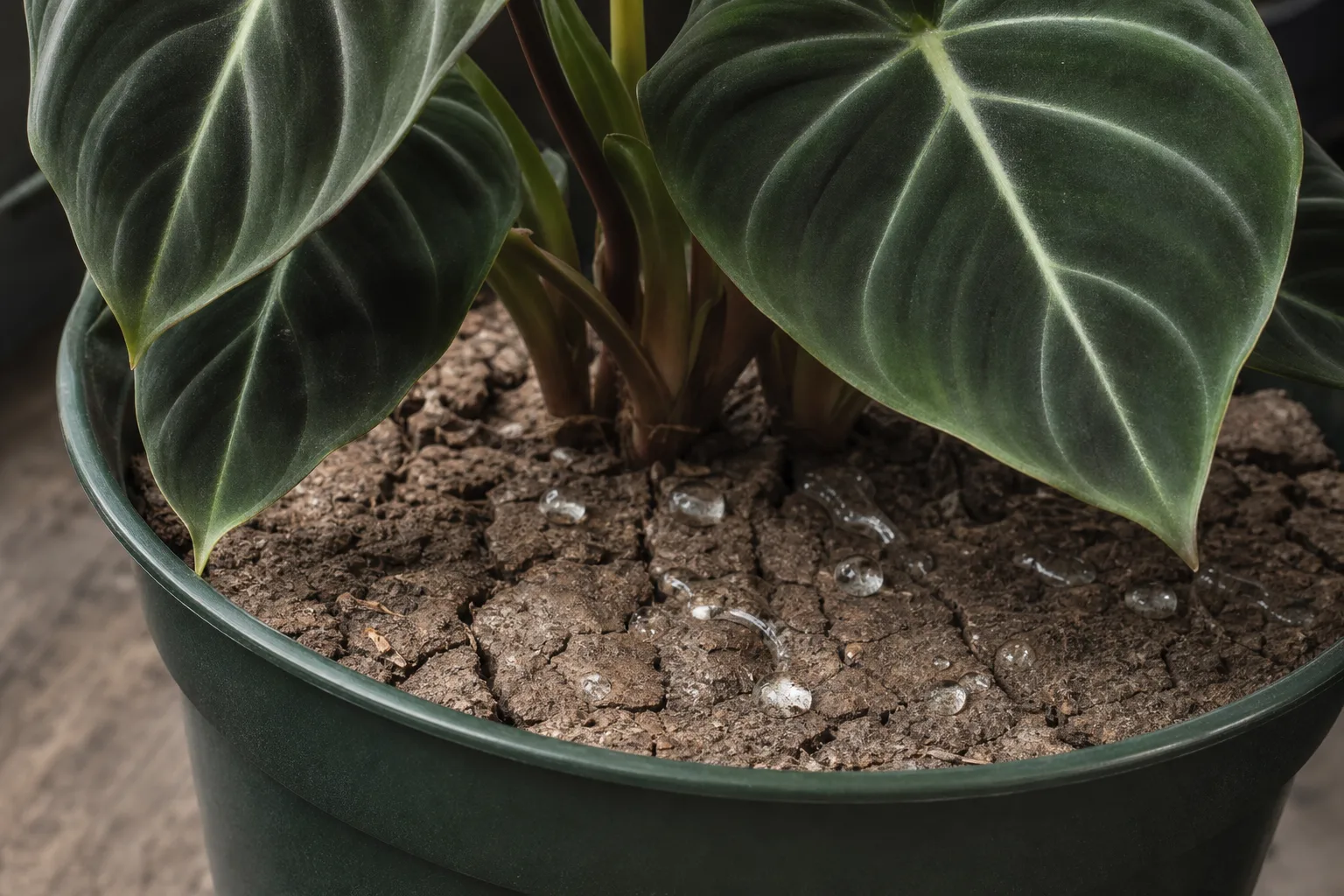
Dry Hydrophobic Soil on Philodendron Gloriosum: Causes, Checks & Fixes
This guide covers dry hydrophobic soil on Philodendron Gloriosum. See also the general Dry Hydrophobic Soil guide, watering, and light pages for this plant.
Dry Hydrophobic Soil on Philodendron Gloriosum: Causes, Checks & Fixes
Quick answer
When a new velvet leaf on Philodendron gloriosum stalls before unfurling while you have been “watering,” suspect dry hydrophobic soil before you blame pests or low light. Peat-heavy mix that dried completely now repels water-you pour from the top, runoff exits the drainage holes, and the rhizome zone around the creeping stem stays dusty dry while older velvet blades droop. On this terrestrial crawler in a wide shallow pot, that hidden drought is easy to miss because saucer water still flows even when the center never re-wets.
First step: bottom-soak the wide pot in room-temperature water until the top 3–5 cm darkens and the container feels noticeably heavier, then drain fully for 30 minutes. Do not keep splashing from the top onto crusted mix. If drought and repellency both seem possible, use the routing table below; if the whole ball is uniformly dry and accepts a slow pour, open underwatering instead.
| What you notice | Most likely cause | First move |
|---|---|---|
| Light pot, water races through, dry at 3–5 cm after “watering” | Hydrophobic dry core (this page) | Bottom-soak until top 3–5 cm moist; drain |
| Light pot, dry at 3–5 cm, mix accepts slow top water | Underwatering | Thorough soak until runoff; empty saucer |
| Heavy pot, wet mix, sour smell, soft rhizome | Overwatering / root rot | Stop water; inspect rhizome same day |
| Moist at 3–5 cm, crispy velvet tips only | Low humidity | Raise humidity; re-wet mix first if channeling |
| Repelling mix + limp leaves, wet vs dry unclear | Wilting | Pot-weight fork before another pour |
Symptom photo pending: water beading on crusted mix in a wide shallow Gloriosum pot with mix pulled away from the rim.
What hydrophobic soil looks like on Philodendron Gloriosum
Hydrophobic mix on Gloriosum often mimics underwatering-but a normal top watering does not fix it:
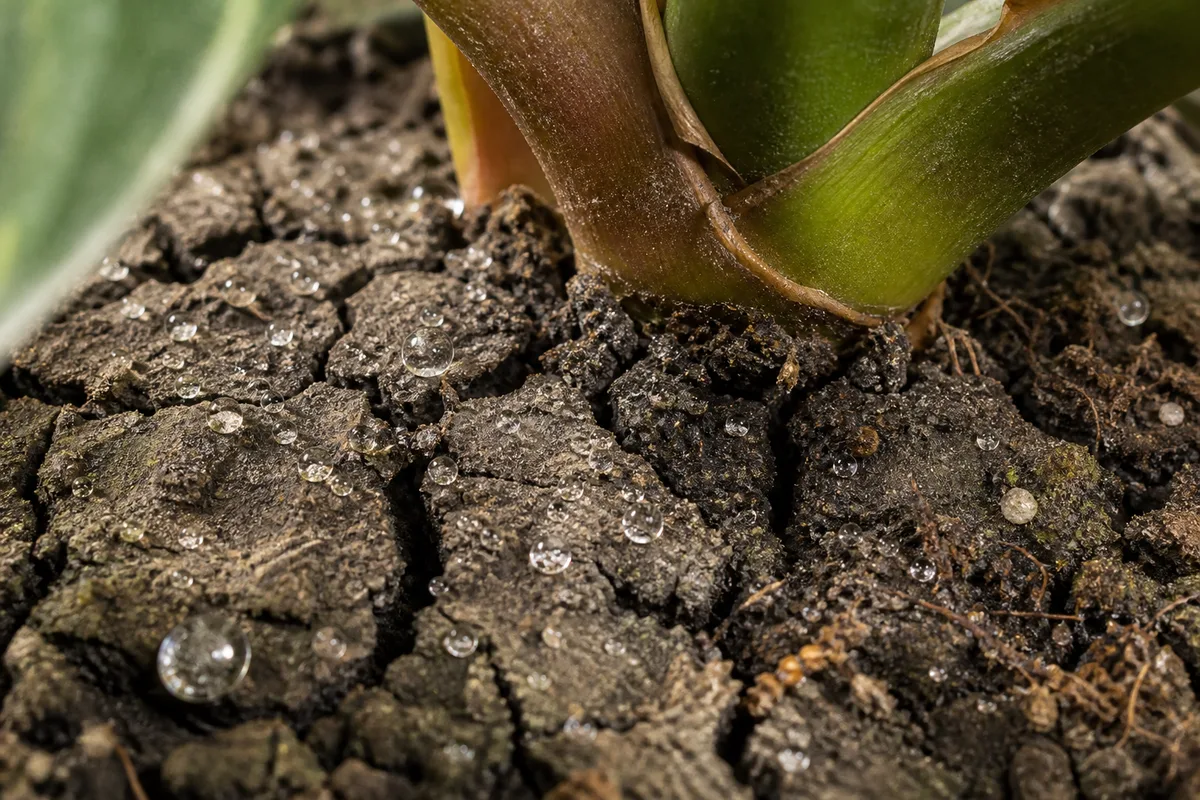
Dry Hydrophobic Soil symptoms on Philodendron Gloriosum - compare with healthy tissue on the same plant.
Pot and mix signs:
- Water beads on the surface or channels down the inside wall without soaking in
- Dry mix has shrunk and pulled away from the wide pot rim, leaving a gap where water runs down
- Pot feels light even right after you watered; saucer water ran out quickly
- Surface may look briefly damp while 3–5 cm down stays dusty dry
- White or pale crust on the surface that sheds water like wax (salt crust vs. hydrophobic crust-probe depth after watering)
Leaf and rhizome signs on this crawler:
- Velvet leaves droop and feel soft despite recent watering
- New leaf stalls before unfurling while older leaves look thirsty
- Rhizome on the surface looks firm, but mix beneath it is bone dry
- Crispy brown velvet margins on leaves that desiccated during the dry spell
This differs from overwatering-heavy wet pot, sour smell, yellow leaves with saturated mix throughout. It also differs from simple calendar underwatering, where the whole root ball is uniformly dry and a normal soak absorbs easily on the first pass. Our wilting guide walks the full branch when wet-soil collapse and dry-core channeling both seem possible.
A real recovery timeline
In March 2025, a single-node Gloriosum in a wide 8-inch peat-heavy pot returned from two weeks of travel neglect with mix shrunk from the plastic walls and one velvet blade fully limp. A top pour exited the drainage holes in under forty seconds; the probe at 3–5 cm stayed dusty dry and the creeping rhizome felt firm with no sour smell. After a sixty-minute bottom-soak and full drainage, the petiole firmed within three days. A new cataphyll resumed pushing from the rhizome tip at week three-typical once the root zone rehydrates on this slow crawler.
Symptom photo pending: surface rhizome on dry repellent mix beside evenly darkened mix after bottom-soak.
Hydrophobic soil vs. underwatering on Gloriosum - when runoff is the problem
Gloriosum wilts from both drought and repelling mix. The pot tells you which guide to open-not the calendar.
| Symptom pattern | Likely cause | Why it differs from hydrophobic soil |
|---|---|---|
| Uniformly dry mix that accepts slow top water | Simple underwatering | No channeling down pot walls; one thorough top soak usually enough |
| Water runs through in seconds; dry at 3–5 cm after watering | Hydrophobic dry core (this page) | Runoff disguises failure; center around rhizome stays dry |
| Heavy pot, sour smell, yellow leaves, wet throughout | Overwatering / rhizome rot | Light repellent mix fits drought-not swampy weight |
| Moist at 3–5 cm, crispy tips, no channeling | Low humidity / water quality | Fix air moisture per low-humidity guide |
| Slow growth, smaller new leaves, normal moisture | Low light | Improving light helps long-term; re-wet root ball first |
If both drought and hydrophobic seem possible, run the runoff test first: pour one cup slowly. Channeling to the sides within a minute confirms repelling mix even when the rhizome still feels firm.
Why Philodendron Gloriosum mix turns hydrophobic
Peat dry-down and wide shallow pot geometry
Peat and coco coir shrink when bone-dry and resist re-wetting. Water can run between the pot wall and the dried root ball instead of penetrating the center-a common failure in wide shallow pots where the mix dries unevenly at the edges first. On upright self-heading philodendrons, a tall column of mix may dry more uniformly; on Gloriosum, the large surface area relative to depth means rim and edge zones go hard-dry while the center around the surface rhizome lags-and then the whole ball repels water once the dry ring connects.
Rhizome moisture reserves mask wilt timing
Gloriosum stores some moisture in its horizontal rhizome-the thickened stem from which leaves emerge on creeping philodendrons. That reserve can keep the stem feeling firm and delay obvious velvet collapse even after fine roots in the dry core have stopped taking up water. Growers interpret firm rhizome tissue as proof the plant is hydrated, add another top splash when they see drainage, and miss that the rhizome zone in the dry center is still thirsty. By the time a new leaf stalls before unfurling, internal drought may already be advanced.
Wrong mix, travel dry-out, and old compacted substrate
Gloriosum needs an airy blend of potting mix, perlite, and orchid bark in a wide shallow pot-not dense all-purpose peat alone. Dense peat compacts over time, loses air pockets, and dries into a hard repellent block, especially problematic around the surface-running rhizome that must stay above stagnant moisture. Extended drought between waterings-common near bright windows, during travel, or when winter intervals stretch too far-sets up hydrophobic failure when you finally water again.
Mix not refreshed in one to two years breaks down; perlite floats to the top over repeated waterings, leaving lower layers dense and prone to dry-out. Salt crust from tap water and fertilizer can worsen surface repellency-scrape only obvious crust and flush at the next soak, or repot if buildup is thick per the soil guide.
Assuming drainage water means the plant is hydrated
Runoff from a repellent root ball looks like success. Many growers add another splash from the top, never realizing the rhizome zone in the dry center is still thirsty. Match your rhythm to pot weight and finger checks from the watering guide-not saucer fill level alone.
How to confirm the cause
Work through these checks before repotting or changing your whole routine:
- Runoff test - Pour slowly; water pools or runs down sides instead of darkening the surface within seconds.
- Gap check - Look for daylight between dry mix and the wide pot wall.
- Depth probe - Dry dusty mix 3–5 cm down immediately after a top watering attempt.
- Pot weight - Light pot with drooping velvet leaves despite recent watering.
- Re-wet trial - Bottom-soak 30–60 minutes (longer for wide pots); surface darkens and leaves perk if the rhizome was dry only.
- Rhizome check - Firm rhizome on the surface supports hydrophobic diagnosis; soft mushy rhizome with wet heavy mix suggests rot instead-open root rot.
- Smell - Neutral dry-earth smell fits hydrophobic drought; sour swampy odor means wet-soil failure, not this page.
- Mix age and texture - Dense peat-heavy substrate with little bark or perlite that dried completely during neglect or after repotting into stale bagged soil.
If top watering failed the probe test, hydrophobic soil is confirmed-move to bottom soaking.
First fix for Philodendron Gloriosum
Bottom-soak the pot until the mix fully rehydrates, then drain completely.
Set the wide pot in a sink or tray of room-temperature water so the mix absorbs upward through drainage holes. Bottom watering may take an hour or more on stubborn dry root balls in shallow wide containers-check hourly by pressing the top 3–5 cm rather than leaving the pot submerged indefinitely. Remove once the surface darkens and the pot feels noticeably heavier; let excess drain 30 minutes and empty any cachepot it sits inside. Do not leave Gloriosum sitting in saucer water long-term-this is a one-time rehydration, not a permanent standing-water setup.
Soak duration by pot width (editorial heuristics for wide shallow Gloriosum pots):
| Pot width (shallow crawler pot) | Typical bottom-soak range | Check signal |
|---|---|---|
| 6-inch wide | 30–45 minutes | Top 3–5 cm moist; pot heavier |
| 8-inch wide | 45–90 minutes | Surface darkened throughout |
| 10–12-inch wide | 90 minutes–2 hours | No dusty core at 3–5 cm |
If bottom soaking fails on the first pass, submerge the pot briefly until air bubbles stop escaping, then drain. That forces water into a severely repellent root ball faster than repeated top splashes.
Do not repot on day one unless the mix remains hydrophobic after two thorough soaks. Do not fertilize a drought-stressed plant. Keep the rhizome on the surface-do not bury it while trying to hold moisture.
Symptom photo pending: wide Gloriosum pot bottom-soaking in a sink with water halfway up the sides.
Step-by-step recovery
- Confirm hydrophobic mix with runoff and depth-probe tests before treating.
- Bottom-soak per the duration table until mix is evenly moist; drain thoroughly and empty cachepots.
- For severe repellency, submerge briefly until bubbling stops, then drain-never overnight.
- Poke shallow aeration holes in the crust with a chopstick-avoid damaging the surface rhizome.
- Trim fully crispy velvet leaves that will not recover; leave firm tissue in place.
- Keep bright indirect light and 60–70% humidity so the plant can use moisture without baking the wide pot dry at the rim-humidity target follows aroid horticulture consensus and the overview humidity section, not a single Gloriosum extension factsheet.
- If mix still repels water after two soaks, repot into fresh chunky aroid blend with extra perlite and bark per the soil guide and repotting guide. Do not reuse hydrophobic peat clumps from the old ball.
- Resume watering only when the top 3–5 cm is dry-judge by pot weight and finger checks from the watering guide, not the calendar.
Hold off on fertilizer until new growth looks firm and the next top watering absorbs normally.
Recovery timeline and what to expect
Leaves often perk within a few days after a successful soak if the rhizome stayed firm. New growth from the rhizome tip may take two to four weeks in active season once moisture is consistent. Severely desiccated leaves with brown crispy edges will not fully green up-judge recovery by a firm rhizome and a new leaf pushing from the growth front.
Improvement signs: pot feels heavier after watering, leaves hold their velvet texture without collapsing, new leaf unfurls cleanly, mix absorbs water on the next top watering.
Worsening signs: rhizome softens or smells sour, multiple leaves yellow while center mix stays dry, growth tip collapses despite soaks, or mix still channels water after two thorough re-wets.
Mistakes to avoid
- Watering daily from the top after one dry spell-water channels past repellent mix without reaching the rhizome zone
- Assuming saucer drainage proves the plant drank-check center moisture and pot weight
- Repotting into another dense peat mix-Gloriosum needs bark and perlite for drainage and long-term wetting
- Burying the rhizome to “hold moisture”-surface placement prevents rot; burying worsens both dry-out at edges and wet rot at the tip
- Fertilizing before the mix re-wets and new growth resumes
- Leaving the pot in standing water for days after rehydration-anaerobic roots follow prolonged saturation
- Leaving the nursery pot inside a cachepot full of drain water after bottom-soaking
- Reusing hydrophobic peat clumps at repot instead of fresh chunky mix
Philodendron Gloriosum care cross-check
Bright indirect light and 60–70% humidity support steady transpiration without baking the wide pot dry at the rim. Pair that with chunky aroid mix in a wide shallow container. Water when the top 3–5 cm is dry-roughly every 10–14 days in active growth for many indoor specimens, less in winter per the watering guide (editorial interval, not extension-prescribed for P. gloriosum specifically). Keep the rhizome on the surface with the active growth tip above stagnant mix. If the pot dries faster at the edges than the center, check mix composition before increasing watering frequency.
How to prevent hydrophobic soil next time
Use chunky aroid mix from the start-potting soil plus perlite and orchid bark, not dense all-purpose peat alone. Water deeply enough that the whole root ball gets moisture each cycle, not just a surface splash. Avoid letting the entire wide pot bake bone-dry for weeks during travel or winter neglect-winter means longer intervals, not depth of drying. Refresh old compacted mix every one to two years before it turns water-repellent. Track pot weight so you notice when a heavy soak fails to add heft. Flush salts periodically if using tap water and fertilizer-crusty surfaces repel water faster. Bottom-soak at the first sign of mix pulling from the pot wall rather than after velvet leaves collapse.
When to worry / when to repot or propagate instead
Worry when two thorough soaks fail to darken the center mix, the rhizome feels soft or smells sour, or the growth tip collapses despite your efforts. At that point unpot, trim dead tissue, and repot into fresh chunky mix with the rhizome on the surface per the repotting guide-or take a healthy rhizome cutting if the main growth point is lost, following the propagation guide.
Escalation checklist:
- Mix smells sour after soaking → stop water; inspect for rot same day
- Repels water again within two weeks of a successful soak → repot with fresh mix from the soil guide
- Growth tip collapses with firm roots elsewhere → rhizome cutting salvage per propagation guide
- Wet heavy pot with yellow leaves → overwatering, not another drought soak
Do not leave the pot submerged overnight-oxygen loss on fine roots and the surface rhizome can follow prolonged saturation even during rescue.
Related Philodendron Gloriosum guides
- Gloriosum overview - crawler biology, humidity targets, and full care map
- Watering - dry-down checks that prevent both drought and wet rhizome
- Soil - chunky aroid mix after repeated repellency
- Repotting - refresh compacted peat in wide shallow geometry
- Propagation - rhizome cutting when growth tip is lost
- Underwatering - uniform dry mix that accepts top water
- Wilting - wet-vs-dry collapse when cause is unclear
- Overwatering - chronic wet mix before acute collapse
- Root rot - soft rhizome and sour smell escalation
- Low humidity - crispy velvet tips with otherwise moist mix
- Compacted soil - dense substrate overlap when drainage slows
Conclusion
Dry hydrophobic soil on Philodendron Gloriosum is a hidden drought problem disguised as successful watering-especially on wide shallow pots where edge-dry mix channels runoff past a firm surface rhizome. Confirm with runoff, a light pot, and dry mix 3–5 cm down after a top pour. Fix by bottom-soaking until the mix rehydrates throughout, then drain. Prevent with chunky aroid mix from the soil guide, deep watering cycles from the watering guide, and timely mix refresh before peat dries into a repellent block.
Escalation checklist: two failed soaks → repot; sour smell or soft rhizome → root rot; lost growth tip with firm sections elsewhere → propagation. When mix still accepts water but the pot is light and dry throughout, use underwatering instead. Success is a firm rhizome, evenly moist root zone, and new velvet growth from the creeping front.