Deformed New Growth on Philodendron Gloriosum: Causes
Quick answer
Deformed new growth on Philodendron Gloriosum usually means the rhizome tip is buried in wet mix, humidity dropped during unfurl, or thrips fed on the cataphyll. First step: inspect the active tip and newest sheath at eye level before repotting or fertilizing.
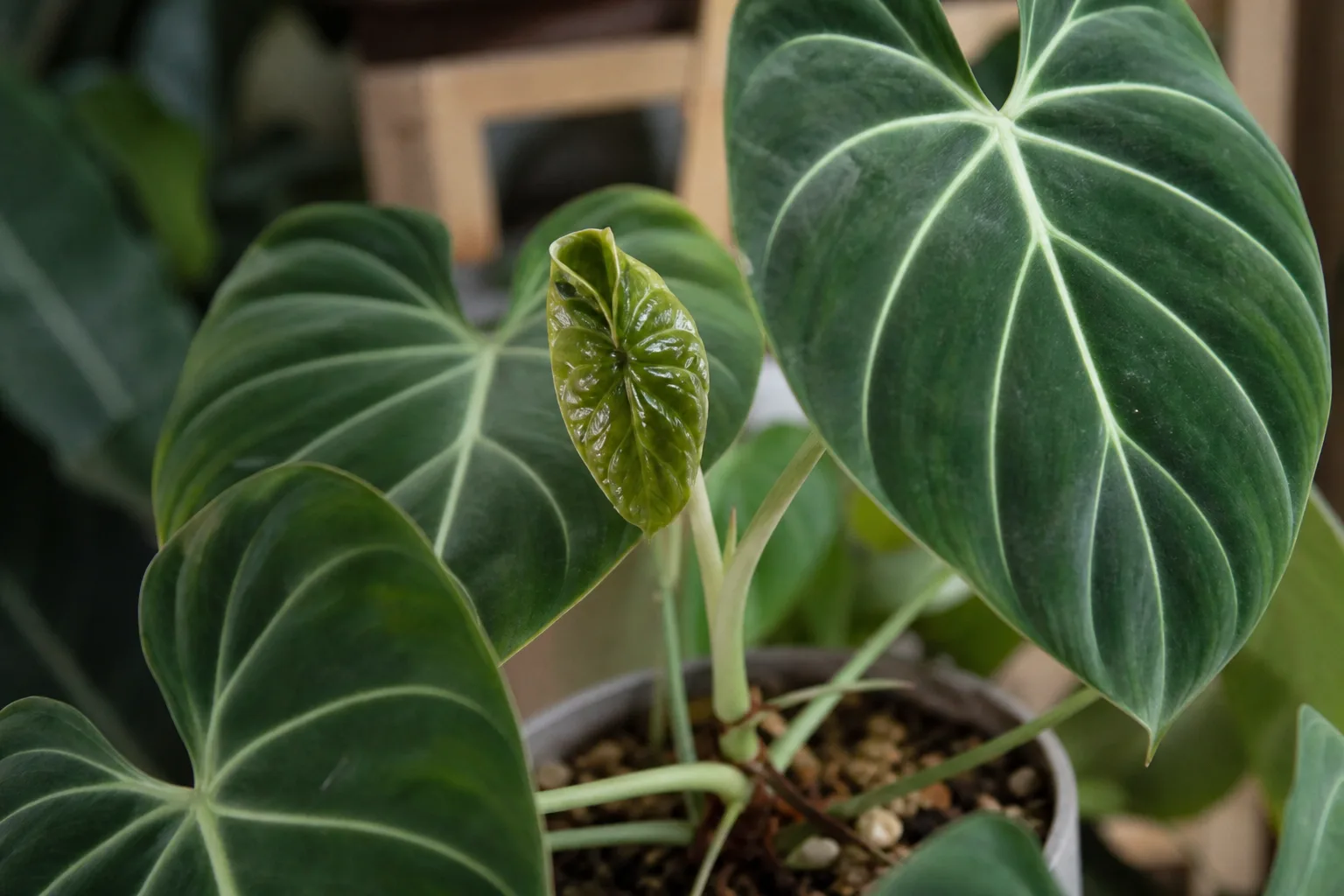
Deformed New Growth on Philodendron Gloriosum: Causes, Checks & Fixes
This guide covers deformed new growth on Philodendron Gloriosum. See also the general Deformed New Growth guide, watering, and light pages for this plant.
Deformed New Growth on Philodendron Gloriosum: Causes, Checks & Fixes
Quick answer
Deformed new growth on Philodendron Gloriosum usually means the rhizome tip is buried in wet mix, humidity dropped during unfurl, or thrips fed on the cataphyll. First step: inspect the active rhizome tip and newest sheath at eye level before Philodendron Gloriosum repotting guide, fertilizing, or trimming.
Philodendron gloriosum is a creeping terrestrial philodendron from tropical America that advances horizontally and unfurls one large velvet leaf at a time from a single active tip. When that tip or its protective cataphyll is stressed, the next leaf-not the whole plant-shows the damage. Older heart-shaped foliage can look perfect while the freshest growth is crinkled, torn, miniature, or frozen inside its sheath.
What deformed new growth looks like on Philodendron Gloriosum
Healthy Gloriosum produces a swollen cataphyll at the rhizome front; over days to weeks a pale velvet blade emerges with prominent white veins and expands into a broad heart. Deformation targets that unfolding leaf:
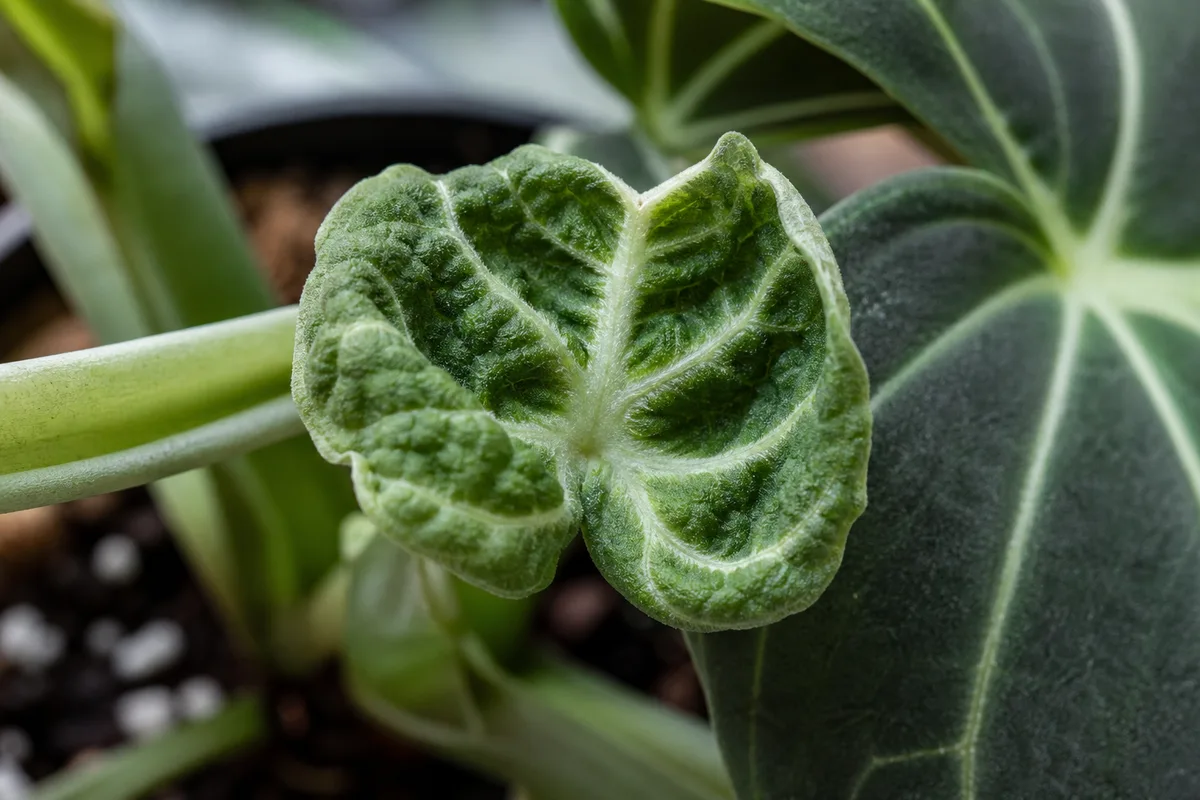
Deformed New Growth symptoms on Philodendron Gloriosum - compare with healthy tissue on the same plant.
- Cataphyll stuck shut for weeks while the leaf inside crinkles or tears
- New blade smaller than the previous leaf with thin petiole and weak structure
- Asymmetric heart shape, accordion pleats, or a leaf that stops expanding halfway
- Brown or translucent patches on the youngest velvet surface only
- Silver streaks or black specks visible when you gently part the newest sheath
- Rhizome tip sunk below the mix line, soft, or surrounded by constantly wet soil
What it is not: Yellowing starting on the lowest old leaves (often overwatering), long bare gaps between every node (leggy low light on a different growth pattern), or random holes in mature foliage (physical damage or chewing pests). Deformed new growth at the crawler tip with stable older leaves narrows the cause list quickly.
Why Philodendron Gloriosum gets deformed new growth
Buried or wet rhizome tip
Gloriosum is not a climber-it crawls. The growth front must stay on or just above the mix surface in a wide shallow pot. When the rhizome gets buried during repotting or slides under wet soil from overwatering, the active tip loses oxygen and new leaves stall, emerge stunted, or fail to unfurl. This is the most Gloriosum-specific cause and easy to miss because the plant still holds one impressive older leaf.
Low humidity during unfurl
Velvet aroids lose moisture at the leaf margin while expanding. Philodendrons prefer high humidity but adapt to average homes-Gloriosum sits at the demanding end of that range and needs roughly 60–70% for clean unfurling. When indoor air drops-especially with winter heating-the cataphyll dries and hardens, trapping the leaf inside. Iowa State Extension notes that low humidity is the most likely cause of poor leaf quality on sensitive houseplants, and stuck or torn new velvet leaves fit that pattern.
Thrips on the cataphyll
Thrips rasp tender tissue inside the leaf roll before it opens. Young leaves still expanding when thrips feed can become permanently stunted, crinkled, or curled. University of Maryland Extension lists aroids including Philodendron among commonly affected indoor plants. On Gloriosum, damage usually appears on consecutive new leaves from the same tip while older velvet hearts stay intact-unlike humidity stress, which may also brown margins on existing foliage.
Insufficient light for large leaf production
Gloriosum needs Philodendron Gloriosum light guide to fuel its slow, large-leaf cycle. In dim corners, new leaves emerge small, pale, or structurally weak-looking deformed next to a single older leaf produced under better conditions. Philodendrons can survive in relatively low indoor light, but Philodendron Gloriosum overview will not build normal velvet tissue there.
Root stress from overwatering
When mix stays wet for days, roots cannot absorb the oxygen needed to function normally and the plant lacks energy for proper new tissue. On a crawler, wet soil around the rhizome overlaps with buried-tip damage-both stall the front leaf while older foliage may still look firm.
Calcium deficiency and uneven watering
Calcium is immobile, so deficiency symptoms appear first on new growth, including distorted or misshapen young leaves. This is less common than humidity or rhizome issues on Gloriosum but worth considering if you use only distilled water long term without repotting, or if the mix swings from bone dry to flooded every cycle.
Cold drafts and recent repotting shock
Gloriosum grows best around 18–30°C (65–86°F). Cold air from winter windows or AC vents can interrupt cell development in the expanding cataphyll. A recent repot that buried the rhizome, a move, or a fertilizer spike can also produce one or two odd leaves before growth stabilizes.
How to confirm the cause
Work through these checks in order:
- Rhizome path - Trace the crawler from the oldest leaf to the tip. Is the active node on the surface or buried? Is the tissue firm or soft?
- Cataphyll exam - In bright light, gently inspect the newest sheath for stuck edges, tears, silver stippling, or black frass specks.
- Humidity at leaf height - Below 50% strongly supports unfurl failure on velvet Gloriosum.
- Soil moisture - Probe the top 3–5 cm. Soggy mix with a stalled tip suggests root-zone stress; chronic dryness may limit expansion.
- Light at the leaf - A soft shadow on your hand at midday means usable indirect light; faint shadow means the plant is struggling to build normal tissue.
- Recent changes - Repotting, relocation, new plants nearby, or heating season timing.
Confirmed buried tip: rhizome below mix line with wet soil contact. Confirmed humidity issue: stuck dry cataphyll, hygrometer below 50%, no pest signs. Confirmed thrips: stippling, frass, or insects in the newest sheath.
The first fix to try
Inspect the active rhizome tip and newest cataphyll before any other treatment.
If the tip is buried or sitting in wet mix, gently expose it onto the surface of the chunky aroid mix-do not repot on day one unless tissue is soft or rotten. If the sheath is stuck with no pest signs, run a humidifier to hold 60–70% near the foliage immediately.
Do not fertilize, prune heavily, or install a moss pole. Damaged velvet leaves will not reshape; your proof of success is the next clean unfurl from the tip.
If you find thrips signs, isolate the plant and rinse leaf surfaces and the cataphyll with lukewarm water before any spray.
Step-by-step recovery
When the rhizome tip was buried or wet
- Uncover the tip so the growth node sits on the mix surface, oriented toward open space in the pot.
- Let the top 3–5 cm of mix dry before the next watering.
- Confirm the wide pot has forward room for the crawler-reposition toward empty space without upsizing unless roots are exhausted.
- Watch one full cataphyll cycle before repotting unless tissue is mushy.
When humidity caused stuck unfurling
- Run a humidifier at 60–70% consistently-not occasional misting alone.
- Move the pot off radiators and away from dry forced-air paths while keeping bright indirect light.
- For a severely stuck sheath with no pests, a damp paper towel wrapped loosely around the cataphyll for 10–15 minutes can soften it-never force or peel the leaf open.
- Judge the next new leaf in four to eight weeks; Gloriosum is slow.
When thrips are confirmed or suspected
- Isolate from other aroids.
- Rinse all leaf surfaces, stems, and cataphylls with lukewarm water for two to three minutes; repeat every three to five days for two weeks.
- After the first rinse, apply insecticidal soap or horticultural oil to the newest growth, following label rates for houseplants.
- Do not remove every blemished leaf-focus on clearing the active tip.
When light or roots are limiting
Low light: Move gradually to bright indirect light within a few feet of an east window or filtered south/west exposure.
Overwatering: Stop watering until the top 3–5 cm is dry. Repot into fresh chunky mix only if soil smells sour or rhizome tissue is soft.
Calcium or watering swings: Even out the Philodendron Gloriosum watering guide and use balanced fertilizer at half strength monthly only during active leaf production after light, humidity, and roots are stable.
Recovery timeline
| Stage | What to expect |
|---|---|
| Week 1 | No further tearing on the active cataphyll; tip exposed and firm |
| Weeks 2–4 | Next sheath swells normally; humidity or pest rinses underway |
| Weeks 4–10 | One clean velvet heart unfurls with typical vein pattern |
| Older leaves | Permanent crinkles or small size remain; they do not flatten |
If two consecutive new leaves stay distorted after rhizome correction, stable 60–70% humidity, and pest clearance, inspect roots for rot or bound circling in the shallow pot.
Lookalike symptoms
Slow growth - No new cataphyll for months but no visible deformation on the last leaf. Often light or seasonal pause, not stuck unfurl.
Brown tips - Crispy margins on existing foliage, not isolated crinkling inside the newest sheath. Fix humidity and placement.
Not enough light - Small pale leaves across several nodes with long thin petioles, not one torn cataphyll on an otherwise healthy crawler.
Overwatering - Yellow lower leaves, sour soil smell, soft rhizome. Let mix dry and assess rot before expecting normal unfurl.
Spider mites - Fine stippling with webbing in dry conditions; uniform speckling rather than thrips’ streaks and frass inside the cataphyll.
Mistakes to avoid
- Burying the rhizome deeper at repot to “stabilize” the plant
- Pulling or cutting open a stuck cataphyll by force
- Misting heavily onto velvet leaves instead of raising room humidity
- Fertilizing a stressed tip hoping to “push” a leaf out
- Installing a moss pole-Gloriosum crawls horizontally, it does not climb
- Ignoring thrips on one velvet aroid while it spreads to neighbors
How to prevent deformed new growth on Philodendron Gloriosum
- Keep the rhizome on the mix surface with the tip facing open space in a wide shallow pot
- Maintain 60–70% humidity year-round, especially during unfurl
- Water when the top 3–5 cm dries-not on a blind calendar
- Provide bright indirect light so each new leaf has energy to expand
- Quarantine new plants and inspect cataphylls weekly in spring and summer
- Avoid cold drafts below about 16°C (60°F) on the active tip
When to worry
Escalate if the rhizome tip softens or smells sour, if distorted leaves keep appearing through warm months with stable care, if thrips signs spread to multiple plants, or if new tips brown and collapse while soil stays wet-root rot on Philodendron Gloriosum may overlap. One bad leaf on a firm tip with fixable humidity is recoverable; repeated failure on consecutive cataphylls needs a harder look at roots, pests, and rhizome health.
Conclusion
Deformed new growth on Philodendron Gloriosum is a tip-level problem on a slow velvet crawler-not a generic houseplant mystery. Inspect the rhizome front and cataphyll first; expose a buried tip, hold 60–70% humidity for unfurl, and clear thrips if present. Measure recovery by the next normal velvet heart, not by repairing the damaged leaf you already have.
When to use this page vs other Philodendron Gloriosum guides
- Philodendron Gloriosum watering guide - Use for routine moisture checks before assuming deformed new growth is the main issue.
- Philodendron Gloriosum problems hub - Browse all 22 common issues on this species.