Damaged Roots on Philodendron Gloriosum: Causes, Checks &
Quick answer
Damaged roots on Philodendron Gloriosum usually follow overwatering, a buried rhizome, repotting trauma, or extreme root binding-the creeping stem and fine roots lose function underground. First step: unpot, trim soft tissue back to firm rhizome and roots, and repot into fresh chunky mix with the rhizome on the surface.
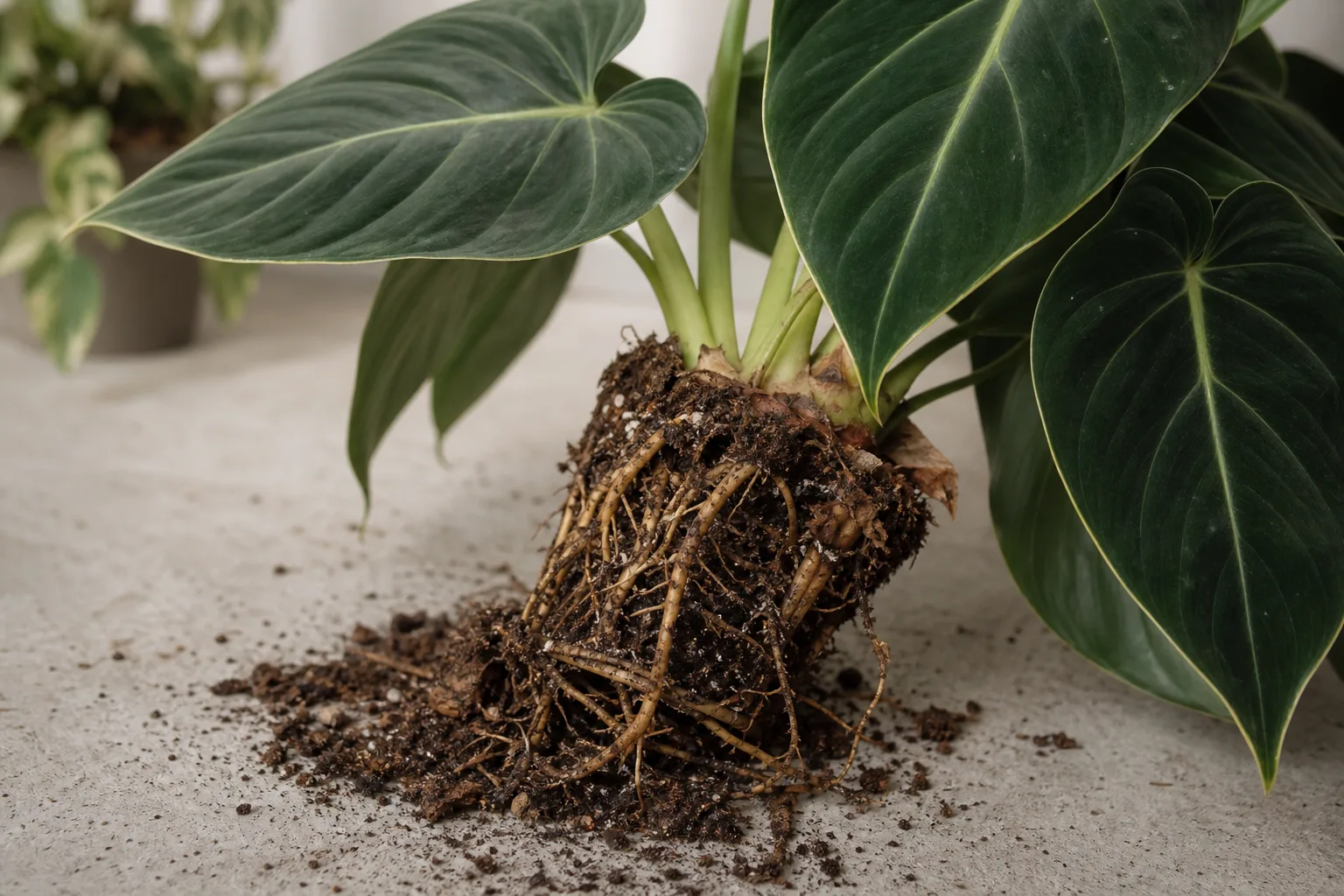
Damaged Roots on Philodendron Gloriosum: Causes, Checks & Fixes
This guide covers damaged roots on Philodendron Gloriosum. See also the general Damaged Roots guide, watering, and light pages for this plant.
Damaged Roots on Philodendron Gloriosum: Causes, Checks & Fixes
Quick answer
Damaged roots on Philodendron Gloriosum hide below the soil line until velvet leaves yellow, new growth stalls, or the pot smells sour-even when one large leaf still looks fine. This terrestrial crawler stores moisture in its rhizome and sends roots from nodes along a horizontal stem. When that rhizome sits buried in wet mix, roots break during rough Philodendron Gloriosum repotting guide, or a tight root ball runs out of usable soil, uptake fails and the plant declines above ground.
First step: unpot gently, inspect the rhizome and roots together, and trim any soft brown or black tissue back to firm pale sections. Repot into fresh chunky aroid mix in a wide shallow pot with the rhizome on or slightly above the surface, then withhold water until the mix dries throughout. Do not keep watering limp velvet leaves when the pot is already heavy-that deepens root failure.
What damaged roots look like on Philodendron Gloriosum
Root injury on Gloriosum shows in patterns tied to its creeping habit and slow velvet leaf production.
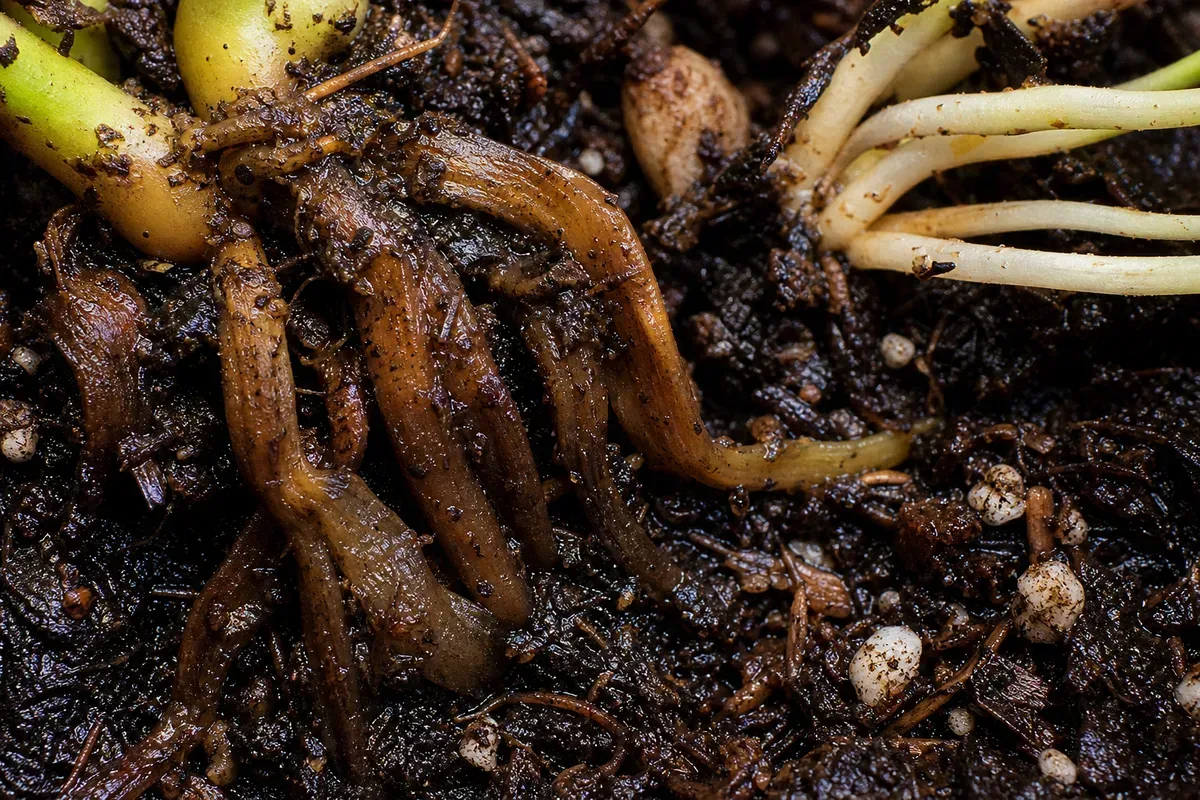
Damaged Roots symptoms on Philodendron Gloriosum - compare with healthy tissue on the same plant.
Above soil:
- New leaves fail to unfurl or stall with wet brown tissue at the base
- Velvet leaves yellow or droop while the pot stays heavy and damp
- Growth stops for weeks despite warm room temperatures
- Older leaves may look acceptable while the active growth tip struggles
- Soil smells sour or musty from drainage holes
- White fungus gnats hover above constantly wet surface mix
Below soil:
- Rhizome sections that should feel firm instead dent or feel hollow
- Roots that should be pale and firm look brown, black, translucent, or mushy
- Freshly torn root tips from rough repotting that brown within days
- Dense circling roots with almost no soil left in a root-bound wide pot
- Rhizome buried below the mix line sitting against constantly wet substrate
Unlike underwatering, the pot does not feel light. Rotting roots cannot take up water even when the mix is wet-wilted velvet leaves with damp soil usually mean root failure, not thirst. Dry mix throughout with slightly limp but firm leaves points to thirst, not root injury.
Why Philodendron Gloriosum gets damaged roots
Several traits make this slow crawler vulnerable to root failure indoors:
Chronic overwatering in slow-draining mix. Gloriosum needs an airy aroid blend and time to dry between drinks. When mix stays wet for days, roots cannot absorb the oxygen they need and fine roots die first; decay can spread into the rhizome. The rhizome stores some moisture, which can mask early underwatering-but it cannot survive long in stagnant wet soil.
Buried or packed rhizome. Gloriosum is a terrestrial crawler. The stem is meant to travel horizontally at or above the mix surface with the growth tip exposed to air. Burying the rhizome during repotting or packing wet mix around the creeping stem is a common Gloriosum-specific failure mode that leads to soft tissue even when watering seems modest.
Oversized decorative pots. Jumping to a much larger container after repotting keeps outer soil wet for weeks while inner roots sit anaerobic. Missouri Botanical Garden advises increasing pot size only one pot size at a time so fresh soil does not stay soggy for long periods.
Dense peaty mix without bark or perlite. Heavy moisture-retentive soil never dries within the 10–14 day summer window Gloriosum expects. Root rot usually results from a soil mix that does not drain quickly or from overly frequent watering.
Low light slowing water use. In dim corners, transpiration drops while watering continues on schedule. Mix stays wet longer and roots lose oxygen even when you think you are watering modestly-new velvet leaves stall before unfurling.
Physical damage during repotting. Broken or torn roots cannot take up water until they regrow. Rough handling, pulling a stuck rhizome from old mix, or watering heavily immediately after aggressive trimming can shock a plant that was recovering from mild binding.
Extreme root binding with depleted soil. When roots have filled a wide shallow pot, the tight mat holds almost no air or moisture buffer. Water runs through too fast in some zones or pools in others, stressing roots despite regular care.
Most cases trace back to culture-too much moisture around the rhizome and roots for too long, or fresh trauma during repotting-not a random pathogen attacking a healthy plant.
How to confirm the cause
Work through these checks before you repot or prune:
- Pot weight and moisture depth - Lift the pot. Heavy days after watering with damp soil 3–5 cm deep suggests roots are sitting in stale water. Light dry soil with firm rhizome tissue points away from root damage.
- Rhizome placement - Slide the plant partly out and look at stem position. A buried creeping rhizome in wet mix confirms a Gloriosum-specific cause that upright philodendrons do not share.
- Smell test - Sour or musty odor from drainage holes or lifted root ball confirms anaerobic conditions. Neutral earthy smell with appropriately dry soil suggests another issue.
- Rhizome and stem firmness - Pinch the creeping stem where it meets the mix. Firm tissue with wet soil may mean early root decline; mush that dents confirms decay is advancing toward the growth tip.
- Partial unpot check - Peek through the drainage hole or lift one side of the root ball. Pale firm roots look healthy; brown jelly-like roots or a soft rhizome confirm damage.
- Recent repot history - Did wilting or yellowing start within a week of aggressive root pruning, a pot upsize, or burying the rhizome? That timeline suggests mechanical injury or repotting stress rather than gradual rot.
- Light and season - Autumn and winter slow dry-down. A summer Philodendron Gloriosum watering guide left unchanged in a dim room often produces wet-soil wilt that mimics thirst.
If the rhizome is firm, roots are mostly pale, and soil smells neutral, look at underwatering, low humidity, or light before assuming root injury.
The first fix to try
Unpot, inspect the rhizome and roots, and remove all soft tissue before repotting.
That single action stops decay from spreading and tells you whether the plant is salvageable. Here is the sequence:
- Water lightly the day before if the mix is bone dry-dry soil shatters roots. Skip this if the mix is already wet.
- Tip the plant out gently. Brush away loose mix without pulling the rhizome.
- Compare firm pale rhizome and roots against soft brown or black sections. On Gloriosum, inspect the active growth tip first-it is the hardest tissue to replace.
- Trim mushy roots and rhizome with clean scissors or a sharp blade. Cut out infected roots and repot in sterile mix, trimming back to firm tissue even if that means shortening the creeping stem.
- Let cut surfaces air-dry for several hours in a warm spot out of direct sun.
- Repot into fresh chunky aroid mix-potting soil, perlite, and orchid bark-in a wide shallow pot sized to the trimmed root mass. Position the rhizome on the surface with the growth tip above the mix and room to advance horizontally.
- Withhold water until the new mix is dry throughout, then resume the normal dry-down rhythm: top 3–5 cm dry in summer, slower in winter.
Do not fertilize, mist heavily, or move the plant to a new location on the same day. One intervention at a time reduces stress on a root system that is already failing.
Step-by-step recovery
After the first trim and repot, support regrowth in order:
Week 1–2: Stabilize. Keep Philodendron Gloriosum light guide, 60–70% humidity if you can provide it, and warm room temperatures. Avoid drafts on wet mix. Do not poke or re-unpot to check progress daily.
Week 2–4: First water cycle. When the mix is dry throughout, water thoroughly until it drains, then empty the saucer. The rhizome should not sit in standing water. Judge success by firm tissue and neutral smell-not by whether old yellow leaves green up.
Week 4–8+: Watch the growth tip. Gloriosum is slow. A new velvet leaf unfurling cleanly from the advancing rhizome is the best recovery sign. Old damaged leaves usually do not return to perfect form; remove them once the plant is stable if they look unsightly.
If roots were mostly gone but rhizome is firm: You may need rhizome-section propagation. Cut healthy segments with at least one node and one leaf, let cuts callus, then root in moist airy mix under high humidity. Discard mushy sections entirely.
If the growth tip is mushy: Salvage depends on whether firm rhizome exists behind the rot. Sometimes the plant can push a new tip from an older node; sometimes propagation from the last firm section is the only path.
Recovery timeline
Gloriosum recovers more slowly than fast vining philodendrons because it produces only a few leaves per year under typical indoor conditions.
- Mild root trimming with firm rhizome: 4–8 weeks before confident new growth
- Moderate damage with half the root mass removed: 2–3 months before a clean new leaf
- Severe rot with rhizome-section restart: 3–6 months or longer depending on humidity and light
Judge recovery by underground firmness and new leaf production-not by whether existing yellow velvet leaves revert. Those leaves are spent; the growth tip tells the truth.
Lookalike symptoms
Underwatering. Light pot, dry mix throughout, and slightly limp but firm leaves with a firm rhizome usually mean thirst. Water once thoroughly and recheck in a few days.
Low humidity. Brown crispy edges on velvet leaves without wet soil or mushy roots point to dry air-not root injury. Humidity stress and root damage can overlap; confirm with an unpot check.
Normal slow growth. Gloriosum is naturally slow indoors. One stalled leaf in firm mix with appropriate dry-down may be seasonal, not root failure. Persistent wet soil plus stalled unfurling is different.
Root rot specifically. Rot from chronic overwatering is the most common subset of damaged roots. If mushy tissue and sour smell dominate, you are likely dealing with decay rather than mechanical breakage alone-but the rescue steps overlap.
Mistakes to avoid
- Watering more when velvet leaves wilt without checking whether the mix is already wet
- Leaving rotted rhizome or root tissue in the pot hoping it will recover
- Burying the creeping stem because it looked untidy above soil
- Repotting into a much larger deep pot to “give roots room”
- Fertilizing to “strengthen” a plant with damaged roots
- Pulling a stuck rhizome aggressively during repotting instead of loosening the pot edges first
- Checking roots daily and disturbing callusing cut surfaces
- Discarding the plant because one old leaf yellowed while the rhizome is still firm
Philodendron Gloriosum care cross-check
After root rescue, align routine care with what this crawler actually needs:
- Pot shape: Wide and shallow, not tall and narrow-room for horizontal rhizome travel
- Mix: Chunky and fast-draining; avoid straight peat that compacts
- Rhizome position: On or above the mix surface; growth tip exposed
- Water: Keep soil evenly moist, but not soggy-when top 3–5 cm is dry in active growth; reduce frequency in winter
- Light: Bright indirect-roots use water more efficiently in adequate light
- Humidity: 60–70% supports velvet leaf recovery without keeping mix soggy
How to prevent damaged roots next time
- Repot before the root ball is a solid mat with no soil buffer-but handle the rhizome gently
- Size up one pot width at a time in a wide shallow container
- Always use drainage holes and empty saucers after watering
- Water on dry-down, not calendar habit, especially in autumn and winter
- Keep the rhizome visible and advancing-not buried during routine top-dressing
- Quarantine and inspect new plants before placing near other aroids
- Wear gloves when handling cut tissue; philodendrons contain calcium oxalate crystals that irritate skin
When to worry
Treat root damage as urgent when:
- The rhizome feels squishy along more than a small section
- Black decay climbs toward the active growth tip
- Wilt appears despite wet soil and worsens over 48 hours
- More than half the root mass is mushy on inspection
- The mix smells strongly sour even after surface drying
If every rhizome section is soft and no firm growth tip remains, propagation from the last healthy node-or accepting loss-is more realistic than repeated repotting.
Conclusion
Damaged roots on Philodendron Gloriosum are a hidden problem until the creeping rhizome or fine roots fail underground. The plant-specific risk is treating this crawler like an upright philodendron-burying the stem, using deep pots, or watering on habit while velvet leaves still look impressive. Unpot once to see the truth, trim back to firm tissue, repot with the rhizome on the surface, and judge recovery by new growth from the advancing tip-not by old leaf color alone.
When to use this page vs other Philodendron Gloriosum guides
- Philodendron Gloriosum watering guide - Use for routine moisture checks before assuming damaged roots is the main issue.
- Philodendron Gloriosum problems hub - Browse all 22 common issues on this species.