Soil Too Alkaline on Philodendron Brasil: Causes, Checks &
Quick answer
Soil too alkaline on Philodendron Brasil shows as pale new heart-shaped leaves with green veins, washed-out lime streaks, and no response to fertilizer while older vines look fine. First step: test mix pH on damp soil-if it reads above 7.0, stop feeding and repot into fresh slightly acidic mix with perlite.
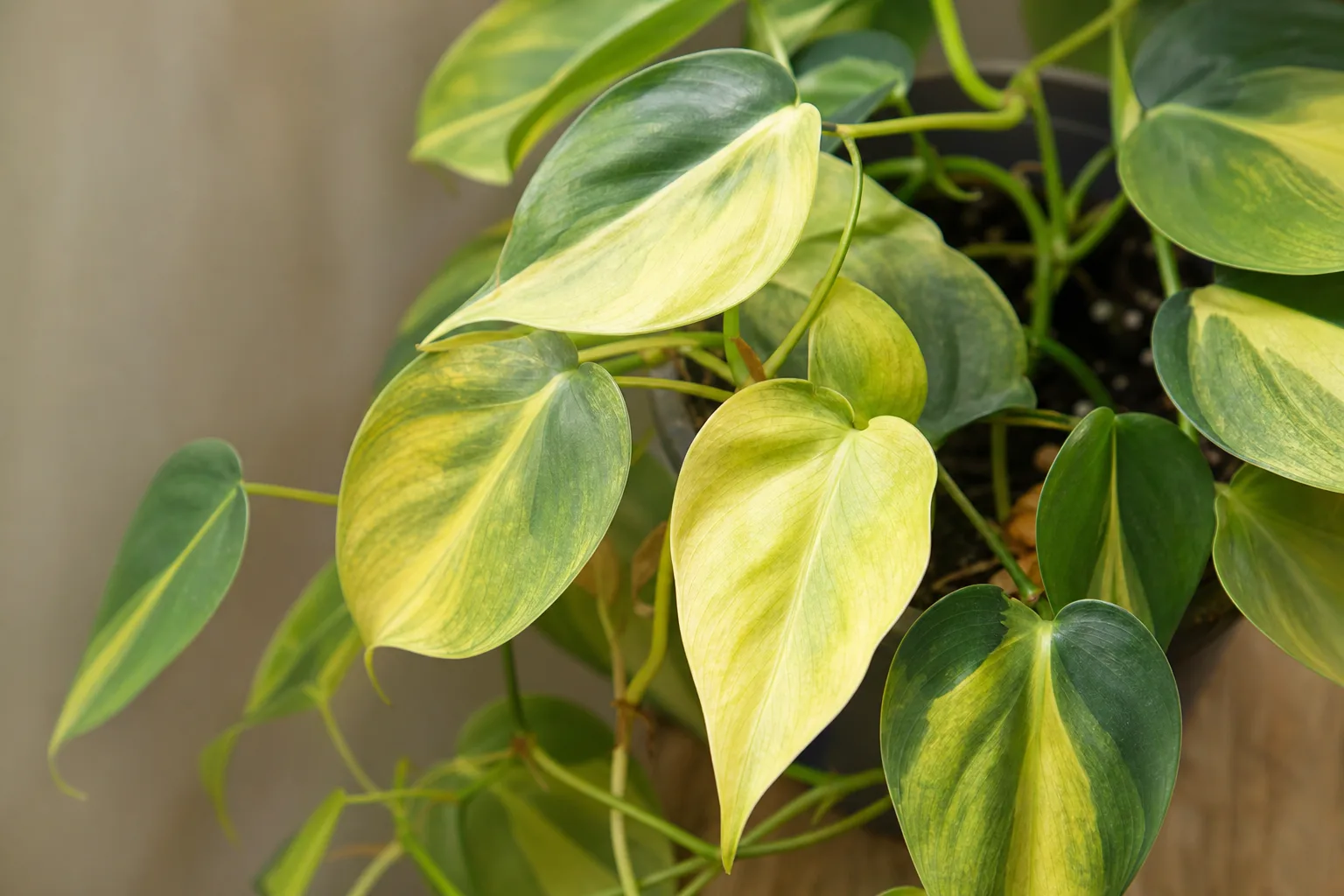
Soil Too Alkaline on Philodendron Brasil: Causes, Checks & Fixes
This guide covers soil too alkaline on Philodendron Brasil. See also the general Soil Too Alkaline guide, watering, and light pages for this plant.
Soil Too Alkaline on Philodendron Brasil: Causes, Checks & Fixes
Quick answer
Philodendron Brasil (Philodendron hederaceum ‘Brasil’) grows best in slightly acidic potting mix around pH 5.5–6.5. When the mix drifts alkaline-typically above 7.0-iron and manganese become less available to roots. The fast-growing vine can look fed and watered yet still produce pale, chlorotic new leaves with green veins and washed-out lime streaks.
First step: test the mix pH on damp soil with a probe or kit. If readings sit above 7.0, stop fertilizing immediately and repot into fresh, airy, slightly acidic mix. Adding more fertilizer to an alkaline root zone often makes leaf burn and salt crust worse without fixing the underlying lockout.
What soil too alkaline looks like on Philodendron Brasil
Alkalinity damage is a new-growth problem first. Older trailing heart-shaped leaves may keep their normal lime-and-green pattern while unfurling leaves tell the story.
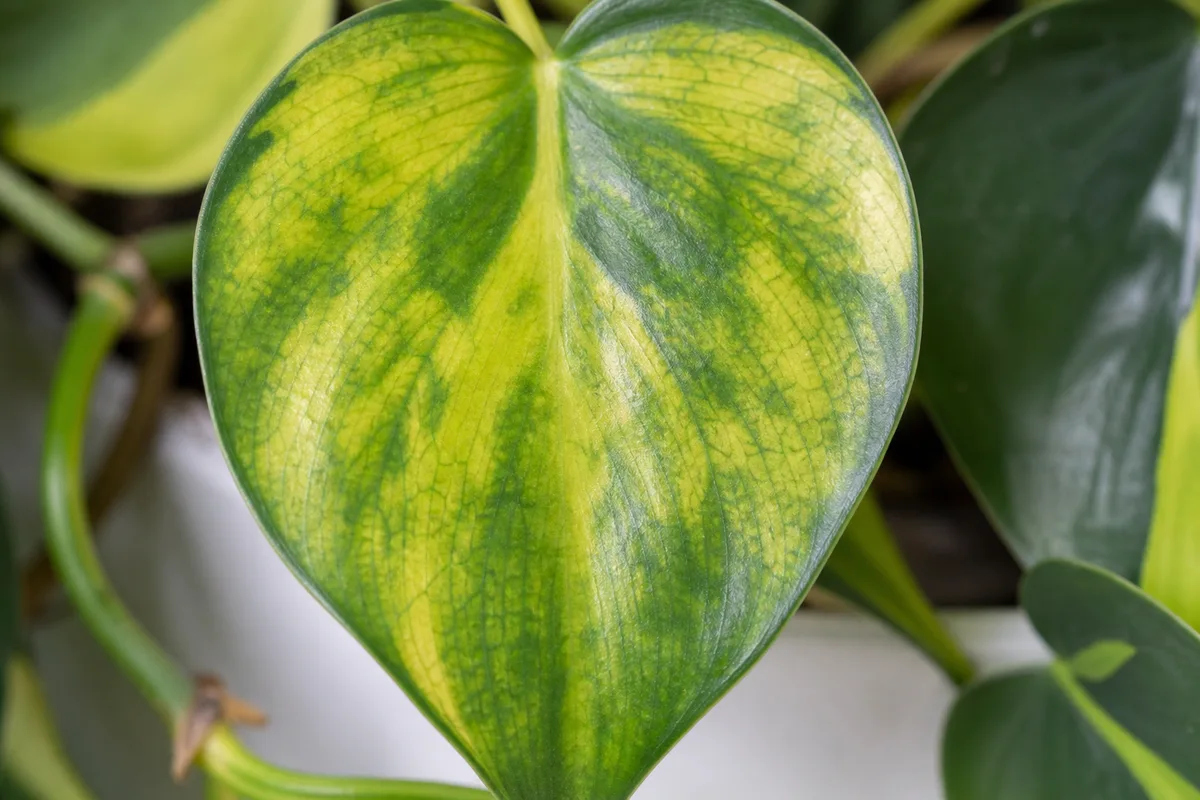
Soil Too Alkaline symptoms on Philodendron Brasil - compare with healthy tissue on the same plant.
Typical signs include:
- Interveinal chlorosis-yellow or pale tissue between dark green veins on young leaves
- Dull, thin lime streaks on new leaves; chartreuse bands look bleached rather than vivid
- Smaller new leaves on a vine that normally grows rapidly
- No response to fertilizer even after a balanced liquid feed at half strength
- White or gray crust on the soil surface or pot rim from mineral and fertilizer salts
- Stalled vine tips while stems remain firm and soil moisture feels normal
What alkaline soil does not look like: whole leaves turning yellow from the petiole upward with soggy mix (overwatering on Philodendron Brasil), long bare stems with solid green new leaves in a dark room (low light reversion), or black soft spots spreading on leaves (disease). Those need different fixes.
Brasil’s variegated center stripe of yellow to light green with dark green borders exposes more pale tissue than all-green heartleaf philodendron. Chlorosis shows up starkly on lime sections, sometimes before the dark green zones look obviously sick-do not dismiss pale new growth as “normal variegation shift.”
Why Philodendron Brasil gets alkaline soil
Heartleaf philodendrons prefer moist, well-drained soil high in organic matter in slightly acidic conditions. Brasil shares the same root physiology as other Philodendron hederaceum cultivars. Several indoor habits push mix toward alkalinity over months or years:
Hard, alkaline tap water. Irrigation water with high carbonate alkalinity gradually raises mix pH, especially in small pots that dry slowly.
Old, broken-down peat mix. Peat-based potting soil compacts and shifts chemistry as organic matter decomposes. Plants not repotted for two or more years often sit in dense, mineral-heavy substrate.
Wrong amendments. Garden soil, crushed limestone, shell grit, or unbuffered coir without perlite can hold pH above what aroids tolerate indoors.
Salt buildup from fertilizer and tap water. Repeated feeding without flushing leaves mineral crust on the surface. Growers interpret pale leaves as hunger and feed again, accelerating the cycle.
Oversized pots with stagnant mix. Excess wet soil in a too-large container slows root activity and lets salts concentrate in the upper profile where roots actively feed.
Brasil is not a heavy feeder. It needs moderate nutrients in the right pH window-not more fertilizer in mix that cannot deliver iron.
How to confirm the cause
Work through checks in order so you do not repot a plant that only needs brighter light or less water.
- Test pH. Insert a digital probe into damp mix at mid-pot depth, or mix a slurry sample with distilled water and use test strips. Above 7.0 supports alkalinity; 5.5–6.5 is the target range for Brasil.
- Inspect new vs. old leaves. Alkalinity hits the newest one or two leaves per vine first. Uniform yellowing on lower leaves with wet soil points to overwatering instead.
- Check the soil surface. Thick white crust plus pale new growth suggests combined salt buildup and high pH. Scrape a little crust-if it returns within weeks, flushing alone will not be enough.
- Review water source. If you use straight tap water in a hard-water region and never flush, alkalinity is more likely than if you use rainwater or filtered water.
- Assess light. New leaves that are entirely green with long internodes mean increase light. Chlorosis with a normal lime-streak pattern but pale color between veins means pH or nutrients.
- Optional root peek. If mix smells sour or stems soften at nodes, slide the plant out. Firm white roots in dense wet muck may need Philodendron Brasil repotting guide for drainage reasons even when pH is borderline.
Confirmed alkalinity means the mix chemistry-not your watering calendar-is blocking iron uptake.
First fix for Philodendron Brasil
Make one correction first:
If pH reads above 7.0: Stop all fertilizer. Repot into fresh standard potting mix blended with 20–25% perlite, targeting pH 5.5–6.5. Choose a pot only one size larger with a drainage hole. Tease away the outer third of old mix without bare-rooting a healthy plant. Water thoroughly once, empty the saucer, and wait two weeks before any half-strength feed.
Do not dump garden lime, wood ash, or crushed eggshells on the surface. Do not acidify blindly with vinegar drenches-they spike pH briefly and stress roots without stabilizing the mix.
If pH is only slightly high (7.0–7.3) with light surface crust and otherwise healthy roots, a double flush-water until excess runs free, wait thirty minutes, repeat-may buy time until scheduled repotting. Brasil in the same mix for more than two years usually needs fresh substrate, not another flush.
Step-by-step recovery
After repotting into slightly acidic mix:
- Place the plant in bright indirect light so it can use nutrients and dry the pot on a predictable schedule.
- Resume watering when the top 3–5 cm of mix is dry-roughly every 7–10 days in summer, longer in winter.
- Wait until you see one clean new leaf with normal lime streaks before applying balanced liquid fertilizer at half strength monthly in spring and summer.
- Trim severely chlorotic leaves once two newer leaves look healthy; they will not re-green.
- Flush the pot every two to three months if you continue using hard tap water-water deeply until runoff is clear.
If chlorosis persists on new leaves six weeks after repotting despite pH 5.5–6.5 mix, consider a chelated iron foliar spray per label directions as a short-term bridge while roots re-establish. Fix the root zone first; sprays alone do not replace repotting.
Recovery timeline
Mild chlorosis on one or two vines often stabilizes within three to four weeks after repotting, once the next heart-shaped leaf unfurls clean. Vines that were pale for months may need six to eight weeks and several new leaves before lime streaks look crisp again.
Old chlorotic tissue does not recover color. Judge success by new growth, not by older blemished leaves re-greening.
Lookalike symptoms
| Pattern | Likely cause | Key difference |
|---|---|---|
| Yellow between veins on newest leaves only | Alkaline mix / iron lockout | pH above 7.0; fertilizer ineffective |
| Yellow from base of lower leaves, wet pot | Overwatering / root stress | Sour smell, heavy soil days after watering |
| Solid green new leaves, long gaps on vine | Not enough light | No interveinal pattern; soil pH often normal |
| Uniform pale yellow on whole leaf | Nitrogen shortage | Affects older leaves too; pH usually in range |
| Brown crispy tips on lime streaks | Low humidity or fluoride | Margins only; pH normal |
Mistakes to avoid
Do not keep fertilizing pale Philodendron Brasil when pH is high-salts accumulate and burn leaf edges. Do not repot into pure peat without perlite; it compacts and holds water. Do not use garden soil indoors. Do not assume pale lime streaks are cosmetic variegation drift; compare vein color on the newest leaf. Do not stack repotting, pruning every vine, and double fertilizer on the same day.
How to prevent alkaline soil next time
Refresh mix every one to two years in spring. Use the same perlite-rich blend Brasil prefers from the start. If your tap water is hard, flush periodically or alternate with filtered or rainwater. Feed lightly during active growth and skip fertilizer when the plant is stressed or newly repotted. Match pot size to the root ball so mix does not stay wet and salty in unused soil.
When to worry
Alkalinity is rarely an overnight emergency. Worry when every new leaf on multiple vines chloroses within a few weeks, growth stops entirely, or firm stems begin softening while mix stays wet-those signs may mean root rot on Philodendron Brasil or chronic overwatering on top of bad chemistry. A single pale new leaf on an otherwise vigorous trailing plant is a cue to test pH, not panic.
Conclusion
Soil too alkaline on Philodendron Brasil locks out iron and shows up as pale, chlorotic new growth while older lime-streaked leaves may look fine. Test mix pH before feeding again. Above 7.0, repot into fresh slightly acidic, well-draining mix and judge recovery by the next heart-shaped leaves that unfurl-not by leaves already bleached.
When to use this page vs other Philodendron Brasil guides
- Philodendron Brasil watering guide - Use for routine moisture checks before assuming soil too alkaline is the main issue.
- Philodendron Brasil problems hub - Browse all 46 common issues on this species.