Leaf Miners on Philodendron Brasil: Causes, Checks & Fixes
Quick answer
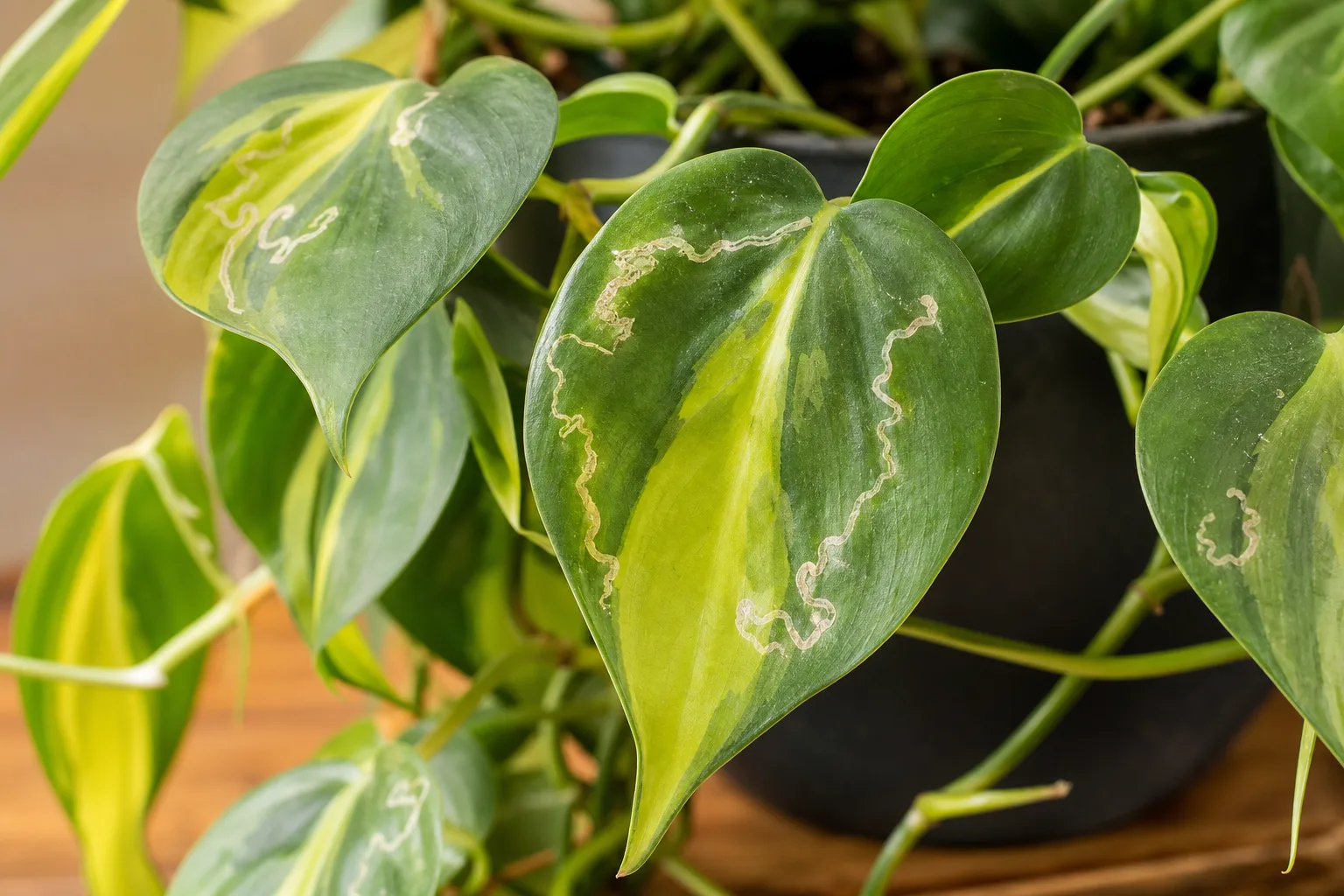
Leaf miner larvae tunnel inside Philodendron Brasil heart leaves, leaving pale winding tracks that cut across lime-and-green variegation. First step: isolate the plant and prune off mined leaves with clean scissors-contact sprays rarely reach maggots protected inside thin foliage.
Leaf Miners on Philodendron Brasil: Causes, Checks & Fixes
This guide covers leaf miners on Philodendron Brasil. See also the general Leaf Miners guide, watering, and light pages for this plant.
Leaf Miners on Philodendron Brasil: Causes, Checks & Fixes
Quick answer
Leaf miners on Philodendron hederaceum ‘Brasil’ are tiny fly larvae feeding between the upper and lower leaf surfaces, leaving winding pale tunnels you can see when you hold a heart leaf to light. On a healthy indoor Brasil the damage is usually cosmetic: trailing vines keep producing new lime-streaked foliage even when a few older blades look stippled or mined. Leaf miners are far less common on philodendrons than spider mites, mealybugs, or aphids, but when they appear the variegated pattern makes serpentine trails easy to spot.
First step: isolate the plant and prune off mined leaves with sterilized scissors before larvae mature and drop to pupate. Contact sprays and soaps rarely reach maggots protected inside leaf tissue, so careful removal beats spraying on thin heartleaf foliage.
What leaf miners look like on Philodendron Brasil
The clearest sign is a serpentine mine-a twisting white or pale trail inside the leaf, often with a dark line of larval waste (frass) running through it. The mine widens as the larva grows. Unlike caterpillar chew holes, the leaf surface stays intact except for a tiny exit hole when the larva leaves to pupate.
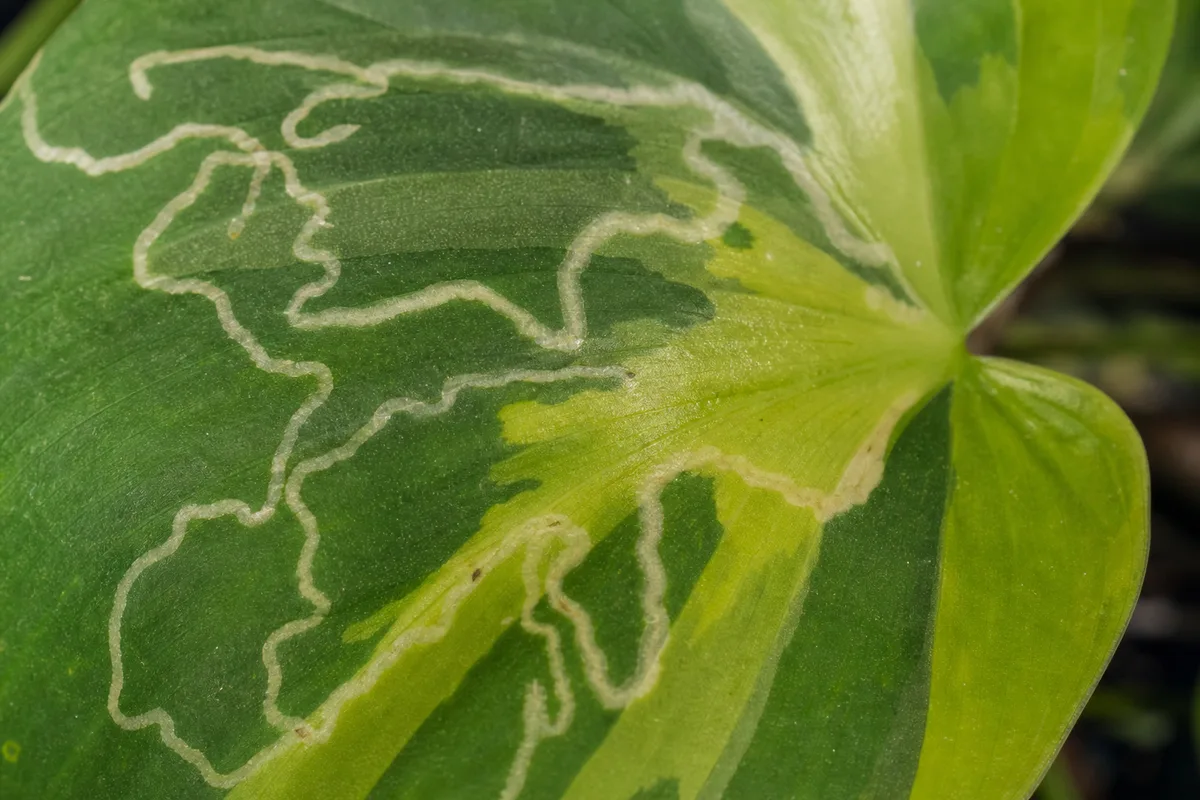
Leaf Miners symptoms on Philodendron Brasil - compare with healthy tissue on the same plant.
Other clues on Brasil:
- White stippling on lime-and-green heart leaves from adult females puncturing tissue to feed on sap before laying eggs.
- Mines on middle and lower leaves along trailing vine nodes, where overlapping foliage stays humid and shaded in hanging baskets.
- A small yellow maggot visible inside an active mine if you gently tear the leaf at the widest part of the tunnel.
- Brown seedlike pupae on the soil surface or pot rim after larvae drop out of mined leaves.
Brasil leaves are glossy, cordate, and thin with bold lime streaks against dark green borders-mines show up sharply as pale squiggles cutting across the variegation. Damage stays in the leaf blade; vine nodes and stem bases are usually unaffected unless mining is exceptionally heavy on young shoots still unfurling at vine tips.
Why Philodendron Brasil gets leaf miners
Leafminers in the genus Liriomyza-including the American serpentine leafminer (L. trifolii)-attack many greenhouse and ornamental broad-leaved plants. Adult black-and-yellow flies lay eggs inside leaf tissue; larvae mine between epidermal layers for about two weeks in warm conditions before exiting to pupate in soil or on the pot surface. Warm indoor conditions can allow multiple overlapping generations through spring and summer.
Philodendron Brasil invites leaf miners for practical reasons:
- Constant soft new growth from fast vining nodes gives females fresh heart leaves to puncture and mine throughout the year indoors.
- Thin, glossy cordate foliage is easy for flies to penetrate and makes mines highly visible once damage starts against the lime streaks.
- Greenhouse-grown nursery stock and summer patio time can introduce mines already inside leaves before you notice stippling on the variegated surface.
- Crowded aroid shelves-Brasil grouped with pothos, monstera, or other philodendrons for humidity-reduce airflow and let flies move between pots.
- Broad-spectrum insecticide use on other pests can kill parasitic wasps in the Diglyphus genus that normally keep leaf miner numbers low-secondary outbreaks after aphid or mite sprays are common in collections.
Leaf miners rarely kill established philodendrons. Unusually heavy mining can cause affected leaves to brown and drop, but a stable Brasil with steady moisture and Philodendron Brasil light guide usually outgrows cosmetic damage if you remove mines early. NC State notes that heartleaf philodendron has no serious pest problems under normal care-leaf miners are an occasional hitchhiker, not a chronic Brasil weakness.
How to confirm the cause
Work through these checks before treating:
- Hold the leaf to light. A bordered internal tunnel confirms leaf miner-not brown tips from dry air or mineral buildup alone.
- Check whether the mine is expanding. A lengthening trail means an active larva; an old brown mine may be empty.
- Look for frass. A dark line inside the pale tunnel distinguishes miners from thrips silvering or mite stippling.
- Rule out chewers. Caterpillars remove tissue outright, leaving ragged holes-not enclosed trails.
- Inspect new plants. Mines on one nursery Brasil in a mixed display often explain a sudden appearance on otherwise healthy trailing vines.
- Note recent sprays. A flare of mines two to three weeks after broad-spectrum insecticide fits loss of natural enemies more than random bad luck.
If you see only fine yellow dots without bordered trails, suspect spider mites-especially in dry winter air. Silvery scarring without internal tunnels points to thrips. Brown crispy margins without a mine pattern fit low humidity or underwatering on Philodendron Brasil-not leaf miners. Monitor philodendron for aphids, spider mites, mealybugs, and scale alongside leaf miners when diagnosing pale leaf damage.
First fix for Philodendron Brasil
Isolate the plant and prune off mined leaves with clean scissors-discard them in the trash, not the compost pile.
Isolate the plant away from pothos, monstera, and other philodendrons immediately. Cut affected leaves just above a node on the vine, bag removed foliage so larvae cannot pupate in your bin, and wipe scissor blades with alcohol between cuts if mines are widespread.
Do not reach for insecticidal soap, neem, or horticultural oil as a first response on a Brasil with a few cosmetic mines. Larvae inside leaves are shielded from contact products-insecticides are not very effective for leafminer control-and heavy film on thin heart leaves adds stress without reaching maggots. Unnecessary sprays can also knock out parasitic wasps already working in your collection.
Do not soak the crown while handling the plant-water standing at crowded vine bases in soggy mix can trigger root problems on an already stressed Brasil. Philodendron Brasil is toxic to cats and dogs; wear gloves when bagging pruned foliage and keep pets away from discarded leaves.
Step-by-step recovery
Once mined leaves are removed and the plant is isolated, work in this order:
- Scout every three to five days through warm months when fly generations turn over quickly. Flip overlapping heart leaves to inspect undersides and newest rolled shoots at vine tips.
- Keep baseline care steady-bright indirect light, water when the top 3–5 cm of mix dries, and 40–60% humidity. Wild swings in water or light slow replacement foliage after you prune mines.
- Improve airflow slightly by spacing pots on the shelf so you can inspect leaf backs without crowding-enough gap for gentle circulation, not a draft on tropical foliage.
- Hold fertilizer while mines are active. Soft, nitrogen-rich new growth is easier for females to puncture. Resume half-strength monthly feeding once new mines stop appearing for two weeks.
- Inspect all aroids nearby and remove early mines on pothos or monstera before larvae pupate and adults reinfest the Brasil.
- Escalate only if needed. If mines cover most leaves or keep spreading despite weekly removal for three weeks, a systemic product with foliar activity-such as imidacloprid applied per label for indoor use-may help when contact removal fails. Treat this as a last resort on home philodendrons, not a first response.
Recovery timeline
Cosmetic mines on a few leaves of a vigorous trailing Brasil: visible improvement within days once you remove affected foliage; new clean heart leaves unfurl within two to three weeks if flies are not laying heavily.
Moderate infestation across several vine sections: two to four weeks of regular leaf removal before mine counts drop, assuming you are not applying broad-spectrum sprays that suppress natural enemies.
Small plant with mines on more than half of leaves: may recover slowly-healthy nodes can push new shoots, but heavy mining on a stressed Brasil sometimes warrants taking clean stem cuttings from unaffected vine sections rather than waiting months.
Mined tissue never regains its original lime streak pattern. Judge success by absence of new expanding mines and firm new heart leaves with strong variegation-not by old trails fading.
Lookalike symptoms
| What you see | Likely cause | How to tell apart |
|---|---|---|
| Winding pale tunnel inside leaf | Leaf miner | Bordered trail with frass line; leaf surface intact |
| Fine yellow dots with fine webbing | Spider mites | No enclosed tunnel; stippling across variegation, worse in dry winter air |
| Ragged holes through leaf | Caterpillars | Tissue removed; frass pellets or visible larvae outside |
| Silver streaks or scuffed patches | Thrips | No internal bordered mine; scrape test on leaf surface |
| Brown tips only, no internal trail | Low humidity or underwatering | Even margin damage; mites and miners absent on inspection |
| Brown spots with yellow halos | Leaf spot disease | Fungal patches on surface, not serpentine internal tunnel |
Mistakes to avoid
- Spraying soap or oil first on a Brasil with a few cosmetic mines-wastes effort and can burn thin foliage without reaching larvae inside tissue.
- Composting mined leaves-larvae may survive and pupate in the pile.
- Using broad-spectrum insecticides for aphids or spider mites, then wondering why leaf miners exploded two weeks later.
- Confusing stippling with mines-white feeding punctures alone do not confirm an active larva; look for the bordered tunnel.
- Misting heavily after pruning-brief wetness does not fix miners and can keep mix wet too long when Brasil already struggles with drainage.
- Philodendron Brasil repotting guide mid-outbreak-unnecessary stress; leaf miner pupae in soil are secondary to removing active mines on foliage.
Philodendron Brasil care cross-check
Leaf miners are a pest issue, not a Philodendron Brasil watering guide problem-but stressed vines recover slower after you remove foliage.
- Light: Bright indirect; no strong direct sun that scorches variegated heart leaves while you are pruning heavily.
- Water: Water when the top 3–5 cm of mix dries; do not let the pot go bone dry during recovery, but avoid soggy mix that stresses roots.
- Humidity: Target 40–60%-steady care speeds replacement leaves even though humidity alone does not prevent miners once flies arrive.
- Temperature: Maintain 18–27°C (65–80°F); avoid cold drafts below 15°C on a thinned plant.
- Airflow: Gentle circulation is fine; do not blast heat directly on foliage after pruning.
How to prevent it next time
- Quarantine new philodendrons two weeks before adding them to aroid groupings or hanging rows.
- Inspect leaves at purchase-reject plants with visible serpentine mines or heavy stippling on lower heart leaves.
- Remove mines during weekly care before larvae exit to pupate in soil.
- Preserve natural enemies by using targeted controls for aphids and spider mites-rinse-first approaches before blanket sprays on the whole shelf.
- Rinse and inspect Brasil brought indoors after summer outdoors before returning it to the collection.
When to worry
Escalate beyond leaf removal when:
- Most leaves on a small plant show active expanding mines-growth may stall before vines replace foliage.
- New mines appear every week on the same plant despite consistent removal for three weeks or more.
- Leaf drop is heavy and the Brasil looks thin after mining, not after drought or overwatering on Philodendron Brasil.
- Mines spread to multiple aroids on one shelf despite isolation of the first affected pot.
For a mature trailing Brasil with scattered cosmetic mines on older leaves, worry less about plant death and more about appearance and spread-prune mined blades, keep watering steady, and watch new unfurling heart leaves for clean variegation.
Conclusion
Leaf miners on Philodendron Brasil look alarming on lime-streaked heart leaves but rarely kill a well-cared-for indoor specimen. The larvae live inside tissue where contact sprays barely reach, so your best tool is early isolation, pruning of mined leaves, and steady Brasil care while vines push clean new growth. Save systemic escalation for persistent outbreaks-and avoid broad-spectrum sprays that trigger the very flare you are trying to prevent.
When to use this page vs other Philodendron Brasil guides
- Philodendron Brasil watering guide - Use for routine moisture checks before assuming leaf miners is the main issue.
- Philodendron Brasil problems hub - Browse all 46 common issues on this species.