Deformed New Growth on Philodendron Brasil: Causes, Checks
Quick answer
Deformed new growth on Philodendron Brasil usually means thrips feeding on unfurling leaves, or stress from low light, dry air, or wet roots. Inspect the newest leaf first-then isolate and rinse if pests are present.
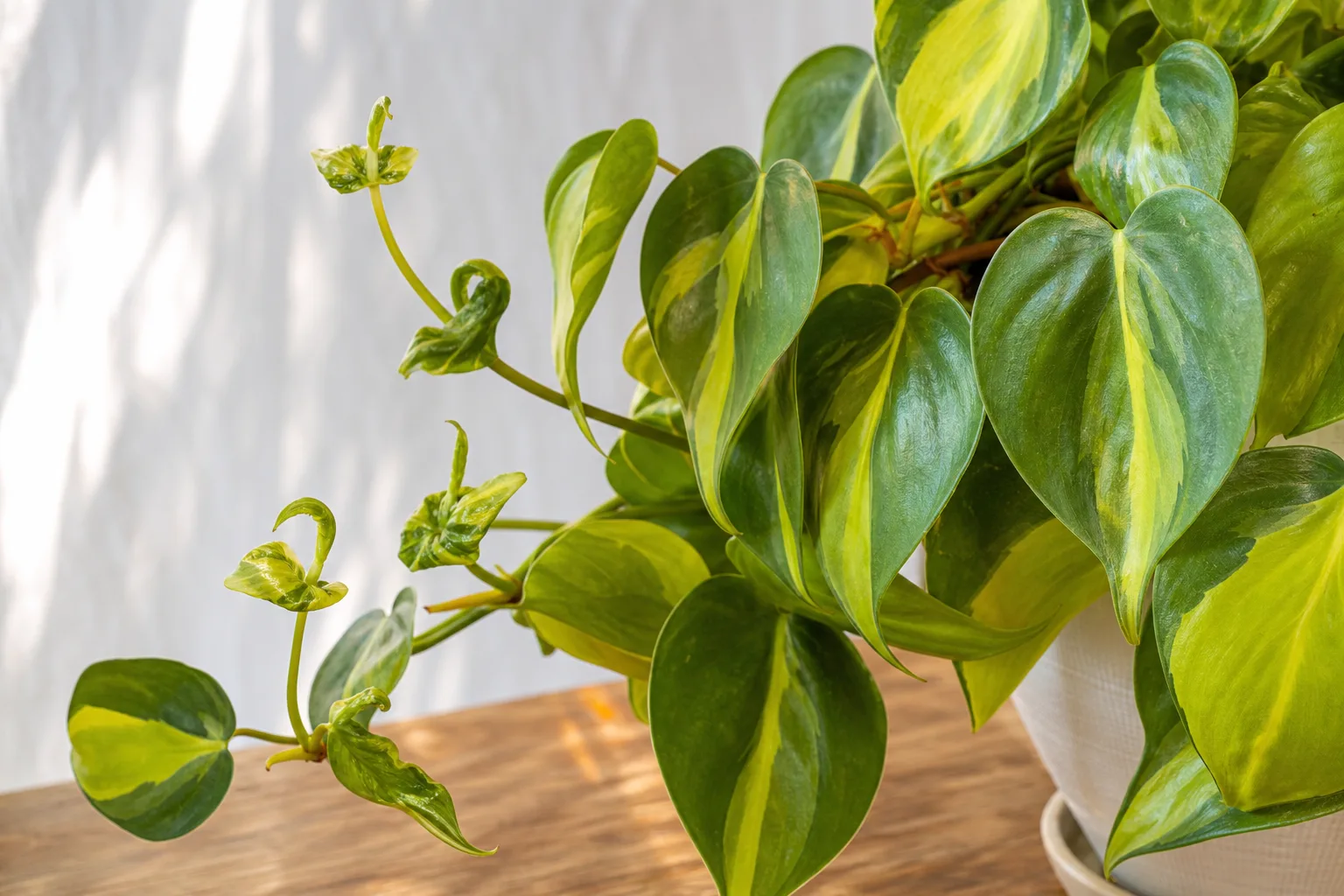
Deformed New Growth on Philodendron Brasil: Causes, Checks & Fixes
This guide covers deformed new growth on Philodendron Brasil. See also the general Deformed New Growth guide, watering, and light pages for this plant.
Deformed New Growth on Philodendron Brasil: Causes, Checks & Fixes
Quick answer
Deformed new growth on Philodendron Brasil (Philodendron hederaceum ‘Brasil’) shows up when the newest heart leaves unfurl crooked, crinkled, partially stuck, or flecked with translucent patches while older vines still look fine. On this fast-growing variegated heartleaf, that pattern almost always targets the last one to three leaves-not the whole plant at once.
First step: inspect the newest unfurling leaf for thrips. Gently open the rolled tip and check for silver streaks, tiny black specks, or pinhead-sized insects along the midrib. Thrips feed on developing tissue before leaves expand, which permanently distorts the blade as it opens. If you find pest signs, isolate the plant and rinse leaf undersides and growing tips with a steady stream of lukewarm water before any spray.
If the leaf is clean, shift to care stress-low light, dry air during unfurl, chronic wet soil, or cold drafts near windows.
What deformed new growth looks like on Philodendron Brasil
Brasil puts out glossy heart-shaped leaves with lime-and-green variegation. Healthy new foliage emerges from a pointed sheath, opens evenly over a few days, and settles with a mix of chartreuse streaks on deep green.
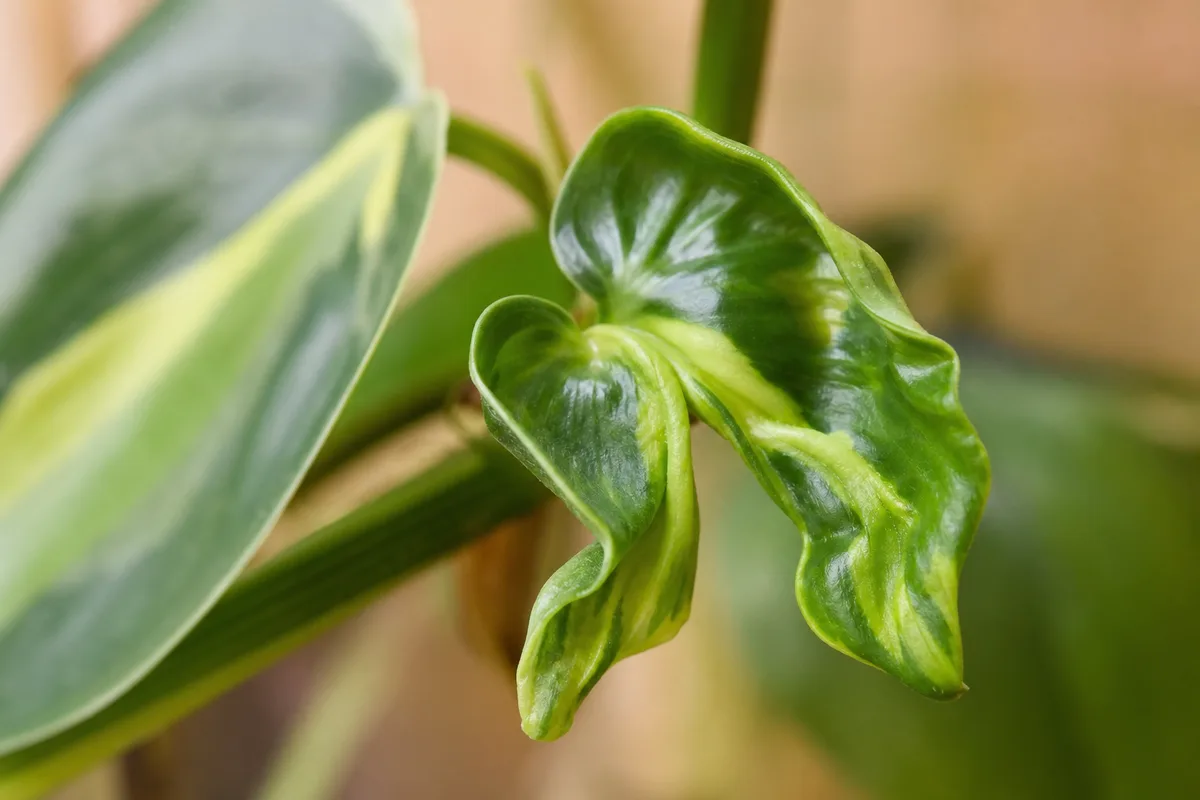
Deformed New Growth symptoms on Philodendron Brasil - compare with healthy tissue on the same plant.
Typical deformation patterns:
- One half of a new leaf stuck or folded while the other side opens normally
- Crinkled, puckered, or accordion-pleated surface on the freshest blade only
- Translucent or paper-thin patches that never green up
- Asymmetric heart shape or a leaf that stops expanding before reaching normal size
- Tip burn or brown scorch on the youngest leaf while older leaves stay glossy
- Lime variegation missing or muddy on deformed leaves only
What it is not: Random holes in mature leaves (usually chewing pests or physical damage), long bare gaps between every leaf (leggy low light), or yellowing starting on the lowest leaves (often overwatering on Philodendron Brasil). Deformed new growth with healthy older foliage narrows the cause list quickly.
Why Philodendron Brasil gets deformed new growth
Thrips on unfurling leaves
Thrips are the most common reason Brasil’s newest leaves look wrong. These tiny insects feed on tender tissue inside the leaf roll before it opens. As the blade expands, damaged cells stay stunted-creating crinkles, stuck sections, and silver streaks. Thrips on houseplants often feed on tender new growth, resulting in distorted growth and leaves that curl downward.
Because thrips are hard to see, owners sometimes blame fertilizer or humidity first. On Brasil, pest damage usually appears on consecutive new leaves while the rest of the basket looks normal.
Low humidity or dry air during unfurl
Heartleaf philodendron tolerates average household humidity, but new leaves are physically fragile while unfurling. If air is very dry-near heating vents, radiators, or constant airflow-a leaf can snag on itself and open unevenly. Brasil’s thinner heart blades are less dramatic than velvet philodendrons, but winter heating still causes occasional stuck unfurling without pests.
Insufficient light for variegated growth
The ‘Brasil’ cultivar is a variegated center stripe of yellow to light green on dark green borders, carrying less chlorophyll in its lime patches than solid-green heartleaf. In dim corners, new leaves may emerge smaller, thinner, or pale with weak structure that looks deformed next to older, better-lit foliage. This differs from thrips damage: light stress usually affects vine spacing and variegation across several nodes, not isolated crinkling on one leaf.
Overwatering and root stress
Philodendron Brasil uses water quickly in bright light, but roots still need oxygen. When mix stays wet for days-especially in low light-roots cannot absorb the oxygen needed to function normally and new growth can stall, cup, or emerge smaller than expected. Wet soil paired with firm older leaves but weak new tips points to root environment stress rather than a pest.
Calcium deficiency and uneven watering
Calcium is immobile in plants, so deficiency shows on newest growth first: distorted young leaves while older foliage stays green. Calcium deficiency symptoms appear on new growth, including distorted or misshapen young leaves. On Brasil, this pattern is less common than thrips but worth considering if you use only reverse-osmosis or distilled water long term without Philodendron Brasil repotting guide, or if soil dries completely between every watering.
Cold drafts and repotting shock
Brasil grows best around 18–27°C (65–80°F). Cold air from winter windows or air-conditioning vents can interrupt cell development in new leaves. Recent repotting, a move, or a fertilizer spike at the wrong time can also produce one or two odd leaves before growth stabilizes.
How to confirm the cause
Work through these checks in order:
- Newest-leaf pest scan - Hold the latest unfurl at eye level in bright light. Look for silver stippling, black frass specks, or slender insects. Tap the leaf over white paper; thrips often show as tiny moving specks.
- Damage pattern - Is only the last one to three leaves affected? Thrips and unfurl stress fit that. Are many vines small and pale with long internodes? Suspect low light.
- Soil moisture - Push your finger 3–5 cm into the mix. Soggy soil days after watering with weak new tips suggests root stress. Bone-dry soil at every check may limit calcium uptake and leaf expansion.
- Humidity and airflow - Note if the pot sits above a radiator, under a ceiling fan, or in a drafty window bay during winter.
- Light at leaf level - At midday, a soft shadow on your hand where leaves sit means usable indirect light. Barely visible shadow means Brasil is struggling to build normal new tissue.
- Recent changes - Repotting, relocation, or a new plant nearby in the last month raises thrips and stress odds.
Confirmed thrips: silver streaks or insects on newest growth. Confirmed care stress: clean pest scan but dry air, wet soil, dim light, or cold exposure matches the timeline.
The first fix to try
If you see any thrips signs-or cannot rule them out-isolate the plant and rinse it first.
Move Brasil away from other houseplants. In a sink or shower, use lukewarm water to wash leaf undersides, stems, and growing tips for two to three minutes. Focus on the rolled newest leaves where thrips hide. Let the plant drain fully, then monitor the next unfurl for seven days.
Do not fertilize, repot, or prune heavily on day one. Damaged leaves will not reshape; your proof of success is the next clean unfurl.
If the pest scan is clean and soil has been wet too long, let the top 3–5 cm dry before watering again and move to brighter indirect light. If air is very dry, shift the pot away from heat sources and group it with other plants to raise local humidity.
Step-by-step recovery
When thrips are confirmed or suspected
- Isolate from other plants immediately.
- Rinse all leaf surfaces and growing tips; repeat every three to five days for two weeks.
- After the first rinse, apply insecticidal soap or horticultural oil to undersides and new growth, following label rates for houseplants. Foliar sprays at seven-day intervals are recommended for thrips on houseplants.
- Prune only leaves that are heavily distorted and still harbor pests-you do not need to remove every blemished blade.
- Inspect neighboring plants that shared a shelf or window.
Expect two to four weeks before a clearly normal new leaf opens. Older crinkled leaves stay as they are.
When care stress is the cause
Low light: Move gradually to brighter indirect light within a few feet of an east or west window. Acclimate over one to two weeks if the plant lived in a dark corner.
Dry unfurl air: Move off radiators, add a pebble tray or nearby humidifier, and avoid blasting new growth with fan drafts.
Overwatering: Stop watering until the top 3–5 cm is dry. Confirm drainage holes are open. Repot into fresh mix with 20–25% perlite only if soil smells sour or roots feel mushy.
Calcium or watering swings: Even out the Philodendron Brasil watering guide-do not let mix go brick-dry and then flood. Use a balanced fertilizer at half strength monthly during active growth only after light and roots are stable.
Recovery timeline
| Stage | What to expect |
|---|---|
| Week 1 | No new damage on the active unfurl; rinses or care corrections underway |
| Weeks 2–3 | Next leaf opens with fewer crinkles; color looks more typical |
| Weeks 4–6 | Two to three consecutive normal hearts with visible lime streaks |
| Older leaves | Permanent crinkles remain; they do not flatten |
If three new leaves in a row stay distorted after pest treatment and care fixes, recheck for thrips in leaf sheaths and inspect roots for rot or bound circling.
Lookalike symptoms
Leggy growth - Long spaces between every leaf and fading variegation on the whole vine. Fix light, not pest sprays.
Not enough light - Small pale new leaves across the plant, not isolated crinkling. Move to brighter indirect light.
Brown tips - Usually moisture loss at margins on several leaves, not stuck unfurling. Check humidity and watering consistency.
Overwatering - Yellow lower leaves and limp vines on wet soil. Let mix dry and assess roots.
Spider mites - Fine stippling with webbing, often in dry conditions. Uniform speckling rather than thrips’ streaks and black frass on new growth.
Mistakes to avoid
- Spraying fertilizer on a stressed plant hoping to “fill out” twisted leaves
- Repotting into a much larger pot while new growth is failing-wet mass increases root risk
- Removing every deformed leaf before confirming thrips are gone-hiding spots remain in sheaths
- Ignoring nearby plants after one Brasil shows stuck unfurling
- Misting once and assuming humidity is fixed while the pot still sits above a heater
How to prevent deformed new growth on Philodendron Brasil
- Quarantine new purchases for two weeks and inspect unfurling tips weekly
- Keep Brasil in bright indirect light so new tissue builds normally
- Water when the top 3–5 cm dries-not on a blind calendar
- Maintain moderate humidity (40–60%) during winter heating season
- Avoid cold drafts below about 16°C (60°F) on active growing tips
- Feed lightly only during spring and summer growth after basics are stable
When to worry
Escalate if distorted new leaves keep appearing through spring on a plant with good light and proper watering, if thrips signs spread to multiple plants, or if new tips soften and brown while soil stays wet-root rot on Philodendron Brasil may be overlapping. Brasil recovers easily from one or two bad leaves when the cause is caught early; repeated failure on consecutive unfurls needs a harder look at pests and roots.
When to use this page vs other Philodendron Brasil guides
- Philodendron Brasil watering guide - Use for routine moisture checks before assuming deformed new growth is the main issue.
- Philodendron Brasil problems hub - Browse all 46 common issues on this species.