Yellow Seedlings on Philodendron Birkin: Causes, Checks &
Quick answer
Yellow on young Philodendron Birkin usually means the start is too wet, too dim, or too cold-not a bad seed batch. First step: confirm the yellow is whole-leaf chlorosis, not normal cream pinstripes, then let the top of the propagation mix dry before watering again.
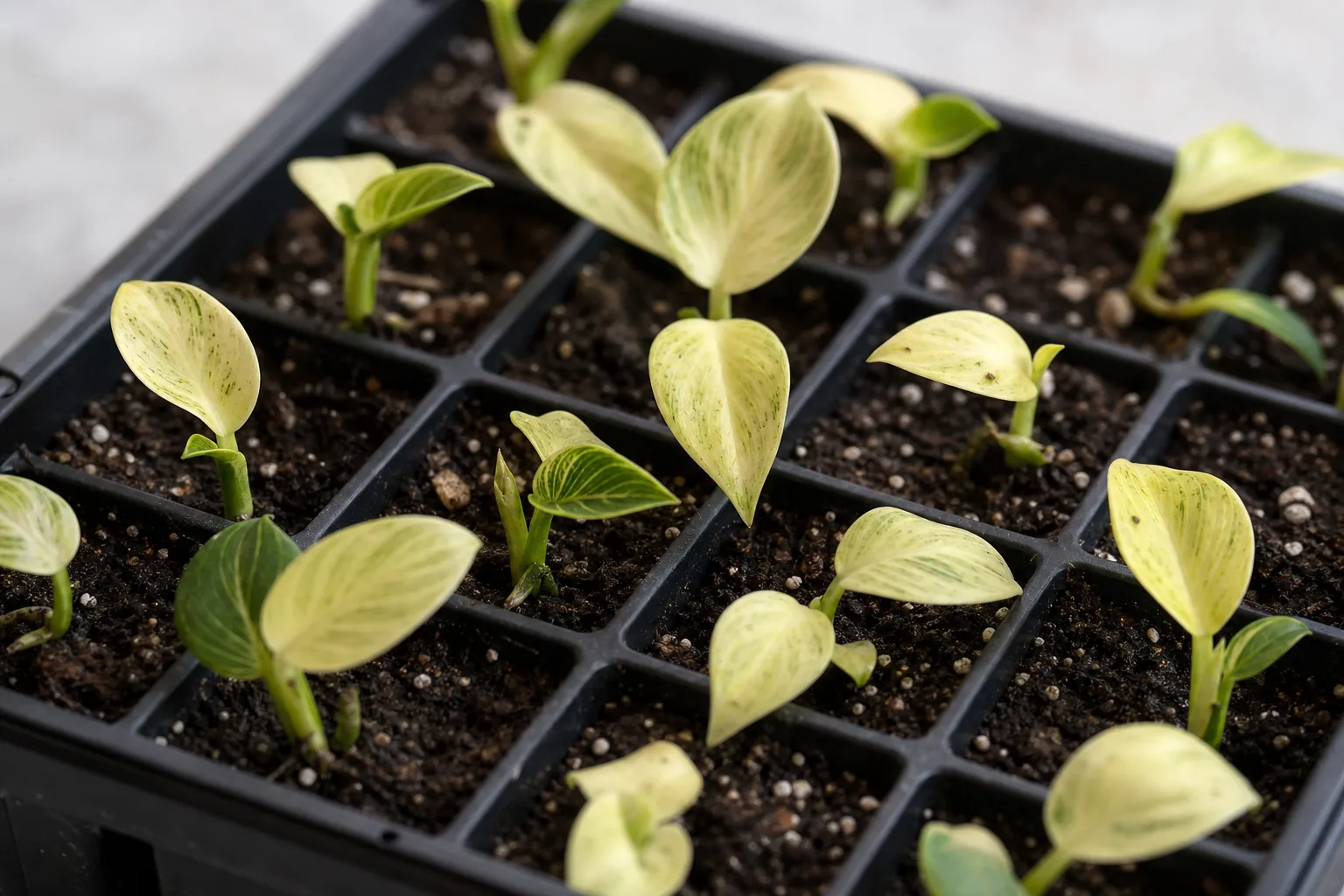
Yellow Seedlings on Philodendron Birkin: Causes, Checks & Fixes
This guide covers yellow seedlings on Philodendron Birkin. See also the general Yellow Seedlings guide, watering, and light pages for this plant.
Yellow Seedlings on Philodendron Birkin: Causes, Checks & Fixes
Quick answer
When people say “yellow seedlings” on Philodendron Birkin, they usually mean a young start-a tissue-culture plug, offset pup, water-rooted cutting, or small nursery pot-not a tray of garden annuals. Birkin is an upright self-heading aroid propagated by stem cuttings, not seed. Its leaves naturally carry pinstripes of creamy white, yellow, or light green on a dark green background, which is easy to confuse with chlorosis if you have never seen a healthy juvenile plant.
First step: decide whether the yellow is variegation or stress. Crisp pinstripes on a green leaf are normal. Uniform yellow-green whole leaves, limp stems, and mix that stays wet for days point to culture problems. Once you confirm stress, stop watering until the top 2–3 cm of mix feels dry, then resume with small drinks only when that layer lightens.
Why young Philodendron Birkin turns yellow
Small Birkin starts have tiny root systems and slow growth. NC State Extension lists slow growth as a Birkin trait, so young plants stay vulnerable longer than fast herbs or vegetables in seed trays.
Overwatered propagation mix is the top indoor trigger. Peat-heavy plugs, water-propagation cups, and dense nursery pots hold moisture tightly. Overwatering can cause root rot and yellowing leaves on philodendrons when roots sit in stale, oxygen-poor mix. Birkin prefers moist but well-drained, slightly acidic soil-not constant saturation.
Insufficient light bleaches young tissue. Birkin needs bright, filtered sunlight. Insufficient light results in loss of variegation, leggy growth, and small leaves. Variegated tissue has less chlorophyll; dim corners force the plant to pale and stretch toward the window, which reads as yellow seedlings even when watering is fine.
Cool soil and drafts slow metabolism. Birkin grows best at 65 to 85 °F with 50 to 60% humidity. Trays on cold windowsills or unheated shelves keep roots cool while leaves look pale. Cool soil slows seedling growth and raises disease risk in wet trays-the same physics apply to slow-rooting aroid starts.
Transplant shock after purchase or Philodendron Birkin repotting guide can yellow the oldest leaf or two on a small plug while roots adjust. This is different from whole-plant decline: firm stems and green new growth mean the start is settling.
Low nutrients in sterile media appears after roots establish and the first few leaves expand. Symptoms of nutrient deficiency include yellow leaves and poor growth on indoor plants. Seed-starting or tissue-culture media is intentionally lean. Feeding before roots work, or feeding at full strength on a stressed yellow start, makes things worse.
Seed-sowing confusion belongs here too. Birkin arose from a spontaneous mutation believed linked to Philodendron ‘Rojo Congo’. Seed from a Birkin-or “Birkin seeds” sold online-rarely produces plants with stable pinstripe variegation. If your “seedlings” sprouted from purchased seed and look like plain green philodendrons turning yellow in wet mix, you are nursing generic philodendron seedlings, not Birkin genetics. Stem cuttings from a striped parent remain the reliable path.
What yellow seedlings look like on Philodendron Birkin
Normal variegation (not a problem):
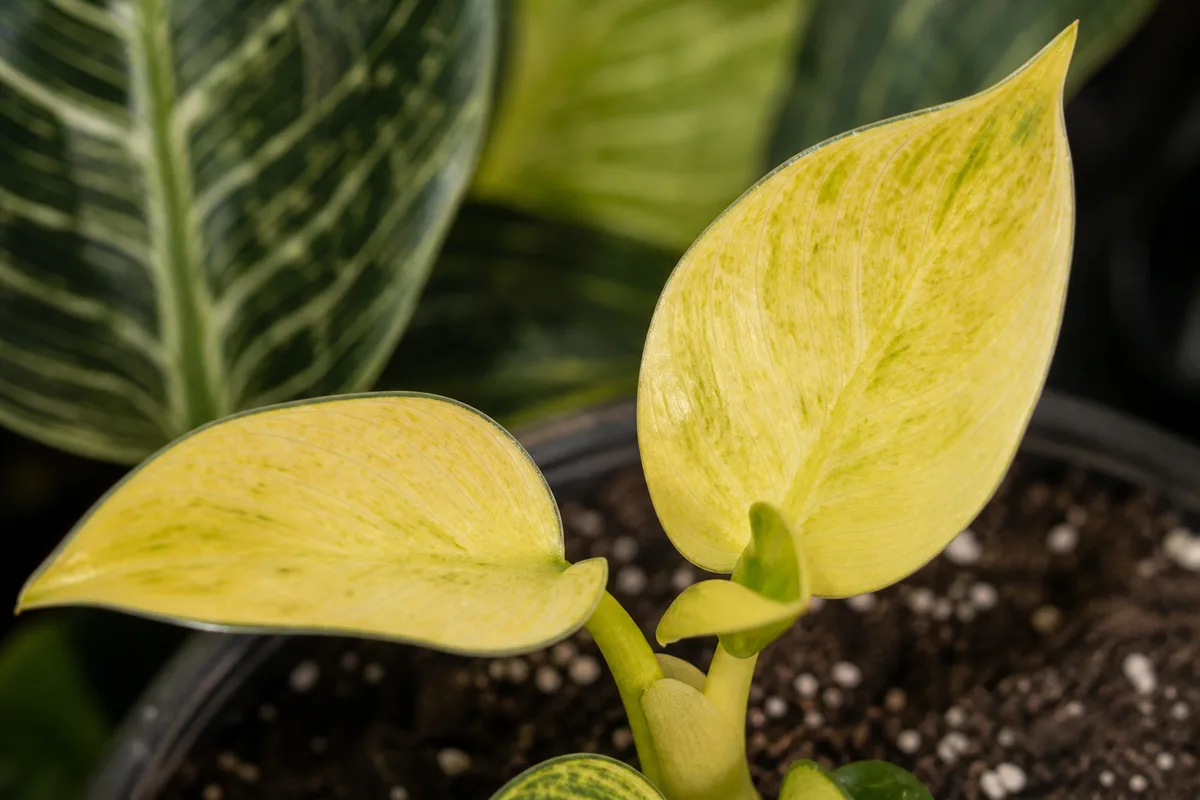
Yellow Seedlings symptoms on Philodendron Birkin - compare with healthy tissue on the same plant.
- Cream, white, or pale yellow stripes on an otherwise green leaf
- Firm upright stem; short internodes when light is adequate
- Mix dries slightly between waterings; no sour smell
Stress yellowing in young starts:
- Entire young leaves uniform yellow-green or lime, not striped
- Long gaps between leaves; stems lean toward the light source
- Mix dark and wet on top for days; pot feels heavy
- Lower leaf yellowing spreads to new growth while soil stays damp
- Fungus gnats when you disturb the pot surface
Root rot or collapse warning:
- Stem soft, thin, or brown-gray at the soil line
- Leaves wilt despite wet mix
- Roots dark, mushy, or absent when you gently unpot a small start
Birkin yellowing rarely shows as crisp brown spots on seedlings-that pattern on mature plants points to leaf spot from wet foliage and is a different problem page.
How to confirm the cause
Work through these checks before you repot, feed, and move the plant on the same day:
- Variegation vs chlorosis - Hold the leaf to the light. Pinstripes with green between them are normal Birkin pattern. A whole blade the same pale color signals stress.
- Moisture at 2–3 cm depth - Wet, cold mix plus yellow leaves strongly suggests overwatering. Dry mix with limp leaves may mean underwatering on Philodendron Birkin instead.
- Stem integrity - Brush soil from the base. Firm green stems support recovery. Thread-like or water-soaked bases mean rot-remove the start from shared trays.
- Light distance - Birkin starts more than 15–20 cm from a grow lamp with only window supplement often stay pale. Aim for 12 to 16 hours of bright light daily when raising plants indoors.
- Start type - Water-rooted cuttings yellow when water is stale or light is weak. Offset pups yellow when buried too deep or kept in soggy parent-pot mix. TC plugs yellow when left in sealed humidity too long after unboxing.
- Temperature - Room below about 18 °C (65 °F) at night with wet mix slows Birkin more than faster houseplants.
If stems are firm, mix dries between drinks, light is bright and filtered, and the plant still pales after three or more leaves-consider dilute feeding, not more water.
First fix for Philodendron Birkin
Let the top 2–3 cm of propagation mix dry, pour off any standing tray water, and move the start to bright filtered light without direct midday sun.
This single step targets the most common cause: saturated mix in a dim or cool spot. Do not fertilize on day one. Do not repot a collapsing plug unless roots are clearly mushy and smell sour. For water-propagated cuttings, change the water and place the vessel within a few inches of a grow lamp rather than adding fertilizer to yellow roots.
Step-by-step recovery
After the initial dry-down:
- Remove collapsed or mushy-base starts from shared trays so pathogens do not spread through bottom-watering runoff.
- Relocate to bright filtered light-east window or filtered south/west, or a grow lamp 10–15 cm above tops for 12–16 hours. Avoid scorching sun that can burn Birkin leaves.
- Water on demand when the top 2–3 cm lightens. For cuttings in water, refresh every few days and transplant to airy aroid mix once roots are 2–5 cm long.
- Warm the root zone if the pot sat on a cold sill-Birkin prefers 65 to 85 °F.
- Increase airflow slightly if a humidity dome or cloche was left on after unboxing; domes left too long trap moisture on slow aroids the way they do on seedling trays prone to damping off.
- Feed at quarter strength only after roots are active, stems stay firm, and at least one new leaf opens greener under improved light. Seedlings in soilless mix benefit from weak soluble fertilizer once several true leaves appear-apply the same caution to rooted Birkin cuttings, not to brand-new unrooted sticks.
- Repot into fresh draining mix if roots are brown and soft: standard potting mix with perlite and orchid bark, pot only slightly larger than the root ball.
If more than half a batch of water starts or plug trays collapse within a week despite dry-down, discard affected material, sterilize containers, and restart from healthy stem cuttings on the parent plant.
Recovery timeline
Firm young Birkin starts with yellow color from overwatering often show greener new leaves within 7 to 21 days after correct dryness, warmth, and light-Birkin’s slow growth rate means recovery is slower than herb seedlings. Old yellow leaves may drop; that is fine if new growth holds striping.
Stretch from prior low light does not shorten; new leaves under proper light come in on tighter internodes, but old elongated stems remain until you prune later on a mature plant.
Starts with rotted stem bases do not recover. Neighbors saved within 48 hours of fixing moisture and airflow may survive if stems stay firm.
Lookalike symptoms
Normal cream pinstripes - Looks like yellow but is stable variegation. Green background between stripes stays rich; stems firm.
Leggy pale starts without wet mix - Light deficiency. Fix lamps before drying mix that is already appropriate.
Yellow leaves on a mature Birkin - Established plants yellow from overwatering or low light on lower leaves first-a different stage than propagation trays.
Seeds not germinating - Bare cells after weeks are germination failure or non-viable “Birkin” seed-not yellow seedlings.
Transparent or brown-tipped pale leaves - Often sunburn or low humidity on variegated tissue, not seedling chlorosis.
Mistakes to avoid
- Mistaking Birkin pinstripes for nutrient deficiency and feeding full-strength fertilizer on day one
- Keeping a humidity dome or bag sealed on a rooted plug for weeks after unboxing
- Bottom-watering trays and leaving standing water overnight on slow-rooting aroids
- Buying “Birkin seeds” expecting pinstriped offspring instead of propagating stem cuttings
- Starting cuttings in a north window in winter without supplemental light or warmth
- Repotting, pruning, and feeding a yellow nursery plug the same weekend you bring it home
How to prevent yellow seedlings on Philodendron Birkin
Propagate from striped parent plants via stem cuttings with at least one node, or divide firm offset pups with their own roots-not from seed. Use sterile or fresh airy aroid mix with drainage holes; never garden soil in indoor propagation.
Provide bright filtered light from emergence. For indoor starts, use artificial light within a few inches of tops for 12–16 hours rather than relying on windowsills alone in winter.
Water when the top 2–3 cm dries; discard tray runoff. Keep room temperature in Birkin’s 65 to 85 °F comfort band and humidity near 50–60%.
Remove humidity covers once roots form. Feed at quarter strength only after several leaves and active roots-never on a stressed yellow start.
When buying small nursery plants, choose firm stems, clean leaf undersides, and mix that is damp but not soggy. Quarantine new plugs for a week before grouping with other plants.
When to worry
Escalate immediately if stems pinch at the soil line, the mix smells sour, roots are black and mushy, or multiple adjacent starts die within 48 hours in the same wet tray.
Also worry if a new plug yellows and collapses within two days of purchase-document for the seller, but do not nurse rotting tissue hoping for recovery.
If stems are firm and you are within three weeks of correcting light and watering, you still have time to save the start. If a batch has been pale, leggy, and wet for six or more weeks, restarting from a healthy parent cutting is often faster than pushing weak yellow starts toward a mature striped Birkin.
When to use this page vs other Philodendron Birkin guides
- Philodendron Birkin watering guide - Use for routine moisture checks before assuming yellow seedlings is the main issue.
- Philodendron Birkin problems hub - Browse all 42 common issues on this species.