Sticky Leaves on Philodendron Birkin: Causes, Checks & Fixes
Quick answer
Sticky leaves on Philodendron Birkin are usually honeydew from sap-sucking pests hiding in the tight rosette, or harmless extrafloral nectar at petiole joints. First step: wipe one leaf and inspect every axil and underside with a hand lens before you spray anything.
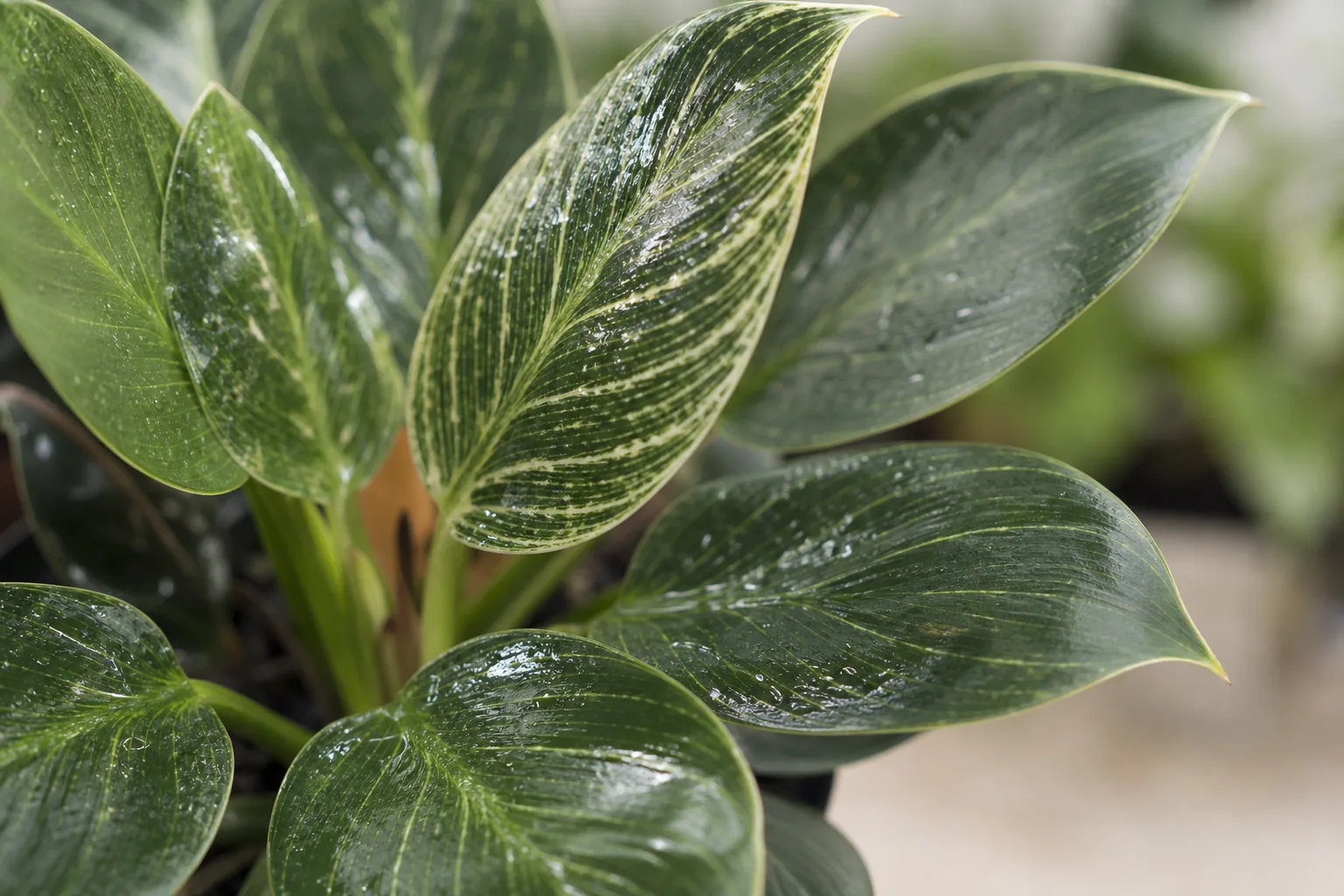
Sticky Leaves on Philodendron Birkin: Causes, Checks & Fixes
This guide covers sticky leaves on Philodendron Birkin. See also the general Sticky Leaves guide, watering, and light pages for this plant.
Sticky Leaves on Philodendron Birkin: Causes, Checks & Fixes
Quick answer
Sticky leaves on Philodendron Birkin fall into two very different categories. Honeydew is a sugar-rich substance produced by sap-sucking insects such as scale, mealybugs, and aphids-it coats leaf surfaces, drips onto tables below, and can promote black sooty mold. Extrafloral nectar is a normal philodendron secretion: tiny clear or amber droplets at predictable spots like petiole bases or stem nodes, with no insects and no leaf damage.
First step: isolate the plant and inspect every leaf axil on the compact rosette before you treat anything. Birkin’s upright, self-heading habit traps pests in sheltered crevices where pinstriped leaves meet the thick stem. Wipe one tacky leaf with a damp cloth-if stickiness returns across broad areas within days and you find bumps, cottony clusters, or tiny moving insects, you are dealing with honeydew, not harmless nectar.
What sticky leaves look like on Philodendron Birkin
On this slow-growing tabletop specimen, stickiness shows up in ways that depend on the cause.
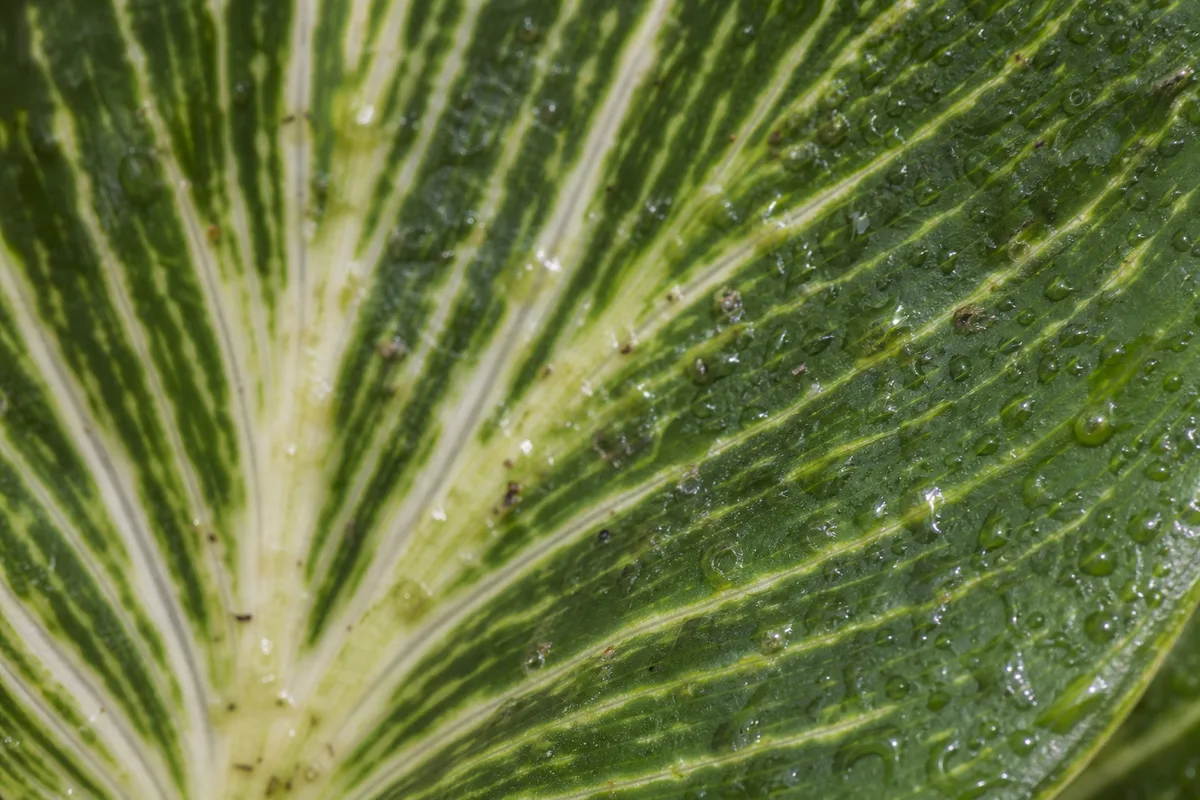
Sticky Leaves symptoms on Philodendron Birkin - compare with healthy tissue on the same plant.
Honeydew from pests (most common concern):
- Tacky film on glossy green portions of pinstriped leaves-not on the flat white stripes themselves
- Sticky residue on pot rims, saucers, or furniture below the plant
- Black sooty mold that smears when wiped-fungus growing on sugar deposits, not leaf disease
- Yellow stippling, silver scarring, or distorted new pinstriped leaves alongside the stickiness
- Ant trails on the pot exterior-ants harvest honeydew and protect pest colonies
- Visible insects: cottony mealybug clusters in axils, immobile scale bumps on stems, tiny thrips on new growth
Extrafloral nectar (normal on philodendrons):
- Small clear or amber droplets at repeated locations-petiole bases, nodes, or young growth points
- No spread across entire leaf surfaces; no sooty mold unless ants visit the droplets
- No yellowing, stippling, or webbing on surrounding tissue
- Droplets may reappear in the same spots after wiping-this is gland secretion, not reinfestation
Not sticky-leaf problems:
- Guttation - water pushed out through leaf margins when soil is very wet; droplets are thin and not sugary-tacky
- Normal variegation - creamy white pinstripes are smooth and dry, never coated in film
- Dust or hard-water spots - powdery or crusty, not uniformly tacky
Birkin’s compact crown means honeydew often appears on lower pinstriped leaves first, while pests feed above in hidden axils. Do not assume the stickiness source is where the residue landed.
Why Philodendron Birkin gets sticky leaves
Philodendron Birkin is a self-heading aroid with thick upright stems and overlapping heart-shaped leaves. That architecture creates two distinct sticky-leaf pathways.
Sap-sucking pests and honeydew
When aphids, mealybugs, soft scale, thrips, or whiteflies pierce Birkin tissue and feed on sap, they excrete honeydew-a sticky, sugar-rich waste that coats foliage and surfaces below. Heavy feeding on new pinstriped leaves causes stippling, distortion, or yellowing while the mix may still feel appropriately dry.
Birkin-specific pest risk factors:
- Tight leaf axils - the rosette shelters scale and mealybugs where leaves join the stem, out of sight from above
- Slow growth - infestations build for weeks before stickiness spreads across enough foliage to notice
- Shared shelves - Birkin often sits among other philodendrons; crawlers and hitchhikers move between pots
- Overwatered stress - soggy mix weakens roots and slows replacement leaves, leaving damaged sticky foliage on the plant longer
- Ant protection - ants farming honeydew disturb predators that would otherwise control pests
Spider mites can accompany sticky-leaf complaints on Birkin when multiple pests overlap, but mites themselves produce little honeydew. If you see fine webbing with stickiness, check for coexisting scale or mealybugs in the same axils.
Extrafloral nectaries
Many philodendrons-including Birkin’s genus-produce extrafloral nectaries: glands outside flowers that secrete small sugary droplets. Monitor philodendrons for mealybugs, aphids, and scale when stickiness appears alongside insects or sooty mold-not when isolated droplets sit at petiole bases with healthy leaves. Warm, humid conditions can increase secretion. Birkin owners sometimes panic when they see glistening droplets at petiole bases during active growth-especially after watering or during spring flush-when no pests are present.
The diagnostic split is simple: localized droplets at repeated gland sites with healthy leaves = nectar; widespread tacky film with insects or sooty mold = honeydew.
How to confirm the cause
Work through these checks in order:
- Location test - Note where stickiness concentrates. Axil-localized droplets at petiole bases suggest nectar. Broad leaf-surface film or drips on furniture below suggest honeydew.
- Wipe-and-watch - Clean one leaf and the surface below. Honeydew returns within days if pests still feed. Nectar may reappear at the same gland spots without spreading.
- Insect search - Open each leaf away from the stem and inspect axils with a hand lens. Look for scale bumps, mealybug wax, thrips on pale new growth, or aphid clusters.
- Sooty mold check - Black coating that smears on your finger indicates sugar deposits from honeydew, not normal Birkin secretions.
- Ant check - Ants on the pot strongly suggest honeydew producers above, even when you have not yet spotted the insect.
- Leaf health check - Distorted pinstripes, stippling, or yellowing alongside stickiness confirms pest feeding. Firm glossy leaves with isolated droplets at nodes point to nectar.
- Neighbor scan - Inspect plants touching Birkin or sharing a shelf. Honeydew-related pests spread; extrafloral nectar does not.
If you find only clear droplets at petiole bases, no insects, and healthy pinstriped foliage, you likely have normal philodendron nectar-not a pest emergency.
First fix for Philodendron Birkin
Move the plant away from other houseplants and wipe all sticky leaves and surfaces below with a damp cloth while you inspect every axil.
This single step removes honeydew and sooty mold so you can see fresh pest signs, stops ants from continuing to farm the plant, and lets you distinguish returning tackiness from one-time nectar droplets. Do not spray insecticide until you confirm insects-unnecessary chemicals stress slow-growing Birkin without solving harmless nectar or misidentified guttation.
During inspection, dab any visible mealybugs with an alcohol swab and physically remove small scale bumps with a thumbnail if infestations are light. Document where you find pests before choosing a follow-up treatment.
Do not fertilize, repot, or heavy-mist the rosette on day one. Fix the stickiness source first.
Step-by-step recovery
After isolation and cleaning:
- Identify the pest - Mealybugs need alcohol dabbing and repeat scouting; scale needs physical removal plus oil or soap; thrips need soap or spinosad on repeat intervals; aphids often rinse off with follow-up soap. Match treatment to what you confirmed in axils.
- Rinse foliage - Shower Birkin with lukewarm water, targeting leaf undersides and stem joints. This dislodges aphids, washes honeydew, and clears sooty mold residue.
- Apply insecticidal soap or horticultural oil if pests persist after rinsing-cover axils, stems, and leaf undersides thoroughly. Repeat at label intervals; these products contact insects directly and have limited residual activity.
- Manage ants if present-barriers on pot rims or ant stakes help natural enemies reach pest colonies.
- Trim badly coated leaves after two weeks with no new honeydew. Birkin replaces foliage slowly; removing the worst sticky leaves improves appearance without shocking the plant.
- Hold fertilizer until new pinstriped growth opens clean for at least two weeks. Tender new shoots attract sap feeders.
- Return to the shelf only after no new stickiness, no sooty mold spread, and no insects on two consecutive weekly axil inspections.
For confirmed extrafloral nectar only: wipe droplets if ants become a nuisance, improve airflow around the rosette, and avoid overwatering on Philodendron Birkin that combines with high humidity to leave water stains alongside nectar.
Recovery timeline
Honeydew wipes off immediately, but pest control takes three to six weeks of repeated treatment because eggs hatch on overlapping cycles. Birkin’s slow growth means new clean pinstriped leaves may take four to eight weeks to look fully normal after feeding stops.
Judge recovery by:
- Leaves feel dry and glossy, not tacky
- No new sooty mold on pinstripes or pot rim
- New crown leaves open with normal white striping, not yellowed or distorted
- Axil inspections show no scale bumps, wax clusters, or thrips
Old sticky or sooty-coated leaves may not recover cosmetically. Focus on clean new growth at the crown.
Lookalike symptoms to rule out
Extrafloral nectar vs. honeydew - Nectar is localized at glands; honeydew spreads and attracts sooty mold. Both can feel sticky; insects and leaf damage separate them.
Guttation - Water droplets along leaf margins after heavy watering or at night. Thin, not sugary, and not accompanied by insects.
Mealybugs without obvious stickiness yet - Early cottony clusters in axils may precede visible honeydew on lower leaves. Inspect crevices even if only one leaf feels tacky.
Scale insects - Hard tan or brown bumps on stems produce honeydew but no cottony wax. Both scale and mealybugs cause stickiness; texture in the axil tells them apart.
Thrips - Silvery scars and black specks on new pinstriped growth; stickiness may be mild compared to scale or mealybug infestations.
Dust or mineral film - Dry and powdery, wipes off without smear. Not tacky.
Mistakes to avoid
Do not spray the whole rosette before confirming pests. Birkin’s variegated foliage can react to unnecessary oils or soaps.
Do not confuse pinstripes with pest wax. Variegation is flat and part of the leaf; mealybugs are fluffy clusters in axils.
Do not ignore ants. Honeydew control is harder while ants protect colonies from predators.
Do not overwater while fighting pests. Wet soil stresses Birkin roots and slows the replacement leaves that show recovery.
Do not assume all philodendron stickiness is nectar. Widespread tacky film with sooty mold always warrants a thorough pest search.
Handle Birkin during treatment with care-philodendrons contain calcium oxalate crystals that irritate skin and are toxic to pets. Wash hands after contact and keep treated plants away from cats and dogs until sprays dry.
How to prevent sticky leaves next time
Quarantine every new Birkin or companion plant for at least two weeks before placing it near your collection. Inspect leaf-stem junctions where pests hide in the compact rosette.
Scout axils during weekly watering. Birkin takes only a minute to check if you lift leaves systematically from crown to base.
Keep Birkin in bright filtered light with 50–60% humidity and water when the top 3–5 cm of mix is dry. Firm healthy growth resists pest buildup better than stressed tissue.
Maintain airflow around the plant so extrafloral nectar dries quickly and you spot pest clusters early on glossy foliage.
Avoid crowding plants so leaves do not touch-crawlers bridge between pots on shared shelves.
Wipe dust from pinstriped leaves occasionally so honeydew and sooty mold stand out against dark green tissue.
When to worry
Treat as urgent when tackiness spreads to multiple leaves within a week, ants swarm the pot, black sooty mold covers pinstripes, or new leaves yellow and fail to open. Birkin’s tight rosette lets populations shelter through casual glances-delay allows pests to reach neighboring philodendrons.
Consider discarding a severely infested Birkin if repeated soap, alcohol, and oil cycles over eight to twelve weeks fail to reduce colonies-heavily infested plants may be better discarded before other houseplants are infested.
A single clear droplet at one petiole base on otherwise healthy pinstriped growth is likely extrafloral nectar, not an emergency. Wipe it, confirm no insects, and monitor.
Conclusion
Sticky leaves on Philodendron Birkin usually mean honeydew from sap-sucking pests hiding in the tight upright rosette-not a problem with the decorative pinstripes themselves. Isolate, wipe sticky surfaces, and inspect every axil before you spray. If you find only localized nectar droplets at petiole joints with healthy foliage, your Birkin is behaving like a normal philodendron. Judge recovery by clean new crown growth, not old coated leaves-and scout axils weekly so stickiness never becomes a collection-wide issue.
When to use this page vs other Philodendron Birkin guides
- Philodendron Birkin watering guide - Use for routine moisture checks before assuming sticky leaves is the main issue.
- Philodendron Birkin problems hub - Browse all 42 common issues on this species.