Slugs and Snails on Philodendron Birkin: Causes, Checks &
Quick answer
Slugs and snails chew irregular holes in Birkin's pinstriped leaves overnight and leave shiny slime trails on foliage, pot rims, and saucers. First step: inspect the plant after dark with a flashlight and hand-pick any feeders you find on leaves or hiding under the pot.
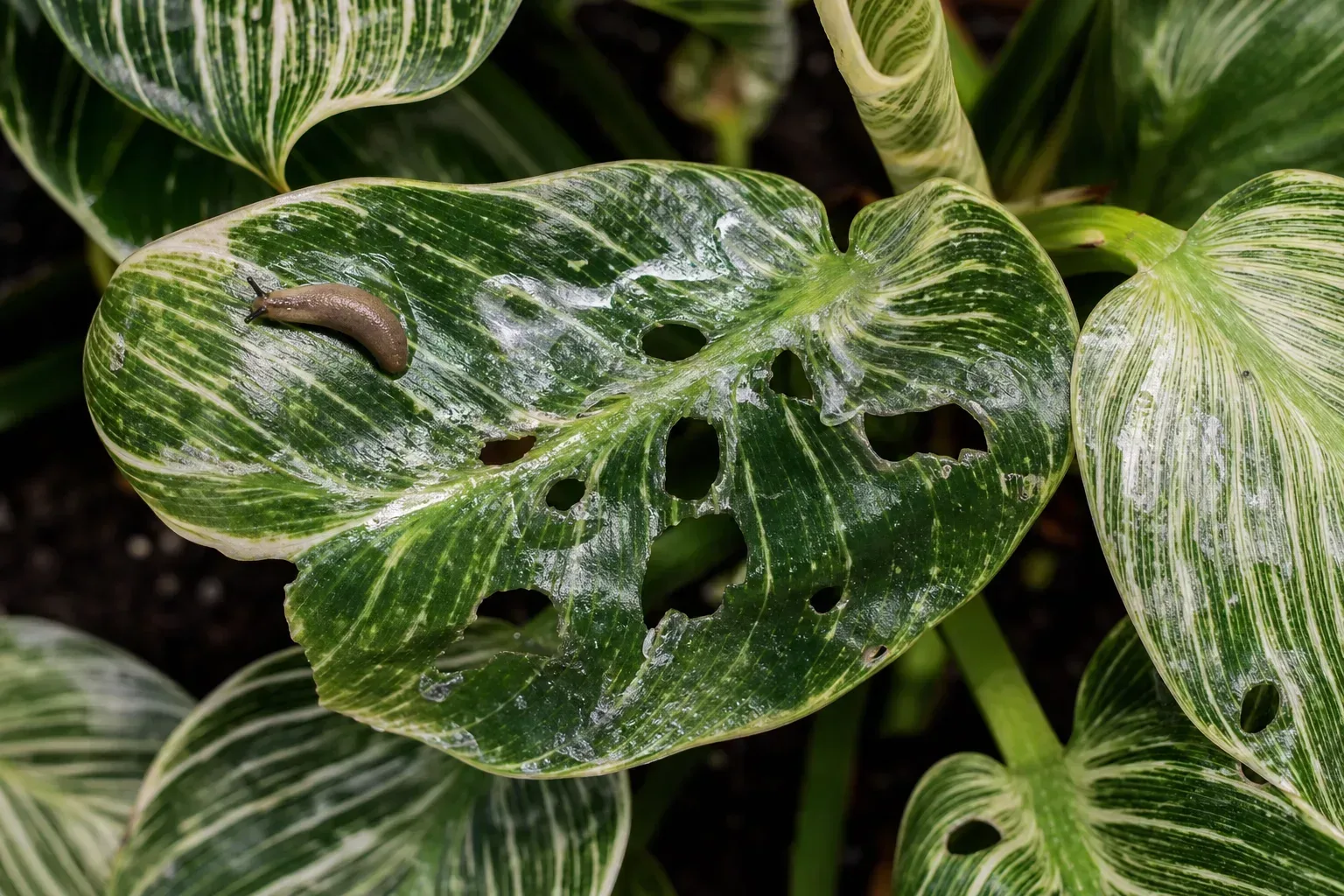
Slugs and Snails on Philodendron Birkin: Causes, Checks & Fixes
This guide covers slugs and snails on Philodendron Birkin. See also the general Slugs and Snails guide, watering, and light pages for this plant.
Slugs and Snails on Philodendron Birkin: Causes, Checks & Fixes
Quick answer
Slugs and snails are uncommon on strictly indoor Philodendron Birkin, but they show up fast when a plant spends summer on a patio, sits on a constantly wet saucer, or arrives from a nursery with damp organic soil. These mollusks feed mostly at night and rasp irregular holes through tender leaf tissue, leaving silvery mucus trails as proof. On Birkin, damage often hits the soft green sections of newest pinstriped leaves before older foliage.
First step: go out after dark with a flashlight and hand-pick every slug or snail on the plant, pot, and saucer. Drop them into soapy water. Birkin is toxic if chewed by pets-wear gloves when handling slimy pests and chewed leaf debris. Do not spray insecticidal soap first; that targets insects, not mollusks.
What slug damage looks like on Philodendron Birkin
Birkin’s thick, glossy pinstriped leaves look tough, but emerging foliage is soft enough for slugs to rasp through in one night. Typical signs include:
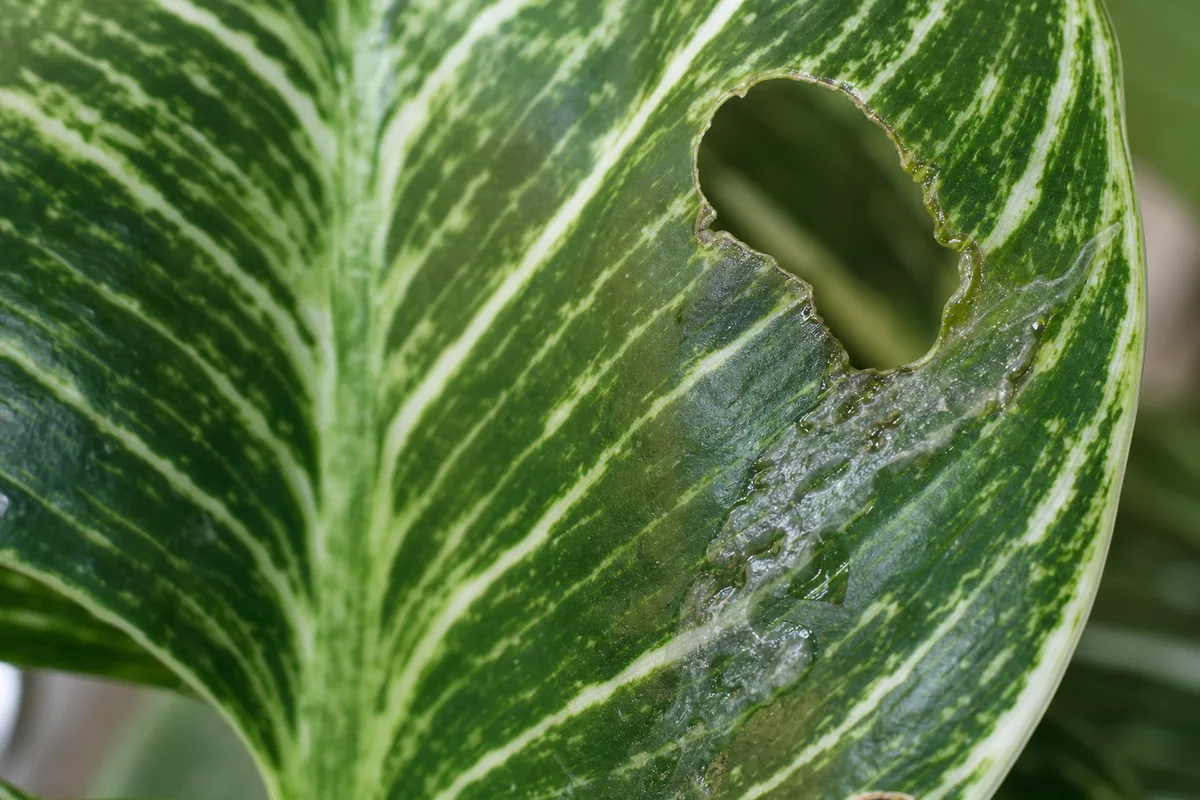
Slugs and Snails symptoms on Philodendron Birkin - compare with healthy tissue on the same plant.
- Irregular holes with ragged edges in green leaf areas, often on the newest pinstriped leaves at the crown
- Shiny slime trails on leaf surfaces, the pot rim, floor tiles, or inside the saucer-not sticky honeydew from sap feeders
- Partially eaten leaf edges where a slug worked along one margin of a pinstriped leaf
- Damage appearing overnight on a plant that looked fine the previous evening
- Feeding concentrated low on the rosette where leaves arch near damp soil or a full saucer
Unlike spider mites, slugs do not cause fine yellow stippling or webbing. Unlike thrips, they do not leave silvery scrape marks with black specks. Unlike mechanical scuffing, slug holes come with mucus evidence nearby.
Birkin grows slowly. One chewed crown leaf can remain on the plant for weeks looking permanently marred even after slugs are gone-judge recovery by clean new growth, not old holes filling in.
Why Philodendron Birkin gets slugs and snails
Pure indoor Birkin collections rarely see slugs because these pests need moisture and hiding spots. Problems start when indoor conditions accidentally mimic a damp garden edge.
Summer patio placement. Birkin tolerates sheltered outdoor time in warm weather, but slugs and snails hide under pots, boards, and mulch during the day and climb at night. A plant that looked clean indoors can return with eggs in soil or a slug tucked under the drainage hole.
Open doors and ground-floor humidity. In humid climates, slugs enter through patio doors and feed on floor-level plants overnight. Birkin on a low stand or shelf near a damp entry is more exposed than one on a tall plant rack.
Wet saucers and overwatered mix. Birkin needs the top 3–5 cm of soil to dry between waterings. A pot standing in drained water keeps the soil surface damp-exactly where slugs seek shelter and moisture. Chronic wetness also stresses Birkin roots, making chewed foliage harder to replace.
New plant introductions. Slugs hitchhike on nursery pots, damp bark mixes, and outdoor-grown stock. Skipping quarantine is the fastest way to bring mollusks into a clean collection.
Dense rosette architecture. Birkin’s upright, overlapping pinstriped leaves trap humidity at the crown. Slugs that reach the soil line can feed on the softest new leaves tucked against the stem without being seen during daytime care.
How to confirm the cause
Work through these checks before baiting or Philodendron Birkin repotting guide:
- Morning slime scan - Follow mucus trails from chewed leaves to the pot base, saucer, floor mat, or nearby clutter where slugs hide.
- Dusk inspection - Slugs and snails feed at night and on rainy or overcast days. Check Birkin one to two hours after sunset with a flashlight.
- Lift the pot - Turn the container over or slide it aside and look under the base and drainage holes.
- Check recent history - Was Birkin outdoors this week? Did a new plant arrive? Was the saucer left full after watering?
- Rule out insects - Aphids and mealybugs leave honeydew and live colonies in leaf axils. Caterpillars leave frass pellets. Neither leaves shiny slug trails.
- Rule out physical damage - Pets, vacuum cords, or moving a heavy pot can tear leaves without slime.
If holes appear but no slime or slugs show up after two damp nights, look at thrips scarring or cultural tearing before treating for mollusks.
First fix for Philodendron Birkin
Hand-pick slugs and snails after dark, then remove their hiding spots.
Move Birkin away from other plants for a few days while you hunt. Wear gloves-Birkin contains calcium oxalate crystals that irritate skin, and slug mucus is unpleasant on bare hands. Pick every visible slug from leaves, soil surface, saucer, and pot exterior. Drop them into a bucket of soapy water rather than tossing them near the door where they can return.
The same night, empty standing saucer water, pull Birkin off damp floor mats, and clear debris stacked under or beside the pot. Handpicking is the recommended first control for slugs on indoor plants because it stops feeding immediately.
Repeat the dusk pick for three to five nights. Slugs have strong homing instincts and may return to the same pot if shelter remains nearby.
Step-by-step recovery
After hand-picking confirms active slugs, layer these steps in order:
- Dry the root zone - Water only when the top 3–5 cm of mix is dry. Let saucers stay empty so the soil surface is not wet at night.
- Scatter iron phosphate bait - Place bait granules on the floor near pot routes and under shelving-not on Birkin foliage or in the pot. Iron phosphate stops feeding quickly and is safer around pets than metaldehyde, though Birkin itself is toxic to cats and dogs if ingested-keep bait where pets cannot reach it.
- Add copper or abrasive barriers - Wrap copper tape around the pot rim or set a ring of diatomaceous earth on the saucer lip. Copper barriers deter slugs; diatomaceous earth must stay dry to work.
- Set beer traps - Sink a shallow container so the rim is level with the floor near the pot. Stale beer attracts slugs; empty and refill every few days.
- Repot only if slugs persist in soil - If you find slugs emerging from drainage holes after a week of picking, repot into fresh sterile mix, wash soil off roots gently, and use a clean pot. Repotting with new soil eliminates soil-borne pests on indoor plants.
Do not reach for insecticidal soap, neem, or horticultural oil for slug holes. Those products target insects and mites, not gastropods.
Lookalike symptoms on Philodendron Birkin
Thrips leave silvery scars and black fecal specks on pinstriped leaves without mucus trails.
Caterpillars chew holes too, but you will find frass pellets on leaves below the damage.
Mechanical tears from moving pots or pet contact lack slime and do not worsen overnight.
Edema or watering stress can blemish leaf margins, but the pattern is symmetric browning or translucent patches-not ragged holes with trails leading to the soil.
Mistakes to avoid
Do not spray insecticides meant for aphids or mites on slug damage. Slugs are mollusks, not insects, and are not controlled by most insecticides.
Do not leave Birkin sitting in drained water to “flush slugs.” Wet soil surface invites more slugs and raises root-rot risk on a plant that already needs well-draining mix.
Do not use metaldehyde baits indoors if pets or children access the room. Iron phosphate is the better default.
Do not assume one hand-picking session is enough. Check at dusk for at least a week.
Do not fertilize a stressed Birkin while leaves are actively being chewed. Let feeding stop and new clean growth appear before resuming diluted fertilizer in the growing season.
Recovery timeline
Chewed pinstriped leaves will not regenerate. Success means no fresh holes or slime for seven to fourteen days, followed by new leaves opening with crisp white stripes. Because Birkin is slow-growing, replacing a badly damaged crown leaf can take several weeks to months.
If slugs stripped most of the newest foliage but the stem is firm and roots are healthy, the plant usually survives. If stems soften at soil level or the mix smells sour, shift diagnosis toward overwatering on Philodendron Birkin and root issues-not slugs alone.
How to prevent slugs and snails on Philodendron Birkin
Prevention focuses on blocking entry and drying slug habitat:
- Quarantine new plants for two weeks and inspect pots at night before placing Birkin near other philodendrons.
- Inspect patio returns at dusk before bringing Birkin back indoors after summer outdoor time.
- Empty saucers after every watering so the soil surface dries before evening activity.
- Elevate pots on feet or a stand so the base is not flush on a damp floor mat.
- Clear floor clutter - Cardboard, stacked nursery pots, and damp rugs under plants are daytime slug shelters.
- Bait early along floor routes when you first move Birkin outdoors for the season, not only after holes appear.
- Water in the morning so foliage and soil surface dry through the day when possible.
When to worry
A single ragged hole on one lower leaf with no new slime is cosmetic. Treat as urgent when emerging pinstriped leaves are stripped repeatedly, slime trails appear every morning, or you find slugs inside drainage holes after a week of hand-picking and bait.
If damage continues in a strictly indoor, dry room with no outdoor exposure, look for a hidden moisture source-a leaking saucer, always-wet cache pot, or damp pebble tray-before assuming another pest is responsible.
Philodendron Birkin care cross-check
Slug outbreaks on Birkin often overlap with watering habits that keep soil surface damp too long. Confirm the top 3–5 cm of mix dries between drinks, the pot has drainage, and the plant gets Philodendron Birkin light guide without sitting in a cold, stagnant corner. Fixing moisture rhythm supports recovery once slugs are removed-even though slugs themselves are the overnight chewers, not the watering mistake alone.
When to use this page vs other Philodendron Birkin guides
- Philodendron Birkin watering guide - Use for routine moisture checks before assuming slugs and snails is the main issue.
- Philodendron Birkin problems hub - Browse all 42 common issues on this species.