Faded Flowers on Marigold: Causes, Checks & Fixes
Quick answer
Faded marigold flowers usually mean normal spent-bloom aging that needs deadheading-not a crisis. Sudden collapse with wilt points to drought; grey fuzzy petals after rain or overhead watering point to botrytis. First step: pinch one faded head and check whether petals are dry-papery (age) or wet-brown with fuzz (mold).
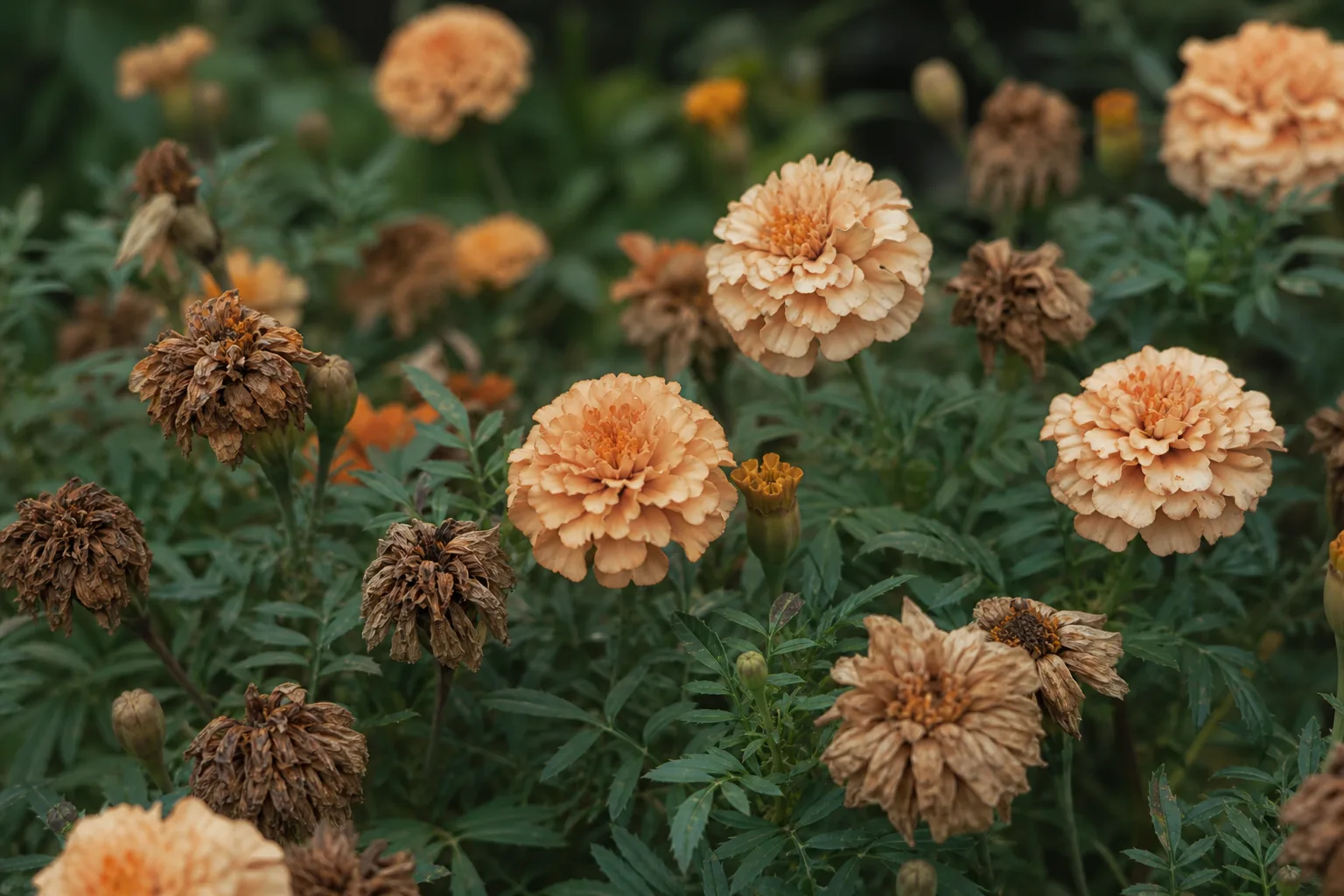
Faded Flowers on Marigold: Causes, Checks & Fixes
This guide covers faded flowers on Marigold. See also the general Faded Flowers guide, watering, and light pages for this plant.
Faded Flowers on Marigold: Causes, Checks & Fixes
Quick answer
Faded flowers on marigold means open blooms losing color or collapsing while leaves and stems are otherwise healthy-or wilting along with the flowers when water runs short. On Tagetes erecta (African marigold) and Tagetes patula (French marigold), three patterns cover almost every porch-pot and bedding display:
| Pattern | What you see | Stem and leaves | First action |
|---|---|---|---|
| Normal aging | Even dulling; dry papery petals; seed pod forming | Plant turgid; no afternoon wilt | Deadhead spent bloom to next leaf pair |
| Drought fade | Sudden collapse; flower heads droop; color washes out fast | Midday wilt; pot light; top 3 cm bone dry | Water deeply at base when soil dries |
| Botrytis mold | Brown-grey mushy petals; fuzzy growth when wet | May look fine until mold spreads | Remove infected flowers; improve airflow; base water only |
First step: classify one faded head before you water, spray, or shear the whole plant. Pinch a single spent bloom and feel the petals. Dry and papery on firm stems means routine deadheading. Limp flowers with wilted leaves and dry soil mean drought. Wet brown petals with grey fuzz after rain or evening overhead watering mean botrytis-not simple aging.
For deadheading technique detail, see the marigold pruning guide. For drought recovery beyond a single dry spell, see underwatering on marigold.
Faded flowers vs bud drop vs no flowers
These three marigold flower problems sound similar but point to different fixes:
- Faded flowers (this page) - Blooms opened, then lost color, dried, or developed mold. The display looks tired; deadheading restores the show on healthy plants.
- Bud drop - Unopened buds abort or fall before petals expand. You find pea-to-golf-ball-sized buds on the soil while leaves stay green. Drought during bud swell and porch botrytis are common triggers.
- No flowers - Zero buds form for weeks despite green foliage. Shade, wet roots, and excess nitrogen are the usual causes-not spent-bloom maintenance.
If buds form but stay tiny and undersized when they open, cross-check small flowers on marigold instead.
What faded flowers look like on marigold
Faded-flower diagnosis is about petal texture, speed, and what stays healthy on the rest of the plant.
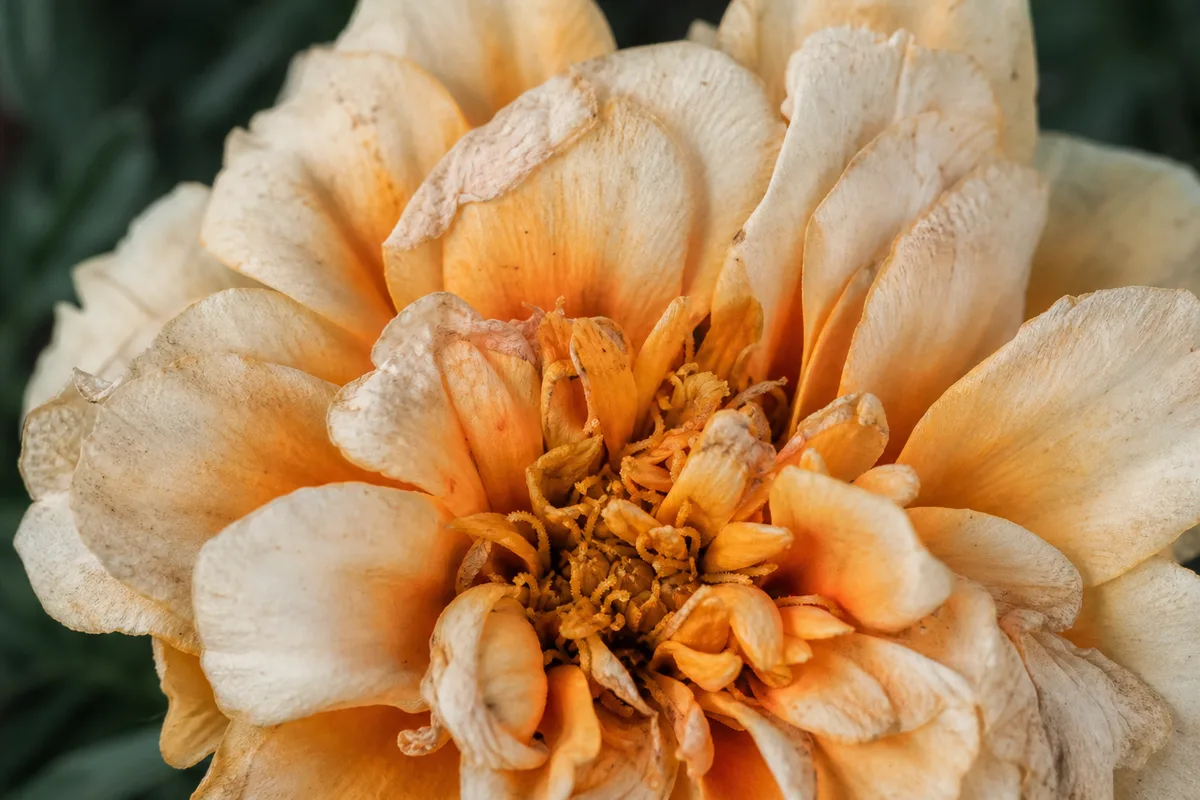
Faded Flowers symptoms on Marigold - compare with healthy tissue on the same plant.
Normal spent-bloom aging:
- Color dulls evenly over several days after the bloom fully opens
- Petals feel dry and papery; edges may curl inward
- A seed pod swells at the flower base if you skip deadheading
- Stems stay firm; leaves do not wilt in afternoon sun
- Lower open flowers fade first while new buds swell above them
Drought-linked flower fade:
- Open blooms collapse suddenly-often overnight after a hot dry day
- Flower heads droop on limp pedicels; color washes out fast
- Same plant shows afternoon wilt; container feels light
- Top 3 cm of soil is bone dry; recovery after deep watering by morning
- Clustered on fast-drying pots on west-facing railings in July heat
Botrytis grey mold on petals:
- Brown-grey mushy patches on open petals-not merely pale yellow
- Grey masses of spores form on infected tissue when wet
- Often follows overhead watering, rain, or humid porch nights
- May start on one spent bloom and spread to neighbors in crowded plantings
- Distinct from dry papery aging-petals feel wet and slimy, not crisp
African vs French bloom longevity:
African marigolds (Tagetes erecta) produce large double flowers up to five inches across that hold color longer before seed set-deadheading greatly benefits display beds. French marigolds (Tagetes patula) produce smaller blooms that fade faster on individual heads but rebloom steadily; deadheading keeps them tidier rather than being strictly required. Signet types (T. tenuifolia) drop spent flowers quickly with minimal fading on the plant.
Lookalikes to rule out:
- Sun bleach on pale cultivars - White or pale-yellow doubles may look washed out in intense reflected heat without wilt or mold. Stems stay firm; soil moisture is adequate.
- Heat slowdown - High temperatures in July and August can temporarily reduce growth and bloom even in full sun. Faded blooms plus slower new bud production in extreme heat differ from disease.
- Whole-plant wilt - If flowers fade while all leaves collapse, see wilting on marigold for root and moisture triage beyond flower display alone.
Why marigold flowers fade
Marigolds are heat-loving annuals bred for continuous summer color in full sun with well-drained soil. Individual flowers are short-lived by design-the plant cycles through bloom, seed set, and rebloom all season.
Normal aging and seed diversion. Each open bloom lasts a finite window before petals thin and color dulls. Without deadheading, the plant invests energy in seed production and slows new bud initiation. Removing spent blooms helps the plant produce more flowers rather than seed. Their blooms also tend to rot easily in humid conditions-spent heads left on the plant become entry points for decay.
Drought stress on open blooms. Open flowers transpire heavily in afternoon sun. When container soil dries through the top 3 cm during a heat wave, marigolds wilt and open blooms collapse before lower leaves show obvious damage. Marigolds tolerate drought better than chronic sogginess but still need steady moisture for continuous display-boom-bust watering fades flowers repeatedly through midsummer.
Botrytis cinerea in humid wet weather. Botrytis colonizes dying petal tissue first, then spreads under humid conditions. Flower parts brown and die; grey spore masses form when wet. Enclosed porches, evening overhead irrigation, and crowded double African heads after rain create ideal conditions. French marigolds are more tolerant of rainy conditions than African types but are not immune on humid nights.
Container vs in-ground fade rates. Pots on sunny balconies dry in hours and show drought fade first on open blooms. In-ground beds hold moisture longer-faded flowers there more often trace to missed deadheading or post-rain botrytis than crash drought, unless irrigation was skipped through a heat spell.
How to confirm the cause
Work through these checks in order-the answer usually appears before you need fungicide:
- Stem turgor - Bend a stem gently. Firm and springy supports normal aging or early botrytis on petals only. Limp stems with afternoon wilt point to drought or root stress.
- Petal texture - Dry and papery means spent bloom. Wet, brown, and slimy with visible fuzz when humid means botrytis. Pale and washed out without slime on firm stems may be sun bleach on light cultivars.
- Soil moisture at 3 cm - Stick a finger beside the stem. Bone dry with wilt confirms drought fade. Constantly wet heavy soil with limp plant suggests overwatering on Marigold-cross-check wilting if whole-plant collapse dominates.
- Weather and watering log - Record recent overhead watering, evening irrigation, rain spells, and porch humidity. Botrytis clusters after wet nights; drought fade follows missed watering days in heat.
- Fuzzy test - In humid weather, mist suspect petals lightly or place a removed bloom in a sealed bag with damp paper for 24 hours. Grey fuzzy growth confirms botrytis per extension disease guides.
- Neighbor comparison - One container faded after a dry railing afternoon while shaded neighbors stayed bright isolates drought. Multiple plants with fuzzy petals after the same rain event implicates botrytis culture.
If petals are dry-papery, stems are firm, and soil moisture is adequate, normal aging is the working diagnosis-deadhead before anything else.
First fix for marigold
Classify the fade type on one flower head, then deadhead all routine spent blooms-or water deeply if drought, or remove moldy flowers if botrytis.
Normal aging path: Pinch or cut each faded flower down to the next healthy leaf pair on the stem, removing the seed pod base. That single maintenance step on a turgid plant is the correct first response-do not shower the plant or apply fertilizer. Full pinch-point guidance lives in the marigold pruning guide.
Drought path: When top 3 cm is dry and flowers collapse with afternoon wilt, soak at soil level until moisture penetrates at least 15 cm in beds or runs from container drainage holes. Water at the base, not over blooms. See underwatering on marigold for recovery rhythm.
Botrytis path: Remove all infected and nearby spent flowers immediately. Improve porch airflow, space crowded stems slightly, and switch to morning base watering only. Do not overhead irrigate in humid evenings. Expect one to two weeks of dry flower surfaces before clean new buds appear.
Do not apply fungicide as a first response on home containers-cultural fixes (removal, airflow, dry petals) resolve most porch outbreaks. Do not compost botrytis-infected flowers in humid climates.
Step-by-step recovery
Branch recovery by what you confirmed-do not stack every fix at once.
If normal spent-bloom aging:
- Deadhead every faded flower including seed pod base-scissors for heavy African doubles, fingers for small French blooms.
- Scan for new buds just below spent heads; avoid cutting into swelling buds.
- Repeat deadheading every two to three days through peak season.
- Judge recovery on fresh full-color buds within one to two weeks in warm sun.
If drought-linked fade:
- Water deeply at base when top 3 cm dries-follow marigold watering rhythm.
- Deadhead collapsed open blooms-they will not rehydrate.
- Provide temporary afternoon shade only during extreme heat above 38°C for containers-one to three days, not permanent shade.
- Expect new blooms within one to two weeks after moisture stabilizes.
If botrytis on petals:
- Remove all fuzzy or brown-mushy flowers and nearby spent blooms.
- Thin crowded stems slightly for airflow on humid porches.
- Water at base in morning only; keep petals dry through evening humidity.
- Remove rotting flowers and keep the soil surface clean to limit spore spread.
- Watch for grey mold climbing into stems-escalate if pedicels brown and soften.
Recovery timeline
| Fade type | First improvement sign | Full display recovery |
|---|---|---|
| Normal aging | New bud swell within 3–7 days after deadheading | Fresh full-color blooms in 1–2 weeks in warm sun |
| Drought fade | Morning turgor returns after deep watering | New blooms in 1–2 weeks once moisture stays even |
| Botrytis | No new fuzzy growth after removal and dry culture | Clean new buds after 1–2 weeks of dry flower surfaces |
Spent blooms do not re-color once faded-recovery always means new flowers, not reviving old petals.
How to deadhead marigolds for continuous color
Deadheading is the core maintenance fix for faded flowers on healthy marigolds:
- When: Whenever a bloom loses brightness and petals feel papery-typically every two to three days in peak summer.
- Where to cut: Down to the next set of healthy leaves, not just the flower cap. Leaving the seed pod base slows rebloom on African doubles.
- Tools: Clean fingers for French singles; sharp scissors for large double African heads that resist pinching.
- After rain: Remove spent blooms promptly-deadheading helps marigolds stay clean in humid weather when rotting heads would otherwise invite disease.
African marigolds benefit most from deadheading; French types look tidier with the same pass. For branching pinches on young plants and photo-level technique, see the marigold pruning guide.
What not to do
- Do not leave seed pods on decorative plantings if continuous color is the goal-the plant will slow new buds.
- Do not overhead water in humid evenings-wet petals overnight invite botrytis on spent and open blooms alike.
- Do not confuse normal dry-papery aging with botrytis-fuzzy wet petals need removal and dry culture, not just a light deadhead.
- Do not fertilize faded flowers as a first fix-nitrogen pushes foliage over blooms on already stressed plants.
- Do not let botrytis-infected flowers sit on the plant or compost pile in humid weather.
How to prevent it next time
- Deadhead regularly through summer-redirects energy from seed to new buds on all Tagetes types.
- Water at the base when top 3 cm dries; avoid wetting petals in evening humidity (Penn State Extension).
- Grow in full sun with airflow between pots on humid porches (Missouri Botanical Garden).
- Remove rotting flowers promptly after rain-prevents botrytis spread from spent tissue to fresh buds.
- Choose type for site: French marigolds tolerate moist soils better than other Tagetes species; African doubles need deadheading and staking in exposed humid sites.
Marigold care cross-check
Faded flowers are often display maintenance, not crisis-unless botrytis or drought underlies them. Baseline care that keeps color bright: full sun, even moisture via the top-3-cm test, and regular deadheading. Review the marigold overview for cultivar choice and the marigold light guide if pale stretch accompanies dull blooms.
Related marigold guides:
- Marigold overview
- Marigold pruning and deadheading
- Marigold watering
- Bud drop on marigold
- No flowers on marigold
- Underwatering on marigold
- Wilting on marigold
- Small flowers on marigold
When to worry
Routine pale spent blooms on firm stems are low urgency. Escalate when:
- Grey mold spreads into stems - pedicels brown, soften, and collapse despite dry culture; remove heavily affected tissue aggressively
- Drought fade repeats daily on the same container through midsummer-pot size or watering rhythm needs adjustment, not more deadheading alone
- All open flowers turn mushy after one rain event on a humid porch-botrytis outbreak; strip affected blooms and improve airflow before it reaches main stems
- Flowers fade while whole plant wilts in wet soil - investigate root stress via wilting and root rot rather than deadheading alone
Mid-season annuals with no recovery window before frost may be better refreshed with a new transplant than nursed indefinitely on a botrytis-weakened stock plant.
When to use this page vs other Marigold guides
- Marigold watering guide - Use for routine moisture checks before assuming faded flowers is the main issue.
- Marigold problems hub - Browse all 20 common issues on this species.