Seedlings Falling Over on Maranta Leuconeura: Causes
Quick answer
Maranta leuconeura seedlings fall over when stems rot at the soil line from damping off, or stretch pale and floppy from too little light under a humidity dome. First step: pinch the stem base-if it is mushy, reduce surface moisture and improve airflow; if firm but thin, remove the dome and place grow lights 2–4 inches above tops for 14–16 hours daily.
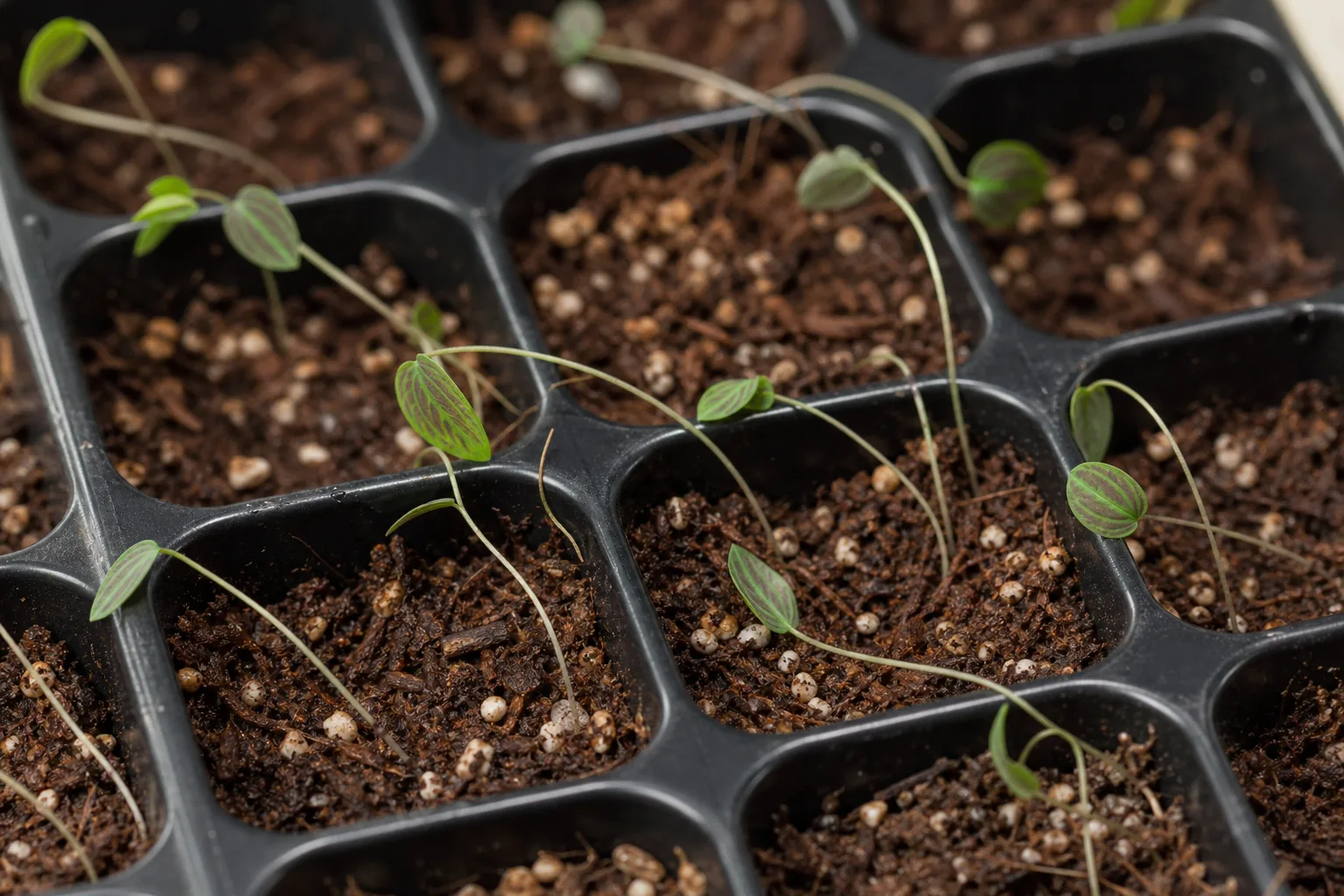
Seedlings Falling Over on Maranta Leuconeura: Causes, Checks & Fixes
This guide covers seedlings falling over on Maranta Leuconeura. See also the general Seedlings Falling Over guide, watering, and light pages for this plant.
Seedlings Falling Over on Maranta Leuconeura: Causes, Checks & Fixes
Quick answer
When Maranta leuconeura seedlings fall over, the cause is almost always one of two problems: damping off rotting the stem at the soil line, or leggy weak growth that cannot support a thin shoot. Prayer plant is normally propagated by cuttings or division, so seed trays are uncommon-but when seeds do sprout, they need the warm, humid start of a tropical understory plant without the stagnant wet air that invites fungal collapse.
First step: pinch the stem base at the soil line. If it feels mushy, pinched, or dark brown, treat it as damping off-reduce surface moisture and improve airflow immediately. If the base stays firm but the seedling is pale, tall, and leaning, the problem is insufficient light; remove any humidity dome and place grow lights 2–4 inches above the tops for 14–16 hours daily.
Do not fertilize, repot crowded cells, or mist constantly on day one. Confirm which failure mode you have, then apply one targeted correction.
What falling seedlings look like on Maranta Leuconeura
Prayer plant seedlings emerge with small oval cotyledons and soon produce the first true leaves with hints of the herringbone pattern. Healthy starts stay low and compact, matching the species’ clump-forming, low-growing habit-not upright spikes like tomato seedlings.
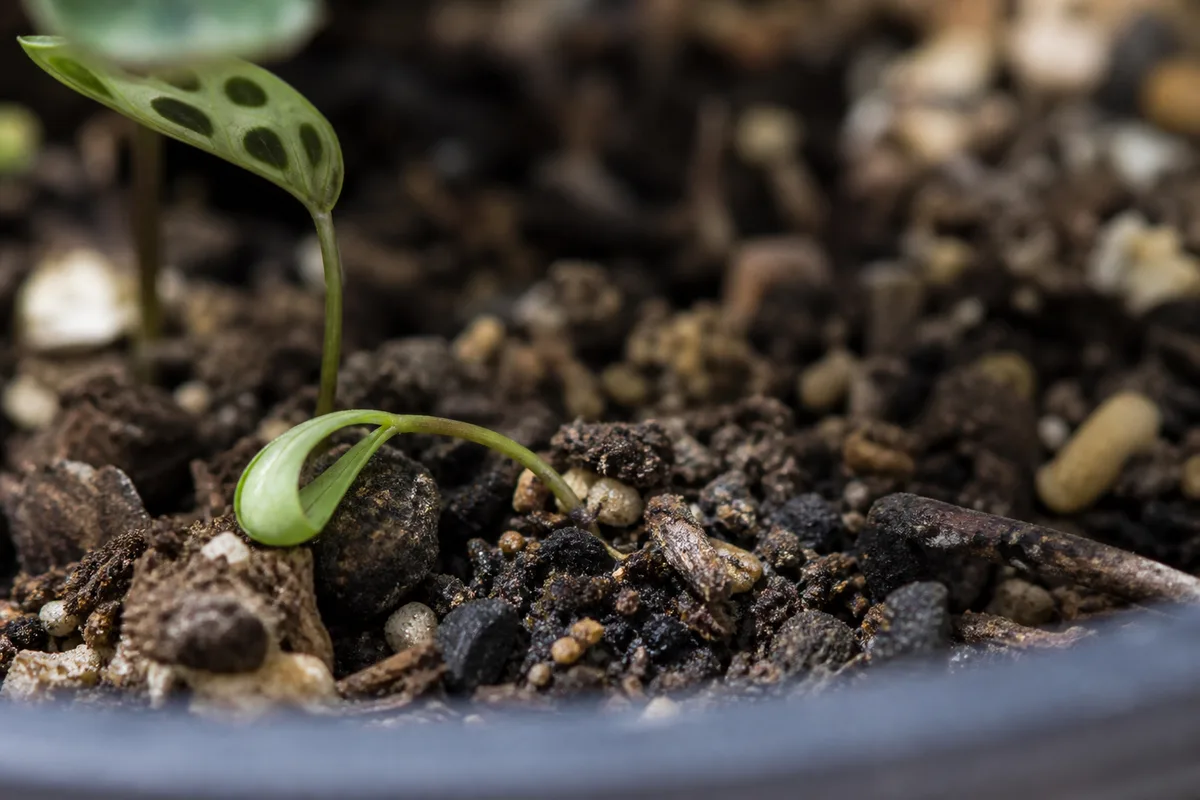
Seedlings Falling Over symptoms on Maranta Leuconeura - compare with healthy tissue on the same plant.
Damping off:
- Seedlings lean or collapse right at the soil surface
- Stem base turns brown, water-soaked, or thread-thin
- Cotyledons wilt green-gray while the crown softens
- White cobweb-like mold on the mix surface in humid domed trays
- Neighboring cells fail in clusters while the tray stays wet
Leggy stretch (insufficient light):
- Stems stay firm but grow long and pale between leaves
- Seedlings lean hard toward a window or bend away from dim center cells
- True leaves stay small; color looks washed out compared with mature prayer plant foliage
- Often follows germination under a sealed dome on a heat mat with window light only
overwatering on Maranta Leuconeura without active rot:
- Stems may soften slightly but lack the pinched “wire stem” of damping off
- Algae or green film on the soil surface
- Mix never dries on top between waterings
Why Maranta seedlings fall over
Maranta leuconeura evolved as a rainforest floor perennial with fine, shallow roots and thin stems that spread horizontally. Seedlings inherit that delicate structure-they are not built to hold heavy, fast vertical growth unless light is strong and even.
Several factors stack against seed-starting success on Maranta Leuconeura overview:
High humidity requirements clash with fungal risk. Germination benefits from warm, humid conditions similar to mature prayer plant care-bright filtered light and high humidity under glass. Leaving a humidity dome sealed after sprouting traps moisture on the soil surface exactly where damping-off pathogens thrive in cool, wet conditions.
Window light is rarely enough. Natural light from a window is seldom adequate for sturdy seedling growth; stems stretch toward the pane and collapse under their own weight. Prayer plant is classified for full to partial shade-meaning Maranta Leuconeura light guide for indoor starts, not a dark shelf or weak winter sill alone.
Heat without light accelerates weak stretch. A warming mat speeds germination but can push soft growth when 14–16 hours of supplemental light is not provided at close range.
Fine roots rot quickly in soggy mix. Mature Maranta already suffers when soil stays waterlogged; seedlings with minimal root mass fail faster in dense, saturated seed mix.
Crowded sowing. Multiple prayer plant seeds per cell compete for light and airflow, weakening every stem in the clump.
How to confirm the cause
Work through these checks in order:
- Stem-base pinch test - Mushy or pinched at the soil line confirms damping off. Firm base with floppy upper stem points to legginess or mechanical lean.
- Tray moisture pattern - Surface wet for days, water pooling in saucers, or constant misting supports fungal collapse. Matte surface with firm collapsed tops suggests light deficit.
- Dome and airflow - Is a humidity lid still on more than 48 hours after the first sprout? Are seedlings touching dome plastic?
- Light distance - Measure from bulb to seedling tops. More than 6 inches under a typical shop light often produces long spindly stems reaching for light.
- Temperature - Prayer plant grows best around 18–27°C. Cool rooms below 18°C slow growth and increase damping-off risk with wet mix.
- Cell density - More than one seedling per small cell increases stretch and rot spread.
- Spread pattern - Cluster failure in one wet corner is damping off. Uniform lean toward the window is light.
First fix for Maranta Leuconeura seedlings
If stems are firm but pale and leaning: remove the humidity dome and position a grow light 2–4 inches above the seedling tops for 14–16 hours daily.
This single change addresses the most common prayer plant seed-starting mistake-germinating under cover, then leaving seedlings in stagnant humid air with insufficient photons. Place lights close above the canopy and raise them as plants grow; window light alone will not produce stocky Maranta starts.
If the stem base is mushy or pinched: discard affected seedlings immediately, let the tray surface dry until it looks matte, and run a gentle fan across the tray. Do not add light before stopping active rot-damping off spreads in shared wet mix.
Step-by-step recovery
For leggy but living seedlings
- Remove dome lids and any plastic touching leaves.
- Install a timer on grow lights for 14–16 hours daily.
- Bottom-water when the top of the mix lightens-avoid overhead soaking.
- Thin to one seedling per cell once the first true leaf expands.
- When transplanting, bury part of the stretched stem in fresh sterile mix so the crown sits slightly deeper for stability.
- Hold fertilizer until several true leaves develop; many seed mixes already contain starter nutrients.
For damping-off trays
- Remove and discard every collapsed or discolored seedling-do not compost infected tissue in home bins near other starts.
- Sterilize tools and trays if you plan to reuse them (10% bleach soak for 30 minutes).
- Allow the surface to dry between bottom-waterings; mist lightly rather than flooding once mix is initially moist.
- Increase airflow with a low fan-not cold drafts on heat mats.
- Restart unaffected cells only if stems and roots look clean when you lift them gently.
When seed starts are not worth saving
Because prayer plant is easily propagated from basal cuttings or division, a tray of failed seedlings is often less practical to rescue than taking a 10 cm stem cutting from a healthy parent in spring. Seed growing is experimental on this species; do not treat a collapsed tray as a reflection of your general houseplant skill.
Recovery timeline
Leggy seedlings show tighter internodes on new leaves within one to two weeks of corrected lighting-old stretched sections will not shorten. Damping-off recovery is binary: unaffected cells either stay clean over the next five to seven days or fail in the same wet conditions. Expect four to eight weeks from germination to transplant-ready size when light, moisture, and temperature stay stable.
Lookalike symptoms
Mature plant leaning - A full prayer plant falling over in a pot usually traces to root rot on Maranta Leuconeura, low light on an established clump, or a top-heavy container-not seed-tray damping off. Check root firmness and pot weight instead of dome humidity.
Transplant shock after moving seedlings - Newly potted starts may wilt once without stem-base rot. Firm the crown, shade briefly, and maintain humidity around the whole small pot-not a sealed dome over wet foliage.
Fungus gnats - Small flies indicate chronically wet mix but do not alone cause instant collapse; they often appear alongside damping off in overwatered trays.
Mistakes to avoid
- Leaving humidity domes on after cotyledons fully open
- Growing on a heat mat without supplemental light
- Overhead watering that keeps foliage and surface constantly wet
- Reusing garden soil or old potting mix for seed trays
- Fertilizing weak seedlings hoping to “strengthen” them-tender nitrogen-rich growth increases damping-off susceptibility
- Crowding multiple Maranta seeds in one cell for “backup” plants
How to prevent falling seedlings next time
- Start with sterile seed-starting mix and sanitized trays with drainage holes
- Sow at shallow depth-cover lightly; deep burial slows emergence on small seeds
- Germinate warm (around 22–25°C) with a dome, then vent and remove the cover at first sprout
- Provide 12–16 hours of fluorescent or LED light kept 2–4 inches above tops
- Bottom-water to keep leaves dry; let the surface approach dry between drinks
- Thin early; one sturdy seedling beats three weak competitors
- Consider cuttings instead if seed supply is limited-prayer plant division remains the reliable propagation path
Conclusion
Maranta leuconeura seedlings fall over when wet stagnant trays rot thin stems at the soil line, or when weak light produces pale, top-heavy stretch. Pinch the base, match the fix to the pattern, and prioritize close supplemental light once sprouts emerge. Failed seed trays are disappointing but normal on a species usually grown from cuttings-use the diagnosis to tighten your next sowing, or propagate from a healthy parent plant instead.
When to use this page vs other Maranta Leuconeura guides
- Maranta Leuconeura watering guide - Use for routine moisture checks before assuming seedlings falling over is the main issue.
- Maranta Leuconeura problems hub - Browse all 40 common issues on this species.